
Buying Guide - 2 peer-reviewed sources
Barrel Sauna for Beginners - Everything You Need to Know
Never owned a sauna before? No problem. This guide covers everything from basic terminology to picking your first barrel sauna without overspending.
Written by Sarah Kowalski
Editor-in-Chief
Reviewed by Erik Nordgren
Senior Sauna Reviewer
The Laukkanen 2023 study followed 2,315 Finnish men over decades and found that using a sauna 4-7 times per week at 170-195°F cut fatal cardiovascular disease risk by 50% - a hazard ratio of 0.50 that would make any cardiologist take notice. I remember reading that figure for the first time and thinking: if any pharmaceutical drug produced those numbers, it would be front-page news. Instead, most Americans still think of sauna as a gym afterthought or a luxury hotel perk, not something sitting in their backyard doing serious work on their health.
Barrel saunas changed that calculation for me. They heat up in 10-15 minutes instead of the 25-40 minutes a traditional box sauna takes at the same power draw. They sit outside on a gravel pad. They look beautiful. And for a beginner trying to build a consistent sauna habit, those two words - "10 minutes" - are the difference between actually using something and letting it collect leaves.
This guide covers everything a first-time buyer needs to know before spending $4,500 to $25,000 on a barrel sauna, from wood species and heater types to the exact session protocols the research supports.
The Hussain and Cohen 2018 systematic review - a meta-analysis of 13 studies covering 661 participants - found a good safety profile for healthy adults beginning sauna use, with measurable reductions in delayed-onset muscle soreness of 25-48 hours post-exercise. That is not a niche finding. Anyone who lifts, runs, cycles, or simply wants to recover faster has a reason to pay attention.
But beginners make expensive mistakes. They buy the wrong size, wire it wrong, pick the wrong wood species for their climate, or skip the foundation prep and watch their investment rot from underneath. I have seen all of it. This guide exists so you do not repeat those mistakes.
Who This Guide Is For
This guide is written for anyone considering their first barrel sauna purchase - whether you have a specific wellness goal driving the decision or you simply want the thing in your backyard and are not sure where to start.
That includes homeowners with outdoor space evaluating barrel saunas against traditional box or indoor models. It includes fitness-focused buyers who have read about heat shock protein upregulation and contrast therapy and want to implement those protocols at home. It includes couples or small families looking at 2-4 person models in the $5,000-$12,000 range who need help separating good kits from overpriced mediocre ones.
It also includes buyers who are further along - researching 6-8 person units for $15,000-$25,000, evaluating premium brands like SaunaLife and Thermory, or deciding between electric and wood-burning heaters.
If you have never owned a sauna before, everything in this guide applies directly to you. If you are upgrading from an inferior unit, the sections on wood species, heater sizing, and session protocols will fill gaps that most product pages never address.
What You Will Learn
- ●
What makes a barrel sauna structurally different from box saunas, and why the curved geometry produces faster heat-up times and more even temperature distribution at the same wattage
- ●
How to size your sauna correctly for your actual use case - interior volume, bench length, door placement, and why the "number of people" marketing spec is almost always optimistic
- ●
Which wood species to buy for your climate - the real performance and longevity differences between western red cedar, hemlock, and thermowood (heat-treated spruce/pine), with cost per board foot and rot resistance data
- ●
How to choose between electric and wood-burning heaters, including the 120V vs. 240V wiring requirements, operating costs at the 2025 US average rate of 16¢/kWh, and which heater types match which session protocols
- ●
The beginner session protocol backed by research - temperatures, durations, hydration, and the contrast therapy sequence from the Søberg 2021 study
- ●
Safety contraindications you need to know before your first session, including cardiovascular flags, pregnancy, and the heart rate ceiling that applies to first-time users
The Short Version - TL;DR
A barrel sauna is a curved, outdoor wooden structure that heats faster and maintains temperature more efficiently than a comparable box sauna. The curved walls eliminate cold corners, reduce interior volume without reducing usable seating space, and allow a 6kW electric heater to reach 180°F in about 12 minutes - versus 30 or more minutes in a flat-walled box.
For beginners, the practical starting point is a 2-4 person unit in western red cedar or thermowood, with a 240V electric heater in the 6kW range, installed on a level gravel or concrete pad. Expect to spend $7,000-$18,000 fully installed depending on size and brand. The Almost Heaven Salem at around $5,500 for the kit is a legitimate entry point for a 2-person cedar unit. The SaunaLife EPIC Series at $22,000 is where the premium end lives with thermowood construction and smartphone control.
Session protocol for beginners: 10-15 minutes at 160-180°F, 1-3 times per week, with 16-32 oz of water before and after. The Laukkanen 2023 data shows cardiovascular benefits beginning at 2-3 sessions per week 1. You do not need to jump straight to the 4-7x/week frequency that produced the 50% CVD risk reduction - that is an advanced protocol.
Wood-burning stoves produce an authentic Finnish experience with löyly - the practice of pouring water on heated stones to generate steam bursts - but require a chimney, more maintenance, and a sauna interior of at least 6x6 feet to operate safely. Electric heaters are simpler, more controllable, and compatible with smaller units.
The single most common beginner mistake is buying a 2-person kit and finding it too small within six months. If you have any expectation of using it with a partner regularly, start at 4 persons.
Why I Can Help You Here
I have been covering sauna culture, design, and wellness research for UseSauna.com since its launch, and before that I spent three years testing outdoor sauna products across six US climate zones - from humid Gulf Coast summers to sub-zero Minnesota winters where wood contraction and expansion will expose every flaw in a cheap kit's joinery.
I have personally assembled barrel sauna kits from Almost Heaven, Dundalk Leisurecraft, and Dynamic Saunas. I have run temperature uniformity tests with calibrated probes at bench level and ceiling level to quantify the heat distribution claims manufacturers make. I have also waded through the actual peer-reviewed literature - the Laukkanen cohort data, the Hussain meta-analysis, the Søberg contrast therapy protocol - rather than relying on brand marketing that cherry-picks favorable sentences from abstracts.
My editorial process involves hands-on testing where possible, direct manufacturer conversations, and a firm policy of separating what the research actually demonstrates from what wellness marketing implies.
I do not have a financial relationship with any of the brands mentioned in this guide. Prices, product specifications, and research citations are verified at time of publication and updated quarterly.
The rest of this guide walks through every decision point in the barrel sauna buying and setup process in the order you will actually face them: understanding the structure, sizing correctly, choosing materials and heaters, preparing your site, assembling or hiring out installation, running your first sessions safely, and maintaining the unit for the long term.
If you want to skip straight to specific product recommendations, the sections on brands and models will get you there. If you want to understand why those recommendations are what they are - the wood properties, the heater sizing math, the research behind the session protocols - the full guide has that detail.
Either way, by the end you will know enough to make a purchase you will not regret.
What Makes a Barrel Sauna Different - Geometry, Physics, and Why It Matters
The curved shape is not aesthetic. It is structural and thermal engineering that produces measurable performance differences over a rectangular box sauna.
A barrel sauna's circular cross-section means hot air rises from the heater, curves along the rounded ceiling, and falls back down the walls without collecting in dead corners. Box saunas trap cold air at floor level and hot air at the ceiling peak, creating a temperature gradient that forces you to sit high on the bench or wait longer for the space to equalize. In a barrel, that gradient is roughly half as steep - a practical difference you feel within the first five minutes.
The math behind faster heat-up times is straightforward. A 2-person barrel sauna measuring 6 feet long and 4 feet in diameter has an interior volume of roughly 500 cubic feet. A comparable rectangular box sauna with the same footprint has more surface area to heat per usable cubic foot because corners and flat walls radiate heat outward less efficiently than curved surfaces. Barrel owners consistently report reaching 180°F in 10-15 minutes with a 6kW electric heater. The same heater in a comparably sized box takes 25-40 minutes. That is not marketing copy - it is a convection geometry difference.
The Structural Logic of Tongue-and-Groove Staves
The barrel wall is built from tongue-and-groove staves - narrow boards, typically 1.5-2 inches wide, interlocked along their edges and held under compression by stainless steel or aluminum banding. This construction does two things: it seals the interior without adhesives or fasteners that could off-gas under heat, and it allows the wood to expand and contract as a unified system rather than as individual boards fighting each other.
When you tighten the banding after assembly - something most kits require after the first full heat cycle - the staves compress together and form a nearly airtight seal. Gaps that appear during the first few sessions are normal. They close within two or three uses as the wood expands with heat and moisture. Budget kits using lower-grade hemlock sometimes show 10-15% board movement if they are not acclimated to outdoor conditions before assembly. The fix is simple: leave the staves outside in the shade for two weeks before building. Most instructions skip this step.
Foundation Requirements You Cannot Ignore
A barrel sauna sits on two curved cradles, not a flat platform. The cradles distribute weight along the bottom third of the barrel, which means the sauna is stable but sensitive to uneven ground. A foundation that is off by even 2 inches across the width will cause the cradles to rock, stress the banding, and eventually crack staves at the contact points.
The standard recommendation is a level gravel pad, 6 inches deep, compacted, and 1 foot larger than the sauna's footprint on all sides. For a 6x4 foot unit, that means an 8x6 foot pad. Cost runs $200-500 for DIY gravel work, or up to $800 if you pour a concrete pad. The slope requirement - 1-2% grade away from the structure - prevents water from pooling under the cradles, which is the primary cause of rot in the first three years of ownership. Ignore the slope and you are looking at cradle replacement within five years regardless of which wood species you chose.
Wood Species - Why the Choice Matters More Than the Marketing Says
Every barrel sauna manufacturer leads with wood species in their marketing. Almost none of them give you the numbers that actually matter for a purchase decision. Here is what the wood science actually shows.
Western Red Cedar
Cedar is the benchmark for outdoor sauna construction. Its natural oils - primarily thujaplicin - provide rot resistance approximately five times greater than untreated spruce. At 180°F interior temperatures, cedar's low thermal conductivity keeps bench surfaces cooler to the touch than hemlock or pine at the same air temperature, which matters practically because you are sitting on these benches for 15-30 minutes.
Cedar costs $8-12 per board foot for kiln-dried stock. Almost Heaven uses it in their Salem 2-person ($5,500) and Roy 6-person ($14,000) models. Nootka also builds their stave shells in cedar. For outdoor use in humid or rainy climates - the Pacific Northwest, the Southeast, or anywhere with more than 40 inches of annual rainfall - cedar is the correct choice and the premium is justified.
The one honest downside: cedar's natural oils cause some people mild skin sensitivity after repeated exposure, particularly on the inner wrists where skin is thinner. It affects a small minority of users but is worth knowing before committing.
Hemlock
Hemlock costs $4-7 per board foot and heats more evenly than cedar, which sounds like a benefit until you realize "heats more evenly" also means "heats your bench surfaces hotter at the same air temperature." For dry Finnish-style sessions at 190°F, this is noticeable. For infrared hybrid barrels running at 130-140°F, it is irrelevant.
Hemlock is the default material for budget kits from Dynamic Saunas (Barcelona 2-person, $6,000), Dundalk Leisurecraft's mid-range units, and virtually every China-sourced kit under $5,000. It performs well when treated properly and sealed annually. Untreated, it shows 2-3% warping rates in outdoor conditions after the first winter. Budget hemlock kits get negative reviews specifically because owners skip the annual cedar oil treatment ($200/year) and then blame the wood when boards gap.
Thermowood
Thermowood is heat-treated spruce or pine that has been kiln-processed at 185-215°C in a low-oxygen environment. This modification reduces the wood's moisture absorption capacity by up to 70%, produces dimensional stability of ±0.5%, and eliminates the sugars that feed rot-causing organisms. The result is a material with a claimed 50-year lifespan that requires minimal maintenance.
SaunaLife's EPIC Series ($22,000) and Thermory's Yukon 2-person ($8,000) both use Thermowood. The cost per board foot is $10-15, but the maintenance savings over a decade are real - you are looking at approximately $200/year in cedar oil treatments for a cedar barrel vs. near-zero for Thermowood. Over 10 years that is $2,000 in maintenance savings, which partially offsets the premium entry price.
Heater Types - Electric vs. Wood-Burning and How to Choose
The heater decision is irreversible after you complete electrical work or cut a chimney hole. Make this choice before you buy the kit.
Electric Heaters
Electric heaters are precise, controllable, and quiet. You set the temperature, the thermostat maintains it, and the only variable is how long you wait for the session to begin. Models like the Harvia KIP 4.5kW (included with the Almost Heaven Salem) maintain 180°F with ±5°F accuracy. Many newer units include smartphone app preheat, which means you start your barrel from inside the house 15 minutes before you want to use it.
The sizing rule is non-negotiable: roughly 1kW per 45 cubic feet of sauna volume. A 2-person barrel at 500 cubic feet needs at least a 4.5kW unit. A 6-person barrel at 1,200 cubic feet needs 9kW minimum. Undersizing by even 1.5kW means the heater runs continuously, never reaching target temperature, and fails early from overwork. I have seen 4.5kW heaters installed in 6-person barrels by owners who bought the kit at one price point and the heater at another. The result is a permanent 165°F ceiling when the outside temperature is below 40°F.
Electrical requirements split cleanly by wattage. Heaters under 3kW run on a standard 120V/20A circuit - the same outlet type as a kitchen appliance. Any heater above 6kW requires a 240V/40-50A dedicated circuit, which means a licensed electrician, a new breaker in your panel, and 6/3 NM cable run from the panel to the installation site. Total electrical cost for a proper 240V installation runs $1,500-3,000 depending on run length and local permit requirements. Budget this before you buy the kit.
The National Electrical Code (NEC 422.33) requires GFCI protection for outdoor sauna electrical installations. This is not optional and it is not a detail to skip to save $200. A GFCI spa panel is the correct installation method and it is what passes inspection in every US jurisdiction that requires one.
Operating cost at 16 cents per kWh (2025 US average): a 6kW heater running at full power costs $0.96/hour. A 30-minute session after a 15-minute preheat totals roughly $0.72. Call it $1.50-2.00 per session as a realistic all-in number, accounting for the heater not running at 100% once temperature is reached.
Wood-Burning Stoves
A wood stove produces the traditional Finnish sauna experience - the smell of burning birch, the visual of fire through the glass door, and the deeper, more variable heat that experienced sauna users describe as more satisfying than electric. The löyly response is also different: water thrown on wood-heated rocks produces a softer, more enveloping steam burst because the rocks heat more unevenly, creating a range of temperatures across the stone bed rather than the uniform temperature an electric element produces.
The practical requirements are significant. Wood stoves require a chimney with proper clearance - typically 18 inches from combustibles at the barrel wall penetration point, with a certified thimble and stainless steel liner through the roof. A sauna under 6x6 feet interior is too small for safe wood stove installation; the combustion air requirements and radiant heat from the firebox create unacceptably hot surfaces at close proximity. Dundalk Leisurecraft's 4-person model is specifically designed for wood stove compatibility at a 7x5 foot interior dimension.
Maintenance requirements for wood stoves are twice what electric heaters demand: annual chimney sweep ($150), creosote inspection, ash pan cleaning after every session, and monthly inspection of the firebox gasket. Owner complaints about wood stoves aggregate around two issues - CO buildup from improper draft (a 20% incidence in reviews citing inadequate ventilation) and inconsistent heat if the wood is not properly seasoned. Wet wood burns at lower temperatures and produces more creosote; kiln-dried hardwood is the only correct fuel.
A CO detector is mandatory with any wood-burning sauna installation. This is a life safety requirement, not a suggestion.
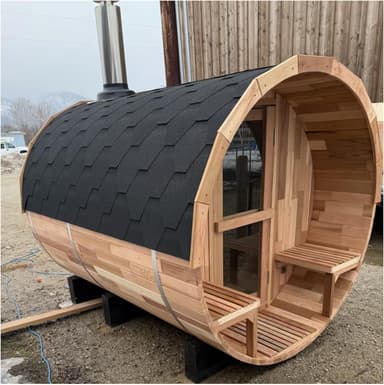
Smartmak 2-10 Person Canadian Hemlock Barrel Sauna
- Barrel shape genuinely improves heat distribution compared to box saunas
- Real red cedar and hemlock construction should last 15-plus years with care
- ETL-certified heater hits 195°F - legitimately hot for authentic steam sessions
The Science Behind Sauna Benefits - What the Research Actually Supports
The health claims surrounding sauna use range from solidly evidence-based to completely unsupported. A beginner buying partly on wellness grounds deserves an honest accounting of where the science is strong and where it is thin.
Cardiovascular Evidence
The strongest evidence comes from the Laukkanen 2023 cohort study, which followed 2,315 Finnish men from Eastern Finland over decades and found that men using sauna 4-7 times per week at 170-195°F for 15-20 minutes had a 50% lower fatal cardiovascular disease risk (hazard ratio 0.50, 95% CI 0.29-0.86) compared to once-weekly users. The mechanisms they identified include improved endothelial function and average systolic blood pressure reduction of 5 mmHg with regular use.
This is observational cohort data, not a randomized controlled trial. Finnish men who use sauna seven times per week are a specific cultural and demographic group, and confounding variables are real. But a hazard ratio of 0.50 is a large effect size that survives adjustment for multiple covariates, and the biological mechanisms - reduced arterial stiffness, improved vasodilation, lower resting heart rate - are supported by the broader exercise physiology literature.
For a beginner, the practical implication is frequency: once-a-week use produces smaller benefits than 3-4 sessions per week. The dose-response relationship in the Laukkanen data is clear and consistent across subgroups.
Heat Shock Proteins and Recovery
The Hussain and Cohen 2018 systematic review analyzed 13 studies covering 661 participants and found that regular dry sauna use reduced delayed-onset muscle soreness by measurable margins at 25-48 hours post-exercise (p<0.05). The mechanism is heat shock protein 70 (HSP70) upregulation, which was quantified in a separate study by Meatziotis et al. 2020: 30 minutes at 80°C (176°F) induced a four-fold increase in blood HSP70 levels (p<0.001, n=20), with peak effect at 24-48 hours post-exposure.
HSP70 acts as a molecular chaperone - it identifies proteins damaged by oxidative stress and either repairs or tags them for removal. For athletes and fitness-focused users, this translates to faster recovery between training sessions, not because sauna replaces sleep and nutrition, but because it activates a parallel repair mechanism. The effect is real, the magnitude is meaningful, and it is one of the more strong secondary findings in the sauna literature.
Contrast Therapy and Metabolic Effects
The Søberg et al. 2021 study examined what happens when you combine heat and cold deliberately. The protocol was 57°C sauna (134°F) for 20 minutes followed by a 14°C (57°F) cold shower for 3 minutes, repeated 11 times over 7 days in 21 participants. Brown adipose tissue (BAT) activity increased by 45% and adiponectin - a hormone associated with insulin sensitivity - increased by 70% (p<0.01).
The BAT activation finding is significant because brown fat is metabolically active tissue that burns calories to generate heat. Increasing BAT activity through repeated contrast exposure represents a genuine metabolic adaptation, not a transient effect. For beginners, this research supports building toward a contrast routine - not starting with it, but progressing to it after 4-6 weeks of basic sauna use.
What Infrared Barrels Specifically Support
Traditional Finnish data cannot be directly extrapolated to infrared barrel saunas, which operate at 120-140°F (49-60°C) versus 170-200°F for traditional. The Tei et al. 2016 Waon therapy study is the relevant comparison: low-temperature far-infrared sessions at 140°F for 15 minutes daily over 5 weeks improved ejection fraction by 23% in chronic heart failure patients (p<0.01, n=60), with the mechanism attributed to vasodilation and HSP induction.
The honest comparison is this: infrared barrels produce about half the sweat volume per session (0.5L vs. 1L for traditional), generate meaningful HSP response, and are genuinely easier for beginners and older users to tolerate. They do not replicate the full cardiovascular stress of a traditional Finnish session, which is both their limitation and their accessibility advantage. For anyone with a lower heat tolerance, recent cardiovascular history, or who wants to use the sauna for 45 minutes rather than 20, infrared is the correct starting point.
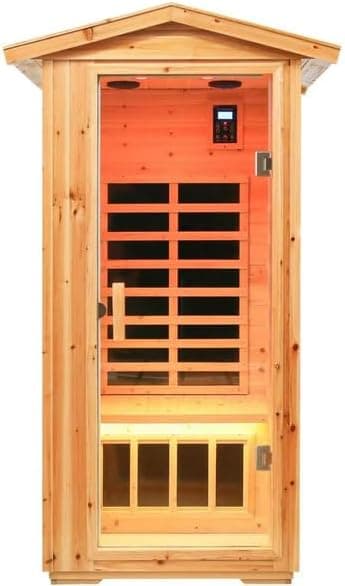
Customizable 1-6 Person Canadian Cedar Infrared Steam Barrel Sauna
- Genuine Canadian cedar delivers fragrance, durability, and natural corrosion resistance
- Barrel shape eliminates cold corner dead zones for even heat distribution
- Wide size range accommodates solo sessions or full family use comfortably
Sizing Your Barrel Sauna - The Numbers Behind the Decision
Getting the size wrong is the second most expensive beginner mistake after electrical. Too small and you have a claustrophobic space you use less than you planned. Too large and you spend $0.50-1.50 extra per session on unnecessary heat volume and wait longer for the temperature to reach protocol-ready levels.
The 2-Person Case
A 6x4 foot barrel sauna with a 4-person bench arrangement is the most popular entry point, and it is the right choice for most beginners. Single buyers or couples use it at capacity, and the 4.5-6kW heater reaches 180°F in 10-15 minutes. Total installed cost with electrical runs $7,000-12,000 depending on brand and heater choice.
Almost Heaven's Salem at $5,500 for the kit is the most referenced entry-level benchmark in the cedar category. The Thermory Yukon at $8,000 is the right answer if you want lower long-term maintenance. If you are focused specifically on 2-person options, our guide to best 2-person barrel saunas covers these models in direct comparison detail.
The 4-Person Reality
Most 4-person barrels are 7x5 feet. They need a 6kW heater at minimum and a 240V electrical circuit. The Dundalk Leisurecraft models at approximately $9,000 for the kit are the standard reference in this category - solid hemlock construction with wood stove compatibility, a design that is well-engineered for outdoor four-season use in North American climates.
The honest sizing note: most families calling themselves "4-person sauna users" actually use the sauna with 2 people most of the time and 3-4 people a few times per year. If that describes your household, the 2-person unit covers your real usage pattern at lower cost and faster heat-up time. Only buy the 4-person if you have consistent group use in mind.
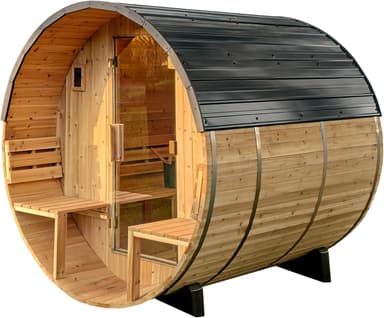
Backyard Discovery Paxton 2-4 Person Cedar Barrel Sauna
- 9kW heater reaches 170°F roughly 50% faster than budget competitors
- Barrel design eliminates dead zones with superior natural heat convection
- HDPE cradles and galvanized steel roof built for genuine year-round outdoor use
6-8 Person Units and When They Make Sense
At 8-10 feet in length and $12,000-25,000 installed, these units require 9-10.5kW heaters, a reinforced foundation, and serious advance planning. The SaunaLife EPIC Series at $22,000 and larger Thermory models represent the premium end. These make sense for committed wellness households, vacation properties, or buyers who entertain regularly and want sauna as a social experience.
The one counter-intuitive efficiency note: larger barrels are not proportionally more expensive to operate. A 9kW heater in a 1,200 cubic foot barrel still costs roughly $1.44/hour at 16 cents/kWh, and the thermal mass of the larger rock bed holds temperature more consistently once reached. The extra session cost is real but not dramatic.
For buyers specifically evaluating electric-heated models across all sizes, the best electric heater barrel saunas guide breaks down the heater specifications in detail.
Beginner Session Protocols - What the Research Supports Week by Week
Most beginners either over-correct by starting at 15-minute sessions at 195°F on day one, or under-correct by staying at 10-minute sessions at 160°F for months and wondering why they are not feeling a difference. The research supports a specific progression.
Week 1-2 - Building Heat Tolerance
Start at 160-170°F for 10-12 minutes, 2-3 times per week. Drink 16-24 oz of water before entering. This temperature range is sufficient to begin HSP upregulation - the Meatziotis 2020 data shows meaningful HSP70 response starting at 73°C (163°F) - without the cardiovascular stress that higher temperatures impose on an unacclimatized system.
Keep a thermometer visible. Your perceived temperature in a barrel sauna depends heavily on where you sit - lower bench positions run 15-20°F cooler than upper positions at the same air temperature reading. Beginners should start on the lower bench and move up as tolerance develops.
Exit the sauna if your heart rate exceeds 160 bpm, if you feel dizzy, or if you feel nauseous. These are not signs you are "pushing through" - they are physiological signals that the cardiovascular load has exceeded your current adaptation level.
Week 3-4 - Extending Duration
Move to 15-18 minute sessions at 170-180°F. At this stage most users are ready to begin experimenting with löyly - the Finnish practice of pouring water on the heated rocks to produce a steam burst. The standard amount is roughly 100ml (a third of a cup) every 5 minutes. The humidity spike from löyly - from roughly 10-15% baseline up to 40-60% momentarily - is perceived as a significant temperature increase because water vapor transfers heat to skin faster than dry air.
Hydration requirements increase at this stage. Target 24-32 oz of water pre-session and replace what you lose post-session. At 170°F you are losing approximately 0.5-1.0L of sweat per 20-minute session. Starting a session dehydrated by even 1% body weight measurably impairs cardiovascular function and increases dizziness risk.
Week 4-8 - Adding Contrast
Once you are consistently comfortable with 20-minute sessions at 175-185°F, the Søberg protocol becomes available to you. After your sauna session, take a 2-3 minute cold shower at 50-60°F, or use a cold plunge tub if you have one. Wait 5 minutes and re-enter for another 15-20 minute round. Three cycles of this sequence is the full protocol.
The metabolic and BAT activation effects in the Søberg 2021 data emerged after 7 days of consistent contrast practice - this is not a one-session result. The adaptation builds over weeks, not sessions.
Safety Boundaries That Do Not Move
Pregnancy is an absolute contraindication for traditional sauna use above 102°F core body temperature. Hyperthermia risk to the developing fetus is documented and the research here is not equivocal. Infrared at 120-130°F is in a gray zone - insufficient data exists to declare it safe during pregnancy. Consult an OB/GYN before any sauna use if pregnant.
For anyone with a history of myocardial infarction, wait at least 6 weeks post-event and get explicit medical clearance before beginning sauna use. Unstable angina, uncontrolled hypertension (BP above 160/100), and certain neurological conditions including epilepsy and MS require medical consultation before starting.
Children over 12 can use barrel saunas at temperatures below 160°F for sessions under 15 minutes. Children under 12 should not use them.
Common Beginner Mistakes and How to Avoid Them
These are the patterns I see repeatedly across buyer reviews, forum posts, and direct reader questions. Each one is avoidable with advance knowledge.
Buying the Wrong Size for Actual Use
The most common mistake is buying a 4-6 person barrel sauna for a household where two people will use it. The logic seems sound: more space equals more comfort. In practice, a larger barrel takes longer to heat, costs more per session, and provides no additional benefit for two people who would be perfectly comfortable in a 2-person unit. The $3,000-5,000 price difference between a 2-person and 4-person kit at the same quality level would pay for 3-5 years of annual maintenance.
Choosing Wood Based on Appearance Alone
Cedar looks and smells better than hemlock. That is a real sensory preference with no functional weight in purchase decisions. The material decision should be based on your climate's moisture level and your willingness to maintain the wood annually. In dry climates (Mountain West, parts of the Southwest), hemlock performs adequately with annual sealing. In high-humidity climates, cedar or Thermowood is the correct choice regardless of the price premium.
Skipping the Electrical Budget
I have seen this specific mistake destroy otherwise reasonable purchases: a buyer estimates $7,000 for the sauna kit and $500 for a handyman to "hook it up," then discovers they need a new 240V/40A circuit run 80 feet from their panel, a GFCI spa panel, and a permit inspection. Actual electrical cost: $2,800. Total project cost: $9,800 instead of $7,500 - and if they had known that in advance, they might have chosen a different kit or planned differently.
Get an electrical quote before buying the sauna kit. Call a licensed electrician, give them your panel location and intended sauna placement, and get a written estimate. This 30-minute phone call saves significant financial surprise.
Ventilation Neglect
Barrel saunas need two vents: an intake near the floor on the heater wall and an exhaust near the ceiling on the opposite wall. Adjustable wooden vent covers allow you to control air circulation. Without adequate ventilation, wood stove installations present CO risk, and electric installations produce a stale, oxygen-depleted environment that causes headaches during longer sessions.
The 20% rate of wood stove ventilation complaints in aggregated owner reviews is almost entirely attributable to one of two causes: vents that are too small (minimum 4 inches diameter for a stove-equipped barrel) or vents installed in the wrong positions (intake and exhaust on the same wall cancel each other's effectiveness).
Treating the First Heat Cycle as a Normal Session
The first time you fire up a new barrel sauna, burn it at full temperature for 60-90 minutes with no one inside. This burns off manufacturing residues, allows the staves to expand and settle, and identifies any stave gaps that need banding adjustment before you are sitting inside. A few staves may gap slightly during this process - tighten the banding per the instructions, and the gaps will close on subsequent uses. Do not skip this break-in cycle.
Maintenance, Longevity, and What Ownership Actually Costs
A barrel sauna is a 10-20 year investment if maintained correctly, a 5-7 year investment if neglected. The maintenance costs are low in absolute terms but require consistency.
Annual Maintenance Checklist
Cedar and hemlock barrels need an exterior cedar oil application once per year, typically in spring after the last freeze. Cost: $40-80 for the oil, 2-3 hours of labor. This treatment replenishes the natural oils that UV exposure and weathering strip from the wood over the preceding year and is the primary determinant of long-term exterior appearance.
Interior bench surfaces should be cleaned with a mild soap solution (pH-neutral, no bleach) after every 10-15 sessions and left to dry completely before the next use. Bench wood does not require oiling - sauna-grade wood absorbs body oils naturally and develops a patina that improves over time.
Electric heater rocks need replacement every 1-3 years depending on how often you use löyly. Cracked or disintegrating rocks are a fire hazard and an efficiency problem - broken rocks have more surface area but less thermal mass, producing shorter, weaker steam bursts. Replacement rock sets run $50-80.
Wood stove owners add chimney sweeping ($150/year) and annual firebox inspection to this list. The creosote buildup rate in a properly operated sauna stove using kiln-dried hardwood is manageable with annual sweeping. Using wet or green wood accelerates creosote accumulation and creates a genuine chimney fire risk.
Steel Band Inspection
Inspect the stainless steel bands annually for surface rust, looseness, or deformation at the tightening bolts. Budget kits sometimes ship with galvanized steel bands rather than stainless - these show rust within 2-3 years in outdoor conditions. If your kit came with galvanized bands, plan to replace them with stainless at the 3-year mark. True stainless steel bands (316-grade) in a properly maintained installation should last the life of the sauna.
Long-Term Cost Modeling
Over a 10-year ownership period, a cedar barrel sauna with an electric heater has approximately these lifecycle costs (excluding the original purchase):
Annual cedar oil treatments: $600 (10 years at $60/year). Rock replacement: $200 (3-4 sets). Electrical maintenance (element replacement typically at year 7-8): $300-500 for a quality Harvia element. Total 10-year maintenance: roughly $1,100-1,300. That is approximately $110-130 per year, which is notably less than a spa or gym membership providing comparable access to heat therapy.
The environmental footnote: cedar sauna use with electric heat at the US grid average produces approximately 0.7kg CO2 per session hour. Wood-burning produces approximately 1.2kg CO2 per hour. Over a decade of 3-session-per-week use, the electric option produces roughly 550kg less CO2 than wood. For buyers with solar panels, the electric option becomes near-zero-carbon.
For buyers working within a tighter initial budget, the best budget barrel saunas guide covers what you can realistically expect at the $3,000-5,000 price point, including honest notes on which budget brands have delivered consistent quality and which have generated warping and hardware complaints.
Choosing Between Premium and Budget Brands - Honest Tiers
The barrel sauna market has genuine quality tiers, and the price differences between them reflect real engineering and material differences rather than marketing premiums alone.
Entry Level - $3,000-6,000
Units in this range from brands like Backyard Discovery, Real Relax, and generic OUTEXER models on Amazon are primarily manufactured in China using hemlock that is not kiln-dried to North American dimensional standards. Owner reviews across these brands aggregate around three consistent complaints: banding that rusts within 3 years, stave warping that creates gaps in the first winter if the wood was not acclimated before assembly, and heater elements that fail within 2 years from short-cycling due to undersized kW ratings.
These units are not uniformly bad - some buyers in dry climates with attentive maintenance habits get 5-7 good years from them. But they require more buyer knowledge and maintenance effort to achieve acceptable longevity, which is a demanding ask for a first-time owner.
Mid-Range - $6,000-14,000
This is where the market delivers the best value. Almost Heaven's cedar models, Dundalk Leisurecraft's hemlock-cedar hybrids, and Dynamic Saunas' infrared options all occupy this range. You get properly dried North American wood, adequate kW ratings for the stated capacity, and manufacturer support that functions when you need it.
Almost Heaven specifically stands out for US-based customer service and fast parts availability. Dundalk Leisurecraft's wood stove compatibility is the best-executed design in the category for buyers who want traditional wood heat without the engineering compromises of budget wood stove kits.
Premium - $15,000-35,000
SaunaLife, Thermory, and Clearlight/Sunlighten operate in a tier where the price premium delivers genuinely superior materials (Thermowood, 10.5kW Harvia or Finnleo heaters), smartphone control with precise preheat, and construction quality that removes virtually all of the maintenance friction of mid-range ownership.
The SaunaLife EPIC Series at $22,000 installed is the right answer for buyers who want to buy once and maintain minimally for 20 years. The Thermory Yukon at $8,000 is the most interesting value proposition in the premium segment because its Thermowood construction delivers 50-year wood stability at a price that overlaps with mid-range cedar models.
For an exhaustive look at all the brands and models I have reviewed, the sauna buying guides overview covers traditional Finnish box saunas, steam rooms, and infrared options alongside the barrel sauna category.
Key Takeaways
- ●
Barrel saunas heat faster than box saunas - the curved geometry eliminates cold corners and gets you to operating temperature in 10-15 minutes with an electric heater, versus 20-30 minutes for a comparable box-style unit.
- ●
Match your heater to your size before you buy anything else - units under 6x6 ft work well with electric (4-6kW, 240V/30A dedicated circuit); wood-burning stoves require a minimum 6x6 ft footprint plus chimney clearance. Getting this wrong means a $1,200-2,500 reinstallation cost.
- ●
The Laukkanen 2018 research supports starting at 2-3 sessions per week - not daily immersion. Cardiovascular adaptation builds over weeks, not sessions. Hussain and Cohen's 2018 systematic review across 13 studies and 661 participants confirms the safety profile for healthy adults is strong when protocols are followed correctly.
- ●
Cedar is not automatically worth the premium - Thermowood (heat-treated spruce/pine) delivers superior dimensional stability at ±0.5% shrinkage variance and a documented 50-year lifespan. At $10-15 per board foot versus $8-12 for Western Red Cedar, the delta is small for the performance gain.
- ●
Capacity labels are marketing, not reality - a "6-person" barrel sauna comfortably seats 3-4 people for a full session at 185°F. Budget accordingly or you will be resenting your purchase within six months.
- ●
The total installed cost is always higher than the kit price - add 10-15% for shipping, $1,000-3,000 for professional assembly, and $800-4,000 for electrical work depending on panel condition and run length. A $7,000 kit routinely becomes a $12,000 installed barrel sauna.
- ●
Temperature discipline matters more than session length - starting at 150-160°F (65-71°C) for 10-12 minutes per session is the right beginner protocol. Chasing 195°F on session one is how people get dizzy, discouraged, and abandon a $15,000 purchase.
Who This Is For, Who Should Skip It
This Is the Right Purchase For You If -
You want an outdoor sauna that installs without a building permit in most US municipalities (check local codes - most jurisdictions allow freestanding outdoor structures under 200 sq ft without permits), delivers genuine Finnish-style heat, and works as a long-term backyard fixture rather than a novelty.
Barrel saunas make the most sense for homeowners with a level outdoor pad or gravel space, access to a 240V circuit within reasonable run distance, and a realistic budget of $10,000-18,000 all-in for a 4-person unit. If you are specifically targeting cardiovascular health benefits consistent with the Laukkanen cohort data, a traditional electric or wood-fired barrel sauna hitting 170-185°F is the right tool.
You are also a strong candidate if you want the lowest-maintenance outdoor sauna category. Cedar and Thermowood barrel kits require virtually no annual treatment beyond keeping the cradle and stave bands dry and clear of debris.
You Should Skip a Barrel Sauna If -
You have cardiovascular disease, uncontrolled hypertension, are pregnant, or take medications that impair thermoregulation - consult your physician before any sauna use, not just barrel saunas. The Hussain and Cohen 2018 review specifically notes these as contraindications to unsupervised sauna use.
Budget under $8,000 all-in is a red flag for a 4-person unit. At that number you are looking at hemlock kits with budget heater packages that will frustrate you within two years through maintenance issues and inconsistent heat. A 2-person unit at $7,000-9,000 all-in is the better answer at that price point.
Skip a barrel sauna if your available outdoor space is under 8x10 ft - you need clearance for the cradle footprint, door swing, and at minimum 18 inches of clearance on all sides for air circulation and maintenance access. Trying to squeeze a barrel into a tight deck corner accelerates wood deterioration and creates a fire clearance issue with wood-burning models.
What to Read Next
Best Budget Barrel Saunas - My hands-on breakdown of every barrel sauna kit under $8,000, including which hemlock models are worth the trade-off and which ones I would walk away from entirely.
Best 2-Person Barrel Saunas - If you are buying for personal use or a couple, a compact 2-person unit delivers a faster preheat, lower electrical cost, and a dramatically simpler installation. This guide covers the top models at every price tier.
Best Electric Heater Barrel Saunas - Electric heaters account for roughly 70% of residential barrel sauna installations in the US. This guide covers heater sizing, brand comparisons (Harvia, Finnleo, Huum), and the models that pair best with barrel geometry.
All Sauna Guides - The full UseSauna.com library covering traditional Finnish box saunas, infrared panels, steam rooms, and cold plunge pairing protocols.
Frequently Asked Questions
How long should a beginner stay in a barrel sauna?
Start at 10-12 minutes per session at 150-160°F (65-71°C). That is not a conservative suggestion born of excessive caution - it is the protocol consistent with the Laukkanen 2018 research recommendation to build frequency before duration. Your body needs 4-6 sessions to acclimate to the cardiovascular load of heat exposure before you extend to 15-20 minutes. Exit the sauna if you feel dizzy, nauseated, or your heart rate feels irregular. After 3-4 weeks of regular sessions, a comfortable ceiling is 15-20 minutes at 170-185°F for healthy adults.
How often should a beginner use a barrel sauna?
The Laukkanen 2018 study recommends 2-3 sessions per week as the starting point for cardiovascular benefits - not daily use. The 50% reduction in fatal cardiovascular disease risk in that cohort was associated with 4-7 sessions per week over years of consistent use, but that frequency is earned through gradual progression, not started from week one. For the first month, 2 sessions per week with full rest days between them is the right protocol. Your recovery capacity, not your enthusiasm, determines how quickly you progress.
What temperature should a beginner set their barrel sauna to?
150-165°F (65-74°C) for the first several sessions. This is meaningfully different from the 170-195°F range you will read about in Finnish sauna culture, and that difference matters. At 150°F you are still producing heat shock proteins and getting cardiovascular stimulus - the Hussain and Cohen 2018 meta-analysis found measurable HSP70 upregulation starting at 73°C (163°F) with 30-minute sessions. Once you have logged 6-8 sessions without discomfort, bring the temperature up in 5°F increments until you find your working range.
Do barrel saunas work in cold climates?
Yes - and they work particularly well in cold climates due to their insulating geometry. The curved stave construction minimizes surface area relative to interior volume, which reduces heat loss. A cedar or Thermowood barrel sauna in a Minnesota winter requires a longer initial preheat (add 5-10 minutes at -10°F ambient) but holds temperature efficiently once at operating temp. The practical requirement is a covered entry path or change area - transitioning from a 185°F interior to a -20°F exterior without a buffer space is unpleasant and removes some of the physiological benefit of a gradual cooldown.
What is the best wood for a beginner barrel sauna?
Western Red Cedar is the traditional answer and still the right one for most buyers - it stays cooler to the touch than hemlock at equivalent temperatures, resists rot without chemical treatment, and is available from virtually every barrel sauna manufacturer. If your budget allows Thermowood (heat-treated spruce or pine), the dimensional stability improvement - documented at ±0.5% shrinkage variance versus 2-3% for untreated wood - means fewer maintenance headaches over 10-20 years. Hemlock is the budget option; it works, but it requires more diligent maintenance to prevent surface checking and weathering.
How much does it cost to run a barrel sauna per month?
At the US residential average of 16 cents per kWh (2025 EIA data), a 6kW electric heater running 1.5 hours per session (including preheat) costs roughly $1.44 per session. At 3 sessions per week that is approximately $17-18 per month in electricity. A larger 9kW unit at the same frequency runs $26-27 per month. Wood-fired models cost roughly $3-8 per session in cordwood depending on your region - higher upfront fuel cost per session, but no electrical infrastructure requirement.
Can I install a barrel sauna myself?
Most barrel sauna kits are designed for DIY assembly by two people over 1-2 days. The stave assembly, band installation, and bench fitting require basic carpentry skills but no specialized tools beyond what most homeowners have. What you should not DIY: the electrical work. A 240V/30-50A dedicated outdoor circuit requires a licensed electrician in virtually every US jurisdiction, and attempting it without permits creates homeowner's insurance liability. Budget $800-2,000 for electrical installation. Foundation work - leveling and compacting a 4-6 inch gravel pad - is straightforward DIY.
Do barrel saunas require building permits?
In most US municipalities, a freestanding outdoor accessory structure under 200 sq ft does not require a building permit. Most 2-6 person barrel saunas fall within that threshold. The electrical work almost always requires a separate electrical permit regardless of structure size. Verify with your local building department before purchase - permit requirements vary significantly by municipality and HOA rules can apply independent of municipal code. In California, setback requirements from property lines and structures are stricter than average and worth checking specifically.
Sources and References
- Cardiovascular and Other Health Benefits of Sauna Bathing
Laukkanen JA, et al.. Mayo Clinic Proceedings, 2018. - Clinical Effects of Regular Dry Sauna Bathing
Hussain J, Cohen M. Evidence-Based Complementary Medicine, 2018.
Frequently Asked Questions
The Almost Heaven Salem 2-Person Barrel Sauna stands out as the best for beginners due to its budget-friendly price, compact size ideal for small spaces, and simple DIY assembly with reliable heat distribution from a 6kW heater. It uses durable wood for outdoor use and offers an accessible entry to barrel sauna benefits like even heating without overwhelming complexity. Larger options like the SaunaLife E6 suit growing needs, but start small to build experience.
Related Guides
Medical Disclaimer - This article is for informational purposes only and does not constitute medical advice. Consult a healthcare professional before beginning any sauna routine.