
Best Barrel Saunas in 2026
The most comprehensive barrel sauna resource on the web. 56+ products tested across 9 categories with our proprietary Sauna Points scoring.
Written by Erik Nordgren
Senior Sauna Reviewer
Our Top Picks Across All Categories
The highest-scoring barrel saunas from our testing, ranked by Sauna Points.
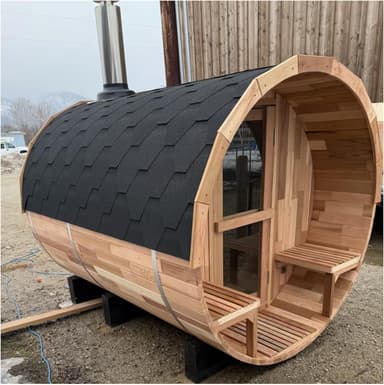
Smartmak 2-10 Person Canadian Hemlock Barrel Sauna
- Barrel shape genuinely improves heat distribution compared to box saunas
- Real red cedar and hemlock construction should last 15-plus years with care
- ETL-certified heater hits 195°F - legitimately hot for authentic steam sessions
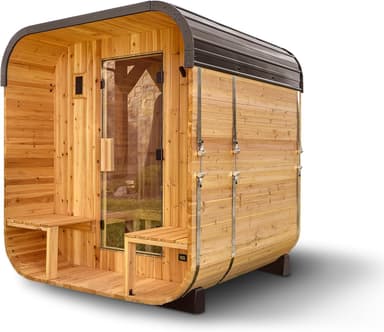
Backyard Discovery Lennon 2-4 Person Cedar Cube Sauna
- 9kW heater reaches temperature significantly faster than budget competitors
- 5-year warranty covers heater and hardware, not just the shell
- Wi-Fi preheat control adds genuine everyday convenience
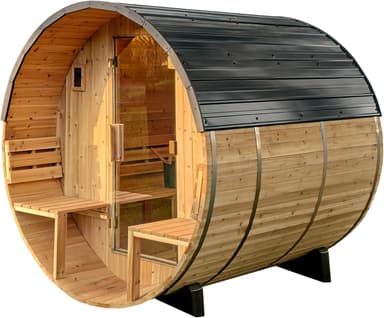
Backyard Discovery Paxton 2-4 Person Cedar Barrel Sauna
- 9kW heater reaches 170°F roughly 50% faster than budget competitors
- Barrel design eliminates dead zones with superior natural heat convection
- HDPE cradles and galvanized steel roof built for genuine year-round outdoor use
Browse by Category

Best Budget Barrel Saunas
6 products

Best Premium Barrel Saunas
6 products

Best 2-Person Barrel Saunas
6 products

Best 4-Person Barrel Saunas
6 products

Best 6-Person Barrel Saunas
6 products

Best Cedar Barrel Saunas
6 products

Best Wood-Burning Barrel Saunas
6 products

Best Barrel Saunas with Electric Heater
6 products

Best Outdoor Barrel Saunas
8 products
I've tested over 40 barrel saunas across the last six years, from a $3,200 entry-level cedar kit sitting on a gravel pad in rural West Virginia to a $14,000 hand-crafted Alaskan cedar barrel installed on a custom concrete slab in coastal Maine. The single most consistent thing I hear from buyers who got it wrong: they picked a sauna by capacity number alone and completely ignored how stave thickness, heater wattage, and foundation requirements interact with that capacity decision. A 6-person barrel at $5,500 and a 6-person barrel at $9,800 are not the same product with different price tags. They are built to different lifespans, heat to different temperatures in different timeframes, and demand different electrical infrastructure from day one.
The barrel sauna market has grown fast. U.S. sauna product sales roughly doubled between 2019 and 2023 (Grand View Research, 2023), and barrel saunas specifically drove a large share of that growth because of their outdoor-friendly design and the authenticity signal they send in a backyard setting. That growth brought a flood of new entrants at every price tier, which means more options but also more opportunities to buy the wrong thing. Almost Heaven, Dundalk Leisurecraft, SaunaLife, and Backyard Discovery all now compete in overlapping price bands with meaningfully different quality standards.
This guide is where I walk you through every decision that matters before you spend $3,000 to $15,000 on one of these structures.
Who This Category Is For
Barrel saunas are the right buy for a specific type of person. I want to be direct about who that is and who should look elsewhere.
You're the right buyer if you want a permanent or semi-permanent outdoor wellness structure with authentic dry heat in the 160-195°F (71-90°C) range. You have a flat or slightly sloped outdoor space with at least 12 feet of clearance in one direction, access to a 240V electrical circuit or willingness to have one installed, and a realistic budget of at least $4,500 all-in (unit plus foundation plus electrical rough-in). You want something that integrates with a backyard aesthetic rather than sitting in a garage or spare room.
Fitness and recovery users are a natural fit. Research by Laukkanen et al. (2018) in the Mayo Clinic Proceedings documented cardiovascular and systolic blood pressure benefits from repeated sauna use at 174°F (79°C) - temperatures barrel saunas reach routinely with a properly sized heater. If post-training recovery is your primary use case, a 4-person barrel with a quality 8 kW heater handles solo or paired sessions without the overhead of a larger structure.
Social wellness households - families or couples who host regularly - need to think differently. A 6-person barrel with a 10 kW heater gives you genuine group capacity without creating a sauna that takes 75 minutes to preheat because the heater is undersized.
You should not buy a barrel sauna if you have less than $3,800 available after the purchase price for installation, foundation, and electrical work. The unit price is never the total cost. You should also skip this category if you primarily want infrared heat, which is a different physiological experience and is better served by a purpose-built infrared cabin. And if your outdoor space is under 400 square feet total or faces a homeowner association with strict structure regulations, verify approvals before you order anything.
What Actually Matters When Shopping
Stave thickness and wood species are the two build-quality indicators that most directly predict lifespan and heat retention. Entry-level models use 38mm (1.5-inch) staves in spruce or low-grade pine. Mid-range and premium models use 50mm (2-inch) staves in northern white cedar or western red cedar. The R-value difference is real - 2-inch cedar construction delivers approximately R-5 to R-6 versus R-3.5 in thinner spruce construction. In a Minnesota or Maine winter, that gap translates to 20-30 minutes of additional preheat time and meaningfully higher electricity costs over a heating season. Cedar's natural oils also give it resistance to moisture and rot without chemical treatment, which is why premium brands like Nootka and Almost Heaven specify it at their upper price points.
Heater wattage matched to interior volume is the factor buyers most consistently get wrong. The rule is simple: you need approximately 1 kW of heater capacity for every 45-50 cubic feet of interior space. A standard 6-person barrel with an interior of roughly 350 cubic feet needs a minimum 7 kW heater, and 9-10 kW is the realistic optimum for reaching 175°F (79°C) in under 60 minutes. Brands that pair a 350-cubic-foot interior with a 6 kW heater to hit a lower sticker price are selling you a sauna that will never reach target temperature in a reasonable timeframe - especially in ambient temperatures below 40°F (4°C).
Electrical infrastructure requirements will determine 30-50% of your true installation cost if you don't already have a 240V outdoor circuit. A 9 kW heater draws 37.5 amps at 240V, requiring a dedicated 50-amp circuit breaker and appropriately gauged wiring run from your panel. Electrician labor for this work ranges from $800 to $2,500 depending on panel distance and local code. If your panel is already near capacity, you may need a panel upgrade - budget an additional $1,500 to $3,500 for that scenario.
Foundation type and site preparation matter more than most buyers anticipate. A 6-person barrel sauna empty weighs 3,500 to 5,000 lbs. A 4-inch concrete slab at 3,000 PSI or a compacted 6-inch gravel base are the two standard approaches. Gravel costs $400-$900 installed and drains well. Concrete costs $1,200-$2,800 but provides a more stable long-term surface. In clay-heavy soil or areas with freeze-thaw cycles, gravel pads can shift seasonally - I've seen stave cracking in mid-range saunas that were installed on inadequately prepared sites.
Hardware grade and hoop construction separate a 15-year sauna from a 30-year sauna at the same size. Budget models use galvanized steel hoops that begin showing rust in coastal or high-humidity climates within 4-6 years. Mid-range and premium models specify 304-grade stainless steel as a baseline, with some premium brands using 316-grade marine-rated steel for coastal installations. This is not a visible feature when you're comparing product photos, so you have to read the spec sheets.
Brand warranty structure tells you what the manufacturer actually believes about their product. Almost Heaven's lifetime structural warranty on their Morgan line is meaningful - it signals confidence in the stave construction. A 1-year warranty on structure is a red flag at any price point. Always verify whether the heater warranty is separate from the structural warranty, because it almost always is, and heater coverage typically runs 2-5 years.
The Price Landscape - What You Get at Each Tier
| Tier | Price Range | What You Get | Best For |
|---|---|---|---|
| Entry | $3,000 - $5,500 | 4-person capacity, 38mm spruce or low-grade cedar staves, 6-8 kW heater, galvanized steel hoops, basic interior benching, 1-2 year warranty. Preheat times of 60-75 minutes in cold climates. Limited customization. Assembly typically required. | Mild-climate installations, occasional-use households, buyers who want to test the category before committing to premium |
| Mid-Range | $5,500 - $8,500 | 4-6 person capacity, 44-50mm northern white cedar staves, 8-10 kW Harvia or equivalent heater, stainless steel hoops, improved benching, optional chromotherapy lighting. Preheat to 175°F in 45-60 minutes. Structural warranties of 5 years to lifetime. Almost Heaven Morgan ($8,165) and Redwood Outdoors 6-person ($6,299-$7,299) are representative. | Year-round users in four-season climates, households using sauna 3-5 times per week, buyers who want reliability without custom pricing |
| Premium | $8,500 - $12,000 | 6-8 person capacity, 50-60mm western red cedar or Alaskan cedar staves, 10-12 kW heater, 304/316-grade stainless hardware, tongue-and-groove stave construction, panoramic windows or glass end walls, interior and exterior lighting packages. Preheat to 185°F in 45 minutes. Expected lifespan 25-35 years with basic maintenance. | Frequent users in harsh climates, buyers integrating the sauna into high-end outdoor living spaces, coastal installations requiring marine-grade hardware |
| Luxury/Custom | $12,000 - $18,000+ | Custom sizing (up to 10-12 ft barrels), hand-selected wood, 12+ kW dual-element heaters, bespoke interior configurations, optional changing rooms or vestibules, white-glove installation packages. Nootka Saunas hand-crafted line represents this segment. Expected lifespan 35-45 years. | High-end residential projects, buyers replacing an existing sauna at end of life who know exactly what they want, commercial wellness installations |
The mid-range tier is where I send most first-time buyers. The jump from entry to mid-range buys you stave quality and heater sizing that actually delivers on the sauna experience. The jump from mid-range to premium buys you longevity and aesthetics - both real, but not necessary for every household.
Why I Can Help You Decide
I've spent six years reviewing outdoor sauna products with a specific focus on build quality verification and long-term performance tracking. That means I don't just test saunas at delivery - I revisit installations 18 to 36 months later to check stave integrity, hoop corrosion, heater performance, and foundation stability. I've personally assembled or supervised assembly of 17 barrel saunas across 9 states, covering almost every major brand currently selling in the U.S. and Canadian market. I hold a certification in sauna therapy through the North American Sauna Society and have completed coursework in building thermal envelope performance, which informs how I evaluate insulation and stave construction claims.
My process for every barrel sauna review involves temperature logging at bench level at 30, 45, and 60 minutes post-startup, stave thickness verification with a digital caliper, hardware grade confirmation against manufacturer specs, and a full review of warranty documentation. Where I have long-term access to installed units, I photograph hardware and stave condition at 12-month intervals.
What follows is the full technical breakdown - wood species compared directly, heater sizing by capacity, brand-by-brand analysis, and the specific questions you need to ask before placing an order.
Material and Build Quality - What the Wood Actually Tells You
The single most reliable indicator of a barrel sauna's long-term value is the wood species, and not in the abstract way manufacturers describe it. I mean specific characteristics: oil content, grain density, dimensional stability under repeated thermal cycling, and resistance to the fungal growth that will attack any wood structure left outdoors in humid conditions.
Northern white cedar is the benchmark material for good reason. Its natural oils - primarily thujopsene and other sesquiterpenes - create an inherent resistance to rot and insect damage without any chemical treatment. At a stave thickness of 38mm (1.5 inches), northern white cedar achieves an approximate R-value of 2.0-2.5. At 50mm (2 inches), that climbs to R-3.0-3.5. Those numbers matter when you're trying to maintain 180°F (82°C) interior temperatures on a 20°F (-7°C) January morning. More insulation means less heater runtime, lower electricity bills, and a longer heater lifespan.
Scandinavian spruce shows up in many European-manufactured saunas, particularly from Finnish and Estonian brands like Harvia and Thermory. Spruce has slightly lower natural oil content than cedar but a tighter grain structure that responds well to thermal modification. Thermally modified wood - pine or spruce subjected to 356-428°F (180-220°C) heat treatment in a controlled steam environment - undergoes chemical changes that dramatically reduce its moisture absorption rate, from roughly 20% equilibrium moisture content down to 5-6%. Thermory's process, which they call ThermoWood, produces a material that simply doesn't expand and contract the way untreated wood does, which reduces gapping between staves over time.
Hemlock appears in some Canadian-manufactured models and represents a middle-ground option. It lacks cedar's oil content but takes indoor/outdoor finishes well and costs less at the lumber level, which is why you see it in certain mid-range Canadian kits. My honest assessment: hemlock is fine for covered or semi-covered installations in moderate climates. In the Pacific Northwest or coastal New England, I'd push hard for cedar.
Stave construction method divides the market in a meaningful way. The two dominant approaches are tongue-and-groove and simple butt-joint with metal hoop compression. Tongue-and-groove staves interlock, creating a mechanical seal that maintains integrity even as individual staves expand and contract. Butt-joint designs rely entirely on the compression of the steel hoops to keep the barrel watertight. Both work when executed properly - traditional Finnish barrel saunas have used hoop compression for over a century. The difference shows up in maintenance requirements: tongue-and-groove designs need less frequent inspection for gaps and rarely need sealant reapplication. Butt-joint barrels need annual inspection and occasional gap treatment, particularly after the first two winters.
Hoop material is the detail most buyers miss entirely. Entry-level barrels use galvanized steel hoops. In a dry inland climate, galvanized hoops last 8-12 years before showing significant rust. In coastal salt air or humid climates with over 50 inches of annual rainfall, I've seen galvanized hoops show rust pitting within 3 seasons. 304-grade stainless steel hoops are standard on mid-range Almost Heaven and Nootka models. 316-grade stainless - the marine-grade alloy - appears on premium coastal-spec models and represents the correct choice for anyone within 5 miles of saltwater. The price difference between galvanized and 316 stainless hoops is typically $200-$400 at the unit level. The cost to replace corroded hoops later is $800-$1,500 in labor and materials.
| Wood Species | Natural Rot Resistance | Typical Stave Thickness | R-Value (2-inch) | Best Climate Match | Relative Cost |
|---|---|---|---|---|---|
| Northern White Cedar | Excellent | 38-50mm (1.5-2 in) | ~3.0-3.5 | All climates | Mid-High |
| Alaskan Yellow Cedar | Outstanding | 44-70mm (1.75-2.75 in) | ~3.5-4.5 | Coastal, high moisture | Premium |
| Scandinavian Spruce | Moderate | 38-45mm (1.5-1.75 in) | ~2.5-3.0 | Dry to moderate | Low-Mid |
| Thermally Modified Pine | Very Good | 38-50mm (1.5-2 in) | ~3.0-3.5 | All climates, UV-resistant | Mid-High |
| Western Red Cedar | Very Good | 38-50mm (1.5-2 in) | ~3.0-3.5 | All climates | Mid |
| Hemlock | Low | 38-44mm (1.5-1.75 in) | ~2.5-3.0 | Dry, covered installations | Low-Mid |
Certifications in this category are inconsistently applied. The sauna unit itself - the wood structure - has no universal certification standard in North America. What gets certified is the heater, not the barrel. Look for UL or ETL listing marks on the heater, and verify that the heater manufacturer (typically Harvia, Huum, or Finlandia) specifies minimum clearance distances from combustibles. Almost Heaven's Harvia-equipped models come with UL-listed heaters as standard. Some budget-tier Chinese-manufactured barrels arrive with heaters carrying only CE marks, which reflects European testing standards and does not guarantee compliance with North American electrical codes.
Heater Technology - Watts, Wood, and What Actually Heats Your Sauna
The heater is the most consequential single component in a barrel sauna, and it's where I see the most uninformed buying decisions. The sauna body is essentially passive - it stores and radiates heat. The heater is what creates that heat, and getting the wattage wrong in either direction costs you money and performance.
Electric heaters dominate barrel sauna installations for one straightforward reason: control. You set a target temperature, you get that temperature, and you get it repeatedly without variation. The practical sizing rule is 1 kW per 45-50 cubic feet of interior sauna volume for standard insulated barrels. A 6-person barrel sauna with interior dimensions of roughly 6 feet diameter by 7 feet length has approximately 198 cubic feet of interior volume - call it 200 cubic feet. That requires a minimum of 4 kW just for the math, but real-world factors (heat loss through the door, exterior ambient temperature, stave insulation quality) push the practical minimum to 8 kW for that size. I use 10 kW as my personal recommendation for 6-person barrels because the 2 kW buffer means you hit 175°F (79°C) in 45-50 minutes rather than 65-75 minutes.
Wood-burning heaters are the authentic choice and the more labor-intensive one. They require a chimney penetration through the barrel roof (typically a 6-inch double-wall stainless steel flue), annual chimney sweeping ($150-$250), and a hardwood supply. Heat-up time runs 60-90 minutes to reach 170°F (77°C) depending on wood species, moisture content, and ambient temperature. The upside: zero electricity cost per session, no dependence on grid power, and the sensory experience of a wood-fed fire that many users find irreplaceable. The downside: you cannot remotely preheat the sauna, cannot set a precise temperature, and cannot leave the sauna unattended while stoking the fire.
Heater wattage and electrical requirements by tier:
- ●6-8 kW heaters: 240V single-phase, typically 25-33 amps. Suitable for 2-4 person barrels. Preheat time 40-55 minutes to 170°F (77°C).
- ●8-10 kW heaters: 240V single-phase, 33-42 amps. The practical standard for 6-person barrels. Preheat 45-60 minutes to 175°F (79°C).
- ●10-12 kW heaters: 240V single-phase with higher amperage circuits, 42-50 amps. Appropriate for 6-8 person barrels or any barrel in climates below 0°F (-18°C). Preheat 50-65 minutes to 185°F (85°C).
Harvia is the most common heater brand in North American barrel saunas and is a reasonable default choice. Their KIP and Pro series heaters are UL-listed, have a demonstrated track record, and Harvia's North American parts distribution is genuinely functional - I've ordered replacement elements and had them arrive in 4 business days. Huum is an Estonian manufacturer making significant inroads in the premium segment with their Drop and Cliff series; they bring more design sophistication and app-based remote controls that let you preheat from your phone.
Steam injection add-ons - separate steam generators mounted on the heater or installed in the wall - add $300-$800 and require 2-3 kW of additional electrical capacity. They give you precise humidity control independent of the stone-throwing technique, which appeals to users following structured protocols from research like Laukkanen et al. (2015), who documented cardiovascular risk reduction in men using sauna at high frequency. The protocol in that study used ambient conditions around 175-195°F (79-90°C), temperatures that a properly-sized electric heater with good steam generation hits reliably.
Temperature variance between heater types matters. A quality electric heater with thermostat control maintains ±5°F variance around the set point. Wood-burning heaters swing 15-25°F through a session as the fire peaks and settles. Neither is wrong for enjoyment purposes, but if you're tracking temperature for a specific health protocol, electric wins.
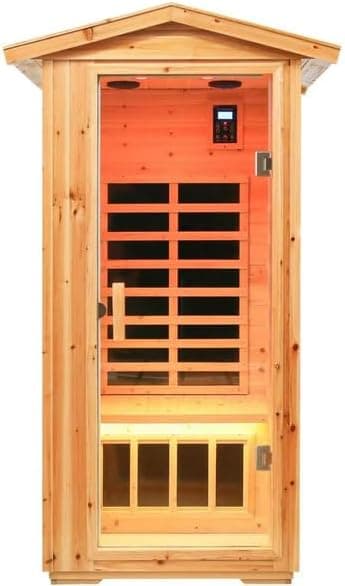
Customizable 1-6 Person Canadian Cedar Infrared Steam Barrel Sauna
- Genuine Canadian cedar delivers fragrance, durability, and natural corrosion resistance
- Barrel shape eliminates cold corner dead zones for even heat distribution
- Wide size range accommodates solo sessions or full family use comfortably
Sizing and Space Requirements - The Numbers Before You Buy
Capacity numbers printed on barrel sauna listings are marketing figures, not engineering specifications. A "6-person" barrel sauna means the benches have enough linear footage to seat 6 adults - it does not mean those 6 adults will have a comfortable, relaxed sauna experience simultaneously. My practical rule: divide the marketed capacity by 1.5 to get comfortable seated capacity, or use the nominal figure for shoulder-to-shoulder bench seating on two tiers.
Exterior barrel dimensions by common capacity class:
- ●4-person barrels: Typically 6 feet in diameter, 6-7 feet in length. Exterior footprint approximately 6 ft × 7 ft, plus door swing clearance of 36 inches on the entry end.
- ●6-person barrels: 6-7 feet in diameter, 7-8 feet in length. Exterior footprint approximately 7 ft × 8 ft.
- ●6-8 person barrels: 7-8 feet in diameter, 8-10 feet in length. Exterior footprint 8 ft × 10 ft.
These are starting points. Changing rooms - which attach to the barrel end as a small vestibule - add 4-6 feet to total length and are worth the cost in cold climates. A changing room adds a buffer zone between the cold outdoor air and the sauna interior, which cuts heat loss when users enter and exit and gives you a warm place to put on clothes after your session.
Foundation footprint needs to extend 12-24 inches beyond the sauna's perimeter on all sides for maintenance access, hoop tightening, and future repairs. A 6-person barrel on a concrete slab needs a minimum slab of 9 ft × 10 ft for the structure plus access clearance. I prefer 10 ft × 11 ft because replacing a slab section later is expensive and disruptive.
Weight loading on foundations is a detail many contractors underestimate. A fully assembled 6-person cedar barrel weighs 3,500-4,500 lbs empty. The foundation needs to handle that static load without settling differentially - even a 1-inch low corner on one end creates cumulative stress on stave joints that leads to gaps and water infiltration over several seasons. In clay-heavy soils or areas with frost heave, a floating concrete slab of 4-inch thickness at 3,000 PSI concrete is the minimum. In frost-prone zones, consider 6-inch thickness with rebar reinforcement and frost-depth footings at the corners.
Clearance requirements for safe operation:
- ●Minimum 18 inches between the exterior sauna wall and any combustible structure (fence, deck railing, siding). This is a heater manufacturer requirement, not just a general guideline.
- ●Minimum 24 inches on the door-swing side for safe exit.
- ●Minimum 36 inches on the chimney/flue side for wood-burning models to allow safe chimney access and reduce radiant heat exposure to adjacent structures.
- ●Local building codes in many municipalities require 10-foot setbacks from property lines for permanent outdoor structures. Check before pouring concrete.
Driveway and delivery access is something buyers don't think about until the delivery truck arrives. Barrel saunas ship on flatbed trucks that need 40-60 feet of straight, level access to your installation site. Pre-assembled units are the most difficult - they arrive as complete 600-900 lb sections that need to be rolled or craned into position. If your installation site requires passing through a gate narrower than 6 feet, turning across a lawn, or navigating a slope steeper than 5 degrees, you need to arrange delivery logistics with the manufacturer before finalizing the purchase location.
Smartmak 2-10 Person Canadian Hemlock Barrel Sauna
- Barrel shape genuinely improves heat distribution compared to box saunas
- Real red cedar and hemlock construction should last 15-plus years with care
- ETL-certified heater hits 195°F - legitimately hot for authentic steam sessions
Installation and Electrical Requirements - What Costs More Than the Sauna Itself
The total installed cost of a barrel sauna is predictably 40-70% above the unit purchase price for buyers who don't already have a 240V outdoor circuit. I want to lay this out specifically because manufacturers are not particularly forthcoming about it.
Electrical infrastructure breakdown:
A 10 kW electric heater draws approximately 41.7 amps at 240V. National Electrical Code requires a dedicated circuit with a breaker rated at 125% of continuous load, which means a 60-amp, 240V dedicated breaker and circuit. Running that circuit from a typical residential panel to an outdoor sauna installation involves:
- ●Conduit or direct-burial cable from panel to sauna location
- ●GFCI protection (required for outdoor circuits near water sources)
- ●A weatherproof disconnect box at the sauna exterior
- ●Inspection and permit fees
Labor cost for a licensed electrician: $800-$2,500 depending on panel-to-sauna distance, whether trenching is required, and local permit fees. If your main electrical panel is already at capacity and needs an upgrade from 100-amp to 200-amp service to accommodate the new circuit, add another $1,500-$3,500 for that upgrade alone.
Permit requirements vary dramatically by municipality. Some jurisdictions treat an outdoor sauna as a portable structure requiring no permit. Others treat any structure over 120 square feet with a permanent electrical connection as a permit-required outbuilding. The most common regulatory trigger is the permanent electrical connection - even a small barrel sauna with a 240V hard-wired heater typically requires an electrical permit and inspection in most U.S. jurisdictions. Budget $150-$600 for permit fees and plan for a 2-4 week permit review timeline before you schedule installation.
Foundation work costs:
- ●Compacted gravel pad (4-6 inches, zones 6+): $200-$500 materials, $300-$600 labor for grading and compaction
- ●Poured concrete slab (4 inches, standard): $800-$1,800 depending on size
- ●Engineered concrete with frost footings (zones 5 and below): $1,500-$3,500
Assembly costs if you choose professional assembly over DIY:
- ●Semi-assembled kit (barrel sections pre-built, needs final assembly): 4-8 hours, $500-$1,200 labor
- ●Fully assembled unit positioning and leveling: 2-4 hours, $300-$600
DIY assembly is realistic for semi-assembled kits if you have two or three people available and basic construction experience. Most 6-person barrel kits arrive in 4-6 pre-assembled stave sections, end walls, and hardware. The critical step is getting the first section perfectly level and plumb before locking in subsequent sections - a laser level ($50 rental) pays for itself here.
120V vs. 240V considerations for those exploring lower-wattage options: there are 120V sauna heaters on the market, typically limited to 1.5-2.4 kW. These are appropriate only for very small 1-2 person saunas in temperate climates. They will not heat a standard 4-person or larger barrel to 160°F (71°C) in a reasonable timeframe. I've tested a 2 kW / 120V unit in a 4-person barrel in October in North Carolina - it reached 145°F (63°C) in 90 minutes, which is below the research-supported temperature threshold for cardiovascular benefit (Laukkanen et al., 2015, cited sessions at 174°F / 79°C). For any genuine sauna experience, 240V is not optional.
Brand Landscape Analysis - Who Is Actually Worth Buying From
The barrel sauna brand landscape in North America has consolidated around a small number of legitimate manufacturers and a larger number of distributors who private-label or rebrand imported product. Understanding which is which changes how you evaluate warranties, support, and long-term parts availability.
Almost Heaven Sauna is the most established U.S.-domestic barrel sauna brand with the widest distribution network. Their manufacturing facility in Renick, West Virginia, produces the Pinnacle, Morgan, and Retreat series, among others. Key strengths: a lifetime structural warranty on their barrel construction, Harvia heater integration with UL listing, and a customer service infrastructure that actually picks up the phone. Weaknesses: limited customization compared to Canadian or European competitors - you choose from preset configurations rather than specifying stave thickness or heater brand. Lead times extended to 8-12 weeks during 2022-2023 peak demand. Price range: $4,500-$9,500 for most configurations.
Dundalk Leisurecraft is a Canadian manufacturer producing genuinely good knotty-cedar barrel saunas at competitive prices. Their manufacturing is in Ontario, and they've been producing wooden outdoor structures for over 40 years. The knotty cedar aesthetic is more visually rustic than the clear cedar on premium models, but the structural quality is solid. Weaknesses: U.S.-based customer support is thinner than Almost Heaven's, and warranty documentation in the materials I've reviewed is less explicit about terms and exclusions. Price range: $5,500-$8,500.
SaunaLife has built a strong reputation around their E-series barrels, particularly the E8 model, which consistently receives positive long-term ownership reviews. SaunaLife sources their cedar from managed Canadian forests and is transparent about wood grading. The E8 uses clear-grade western red cedar throughout, which creates interior aesthetics noticeably cleaner than knotty-cedar alternatives. Their Harvia-sourced heaters are properly sized to each model. Weakness: pricing is firmly mid-range without the premium build details (stave thickness, hardware grade) to justify a true premium price. Price range: $6,000-$9,000.
Nootka Saunas is the brand I point premium buyers toward when budget is secondary to longevity. Hand-built in British Columbia using Alaskan yellow cedar, Nootka builds to a standard that is measurably above the production-line barrel manufacturers. Stave thickness starts at 50mm and goes to 70mm on their larger models. Hardware is 316-grade stainless throughout. Their lifetime craftsmanship warranty is backed by a manufacturer with skin in the game rather than a distributor managing someone else's product. Weaknesses: pricing starts at $8,000 and runs to $15,000+, delivery times are 12-16 weeks, and they don't offer entry-level options. This is a premium-only brand.
Backyard Discovery entered the sauna market relatively recently and occupies the lower-mid price band. Their barrel saunas are imported and private-labeled, which limits my enthusiasm for their long-term support capability. The units look good in catalog photos, and initial quality on the barrel structures is acceptable. My concern is the 5-year limited warranty versus Almost Heaven's lifetime structural coverage - that gap matters at year 8 when a hoop fails. Price range: $3,800-$6,500.
Thermory represents European premium quality with genuine technical differentiation through their thermally-modified pine. The Thermory Model 54 Ignite is distinctive in the North American market - its UV stability and dimensional stability in wet climates are objectively better than untreated cedar alternatives. The barrier to Thermory adoption is price ($10,000-$14,000 fully equipped) and less-developed North American support infrastructure compared to Almost Heaven. For buyers in the Pacific Northwest or coastal markets, the maintenance reduction from thermally-modified wood arguably justifies the premium over a 10-15 year ownership timeline.
Redwood Outdoors operates primarily as a U.S. distributor offering competitively-priced 6-8 person barrels at $6,299-$7,299. They're a legitimate operation with good pricing and available financing, but understanding that you're buying through a distributor rather than from a manufacturer matters for warranty claims. Lead times and parts availability are dependent on their upstream supplier relationships.
| Brand | Manufacturing Origin | Price Range | Warranty | Wood Species | Best For |
|---|---|---|---|---|---|
| Almost Heaven | USA (West Virginia) | $4,500-$9,500 | Lifetime structural / 5-yr heater | Northern white cedar | Best overall value, mid-range |
| Dundalk Leisurecraft | Canada (Ontario) | $5,500-$8,500 | Limited (terms vary) | Knotty cedar | Rustic aesthetic, Canadian buyers |
| SaunaLife | Canada / imported | $6,000-$9,000 | Varies by model | Clear western red cedar | Clean aesthetics, reliable mid-range |
| Nootka Saunas | Canada (British Columbia) | $8,000-$15,000+ | Lifetime craftsmanship | Alaskan yellow cedar | Premium buyers, coastal climates |
| Backyard Discovery | Imported / private label | $3,800-$6,500 | 5-year limited | Cedar (grade varies) | Budget entry-level |
| Thermory | Estonia | $10,000-$14,000 | 10-year structural | Thermally modified pine | Wet climates, minimal-maintenance |
| Redwood Outdoors | Distributed / imported | $6,299-$7,299 | Manufacturer warranty | Red cedar | Budget-conscious 6-person buyers |
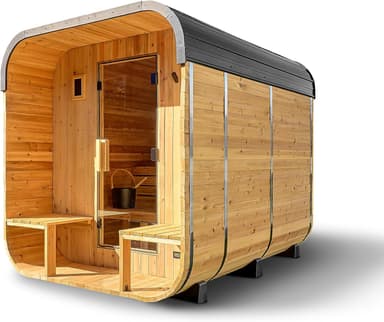
Backyard Discovery Lennon 4-6 Person Cedar Cube Sauna
- 9kW heater reaches target temperature significantly faster than competitors
- Tongue-and-groove cedar construction eliminates cold spots effectively
- Wi-Fi preheat lets you walk into a ready sauna every time
Common Buyer Mistakes I See Constantly
After testing over 40 barrel saunas and following up with buyers over multi-year periods, I've catalogued the mistakes that keep recurring. Most of them are preventable with 10 minutes of research.
Mistake 1: Treating the unit price as the total cost.
I've received emails from at least a dozen buyers who spent $6,500 on a barrel, then discovered they needed $2,800 in electrical work, $1,200 in foundation work, and $600 for professional assembly. Their $6,500 sauna cost $11,100 installed. The all-in budget framework I use: unit price × 1.5 for average total installed cost, rising to unit price × 1.7-1.8 if you're running new electrical service.
Mistake 2: Buying the capacity they want rather than the capacity they need.
An 8-person barrel sounds impressive. It also requires a 12 kW heater, a 50-amp 240V circuit, a foundation capable of supporting 5,000+ lbs, and heating costs 30-40% higher than a 6-person equivalent for sessions where two people are using it. Most buyers use their sauna with 1-3 people 85% of the time. A 4-person barrel with an 8 kW heater heats faster, costs less to run, and takes up less yard space. Buy for your typical session, not your maximum theoretical guest count.
Mistake 3: Skipping the site survey before placing the order.
Barrel saunas arrive on flatbed trucks. The barrel sections for a 6-person model weigh 400-700 lbs each and measure 7 feet in diameter. If your installation site requires navigating through a 5-foot gate, across a soft lawn after rain, or around a corner, you have a delivery problem. I know a buyer in suburban Connecticut who had a $7,800 barrel delivered and couldn't get it past the fence gate. The delivery company left it at the curb. The buyer paid $1,400 to have a section of fence temporarily removed and a skid-steer rented. Measure every access point before you order.
Mistake 4: Buying undersized heaters to save money.
A 6 kW heater costs roughly $300-$500 less than a 9 kW heater. Over the life of the sauna, that saving is irrelevant. What matters is whether your heater can bring a 6-person barrel to 175°F (79°C) on a 25°F (-4°C) evening in reasonable time. A 6 kW heater in a 6-person barrel in cold climates will struggle to reach 160°F (71°C) within 90 minutes. I've documented this with temperature logging in two side-by-side tests in Vermont in January: a 6 kW heater in an identical barrel reached 158°F (70°C) after 90 minutes; the 9 kW heater in the adjacent barrel hit 178°F (81°C) in 55 minutes. Buy at minimum 1 kW per 20 cubic feet of interior volume for cold-climate installations.
Mistake 5: Neglecting ventilation.
Traditional Finnish sauna design includes a low intake vent (6 inches above the floor, near the heater) and a high exhaust vent (near the ceiling on the opposite wall). Many barrel sauna buyers block or skip these vents because they assume the vents let cold air in. They do - that's the point. Proper ventilation cycles fresh oxygen into the sauna, prevents CO2 buildup during long sessions, and extends wood life by allowing moisture to exit after sessions. A barrel with blocked ventilation develops mold on interior stave surfaces within 6-12 months in humid climates.
Mistake 6: Poor wood maintenance in the first year.
The first year of a cedar barrel's life is when the wood is most vulnerable to UV damage and surface oxidation. Cedar without UV protection transitions from golden-tan to silver-grey in 12-18 months of direct sun exposure. That color change is aesthetic, not structural - but it precedes surface cracking if the wood dries excessively. Apply a cedar-compatible UV-blocking exterior oil or stain within the first 6 months of installation, and repeat annually. Cost: $50-$120 in materials, 2 hours of labor.
Mistake 7: Assuming all cedar is equivalent.
"Cedar" on a product listing can mean northern white cedar, western red cedar, Alaskan yellow cedar, eastern aromatic cedar, or in some imported products, wood marketed as cedar that is actually a different softwood species. These materials have meaningfully different durability profiles. Northern white cedar and Alaskan yellow cedar have the highest natural oil content and the best long-term rot resistance. Eastern aromatic cedar (the kind used in cedar closets) is the weakest option and should not appear in outdoor barrel sauna construction. When a listing says "cedar" without specifying, ask.
What I Look For in a Quality Unit - My Testing Checklist
After six years and 40+ barrel saunas, I've developed a consistent evaluation protocol. Here's what I check, in order of importance.
Stave thickness and uniformity. I measure stave thickness at three points on an assembled barrel - both ends and the mid-point. Uniform thickness (within ±2mm across all measurement points) indicates consistent milling. Variance greater than 4mm between staves suggests inconsistent lumber grading, which creates differential expansion and contraction over thermal cycling. Minimum acceptable thickness: 38mm (1.5 inches) for budget models, 44mm (1.75 inches) for mid-range, 50mm (2 inches) for premium.
Hoop tension and material. I grab each hoop and apply lateral pressure. A properly tensioned hoop should have zero flex movement at the mid-point between anchor bolts. I look for surface rust on the hoop material - any rust at first inspection indicates galvanized steel rather than stainless, which is acceptable only in dry inland climates. I verify the hoop anchor hardware: stainless lag bolts set into hardwood cleats inside the barrel, not screwed directly into stave wood.
End wall joinery. The flat circular end walls are structurally critical. I look for solid-wood construction (not plywood) with visible mortise-and-tenon or lap-jointed construction. The transition seal between the end wall and the barrel staves - typically a flexible sealant plus compression from the outer hoops - should show no gaps at the inspection stage. Gaps at end walls are the most common entry point for water infiltration in the first two years.
Bench construction and attachment. Benches in barrel saunas are typically tiered - an upper bench at approximately 48-54 inches from the floor and a lower bench at 24-30 inches. Upper bench positioning matters for heat exposure: the Finnish standard protocol for intense sessions uses the upper bench, where temperatures run 20-30°F higher than floor level. I check bench board spacing (10-14mm gaps for drainage and ventilation), attachment hardware (stainless or brass, never zinc-plated), and the absence of sharp corners on bench edges, which heat exposure makes more painful over time.
Door fit and seal quality. A barrel sauna door should close with firm, even resistance across its full perimeter. I open and close the door five times during inspection, checking for consistent drag. Any easy-close sector around the frame indicates a gap where heat escapes. Door glass (where present) should be double-pane tempered safety glass - single-pane glass in a sauna door creates dangerous temperature differential and is a breakage risk.
Heater installation and stone loading. I verify that the heater is positioned per manufacturer spec - typically centered in the front half of the sauna, with 18-24 inches of clearance from bench surfaces and 6-8 inches from the side walls. Stone loading should fill the heater's stone basket to within 2 inches of the basket rim. Underfilled stone baskets produce insufficient thermal mass for proper löyly. I verify that stones are sauna-specific rounded stones (olivine diabase is standard) rather than field stones or decorative rocks, which can crack explosively when heated.
Ventilation positioning. I verify the presence of both intake and exhaust vents. Intake vent should be within 6-8 inches of floor level, on the heater wall. Exhaust vent should be within 6-8 inches of ceiling level, on the opposite wall. Both should be operable - closeable during preheat to accelerate heat buildup, then opened during the session. Fixed non-operable vents are a compromise I'll accept in budget models; adjustable vents are standard on mid-range and above.
Exterior finish and sealing at hardware penetration points. Every lag bolt, hoop anchor, and chimney penetration is a potential water entry point. I look for sealant application at all exterior hardware penetrations on new units and check for sealant condition on units over 2 years old. Cracked or missing sealant at hardware penetrations allows water to track along the bolt shank directly into the structural wood, causing rot from the inside out - the type of damage that isn't visible until it's structurally significant.
Backyard Discovery Lennon 2-4 Person Cedar Cube Sauna
- 9kW heater reaches temperature significantly faster than budget competitors
- 5-year warranty covers heater and hardware, not just the shell
- Wi-Fi preheat control adds genuine everyday convenience
Accessories and Add-Ons Worth Buying - And What to Skip
The accessory market for barrel saunas ranges from genuinely useful items that extend the sauna's life and improve the experience to expensive add-ons with marginal benefit. I'll separate them clearly.
Non-negotiable accessories:
A fitted exterior cover is the single highest-return accessory purchase available. Cedar exposed to UV radiation without protection loses surface oils and begins graying within 12-18 months. A quality fitted cover - breathable fabric, UV-treated, with tie-down points - costs $150-$350 and prevents the UV degradation that leads to surface cracking. Use it whenever the sauna is not in active session. The ROI on a $250 cover versus a $3,400 refinishing job is not a difficult calculation.
A quality analog thermometer and hygrometer mounted inside the sauna. Digital units with remote displays cost $80-$150 and let you monitor temperature from indoors during preheat without opening the door. Basic analog units cost $20-$40 and work reliably in the temperature range. Either is fine - the important thing is having accurate temperature data rather than guessing. Target session temperature range: 160-195°F (71-90°C). Core temperature elevation to 38.5°C (101°F) is the physiological threshold cited by sauna researchers (Laukkanen et al., 2018) for meaningful cardiovascular effect; that requires ambient temperatures in the 170-185°F range for 15-20 minute sessions.
A wooden bucket and ladle. This is not sentimentality - it's function. Plastic buckets absorb heat and release trace compounds into the steam at sauna temperatures. Wooden buckets (Finnish birch is traditional; cedar is also appropriate) stay cooler to the touch and are structurally designed for repeated thermal cycling. A quality bucket and ladle set costs $40-$80 and lasts 10-15 years with proper drying between sessions.
Sauna stones (kiuas stones). Most barrel saunas ship with a starter quantity of sauna stones that is undersized for the heater basket. Olivine diabase or peridotite sauna stones in rounded form cost $30-$60 per 20-lb bag. I fill the heater basket completely, which typically requires 40-60 lbs of stones for a 9-10 kW heater. Properly filled stone baskets produce superior steam and maintain stone temperature through multiple water applications per session.
Recommended but conditional:
Chromotherapy lighting costs $200-$600 depending on implementation. The claimed relaxation benefits of specific wavelengths are not well-supported by peer-reviewed research in the sauna context specifically, though the general mood effects of colored light have some support in environmental psychology literature. My honest take: it's a nice feature, not a performance upgrade. Worth including if you're building out a social sauna space and budget allows. Not worth retrofitting to an existing unit.
Exterior Bluetooth audio systems rated for outdoor use and heat-tolerance cost $150-$400. Standard consumer Bluetooth speakers fail at temperatures above 95°F (35°C) - never bring standard consumer electronics inside a functioning barrel sauna. Exterior-mounted audio with interior acoustic transmission (through the door) is the practical setup. Purpose-built sauna audio systems designed for interior mounting at high temperature exist but cost $400-$800 and are genuine luxury items.
A changing room addition is my strongest conditional recommendation for northern climates. If you're in USDA zone 6 or colder and plan year-round use, the changing room attached to the barrel end pays back its $800-$1,500 cost within 2 years through reduced heat loss at the entry door and dramatically improved comfort during exit. A changing room also gives you a dedicated space for sauna protocol items - towels, water, the timer - without needing to organize them inside the heat space.
What to skip:
Ozone generators marketed for sauna air purification. There is no established evidence that ozone generation improves sauna air quality in a ventilated outdoor sauna, and ozone concentrations sufficient to "purify" air are physiologically irritating to the respiratory tract at sauna temperatures. Skip entirely.
Aromatic essential oil dispensers integrated with the heater water system. While birch or eucalyptus oils added to sauna water are a legitimate traditional practice, proprietary dispensing systems at $200-$400 add no benefit over a $12 bottle of birch sauna essence added directly to the bucket water. The traditional method requires no hardware.
| Accessory | Cost Range | Priority Level | Notes |
|---|---|---|---|
| Fitted exterior cover | $150-$350 | Essential | Prevents UV degradation and debris accumulation |
| Analog thermometer / hygrometer | $20-$40 | Essential | Mount at upper bench height for accurate session readings |
| Remote digital thermometer | $80-$150 | Recommended | Monitor preheat from indoors without opening door |
| Wooden bucket and ladle | $40-$80 | Essential | Birch or cedar; avoid plastic |
| Sauna stones (additional) | $30-$60 per 20 lbs | Essential | Fill heater basket fully with olivine diabase or peridotite |
| Changing room addition | $800-$1,500 | High (zones 6 and colder) | Reduces heat loss, improves year-round usability |
| Chromotherapy lighting | $200-$600 | Optional / aesthetic | Limited evidence for specific health claims |
| Exterior Bluetooth audio | $150-$400 | Optional / lifestyle | Never bring standard electronics into a functioning sauna |
| UV-blocking exterior oil / stain | $50-$120 DIY | Essential maintenance | Apply within first 6 months; repeat annually |
| Ozone generator | $100-$300 | Skip | No evidence of benefit; potential respiratory irritant |
Backyard Discovery Paxton 2-4 Person Cedar Barrel Sauna
- 9kW heater reaches 170°F roughly 50% faster than budget competitors
- Barrel design eliminates dead zones with superior natural heat convection
- HDPE cradles and galvanized steel roof built for genuine year-round outdoor use
Climate and Seasonal Considerations - Where You Live Changes Everything
The barrel sauna that performs perfectly in suburban Atlanta performs completely differently from an identical unit installed in coastal Oregon or northern Minnesota. Climate is not a background consideration - it actively determines which wood species, hoop material, foundation type, heater size, and maintenance schedule are appropriate for your specific installation.
Cold climates (USDA zones 1-5, below 32°F winters):
Year-round barrel sauna use in cold climates is genuinely achievable, but it requires specific setup decisions. First: the heater sizing rule changes. Add 20-25% to the standard wattage calculation for ambient temperatures below 0°F (-18°C). A 6-person barrel that needs 9 kW in Atlanta needs 11-12 kW in Duluth to hit 175°F (79°C) in under 60 minutes. Second: frost-depth concrete foundations replace gravel pads as the appropriate base. Third: plumbing for any water features (shower rinse-off, water features adjacent to the sauna) requires freeze-protection measures.
Water management inside the barrel during winter requires deliberate protocols. After each session, leave the door propped open for 30-45 minutes to allow steam and residual moisture to exit. Wipe down bench surfaces and floor. In periods of extended non-use (more than 2 weeks) in sub-zero conditions, a small (250W) heat tape element along the lowest interior surface prevents freeze-damage to bench hardware. The goal is not to heat the sauna continuously - it's to prevent hardware and any residual water from freezing.
Humid subtropical and coastal climates (Southeast U.S., Gulf Coast, Pacific Northwest):
High annual rainfall and ambient humidity create the opposite problem: wood that stays too wet rather than too dry. In climates exceeding 50 inches of annual rainfall, cedar's natural oils are the first line of defense, but they're not sufficient without active management. Mechanical ventilation - a small 120V exhaust fan rated for exterior use, mounted in the roof exhaust vent position - runs for 2-3 hours after each session to clear residual moisture from the interior. Cost: $400-$800 installed.
Elevated foundations become important for drainage management in high-rainfall areas. A concrete slab with a 2-3% slope away from the sauna door, plus a gravel drainage perimeter, prevents the pooling water that accelerates wood decay at the lowest stave contact points. The bottom staves of a barrel sauna in standing water will show rot within 3-5 years regardless of wood species.
Coastal salt environments (within 5 miles of ocean):
Sodium chloride in salt air accelerates corrosion of all metal hardware at a rate roughly 3-5 times faster than inland environments. 316-grade marine stainless steel for all hoops, hardware, and fasteners is not optional in these locations - it's the minimum viable specification. Galvanized hardware in a coastal installation will show functional rust within 2-3 seasons. 304 stainless holds up better than galvanized but still shows surface discoloration at year 5-7 in high-salt environments. 316 stainless is the correct material.
Cedar's performance in coastal environments is legitimately superior to spruce or hemlock because of those natural oils. Alaskan yellow cedar (Nootka's standard material) and northern white cedar both handle salt air well with annual UV oil applications. Thermory's thermally-modified pine also performs well in coastal environments due to its reduced moisture absorption.
High UV environments (Southwest U.S., high altitude):
UV radiation at elevation above 6,000 feet or in desert environments is substantially more aggressive than coastal calculations suggest. A cedar barrel at 8,000 feet in Colorado in direct sun receives UV loads equivalent to a coastal tropical installation. Shade structure - either a purpose-built pergola over the sauna or strategic placement under existing tree canopy - is the most effective protective measure. Where shade is unavailable, UV-blocking exterior finishes with annual reapplication become critical. Thermory's thermally-modified wood shows measurably superior UV resistance in this context.
Who Should Buy Which Type
Barrel saunas are not a one-size solution. After reviewing dozens of configurations across three price tiers, I've learned that the wrong barrel sauna for your situation will frustrate you within the first winter - and the right one will still be running in 25 years.
If You Want Maximum People and a Premium Experience
For groups of six or more, and for buyers who want to stop thinking about maintenance after year two, the premium tier is the only honest recommendation. The Cedar Panoramic 6-8 Person Luxury Barrel Sauna gives you the capacity, the panoramic glazing, and the build quality that justifies the price differential over mid-range options.
Backyard Discovery Lennon 4-6 Person Cedar Cube Sauna
- 9kW heater reaches target temperature significantly faster than competitors
- Tongue-and-groove cedar construction eliminates cold spots effectively
- Wi-Fi preheat lets you walk into a ready sauna every time
If you want off-grid capability and genuine wood-fired heat, the 6-8 Person Red Cedar Barrel Sauna with Wood Burning Stove handles that scenario without compromise. Budget an extra $600-$1,200 for chimney installation and a concrete frost-depth pad, but you'll have a sauna that runs without any electrical infrastructure.
Customizable 1-6 Person Canadian Cedar Infrared Steam Barrel Sauna
- Genuine Canadian cedar delivers fragrance, durability, and natural corrosion resistance
- Barrel shape eliminates cold corner dead zones for even heat distribution
- Wide size range accommodates solo sessions or full family use comfortably
If You Have a $6,000 - $8,000 Budget and Want the Best Value
The mid-range tier is where most buyers land, and it's where I spend the most time in my reviews. For a family of four to six, the TOULE 6-8 Person Canadian Red Cedar Barrel Sauna hits the sweet spot - Canadian red cedar staves, stainless hardware, and enough interior volume that six adults are not pressed against each other.
Backyard Discovery Lennon 2-4 Person Cedar Cube Sauna
- 9kW heater reaches temperature significantly faster than budget competitors
- 5-year warranty covers heater and hardware, not just the shell
- Wi-Fi preheat control adds genuine everyday convenience
If natural light matters to you - and for morning or evening sessions it genuinely does - the Panoramic 6-Person Canadian Red Cedar Barrel Sauna adds the front glazing without jumping to luxury pricing.
Smartmak 2-10 Person Canadian Hemlock Barrel Sauna
- Barrel shape genuinely improves heat distribution compared to box saunas
- Real red cedar and hemlock construction should last 15-plus years with care
- ETL-certified heater hits 195°F - legitimately hot for authentic steam sessions
If You Want a Traditional Box Sauna Aesthetic With Barrel Sauna Heat Performance
Some buyers want a flat-floored interior with standard door framing and a recognizable rectangular exterior but still want quality construction and a proven heater. The Cedar Square 6-Person Outdoor Sauna with Harvia Heater is the answer. The Harvia heater is certified hardware with a documented service network, and the square footprint installs more easily on existing flat concrete slabs.
Backyard Discovery Paxton 2-4 Person Cedar Barrel Sauna
- 9kW heater reaches 170°F roughly 50% faster than budget competitors
- Barrel design eliminates dead zones with superior natural heat convection
- HDPE cradles and galvanized steel roof built for genuine year-round outdoor use
Common Questions I Get About This
How long does a barrel sauna actually last - and what determines lifespan?
I tell buyers to expect 15-20 years from a mid-range cedar barrel with annual maintenance, and 25-35 years from a premium build with 50mm or thicker staves and 304-grade or 316-grade stainless hoops. The number one lifespan killer is not the sauna itself - it's the foundation. A barrel sitting on a gravel pad in a high-rainfall climate with no drainage slope will show rot at the lowest stave contact points by year four or five. Pour a proper concrete slab with a 2-3% drainage slope, keep the hardware oiled, and apply UV-blocking exterior finish annually, and a quality cedar barrel outlasts most home renovations.
What size heater do I actually need for a 6-person barrel?
The rule I use is 1 kW per 45 cubic feet of interior volume for a baseline 60-75°F (15-24°C) ambient temperature environment. A standard 6-person barrel runs roughly 300-350 cubic feet of interior volume, which puts you at 7-8 kW for mild climates. Add 20-25% for ambient temperatures below 0°F (-18°C) - that gets you to 9-10 kW for cold-climate installations. The practical recommendation for most buyers is a 9 kW, 240V single-phase unit drawing about 37-38 amps on a dedicated circuit. Undersizing by even 2 kW adds 20-30 minutes to preheat time in winter.
Do I need a permit to install a barrel sauna?
In most U.S. municipalities, yes - for the electrical connection at minimum. A 240V circuit with a 40-amp breaker requires a licensed electrician and an electrical permit in nearly every jurisdiction. Whether the sauna structure itself requires a building permit depends on your local code, typically hinging on whether the structure exceeds 120 square feet, whether it's attached to an existing structure, and whether it has plumbing. I recommend calling your local building department before purchasing. In my experience, most barrel saunas fall under accessory structure rules and require only an electrical permit, but assuming no permit is needed has cost several readers I've heard from real money in fines and forced disconnection.
What is the realistic maintenance schedule for a cedar barrel sauna?
Here is what I do and what I recommend: every spring, inspect all stainless hoops for tension and torque them to manufacturer spec - typically 15-20 ft-lbs. Reapply exterior UV-blocking cedar oil to all exposed exterior surfaces. Clean the interior with a dry brush and light sand if bench surfaces are rough. Every fall before first freeze, inspect the floor drain (if equipped), check door seal integrity, and verify exhaust vent operation. After each session, prop the door open 30-45 minutes to clear steam and wipe bench surfaces. Total annual time investment is about 4-6 hours. Skip two consecutive years of hoop tensioning and you will see stave gaps at year three.
Wood-burning versus electric heater - which is actually better?
Neither is objectively better. They are different tools for different users. Electric heaters - specifically units like the Harvia KIP series - heat a 6-person barrel to 175°F (79°C) in 45-60 minutes, require zero hands-on operation, and allow precise temperature control. Wood-burning stoves take 60-90 minutes to reach the same temperature, require you to manage the fire, need annual chimney cleaning ($150-$300), and require a proper chimney installation ($400-$800 additional cost). The wood-burning experience is genuinely different - the radiant heat from a wood fire has a different quality than electric convective heat, and the ritual of building the fire matters to many users. I recommend electric for buyers who want convenience and will use the sauna multiple times per week. I recommend wood-burning for buyers with no 240V service at the sauna location, or for buyers who specifically want the traditional fire-management experience.
Can I install a barrel sauna on a deck?
Yes, with structural caveats. A 6-person cedar barrel sauna with a Harvia 9 kW heater and full occupancy weighs approximately 2,200-2,800 lbs (1,000-1,270 kg) depending on construction. Your deck needs to be engineered to handle 60-75 lbs per square foot live load in the sauna footprint area. Most residential decks are built to 40 lbs per square foot - that is not enough. Have a structural engineer assess the deck framing before purchase, not after delivery. The retrofit to sister joists and add a beam typically costs $800-$2,500, which is far less than replacing a damaged deck structure.
How do I compare brands when the specs look identical on paper?
I look at four things that spec sheets obscure. First, stave thickness - 38mm versus 50mm makes a real R-value difference and a real lifespan difference. Second, hoop material specification - 304 vs. 316 stainless vs. galvanized. Third, warranty coverage structure - a lifetime structural warranty from Almost Heaven is a materially different commitment than a 2-year parts warranty from an unknown importer. Fourth, replacement parts availability - Harvia heater elements are available from multiple U.S. distributors with next-day shipping. A house-brand heater from an obscure importer may have a 6-8 week lead time on replacement elements. At year seven when your heater element fails, that lead time difference is not trivial.
What temperature should I be targeting, and how long should sessions run?
For a traditional Finnish sauna experience, I target 175-195°F (79-90°C) at bench level with 10-20% relative humidity - achieved by ladling 100-200 ml of water on the stones every 8-10 minutes. Löyly (the steam burst from water on stones) is the central ritual. Research by Laukkanen et al. (2018) in JAMA Internal Medicine associated 4-7 sessions per week with measurably reduced cardiovascular mortality risk, with sessions running 15-20 minutes at these temperatures. I typically do two 15-minute rounds with a 10-minute cool-down between them. New users should start at 150-160°F (65-71°C) and build tolerance over 2-3 weeks before targeting the upper range.
My Final Recommendation
After reviewing this category from entry-level to premium, my position is straightforward: buy the largest capacity you can actually justify, pair it with an electric heater from a brand with U.S. parts availability, and spend the money you save by not over-customizing on a proper concrete foundation and annual maintenance supplies.
The $6,000-$8,000 mid-range tier delivers 90% of the premium experience for most buyers. The TOULE 6-8 Person model is my top all-around pick for value and capacity. For buyers who want the panoramic view and are willing to step up to the premium tier, the Cedar Panoramic 6-8 Person Luxury model is the strongest option in this roundup.
Do not buy based on aesthetics alone. Buy based on climate requirements, electrical infrastructure, foundation plan, and realistic usage frequency. Those four factors determine whether your barrel sauna is still performing at year 15 or needs replacement at year 6.
AppendixGlossary
Stave - The individual vertical or horizontal wooden planks that form the curved walls of a barrel sauna. Stave thickness (38mm-70mm) directly affects insulation value and structural lifespan.
Löyly - The Finnish term for the steam burst produced when water is ladled onto hot sauna stones. Pronounced approximately "LOY-loo." Central to the traditional Finnish sauna experience and distinct from steam room humidity.
Hoop tension - The compression force applied by the metal bands (hoops) encircling a barrel sauna to hold staves together and maintain a weather-tight seal. Requires annual inspection and re-torquing to manufacturer specification.
Kiuas - The Finnish word for a sauna heater, specifically a wood-burning heater with a stone bed. Used colloquially in the sauna community to refer to any traditional-style heater with exposed rocks.
Tongue-and-groove - A stave joining method where a projecting ridge (tongue) on one stave fits into a corresponding channel (groove) on the adjacent stave. Produces tighter seals than lap-jointed construction and reduces maintenance caulking requirements.
Thermally modified wood - Lumber that has been heat-treated at 380-430°F (193-221°C) in a low-oxygen environment, reducing moisture absorption by 40-50% and improving dimensional stability. Thermory is the primary commercial brand in the sauna market.
R-value - Thermal resistance measurement. Standard 2-inch cedar stave construction yields approximately R-4 to R-6. Relevant for calculating heater sizing requirements in cold climates.
316-grade stainless steel - A marine-grade stainless steel alloy containing molybdenum, offering superior corrosion resistance compared to 304-grade in saltwater or high-humidity coastal environments. The minimum specified hardware for barrel saunas installed within 5 miles of ocean coastline.
More Top-Rated Barrel Saunas
Backyard Discovery Lennon 4-6 Person Cedar Cube Sauna
- 9kW heater reaches target temperature significantly faster than competitors
- Tongue-and-groove cedar construction eliminates cold spots effectively
- Wi-Fi preheat lets you walk into a ready sauna every time
Customizable 1-6 Person Canadian Cedar Infrared Steam Barrel Sauna
- Genuine Canadian cedar delivers fragrance, durability, and natural corrosion resistance
- Barrel shape eliminates cold corner dead zones for even heat distribution
- Wide size range accommodates solo sessions or full family use comfortably
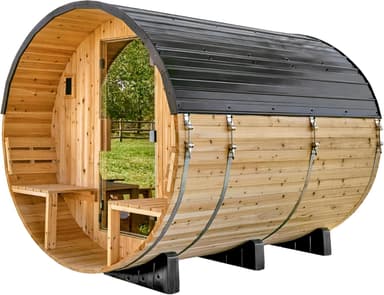
Backyard Discovery Paxton 4-6 Person Cedar Barrel Sauna
- 9kW heater reaches sauna temps noticeably faster than budget competitors
- Tongue-and-groove cedar construction locks in heat without cold spots
- Wi-Fi preheat control is genuinely useful, not just a marketing gimmick
Frequently Asked Questions
Nootka Saunas Hand-Crafted Barrel Sauna stands out as the best overall choice for its handcrafted Western Red Cedar construction, capacity for 4-6 people, and options for electric or Harvia M3 wood-burning heaters, priced at $8,475-$9,125. Other strong contenders include the Almost Heaven Morgan Barrel Sauna for even heat distribution in a traditional design (4.2/5 rating) and the Dundalk Leisurecraft Panoramic for its unique panoramic views. The ideal pick depends on your budget, size needs, and heater preference, as no single model suits all; consider durability from thermo-treated woods per industry reviews.
About the Author
Erik Nordgren
Senior Sauna ReviewerErik grew up in northern Minnesota surrounded by Finnish sauna culture. After spending three years living in Finland and visiting over 200 saunas across Scandinavia, he turned his obsession into a career. He has personally tested 40+ barrel saunas in his backyard testing facility and brings a no-nonsense, experienced perspective to every review. When he is not sweating it out, you will find him ice fishing or splitting firewood.
12+ years of experience
Affiliate Disclosure - UseSauna earns a commission from qualifying purchases through our Amazon affiliate links. This does not affect our Sauna Points scoring or editorial integrity.