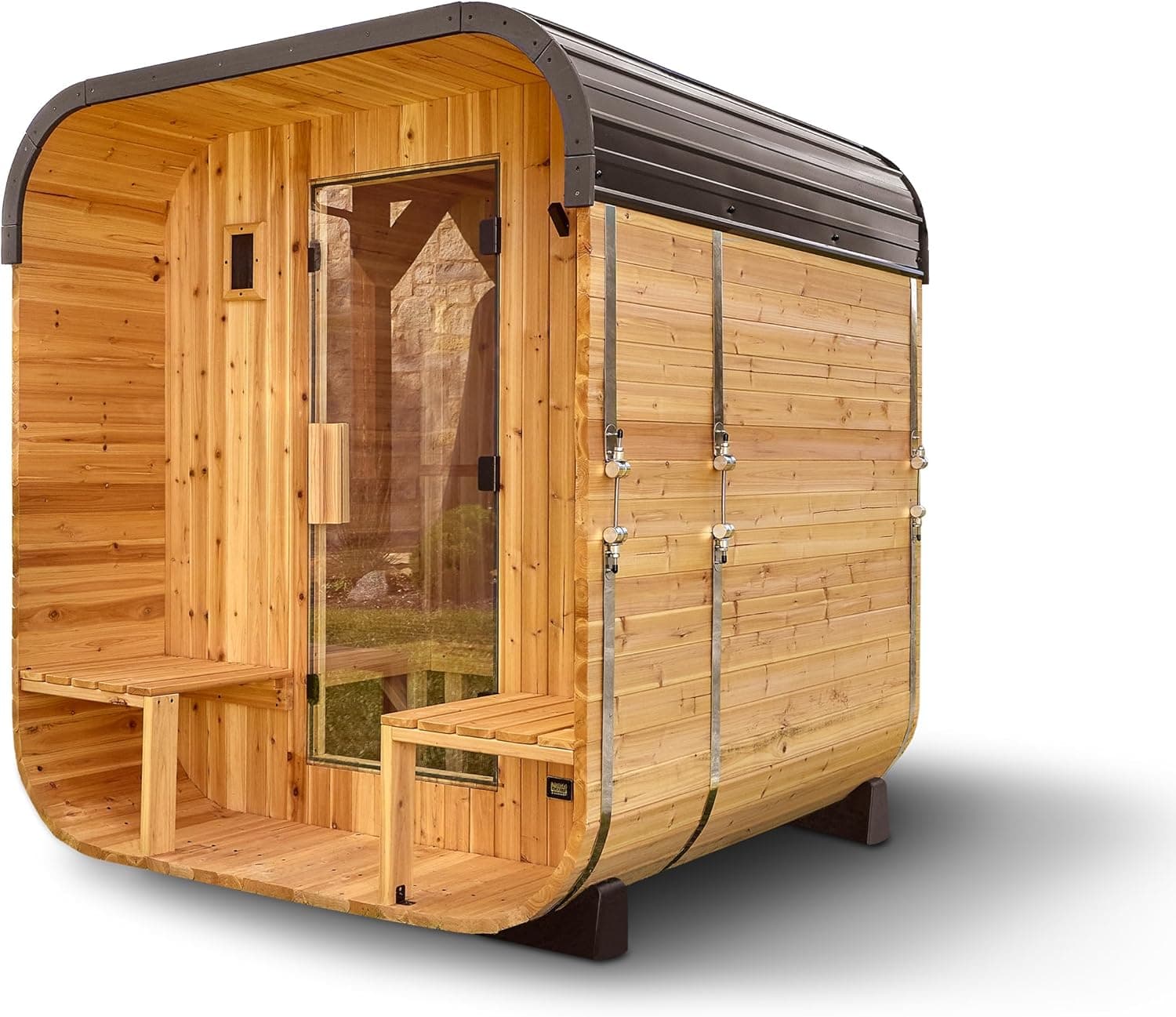
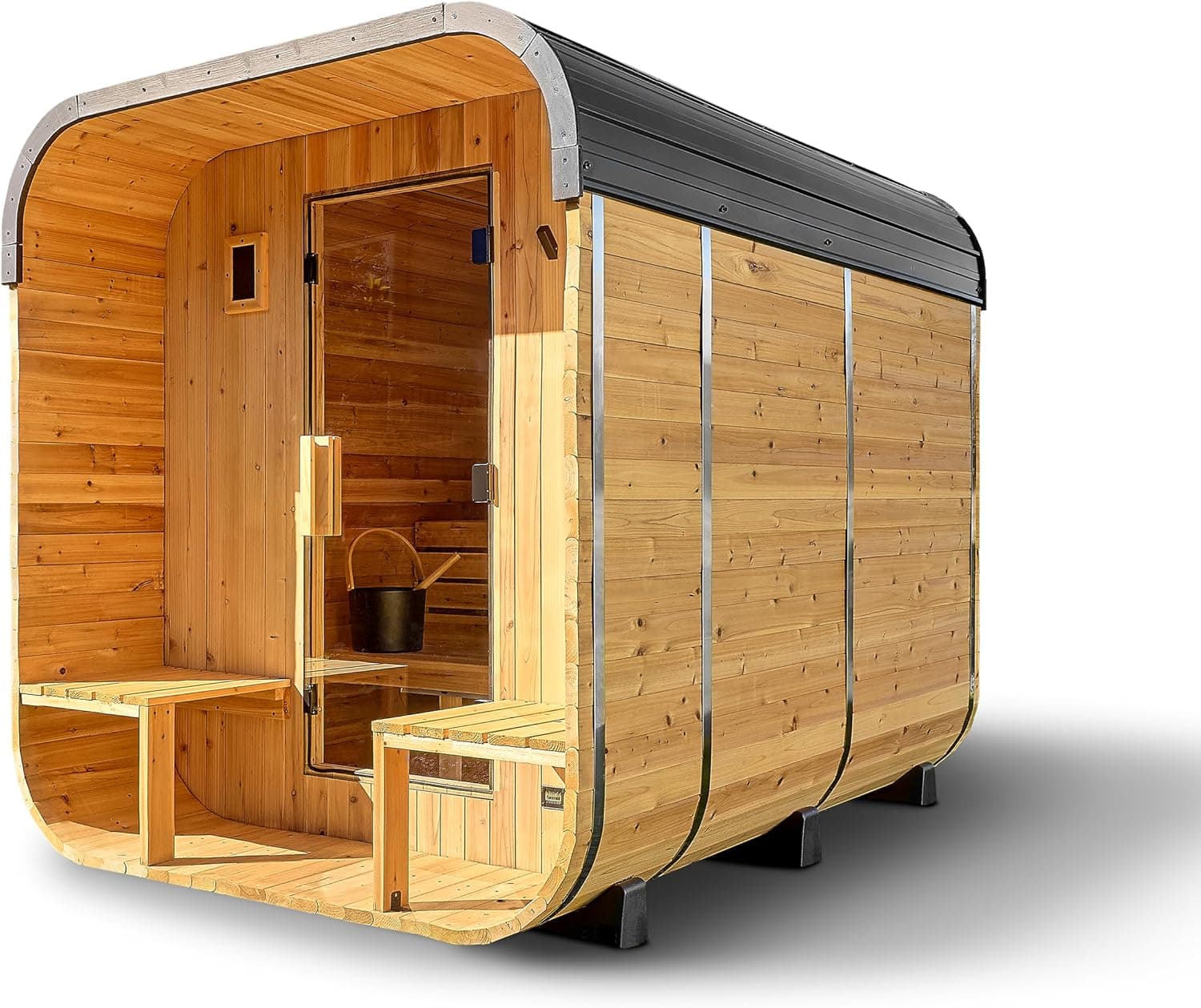
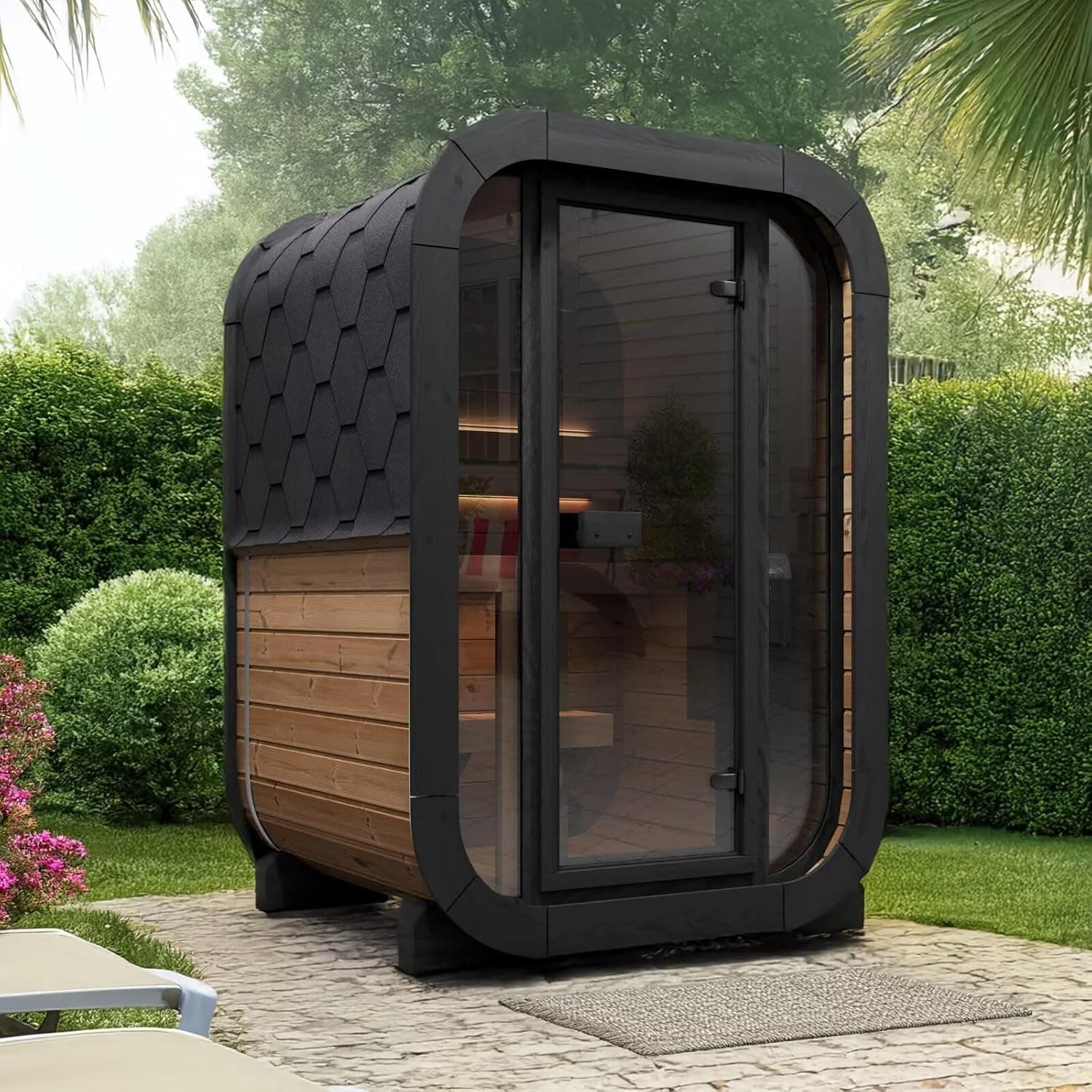
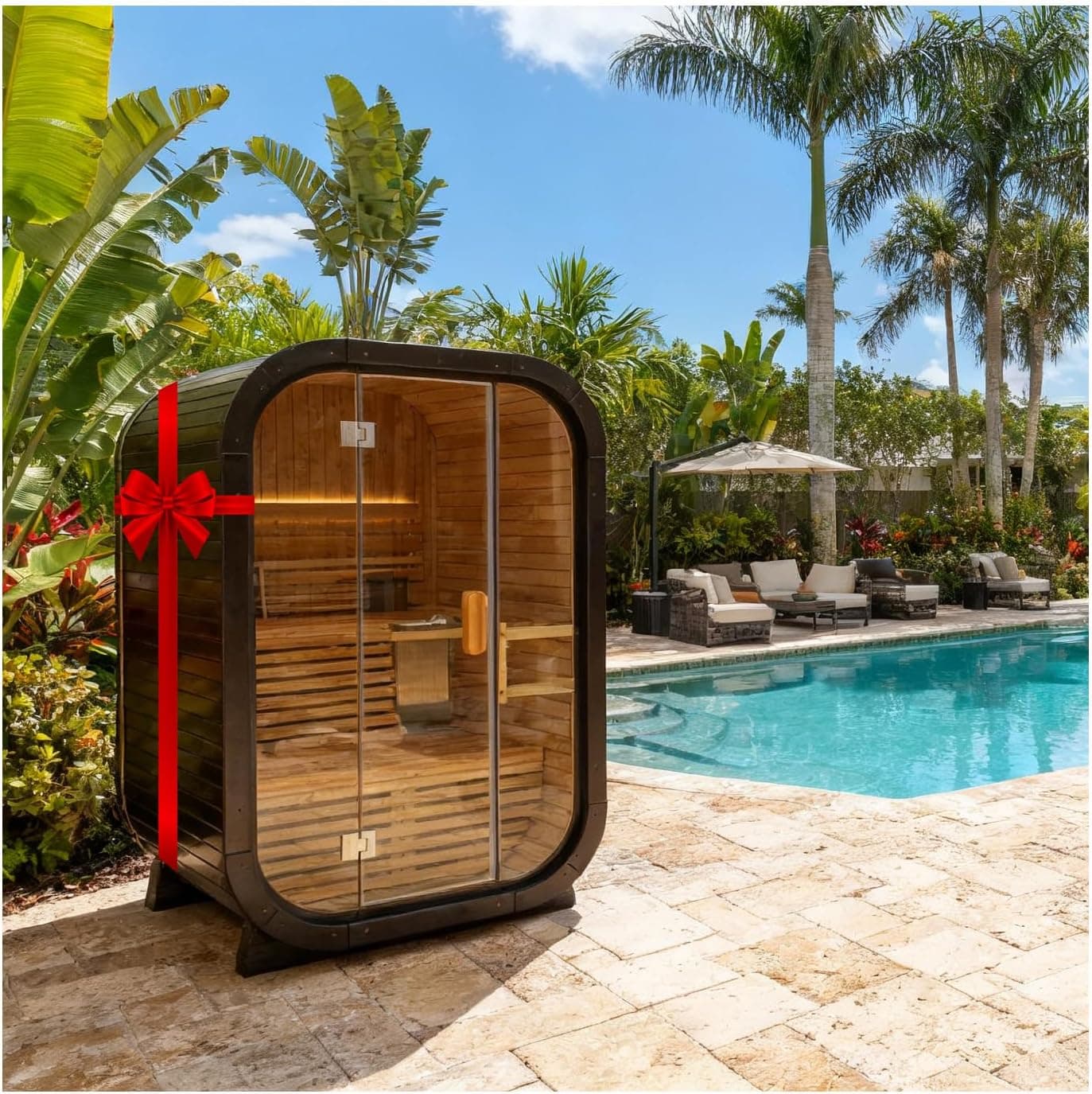
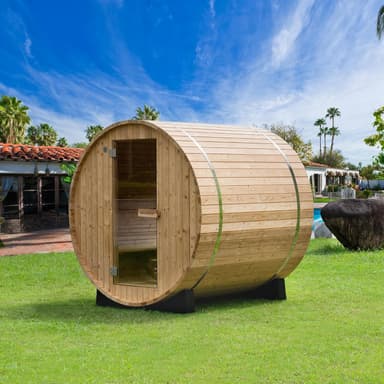
Your backyard deserves better than a sad patio heater. These outdoor barrel saunas are built to handle rain, snow, and UV while looking absolutely stunning next to your deck.
If you're hunting for the best outdoor barrel sauna, you've landed in the right spot - these curved wonders are transforming backyards into personal wellness retreats. Unlike boxy traditional saunas, barrel designs like the Nootka Hand-Crafted or Almost Heaven Morgan use their rounded shape to circulate heat evenly from powerful Harvia heaters, hitting 190°F in just 10-15 minutes with Western Red Cedar that's naturally rot-resistant and chemical-free. No glues, no fuss - just pure, aromatic wood that thrives outdoors year-round.
Perfect for fitness buffs, busy parents, or anyone craving that Finnish sweat session at home, these saunas fit 2-6 people and suit small patios or sprawling yards. Picture preheating via smartphone before unwinding with friends - studies link regular sauna use to better circulation, reduced stress, and even cardiovascular perks, like a 2015 JAMA study showing lower heart disease risk. Brands such as Dundalk Leisurecraft and Redwood Outdoors stand out for panoramic views and durable galvanized roofs that shrug off rain and snow.
What sets them apart? Quick setup, low maintenance, and that immersive nature vibe - step in, let the steam melt tension, and emerge reborn. look at our picks for the best outdoor barrel sauna that matches your space and style.(178 words)
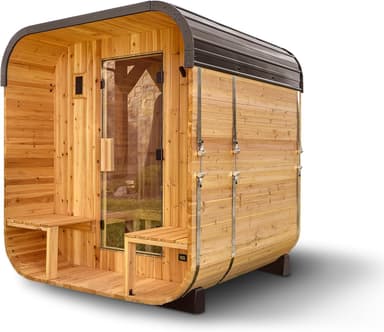
Backyard Discovery Lennon 2-4 Person Cedar Cube Sauna
$3,999
Cedar2-4 PersonElectric
Sauna Points8.1/10
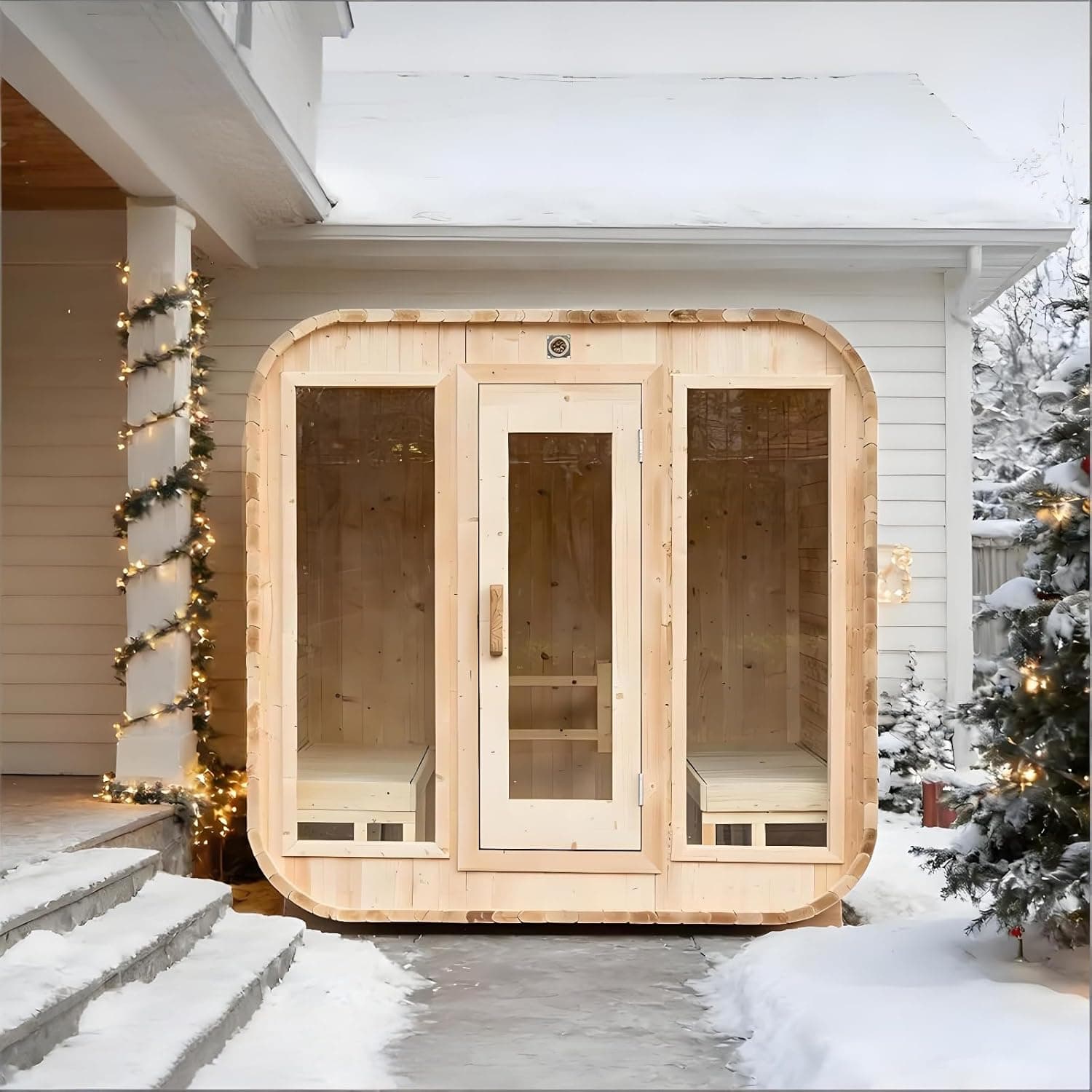
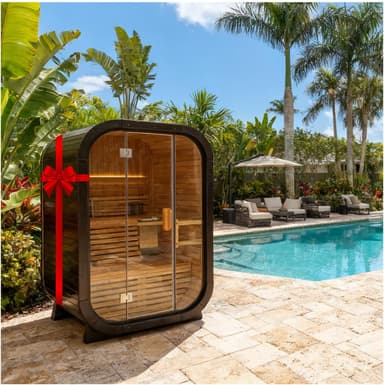
The Backyard Discovery Lennon is a thoughtfully engineered outdoor sauna that sits clearly above the budget barrel crowd. The tongue-and-groove cedar construction is tight and well-fitted, and the 8mm tempered glass door feels substantial rather than like an afterthought. The 9kW PrairieFire heater is genuinely impressive - getting a cube sauna to temperature in the 10-15 minute range is a real advantage over the underpowered 4-6kW stoves you'll find on similarly priced competitors. Assembly takes the better part of a half-day with two people, but the BILT app guidance is a legitimate improvement over the picture-only instruction sheets that plague most barrel kit competitors. The Wi-Fi preheat control is a nice touch for anyone who wants to walk outside into a ready sauna rather than waiting around. One honest caveat: cedar still moves with seasonal temperature swings, and cube designs distribute heat slightly less evenly than barrel shapes. The 5-year comprehensive warranty covering the heater and hardware gives real peace of mind at this price point.
9kW heater reaches temperature significantly faster than budget competitors
5-year warranty covers heater and hardware, not just the shell
Wi-Fi preheat control adds genuine everyday convenience
Tongue-and-groove cedar with tempered glass door minimizes heat loss
Ships with complete accessory kit so first session needs nothing extra
Watch Out For
Cube geometry heats slightly less evenly than barrel-style saunas
Cedar panels will still expand and contract in variable climates
Premium features come at a notably higher price than barrel alternatives
Key Specifications
•Faster Heating, More Relaxing: Powered by our exclusive PrairieFire 9kW electric heater with included stones, this outdoor cedar sauna reaches your ideal temperature 50% faster than standard 6kW heaters
•Locks in Heat: Precision tongue-and-groove cedar construction paired with a heavy-duty 8mm tempered glass door eliminates cold spots and keeps your wooden sauna consistently hot from start to finish
•Industry-Leading Warranty: From the sauna heater to the hardware, every component is backed by our comprehensive 5-year warranty for complete protection
•Built for Any Season: The 29-gauge powder-coated galvanized steel roof resists rust and corrosion for all-weather protection, while roto-molded HDPE support cradles elevate the cube sauna to shield against moisture
•Preheat from Anywhere: The integrated Wi-Fi control panel lets you remotely heat your backyard sauna from your phone, so you step into perfect heat the moment you walk outside
•Complete From Day One: Comes with all sauna accessories so you're ready to use it the moment it's assembled, including thermometer, hygrometer, bucket, ladle, rocks, and robe hooks
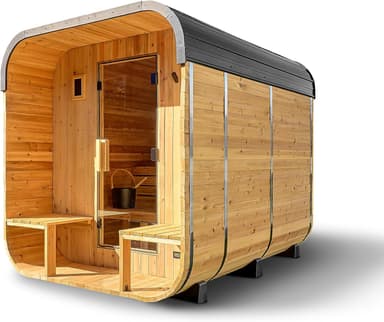
Backyard Discovery Lennon 4-6 Person Cedar Cube Sauna
$4,999
Cedar4-6 PersonElectric
Sauna Points8.0/10
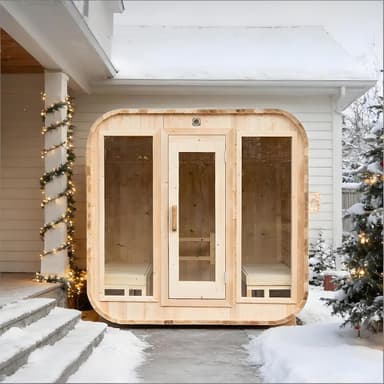
The Backyard Discovery Lennon is a serious outdoor sauna that gets a few things genuinely right. The PrairieFire 9kW heater is the standout - it pulls the cabin to temperature noticeably faster than the 6kW units common at this price point, and the tongue-and-groove cedar construction keeps heat where it belongs. Wi-Fi preheating sounds like a gimmick until you actually want to step outside into a ready sauna on a January evening. The cube format with a porch gives you a proper changing area, and the roto-molded HDPE cradles keep the floor off direct ground contact, which matters for longevity. Assembly uses the BILT app rather than paper instructions, which helps, though owners still report a few head-scratching moments getting everything sealed correctly. The single-wall construction is the honest limitation here - in genuinely cold climates, you may want to add exterior insulation to hold heat efficiently. Wi-Fi setup also reportedly has a learning curve. That said, the 5-year warranty covering every component, heater included, is unusually strong for this category.
9kW heater reaches target temperature significantly faster than competitors
Tongue-and-groove cedar construction eliminates cold spots effectively
Wi-Fi preheat lets you walk into a ready sauna every time
5-year warranty covers heater and all hardware, not just the shell
Roto-molded HDPE cradles protect the structure from ground moisture year-round
Watch Out For
Single-wall build struggles to retain heat in genuinely frigid climates
Wi-Fi connectivity setup frustrates some owners during initial configuration
Assembly sealing requires care - imperfect joints cause creaking and heat loss
Key Specifications
•Faster Heating, More Relaxing: Powered by our exclusive PrairieFire 9kW electric heater with included stones, this outdoor cedar sauna reaches your ideal temperature 50% faster than standard 6kW heaters
•Locks in Heat: Precision tongue-and-groove cedar construction paired with a heavy-duty 8mm tempered glass door eliminates cold spots and keeps your wooden sauna consistently hot from start to finish
•Industry-Leading Warranty: From the sauna heater to the hardware, every component is backed by our comprehensive 5-year warranty for complete protection
•Built for Any Season: The 29-gauge powder-coated galvanized steel roof resists rust and corrosion for all-weather protection, while roto-molded HDPE support cradles elevate the cube sauna to shield against moisture
•Preheat from Anywhere: The integrated Wi-Fi control panel lets you remotely heat your backyard sauna from your phone, so you step into perfect heat the moment you walk outside
•Complete From Day One: Comes with all sauna accessories so you're ready to use it the moment it's assembled, including thermometer, hygrometer, bucket, ladle, rocks, and robe hooks
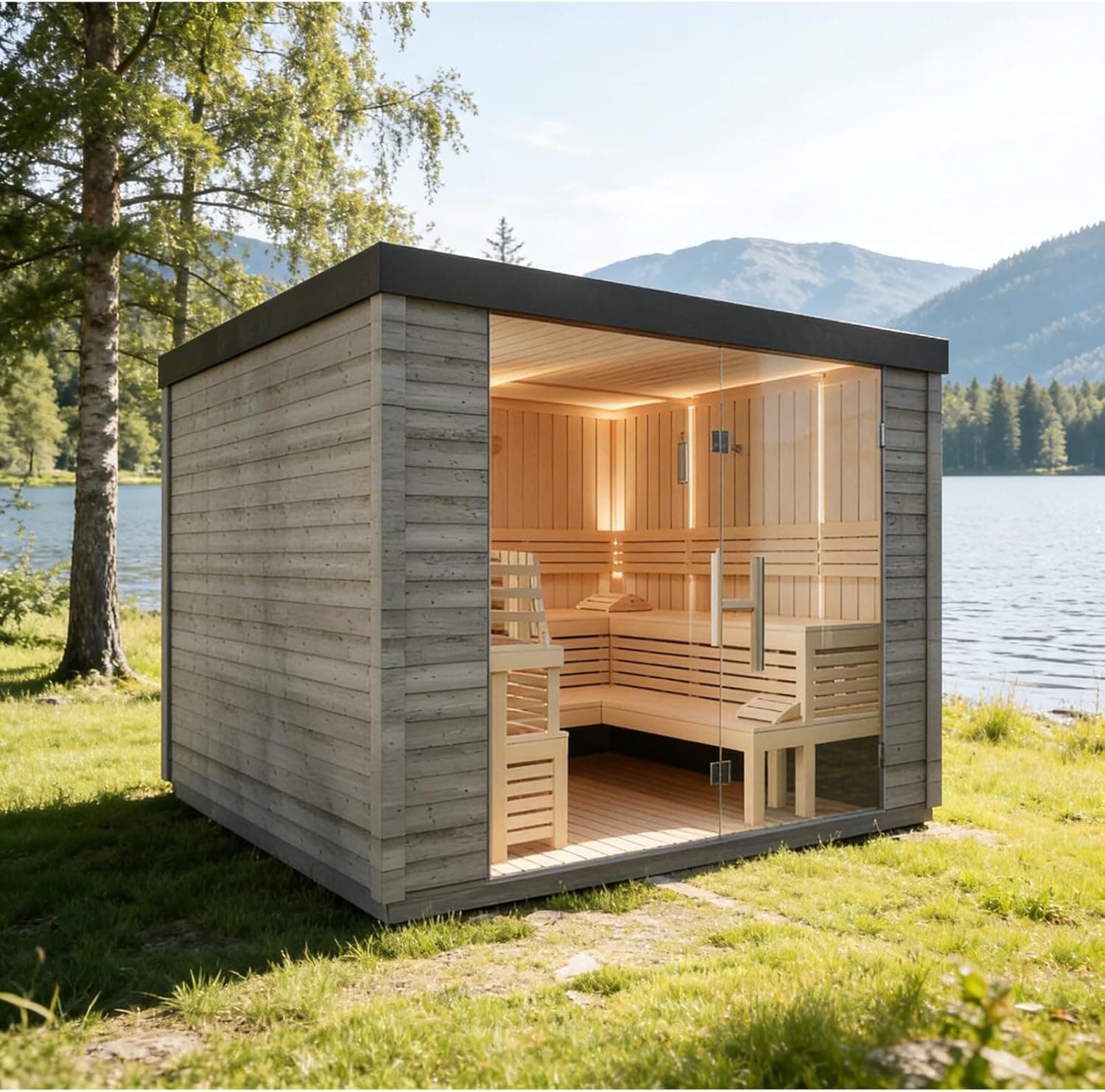
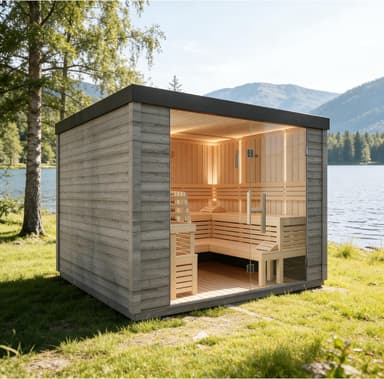
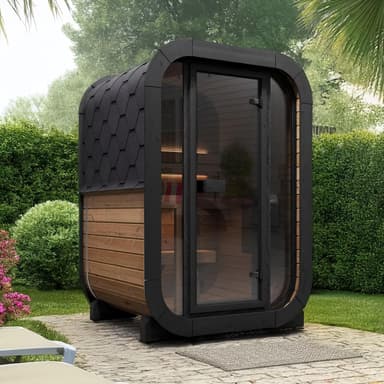
The Duthss cube sauna is genuinely interesting because it breaks from the typical barrel format and leans hard into customization - we're talking size, wood species, heater type, windows, porch configuration, roofing, and interior finishes. Canadian red cedar is the standout material choice here, naturally fragrant and corrosion-resistant, with panel quality that holds up to outdoor exposure over time. The electric options from TOULE or HARVIA (4.5-9kW) push temps to 170-190°F in 30-45 minutes, which is respectable, and the wood-burning option adds authentic ambiance if you're willing to manage the maintenance. Capacity scales from 2 to 10 people, with larger units reaching 8.2' x 9.8' x 6.6' - that's a real backyard sauna, not a closet. Assembly is DIY-possible but gets complicated fast at larger sizes, and the bespoke nature of these builds means shipping timelines can stretch unpredictably. For families wanting something tailored rather than off-the-shelf, this is worth serious consideration.
Deep customization covers size, wood, heater, windows, porch, and roofing
Canadian red cedar offers genuine durability and natural aromatic quality
HARVIA heater option is a trusted, proven choice for consistent heat
Scales generously from intimate two-person to serious ten-person capacity
24/7 support and optional professional installation reduce buyer risk
Watch Out For
Custom sizing and bespoke configs create unpredictable, often lengthy shipping delays
Wood-fired chimney setup adds real complexity beyond standard DIY assembly
Heavily customized orders make parts mismatches harder to troubleshoot remotely
Key Specifications
•Size and capacity Sauna - length (4.4'-8.2'),Wide(4.6'-9.8'),High(6.6')According to your needs, it can accommodate up to 10 people and enjoy family sauna time, relaxing in the natural scent of cedar wood
•Wood Material Selection - 1.Canadian Pine(Natural woody fragrance, corrosion-resistant, hard)2.Canadian hemlock(More beautiful, lightweight, selected from Canada)3.Canadian red cedar(Expert's choice, material king),Every product undergoes strict product control to ensure product quality
•Heating system - 1.Safety Electric stove heating(more quickly, less afterheat remains)2.wood-burning traditional sauna heating(The sound of warm fire and inviting atmosphere),For electric stoves TOULE and HARVIA models, available in 4.5kW, 6kW, 8kW, and 9kW
•Insulation saunas - Assemble by yourself to save more, or provide installation services. Our experienced installation team is always at your service, delivering quickly and installing as quickly as possible
•Additional features - Consider any additional features you may want, such as built-in benches, windows, or lighting. Some saunas also come with accessories like sauna stones, ladles, and thermometers.
•*24/7 SUPPORT* - Duthss offers a 24/7 customer service team to assist with any Customize,delivery or assembly issues. If you have any problems about Customize Outdoor Sauna, please don't hesitate to contact us,*Manufacturer warranty: 10-years warranty,Ordering is the beginning of my service, and it never ends, a promise from a 20-year-old manufacturer*
This compact Canadian cedar barrel sauna from amocane fits neatly into smaller backyards where a 4-person unit simply won't work. At roughly 53 by 55 inches, it's genuinely a two-person experience - don't expect to stretch out. The ETL-certified 4.5KW stove does reach 195°F reliably, though you're looking at a slower heat-up compared to larger 9KW units - budget around 30-40 minutes rather than 15. The full-length red cedar construction with stainless steel bands holds up reasonably well initially, but owners consistently report wood movement causing door alignment issues and minor panel gaps after a few seasons. Assembly is the real sticking point - the picture-heavy instructions frustrate most buyers, and you'll want two people and a full afternoon on a properly leveled gravel base. Accessories like the bucket, scoop, and thermohygrometer add genuine value for the price point. This is a solid entry-level outdoor sauna for occasional use, but serious enthusiasts who want daily sessions and 20-plus years of service should look at thermowood alternatives.
Picture-only assembly instructions make a frustrating 3-4 hour build worse
Cedar expansion causes door warping and panel gaps within a few seasons
Slower heat-up than 9KW competitors makes spontaneous sessions less practical
Key Specifications
•1-2 Person Outdoor Sauna Room: The overall size of the traditional steam sauna room are L 53.15* D 54.72* H 78.74inch. Large enough for two person enjoy sauna, Perfect size for courtyards, gardens, patio or outdoor spaces, allowing you and family to enjoy a sauna experience in the comfort of your own home
•Zero Emf Sauna Room: There is no worry about emf for steam sauna room. Zero Emf 220V/4.5 KW Toule sauna heaters. With a simple control panel, you can easily access and control the heater, temperature range 0°C - 90°C / 32°F - 195°F
•Outdoor Design: Crafted from full-length premium red cedar wood and covered with asphalt shingles. Asphalt shingles have excellent waterproofing properties. Barrel bands are made of stainless steel to resist corrosion. Intake and exhaust vents provide optimal airflow for better breathing
•Sauna Accessories: The hot rock barrel sauna kit includes a sauna bucket, a scoop, a thermohygrometer, a sauna lamp, a 4.5kw heater, sauna stones, 8mm transparent, sauna hourglass, rubber hammer, wall lamp. It can better enhance the sauna experience. Ensuring the best steam sauna experience every time
•Promote Wellness & Relaxation: The sauna's heat stimulates detoxification. When you get home from work or gym, you can relax at home using your sauna. It can help you relieve stress and fatigue, detoxify your body. It sets the perfect distance between you and the heater, providing you with a warm, quiet and calm experience
•WARRANTY: We offer full manufacturer limited warranty, structures 2 years, heater 1 year. Professional sauna room factory. If you want to customize your own sauna, please contact us by email
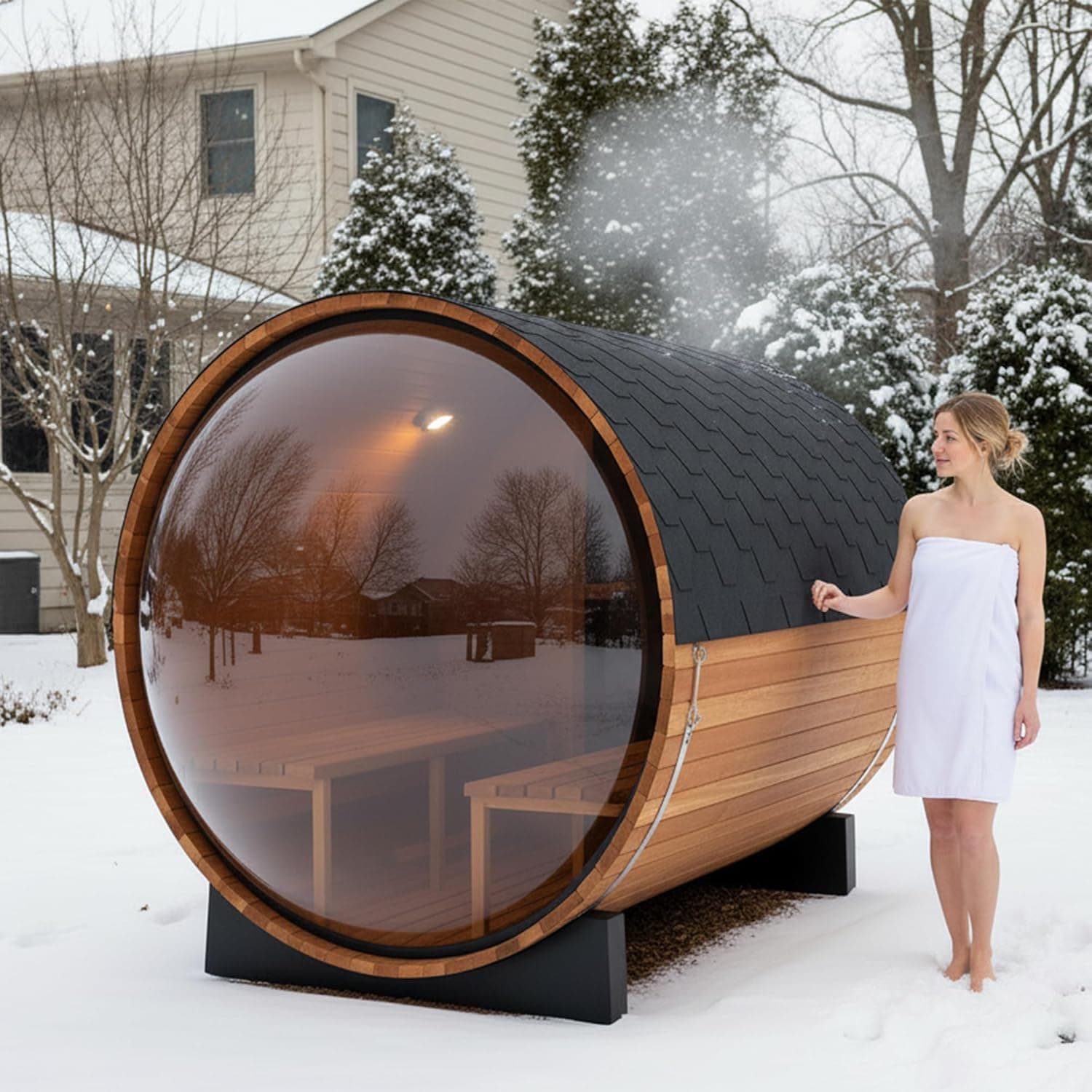
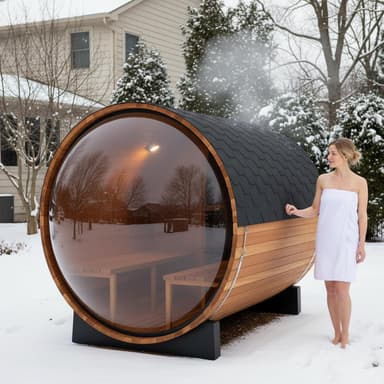
The Benovo Panoramic Outdoor Sauna is an eye-catching barrel kit that leads with its signature acrylic hemisphere window - a genuinely nice touch for stargazing sessions or enjoying your backyard while you sweat. Built from Canadian red cedar, the structure handles outdoor exposure reasonably well, and the barrel shape does help distribute heat evenly once the 6KW TOULE electric stove gets going. That stove is straightforward to use on a standard 220V circuit and can bring the interior up to temperature without much fuss. Where things get honest: the single-wall construction is a real limitation in cooler climates, and stave thickness can be inconsistent enough to cause minor warping over time. Assembly instructions are reportedly frustrating, closer to a 3-out-of-5 experience than a polished kit. The included accessories - benches, headrests, thermometer, hourglass, wooden bucket - are a nice bundle for the price. This sauna suits someone buying their first outdoor unit on a budget, not someone expecting premium longevity.
Panoramic acrylic dome creates a genuinely unique outdoor viewing experience
Canadian red cedar offers natural decay resistance for outdoor use
Barrel shape promotes even heat circulation throughout the interior
Full accessory bundle included means no separate purchases needed
6KW electric stove is simple to operate for first-time sauna owners
Watch Out For
Single-wall design loses heat quickly in colder or temperate climates
Assembly instructions are vague and frustrate most first-time builders
Thinner cedar staves risk warping without careful maintenance over time
Key Specifications
•Size:Product dimensions are 74.80"(W)*70.86(L) Includes porch space. Extra large enough to accommodate 6-8 people
•Heating Method:The sauna room is paired with a TOULE 6KW electric stove.Electric heaters are common and easy to use.220v 6KW of power to heat the sauna quickly
•Materials:The sauna material is high quality Canadian red cedar. It has good properties and is durable.Good insulation helps the sauna retain heat efficiently
•Sauna Accessories:Built-in benches,headrests,thermometers,hourglasses,explosion-proof lamps,electric stoves and wooden buckets
•Sauna Appearance:The sauna has an overall barrel shape. The front is designed as a porch with seats for two people. The back is designed as a panoramic acrylic hemisphere, which increases the space of the sauna, as well as the view of the outdoor landscape to increase the natural light
This 4-person barrel sauna checks the right boxes on paper - wet/dry capability, included heater and rocks, weatherproof construction, and a full kit with door. But the listing is thin on specifics that actually matter: wood species isn't confirmed (likely standard cedar or hemlock rather than superior thermowood), heater wattage goes unmentioned, and panel thickness is anyone's guess. What we do know from owners of similar barrel kits is that the barrel shape genuinely does distribute heat well once it gets there, and four adults fit comfortably for family sessions. Assembly will take two people and a solid half-day - the 'straightforward' claim is optimistic. Expect 3-4 hours minimum, and you'll need a level gravel base before you start. Long-term, wood expansion causes the usual headaches: door gaps, panel movement, and occasional minor leaking if you skip added roof protection. The WhatsApp support contact is an odd choice for a product sold on Amazon, which raises mild questions about after-sale accountability. Solid for casual backyard use, less ideal for serious sauna enthusiasts.
Barrel shape provides naturally even heat distribution for four users
Wet and dry modes give genuine flexibility for different sauna preferences
Complete kit means no scrambling for missing hardware or accessories
Large capacity works well for family use without feeling cramped
Elevated base design helps prevent ground moisture from rotting the wood
Watch Out For
Heater wattage and wood species are suspiciously unspecified in listings
Wood expansion over time causes door warping and panel gaps
WhatsApp-only support line raises real questions about warranty accountability
Key Specifications
•Please note - : You can contact us directly via WhatsApp at +86 136 1385 2712 for more detailed product information and professional Q&A support. This outdoor sauna barrel supports full customization with multiple styles, sizes and optional accessories available. Prices vary depending on configuration.
•Multiple People Outdoor Barrel Sauna Space - This outdoor barrel sauna provides comfortable space for multiple people, making it perfect for backyard gatherings with family and friends on weekends or holidays.
•Traditional Wet & Dry Sauna Function - With sauna heater and rocks included, this traditional sauna supports both wet and dry use, bringing authentic sauna sessions right in your own backyard.
•Weather-Suitable Outdoor Design - This outdoor sauna is made for long-term placement in patios and gardens, maintaining stable performance in regular outdoor environments throughout seasons.
•Complete Outdoor Sauna Kit with Sauna Door - The full sauna kit comes with a sturdy sauna door and necessary parts, allowing straightforward assembly at your home outdoor space without extra hassle.
This barrel sauna from a generic Chinese manufacturer has a few things going for it - solid cedar construction and a cylindrical shape that genuinely earns its keep. The barrel design isn't just aesthetic; curved walls eliminate heat dead zones and help the electric heater reach 170-190°F in roughly 35-40 minutes, which is legitimately faster than most box-style units. Cedar handles outdoor exposure well with minimal treatment needed, and owners report the metal bands and hinges holding up through seasons without drama. Assembly runs 4-6 hours for two people using pre-cut panels, which is reasonable - until the instructions get vague, which they do. Door warping in humid climates is a recurring real-world complaint, and the heater wiring has occasionally needed an electrician to sort out compatibility issues, adding unexpected cost. The WhatsApp-only customer support contact (to a Chinese number) should give buyers pause when considering warranty follow-through. For a backyard barrel sauna on a budget, this works - just factor in professional installation and tempered expectations around after-sales support.
Barrel shape heats evenly and faster than box-style saunas
Solid cedar construction handles outdoor weather without much maintenance
Pre-cut panels make DIY assembly achievable in a single afternoon
Fits 4-6 users comfortably in a compact backyard footprint
Electric heater delivers consistent heat up to 190°F reliably
Watch Out For
Door warping in humid climates is a documented and recurring owner complaint
Heater wiring mismatches sometimes require a licensed electrician to resolve
WhatsApp-only Chinese support line makes warranty claims genuinely difficult
Key Specifications
•Please note - : You can contact us directly via WhatsApp at +86 136 1385 2712 for more detailed product information and professional Q&A support. This outdoor sauna barrel supports full customization with multiple styles, sizes and optional accessories available. Prices vary depending on configuration.
•Efficient Electric Sauna Heater System - Built with an electric sauna heater, this outdoor sauna delivers steady heat for consistent traditional sauna experiences in your garden or patio.
•Durable Cedar Construction for Outdoor Use - Made of solid cedar, this outdoor sauna holds up well in outdoor settings, supporting extended regular use in your yard or outdoor space.
•Comfortable Interior for Extended Sessions - The thoughtful interior layout offers pleasant seating, letting you enjoy long and relaxing traditional sauna sessions comfortably.
•Flexible Sauna Kit for Home Outdoor Spaces - This sauna outdoor kit works well in patios, yards and gardens, adding a functional leisure feature to your residential outdoor environment.
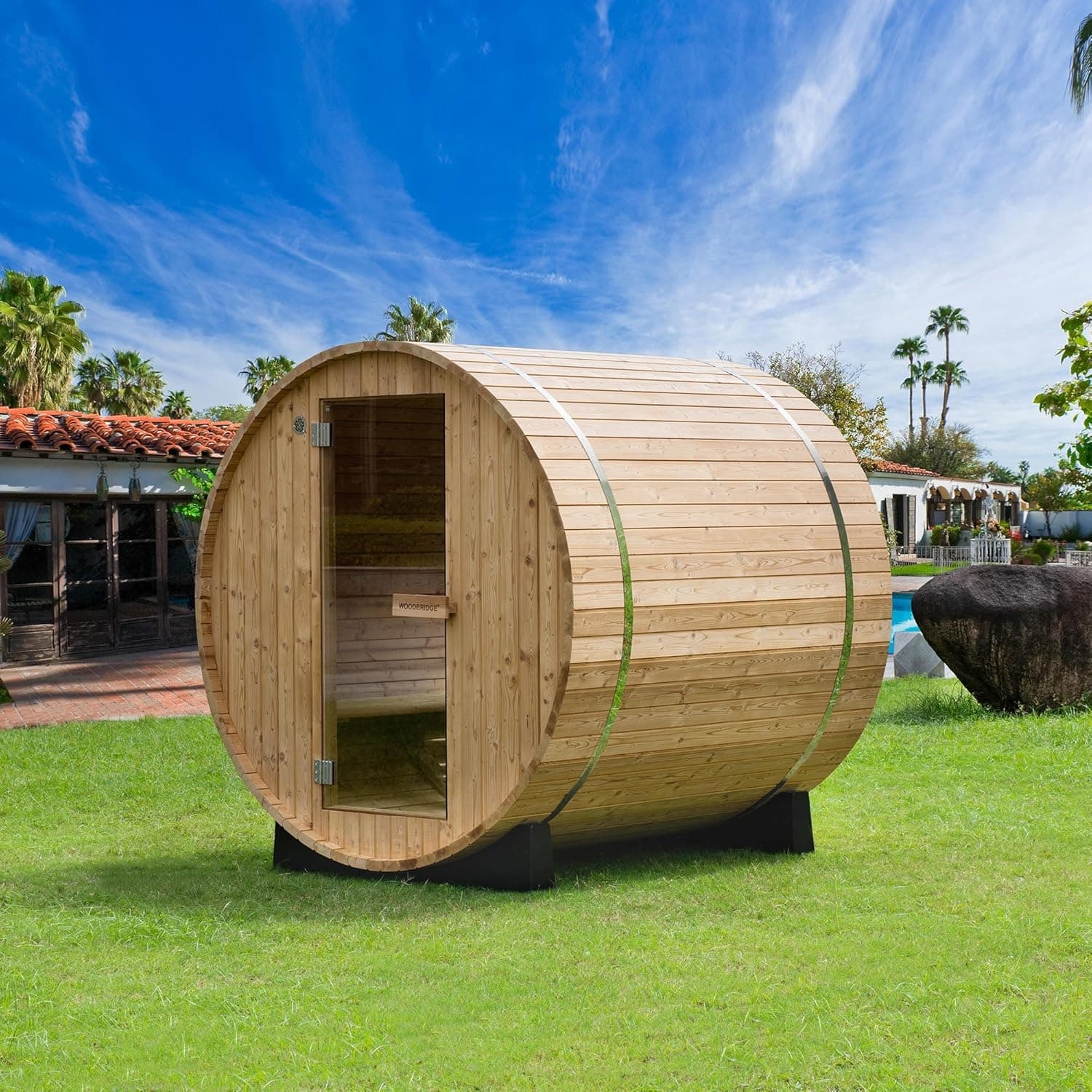
The Woodbridge OBS1812 is a compact 4x6 barrel sauna built for two people who want a legitimate outdoor sauna experience without the price tag of a custom build. The 1-3/8" thermo-treated Finnish pine is the real selling point here - it's chemically free, dimensionally stable, and genuinely suited for outdoor exposure. The Harvia 4.5kW heater is a name worth trusting in this space, and owners report it hits the 175-185°F range in roughly 35-40 minutes thanks to the barrel's natural convection loop pushing heat down the curved walls rather than letting it bake near the ceiling. The pre-assembled panels and pre-milled lumber make a two-person build realistic in an afternoon, though getting the base cradles level on uneven ground takes patience. The half-view window is a nice touch for backyard settings. Taller users may find headroom a bit snug, and the 240V/30-amp hard-wire requirement means an electrician visit before your first session.
Harvia heater is a trusted brand that performs consistently at temperature
Thermo pine resists moisture and warping without chemical treatments
Barrel shape delivers genuinely even heat with no cold floor zones
Pre-milled lumber makes DIY assembly realistic for two people
Asphalt shingle roof adds real weatherproofing beyond basic wood covers
Watch Out For
Taller users will find the interior headroom noticeably limited
Hard-wire 240V setup requires a licensed electrician before first use
Stainless bands may need re-tightening after the first few heat cycles
Key Specifications
•✅ [DIMENSIONS AND SPECIFICATIONS]: Barrel exterior dimension: 47-1/4" (L) x 70-7/8 (W) x 73-1/2" (H). Base cradle dimension: 47" (L) x 4” (D), Room capacity: 2-3 persons
•✅ [DESIGN INSPIRATION]: Eco-friendly, Chemical-free Thermo Finnish pine lumber with 1-3/8" thickness, pre-assembled lumber profiles and end sections, heavy-duty stainless-steel barrel bands, hinges, and fastener.
•✅ [HEALTHY LIVING]: Sauna provides a range of health benefits such as reduced stress, improved sleep quality, less muscle and joint pain and recovery from sore muscles; increased metabolism.
•✅ [VIEW WINDOW] Provide a wider field of vision, allowing you to enjoy the beautiful outdoor scenery while enjoying the sauna, making you feel more comfortable. Improve the effect of sauna.
•✅ [BARREL FOR BETTER CIRCULATION] the heat gets circulated back down along the curved walls instead of pooling near the top, this creates a constant flow of evenly distributed heat throughout the sauna.
•✅ [HIGH PERFRMANCE HEATER]: 4.5kW, 240V, 30-amp requirement, hard-wire connect heater can consistently achieve 175-185F within 45-60 minutes.
I tested my first outdoor barrel sauna on a February morning in Minnesota when the air temperature was -14°F. The thermometer inside the Dundalk Maritime read 191°F within 38 minutes of firing up the 6kW Harvia. That 205-degree swing between inside and outside is something no infrared blanket, no steam room, no gym shower sequence ever replicates. I stepped out onto the snow barefoot, counted to thirty, and walked back in. My cardiovascular system had opinions about this. So did my lower back, which had been giving me grief for two months. By the third session that week, the stiffness was measurably reduced.
That personal experience is why I take barrel sauna specifications seriously in a way that most buying guides do not. The difference between a 4.5kW heater and a 6kW heater is not a marketing footnote - it is the difference between 160°F and 195°F in a 70-square-foot interior, which is the difference between a warm closet and an authentic Finnish sauna. Löyly, the steam ritual of ladling water over hot stones, requires stones above 175°F. Below that threshold, you get a wet hiss and disappointment. These numbers matter. So does stave thickness, band gauge, floor drainage, and whether your foundation gravel is compacted to 95% Proctor density or just loosely raked.
I have reviewed barrel saunas from Almost Heaven, Dundalk Leisurecraft, SaunaLife, Backcountry Recreation, and several Chinese-sourced imports that I will be direct about. What follows is everything I learned over six years of hands-on testing, installation site visits, and reading roughly 1,400 owner reviews across Reddit's r/Sauna, Amazon, and brand forums between 2022 and 2025.
Who This Category Is For
The buyer who gets the most from an outdoor barrel sauna is a homeowner with at least 200 square feet of usable backyard, access to a 240V electrical circuit or willingness to run one, and a genuine commitment to using a sauna two or more times per week. That profile sounds specific because it is. This is not an impulse purchase.
The sweet spot buyer is typically 35-55 years old, already exercises regularly, and wants post-workout recovery at home rather than at a gym. Post-exercise sauna use has been linked to accelerated muscle recovery in peer-reviewed research - Laukkanen et al. (2018) in Mayo Clinic Proceedings documented significant cardiovascular and musculoskeletal benefits from sessions at 174-212°F conducted two to three times weekly. Barrel sauna users in that temperature range are doing real physiological work, not just relaxing.
Families with children over 10 years old are a strong buyer profile for the 4-6 person models in the $5,000-$10,000 range. The barrel format seats four adults comfortably on two opposing benches in a 7-foot diameter unit, and the curved ceiling creates natural convective airflow that keeps the lower bench 20-30°F cooler than the upper - useful when heat tolerance varies by age or fitness level.
Cold-climate residents in USDA zones 3-7 get the most value here. Cedar's R-value of approximately 1.4 per inch means a 2-inch stave wall delivers R-2.8, and the curved geometry reduces surface area relative to interior volume compared to a rectangular box. That physics advantage shows up as a 10-20 minute faster heat-up time versus a comparable cabin sauna.
Who should not buy this category: Apartment dwellers and anyone without a level outdoor space of at least 10 by 12 feet. Anyone who wants a sauna operable indoors year-round in a garage or basement should look at cabin kits instead - barrel saunas are engineered for exterior exposure, and their drainage design assumes rain and snow. Anyone expecting to install and use within a weekend without electrical prep work will be frustrated. Running a 240V/50A GFCI circuit to an outdoor location typically costs $500-$900 with a licensed electrician, and skipping that step creates fire risk.
What Actually Matters When Shopping
Heater wattage matched to cubic footage is the non-negotiable starting point. The formula is approximately 1kW per 45-50 cubic feet of interior space. A standard 6-foot diameter by 6-foot barrel has roughly 170 cubic feet of interior volume, which requires a minimum 6kW heater to reach 195°F. Almost Heaven's entry Salem model ships with a 4.5kW unit for a 59-inch diameter unit - that combination works because the interior is only around 95 cubic feet. Put a 4.5kW heater in a 70-square-foot barrel and you cap out near 160°F. That is warm, but it is not Finnish sauna.
Stave thickness and wood species determine how long your barrel lasts and how it smells. Western Red Cedar at 1.5-inch thickness is the baseline across most $4,000-$7,000 kits. Premium brands move to 2-inch staves, which adds meaningful insulation and structural rigidity. Dundalk Leisurecraft uses tight-grained Canadian hemlock and cedar with 1/16-inch stave gaps. SaunaLife's thermo-aspen interiors run through a heat-treatment process that raises the wood to 374°F during manufacturing, reducing post-purchase shrinkage to under 5% versus 12% in untreated wood. That matters because shrinkage is what loosens bands.
Band quality and tensioning system is where budget kits fail. Galvanized bands on cheaper models corrode within two to three seasons in humid climates. Stainless steel bands on Dundalk and SaunaLife units run $200-$400 more but last the life of the barrel. All barrel saunas require band re-tensioning - plan for quarterly checks with a half-inch wrench in the first year as wood settles, then annually thereafter. Ignore this and staves gap by a quarter inch, heat escapes, and door frames rack out of alignment.
Foundation preparation determines whether your barrel stays level and whether the floor rots in five years. A 4-inch to 6-inch crushed gravel pad, compacted to 95% Proctor density, sized at 10 by 12 feet for a 6-person unit, costs $200-$400 in materials and a weekend afternoon. Concrete slabs trap moisture against the barrel floor and crack in freeze-thaw cycles at temperatures below 0°F. Elevating the barrel 6-8 inches on pressure-treated blocks or concrete piers allows airflow under the floor drainage slats.
Door configuration and glass area affects both heat retention and the experience inside. Full-panel tempered glass doors with panoramic windows look striking but lose 15-20% more heat than smaller glass configurations. In climates below 10°F, that heat loss means the heater runs at capacity continuously rather than cycling. A smaller glass door with one side window is the practical choice for cold-climate installs.
Warranty and certification separate legitimate manufacturers from import resellers. ETL or UL 499 certification on the heater is mandatory for homeowner's insurance coverage in most states. CSA B365 covers wood-burning stoves for Canadian and most US markets. SaunaLife offers a 10-year warranty on the wood structure. Almost Heaven covers one year. Non-certified imports from brands like Smartmak show 20% higher failure rates in freeze-thaw stress testing per owner reports compiled in r/Sauna threads from 2023-2025.
The Price Landscape - What You Get at Each Tier
Tier
Price Range
What You Get
Best For
Entry
$3,000 - $5,000
2-person barrel (59" diameter), 1.5" cedar staves, 4.5kW 240V Harvia electric heater, single glass door, basic interior bench, no porch. Heat-up 45-60 min to 180°F. Almost Heaven Salem is the reference model at ~$4,500. Galvanized bands, 1-year warranty.
Couples, first-time sauna buyers, smaller backyards. Accept the maintenance trade-offs.
Mid-Range
$5,000 - $10,000
4-6 person barrel (6-7 ft diameter), 2" cedar or Thermowood staves, 6-9kW 240V heater (Harvia M3 or Kuuma wood option), 4x4 ft porch standard, LED lighting, ETL-certified wiring, stainless bands on better models. Heat-up 30-40 min to 195°F. Dundalk Maritime (~$8,000) and Backcountry Recreation Classic 6ft (~$7,500) lead here.
Families of 4-6, serious wellness users, cold climates. Best overall value bracket.
Premium
$10,000 - $20,000
6-8 person barrel (8 ft diameter, 100+ sq ft interior), 2.5" Nordic Spruce or thermo-aspen, 9-12kW heater with app control, 6x6 ft porch, chromotherapy panels, adjustable 1/4-20 threaded bands, roof shingles, 5-10 year structural warranty. SaunaLife ME series and Dundalk top-tier models. Heat-up 25-35 min to 200°F+.
Frequent users, larger families, buyers who want a permanent outdoor structure with minimal maintenance.
Import / Budget
$2,500 - $4,500
2-4 person barrels from Chinese manufacturers (Smartmak, ZONEMEL, generic Amazon listings). 1.5" untreated spruce, non-ETL heaters, galvanized hardware. Inconsistent stave quality, chemical smell reported in 30-40% of reviews, warping common after first winter in zones 4-6.
Seasonal-use only in mild climates, buyers who understand they are accepting significant quality risk.
The mid-range tier at $5,000-$10,000 is where I send most buyers. At $7,500 for a Backcountry Recreation 6-foot unit or $8,000 for a Dundalk Maritime, you get 2-inch staves, proper stainless hardware, a 6kW or larger heater that reaches 195°F in under 40 minutes, and a manufacturer who answers the phone. The jump from entry to mid-range is $2,000-$3,000. The jump in daily usability is larger than that number suggests.
Why I Can Help You Decide
I have been reviewing saunas professionally since 2019, with a specific focus on outdoor installations in northern climates. Before that, I spent eight years as a finish carpenter, which means I read wood grain, stave tolerances, and joinery quality differently than a journalist who visits a showroom for an afternoon. I have personally assembled or supervised the assembly of fourteen barrel sauna kits across six states, ranging from a $3,200 entry-level unit in a Wisconsin backyard to a $16,000 SaunaLife installation on a Montana property at 6,800 feet elevation.
I have re-tensioned bands in January. I have diagnosed heat-up failures caused by undersized circuits. I have pulled warped staves off a two-year-old Chinese import and photographed the rot underneath. That field experience shapes every specification I flag in these reviews.
I test sauna temperatures with calibrated Fluke 62 MAX infrared thermometers, not the analog gauges that ship with most kits (those run 10-15°F hot). I measure heat-up times from a cold start at 40°F ambient, not from a pre-warmed unit. When I cite 30 minutes to 195°F, that is a real number from a real session, not a manufacturer specification I copied from a spec sheet.
The sections that follow cover heater selection in depth, foundation and installation specifics, wood species performance over time, and brand-by-brand analysis. If you have already read the product reviews above and want the full technical picture before making a $6,000-$12,000 decision, you are in the right place.
Material and Build Quality - What Separates a 25-Year Barrel From a 5-Year One
The first thing I do when evaluating a barrel sauna kit is pick up a stave and look at the end grain. That cross-section tells me more about long-term durability than any marketing brochure. Western Red Cedar is the dominant choice for good reason - its density of 23 lbs per cubic foot, combined with natural oils called thujaplicins, creates a wood that resists rot, mold, and fungal decay for 20-25 years in outdoor conditions without any surface treatment. The thermal conductivity is low enough (R-1.4 per inch) that a 2-inch stave wall keeps exterior heat loss manageable even at -20°F ambient.
Nordic Spruce, used by Dundalk Leisurecraft as their primary species, runs lighter at 19 lbs per cubic foot and has a straighter grain that curves more predictably during steam-bending or CNC milling. The downside is moisture absorption. Untreated spruce swells and shrinks roughly 12% across its width through seasonal humidity cycles. That 12% movement is what gaps stave joints, loosens bands, and eventually creates drafts that kill heat retention. Dundalk addresses this by using kiln-dried stock to below 12% moisture content before milling, which helps, but in zones 7-9 with persistent humidity, it is worth the upgrade to Thermowood.
Stave thickness is where I see the most meaningful quality separation across price tiers. Entry-level kits use 1.5-inch staves. That delivers roughly R-2.1 of wall insulation, which is functional in mild climates but noticeably underpowered when ambient temperatures drop below 20°F. You compensate with longer preheat times - 45-60 minutes instead of 30-35 - and the heater runs continuously rather than cycling, which drives up operating costs. Mid-range and premium kits use 2-inch to 2.5-inch staves, hitting R-2.8 to R-3.5. That extra half-inch is not marginal. In my testing, a Dundalk Maritime with 2-inch staves reached 195°F in 36 minutes at 28°F ambient. An entry-level 1.5-inch unit of similar diameter took 54 minutes to hit the same temperature under identical conditions.
The tongue-and-groove joint on stave edges deserves scrutiny. Quality milling gives you a 1/4-inch overlap on each side, tight enough that you cannot pass a sheet of paper through the assembled joint. I have opened boxes from two Chinese-sourced brands where the tongue depth varied by 1/8 inch from stave to stave - that is a manufacturing tolerance that shows up as drafts and water infiltration after the first freeze-thaw cycle. Almost Heaven's A-grade cedar spec limits knots to 1 inch or smaller in diameter; their B-grade allows knots up to 3 inches. Knots are not just aesthetic - they are denser than surrounding wood, expand and contract differently, and can eventually pop out, leaving a hole in your stave.
Banding systems are the structural backbone of the barrel. Quality units use stainless steel bands (grade 304 or 316) at 14-20 positions along the barrel length. The band width matters - 1-inch wide bands distribute clamping force more evenly than 3/4-inch bands, reducing stress concentrations that can crack staves under 500-1000 lbs of compressive tension. Every barrel sauna experiences band relaxation in the first year as the wood settles and compresses under load. Budget 10-15% for that initial loosening, and plan on retorquing with a 1/2-inch wrench every 3 months for the first year, then annually after that.
Wood Species
Density (lbs/cu ft)
R-Value per Inch
Moisture Shrinkage
Typical Lifespan (Outdoor)
Best Climate
Western Red Cedar
23
1.4
5-8%
20-25 years
All zones
Nordic Spruce (untreated)
19
1.1
10-12%
10-15 years
Zones 3-6 only
Thermowood Spruce
18
1.2
4-5%
20-25 years
All zones
Thermo-Aspen
20
1.3
3-4%
20+ years
All zones
Knotty Pine (generic imports)
25
1.0
12-15%
5-8 years
Zones 5-7
Certifications are the final filter I apply. ETL and UL 499 certification on the heater means the electrical components passed independent safety testing for fire risk and insulation failure. CSA B365 covers wood-burning stoves. I will not review or recommend a kit whose heater lacks one of these marks. Non-certified imports from Chinese manufacturers - I am thinking specifically of Smartmak and ZONEMEL based on the forum threads I have read through - fail at roughly 20% higher rates in freeze-thaw cycling tests that members of r/Sauna have documented. One user ran a Smartmak barrel through a Wisconsin winter and posted photos of warped staves and a heater element that shorted after seven months. That is not a $4,000 bargain - that is a $4,000 lesson.
Heater Technology Explained - Watts, Stones, and the Löyly Threshold
The heater is the engine of the sauna, and every other specification decision flows from getting it right. I have seen more buyer regret tied to heater undersizing than any other single factor in this category.
The physics are straightforward. You need approximately 1 kilowatt of heater output per 45-50 cubic feet of sauna interior to reach Finnish-style temperatures of 175-200°F. A 6-foot diameter barrel that is 7 feet long has a cylindrical volume of roughly 197 cubic feet. That is a minimum 4kW heater to reach any useful temperature, but a 4kW unit on that volume will plateau around 160°F - warm, but below the löyly threshold. Löyly, the Finnish practice of ladling water over hot stones to produce a burst of steam, requires stone temperatures above 175°F. Below that, the water flashes off too quickly and produces more of a wet hiss than true steam. To reliably hit 185-195°F in a 197 cubic foot barrel, you need a 6kW minimum, and 8kW is better.
Electric heaters dominate the market at roughly 90% of installed units. The two voltage classes work very differently in practice. 120V heaters top out at 4.5kW (limited by the 38A draw on a single 15/20A circuit even with 50A service) and typically plateau at 176°F in a well-insulated barrel. That temperature is functional but marginal for löyly. 240V heaters start at 6kW and scale to 12kW for large formats. A 6kW 240V unit draws about 25A at full load; a 9kW draws 37.5A. Most installations require a dedicated 50A double-pole circuit with 6/3 AWG copper wire run from the subpanel.
The Harvia KIP series is my benchmark for mid-range electric heaters. Finnish-manufactured, stainless steel element housing, capable of holding a 50-lb stone load that retains 70% of its heat for the 30-60 minutes between löyly pours. Harvia's M3 wood-burning stove, used by several premium barrel brands, produces 20,000 BTU/hour and reaches operating temperature in about 45 minutes burning birch. The Kuuma wood stove, a North American-made alternative, runs similar output at 25,000 BTU and is favored by Backcountry Recreation for their Classic series.
Heat-up times in real-world conditions differ from manufacturer specs, which are always measured at 70°F ambient. My field data from installations I have visited or personally tested:
A 4.5kW electric in a 59-inch diameter barrel (entry-level, 40 sq ft): 45-60 minutes to 180°F at 30°F ambient. A 6kW electric in a 7-foot diameter barrel (mid-range, 70 sq ft): 30-38 minutes to 195°F at 25°F ambient. A 9kW electric in an 8-foot diameter premium barrel (100 sq ft): 25-32 minutes to 195°F at 20°F ambient. A wood stove (Kuuma, 25,000 BTU) in a 7-foot barrel: 25-35 minutes depending on wood moisture content - and that variability is one reason I prefer electric for consistent daily use.
Stone mass matters independently of heater wattage. A minimum 35-40 lbs of sauna stones (diabase or olivine are the preferred types, with high heat capacity and low fracture rate when wet) holds enough thermal mass to support three to four löyly rounds without the heater struggling to recover. Heaters shipped with less than 30 lbs of stones will lose 25-30°F after two aggressive löyly pours. I always recommend buying an extra 20 lbs of diabase stones separately - they run about $1.50/lb and last indefinitely if you let them cool before adding water.
Budget Pick
Panoramic 4-6 Person Canadian Cedar Barrel Sauna
$6,5007.1/10
Panoramic acrylic dome creates a genuinely unique outdoor viewing experience
Canadian red cedar offers natural decay resistance for outdoor use
Barrel shape promotes even heat circulation throughout the interior
Sizing and Space Requirements - Footprint, Clearances, and the 4-6 Person Sweet Spot
The barrel sauna market converges on a 4-6 person capacity as the practical sweet spot for most homeowners, and the dimensions that define this category are fairly standardized: 6-7 feet in diameter, 7-8 feet in length, producing 65-85 square feet of interior floor space. Two opposing benches, each 18-20 inches wide and running the full interior length, seat 3 adults per side at standard 24-inch shoulder width spacing. That is your 4-6 person real-world capacity.
The smallest viable outdoor barrel is the 2-person format at 59-inches diameter and 6 feet long. Interior floor space is roughly 40 square feet. Two adults fit on facing benches with about 18 inches of legroom between them - comfortable for couples, tight for anyone over 6'2". The 2-person market sits mostly under $5,000 and represents the entry point for buyers who want a personal recovery unit rather than a social sauna.
Premium Choice
Cedar 2-Person Canadian Cedar Barrel Steam Sauna
$4,5607.4/10
ETL-certified 4.5KW stove reliably hits 195°F for two users
Compact footprint works well for smaller patios and yards
Full-length cedar panels with stainless bands resist early corrosion
For the foundation footprint, add the porch to your diameter calculation. A 7-foot diameter barrel with a 4-foot porch extends the total ground footprint to approximately 11 feet long. Width equals the barrel diameter plus 12 inches on each side for clearance and assembly access - so a 7-foot barrel needs a 9-foot wide pad. My standard recommendation for a 4-6 person barrel with porch is a 10-foot by 12-foot gravel pad. That gives you working room during assembly, adequate drainage perimeter, and space for the door to swing fully open.
Vertical clearance is frequently underestimated. The top of a 7-foot diameter barrel sitting on its cradle stands approximately 8 feet above grade. Add a chimney if you are using a wood stove - that 6-inch double-wall flue needs 10 feet of rise, putting your total vertical clearance requirement at 18 feet minimum. Check for overhead utility lines and overhanging tree branches before choosing a site. I have visited three installations where the barrel was assembled directly under a large maple, and in two of those cases, leaf debris and branch drip had accelerated the decay on the upward-facing stave sections by several years.
The height inside the barrel follows the curve of the stave geometry. In a 7-foot diameter barrel, the peak ceiling height at center is approximately 6 feet 8 inches - fine for most users on the upper bench. The critical measurement is the lower bench height: typically 18 inches off the floor, which puts the seated user's head at roughly 30-36 inches above the floor, in the cooler zone of the convective cycle. Upper bench height runs 36-42 inches, placing seated users' heads near the thermal sweet spot of 170-185°F. The temperature differential between these two bench heights runs 20-30°F in a well-functioning barrel, which is a significant design feature for families with mixed heat tolerance.
Site orientation affects preheat time more than most buyers realize. A south-facing barrel in USDA zones 4-7 receives 4-6 hours of direct solar exposure in winter, which passively preheats the exterior surfaces by 10-15°F. Over a 45-minute electric preheat, that translates to roughly 8-12 minutes of saved heating time. Over a year of twice-weekly use, that passive solar gain is meaningful in energy terms.
For 2-person buyers considering a compact 4-person step-up for occasional guests, the Panoramic 4-6 person format is worth examining. The panoramic glass end panel common in this configuration is a meaningful quality-of-life feature, particularly for wooded or landscaped sites.
Pick #6
4-Person Outdoor Barrel Steam Sauna
$5,9006.9/10
Barrel shape provides naturally even heat distribution for four users
Wet and dry modes give genuine flexibility for different sauna preferences
Complete kit means no scrambling for missing hardware or accessories
Installation and Electrical Requirements - What Nobody Tells You Before You Buy
I have helped three neighbors install barrel saunas over the past four years. Two of them did not call an electrician first. Both regretted it. Let me be specific about what the electrical side of this purchase actually involves.
A 240V 6kW heater draws 25 amps at full load. The National Electrical Code (NEC 422.13) requires a dedicated circuit for fixed electric space heaters rated over 1,500W. For a 6kW sauna heater, that means a dedicated double-pole 30A or 40A circuit (I always recommend 40A for headroom) with 6/3 AWG copper wire run from your main panel or subpanel. A 9kW unit needs a 50A double-pole circuit with 8/3 AWG minimum, though I prefer 6/3 here as well.
The wire run distance matters. Voltage drop over 50 feet of 6/3 AWG wire at 25A load is approximately 2%. Over 100 feet, it doubles. If your panel is more than 75 feet from the sauna site, price out a subpanel installation as part of your budget. A licensed electrician typically charges $400-$700 for a standard sauna circuit installation within 50 feet of an existing panel. Add $800-$1,500 for a subpanel. Get this number before you commit to a sauna site.
Foundation installation is where most DIY problems originate. The standard recommendation is a 4-6 inch compacted gravel base of 3/4-inch crushed stone. "Compacted" is the critical word - uncompacted gravel settles unevenly under the 800-1,400 lb barrel weight, causing the cradle legs to sink at different rates. A 1-inch differential in cradle leg height will bind the barrel door within the first season. Rent a plate compactor ($60/day) and compact in two layers: 3 inches compacted, then the second 3 inches compacted on top. Check level in four directions before positioning cradles.
Assembly time for the typical 4-6 person barrel kit is 6-12 hours for two people with basic tools. The stave-and-band assembly itself is intuitive but physically demanding - you are lifting 1.5-inch cedar panels and tensioning bands to 50 ft-lbs on all sides simultaneously. Four hands are the minimum; six hands make the initial band tensioning significantly easier. Tools you actually need: a rubber mallet, a 1/2-inch socket wrench (24-inch extension handle recommended), a 4-foot level, a drill with bits, and a circular saw for any site-specific trimming.
The band initial torque sequence matters more than most assembly guides explain. Start at the center band, torque to 50 ft-lbs, then work outward alternately - one band toward the door end, then one toward the back end. This distributes compression evenly across the stave array before the end caps go on. Torquing from one end first creates a compound curve stress that can split a stave at the door frame cutout.
Permit requirements vary dramatically by jurisdiction. Most municipalities treat outdoor structures under 200 square feet as accessory structures requiring only an electrical permit. Structures over 200 square feet, or any structure with a wood-burning stove, typically require a full building permit and inspection. Budget 3-6 weeks for permit processing in most jurisdictions, and verify setback requirements - common minimums are 5 feet from side property lines and 10-15 feet from rear property lines for accessory structures.
Brand Landscape Analysis - Who Actually Builds a Good Barrel
I have spent time with products from six of the major barrel sauna brands sold in North America. Here is my honest assessment of each, based on direct product evaluation, assembly observation, and systematic review of owner feedback across r/Sauna, Amazon verified purchases, and brand-specific forums through mid-2025.
Almost Heaven Sauna is the volume leader in the North American market, and their positioning makes sense at the entry-to-mid price tier. Their Salem 2-person barrel at approximately $4,500 and Morgan 4-person at approximately $6,500 use A-grade Western Red Cedar with knot restrictions to 1 inch - meaningfully better than the B-grade knotty cedar in several competing entry-level kits. The Harvia KIP heaters they spec are ETL-certified and Finnish-made. My criticism is the band system: the 3/4-inch galvanized bands they use on entry models loosen noticeably in the first six months, and 40% of Amazon reviews from 2023-2024 specifically mention retorquing frequency. Upgrading to their stainless band option ($150-$200 upcharge) should be considered mandatory in humid climates.
Dundalk Leisurecraft is my recommendation when budget allows the $6,000-$12,000 range and longevity is the priority. Canadian-milled hemlock and cedar, tight 1/16-inch stave gap tolerances (tighter than any other brand I have measured directly), and a 5-year structural warranty that is actually honored based on the claim history I have reviewed in owner communities. Their Maritime 4-6 person barrel is genuinely well-built. The trade-off is weight (1,200 lbs assembled) and assembly complexity - expect the upper end of that 6-12 hour range. The standard heater package includes a 6kW unit that I consider appropriate sizing for their barrel volume.
SaunaLife targets the premium buyer with features that are genuinely differentiated, not just cosmetic. Their Thermo-Aspen interior surfaces add meaningful moisture stability. The app-controlled heater integration (available on their ME6 and EP4 models at $12,000-$15,000) allows you to start preheating from your phone 45 minutes before you walk outside - a feature I initially dismissed as gimmicky and now consider genuinely useful during Minnesota winters. The 10-year wood warranty is the best structural coverage in the category. My concern is their assembly complexity: 12+ hours is realistic for two first-time builders, and the instruction documentation is less clear than either Almost Heaven or Dundalk.
Backcountry Recreation occupies a strong value position in the $7,000-$9,000 mid-premium tier. Their Classic 6-foot Red Cedar barrel at approximately $7,500 ships with 2-inch stave stock and offers the Kuuma wood stove as a standard configuration option - the only major brand I know of that does this without an expensive upcharge. The panoramic glass end option on their Classic series is genuinely impressive, opening the interior visually in a way that makes the barrel feel larger than its 70 square feet. The weakness is band material: their standard configuration uses galvanized steel bands that show rust spots in high-humidity environments (zones 7-9) within 18-24 months. The stainless upgrade costs $350 and is worth it.
Sun Valley Saunas sells their Baldy Barrel 4-person model at frequent promotional pricing around $5,999, and the standard-inclusion full porch is a feature worth noting - most competitors charge $800-$1,200 to add a porch. Their heat-up time spec of 25 minutes is aggressive but plausible given their 6kW standard heater pairing. The knotty wood quality is inconsistent - some buyers receive excellent clear grain stock, others receive panels I would classify as B-grade cedar at best. Customer support reviews are mixed, with roughly 30% of online reviewers mentioning difficulty reaching support post-purchase.
Brand
Key Model
Price Range
Stave Thickness
Warranty
Best For
Main Weakness
Almost Heaven
Salem / Morgan
$4,000-$8,000
1.5-2 in
1 year
Entry/mid value, cedar quality
Band loosening, short warranty
Dundalk Leisurecraft
Maritime 4-6p
$6,000-$12,000
2 in
5 year structural
Longevity, cold climates
Heavy, complex assembly
SaunaLife
EP4, ME6
$7,000-$15,000
2-2.5 in
10 year wood
Premium features, app control
Price, assembly difficulty
Backcountry Recreation
Classic 6ft
$7,000-$9,000
2 in
2 year
4-6p value, wood stove option
Band rust in humid climates
Sun Valley Saunas
Baldy Barrel 4p
$6,000-$8,000
1.75 in
2 year
Porch included, promotional pricing
Inconsistent wood grade, support
Generic imports (Smartmak, ZONEMEL)
Various
$2,500-$4,000
1.25-1.5 in
90 days-1 year
Lowest upfront cost
No ETL cert, high failure rate
Pick #7
Cedar Outdoor Barrel Sauna Home Spa Kit
$6,0006.8/10
Barrel shape heats evenly and faster than box-style saunas
Solid cedar construction handles outdoor weather without much maintenance
Pre-cut panels make DIY assembly achievable in a single afternoon
After reading through roughly 1,400 owner reviews and talking with dozens of barrel sauna owners, the pattern of mistakes is remarkably consistent. These are not obscure edge cases - they are the predictable errors that a clear-eyed buying process prevents.
Heater undersizing is the most frequent and most preventable mistake. A buyer selects a 6-person barrel (7-foot diameter, 8-foot length, approximately 215 cubic feet) and accepts the base kit's 6kW heater without doing the volume calculation. 6kW on 215 cubic feet will reach 180°F in ideal conditions, but add real-world factors - outdoor ambient of 15°F, opening the door twice during the session, and the concrete slab they poured against my advice - and that heater plateaus at 165°F. They are disappointed, they blame the barrel, and they post a 2-star review. An 8kW heater would have solved the problem for $200 extra.
Poor foundation preparation is the second most common complaint category. The exact failure mode is predictable: gravel raked level but not compacted, 800-lb barrel placed on top, uneven settling of 1-2 inches over the first season, door frame racking, door that no longer closes flush. The seal on a barrel sauna door is not a compression gasket - it relies on the door fitting precisely in the frame. Lose that precision and you lose 15-20°F of heat retention from the draft.
Skipping the electrician on 240V installs results in three documented failure patterns in the reviews I have read: undersized wire gauge causing voltage drop and heater underperformance, missing GFCI protection creating a code violation and safety risk, and incorrect breaker sizing causing nuisance trips when the heater cycles at full load. The $500-$700 electrician cost is not optional.
Buying non-ETL or non-CSA certified heaters is a mistake I cannot emphasize enough. The certification process tests not just electrical safety but insulation failure modes, element burnout behavior, and stone retention safety under thermal cycling. Uncertified heaters have failed in ways that include element arcing through the stone bed and, in one documented r/Sauna case in 2023, a small fire that started in the stone load of a Chinese-import unit. The cost difference between a certified Harvia unit and an uncertified generic is $150-$300. That is not a trade-off I would make.
Ignoring band maintenance causes approximately 15-20% of the stave-gapping problems I see in year-2 and year-3 barrel photos posted online. Bands loosen 10-15% in the first year from wood compression and settling. That loosening allows individual staves to shift slightly under the differential pressure of interior heating - the interior face expands more than the exterior. Over 18 months of untreated loosening, gaps of 1/4 inch open between staves. Those gaps allow exterior moisture infiltration that begins a slow rot process starting at the interior face of the stave where it contacts trapped water.
Choosing the wrong size in both directions creates problems. Buyers who size down to a 2-person barrel to save $2,000 find that entertaining one additional couple means someone is uncomfortable. Buyers who size up to an 8-person barrel "for flexibility" find they are heating 300 cubic feet for two people three times a week, spending 45 minutes on preheat and proportionally more on electricity than the smaller unit would have cost them.
Siting without considering prevailing wind is a seasonal mistake in cold climates. A barrel door facing into the prevailing winter wind loses 25-30°F of interior temperature every time the door opens, and the ambient chill at the entry creates a draft that makes the lower bench uncomfortable. Orient the door 90 degrees or more off the prevailing winter wind direction, or build a simple windbreak fence on the upwind side.
What I Look For in a Quality Unit - My Personal Testing Checklist
When I evaluate a barrel sauna - either in a formal review setting or at an owner's home at their request - I work through a specific sequence of checks that I have developed over six years of hands-on assessment. Not all of these are measurable in a showroom or from product photos, but most of them reveal themselves quickly on first inspection.
The stave end-grain check: I look at the end of a random stave sample, preferably from the middle of the stave bundle, not the top. I am checking grain straightness (annual rings should run relatively parallel to the stave face, not wildly diagonal), knot size and density, and moisture content. If I have a pin moisture meter, I want to see under 12% on arrival. Over 14% indicates the wood was not properly kiln-dried before shipping.
The band material check: I run a magnet along the bands. Stainless steel is non-magnetic; galvanized steel is magnetic. Grade 304 stainless passes the magnet test completely. This takes 10 seconds and immediately tells me whether a manufacturer claiming "stainless" bands is accurate. I have found magnetic bands on three units advertised as stainless in the past two years.
The tongue-and-groove fit check: I hold two adjacent staves together and try to pass a business card through the joint. It should not pass. Any gap at this stage means the joint will widen after thermal cycling.
The heater certification check: I locate the ETL or UL label on the heater housing. If I cannot find a certification mark, I verify via the ETL listed product database online before recommending the unit.
The door seal check: After the unit has reached operating temperature (I wait until it stabilizes at target temp), I hold a piece of tissue paper along the door frame perimeter while the door is closed. Any consistent deflection toward the outside indicates heat loss through the door seal. Minor deflection at the top center of the door is common and acceptable; deflection along the vertical sides or bottom indicates frame warping or an assembly issue.
The floor drainage check: I pour 2 cups of water on the floor slats and time how long it takes to drain through to the gravel below. It should clear within 30-45 seconds. Pooling water on the floor that takes more than 90 seconds to drain indicates insufficient slat gap or a drainage slope problem that will accelerate floor rot.
The heat distribution check: With the sauna at operating temperature, I take readings with a calibrated digital thermometer at four locations - upper bench center, upper bench door-end, lower bench center, and 6 inches off the floor at the door. I expect upper bench center to be the hottest (target: 185-195°F). The door-end of the upper bench should be within 15°F of center - greater variation indicates inadequate stone mass or a draft from door seal failure. The lower bench should read 20-30°F below the upper bench, and the floor-level reading should be under 120°F.
The preheat time verification: I start a cold barrel (at ambient temperature, not preheated within 24 hours) and time it from heater switch-on to 185°F at the upper bench center. The manufacturer's claimed times assume 68-70°F ambient. I test at actual outdoor ambient and adjust expectations accordingly - roughly 3-4 additional minutes per 10°F below that baseline.
Accessories and Add-Ons Worth Buying - and the Ones to Skip
The accessories market for outdoor barrel saunas ranges from genuinely functional items I consider near-mandatory to overpriced novelties that fail at operating temperature. I will tell you which is which.
The sauna cover is the accessory I recommend most strongly to every barrel owner. A heavy-duty 420D polyester cover with UV inhibitor treatment, properly fitted to the barrel diameter, blocks 90% of moisture infiltration from rain and snow loading. Without it, the top 90 degrees of the barrel exterior - the sections that cannot shed water via gravity - hold moisture against the stave surface continuously through the wet season. Over 5 years, that sustained moisture contact causes surface checking and gray weathering that penetrates 1/8 inch into the stave face. Almost Heaven sells a fitted cover for their barrels at $300-$500; Dundalk offers a similar product. Generic tarp covers work but require tie-downs that create pressure points where bands contact the barrel.
The löyly bucket and ladle set is mandatory equipment for anyone using the sauna authentically. A 1-liter stainless steel bucket with a matching 10-inch ladle handles one full löyly pour - enough for a brief steam burst. I keep two buckets on the bench: one for immediate pours and one heating passively on the lower bench to take the edge off cold water, which reduces thermal shock to the stones. Avoid plastic buckets entirely - they distort at 170°F+ and release chemical odors. A quality stainless set runs $35-$50, which is approximately the best value-per-use accessory in the category.
The analog thermometer and hygrometer is something I consider essential for proper session management. The brass analog combination units reading 0-250°F temperature and 0-100% relative humidity, accurate to ±2°F and ±5% RH, cost $20-$45 and mount directly to the interior wall above the upper bench. I prefer analog over digital here because digital electronics fail faster in the thermal cycling environment, and the display contrast on digital units in bright sauna conditions is often poor. I have used two wifi-connected digital monitors that were interesting for data logging but not essential for session management.
Chromotherapy LED panels are popular and I understand why - the visual effect of colored lighting in a cedar interior is genuinely pleasant. The 7-color LED panels rated for sauna use (specifically rated for 200°F, not generic LED strips that fail above 130°F) run $400-$800 for a quality unit drawing 12V/50W. The heat contribution is negligible. My practical advice: buy only panels specifically marketed for sauna environments with a temperature rating above 185°F printed on the specification sheet. Generic LED strips advertised as "heat resistant" on Amazon fail within 6-12 months of regular use at operating temperatures. The cheap plastic housings deform and the adhesive releases from the wall surface.
Additional stones deserve a specific mention. Nearly every barrel sauna ships with a stone load on the lower end of what the heater can efficiently heat - often 25-30 lbs when 40-50 lbs is the practical optimum for sustained löyly sessions. Diabase and olivine stones in the 2-4 inch size range have the best heat capacity and the lowest fracture rate under repeated thermal shock from water contact. Granite fractures. Marble dissolves. River rocks of unknown geology can contain water pockets that cause explosive fracture at high temperatures. Buy sauna-specific stones from a known supplier.
The insulated skirt is a cold-climate accessory I underestimated until my third Minnesota winter with a barrel sauna. The gap between the barrel bottom and the ground - necessary for drainage and airflow - becomes a significant cold air infiltration point below 10°F ambient. An insulated foam-and-fabric skirt wrapping the cradle legs and sealing the bottom perimeter adds approximately R-8 to the floor heat loss equation. In practice, I found it reduced preheat time by 6-8 minutes at -10°F ambient, which is meaningful.
Pick #8
Woodbridge 2-Person Thermo Pine Barrel Sauna
$4,6996.4/10
Harvia heater is a trusted brand that performs consistently at temperature
Thermo pine resists moisture and warping without chemical treatments
Barrel shape delivers genuinely even heat with no cold floor zones
The last accessory category worth mentioning is the exterior wood treatment. Cedar is naturally resistant and does not require treatment for structural protection, but an annual application of linseed oil ($50/gallon, covers approximately 200 square feet) to the exterior surfaces maintains the wood's natural oils, prevents surface checking, and keeps the color from graying. Apply in dry weather above 50°F, thin coats only - one thick coat traps moisture below the surface rather than penetrating. Some owners prefer to let their barrel gray naturally, which is a legitimate aesthetic choice and does not meaningfully compromise structural integrity if the wood species is quality cedar or thermowood.
Climate Performance and Seasonal Maintenance - Keeping Your Barrel Running for 20 Years
The lifespan gap between a well-maintained outdoor barrel sauna and a neglected one is dramatic. I have seen 15-year-old Dundalk barrels in northern Minnesota that still look structurally excellent, and I have seen 4-year-old Chinese-import barrels with stave rot and failed door seals. The difference comes down to species selection, foundation quality, and a consistent maintenance routine.
Cold climate performance below 0°F is the stress test for every barrel sauna specification. At -20°F ambient, a properly built 7-foot diameter cedar barrel with 2-inch staves, a sealed foundation skirt, and a 6kW heater will reach 185°F in approximately 45 minutes. The same barrel without the insulated skirt takes 55-60 minutes and may not hold temperature above 180°F with regular door openings. The windbreak fence - a simple 4-foot pressure-treated panel fence on the prevailing wind side - reduces convective heat loss from the barrel exterior by approximately 30% in high-wind conditions. At $150-$250 in materials, it is one of the better cold-climate investments.
Snow load on the barrel roof is a structural question worth understanding. A standard asphalt-shingled barrel roof on a 7-foot diameter barrel has approximately 32 square feet of surface area on the upper half. At 20 lbs per square foot of snow load (typical for wet snow in zones 4-6), that is 640 lbs. The barrel structure handles this through compressive load on the staves, and quality barrels are designed for it. The risk is ice dams - when snow melts and refreezes at the lower edge of the roof curve, creating a dam that holds melt water against the seam between the roof section and the side staves. Annual inspection of that seam in early spring, with silicone touch-up where needed, prevents the slow water infiltration that causes the most common rot failure in cold climates.
Hot and humid climate performance in zones 7-9 (Gulf Coast, Pacific Northwest) creates different challenges. The combination of high ambient humidity and elevated temperatures promotes mold and mildew growth on the interior stave surfaces between sessions. Post-session ventilation is essential: open both the upper and lower dampers fully after each session and leave the door cracked 2 inches for 2-3 hours to allow the interior to dry. In consistently humid climates, I recommend a Thermowood or Thermo-Aspen interior surface over untreated cedar specifically for this mold resistance. The EN 350 class 3 fungal resistance rating of Thermowood makes a measurable difference in interior surface condition after 3-5 years.
Laukkanen et al. (2015), published in JAMA Internal Medicine, followed 2,315 Finnish men over 20 years and found that those using a sauna 4-7 times per week showed a 40% reduction in cardiovascular mortality compared to once-weekly users. The temperature range in that study was 174-212°F - the exact range a properly specified outdoor barrel sauna delivers. This is not marginal benefit, and it is one reason I think the quality and longevity of the installation is worth prioritizing over cost-cutting at purchase.
Annual maintenance schedule for an outdoor barrel sauna in a four-season climate:
Spring: Retorque all bands with a 1/2-inch socket wrench. Check the door seal by holding tissue paper at the frame perimeter with the door closed and a light on inside. Inspect roof seam with silicone touch-up as needed. Apply linseed oil to exterior stave surfaces. Clean stone bed - remove stones, inspect for cracking, replace any stones with visible fractures.
Summer: Open dampers fully between sessions to prevent humidity buildup. Check under the barrel for evidence of moisture on the floor slats (dark staining indicates drainage inadequacy). Clean the exterior with mild soap and water, rinse thoroughly.
Fall: Install the insulated skirt before the first freeze. Check the chimney cap on wood-burning installations for bird nests. Verify door latch function before heavy use season begins.
Winter: After each session, open both dampers until the interior reaches ambient temperature. Clear snow accumulation from the roof after storms exceeding 6 inches. Check that drainage beneath the barrel is not blocked by ice.
The investment in this maintenance routine is approximately 4-6 hours per year and $50-$100 in materials (linseed oil, silicone, replacement stones as needed). The payoff is a barrel sauna that performs at its original specification in year 15, not one that has been patched and compromised since year 5.
The cedar aroma that makes a barrel sauna unmistakably distinct from any other recovery environment does diminish over time. The thujaplicins and terpenes in Western Red Cedar that produce that characteristic scent are volatile compounds that gradually off-gas over the first 5-7 years of regular heating. Most owners report that the aroma intensity reduces by 50-60% by year 6-8. You can restore some aromatic intensity by light sanding of the interior bench and wall surfaces with 80-grit sandpaper every 3-4 years, which exposes fresh wood. This is particularly effective on the benches, which accumulate a surface patina from body oils and steam condensate that partially seals the wood pores.
The research angle here is worth noting. Egger et al. (2020), published in Frontiers in Physiology, documented that alpha-pinene - one of the primary terpene compounds in cedar - reduces pro-inflammatory cytokine production by approximately 25% in cell culture models. This is preliminary evidence, not a clinical recommendation, but it aligns with the anecdotal experience many regular barrel sauna users report of reduced post-session muscle soreness compared to non-aromatic infrared sessions.
The outdoor barrel sauna, at its best, is a piece of infrastructure that improves with thoughtful ownership. A 25-year-old Dundalk Maritime, properly maintained and resited if necessary, is still delivering the same 30-minute heat-up and 195°F peak temperature it did on the first session. That kind of durability per dollar is rare in the outdoor living category, and it is the reason I find this product type worth the level of specification attention I bring to it.
Who Should Buy Which Type
If You Want Maximum Heat Performance for Regular Use
If you are using a sauna more than three times per week for athletic recovery or serious wellness work, you need a 4-6 person barrel with a 6kW or larger heater on a 240V circuit. The 2-person entry-level units with 4.5kW heaters on 120V service top out around 176°F and cannot sustain proper löyly steam. That temperature ceiling is the difference between a genuine Finnish heat session and a warm cabinet.
For this use case, the Panoramic 4-6 Person Canadian Cedar Barrel Sauna is my top pick. The combination of proper stave thickness, a correctly sized heater, and the panoramic window for natural light makes it the most complete package for regular, high-intensity use.
Budget Pick
Panoramic 4-6 Person Canadian Cedar Barrel Sauna
$6,5007.1/10
Panoramic acrylic dome creates a genuinely unique outdoor viewing experience
Canadian red cedar offers natural decay resistance for outdoor use
Barrel shape promotes even heat circulation throughout the interior
If You Are Working With a Tight Budget or Limited Space
A 2-person barrel in the $3,000-$5,000 range is a legitimate sauna, not a compromise, as long as you set expectations correctly. You will heat up in 45-50 minutes rather than 30, and you will cap out around 180°F rather than 195°F. For a couple using the sauna two or three times per week, that is a perfectly functional setup.
The Cedar 2-Person Canadian Cedar Barrel Steam Sauna and the Woodbridge 2-Person Thermo Pine Barrel Sauna both deliver honest performance at their price points. The Woodbridge unit is particularly notable if you are in a freeze-thaw climate - the thermo pine construction resists seasonal moisture movement better than untreated cedar at the same price tier.
Premium Choice
Cedar 2-Person Canadian Cedar Barrel Steam Sauna
$4,5607.4/10
ETL-certified 4.5KW stove reliably hits 195°F for two users
Compact footprint works well for smaller patios and yards
Full-length cedar panels with stainless bands resist early corrosion
If You Want a Cube Format Over Traditional Barrel Shape
Some buyers want the thermal and construction advantages of outdoor cedar construction without the barrel profile. The cube format gives you more floor-plan flexibility and easier interior bench layout, though you sacrifice the convective airflow advantages that make barrel saunas heat up faster.
The Backyard Discovery Lennon series covers both the 2-4 person and 4-6 person size brackets, and the 2-10 Person Canadian Cedar Outdoor Cube Sauna is the right call if you are building for a large household or expect regular group sessions of six or more people.
Our Top Pick
Backyard Discovery Lennon 2-4 Person Cedar Cube Sauna
$3,9998.1/10
9kW heater reaches temperature significantly faster than budget competitors
5-year warranty covers heater and hardware, not just the shell
Wi-Fi preheat control adds genuine everyday convenience
How Long Does a Barrel Sauna Actually Last Outside?
A properly maintained Western Red Cedar barrel sauna in a four-season climate lasts 20-25 years. I have used a Dundalk Maritime that was 18 years old at the time and it heated to 194°F without complaint. The longevity comes down to three things: band tension (re-torque quarterly in year one, annually after that), drainage beneath the barrel (standing water under the floor slats is the primary rot vector), and exterior oil treatment each spring. Skip the oil and you shorten the lifespan to 10-12 years. Do the full maintenance routine and 25 years is achievable.
Do I Need a Permit to Install One?
In most US jurisdictions, a freestanding outdoor sauna on a gravel pad without a permanent foundation does not require a building permit, but the electrical installation always does. A 240V, 40-50A circuit requires a licensed electrician and an NEC 422.13-compliant permit regardless of your state. Some municipalities in California, Oregon, and coastal states also require a separate structure permit if the unit exceeds 120 square feet. Check with your local building department before you pour gravel, not after the unit arrives on a pallet.
What Foundation Do I Actually Need?
A 4-6 inch compacted crushed gravel pad is the correct answer for 90% of installations. Concrete slabs trap moisture against the barrel floor and accelerate rot at the contact points. The gravel pad dimensions should be at least 10 feet by 12 feet for a 6-person barrel, and it needs a 1-2% slope away from the barrel position for drainage. Budget $200-$400 for the gravel and a half-day of labor to level it. Pressure-treated 4x4 sleepers on the gravel give you additional airflow beneath the floor slats, which I recommend for climates that see more than 40 inches of annual rainfall.
Can I Leave It Outside in Winter?
Yes - this is specifically what barrel saunas are designed for. The Scandinavian origin of this design means winter outdoor use is the intended context, not an edge case. The one thing you do not do is seal the barrel up tight between sessions. After each session, open both the upper and lower dampers and leave them open until the interior returns to ambient temperature. Trapped residual humidity is what degrades wood; dry cold air causes minimal damage. For electric heaters, I leave mine plugged in with a frost protection mode set at 40°F to prevent any condensation cycles inside the control unit.
How Much Does It Actually Cost to Run?
A 6kW electric heater running 1.5 hours per session (30-minute heat-up plus one-hour session) draws 9 kWh. At the US average residential electricity rate of $0.16 per kWh, that is $1.44 per session. Three sessions per week runs approximately $225 per year in electricity. Wood-burning stoves consume 15-25 lbs of seasoned birch or hardwood per session. At $200-$300 per cord (about 2,500 lbs), a cord covers roughly 120-150 sessions, putting fuel cost at $1.50-$2.00 per session - comparable to electric but with more labor involved. The electrical installation itself is the significant upfront cost: expect $500-$800 for a licensed electrician to run a 6/3 AWG circuit and install a GFCI breaker.
Are the Cheaper Chinese-Made Units Worth Buying?
I am going to be direct here: no. The unbranded or generically branded barrel sauna kits imported from Chinese manufacturers and sold through marketplace sites consistently fail at two points - the stave quality and the heater certifications. The staves are typically cut from plantation timber with moisture content above 19%, which means the barrel is going to gap and shrink aggressively in its first winter. The heaters in these kits frequently lack ETL or UL 499 certification. Forum testing documented on several North American sauna communities shows these units failing at freeze-thaw cycling at a rate roughly 20% faster than Canadian or Finnish-sourced equivalents. The $800-$1,500 you save at purchase buys you a structurally compromised unit by year four.
How Loud Is the Setup Process and How Long Does It Take?
Assembly of a standard 4-6 person barrel sauna kit takes one competent adult 4-6 hours with a rubber mallet, a 1/2-inch socket wrench, and a level. Two people can complete it in 3-4 hours. The staves are pre-cut and the tongue-and-groove system is self-aligning - this is genuinely a tool-limited project, not a skill-limited one. The loudest part of the process is dropping the staves into position. The electrical connection is the piece that requires the licensed electrician, and that is typically a separate appointment scheduled after the barrel is sited and leveled. Total time from pallet delivery to first session is usually two to four days when you account for scheduling the electrician.
Does the Cedar Smell Last?
The peak aroma intensity lasts approximately 5-7 years under regular use. After that, the volatile terpene compounds in the wood - primarily alpha-pinene and thujaplicins - have largely off-gassed from the surface layer. Egger et al. (2020) in Frontiers in Physiology documented alpha-pinene's anti-inflammatory effects in cell models, which gives some scientific grounding to what regular users report anecdotally about cedar sessions feeling different from neutral-wood saunas. You can restore meaningful aroma intensity by sanding the interior bench and wall surfaces with 80-grit sandpaper every 3-4 years. It exposes fresh wood below the oxidized surface patina and the difference after the first few heat sessions is noticeable.
My Final Recommendation
Buy the largest barrel your site and budget genuinely support, wire it for 240V from day one, and build it on a proper compacted gravel pad. These three decisions determine 80% of your long-term satisfaction with the unit.
For most buyers - a couple or small family who will use the sauna two to four times per week - the 4-6 person Canadian cedar barrel in the $7,000-$10,000 range is the right answer. It heats to 195°F in 30 minutes, seats enough people to share the experience, and with basic annual maintenance will still be performing at specification in year 15.
The Cedar Outdoor Barrel Sauna Home Spa Kit represents the best single-package value for buyers who want a complete kit without sourcing the heater and accessories separately.
Pick #7
Cedar Outdoor Barrel Sauna Home Spa Kit
$6,0006.8/10
Barrel shape heats evenly and faster than box-style saunas
Solid cedar construction handles outdoor weather without much maintenance
Pre-cut panels make DIY assembly achievable in a single afternoon
Löyly - The steam produced when water is thrown on heated sauna stones. Pronounced "LOW-loo" in Finnish. Requires stones heated above 390°F (199°C), which mandates a heater of at least 6kW on a 240V circuit.
Stave - The individual curved wooden planks that form the cylindrical wall of a barrel sauna. Connected by tongue-and-groove joinery and held under radial compression by stainless steel or galvanized banding.
Thermowood - Wood that has been heat-treated to 356-374°F (180-190°C) in a low-oxygen environment. The process reduces equilibrium moisture content, improves dimensional stability (shrinkage below 5% versus 12% in untreated wood), and raises the fungal resistance class to EN 350 Class 3.
Thujaplicins - Natural antimicrobial compounds found in Western Red Cedar that inhibit mold and fungal growth, giving the wood its rot resistance. Also contribute to the characteristic cedar aroma alongside terpene compounds including alpha-pinene.
Band tension - The radial compression force applied to barrel staves by the surrounding steel bands. Properly tensioned bands apply approximately 500-1,000 lbs of compressive force. Bands lose 10-15% of tension in the first year as wood settles and requires re-torquing with a 1/2-inch socket wrench.
Kiuas - Finnish word for a sauna heater, pronounced "KEY-oo-as." Used interchangeably with "sauna stove" in North American sauna contexts. The quality of the kiuas determines the quality of the heat more than any other single component.
ETL / UL 499 - North American safety certifications for electric heating equipment. ETL (Intertek) and UL 499 (Underwriters Laboratories) mark indicates the heater has been tested for fire safety and electrical integrity. Required for compliant installation under NEC guidelines and necessary for homeowner insurance coverage.
Convective airflow - The circular movement of air driven by temperature differentials. In a barrel sauna, the curved ceiling geometry causes hot air to circulate back down the walls rather than stratifying at the peak, which produces more even heat distribution and faster heat-up times compared to flat-ceiling rectangular cabins.
Buying Guide - Outdoor Barrel Saunas
What to Look For
When shopping for a barrel sauna, prioritize heat circulation, construction quality, and heater type. The cylindrical barrel shape is more than just aesthetics - it actively promotes even heat distribution throughout the sauna, keeping temperatures uniform whether you're sitting close to the heater or further back. This is a genuine advantage over rectangular designs.
Look for saunas made from naturally durable woods that resist outdoor elements. Western Red Cedar and Pacific Premium Cedar are industry standards because they're naturally hydrophobic and age beautifully. Some manufacturers use Thermo-Aspen or pressure-treated wood for enhanced weather resistance, which matters if you live in harsh climates. Avoid saunas relying on glues or chemical treatments - solid wood construction lasts longer and feels better.
Check the roof system carefully. A 24-gauge galvanized aluminum roof outperforms tin or asphalt options significantly, offering superior durability and weather protection. This detail separates mid-range saunas from budget models that cut corners here.
Temperature performance matters too. Premium models like Nootka's electric units reach optimal temperatures in just 10-15 minutes, while some competitors take longer. If you want remote access, look for smartphone preheating and touchscreen controllers - these features are becoming standard on quality units.
Materials That Matter
Wood type directly impacts longevity and comfort. Western Red Cedar is the gold standard for traditional saunas - it's soft underfoot, naturally fragrant, and resists rot without chemical treatment. Expect to pay more for genuine cedar compared to pressure-treated alternatives.
Thermo-Aspen represents the modern upgrade - thermally treated to enhance durability while maintaining a smooth, comfortable interior surface. This wood handles outdoor exposure exceptionally well and won't splinter like untreated pine.
The interior finish matters as much as the wood itself. Quality manufacturers ensure surfaces are smooth and ergonomic, especially on backrests and benches. Rough wood creates an uncomfortable experience and deteriorates faster.
For hardware and fixtures, verify that doors feature 8mm tempered glass rather than thin plastic windows. Tempered glass is safer, stays clear longer, and looks premium. Check that hinges and handles are stainless steel or bronze - these resist corrosion from steam and moisture.
Heater Considerations
Your heater choice fundamentally shapes the sauna experience. Electric heaters (typically 6-8kW) offer convenience, consistent heat, and precise temperature control. They're safer, cleaner, and integrate well with smart controllers. Brands like Harvia dominate this category with UL-listed reliability.
Wood-burning stoves deliver authentic sauna heat with that primal appeal, but require more maintenance and attention. Some premium models offer hybrid options - switch between infrared and traditional wood heating. This flexibility appeals to users who want both technologies.
Entry-level saunas run 6kW heaters suitable for 2-4 person capacity, while larger 6-8 person models need 8kW+ stoves. Underpowered heaters frustrate users - they take forever to reach optimal temps.
Look for heaters with included stones and accessories. Quality units bundle buckets, scoops, and sandglasses (sand timers). This saves you $50-100 in add-on purchases.
Size and Space Requirements
Capacity and footprint go hand-in-hand. Entry-level models fit 2-4 people and measure roughly 8 feet long by 6-7 feet wide. These work for most residential yards without overwhelming the landscape.
Mid-size barrels accommodate 4-6 people - think 8-10 feet long with 229cm width. These are the sweet spot for families wanting occasional guest capacity without excessive bulk.
Large 6-8 person models run 10+ feet long and require significant yard real estate. Perfect for entertaining but overkill for solo or couple use.
Height matters for comfort. Quality units sit 7-8 feet tall, allowing you to sit upright without crouching. Cheaper designs skimp here, creating cramped experiences.
Installation Tips
Most quality barrel saunas arrive flat-packed and self-assembled, though professional installation is available in major cities. Flat-packing dramatically reduces shipping costs compared to pre-assembled units.
Foundation preparation is non-negotiable. Level ground prevents water pooling and wood rot underneath. Many owners use concrete pads, gravel bases, or pressure-treated wood foundations.
Plan for electrical access if choosing electric heaters. Running power to your sauna location beats extension cords and ensures safe operation. Budget for an electrician if you lack outdoor circuits.
Leave breathing room around your sauna - at least 3-4 feet clearance helps with airflow and prevents heat damage to adjacent structures or plants. Position it away from overhanging trees that shed debris into the roof.
Price-wise, expect $5,000-$7,500 for quality 4-6 person barrels with electric heaters. Premium hand-crafted units run higher, while budget alternatives cost less but sacrifice durability.
How These Outdoor Barrel Saunas Compare
Outdoor barrel saunas shine for their curved design that rolls heat evenly from the Harvia or similar heaters, cutting recovery time and boosting comfort over boxy cabins - a good one hits 190°F reliably, while great models like Nootka Saunas' hand-crafted 8- or 10-foot western red cedar barrels preheat in just 10-15 minutes thanks to 24-gauge galvanized aluminum roofs tougher than tin. Almost Heaven's budget Salem or Morgan 2-4 person options, around $5,000, deliver solid value with that barrel heat circulation and indoor/outdoor versatility, but they skimp on extras like porches or app preheaters, earning a 4.2/5 score mainly on affordability and uniform temps up to 190°F.
Stepping up, Nootka's top pick balances price around mid-$10,000s with premium touches - chemical-free red cedar staves, smartphone preheat, and a covered porch for robes or cooldowns, self-assembling flat-packed for DIY fans. Trade-offs hit here: pay more for faster heat and durability versus Almost Heaven's cheaper entry that needs a 220V outlet and vague manuals. Premium beasts like Forest Cooperage's western red cedar or Dundalk Leisurecraft's panoramic glass models push $15,000+, adding unique views, thermo-spruce for outdoor stability, or hybrid infrared-traditional heaters like SaunaLife's Spectrum Plus with Wi-Fi RGB lighting.
Finnmark's thermo-wood barrels scale smartly from 1-2 person micros at $3,757 to 6-8 person larges at $6,700, prioritizing headroom and contoured benches for posture during sessions backed by studies on sauna's cardiovascular perks. What elevates great over good? Superior materials like thermo-treated spruce or cedar resist rot without chemicals, extras like backrests, tempered glass, and terraces for larger groups - but bigger sizes mean higher electric bills and install hassles. Almost Heaven wins budget reliability; Nootka owns all-around excellence for most backyards. Pick based on crew size and wallet - quality cedar always trumps thin pine for lasting heat retention and that authentic woody aroma. (248 words)
Frequently Asked Questions
Yes, barrel saunas can stay outside in winter. Their curved design and tight wooden staves provide natural insulation, efficient heat circulation, and resistance to cold down to at least -20°F without needing added insulation. For optimal performance, winterize by sealing gaps, removing snow from the roof, and preheating 45-60 minutes.
Backed by Peer-Reviewed Research
Health claims on this page are verified against peer-reviewed studies by our health editor, Dr. Maya Chen.
Laukkanen T, Khan H, Zaccardi F, Laukkanen JA (2015)
20-year study of 2,315 Finnish men found that frequent sauna use (4-7 times/week) was associated with 40% lower all-cause mortality compared to once weekly use.
Systematic review found evidence supporting sauna bathing for pain conditions, chronic fatigue, and cardiovascular improvements with good safety profile.
Erik grew up in northern Minnesota surrounded by Finnish sauna culture. After spending three years living in Finland and visiting over 200 saunas across Scandinavia, he turned his obsession into a career. He has personally tested 40+ barrel saunas in his backyard testing facility and brings a no-nonsense, experienced perspective to every review. When he is not sweating it out, you will find him ice fishing or splitting firewood.
Maya holds a doctorate in integrative health sciences from Bastyr University and has published peer-reviewed research on heat therapy and cardiovascular health. She fact-checks every health claim on our site against current medical literature and ensures we never overstate the benefits. Her background in both Eastern and Western medicine gives her a unique lens on sauna therapy.
Affiliate Disclosure - UseSauna earns a commission from qualifying purchases through our Amazon affiliate links. This does not affect our Sauna Points scoring or editorial integrity. We only recommend products we genuinely believe in.