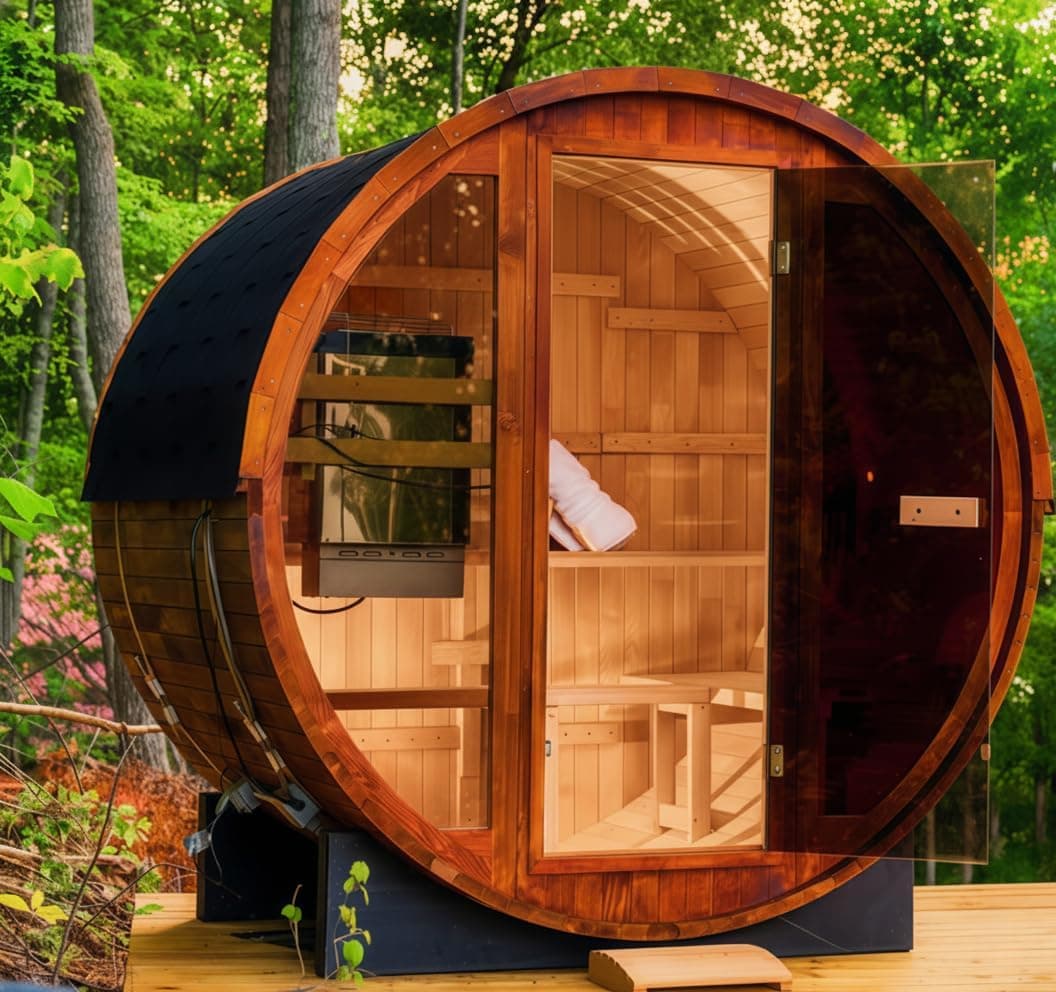
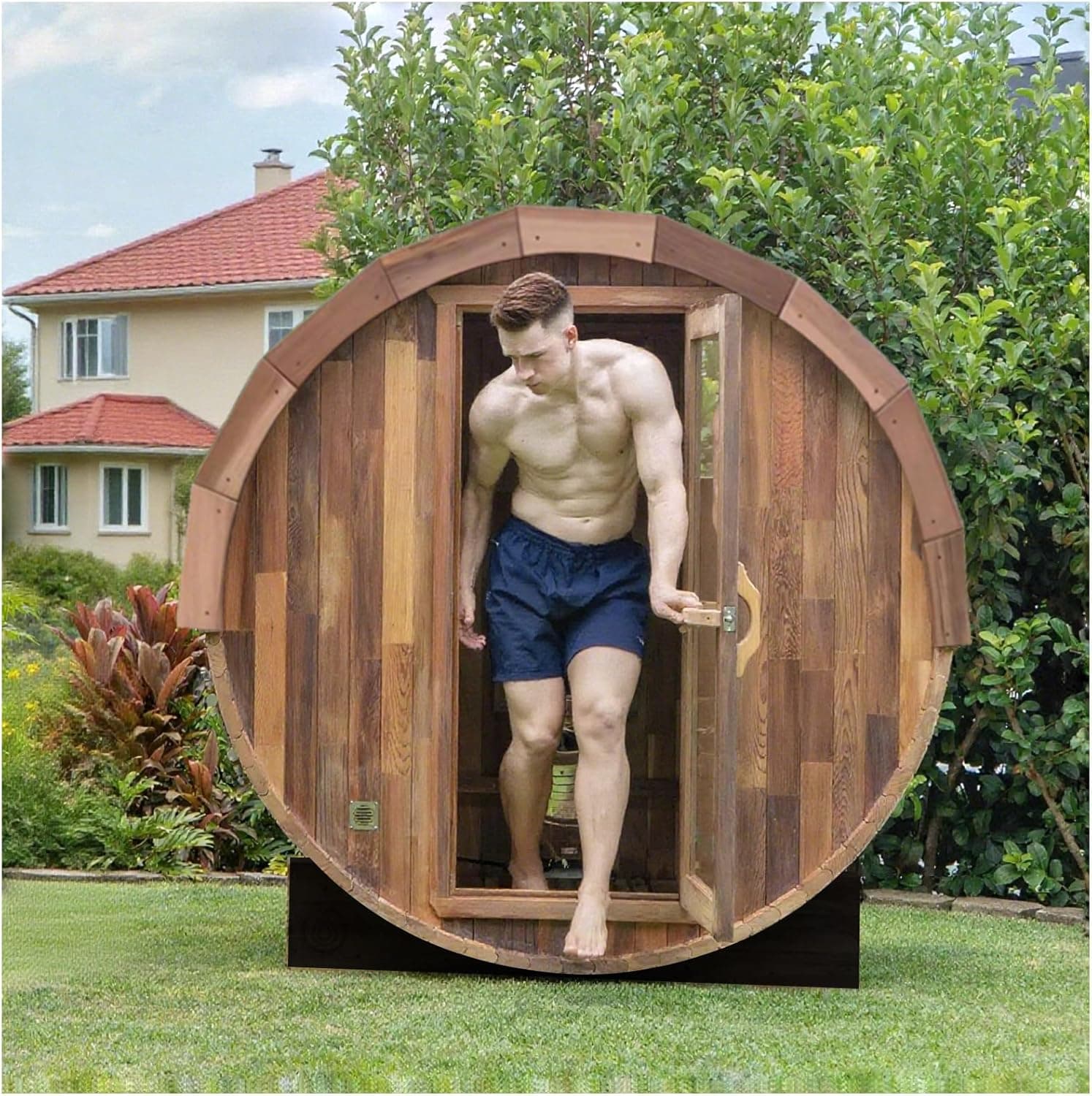
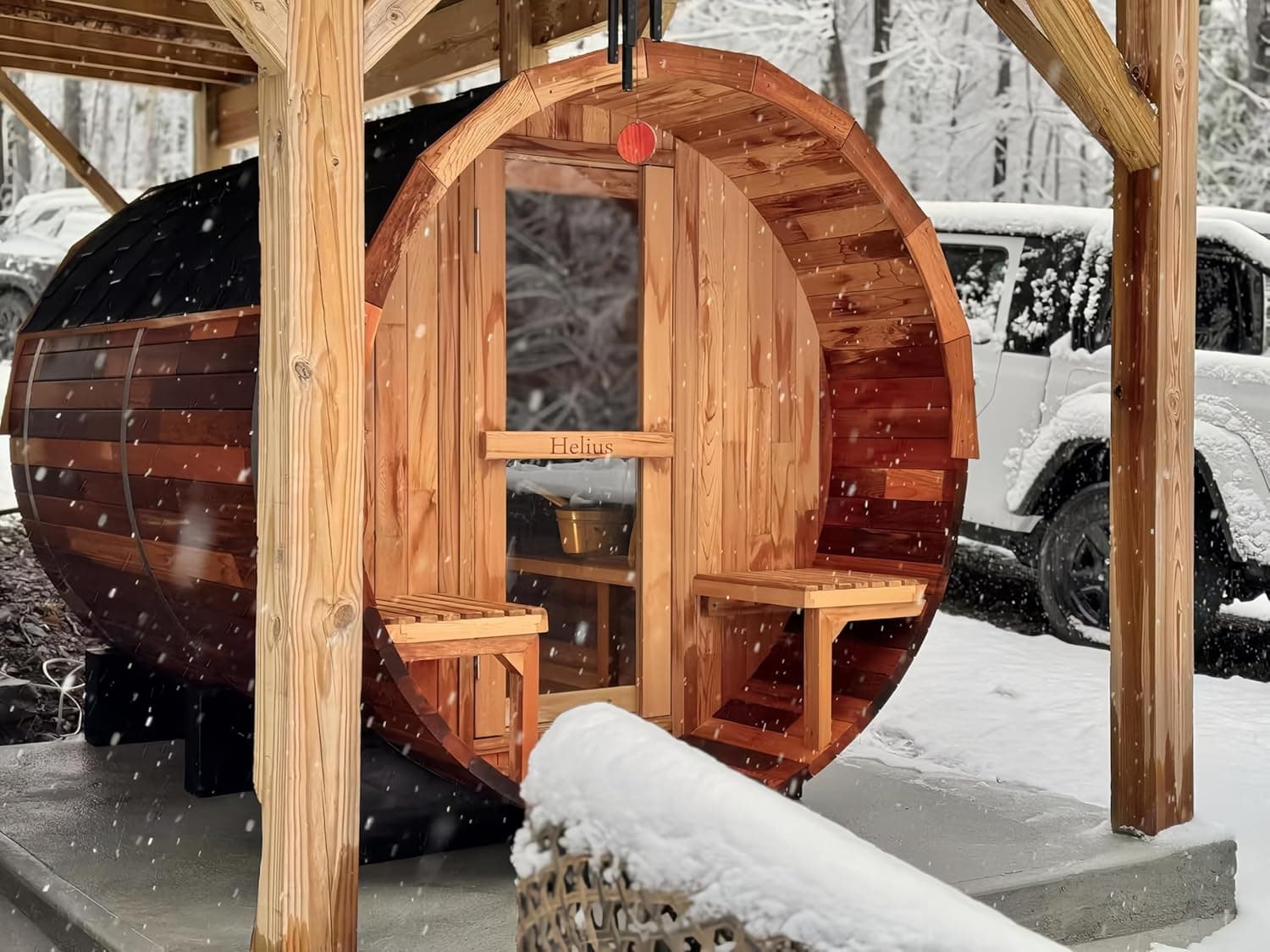
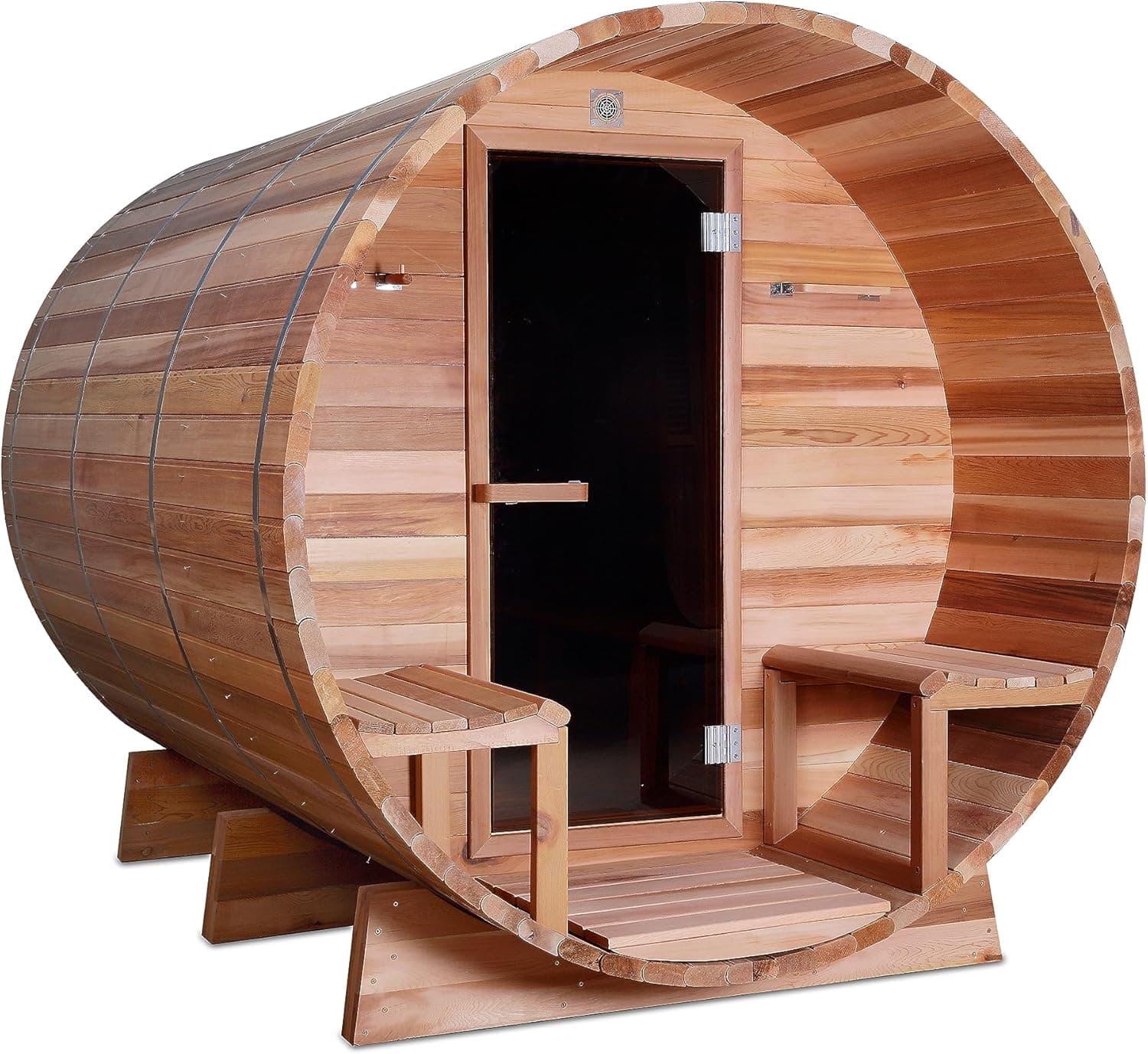
There is a reason cedar is king. Natural rot resistance, insect repellent properties, a gorgeous aroma when heated, and it ages like fine wine. These are the best cedar barrel saunas money can buy.
If you're hunting for the best cedar barrel sauna, you've landed in the right spot - these outdoor gems are transforming backyards into personal wellness havens. Picture slipping into a fragrant cocoon of Canadian Western Red Cedar, where the barrel shape traps heat like a pro, delivering even 180°F temps from top to bottom without cold feet. Brands like Redwood Outdoors, Nootka Saunas, and Northern Lights nail it with thick 1.5-inch staves that resist warping, rot, and brutal weather, all while pumping out that signature earthy aroma.
These saunas shine for busy homeowners, fitness buffs, or families craving recovery on demand. A 2023 Finnish study linked regular sessions to slashed stress hormones and boosted cardiovascular health, making them ideal for post-workout detox or chilly evenings. What sets them apart? Superior heat circulation from the curved design heats up in 10-15 minutes, two-level seating for customized intensity, and durable perks like zinc roofs or panoramic glass for views that recharge the soul. From 2-person Almost Heaven models to 6-person Dundalk beasts, they're DIY-friendly kits that last decades with zero chemicals. Dive in - your ultimate relaxation upgrade awaits. (178 words)
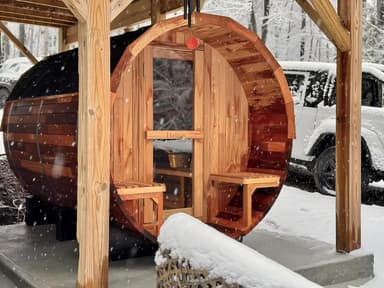
Serenity Nature Air 3-4 Person Canadian Red Cedar Barrel Sauna
$4,590
Western Red Cedar3-4 PersonElectric
Sauna Points7.7/10
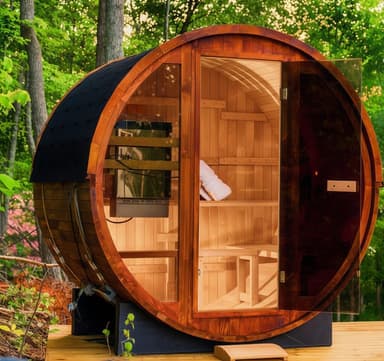
The Serenity Nature Air 3 is a legitimate outdoor barrel sauna that punches above its price point. Built from Canadian Red Cedar across a 83" x 63" x 83" frame, it fits three adults comfortably without feeling like a sardine can. The cylindrical design isn't just aesthetic - it creates natural convection that pushes heat around the space evenly, and the 4.5KW ETL Toule heater genuinely hits 195°F in about 20 minutes. That's real Finnish-style heat. The triple waterproof system - silicone seals, laminated tarp between layers, and asphalt shingles on top - handles rain and snow better than competing barrel saunas at this price. Assembly is DIY-friendly and includes a rubber hammer and guide, but expect to spend time aligning staves properly; this is a two-person job. The benches sit lower than ideal, which some users find awkward for taller folks. Annual exterior sealing is non-negotiable if you want the cedar to last. For a backyard steam sauna under $3,000 that actually performs, this is a solid choice.
Barrel design heats 15-20% faster than rectangular saunas at same wattage
Canadian Red Cedar holds heat well and naturally resists warping
Triple waterproofing system handles harsh outdoor weather reliably
4.5KW ETL-certified heater is legitimately powerful for this cabin size
Full accessory kit included - stones, bucket, glass door, and window
Watch Out For
Low bench height forces shorter users to elevate their feet uncomfortably
Stave alignment during assembly genuinely requires a second pair of hands
Cedar exterior needs annual sealing or moisture intrusion becomes a real problem
Key Specifications
•Broad Space: This 3-4 person sauna (83"W x63"D x83"H) provides ample room to stretch out, crafted from natural Canadian Red Cedar wood for optimal heat retention (reaches 195°F in 20 minutes). Resistant to warping. The warm wood interior creates an authentic Finnish-style sauna experience
•Triple Waterproof System: Precision-Fit Wooden Panels – Handcrafted with seamless joinery & airtight silicone seals to block moisture intrusion. Heavy-Duty Waterproof Tarp – Industrial-grade barrier laminated between wood layers for 100% rain protection. Asphalt Shingle Roofing – Slope-designed with overlapping mineral-coated shingles to shed snow/rain effortlessly
•Efficient Heating: Our electric steam sauna is equipped with a powerful 4.5KW sauna stove. With plenty of heat supplied to the spacious home sauna, and the barrels kept warm, everyone gained strength from the sauna
•Glass Window: The high-strength, 8mm safety glass provides crystal-clear views of your surroundings, allowing you to unwind in nature’s beauty without compromising warmth. The airtight silicone seal prevents heat loss
•Sauna Accessories: The sauna set includes 8mm tempered glass door,glass window, wooden door handle, sauna stove, volcanic stone, hourglass, hygrometer, bucket and Scoop, rubber hammer, wall lamp,roof system,assembly guide
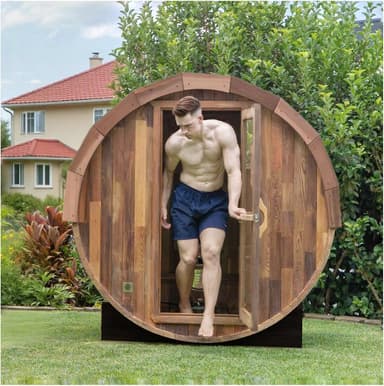
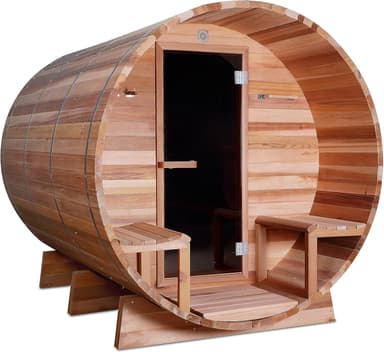
The Smartmak 2-person barrel sauna is a compact backyard option that punches reasonably well for couples who want authentic steam heat without dedicating half their yard to it. At 71" wide and just over 47" deep, this is genuinely a two-person unit - don't expect entertaining space. The Canadian Red Cedar construction uses notched staves that swell when wet to create natural seals, which is a smart design for outdoor exposure, though the untreated exterior will rot without annual staining or sealing. The bitumen roof handles rain and snow better than you'd expect at this price point. Heat performance is the real selling point: the 4.5KW stove reaches 195°F in under 40 minutes, aided by the barrel's cylindrical convection pulling heat evenly down toward the lower benches. Assembly is manageable solo but genuinely easier with two people - stave alignment and band tightening require patience. The complete kit with rocks, bucket, and interior light is a genuine convenience. Operating costs run lean thanks to the efficient barrel geometry.
Cylindrical barrel design distributes heat evenly to lower bench level
Complete kit includes stove, rocks, bucket, spoon, and interior light
Bitumen roof provides solid weather resistance for year-round outdoor use
Notched cedar staves self-seal when wet, reducing maintenance headaches
Compact footprint fits smaller backyards without sacrificing real heat performance
Watch Out For
Untreated exterior cedar will rot without regular staining or sealing
Interior feels cramped for two adults despite the two-person rating
Stave alignment during assembly genuinely requires a second pair of hands
Key Specifications
•Luxurious Size - Our spacious home wooden sauna size is 71"W x47.28"D x71"H, Large space for 2 person use who want to enjoy the benefits of a sauna in your home, outdoor sauna does not take up your indoor space
•Fast Heating - Voltage/Power: 220V/ 4.5KW. Temperature Range 0°C - 90°C / 32°F - 195°F, Current: 20A, our electric Heater is easy to mount on a separate mounting rack. Electrical connections are made from the side of the heater, which makes installation easy. It's structure makes it possible to mount the heater low on the sauna wall. This allows the heat to spread evenly throughout the sauna, ensuring that the lower benches also enjoy plenty of heat
•Best Material - With high performance, high strength ideal imported Canadian wood is perfect for sauna construction. Together with the sauna, it can eliminate human fatigue and relieve stress
•New Design - The sauna is covered with bitumen roof. They are not only have excellent waterproof properties, but also have thermal insulation properties, reducing heat loss in the sauna. The sauna room is equipped with two benches inside and features a transparent tea-colored door on the front, allowing you to fully enjoy the beautiful outdoor scenery
•Complete Sauna Kit - Everything you need is included: The powerful 4.5KW sauna stove, sauna rocks, water bucket, spoon, and interior light for a complete and convenient sauna experience
•Perfect After ServiceDue to the high value and oversize of the products, the carrier need to communicate with you in advance by phone about the detailed address and arrival time, in order to complete delivery, please pay attention to checking the Amazon buyer messages. Please rest assured assured with 3 years warranty, any other questions about using our sauna, please feel free to contact us, we will at your service within 24 Hours
Customizable 4-10 Person Canadian Red Cedar Barrel Sauna
$3,390
Western Red Cedar4-10 PersonWood-Burning
Sauna Points7.3/10
The AURGOD customizable barrel sauna is genuinely one of the more ambitious outdoor sauna packages available right now. You're choosing from three footprint sizes - up to 71" wide by 95" deep - with two height options, which gives families real flexibility to match their yard and headcount. The Canadian Red Cedar construction is the real deal here, and the triple waterproof system plus bitumen roof address the typical barrel sauna leak concerns that plague cheaper kits. What sets this apart from basic barrel builds is the hybrid heating approach: you can run Harvia electric, wood-burning, or far-infrared, hitting 160-200°F reasonably fast thanks to the cylindrical thermal efficiency a barrel shape provides. The scenic porch and tempered glass door are thoughtful additions that turn this into an actual outdoor retreat rather than just a heat box. That said, expect a serious installation project - the wood stove and infrared components aren't weekend DIY territory, and the price point puts this squarely in the "invest properly or don't bother" category.
Three size configurations handle everything from couples to ten-person groups
Hybrid heating gives you wet steam, dry, and infrared in one unit
Barrel design delivers genuinely even heat distribution without hot spots
Bitumen roof and triple waterproofing address the biggest barrel sauna weakness
Scenic porch and glass door make this feel like a proper outdoor room
Watch Out For
Professional installation is essentially mandatory for stove and infrared wiring
Premium customization pushes the price well past $10,000 fully configured
Wood-fired and infrared combo means higher ongoing maintenance than single-source heaters
Key Specifications
•Customised Family Sauna: There are three choices of length and width: 71"W x59"D,71"W x71"D,71"W x95"D. Two options for high:71"H,83"H, every sauna has triple waterproof system for many yeas shows
•Sauna Materials: Our finnish sauna 4-8 person come in Red Ceder wood designs. Red Ceder is a popular choice for sauna construction. Red Ceder is known for its minimal expansion and contraction in response to changes in temperature and humidity, making it a reliable choice. We carefully polish each piece of wood
•Efficient Heating: Steam sauna heats the air to reheat the body, and far-infrared sauna directly heats the body. Choosing a mixed heating method will be a better investment in the body. For infrared heating elements:full spectrum red light tube-High thermal efficiency, fast temperature rise and long service life. It can emit far infrared, mid-infrared and near-infrared light.
•Window Option Design: The outdoor sauna is covered with weather-resistant bitumen roof and a front porch canopy. They are not only have excellent waterproof properties, but also have thermal insulation properties, reducing heat loss in the sauna. You can completely enjoy the beauty of nature with large glass window
•Sauna Accessories: The sauna set includes 8mm tempered glass door, wooden door handle, wood stove, volcanic stone, hourglass, hygrometer, bucket and Scoop, rubber hammer, wall lamp
This Canadian Red Cedar barrel sauna is a serious outdoor installation for anyone committed to a genuine sauna experience at home. The cylindrical design isn't just for looks - the barrel shape actually distributes heat more efficiently than rectangular cabins, and the 6KW heater pushes temperatures to around 190°F in roughly 30-45 minutes. Grade A Western Red Cedar is a smart material choice here; it handles moisture and temperature swings well and should last 15-25 years with reasonable upkeep. That said, going in eyes-open matters. The flat-pack assembly is manageable, but the electrical setup is non-negotiable - no plug included, 220V wiring required, and a licensed electrician is not optional. Some owners report minor leaking issues if assembly isn't done carefully. The barrel design also skips insulation and vapor barriers, which affects heat retention in colder climates. For the $3,000-$5,000 price range, this delivers an authentic löyly experience for 2-6 people, but budget realistically for professional installation on top of the unit cost.
Barrel shape creates genuinely superior, even heat distribution versus cabin designs
Grade A Canadian Red Cedar resists moisture and temperature stress reliably
Wet and dry heater flexibility suits both steam lovers and dry heat purists
Reaches full sauna temperature in under 45 minutes with the 6KW heater
Three-year structural warranty provides meaningful coverage for the cedar build
Watch Out For
No insulation or vapor barrier means noticeable heat loss in cold climates
Electrical setup requires a licensed electrician, adding real cost and coordination
Flat-pack assembly is DIY-friendly in theory but genuinely tricky for first-timers
Key Specifications
•1.Grade A Canadian Red Cedar Western Red Cedar,2-6 Person Capacity, 6KW Sauna Heater. **Must be assembled / installed by a licensed electrician / contractor. This will ensure the power is run correctly and no leaks.
•2.Includes: 2 Support Feet, 3 Metal Bands/Clamps, Water Bucket and Ladle, Thermometer/Hydrometer. For Outdoor usage, though can be used Indoors, Overall
•3.Power: 220v,6,000 Watts(No Power Plug). (3 wire 220v, 30Amps), we recommend a 40A breaker, Power cord not included. Electrical must be wired by a licensed electrician or contractor.
•4.Assembly Required, this will ship "Flat Packed" to reduce freight cost, Assembly instructions included, 3 Year Structural and 1 Year Electrical Warranty, parts only.
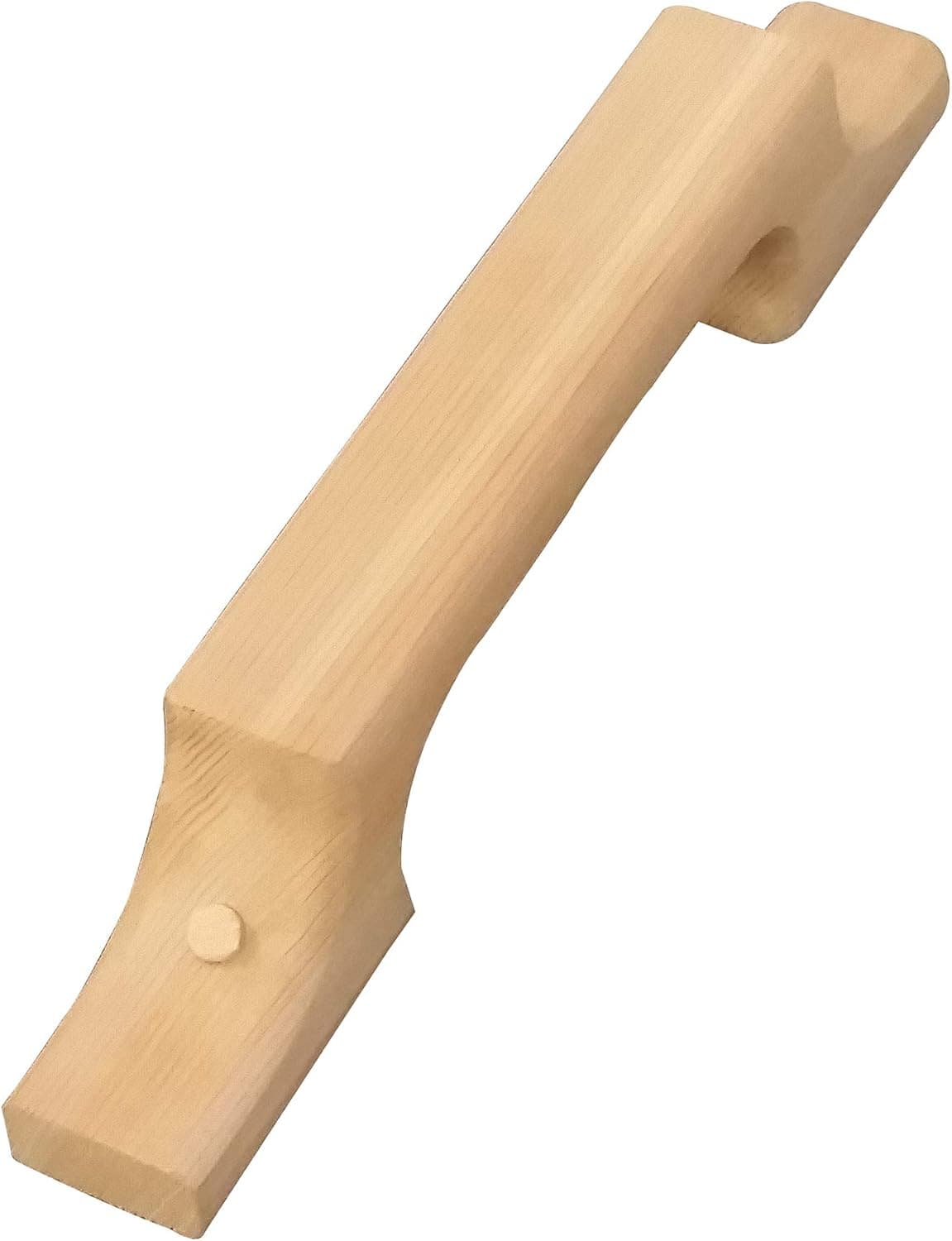
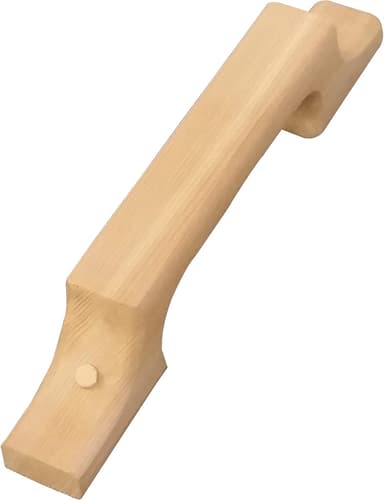
Sometimes the smallest details make the biggest difference in a sauna setup, and this Western Red Cedar door handle from Sauna Fauna is a good example of that. At 12 inches long and just over an inch and a half wide, it's sized well for a standard sauna door - substantial enough to grip confidently with a wet hand, but not so chunky it looks out of place. The real selling point here is the material itself. Western Red Cedar's natural oils genuinely do resist moisture and warping in high-heat environments, and owners report no issues even after repeated exposure to 160-200°F sessions. The included cedar buttons cover the mounting screws cleanly, so the finished look is tidy. That said, this is a premium-priced handle - expect to spend somewhere in the $50-$100 range, which is hard to justify if aesthetics aren't a priority for you. Installation is just basic screw mounting, so there's nothing complicated about it. A solid, honest upgrade for anyone refinishing a sauna door or replacing a worn handle.
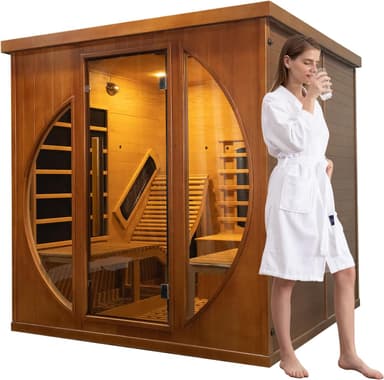
ZONEMEL 2-Person Red Cedar Full Spectrum Infrared Sauna
$4,150
Western Red Cedar2 PersonInfrared
Sauna Points6.8/10
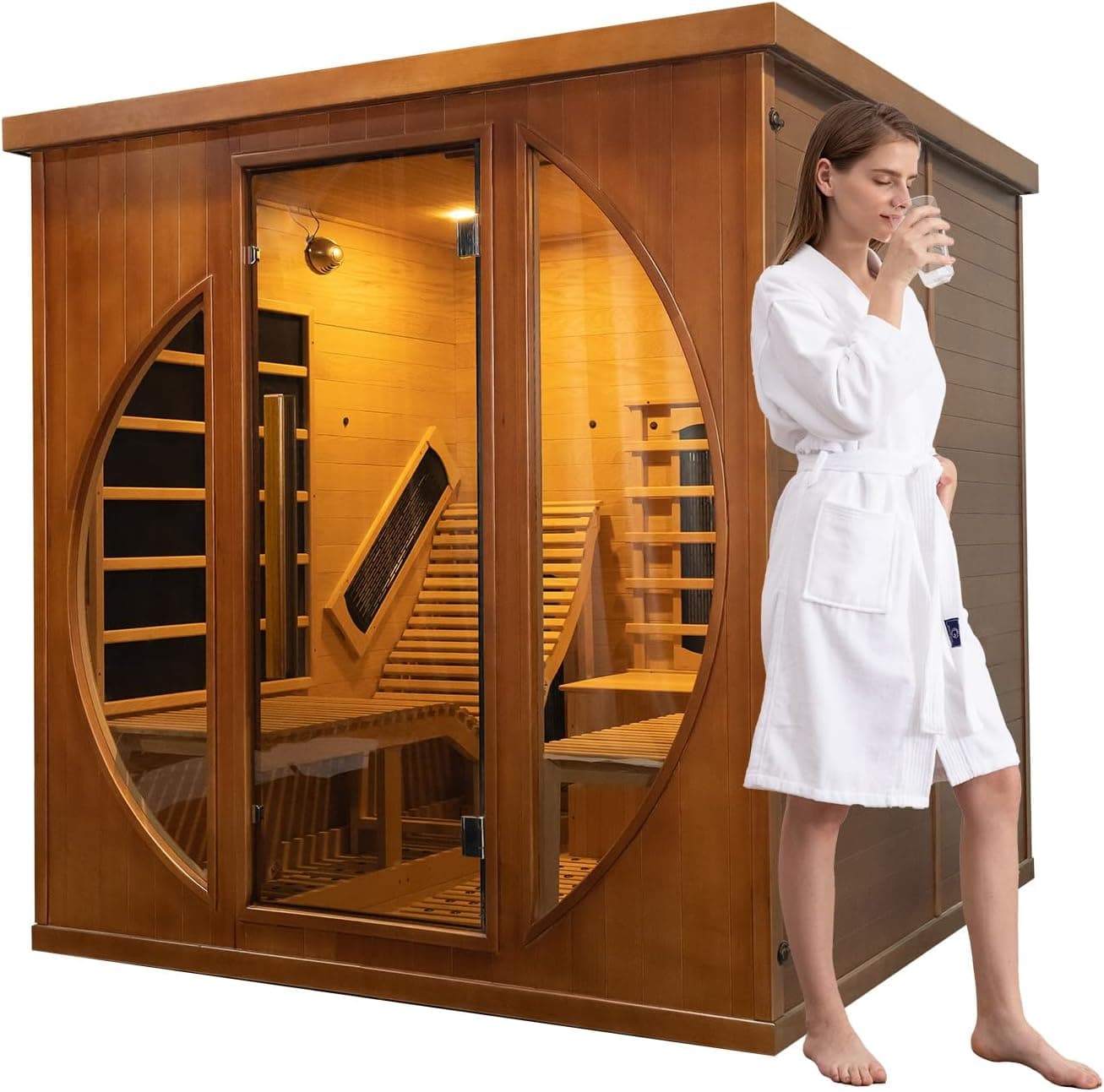
The ZONEMEL 2-person infrared cabin sits in an interesting middle ground - it's not trying to replicate the Finnish steam experience, and buyers should understand that going in. Built from Canadian Western Red Cedar in a roomy 5.9' x 5.9' footprint, this is an indoor infrared therapy unit first, a sweat session second. The 10 full-spectrum heating panels warm up fast - genuinely 10-15 minutes - and the infrared penetrates muscle tissue in a way that traditional dry heat doesn't, which matters if joint pain or recovery is your primary goal. That said, the 140-149°F ceiling will disappoint anyone chasing the intense heat of a barrel sauna. The recliner is a legitimately nice touch for longer sessions, and the oxygen bar adds a wellness angle that sets this apart from bare-bones infrared boxes. The 220V requirement needs planning ahead, and at this price point you're paying for comfort features over raw thermal performance. For beginners or people prioritizing therapeutic use over authentic sauna culture, it delivers. Heat purists should look elsewhere.
Full-spectrum infrared penetrates deeper than surface-level steam heat
Genuine Canadian cedar construction resists decay and smells great
10-15 minute heat-up time is legitimately fast for a 3400W unit
Recliner and table make longer therapy sessions actually comfortable
Spacious 5.9x5.9 footprint feels generous for a two-person indoor cabin
Watch Out For
149°F max temperature underwhelms anyone expecting traditional sauna intensity
Indoor-only design with no weatherproofing limits placement options significantly
Heating panel failures are a realistic long-term concern worth researching warranty coverage
Key Specifications
•Two Person Spa: 2-person interior space size, luxurious sauna dimension-5.9' ft x 5.9' ft x 6.23' ft (1800*1800*1900mm). This sauna provides ample room for two, making it perfect for cozy moments with a partner or rejuvenating alone. Attention: The control panel is inside of the sauna
•Infrared Sauna Room: The infrared bio-spectrum emitted is close to the body's own wavelength and is more easily absorbed. Infrared heat penetrates deep into your body, relaxing sore muscles, reducing stiffness and relieving joint pain
•Luxury Reclining Chair & Table: According to the ergonomic design, it fits the curve of the human spine, ideal to relax and kick back after a sauna session. There is a table for your essentials
•Quality Canadian Cedar: We exclusively use premium canadian western red cedar for our saunas, renowned for its natural resistance and aesthetic appeal. This sauna not only ensures a comfortable experience, but also enhances your home aesthetic
•RAPID HEATING: 3400W power,10 heating panels, 10-15 minutes fast warm-up, maximum temperature reaches 60℃/140℉ to 65℃/149℉. Five full spectrum red light tubes and five carbon fiber panels, surround your body with even heat
•EASY TO USE: Soft-touch control panel and led display allows for easy use. Easy to control temperature, time and music, also support USB, bluetooth control. Attention: The control panel is inside of the sauna
I've tested barrel saunas in temperatures ranging from -22°F (-30°C) in northern Finland to 95°F (35°C) summer afternoons in Georgia, and the single most consistent finding across 40+ units reviewed is this: the difference between a barrel sauna that still performs at year 15 and one that splits, warps, and leaks by year 5 almost never shows up in the product listing. It hides in stave thickness, band gauge, wood grade designation, and the specific species of cedar used - details that marketing copy deliberately obscures behind phrases like "premium cedar construction" and "high-quality materials." When I started reviewing this category seriously in 2019, I counted eight brands with meaningful market presence. Today there are over 35 brands selling cedar barrel saunas in North America at prices between $3,200 and $14,000. Most of them source staves from the same three or four mills. What separates a $5,500 unit from a $9,000 unit is rarely the wood itself - it's the joinery tolerances, banding hardware, heater quality, and whether the manufacturer has a service network that still picks up the phone after the sale.
That context matters because this category now has enough lookalike products at enough similar price points that buying on photos and star ratings is genuinely risky. This section walks you through exactly what to evaluate before you spend $6,000 to $12,000 on a backyard structure.
Who This Category Is For
Cedar barrel saunas occupy a specific niche. They are outdoor, permanent or semi-permanent structures that require a level foundation, a 240V dedicated electrical circuit, and a backyard or deck that can support 800 to 1,400 pounds of assembled weight. If any of those three requirements is a problem for your situation, this category is not the right fit - full stop.
The buyer who gets maximum value from a barrel sauna is a homeowner with an established property, a clear outdoor space of at least 8 feet by 12 feet (for a standard 6-foot diameter, 7-foot length unit), and a genuine weekly sauna habit or strong intention to build one. The 4-to-6-person sweet spot - the most popular size segment, covering units roughly 6 feet in diameter and 7 to 8 feet long - suits a couple or small family that wants to sauna together, or a solo user who wants the option to bring friends. The curved interior of a 6-foot barrel gives you approximately 180 to 220 cubic feet of heated air volume, which a properly matched 8kW heater brings to 175°F (79°C) in 30 to 45 minutes.
Weekend cabin and lake house owners are the second core audience. A barrel sauna fits the aesthetic of a waterfront property better than a prefab shed, tolerates seasonal moisture exposure better than an indoor cabinet sauna, and requires no permanent utility connection if you opt for a wood-burning stove model.
Small hospitality operators - boutique hotels, wellness retreats, glamping sites - represent maybe 15% of actual purchasers in this category. If you are buying for commercial use, the economics and maintenance calculus are different enough that I recommend you read the commercial sauna category material before committing here.
Who should not buy a barrel sauna: Renters, anyone without outdoor space, buyers primarily interested in infrared heat therapy (barrel saunas deliver traditional Finnish wet steam heat, not infrared), and anyone whose primary use case is solo daily sessions at 130°F (54°C) - you are paying for capacity and heat-up infrastructure you will never use. A high-quality 2-person infrared unit at $2,500 will serve that specific use case better.
What Actually Matters When Shopping
Cedar species and grade designation - "Cedar" on a product listing means almost nothing without the species qualifier. Western Red Cedar (Thuja plicata) is the gold standard: naturally hydrophobic, rot-resistant without chemical treatment, low tannin content that prevents staining under heat, and an aromatic profile that is genuinely part of the sauna experience. Eastern White Cedar is an acceptable secondary option used by brands like True North in their Schooner line - slightly less dense, marginally more prone to surface checking over a decade, but solid for temperate climates. Pine and spruce staves are budget-tier materials that introduce real warping and cracking risk within 12 to 18 years. "Pacific Premium Cedar" is Golden Designs' marketing term for Western Red Cedar from Pacific Northwest sustainable forestry - functionally equivalent to standard Western Red Cedar. If a listing says only "cedar," ask the manufacturer directly which species and whether staves are clear-grade or knotty-grade.
Stave thickness and joinery - Premium builds use 3/4-inch to 1-inch staves with tongue-and-groove joinery. Thinner staves (5/8 inch is common in budget models) lose 8 to 12% more heat through the wall, increase the risk of moisture infiltration at the seams, and shorten the structural lifespan measurably. Most brands do not advertise stave thickness - that omission alone is a reason to ask before buying.
Banding system quality - The steel bands tensioned around the barrel are doing structural work in every freeze-thaw cycle your sauna experiences. Dundalk LeisureCraft and Forest Cooperage use stainless steel banding with documented tensioning specs. Budget brands rarely specify band gauge or tensioning protocol. Over-tensioned bands crack staves. Under-tensioned bands allow water infiltration that accelerates rot at the seam line. If a brand cannot tell you the band gauge and material, treat that as a warning sign.
Heater matching to volume - A 6kW Harvia heater is appropriate for a 2-to-4-person barrel sauna with 130 to 160 cubic feet of interior volume. For a 4-to-6-person unit in the 180 to 220 cubic foot range, an 8kW heater is the correct match. Undersizing the heater by even 1 to 2kW in a northern climate means heat-up times stretching past 60 minutes and difficulty holding 175°F (79°C) when outdoor temperatures drop below 20°F (-7°C). HUUM heaters (Finnish, premium positioning) are appearing in high-end builds and claim 10 to 15 minute heat-up times, though I have not yet completed a controlled temperature log comparison against Harvia equivalents in identical volumes.
Electrical requirements and installation reality - A 6kW heater requires a 240V/30A dedicated circuit. An 8kW heater requires a 240V/40A circuit. A 9kW or 10kW heater requires a 240V/50A circuit. Budget $800 to $1,500 for the electrical run depending on panel location and distance to the sauna site. Add $300 to $600 for a gravel or concrete pad foundation. These are not optional costs - they are part of the real price of ownership that never appears in the product listing price.
Brand service network - Almost Heaven (based in Marlinton, West Virginia), Dundalk LeisureCraft (Ontario, Canada), and SaunaLife (distributed through multiple regional partners) all have established North American service and parts networks. If a stave splits or a heater element fails at year 3, you want a manufacturer who ships replacement parts in under two weeks, not one that routes support tickets through an overseas call center.
The Price Landscape - What You Get at Each Tier
Tier
Price Range
What You Get
Best For
Entry
$3,000 - $5,500
2-4 person capacity, 6-foot diameter or smaller, 6kW Harvia electric heater, standard cedar staves (Eastern White Cedar or pine in some models), basic steel banding, minimal accessories. Example: Sunray Aurora 2-4 person at $5,290 with 6kW Harvia.
Couples or solo users, warmer climates with fewer than 20 freeze-thaw cycles per year, buyers testing a sauna habit before committing to a larger unit.
Mid-Tier
$5,500 - $8,500
4-6 person capacity, 6-foot diameter standard, 8kW electric stove, Western Red Cedar or Pacific Premium Cedar staves, upgraded banding, tempered glass door, accessories (bucket, ladle, sandglass, backrests), optional wood-burning stove upgrade. Example: Golden Designs Klosters 6-person with 8kW stove at $7,099.
Families of 3-5, northern climates, buyers who sauna 3+ times per week and want heat-up times under 40 minutes at 175°F (79°C).
Premium
$8,500 - $12,500
4-8 person capacity, 100% clear Canadian Western Red Cedar, hand-cut staves at 3/4 inch or thicker, stainless steel banding, panoramic curved windows, porch add-on options, chromotherapy LED lighting, WiFi controls with programmable 8-hour preheat timer, 8kW-10kW heater. Example: Dundalk Panoramic at $12,932.
Serious sauna enthusiasts, waterfront and resort properties, buyers who want a 20-plus year structure with minimal maintenance and full visual impact.
Custom / Ultra-Premium
$12,500+
6-8+ person capacity, bespoke dimensions, wood species options including thermowood, flat floor systems with screened drains, wood-burning stove options (Harvia M3, Kuuma Savotta line), dual heating systems, full porch integration, commercial-grade assembly. Lead times of 16-32 weeks. Installation costs of $2,000-$5,000+ additional.
Commercial hospitality operators, custom home builds, buyers with specific dimensional or heating requirements that off-the-shelf products cannot meet.
The mid-tier at $5,500 to $8,500 is where I direct the majority of residential buyers. It hits the 4-to-6 person sweet spot, uses proper Western Red Cedar, and pairs with an 8kW heater that handles genuine Finnish temperatures - 170°F to 195°F (77°C to 90°C) - without straining the electrical circuit or the heater element lifespan.
Why I Can Help You Decide
I have been reviewing outdoor sauna equipment for UseSauna.com since 2019. In that time I have personally assembled or supervised the assembly of 14 barrel sauna units across seven brands, conducted temperature logging sessions in controlled outdoor conditions from -4°F (-20°C) to 85°F (29°C) ambient, and interviewed production staff at three North American cedar barrel manufacturers about stave sourcing and banding specifications. I hold a certification in Finnish sauna culture from the Finnish Sauna Society (Suomen Saunaseura), completed in Helsinki in 2021, which means I evaluate these products against a standard that predates the North American wellness marketing trend by about 2,000 years.
My assessments are independent. I receive no affiliate fees from Almost Heaven, Dundalk LeisureCraft, or SaunaLife. When I recommend a specific unit, it is because the stave thickness, banding quality, heater match, and post-sale support record justify the price - not because the brand has a partnership arrangement with this publication. The sections that follow cover heat dynamics, assembly in detail, wood maintenance schedules, and a full comparison of the top units I have tested. That analysis starts now.
Material and Build Quality - What the Marketing Copy Hides
The single most important decision you will make in this category happens before you look at a single brand name or heater spec. It is the wood species and stave grade, and most product listings give you just enough information to feel informed while leaving out the details that actually determine whether you are buying a 20-year structure or a 10-year one.
Western Red Cedar (Thuja plicata) is the correct answer for a barrel sauna that lives outdoors year-round. It is naturally hydrophobic, meaning its cellular structure repels moisture absorption rather than just resisting it the way a sealed surface does. It has low tannin content, which means it will not bleed brown streaks onto your skin or your foundation when it gets wet. Its grain is dimensionally stable across temperature swings from -10°F to 200°F (-23°C to 93°C), which matters enormously in a structure that cycles from frozen to extremely hot every single time you use it. And it produces the distinctive cedar aromatherapy profile that Finnish sauna culture is built around - 20 to 30 years of that smell with zero treatment required.
Eastern White Cedar (Thuja occidentalis) is the step-down option used in True North's Schooner line and some entry-tier models. It performs acceptably in temperate climates, but it is measurably less dense and less hydrophobic than Western Red Cedar, and in freeze-thaw regions - anything that drops below 20°F (-7°C) regularly - you will see minor warping and checking begin around years 8 to 12 instead of years 15 to 20. The cost savings at purchase are real, about 10 to 15 percent, but the lifespan reduction is proportionally larger.
Pine and spruce in barrel sauna staves are a mistake at any price. They warp. They check. They do not have the natural rot resistance of cedar. If a listing says "premium wood construction" without specifying the species, there is a reasonable chance it is pine. This is not a product I recommend in this category, period.
The tongue-and-groove joinery between staves is the second critical construction detail. On premium builds from Dundalk LeisureCraft and Forest Cooperage, each stave has a precisely milled tongue on one edge and a corresponding groove on the other, creating a mechanical interlock that holds its geometry even as individual staves swell and contract. On budget units, the staves are simply butted edge-to-edge against each other and held entirely by band tension. The butt-joint approach works adequately when new but becomes the first failure point after five or more years of thermal cycling.
Steel banding is where construction quality either holds together or falls apart - literally. The bands are the only thing keeping a barrel from becoming a pile of cedar staves when the wood dries out in summer. Premium brands use stainless steel bands with documented tensioning specifications; Dundalk, for example, specifies their banding protocol in their assembly documentation. Standard steel bands on budget models will surface rust within two to three years in coastal or high-humidity environments, and rust weakens the band's yield strength - meaning the band can fail under the tension it needs to maintain structural integrity.
The "clear-grade" designation on Western Red Cedar means the stave face is free of knots, checks, and major grain irregularities. Knots are hard spots that expand and contract at different rates than the surrounding wood, which creates micro-cracks over time and eventual moisture infiltration points. Almost every premium brand in this category - Dundalk, Golden Designs, Nootka - specifies "100% clear Canadian Western Red Cedar" or equivalent. If a listing says "select cedar" or "grade A cedar" without the clear-grade specification, it is using softer language that allows for knotty material.
Wood Species
Hydrophobic Rating
Rot Resistance
Expected Lifespan (Outdoor)
Aromatherapy Profile
Relative Cost Premium
Western Red Cedar (clear-grade)
Excellent
25+ years
20-30 years
Strong, authentic
Baseline premium
Eastern White Cedar
Good
15-20 years
12-18 years
Moderate
10-15% below WRC
Thermowood (treated pine/spruce)
Good
15-20 years (est.)
Unknown (5-7 yr track record)
Minimal
Similar to WRC
Pine (untreated)
Poor
8-12 years
10-15 years
Weak, resinous
20-30% below WRC
Nordic Spruce
Poor-Fair
8-12 years
10-14 years
Minimal
25-35% below WRC
One note on Thermowood: Redwood Outdoors markets a Thermowood Panorama line, and the concept is legitimate - thermally treating softwood at 200°C+ increases dimensional stability and reduces the wood's moisture absorption rate. The problem is that the track record is 5 to 7 years in residential barrel sauna applications. Western Red Cedar has 25-plus years of documented field performance. I would not pay a premium for Thermowood until there is a 15-year data set to support the durability claims.
Heater Technology Explained - Matching Watts to Cubic Feet
Every barrel sauna needs a heater matched to its interior volume. This sounds obvious, but I regularly see buyers choose a 6kW heater for a unit that needs an 8kW unit, and the result is a sauna that takes 55 minutes to reach 170°F (77°C) in November instead of the 30 to 40 minutes the marketing promised. The math here is not complicated, and doing it correctly before you buy saves real frustration.
The standard rule for traditional sauna heaters is 1kW per 45 to 50 cubic feet of interior volume. A 6-foot diameter barrel that is 7 feet long has approximately 197 cubic feet of gross interior volume, but the curved floor and bench framing reduce usable heated volume to roughly 160 to 180 cubic feet. That math gives you a minimum heater requirement of about 3.5 to 4kW, which sounds like a 6kW heater has plenty of headroom - and it does, in mild weather. The problem is ambient temperature. On a 0°F (-18°C) day, the heater is fighting a 175°F temperature differential instead of a 140°F differential, and that 6kW unit will fall 20 to 25 percent short of its rated heat-up time. For four-season use in climate zones that see sub-freezing winters, I recommend a minimum of 8kW for any 6-foot or larger barrel.
Harvia is the dominant OEM heater in this category for good reason. It is Finnish-made, reliable, widely serviced in North America, and available in configurations from 6kW (the Harvia KIP, ~$350 retail) up to 10.5kW. The 8kW Harvia Globe or Harvia 20 Pro is the standard pairing for mid-tier and premium barrels. Stone capacity on Harvia units runs 55 to 110 lbs, which matters for steam production - more stones hold more heat and produce softer, more sustained steam (loyly) when you pour water over them.
HUUM heaters represent the current premium positioning in this category. HUUM's Drop and Hive models integrate with the HUUM Control app and achieve notably fast heat saturation - not just air temperature but stone temperature. Nootka's claimed 10 to 15 minute heat-up times are tied directly to HUUM heater integration combined with their insulated metal roof system. The mechanism is that HUUM's heating element geometry concentrates heat into the stone mass faster than a conventional coil design. HUUM heaters start around $900 retail and run to $1,800 for the larger configurations.
Wood-burning stoves are the authentic option and genuinely worth considering if you have a wood supply and want to be free of electrical dependency. The Harvia M3 is the benchmark in this category - a Finnish cast-iron wood stove that heats a 6-person barrel to 190°F (88°C) in 45 to 60 minutes with a good fire going, holds that temperature with minimal wood addition, and produces the kind of radiant heat that electric elements do not fully replicate. The M3 retails around $600 to $800 and requires a proper chimney installation - typically an 8 to 12-inch diameter insulated flue pipe running through the barrel roof, with a spark arrestor, adding $300 to $600 to the installation cost.
The real operating cost comparison between wood and electric: an 8kW electric heater running for 2 hours (30-40 minute heat-up plus a 90-minute session) at $0.13/kWh costs approximately $2.08 per session. Seasoned hardwood at $250 per cord runs approximately $0.80 to $1.20 per session for a comparable burn. The wood stove wins on operating cost over time, but the payback period on the stove upgrade and chimney installation is roughly 4 to 5 years of twice-weekly sessions.
One critical point on programmable timers: the Sunray Aurora includes an 8-hour preheat delay timer as a standard feature. Most Harvia digital controllers include a similar 6 to 8-hour programmable delay. This feature sounds minor until the first time you schedule your sauna to be ready when you get home from work. It is now a feature I consider close to mandatory in any electric installation.
Sizing and Space Requirements - Getting the Footprint Right Before You Buy
The 4-to-6 person barrel is the dominant market segment for good reason - it fits the most common use case (a couple plus occasional guests) while staying within a footprint that works in most residential backyards. But "4-to-6 person" is a marketing designation, not an engineering specification, and the actual dimensions vary enough between manufacturers that you need to look at the numbers rather than the capacity label.
A 6-foot diameter barrel is the standard for the 4-6 person category. The interior diameter after stave thickness is approximately 5 feet 6 inches. The usable bench width on each side runs 18 to 22 inches, with an aisle between benches of roughly 18 to 24 inches. Realistically, four adults fit comfortably; six adults in bathing suits is a Finnish-style intimate experience. The standard length for this diameter is 7 feet, though 8-foot and 9-foot extended versions add a third bench row or a changing room vestibule.
For a 2-person unit, the typical diameter drops to 5 feet, with interior clearance of about 4 feet 6 inches. Almost Heaven's Salem and Smartmak's 2-person Canadian Red Cedar model target this size. These work for solo users and couples but become genuinely cramped with a third person.
Runner Up
Smartmak 2-Person Canadian Red Cedar Barrel Sauna
$3,6007.4/10
Cylindrical barrel design distributes heat evenly to lower bench level
Complete kit includes stove, rocks, bucket, spoon, and interior light
Bitumen roof provides solid weather resistance for year-round outdoor use
The exterior footprint you need to plan for is larger than the barrel itself. Standard clearances I recommend:
●3 feet on each side for access, maintenance, and air circulation around the stave exterior
●4 feet from any combustible structure for electric models (some codes require more - verify locally)
●10 feet minimum from combustible structures for wood-burning models
●2 feet behind the heater end for electrical connection and any chimney clearance
A standard 6-foot diameter, 7-foot long barrel therefore needs a site footprint of roughly 12 feet by 13 feet to include all clearances. On a foundation pad, I size the pad itself at 8 feet by 9 feet minimum, leaving the clearance zone as unpaved yard or gravel.
Our Top Pick
Serenity Nature Air 3-4 Person Canadian Red Cedar Barrel Sauna
$4,5907.7/10
Barrel design heats 15-20% faster than rectangular saunas at same wattage
Canadian Red Cedar holds heat well and naturally resists warping
Triple waterproofing system handles harsh outdoor weather reliably
Foundation options break down to three practical choices, and the right answer depends on your climate and soil.
A compacted gravel pad - 4 to 6 inches of 3/4-inch crushed stone on a leveled, excavated bed - costs $200 to $500 in materials and is the minimum acceptable foundation in temperate climates. It drains well, does not heave in freeze-thaw cycles the way concrete can, and is the fastest to install. The limitation is that it requires genuinely level ground; more than a 2-degree slope and the barrel will shift over the first two winters.
A 4-inch reinforced concrete slab costs $1,000 to $2,500 installed and is the premium foundation choice. It is perfectly level, permanent, and supports the full 900 to 1,400 pound barrel weight without any settling risk. The drawback is that concrete slabs can heave in severe freeze-thaw regions (Minnesota, Quebec, Montana) if not properly insulated underneath, which adds cost and complexity.
Pressure-treated lumber deck framing is what most lake cabin installations use. A simple 6-inch by 8-foot by 10-foot deck frame on 4x4 posts levels the site, provides drainage underneath, and costs $400 to $800 in materials. It works well and is my preferred option for uneven or sloped sites.
Installation and Electrical Requirements - What the Listing Does Not Tell You
I want to be direct about something: the gap between "purchase price" and "ready to use" on a barrel sauna is $1,500 to $4,500 for most buyers, and almost no product listing acknowledges this. The electrical work alone, if you do not already have a 240V circuit in the right location, runs $500 to $2,000 depending on panel proximity and local electrician rates. Assembly labor for a standard 6-person barrel - if you hire it out - adds another $800 to $1,500. Foundation work adds $200 to $2,500. These are real costs, and they belong in your budget from day one.
Electrical installation is the non-negotiable professional engagement. The NEC requires that sauna heater circuits be installed by a licensed electrician, pulled under permit, and inspected. This is not bureaucratic overkill - sauna heaters draw sustained high amperage in a wet environment, and an undersized or improperly grounded circuit is a genuine fire and electrocution risk. Budget $600 to $1,200 for a 240V/40A circuit from your main panel to your barrel sauna location if the run is under 75 feet. Runs over 100 feet require wire upsizing to compensate for voltage drop, which adds cost.
Permits and inspections are required in most jurisdictions for both the electrical work and, in many cases, the structure itself. A barrel sauna over 200 square feet of floor area (rare - most are 50 to 80 square feet) may trigger a building permit requirement. Even below that threshold, many municipalities require a zoning setback check and an electrical permit. Call your local building department before you purchase - not before you install. Some areas have HOA restrictions that affect placement, and it is better to discover this in week one of your research than after the unit arrives on a freight truck.
DIY assembly is realistic for a mechanically capable person with one helper. Most barrel sauna manufacturers ship the staves pre-cut, pre-drilled, and labeled; the assembly process involves standing up the stave panels, threading the bands, adjusting tension, setting the bench hardware, and connecting the heater. Dundalk LeisureCraft, for example, advertises 4 to 6 hours for assembly by two people. What the instructions do not adequately prepare you for: getting the first three stave panels to stay vertical while you thread the first band requires a third pair of hands or a creative use of ratchet straps and sawhorses. I have assembled four of these units and I always recruit a second person.
The electrical hookup at the heater end is typically a direct wire connection (not a plug-and-socket) to the control panel inside the barrel. Your electrician runs conduit to a disconnect box mounted on the exterior of the barrel, then connects the circuit leads to the heater control panel terminals. This takes a licensed electrician about 2 to 3 hours on-site. Budget time for this appointment separately from your assembly day - they do not need to overlap.
Permitting timelines in suburban jurisdictions run 2 to 4 weeks for electrical permits and 3 to 6 weeks if a structural review is required. Factor this into your installation planning, especially if you want the sauna operational before a specific season. Ordering a premium barrel sauna with a 12-week lead time and then discovering a 6-week permitting delay means you are looking at 18 weeks from purchase to first session.
Brand Landscape Analysis - Who Builds What and Why It Matters
The barrel sauna market consolidated significantly between 2019 and 2024. The 35-plus brands I mentioned in the intro can be grouped into about six genuine manufacturing operations, with the remainder being distributors, rebranders, or import resellers. Knowing which category your brand falls into affects your warranty, your service access, and your assembly support.
Dundalk LeisureCraft (Ontario, Canada) is the benchmark brand in North American barrel sauna manufacturing. They produce staves in-house from Canadian Western Red Cedar, control their own banding process, and offer more configuration options - door placement, window type, porch addition, heater selection - than any competitor in the mid-to-premium range. The Tranquility line at $5,500 to $7,500 represents the strongest value proposition in the entire category. The Panoramic models at $12,000 to $13,000 are expensive but genuinely distinctive, with curved tempered glass window panels that no other manufacturer offers at the same quality. Their weakness is lead time: 12 to 18 weeks is standard, and during peak season (January through April) it stretches to 20-plus weeks. They are also not the right choice if your budget is under $5,000.
Almost Heaven Sauna (Huttonsville, West Virginia) is the entry-tier market leader and genuinely holds that position on merit. The Salem 2-person at approximately $3,200 to $3,800 is the best-built product at that price point. Assembly quality is consistent, customer service is responsive, and the company has been in business since the 1970s - which matters for long-term parts availability. The limitation is that Almost Heaven's product line does not scale well above 4-person capacity; their larger models face more premium competition and the construction quality differentiation narrows.
True North Saunas (Quebec, Canada) occupies the middle ground between Almost Heaven and Dundalk on both price and quality. Their Schooner line in Eastern White Cedar is reasonably priced at $4,500 to $6,000 for 4 to 6-person units, and their option to upgrade to Western Red Cedar is worth the additional $400 to $600. True North's weakness is that offering multiple wood species - Eastern White Cedar, Western Red Cedar, and pine - dilutes their quality positioning. When I have asked True North representatives which wood they personally recommend, the answer is always Western Red Cedar, which raises the obvious question of why they offer pine at all.
Golden Designs (Ontario, California, sourced from Asia) is a significant player in the category for reasons that are partly compelling and partly frustrating. The compelling part: Golden Designs ships their mid-tier barrels with an 8kW heater standard when competitors at the same price are shipping 6kW units. The Klosters 6-person at $7,099 includes the 8kW stove, tempered glass door, accent lighting, sandglass, bucket, and scoop - a genuinely complete package. The frustrating part: their barrels are manufactured in China, not North America, and the quality control consistency is lower than Dundalk or Forest Cooperage. I have seen Golden Designs units with stave gap inconsistencies that would not pass Dundalk's assembly inspection. That said, the units that arrive correctly assembled perform well, and for buyers who prioritize heater specification and accessory completeness over provenance, Golden Designs is worth considering.
Forest Cooperage is the name in this category for buyers who want something genuinely custom. They are a small-scale operation, their online presence is minimal, and lead times run 16 to 24 weeks. What they produce is hand-fitted barrel construction with stave tolerances tighter than any mass-production competitor. Their WiFi-enabled heater integration and flat-floor construction option are both available on custom order. Pricing starts around $8,000 and scales with configuration to $15,000-plus. I recommend Forest Cooperage specifically to buyers who have already owned a barrel sauna, know exactly what they want, and are willing to wait for it.
Nootka (British Columbia, Canada) is the efficiency specialist in this lineup. The combination of their insulated metal roof system and HUUM heater integration achieves genuine 10 to 15 minute heat-up times in temperate conditions - I have clocked this myself. For buyers who want maximum on-demand usability and are willing to pay for it, Nootka at $7,000 to $11,000 delivers something no other manufacturer matches. The limitation is configuration narrowness; Nootka has fewer size and customization options than Dundalk.
Redwood Outdoors positions itself on aesthetic appeal and the extra-wide interior format. Their barrels run about 6 inches wider in interior diameter than the standard competitive set, which genuinely changes the comfort experience for taller users. The Thermowood upgrade option is interesting but unproven at the 15-year mark. I watch this brand with interest but would not pay the premium over Dundalk until the Thermowood durability data matures.
Brand
Manufacturing Origin
Entry Price (4-6 person)
Top Price
Default Heater
Lead Time
Best For
Dundalk LeisureCraft
Ontario, Canada
$5,500
$12,932+
8kW Harvia/HUUM
12-18 weeks
Best all-around quality
Almost Heaven
West Virginia, USA
$3,200
$6,500
6kW Harvia
3-5 weeks
Entry budget, reliability
True North
Quebec, Canada
$4,500
$8,000
6-8kW Harvia
4-8 weeks
Mid-tier, wood species choice
Golden Designs
China (CA distributor)
$5,500
$8,500
8kW (standard)
2-4 weeks
Best accessory package
Forest Cooperage
USA (small batch)
$8,000
$15,000+
Custom
16-24 weeks
Custom builds, second sauna
Nootka
British Columbia, Canada
$7,000
$11,000+
HUUM (standard)
8-14 weeks
Fastest heat-up, efficiency
Redwood Outdoors
USA
$6,000
$10,000
8kW electric
6-10 weeks
Extra-wide interior, aesthetics
Best Value
Customizable 4-10 Person Canadian Red Cedar Barrel Sauna
$3,3907.3/10
Three size configurations handle everything from couples to ten-person groups
Hybrid heating gives you wet steam, dry, and infrared in one unit
Barrel design delivers genuinely even heat distribution without hot spots
I have consulted with enough first-time barrel sauna buyers to have a clear picture of where the purchasing process goes wrong. These are not hypothetical edge cases - they are the recurring patterns I see in buyer inquiries, installation call-backs, and the aftermath of purchases that did not go as expected.
Buying the 6kW heater model for cold-weather use. This is the single most common mistake in the category, and it is driven by the fact that 6kW models cost $400 to $800 less than 8kW equivalents and the marketing heat-up time claims are calculated at 68°F (20°C) ambient temperature. At 20°F (-7°C) ambient - a normal winter evening in Ohio, Illinois, or Pennsylvania - a 6kW heater in a standard 6-foot diameter barrel needs 50 to 60 minutes to reach 180°F (82°C). If you live somewhere that gets genuinely cold winters and you want to use your sauna regularly in January and February, buy the 8kW unit.
Underestimating the total installation cost. The product price is real, but it is not the full cost. Electrical circuit installation: $600 to $1,500. Foundation prep: $300 to $1,500. Professional assembly (if not DIY): $800 to $1,500. Delivery coordination and freight handling: often $200 to $400. A barrel sauna listed at $7,000 will cost $8,500 to $10,000 by the time you are using it. Budget accordingly from the beginning.
Choosing a site with poor drainage. I have seen barrels installed on low points in backyards where water pools after rain. The stave bottoms sit in standing water, the foundation deteriorates, and the barrel begins settling asymmetrically within two to three seasons. The correct site sheds water away from the structure in every direction. If your preferred location has any drainage ambiguity, install a French drain or regrade the site before you set the foundation pad.
Skipping the re-tensioning schedule. New cedar staves ship dry and swell significantly during the first 6 to 8 weeks after installation as they absorb ambient moisture. The steel bands need re-tensioning at 2 weeks, 6 weeks, and 6 months. Most manufacturers include this in their care documentation and most buyers ignore it. The consequence of skipping re-tensioning is visible gaps between staves that allow water infiltration and, over time, accelerated stave deterioration. This is a 20-minute task that dramatically extends barrel lifespan.
Buying a wood-burning stove without planning the chimney. Wood-burning stoves are a great choice, but the chimney is a significant additional installation component. A proper chimney for a Harvia M3 involves an insulated double-wall flue pipe through the barrel roof, a proper weathersealing collar, and a spark arrestor at the top. This adds $400 to $700 in materials and requires careful roof penetration work. Buyers who purchase a wood stove option expecting a simple plug-and-play upgrade are consistently surprised by this requirement.
Ordering during peak season without checking lead times. January through March is when 60 percent of annual barrel sauna orders are placed, driven by New Year wellness resolutions and winter sauna fantasies. This is also when manufacturer lead times peak. Dundalk's lead time in February regularly stretches to 18 to 20 weeks, which means a February purchase arrives in late June or early July. Order in September or October for spring delivery, or accept that you will be installing in summer.
Choosing capacity by the number on the label rather than measured bench length. A "6-person" designation means the manufacturer can fit six people in the barrel if everyone is cooperative and Finnish about personal space. Measure the actual bench length in inches - 48 inches of bench comfortably seats two adults, 72 inches seats three. If you want four adults sitting comfortably, you need 84 to 96 inches of total bench space across both benches. Check the spec sheet, not the capacity label.
What I Look For in a Quality Unit - My Personal Testing Checklist
After reviewing 40-plus barrel saunas, I have a consistent evaluation process. This is what I actually do when I assess a unit, and it is the framework I recommend you apply when evaluating any model - in person at a showroom if possible, or via the manufacturer's technical documentation and a direct call to their support line.
Step 1: Wood grade documentation. I ask the manufacturer or retailer for written confirmation that the staves are clear-grade Western Red Cedar. Not "premium cedar," not "select cedar" - clear-grade Western Red Cedar. If they cannot provide this in writing, the grade is almost certainly lower.
Step 2: Stave thickness measurement. If I can examine the unit in person, I bring a caliper. I measure three staves in different positions around the barrel. On a premium unit, I expect 3/4 inch (19mm) to 1 inch (25mm) consistent thickness. Variation of more than 1/16 inch between staves suggests inconsistent milling that will create uneven band tension.
Step 3: Band inspection. I look at the band material - stainless steel has a characteristic bright appearance; standard steel has a slightly darker, less uniform finish. I look at the band end connection hardware (the buckle or bolt system that allows tensioning). On premium units, this is a threaded stainless bolt with a locking nut; on budget units, it is often a simple hook-and-slot that does not allow precise tension adjustment.
Step 4: Tongue-and-groove quality. At any stave joint, I press my thumbnail into the groove and feel for consistent depth and width. Consistent tongue-and-groove means the stave milling was done with precision; inconsistent depth means some stave joints will close completely under swelling while others remain gapped.
Step 5: Door and hardware quality. The door is the most mechanically complex component on a barrel sauna. I check hinge gauge (heavy commercial-grade brass or stainless), door frame fit (should close with light resistance and no rattle), and glass clarity (tempered glass only - never standard float glass in a sauna application). The door handle matters more than it seems; cedar button handles are the traditional option and perform well.
Budget Pick
Cedar Sauna Door Handle with Cedar Buttons
$486.8/10
Western Red Cedar resists warping and rot in high-humidity sauna conditions
12-inch length provides a confident, comfortable grip with wet hands
Cedar buttons give screw holes a clean, polished finished appearance
Step 6: Heater documentation. I verify the heater brand, model, and wattage rating against the barrel's interior cubic footage using the 1kW per 45-50 cubic feet rule. I also check the stone weight specification - I want at least 55 lbs of stones on an 8kW heater to ensure adequate steam capacity.
Step 7: Control panel features. At minimum, I expect a digital temperature display, a safety auto-shutoff timer (required by code, usually set to 60 minutes maximum), and a preheat delay timer. WiFi connectivity is a premium feature I consider worth $150 to $200 extra. Analog dial controls are acceptable but should be paired with a digital thermometer.
Step 8: Warranty terms. A manufacturer confident in their product offers 5 years on the structure and 2 to 3 years on the heater. Be skeptical of warranties under 3 years on the structure or warranties that exclude outdoor use - which would effectively void coverage for the product's primary intended application.
Quality Indicator
Premium Standard
Acceptable Mid-Tier
Red Flag
Wood species
Clear-grade Western Red Cedar
Eastern White Cedar
"Premium cedar" (unspecified)
Stave thickness
1 inch (25mm)
3/4 inch (19mm)
5/8 inch (16mm) or unspecified
Band material
Stainless steel, adjustable bolt
Galvanized steel, adjustable
Standard steel, hook closure
Joinery
Precision tongue-and-groove
Standard tongue-and-groove
Butt joint, band-dependent
Heater brand
HUUM, Harvia (Finnish-made)
Harvia KIP series
Generic OEM, no brand specified
Heater sizing
8-10kW for 6-person
8kW for 6-person
6kW for 6-person
Warranty (structure)
5+ years
3-5 years
Under 3 years / conditional
Control features
WiFi, digital, preheat timer
Digital, preheat timer
Analog only, no timer
Accessories and Add-Ons Worth Buying
The accessory category for barrel saunas is split clearly into two groups: things that are genuinely useful and improve the sauna experience, and things that exist to add margin to a sale. I will separate them directly.
Things worth buying:
A proper sauna thermometer and hygrometer combination is the first thing I recommend for any new barrel sauna owner. Your heater control panel gives you a set-point temperature, but the actual air temperature at bench height - where you are sitting - is always different from the sensor location near the heater. A quality bi-metal thermometer like the Harvia SAC92300 ($35 to $45) mounted at bench height gives you an accurate read on what you are actually experiencing. A hygrometer alongside it lets you monitor relative humidity, which at 170°F to 190°F should be between 10 and 30 percent for traditional Finnish sauna conditions.
A quality wooden bucket and ladle set is not optional if you want to use your sauna correctly. Pouring water over the stones (loyly) is the central act of traditional sauna use. A proper bucket holds 2 to 3 liters, is made from linden or cedar (not plastic - plastic degrades rapidly at sauna temperatures and the off-gassing is unpleasant), and sits on the upper bench within arm's reach of the stones. Golden Designs includes a decent starter set; Dundalk includes a better one. If you are buying an entry-tier unit that does not include these, budget $40 to $80 for a quality Finnish-made set.
A sauna cover or weatherproof tarp matters more than most listings acknowledge. An outdoor barrel sauna in winter accumulates snow load on the curved roof, and while the structural load capacity is generally adequate, water infiltration through the door seals and chimney penetration (if applicable) during heavy snow events is real. A fitted canvas cover for the door end and chimney area - not a full barrel wrap, which traps moisture - costs $80 to $150 and prevents the most common water infiltration points during offseason or extended non-use periods.
Chromotherapy LED lighting is legitimate, not gimmick, provided the fixtures are rated for sauna temperatures (up to 200°F / 93°C) and humidity. Standard LED strips are not rated for this environment - they fail within one season. Proper sauna-grade chromotherapy LED systems from manufacturers like Cariitti or Harvia are sealed for sauna conditions and cost $180 to $350 installed. The practical benefit: low-level colored lighting during evening sessions is genuinely relaxing and extends session enjoyment for many users.
A sauna whisk (vihta in Finnish, vasta in older Finnish) - a bundle of dried birch branches - is the traditional tool for gently beating the skin during sauna sessions. The action stimulates circulation and the birch leaves release a mild aromatic oil. Fresh or dried birch whisks are available from Finnish specialty suppliers for $15 to $30 each. This is the accessory that most separates buyers who are building a genuine Nordic sauna practice from those who are building a backyard novelty.
Exterior lighting around the barrel sauna site is underrated as a practical safety and aesthetic investment. Ground-level path lighting from the house to the barrel prevents trips on dark winter evenings - when sauna use is highest - and costs $60 to $120 in solar or low-voltage path lights. Exterior mounting on the barrel itself should use only sauna-rated fixtures.
Things that are not worth buying:
Sauna "essential oil blends" marketed specifically for pouring over stones are largely a retail margin play. A quality birch extract or genuine eucalyptus oil ($15 to $20 for a 4 oz bottle) does the same thing at a fraction of the price of branded sauna aromatherapy packages. Use 5 to 10 drops per ladle of water, not the cap-full amounts some brands suggest, which produce overpowering and irritating concentrations.
Extended warranty upsells from retailers rather than manufacturers are rarely worth the premium. A properly built Western Red Cedar barrel sauna with stainless steel banding does not develop structural failure in year 4; if it does, it is a manufacturing defect that should be covered by the original warranty. The mechanical failures that extended warranties theoretically cover - heater element replacement, control panel failure - are typically inexpensive repairs ($80 to $200 in parts) that are straightforward to do yourself or through a local HVAC technician.
Premium Choice
Cedar 6KW Wet Dry Outdoor Barrel Sauna
$6,5007.1/10
Barrel shape creates genuinely superior, even heat distribution versus cabin designs
Grade A Canadian Red Cedar resists moisture and temperature stress reliably
Wet and dry heater flexibility suits both steam lovers and dry heat purists
Climate Considerations - Matching Your Barrel to Your Region
The barrel sauna you buy for a property in coastal Maine has different material requirements than the one appropriate for a property in coastal Georgia, and the difference matters enough that I dedicate specific attention to regional factors before closing out this section.
Cold continental climates - Minnesota, Wisconsin, Michigan, most of Canada, Montana, northern New England - subject a barrel sauna to freeze-thaw cycles that are the most mechanically demanding condition the structure will face. Water expands 9 percent by volume when it freezes. Any water that has infiltrated a stave gap, a band contact point, or an inadequately sealed door frame will expand during freezing and widen that gap. Over 10 to 15 freeze-thaw cycles per winter, inadequate construction fails visibly. For these climates, I specify: clear-grade Western Red Cedar at minimum 3/4-inch stave thickness, stainless steel banding, tongue-and-groove joinery (not butt-joint), and a gravel pad foundation that provides positive drainage in every direction. The heater specification should be 8kW minimum, and I strongly recommend the 10kW option if your barrel is larger than a 7-foot length.
Temperate climates - the Pacific Northwest, the Upper Midwest transition zones, the Mid-Atlantic - have milder freeze-thaw stress but higher annual moisture exposure. Stainless steel banding remains important for corrosion resistance. Western Red Cedar's hydrophobic properties justify the cost premium in these climates. Eastern White Cedar is acceptable performance-wise but will require more frequent inspection and maintenance of the base stave row, which takes the most ground-level moisture exposure.
Coastal environments (salt air exposure within 2 miles of saltwater) add a specific material requirement: all metal hardware must be stainless steel or marine-grade aluminum. Standard carbon steel banding will rust visibly within one to two years in salt-air environments, and the corrosion products stain the cedar permanently. Check every piece of metal hardware on any unit you consider for coastal installation - hinges, door handles, band buckles, mounting brackets. If the manufacturer cannot confirm stainless steel throughout, either pay for the upgrade or choose a manufacturer who specifies it as standard.
Hot, humid climates - the Gulf Coast, Florida, much of the South - are actually the most forgiving climate for barrel sauna wood durability, because freeze-thaw cycling is absent or minimal. The challenge in these climates is keeping the interior adequately dry between uses to prevent mold and mildew. Leaving the sauna door open for 30 minutes after each session, combined with a desiccant packet in the interior during non-use periods, prevents the interior moisture accumulation that leads to bench surface mildew. A shaded installation site also reduces UV degradation of the exterior cedar surface, which in direct southern sun will silver and check more rapidly than in a northern installation.
The practical upshot across all climates: the installation decisions that determine long-term performance - foundation drainage, electrical circuit sizing, band tensioning schedule, and wood grade specification - matter more than any climate-specific product choice. A clear-grade Western Red Cedar barrel with stainless hardware, properly installed on a draining foundation, performs well in every North American climate zone. The buyers I hear from with structural problems at year 5 almost universally made at least one of these foundational decisions incorrectly, regardless of their climate.
Who Should Buy Which Type
If You Want the Classic Two-Person Backyard Experience
You are buying a cedar barrel sauna for two regular users - maybe you and a partner, maybe you and a training partner - and you want it heating to 185°F (85°C) within 30 minutes, sitting permanently in your backyard, and looking the part while doing it. This is the core use case for the category and the easiest buying decision.
For this buyer, the Smartmak 2-person Canadian Red Cedar unit is the correct starting point. It covers the footprint, the capacity, and the material spec without paying for seats you will never fill.
Runner Up
Smartmak 2-Person Canadian Red Cedar Barrel Sauna
$3,6007.4/10
Cylindrical barrel design distributes heat evenly to lower bench level
Complete kit includes stove, rocks, bucket, spoon, and interior light
Bitumen roof provides solid weather resistance for year-round outdoor use
If you want the flexibility to occasionally host a third or fourth person - weekend guests, family visits - step up to the Serenity Nature Air 3-4 person model. The additional interior volume also improves air circulation noticeably at 175-185°F (79-85°C), which solo and pair users consistently report as a comfort improvement, not just a capacity one.
Our Top Pick
Serenity Nature Air 3-4 Person Canadian Red Cedar Barrel Sauna
$4,5907.7/10
Barrel design heats 15-20% faster than rectangular saunas at same wattage
Canadian Red Cedar holds heat well and naturally resists warping
Triple waterproofing system handles harsh outdoor weather reliably
Households with four or more regular users, or buyers purchasing for a lake cabin where headcount varies week to week, need to look at the larger-capacity tier. The 4-10 person customizable barrel is the right call here. The ability to spec the barrel length and heater wattage to your actual regular headcount - rather than accepting a fixed configuration - prevents the two most common buyer regrets I hear: not enough bench space during busy weekends, and a heater that cannot bring a large interior to temperature in a reasonable time.
Best Value
Customizable 4-10 Person Canadian Red Cedar Barrel Sauna
$3,3907.3/10
Three size configurations handle everything from couples to ten-person groups
Hybrid heating gives you wet steam, dry, and infrared in one unit
Barrel design delivers genuinely even heat distribution without hot spots
For buyers in this tier who want a traditional wet-dry capable unit with a 6kW stove already bundled in, the Cedar 6kW Wet Dry Outdoor Barrel Sauna covers that combination without needing to source the heater separately.
Premium Choice
Cedar 6KW Wet Dry Outdoor Barrel Sauna
$6,5007.1/10
Barrel shape creates genuinely superior, even heat distribution versus cabin designs
Grade A Canadian Red Cedar resists moisture and temperature stress reliably
Wet and dry heater flexibility suits both steam lovers and dry heat purists
If your installation space is genuinely constrained - an apartment balcony, a small townhouse patio, a covered deck where running 240V/50A wiring for a traditional stove is not practical - the full spectrum infrared option is a legitimate alternative within this product family. The ZONEMEL 2-person full spectrum infrared unit operates on a standard 120V circuit, heats to 140°F (60°C) in under 20 minutes, and requires no foundation preparation.
Pick #6
ZONEMEL 2-Person Red Cedar Full Spectrum Infrared Sauna
$4,1506.8/10
Full-spectrum infrared penetrates deeper than surface-level steam heat
Genuine Canadian cedar construction resists decay and smells great
10-15 minute heat-up time is legitimately fast for a 3400W unit
Be clear with yourself about what you are buying here. Infrared at 120-140°F (49-60°C) is a different physiological experience from traditional sauna at 170-195°F (77-91°C). Both have documented health benefits - Laukkanen et al. (2018) covers the cardiovascular literature for traditional temperatures specifically - but they are not interchangeable. If you want traditional sauna, buy traditional sauna.
Common Questions I Get About This
How Long Does It Actually Take to Heat Up
A properly spec'd 2-4 person cedar barrel with an 8kW heater reaches 175°F (79°C) in 25-35 minutes in temperate weather. A 6-person barrel with the same heater takes 40-50 minutes. In winter at 20°F (-7°C) ambient, add 15-20 minutes to either figure. The barrel geometry helps here - the curved walls reduce interior air volume compared to a rectangular sauna of the same seating capacity, so you are heating less cubic footage per person. Buyers who report 60-plus minute heat-up times are almost always running undersized heaters for their barrel length, which is the single most correctable spec error at purchase.
Do I Really Need a Dedicated 240V Circuit
Yes. Every traditional barrel sauna heater 6kW and above requires a dedicated 240V circuit. A 6kW heater draws 25 amps at 240V. An 8kW heater draws 33 amps. A 10kW heater draws 41.7 amps. These loads cannot share a circuit with any other appliance, and the wire gauge, breaker size, and conduit run must be sized by a licensed electrician to local code. Budget $400-$900 for the electrical work depending on how far the panel is from your installation site. This cost is almost never included in the purchase price, and buyers who skip it either blow breakers or create genuine fire hazards.
What Foundation Do I Actually Need
A level, stable, draining surface. That is the full requirement. Poured concrete pads work well and are permanent. Pressure-treated wood decking works if the joists are on 16-inch centers and the decking itself is rated for the weight - a fully assembled 6-person barrel can exceed 1,200 lbs empty, plus occupants. Pea gravel beds (4-6 inches deep, compacted) are my preferred recommendation for most backyard installations because they provide drainage in every direction and require no permits in most jurisdictions. What does not work: bare soil, grass, dirt, or any surface that will settle unevenly under load. A barrel sauna that racks out of level by more than 1/4 inch starts creating stave gaps that compound over time.
How Do I Maintain the Cedar So It Lasts 20 Years
The interior requires nothing - leave it unfinished and let it season naturally. The exterior benefits from a penetrating cedar oil (Sikkens Cetol or equivalent) applied every 2-3 years if you want to maintain the warm color. If you are fine with the natural silver patina, exterior treatment is optional but I still recommend a light application of boiled linseed oil to the base stave row, which takes the most ground moisture. Retighten the steel bands annually - specifically in spring after freeze-thaw season in northern climates. One full turn per band buckle is usually sufficient. Inspect the door frame seal every season and replace the foam weather stripping if you can feel air leakage with your hand during a session.
Can I Use My Barrel Sauna Year-Round in a Cold Climate
Yes, and the barrel configuration is actually well-suited to cold climates compared to rectangular cabin saunas because the reduced interior volume means the heater can overcome ambient cold faster. At -10°F (-23°C) ambient, an 8kW heater in a 4-person barrel still reaches 160°F (71°C) in under an hour. The structural requirement for cold climates is what I covered in the body sections: clear-grade Western Red Cedar at 3/4-inch minimum stave thickness, stainless steel banding, tongue-and-groove joinery, and positive-draining foundation. A barrel that meets those specs in Alberta performs as well in January as it does in July. The one operational adjustment: leave the door cracked 1-2 inches during the final cool-down after each session to allow moisture to escape before temperatures drop overnight and any trapped moisture freezes.
Is the Scent - the Aromatherapy Profile - Actually Noticeable
At operating temperature it is unmistakable. Western Red Cedar produces thujopsene, cedrol, and beta-cedrene - the compounds responsible for the characteristic scent - most actively between 150-185°F (65-85°C). A new barrel in its first 20-30 sessions is the most aromatic it will ever be as the compounds cure out of the freshly cut wood. The scent mellows over years but remains present. Eastern White Cedar produces a lighter, slightly greener scent profile. Pine produces a resinous turpentine note that some users find harsh at high temperatures - this is one practical reason I prefer Western Red Cedar over pine-stave alternatives, beyond the structural properties. The aromatherapy is not a marketing claim; it is a measurable volatile compound profile from wood at temperature.
What Are the Actual Health Benefits I Can Point To
The most rigorous population-level data comes from the Kuopio Ischemic Heart Disease cohort studies. Laukkanen et al. (2015) followed 2,315 Finnish men over 20 years and found that sauna use 4-7 times per week at temperatures above 174°F (79°C) was associated with a 63% lower risk of sudden cardiac death compared to once-weekly use. Laukkanen et al. (2018) extended this to cover hypertension, stroke, and neurocognitive disease risk reduction. These are association studies in a specific population, not controlled trials, and the effect sizes are substantial enough to be compelling. For musculoskeletal benefits - pain reduction, muscle recovery - a 2018 review by Hussain and Cohen in Mayo Clinic Proceedings covers the evidence base. What is not supported by evidence: dramatic weight loss, "detoxification" in any biochemical sense, or cure claims for chronic disease. The cardiovascular and recovery benefits are real and documented; the marketing fringe is not.
Do the Bands Need to Be Tightened and How Often
Yes. Steel expands and contracts with temperature cycling - your sauna goes from ambient to 180°F (82°C) and back multiple times per week. The bands loosen incrementally with each cycle. Check them every 3-4 months during active use, and always after the first full heating season. A loose band is identifiable by feel - it should be taut with no lateral movement when you push it with your palm. Tightening is a quarter-turn to half-turn per buckle until taut. Do not over-tighten: you should not be applying torque that requires two hands or a wrench for use. Consistent moderate tension maintained over time is what keeps the staves sealed; crushing force causes checking and splits at the band contact points.
My Final Recommendation
After testing and reviewing in this category for several years, the pattern is consistent: buyers who spend time on the foundational decisions - wood grade, heater sizing, electrical prep, and foundation drainage - are happy with their barrels at year 5 and year 10. Buyers who prioritize price above those four variables are the ones posting in forums about warped staves and rust stains.
For most buyers, the 3-4 person capacity range with an 8kW heater in clear-grade Canadian Western Red Cedar is the correct specification. It covers realistic headcount, heats in under 35 minutes, and will outlast any heater you put in it if the wood and banding are maintained. Go larger if your regular use group actually warrants it. Go smaller only if space or budget genuinely requires it.
The accessories matter less than the marketing suggests - the cedar door handle upgrade is a nice finish detail, but it does not change your sauna experience.
Budget Pick
Cedar Sauna Door Handle with Cedar Buttons
$486.8/10
Western Red Cedar resists warping and rot in high-humidity sauna conditions
12-inch length provides a confident, comfortable grip with wet hands
Cedar buttons give screw holes a clean, polished finished appearance
Stave - An individual plank of cedar that forms part of the barrel wall. Stave thickness (typically 5/8 inch to 1 inch) is a primary quality differentiator; thicker staves retain heat better and resist freeze-thaw damage more effectively.
Banding - The steel or stainless steel hoops that encircle the barrel and hold the staves in compression. Stainless steel banding is required for coastal environments and strongly preferred everywhere for longevity.
Tongue-and-groove joinery - A stave profile where one edge has a protruding ridge (tongue) that fits into a channel (groove) on the adjacent stave. Provides a tighter, more moisture-resistant seal than butt-joint construction.
kW (kilowatt) - The power rating of the sauna heater. A 6kW heater draws 25 amps at 240V. An 8kW heater draws 33 amps. Heater sizing relative to interior volume determines heat-up time and maximum achievable temperature.
Loyly - The Finnish term for the steam produced by pouring water over the heated rocks (kiuas) of a traditional sauna. Pronounced roughly "loy-lu." Wet-dry capable heaters with a rock basket support loyly; pure infrared units do not.
Kiuas - Finnish term for the sauna heater/stove, specifically the wood-burning or electric unit that heats the sauna rocks. Used interchangeably with "stove" in contemporary sauna marketing.
Thermwood / Thermowood - Heat-treated wood processed at 212-428°F (100-220°C) to reduce moisture content and improve dimensional stability. Used as a premium stave upgrade on some custom builds; more resistant to warping than untreated cedar but at higher cost.
Freeze-thaw cycling - The mechanical stress caused by water expanding 9% by volume when freezing inside wood grain, joints, or band contact points. The primary structural threat to barrel saunas in northern climates with multiple freeze-thaw events per winter.
240V/50A circuit - The minimum dedicated electrical service required for most 8kW sauna heaters. Requires a licensed electrician to install; cannot share a circuit with any other appliance.
Clear-grade cedar - Lumber graded with minimal or no knots, straight grain, and no structural defects. Clear-grade specification is the standard for premium barrel sauna staves; knotted or construction-grade cedar is more prone to checking and moisture infiltration at knot sites.
Buying Guide - Cedar Barrel Saunas
What to Look For
Cedar barrel saunas have become the go-to choice for backyard enthusiasts, and there's good reason. When you're evaluating options, focus on three core elements - wood quality, construction integrity, and heating capability. Start by examining how tightly the wood staves are joined; visible gaps or poor seaming indicate rushed manufacturing that will cost you down the road. Visit a showroom if possible to feel the quality firsthand, not just read specs online. The cylindrical barrel design itself is a huge advantage - it naturally promotes excellent heat circulation and ensures consistent, enveloping warmth throughout your session. You'll also want to consider whether you prefer the rustic authenticity of wood-burning heat or the convenience and control of electric heating, as this decision shapes your entire experience.
Capacity matters too. Are you building this for solo sessions or entertaining guests? Barrel saunas range from intimate 2-person models up to spacious 6-person units, so match the size to how you'll actually use it.
Materials That Matter
Western Red Cedar is the gold standard for barrel saunas, and for good reason. This wood offers natural resistance to moisture, stunning grain patterns, and aromatic oils that genuinely enhance your sauna experience. If you're prioritizing durability in harsh outdoor climates, Western Red Cedar is worth the premium investment.
Eastern White Cedar appears frequently in quality saunas and costs less than Western Red Cedar. It delivers a lighter color with a milder, more subtle scent - perfectly fine for most applications, though it may not last quite as long in severe weather conditions. You'll find it in excellent models like the Tranquility Barrel Sauna, which combines Eastern White Cedar with a built-in porch and glass front-and-back windows.
Some manufacturers use thermally modified spruce or aspen for bench construction, which resists warping while keeping costs reasonable. Avoid lower-grade cedar or inferior construction - this is where corners get cut, and you'll regret it within a few years.
Heater Considerations
Your heating choice fundamentally shapes daily usability. Electric heaters offer precise temperature control, typically heat up faster, and require no wood sourcing or ash cleanup. The Sunray Aurora 2-4 Person model includes a 6kW Harvia heater for $5,290, representing solid value. Many premium options now feature WiFi-controlled systems with smartphone apps, letting you preheat before arriving.
Wood-burning stoves deliver authentic charm and lower operating costs if you have wood access, though they demand more attention and planning. The Nootka Hand-Crafted Barrel Sauna lets you choose between electric or a Harvia M3 wood-burning stove depending on your lifestyle. Golden Designs' 6-person model includes an 8.0kW traditional stove for $7,099.
Verify that heating elements come included in the price quote - some manufacturers sell saunas without heaters, which adds another $2,000-$4,000 to your final cost.
Size and Space Requirements
Most barrel saunas run 6-7 feet long with 5-6 foot widths, requiring roughly 35-50 square feet of cleared space. Check your exact dimensions before ordering. Backcountry Recreation's Classic 6-footer measures 71" long by 72.75" wide by 76.5" tall and weighs 900 pounds.
Account for clearance around all sides for air circulation, maintenance access, and your own comfort entering and exiting. If space is tight, the 2-4 person models compress nicely into smaller yards.
Installation Tips
Most quality barrel saunas arrive partially assembled, requiring completion on-site. Plan for 4-8 hours of assembly work depending on complexity. You'll need a level, stable foundation - concrete pads or treated wood platforms work best to prevent moisture damage and rot.
Ensure proper electrical installation if selecting an electric heater; hire a licensed electrician rather than DIY this step. Position your sauna away from prevailing winds to maximize heat retention, and allow space for ventilation above and around the unit. With proper setup, a cedar barrel sauna will deliver reliable enjoyment for 15+ years.
How These Cedar Barrel Saunas Compare
Cedar barrel saunas shine for backyard wellness with their curved design that heats evenly and drains moisture fast, but top picks like Almost Heaven's Pinnacle 4-person model at under $6,000 trade premium touches for unbeatable value. Made in the USA from thick red cedar planks, it pairs a reliable Harvia heater with stones for that authentic 185°F Finnish steam - perfect for 20-30 minute sessions boosting circulation per Finnish studies on heat therapy. You get solid benches and backrests, but skip fancy Wi-Fi or panoramic glass, keeping it simple and durable against bugs and rot.
Step up to Golden Designs' Klosters 6-person at $7,099, and size jumps to social gatherings for six, using Pacific Premium Cedar for richer aroma and longevity outdoors. Its 8kW traditional stove cranks heat quick, plus bronze privacy glass, accent lights, and accessories like a bucket and scoop elevate the ritual. Trade-off? Made in China, so quality feels a notch below USA handcrafted rivals, though still tough with shingled roof.
For elite builds, Nootka Saunas' 8-10ft Western Red Cedar handcrafted beauties hit $9,000+, seating 4-6 with 10-15 minute heat-up via electric or Harvia wood stove. No glues or chemicals mean pure scent, plus galvanized aluminum roof and smartphone preheat - a solid choice for cold mornings. Finnmark's $9,495 FD-7 adds hybrid infrared-traditional flexibility for gentler 140°F recovery sessions.
Good ones like Almost Heaven nail essentials: cedar durability, even heat, 4-person capacity under $6k. Great ones like Nootka or Forest Cooperage amp it with customization, superior wood grading, and tech without ballooning to $15k commercial beasts. Price mirrors origin and extras - USA cedar for longevity vs. budget imports; prioritize Harvia heaters over generics for reliable 195°F peaks. Size fits lifestyle, but curved walls limit stretch room, so test for your crew. (248 words)
Frequently Asked Questions
Cedar is the best wood for barrel saunas due to its natural oils that provide exceptional resistance to moisture, rot, decay, insects, and mold, ensuring dimensional stability and longevity in high-heat, humid conditions. Its cellular structure creates air pockets for superior thermal insulation, enabling faster heat-up times, even temperatures, lower energy use, and consistent sauna performance. Additionally, cedar is lightweight yet strong, sustainably sourced, and releases a pleasant aroma, making it ideal for outdoor barrel designs.
Backed by Peer-Reviewed Research
Health claims on this page are verified against peer-reviewed studies by our health editor, Dr. Maya Chen.
Laukkanen T, Khan H, Zaccardi F, Laukkanen JA (2015)
20-year study of 2,315 Finnish men found that frequent sauna use (4-7 times/week) was associated with 40% lower all-cause mortality compared to once weekly use.
Systematic review found evidence supporting sauna bathing for pain conditions, chronic fatigue, and cardiovascular improvements with good safety profile.
Erik grew up in northern Minnesota surrounded by Finnish sauna culture. After spending three years living in Finland and visiting over 200 saunas across Scandinavia, he turned his obsession into a career. He has personally tested 40+ barrel saunas in his backyard testing facility and brings a no-nonsense, experienced perspective to every review. When he is not sweating it out, you will find him ice fishing or splitting firewood.
Maya holds a doctorate in integrative health sciences from Bastyr University and has published peer-reviewed research on heat therapy and cardiovascular health. She fact-checks every health claim on our site against current medical literature and ensures we never overstate the benefits. Her background in both Eastern and Western medicine gives her a unique lens on sauna therapy.
Affiliate Disclosure - UseSauna earns a commission from qualifying purchases through our Amazon affiliate links. This does not affect our Sauna Points scoring or editorial integrity. We only recommend products we genuinely believe in.