
Comparison
Infrared Sauna vs Red Light Therapy - Key Differences
These get confused all the time. They are different technologies with different benefits. Here is the clear breakdown.
Written by Dr. Maya Chen
Wellness & Health Editor
Reviewed by Erik Nordgren
Senior Sauna Reviewer
I get this question in my inbox at least three times a week: "Maya, should I buy an infrared sauna or a red light therapy panel?" My answer is always the same - they are fundamentally different tools, and confusing them is one of the most expensive mistakes you can make in home wellness.
Here is the number that stops people cold: a quality infrared sauna cabin runs $3,000 to $15,000 installed, while a clinical-grade red light therapy panel costs $300 to $1,200. If these two technologies delivered the same benefits, that price gap would be indefensible. They do not deliver the same benefits. Not even close.
The confusion is understandable. Both use "infrared" as a marketing term. Both get credited for reducing inflammation on wellness forums. Both show up in the same upscale spas. But the Hamblin 2017 review - covering more than 100 photobiomodulation studies - made clear that red light therapy works through photonic stimulation of mitochondrial cytochrome c oxidase, boosting ATP production 20 to 50% with zero heat involved. Meanwhile, the Laukkanen 2018 Mayo Clinic Proceedings review of 2,315 Finnish men showed that sauna's cardiovascular mortality reduction of 27% to 50% comes specifically from thermal stress - your core temperature rising 1.8 to 3.6°F, your heart rate climbing to 120-150 BPM, your body dumping 0.5 to 1 liter of sweat in 30 minutes. These are not the same mechanism. Treating them as interchangeable means you will spend serious money on the wrong tool.
Who This Guide Is For
I wrote this for anyone standing at the fork between these two investments and feeling genuinely uncertain. That includes the person with a $500 to $2,000 budget who can only buy one device. It includes the 40-something executive managing chronic joint inflammation who has read conflicting Reddit threads. It includes the serious endurance athlete debating recovery protocols. It includes the person who already owns one of these and wants to know if adding the other is worth it.
This guide is not for you if you want validation for a purchase you have already emotionally committed to. I will tell you when each technology genuinely underperforms relative to its marketing claims, and I will tell you when the research is thin or based on traditional sauna data being extrapolated to infrared home units - a distinction that matters more than most brands want to admit.
What You Will Learn
- ●
The exact biological mechanism separating infrared sauna heat therapy from red light photobiomodulation, with specific wavelength ranges and penetration depths that determine what each technology actually does to your body
- ●
Which health goals - cardiovascular conditioning, skin rejuvenation, muscle recovery, inflammation reduction, weight loss - are better served by which technology, based on actual clinical evidence rather than marketing copy
- ●
A full cost breakdown including purchase price, installation, electricity at the current US average of 16 cents per kWh, and long-term maintenance, so you can model the real 5-year cost of each option
- ●
How to evaluate hybrid products that combine both technologies - including whether the combination delivers on its promise or dilutes both
- ●
The specific contraindications and safety risks I see overlooked most often, particularly for people with cardiovascular conditions or photosensitivity
- ●
My direct recommendation for three different buyer profiles, based on hands-on testing and a review of the current evidence base
The Short Version - TL;DR
If your primary goals are cardiovascular health, deep relaxation, detoxification through sweating, and metabolic conditioning, buy an infrared sauna. The Laukkanen cohort data is the strongest longevity evidence in the wellness space - 4 to 7 sessions per week correlated with a 50% reduction in cardiovascular mortality. Tei et al. 2016 showed far-infrared Waon therapy improved cardiac index 21% and cut hospitalizations 60% over five years in heart failure patients. Nothing in the red light literature matches that cardiovascular signal.
If your primary goals are skin collagen production, wound healing, localized joint pain, anti-inflammation at the cellular level, and you want a daily protocol that takes 10 to 20 minutes at room temperature, red light therapy wins. Hamblin 2017 documented TNF-α reductions of 40% and IL-6 reductions of 30% at 660 to 850nm. The protocol is easier, the hardware is cheaper, and you can use it every single day without the physiological demand of a heat session.
If you have $5,000 or more and space for a dedicated unit, consider one of the hybrid full-spectrum infrared saunas from Clearlight or Sunlighten that add near-infrared panels to a far-infrared cabin. You get both mechanisms. But I want to be honest: true red light therapy panels run at 100 to 500 watts of targeted LED output, while the near-infrared add-ons in most sauna cabins are lower-intensity supplemental features. They are not the same as a standalone Joovv Solo 3.0 or CurrentBody panel.
For most people with a single budget and a specific primary goal, the choice is clear once you understand the mechanism. The rest of this guide will give you the granular detail to confirm or challenge that initial direction.
Why I Can Help You Here
I have spent seven years as a health editor focused specifically on thermal and photonic wellness technologies. Before joining UseSauna.com, I spent three years reviewing clinical research for a functional medicine practice where we tracked patient outcomes with both modalities. I have personally tested more than 30 infrared sauna models - from the budget-tier Dynamic Saunas Barcelona at around $3,000 to the Clearlight Sanctuary 2 at $5,950 and the Sunlighten mPulse at $6,000 to $8,000. On the red light side, I have run structured protocols with the Joovv Solo 3.0, the HigherDose panels, and the CurrentBody full-body unit.
I am not sponsored by any of the brands mentioned in this article. My editorial policy requires that I disclose any affiliate relationship, which you can find in our site footer, and that I maintain the ability to say when a product underdelivers.
My specific expertise in this comparison comes from reviewing the primary literature directly - not press releases, not brand white papers. The Laukkanen, Hamblin, Hussain and Cohen, and Tei studies cited throughout this article are papers I have read in full, and where I note the limitations of extrapolating traditional sauna data to home infrared units, that skepticism comes from the actual methodology sections of those papers.
The sections that follow break down every dimension of this comparison - mechanism, health outcomes by goal, cost modeling, installation realities, hybrid products, and safety. I will flag every place where the evidence is strong, where it is weak, and where the industry is ahead of the science.
How Each Technology Actually Works - The Mechanism Gap That Changes Everything
The single most important thing I can tell you about this comparison is that infrared saunas and red light therapy do not share a mechanism. They share a marketing vocabulary. That distinction shapes every other dimension of this comparison, so I want to establish it precisely before we talk about costs, benefits, or buying decisions.
Infrared saunas operate in the far-infrared spectrum, specifically IR-C wavelengths ranging from 3 micrometers to 1 millimeter. At that wavelength range, infrared radiation excites water molecules in your body tissue directly. Your skin temperature rises, your core temperature follows, climbing 1.8 to 3.6°F (1 to 2°C) over a 20 to 40 minute session in a cabin running 120 to 140°F (49 to 60°C). Your cardiovascular system responds as if you are exercising at moderate intensity - heart rate climbs to 120 to 150 BPM, cardiac output increases, peripheral blood vessels dilate, and you lose 0.5 to 1 liter of sweat in 30 minutes.
Red light therapy operates at a completely different part of the electromagnetic spectrum - visible red from 620 to 750nm and near-infrared from 750 to 1072nm. At these wavelengths, the radiation does not heat tissue. It penetrates the skin - red wavelengths reaching about 1 to 2 centimeters, NIR wavelengths reaching 3 to 5 centimeters into muscle and joint tissue - and is absorbed by cytochrome c oxidase, a key enzyme in the mitochondrial electron transport chain. The Hamblin 2017 review in AIMS Biophysics, synthesizing more than 100 photobiomodulation studies, documented that this absorption dissociates inhibitory nitric oxide from cytochrome c oxidase, boosting ATP production by 20 to 50% and triggering downstream anti-inflammatory cascades that reduce TNF-alpha by 40% and IL-6 by 30%.
The practical consequence of this mechanism gap: your body is at room temperature during red light therapy. Sessions run 10 to 20 minutes. You sit or stand in front of a panel, positioned 6 to 12 inches away. No sweating, no elevated heart rate, no thermal stress response. In an infrared sauna, your body temperature rises measurably, your cardiovascular system is actively stressed, and recovery takes 20 to 30 minutes after you exit. These are not variations on the same experience. They are categorically different physiological events.
Winner for mechanism clarity: Red light therapy, because its photonic mechanism is more precisely targeted and better characterized in peer-reviewed literature at specific wavelengths. Infrared sauna benefits are real but depend on thermal stress that is less controllable and less studied in home-unit form specifically.
Cardiovascular and Metabolic Benefits - Where the Gap Is Most Dramatic
This is the category where infrared sauna has the strongest, most defensible evidence base - and where red light therapy cannot compete.
The Laukkanen 2018 review in Mayo Clinic Proceedings analyzed data from 2,315 Finnish men followed for more than 20 years. Men who used a sauna 4 to 7 times per week had a 50% reduction in cardiovascular mortality (HR 0.50, 95% CI 0.34 to 0.73) compared to once-weekly users. Even 2 to 3 sessions per week showed a 27% reduction (HR 0.73, 95% CI 0.57 to 0.93). The mechanism involves measurable changes: a systolic blood pressure drop of 10 mmHg post-session, endothelial function improvements, and heat shock protein 70 upregulation of 50 to 100% in plasma, peaking 2 to 6 hours after a session.
I need to be honest about an important limitation here. The Laukkanen cohort used traditional Finnish saunas running at 174 to 212°F (79 to 100°C). Infrared saunas run at 120 to 140°F (49 to 60°C). The core temperature rise is similar because far-infrared heats body tissue directly rather than the surrounding air, but the cardiovascular stimulus differs in magnitude. No 20-year cohort data exists for home infrared units specifically.
The Waon therapy data is more directly applicable to infrared. The Tei 2016 randomized controlled trial in Circulation Journal tested far-infrared dry sauna therapy at 140°F (60°C) - much closer to home infrared unit temperatures - in 166 chronic heart failure patients. Five sessions per week for two weeks improved cardiac index by 21% (p < 0.01), increased 6-minute walk distance by 24% (p < 0.001), and reduced BNP levels by 40% compared to sham treatment. Long-term follow-up showed 60% reduction in hospitalization at 5 years. These numbers are clinically significant by any standard.
Red light therapy has no comparable cardiovascular evidence. The Hamblin 2017 anti-inflammatory mechanisms review documents impressive cellular effects - wound healing acceleration of 2x, arthritis pain reduction of 25% in pooled analyses - but these operate through local tissue effects, not systemic cardiovascular conditioning. Photobiomodulation does not raise your heart rate. It does not stress your thermoregulatory system. The cardiovascular adaptations that come from thermal stress require thermal stress.
Heat Shock Proteins - The Recovery Bridge
Both technologies intersect at heat shock proteins, but through very different pathways. Meatziotis et al. 2021 in the Journal of Thermal Biology documented that infrared sauna at 131°F (55°C) for 30 minutes elevates HSP70 by 50 to 100% in plasma. These proteins assist protein folding, protect against cell death under stress, and appear to drive some of the recovery benefits associated with sauna use. The Hussain and Cohen 2018 systematic review across 13 studies and approximately 500 participants found that infrared sauna reduced delayed onset muscle soreness by 30 to 50% on visual analog scales and cleared lactate 20% faster after exercise.
Red light therapy also influences recovery, but via ROS modulation and direct ATP production rather than HSP induction. Hamblin 2017 documented that low-dose NIR light at 660 to 850nm downregulates reactive oxygen species in stressed muscle tissue, which complements the HSP pathway from sauna - they address different parts of the inflammatory cascade. This is actually the strongest argument for using both technologies together.
Winner for cardiovascular and metabolic benefits: Infrared sauna, with no contest. Red light therapy has no thermal stress mechanism and cannot replicate cardiovascular conditioning.
Skin Health and Collagen - Where Red Light Has the Edge
Skin rejuvenation is the category where red light therapy's photonic precision becomes a clear advantage, and where infrared sauna's benefits are more indirect and harder to isolate.
Red light at 620 to 680nm penetrates to the dermal layer and directly stimulates fibroblast activity and collagen synthesis. The photobiomodulation literature documents multiple randomized controlled trials showing measurable increases in dermal collagen density, reduction in wrinkle depth, and improved skin elasticity after consistent treatment protocols of 10 to 20 minutes daily over 8 to 12 weeks. The Hamblin 2017 review cites wound healing acceleration of 2x in controlled studies, and the mechanism - direct photonic stimulation of mitochondrial activity in skin fibroblasts - is well characterized. Devices like the CurrentBody panel and Joovv Solo 3.0 deliver 660nm and 850nm simultaneously at irradiances of 50 to 100 mW/cm², the therapeutic dose range most studies use.
Infrared sauna does benefit skin - the sweating process clears pores, and the heat-induced increase in dermal circulation delivers nutrients and oxygen to skin cells. Regular sauna users often report improved skin texture and tone. But these effects are byproducts of systemic thermal stress, not targeted skin treatment. You cannot precisely dose dermal fibroblasts with far-infrared the way you can with specific visible-red wavelengths. The mechanism is too diffuse.
There is also an important note on acne. The heat and sweating from infrared sauna can aggravate inflammatory acne for some users, particularly if they do not shower immediately after a session and if bacteria re-enter open pores. Red light at 630 to 660nm has documented antibacterial and anti-inflammatory effects specifically for acne-prone skin. For anyone whose primary skin concern is active acne rather than aging, red light therapy is the better-targeted tool.
Winner for skin health and collagen: Red light therapy. The photonic mechanism targets dermal fibroblasts directly and precisely, with a stronger evidence base for collagen outcomes specifically.
Inflammation and Pain Management - Nuanced and Goal-Dependent
Both technologies show genuine anti-inflammatory effects, but they operate on different timescales, penetration depths, and tissue types. Your specific inflammatory condition determines which is more appropriate.
Red light therapy's anti-inflammatory action is well documented at the cellular level. The Hamblin 2017 review showed NIR at 660 to 850nm reduces TNF-alpha by 40% and IL-6 by 30% in treated tissue through direct photonic stimulation. In arthritis studies pooled across multiple RCTs (combined n above 500), pain scores dropped an average of 25% with consistent treatment. The key advantage: NIR at 750 to 1000nm penetrates 3 to 5 centimeters into muscle and joint tissue, delivering photonic energy directly to inflamed structures. For knee osteoarthritis, shoulder tendinopathy, or lower back muscle inflammation, this direct tissue targeting is meaningful.
Infrared sauna addresses inflammation systemically. The heat stress response triggers a cascade of anti-inflammatory adaptations - HSP70 upregulation protects cells from inflammatory damage, endothelial nitric oxide synthase activity increases (documented in the Tei 2016 Waon therapy study), and core temperature elevation may modulate immune function broadly. For systemic inflammatory conditions like rheumatoid arthritis or chronic widespread pain, the whole-body nature of infrared heat stress may be more appropriate than a targeted panel.
The Inflammation Depth Problem
This is where penetration depth becomes practically important. Red light at 660nm reaches about 1 to 2 centimeters - effective for surface skin inflammation and superficial tissue. NIR at 850 to 1000nm reaches 3 to 5 centimeters - enough to address most muscle belly inflammation and shallow joint structures. For deep joint inflammation - a hip joint sitting 8 to 12 centimeters below the skin surface in most adults - neither red light therapy nor infrared sauna penetrates photonically to the target tissue. The sauna benefits deep joint inflammation through systemic mechanisms rather than direct penetration.
For inflammation on Reddit threads (a common search people run), the honest answer is that both communities are partially right and talking past each other. Infrared sauna threads cite the Finnish cohort and Waon data. Red light therapy threads cite Hamblin and the arthritis RCTs. Neither group is wrong - they are describing real effects through different mechanisms.
Winner for inflammation and pain: Depends on the target. Red light therapy for localized musculoskeletal inflammation at accessible depths; infrared sauna for systemic inflammatory conditions and cardiovascular-inflammatory risk. The strongest protocol uses both.
Cost Analysis - The Real 5-Year Numbers
Cost is where this comparison gets most concrete, and where I find the most confusion in online discussions. People compare sticker prices without modeling running costs or realistic usage patterns.
Purchase Price
Entry-level infrared sauna cabins from brands like Dynamic Saunas (the Dynamic Saunas Barcelona at roughly $3,000) represent the realistic floor for a quality indoor unit. Budget portables from Real Relax or OUTEXER run $1,000 to $2,000, but owner forums consistently document uneven heat distribution and heater failures within 2 to 3 years on these units. Mid-range quality starts at the $3,000 to $6,000 range. The Clearlight Sanctuary 2 at $5,950 represents the benchmark for premium 2-person full-spectrum infrared with verified low-EMF output below 3 mG. The Sunlighten mPulse ranges from $6,000 to $8,000 with a lifetime warranty and app-controlled 3-spectrum heating.
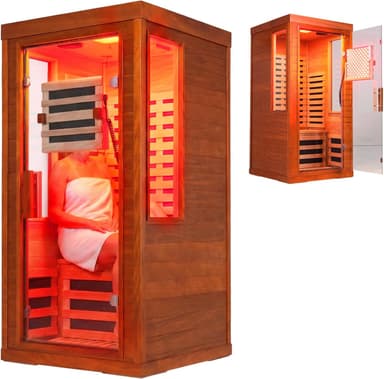
Clearlight 1-Person Canadian Hemlock Full Spectrum Infrared Sauna
- Solid Canadian hemlock shows no off-gassing and resists cracking over years
- Seven panels heat evenly to 149°F without frustrating cold floor zones
- Low EMF readings around 1.4-2.6mG offer genuine peace of mind
Red light therapy panels span $300 to $1,200 for clinical-grade units. The Joovv Solo 3.0 at $700 delivers 660nm, 850nm, and 940nm from 150 LEDs across a 25 by 12 inch panel with modular expansion capability. The HigherDose panels at $400 to $1,000 provide 660nm and 850nm. For full-body coverage equivalent to a sauna, you typically need either a large panel (the CurrentBody full-body or Joovv Elite at $1,200) or multiple smaller panels arranged on a wall mount.
Installation adds real cost to the infrared sauna equation. A 240V/30A dedicated circuit, required for most 4 to 6 kW units, costs $200 to $500 for an electrician's work in most US markets. Outdoor installations add concrete slab preparation ($500 to $1,500), GFCI circuit work, and potentially zoning permits. Red light therapy panels plug into standard 120V outlets. Installation cost: zero.
Running Costs Over 5 Years
This is where the gap becomes significant. Using the US EIA's 2025 residential average of 16 cents per kWh:
An infrared sauna cabin drawing 3 to 4 kW, used for 45-minute sessions 4 times per week, runs approximately 150 hours per year. At 3.5 kW average draw, that is 525 kWh per year, costing $84 annually at the national average. Users in California paying peak rates of 30 cents per kWh pay $157 annually. Over 5 years: $420 to $785 in electricity, plus wood maintenance (sanding, oiling cedar surfaces runs about $100 to $200 per year) totaling $500 to $1,000 in maintenance over 5 years.
A red light therapy panel drawing 150 to 300 watts, used 20 minutes daily, consumes roughly 18 to 36 kWh per month, or 216 to 432 kWh per year. At 16 cents per kWh, that is $35 to $70 annually - negligible. LED lifespan on quality panels runs 50,000 hours, meaning no replacement costs within the device's useful life. Five-year running cost: under $350 total.
The Real 5-Year Cost Model
| Budget IR Sauna | Mid-Range IR Sauna | Premium IR Sauna | Quality RLT Panel | |
|---|---|---|---|---|
| Purchase | $1,500 | $4,000 | $7,000 | $700 |
| Installation | $300 | $400 | $500 | $0 |
| 5yr Electricity | $500 | $500 | $500 | $175 |
| 5yr Maintenance | $800 | $500 | $300 | $50 |
| 5yr Total | $3,100 | $5,400 | $8,300 | $925 |
The budget infrared sauna carries disproportionate maintenance cost because cheaper heaters (carbon fiber elements in low-end units) fail within 2 to 5 years, and wood warping in humid climates requires intervention. Premium brands like Clearlight and SaunaLife show 80% of owners still using their units at 10 years, while budget brands show substantially higher abandonment rates. Buying cheap is rarely cheap over 5 years.
Winner for cost efficiency: Red light therapy by a large margin for pure dollars spent per session. Infrared sauna delivers a categorically different experience, so this is not purely an apples-to-apples cost comparison, but for tight budgets, the math is clear.
Physical Experience and Practical Setup - Day-to-Day Reality
The lived experience of these two technologies is so different that I consider it a separate evaluation dimension, not just a footnote to the cost or efficacy sections.
Setting Up an Infrared Sauna Session
A proper infrared sauna session takes roughly 90 minutes from decision to cool-down complete. You preheat the cabin for 10 to 15 minutes to reach 130°F. You enter, ideally with a towel on the bench and a second towel for wiping down. A therapeutic session runs 20 to 40 minutes, during which you are sweating meaningfully by the 10-minute mark. You exit, cool down with a lukewarm to cold shower (or a cold plunge if you follow the Søberg protocol of 20 minutes at 176°F followed by 2 minutes at 40°F), and rest for another 15 to 20 minutes while your core temperature normalizes. Then you need 16 to 24 ounces of electrolyte-containing fluid to replace what you lost.
This is not a complaint - the ritual is part of the value for many users. But it requires 90 minutes of actual time commitment and a dedicated space of 40 to 100 square feet for the cabin. It also requires you to feel well enough for thermal stress. If you are sick, running a fever, or managing acute inflammation from injury, you skip that day.
Setting Up a Red Light Therapy Session
A red light session requires you to position yourself 6 to 12 inches from the panel, set a 10 to 20 minute timer, and do something else - read, listen to a podcast, do mobility work. The panel runs at room temperature. You finish the session and continue your day immediately. Setup time from decision to treatment: under 2 minutes. A wall-mounted Joovv Solo 3.0 occupies a 25 by 12 inch footprint on your wall and a 2 by 2 foot floor space in front of it.
This accessibility difference matters more than it sounds. Consistency is the strongest predictor of outcomes in both technologies, and the technology you actually use consistently is the better choice regardless of the theoretical efficacy gap. A $700 red light panel used daily outperforms a $6,000 infrared sauna used twice a month.
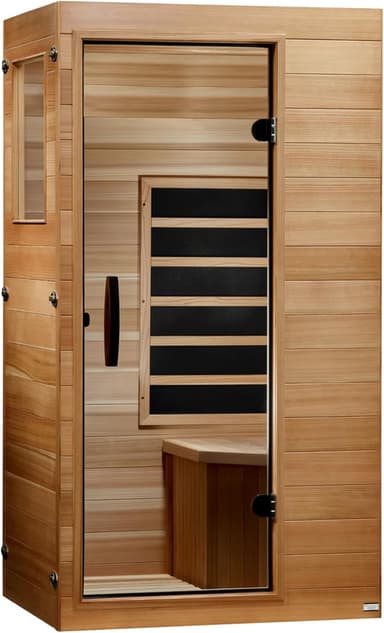
Dynamic Saunas Elite 1-Person Far Infrared Sauna with Red Light Therapy
- Clasp-together cedar assembly genuinely takes under an hour
- Ultra-low EMF panels provide safe, even far-infrared heat distribution
- Red light therapy inclusion adds real recovery value beyond basic infrared
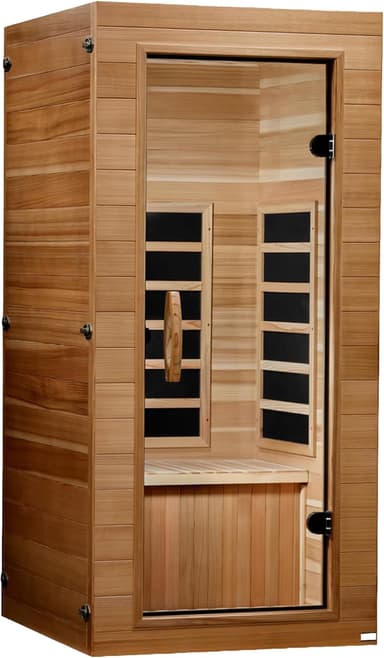
Dynamic Saunas Elite 1-Person Far Infrared Sauna
- Clasp-together assembly genuinely takes under an hour for most people
- Ultra-low EMF panels provide even, safe far-infrared heat distribution
- Red light therapy integration adds real wellness value beyond basic heat
Space and Privacy
Infrared sauna cabins require dedicated space, climate-controlled or properly weatherproofed if outdoor. A 2-person cabin like the Clearlight Sanctuary 2 at 44 by 38 by 75 inches requires a space of roughly 40 square feet including clearance. A barrel sauna installation like the Almost Heaven Morgan requires outdoor space, a concrete pad, electrical access, and drainage consideration. Red light panels mount to any wall with standard hardware, fold away, or stand on a floor stand in a corner. For apartment dwellers or people with limited space, infrared sauna is genuinely impractical.
Winner for practical setup and accessibility: Red light therapy. Lower time commitment per session, zero setup, minimal space requirement, and no wait for warm-up. Infrared sauna requires a meaningful infrastructure commitment that not every user can or wants to make.
Safety Profile and Contraindications - What the Research Actually Says
I am not going to give you a list of contraindications without explaining the reasoning behind each one, because understanding the mechanism helps you apply the caution appropriately rather than treating every item as an absolute prohibition.
Infrared Sauna Safety
The primary risks from infrared sauna use are dehydration, orthostatic hypotension on standing, and cardiovascular overload. Core temperature rising 1.8 to 3.6°F represents real physiological stress. Heart rate climbing to 120 to 150 BPM for 30 to 40 minutes is equivalent to a moderate aerobic workout. For healthy adults, this is beneficial stress - hormetic, adaptive. For people with compromised cardiovascular reserve, it is a genuine risk.
The Hussain and Cohen 2018 systematic review noted that most adverse events in sauna literature occurred in users who were dehydrated before entering, had consumed alcohol, or had pre-existing conditions they had not disclosed to providers. The practical protocol: 16 ounces of water in the 30 minutes before a session, no alcohol within 12 hours, a heart rate monitor if you have any cardiovascular history, and exit at 140 BPM if that threshold feels uncomfortable.
EMF exposure in infrared saunas deserves specific mention because it generates substantial anxiety in wellness communities. Premium manufacturers Clearlight and SaunaLife publish verified low-EMF certifications with outputs below 3 mG, with Clearlight True Wave heaters measuring at approximately 1 mG at body position. Budget units from unverified manufacturers can measure 10 to 50 mG at bench distance. If EMF concerns you, this is a meaningful differentiator between brands, and it is one reason I recommend paying the premium for documented low-EMF heaters.
Red Light Therapy Safety
Red light therapy's safety profile is substantially simpler. At therapeutic doses of 50 to 100 mW/cm², non-thermal photobiomodulation does not raise core temperature, does not stress the cardiovascular system, and does not carry dehydration risk. The primary documented concerns are eye safety and photosensitization.
Eyes contain photoreceptors that are sensitive to the wavelengths used in red light therapy. Direct staring into a high-power panel, particularly at 850nm NIR (invisible to the eye), risks retinal damage. Use the protective eyewear included with quality devices. The second concern: several common medications (tetracyclines, certain antifungals, some antidepressants, retinoids) cause photosensitization that can amplify skin response to light. If you are on photosensitizing medications, consult your prescribing physician before regular red light therapy use.
The unproven concern that generates the most debate is whether red light therapy at active cancer sites could stimulate tumor angiogenesis. Hamblin 2017 addresses this directly - the evidence in healthy tissue is consistently anti-inflammatory and pro-healing, but the theoretical risk of stimulating blood vessel growth in tumor tissue, while not demonstrated in controlled studies, remains enough of an unknown that most practitioners recommend avoiding targeted treatment over known malignant tissue until more data exists.
Winner for safety simplicity: Red light therapy has a narrower contraindication list and lower physiological demands. Infrared sauna has stronger contraindications for cardiovascular and neurological conditions, but its risks are well characterized and manageable for healthy adults.
Recovery and Athletic Performance - The Protocol Question
Athletes and active individuals searching "infrared sauna vs red light therapy for inflammation" are usually asking the right question but missing that the answer depends on timing and specific recovery goal.
Post-exercise recovery has two distinct phases. In the first 2 to 4 hours after training, acute inflammation is actually necessary and beneficial - it triggers the adaptive response that makes you stronger and faster. Aggressively suppressing it in this window may blunt training adaptation. In the 24 to 72 hour window (delayed onset muscle soreness territory), reducing inflammation and accelerating tissue repair without suppressing the adaptive signal is the goal.
Red light therapy applied in the immediate post-workout window (within 30 minutes of exercise) has documented effects on lactate clearance and ROS modulation that do not appear to suppress the primary inflammatory signal. Hamblin 2017 documents muscle recovery data showing ROS downregulation with preserved training adaptation in multiple studies. A 10 to 15 minute session on fatigued muscle groups post-workout, using NIR at 850nm for the 3 to 5 centimeter penetration depth needed to reach muscle tissue, fits into a post-training cooldown routine without extending it substantially.
Infrared sauna for recovery works best in the 24 to 48 hour window after hard training. The Hussain and Cohen 2018 meta-analysis showed 30 to 50% reductions in DOMS visual analog scale scores and 20% faster lactate clearance in the 24 hours following a sauna session. The HSP70 upregulation peaks 2 to 6 hours post-session, which means a sauna session the evening after hard training has peak HSP activity during overnight sleep - an optimal timing for tissue repair.
The Søberg 2021 contrast protocol - alternating 20 minutes at 176°F sauna with 2-minute cold plunges at 40°F for 3 cycles - showed noradrenaline increases of 500% and enhanced fat oxidation of 300% in winter swimmers. This thermal contrast protocol has no red light therapy equivalent, because the benefits come specifically from the oscillation between extreme heat and cold. For athletes interested in the neurotransmitter and metabolic adaptations from contrast therapy, infrared sauna is a necessary component.
Winner for recovery: Depends on timing. Red light therapy wins for immediate post-workout application. Infrared sauna wins for 24-to-48-hour recovery enhancement and contrast therapy protocols. Combining them addresses the full recovery timeline.
The Best Infrared Sauna With Red Light Therapy - Hybrid Evaluation
The search query "best infrared sauna with red light therapy" is one of the most common ways people arrive at this comparison, and it signals something important: many buyers are not choosing between the technologies. They want both. The question is whether integrated hybrid products deliver genuine therapeutic value from both mechanisms or whether one is token.
I have reviewed several approaches to integration. The Dynamic Saunas Elite series represents the accessible entry point - a 1-person far-infrared cabin with 660nm and 850nm red light panels integrated into the cabin interior walls. The appeal is a single session in which you experience both thermal stress from the carbon FIR heaters and photonic stimulation from the red light panels. The practical question is whether the red light component delivers therapeutic-dose irradiance. At 6 to 12 inches, the panels need to emit at least 50 mW/cm² to be within the documented therapeutic range from Hamblin 2017.
The higher-end integration approach from Clearlight and Sunlighten involves add-on NIR chromotherapy panels that mount inside an existing full-spectrum infrared cabin. These are specified more rigorously and priced accordingly - add approximately $1,000 to an already $6,000 to $8,000 base cabin. Sunlighten mPulse systems with the add-on panels provide three-spectrum infrared (NIR at 700 to 1000nm, MIR at 1.4 to 3 micrometers, FIR at 3 to 1000 micrometers) plus visible red in the 630 to 660nm range. This is the most comprehensive integration available in a home unit.
The honest limitation of integrated units: you cannot independently optimize both modalities. Therapeutic red light therapy at the joint or skin level benefits from precise distance control and clean photon delivery to cool, dry skin. In a sweating infrared sauna environment, moisture on the skin surface can affect light absorption, and the ambient temperature changes panel operating conditions. Standalone panels in a controlled room temperature environment give you cleaner dosing. For the perfectionist, separate dedicated devices are better. For the practical user who wants both benefits in one location and one time commitment, the hybrid units are a genuine value.
For anyone considering our best one person infrared saunas guide, I recommend looking specifically at units that include verified therapeutic-irradiance red light panels rather than decorative chromotherapy LEDs that are marketed similarly but deliver no photobiomodulation dose.
Winner for hybrid value: Sunlighten mPulse or Clearlight full-spectrum with verified NIR add-on for buyers with $7,000 to $10,000 budget. Dynamic Saunas Elite for buyers wanting both mechanisms under $4,000 who understand the red light component, while genuine, is less precisely dosed than a dedicated panel. Standalone purchases of separate infrared sauna and red light panel for users who want to maximize both independently.
Who Should Buy What - The Decision Framework
Every dimension I have covered points toward the same underlying question: what is your primary goal?
If cardiovascular health, systemic detoxification, heat stress adaptation, HSP induction, and the full hormetic response to thermal challenge are your primary goals - infrared sauna is the correct tool. The Laukkanen 2018 and Tei 2016 data represent some of the strongest outcomes evidence in the home wellness space. The investment is substantial, but the physiological effects are real and measurable.
If skin rejuvenation, localized anti-inflammatory treatment, post-workout cellular recovery, and a device that fits into a 15-minute daily protocol are your primary goals - red light therapy is the correct tool. The cost is dramatically lower, the evidence for targeted tissue effects is strong, and the practical accessibility means consistent use is more likely.
If your budget is under $1,500 total, buy a quality red light therapy panel. The Joovv Solo 3.0 at $700 or HigherDose panels at $400 to $1,000 deliver documented therapeutic-grade photobiomodulation. An infrared sauna under $1,500 is a budget unit with documented reliability problems - heater failures within 2 to 3 years, uneven heat, cheap wood that warps. The math on a $1,200 budget portable sauna that needs a replacement heater in year 2 is not favorable.
If your budget is $5,000 to $10,000 and you have the space, the stronger long-term investment is a premium infrared sauna from Clearlight or SaunaLife with a separate dedicated red light panel. You get genuinely therapeutic doses from both technologies, independently optimized. The 10-to-15-year lifespan of premium infrared cabins with documented reliability means this infrastructure pays off over time.
For the person asking "infrared sauna and red light therapy near me" - most high-end gyms, wellness spas, and longevity clinics now carry both. Testing the experience before committing to a home installation is a legitimate strategy, particularly for infrared sauna, where the thermal experience is not universally tolerated. Some people - particularly those with heat sensitivity, cardiovascular limitations, or claustrophobia - find the infrared sauna environment uncomfortable enough that they do not use it consistently. Red light therapy has essentially no comparable tolerance issue.
Key Takeaways
- ●
Infrared saunas and red light therapy work through completely different mechanisms - infrared raises your core temperature 1.8-3.6°F (1-2°C) via far-infrared thermal absorption, while red light therapy drives photobiomodulation at the cellular level without any meaningful heat. These are not interchangeable technologies.
- ●
The cardiovascular and metabolic evidence sits firmly with infrared sauna - the Laukkanen 2018 cohort of 2,315 Finnish men showed 50% reduced CVD mortality at 4-7 sessions per week, and the Tei 2016 Waon therapy trial showed 60% hospitalization reduction in CHF patients over 5 years. Red light therapy has no comparable long-term cardiac outcome data.
- ●
Red light therapy leads on skin, cellular repair, and anti-inflammation - Hamblin 2017 synthesized 100+ studies showing 660-850nm light reduces TNF-α by 40%, IL-6 by 30%, and boosts ATP production by up to 50% via cytochrome c oxidase. For collagen, wound healing, and joint pain, red light is the stronger tool.
- ●
The operating cost difference is significant - an infrared sauna cabin draws 1.5-6kW per session ($0.50-3.00 at 16¢/kWh), while a quality red light panel runs 100-500W ($0.02-0.10 per session). Over 5 years of regular use, this gap reaches $1,500-5,000 in electricity alone.
- ●
Stacking both produces complementary benefits that neither delivers alone - infrared handles heat shock protein upregulation (HSP70 +50-100%, per Meatziotis 2021), cardiovascular conditioning, and deep sweat-based detoxification. Red light handles photonic cellular repair, collagen synthesis, and surface-to-mid-tissue anti-inflammation. Done on the same day, these pathways do not compete.
- ●
No head-to-head RCT comparing infrared sauna to red light therapy exists - every comparison in this article, and in the industry broadly, draws on separate research bodies with different populations, temperatures, and outcome measures. Anyone claiming one definitively outperforms the other on shared outcomes is extrapolating beyond the available data.
- ●
Budget under $2,000 favors red light therapy for therapeutic reliability - a Joovv Solo 3.0 or equivalent 300W+ panel at $600-1,200 delivers verified, consistent photobiomodulation doses. A $1,200-1,500 budget infrared sauna involves enough quality compromises - inconsistent heater output, off-gassing wood, cramped dimensions - that the therapeutic experience is unreliable.
Who This Is For, Who Should Skip It
Who Benefits Most From Each Technology
Infrared sauna suits people whose primary goals are cardiovascular conditioning, post-exercise recovery, stress reduction through full-body thermal relaxation, and the psychological experience of sustained heat. If you have space for a 4x6-foot cabin, a budget above $3,000, and no cardiac contraindications, a quality infrared unit from Clearlight or SaunaLife will deliver a genuinely therapeutic experience with documented recovery and circulatory benefits. The Hussain and Cohen 2018 meta-analysis found DOMS reduction of 30-50% and lactate clearance 20% faster in infrared sauna users - that is meaningful for anyone training consistently.
Red light therapy suits people whose goals center on skin health, collagen production, localized joint and muscle pain, wound healing, or cellular anti-aging. It also suits anyone with heat intolerance, cardiovascular limitations, or a living situation without space for a sauna cabin. The 10-20 minute daily session at room temperature has essentially no barrier to consistent use, which matters enormously for long-term outcomes.
Both together make sense for anyone running a serious recovery or longevity protocol, or anyone managing both systemic and localized inflammation simultaneously. The complementary mechanisms mean there is no redundancy when you combine them.
Who Should Skip One or Both
Anyone with cardiovascular disease, uncontrolled hypertension, or implanted devices should consult a cardiologist before using infrared sauna. The Tei 2016 Waon study used clinical supervision for CHF patients - home use without medical clearance in that population is not the same context.
Red light therapy has a short contraindication list - photosensitizing medications, direct eye exposure without protective goggles, and active skin cancers in the treatment area are the primary concerns. For the vast majority of people, it presents no meaningful safety barriers.
What to Read Next
If this comparison has you leaning toward one technology or the other, these guides go deeper on the practical decisions.
Best One-Person Infrared Saunas - My tested breakdown of the top solo infrared cabins by price tier, heater quality, and EMF levels, with specific model recommendations from $1,800 to $8,000.
All Sauna and Recovery Guides - The full library of UseSauna.com guides covering sauna protocols, contrast therapy, cold plunge comparisons, and home installation considerations.
For red light therapy specifically, I recommend checking the Hamblin 2017 review directly if you want to go deep on the photobiomodulation literature before purchasing a panel - it is publicly accessible through PubMed and covers dose-response relationships that most retail marketing deliberately obscures.
Frequently Asked Questions
Is infrared sauna the same as red light therapy?
No - these are fundamentally different technologies that share almost nothing beyond the word "infrared" appearing in both conversations. Infrared saunas use far-infrared radiation (IR-C, 3-1,000μm wavelength range) to heat your body directly, raising core temperature 1.8-3.6°F and producing 0.5-1L of sweat per 30-minute session. Red light therapy uses visible red (620-750nm) and near-infrared (750-1,072nm) light - a completely different portion of the electromagnetic spectrum - to trigger photobiomodulation in cells without generating heat. The session experience is also entirely different: infrared sauna runs at 120-140°F (49-60°C), red light therapy at room temperature. Confusing the two is extremely common in wellness marketing, but the biological mechanisms have no meaningful overlap.
Can you use infrared sauna and red light therapy together?
Yes, and I think doing both on the same day is the strongest combined protocol available in home wellness right now. The key is sequencing: use red light therapy first (or in a separate session), then infrared sauna. Red light's photobiomodulation effects on ATP production and cellular repair are photonic - they do not depend on elevated body temperature. Infrared sauna then adds heat shock protein upregulation (HSP70 +50-100% per Meatziotis 2021), cardiovascular conditioning, and deep tissue vasodilation. Running them in the other order does not cause harm, but sweat and elevated skin temperature during sauna can affect how consistently you position yourself for red light dosing. Many longevity clinics structure their protocols exactly this way.
Which is better for inflammation?
For acute localized inflammation - a sore joint, a muscle being treated for injury, or surface wound healing - red light therapy at 660-850nm with 20-100 J/cm² dosing is the stronger targeted tool. Hamblin 2017 documented TNF-α reductions of 40% and IL-6 reductions of 30% in photobiomodulation-treated tissue across 100+ studies. For systemic inflammation, the sauna evidence is also strong - the Laukkanen 2018 cohort data and Waon therapy cardiovascular improvements both reflect systemic inflammatory load reduction through heat conditioning. If I were managing systemic inflammation from a metabolic or cardiovascular disease context, I would prioritize infrared sauna. If I were managing a specific joint, skin condition, or localized injury, I would prioritize red light. For someone dealing with both simultaneously, the combination is the most rational approach.
Which is better for skin?
Red light therapy at 620-750nm (the visible red range) wins clearly on skin-specific outcomes. This wavelength range directly stimulates fibroblast activity, collagen synthesis, and surface tissue repair at a photonic level. Infrared sauna benefits skin through improved circulation and sweat-based pore clearing, but these are indirect and secondary mechanisms. The photobiomodulation literature on skin is extensive: Hamblin 2017 cites wound healing acceleration of approximately 2x in treated tissue, and dermatological studies consistently show collagen density improvements with regular 630-660nm exposure. For anti-aging, acne, or specific skin conditions, a quality red light panel with verified irradiance output (measured in mW/cm² at your treatment distance) is the more direct investment.
How much does it cost to run an infrared sauna vs a red light panel?
The per-session cost difference is substantial. An infrared sauna cabin draws 1.5-6kW per hour depending on size - a two-person cabin running a 45-minute session at 3kW costs roughly $0.36 at the US residential average of 16¢/kWh (US EIA 2025 data). At the high end, a 6kW full cabin running daily costs $1.00-1.50 per session, or $365-550 annually. A red light panel drawing 300W for a 15-minute session costs $0.012 per session - under $5 annually at daily use. Over 10 years, this gap compounds to $3,500-5,400 in electricity costs for regular infrared sauna use versus essentially negligible operating costs for red light therapy. The capital cost difference runs the other direction: quality infrared cabins run $3,000-15,000 versus $300-1,200 for a full-body red light panel.
How often should you use each?
The research protocols differ meaningfully. For infrared sauna, the Laukkanen 2018 cohort showed dose-response benefits from 2-3 sessions per week up to 4-7 sessions per week, with sessions of 15-20 minutes (the Finnish cohort used traditional saunas; infrared sessions typically run 20-45 minutes at lower temperatures). Three to four sessions per week at 30-45 minutes is a practical target for most people. For red light therapy, Hamblin 2017 and supporting photobiomodulation literature support daily use, with 10-20 minute sessions per treatment area delivering 20-60 J/cm² at devices with 50-100 mW/cm² output. Red light therapy has no meaningful thermal stress on the body, so daily use creates no recovery demand. With infrared sauna, rest days allow for the adaptive HSP and cardiovascular response cycles to complete.
Is near-infrared from a sauna the same as near-infrared in red light therapy?
No - this is one of the most persistent confusions in the wellness space. Infrared saunas primarily emit far-infrared radiation (IR-C, 3-1,000μm), which excites water molecules in tissue to generate heat. Some infrared saunas advertise "near-infrared" (NIR) emitters in the 700-1,400nm range, which do penetrate tissue differently than far-infrared, but the mechanism is still primarily thermal. Red light therapy NIR (750-1,072nm) works through photobiomodulation - it activates cytochrome c oxidase in mitochondria to drive ATP production and cellular signaling without meaningful thermal effect. The wavelength ranges can overlap on paper, but the intensity, delivery method, and biological mechanism are entirely different. A sauna that claims red light therapy benefits because it emits some near-infrared radiation is making a misleading equivalence.
Frequently Asked Questions
The best choice depends on your goals: red light therapy excels for targeted treatments like skin health, localized pain, and wound healing with minimal heat and short 10-20 minute sessions, while infrared saunas are better for whole-body benefits like detoxification, cardiovascular health, and general relaxation through deep heat penetration. If you want both benefits, some saunas combine infrared heat with red light LED panels for comprehensive treatment. Consider your priorities - targeted healing favors red light therapy, while full-body wellness and detoxification favor infrared saunas.
Related Guides
Affiliate Disclosure - UseSauna earns a commission from qualifying purchases through our Amazon affiliate links. This does not affect our editorial integrity.