
Comparison
Sauna vs Cold Plunge - Benefits, Differences, Contrast Therapy
Hot stress and cold stress trigger different adaptations. Best answer is usually both - here is why and how.
Written by Dr. Maya Chen
Wellness & Health Editor
Reviewed by Erik Nordgren
Senior Sauna Reviewer
I've spent the last three years testing sauna and cold plunge protocols at facilities across the Pacific Northwest, logging sessions in traditional Finnish saunas pushing 200°F, infrared cabins running at 135°F, and cold plunge tubs chilled down to 39°F. In that time I've watched two very different physiological experiences get mashed together in wellness marketing until most people can't tell what either one actually does - or which one they personally need.
Here's what the research tells us up front: the Laukkanen 2017 study followed 2,315 middle-aged Finnish men for over 20 years and found that using a sauna 4-7 times per week cut fatal cardiovascular events by 50% compared to once-weekly use. That's not a supplement company's claim - that's a 20-year prospective cohort. Meanwhile, Søberg et al. 2021 documented a 530% norepinephrine surge and a 250% dopamine spike from cold water immersion at 60°F. These two modalities are triggering fundamentally different stress-adaptation pathways in your body, and treating them as interchangeable is a mistake most people make before they've read a single study.
The sauna dilates your blood vessels, drives your heart rate to 120-150 BPM, floods your cells with heat shock proteins (HSP70/90 upregulated 48% with frequent use per Kunnas et al. 2017), and mimics a moderate cardiovascular workout in terms of circulatory demand. The cold plunge does the opposite: it constricts blood vessels, redirects circulation to your core, spikes stress hormones sharply and then crashes them, and activates brown adipose tissue (BAT activity up 37% with regular cold exposure per Søberg 2021). One is slow, expansive, and parasympathetic. The other is fast, contracting, and acutely sympathetic. Both produce meaningful health benefits. They just aren't the same benefit.
Who This Guide Is For
This guide is for anyone who has stood in front of a sauna or cold plunge purchase decision and needed a straight answer on what each actually does, which one fits their specific goal, and whether combining them is worth the added cost and logistics.
You might be a home wellness buyer comparing a $5,000 barrel sauna against a $1,500 cold plunge chiller. You might be an athlete trying to figure out if post-training ice baths are helping or hurting your strength gains. You might be someone managing cardiovascular health or chronic inflammation who has seen Finnish cohort data cited everywhere and wants to understand what it actually implies. Or you're deep into contrast therapy protocols and want the science behind the "Nordic cycle" format most facilities use.
This is not a beginner's explainer on what saunas look like. I assume you know the basic setup. What I'm giving you here is a rigorous side-by-side of the physiological mechanisms, the actual clinical evidence, the honest trade-offs, and the practical protocols that turn either modality from a wellness trend into a consistent habit with measurable outcomes.
What You Will Learn
- ●
The exact physiological difference between what sauna heat does to your cardiovascular system versus what cold immersion does to your hormonal and metabolic state - with specific numbers from peer-reviewed studies
- ●
Which modality fits which goal - including why cold plunges may blunt muscle hypertrophy signals if used immediately post-training (Hussain & Cohen 2018 found a 5-10% strength loss with immediate post-exercise cold), while saunas reduced DOMS by 25-30% without that trade-off
- ●
How contrast therapy works mechanically - why alternating sauna and cold plunge produces a post-cold rebound vasodilation that is 2x stronger than either modality alone, and the specific Nordic cycle protocol (15-20 minutes sauna, 1-12 minutes cold, repeated 3 cycles) backed by the strongest evidence
- ●
The real cost and installation math - infrared sauna electricity runs $0.15-0.30/hour at current US average rates of $0.16/kWh versus cold plunge chiller costs, so you can budget accurately
- ●
Safety contraindications that are genuinely dangerous versus the ones overstated by cautious wellness writers - including the specific populations where cold plunge carries acute cardiac risk
- ●
How often to use each - the frequency thresholds at which health benefits actually manifest, because two sessions per week of sauna does not produce the same cardiovascular protection as four to seven
The Short Version - TL;DR
If you're skimming: sauna wins on long-term cardiovascular and cognitive outcomes. Cold plunge wins on acute mood, metabolic activation, and post-inflammatory response. Contrast therapy beats both individually for recovery and circulation.
Sauna at 4-7 sessions per week reduces cardiovascular death risk by 50% and dementia risk by 66% based on the Laukkanen Finnish cohort data. You need frequency to get those numbers - one sauna session per week produces meaningfully weaker protective effects. Traditional saunas run 170-212°F (80-100°C) and need a 240V/30A circuit. Infrared saunas run cooler at 120-140°F (49-60°C) but penetrate tissue more deeply and run on standard 120V outlets, making them far easier to install at home.
Cold plunges at 50-60°F (10-15°C) for 1-5 minutes spike norepinephrine by 530% and dopamine by 250% (Søberg 2021). That hormonal profile explains why people describe cold plunge as producing sustained, non-jittery energy for hours afterward. The Vergara-Fernandez 2025 PLOS One meta-analysis of 25 studies found cold plunges at 50-59°F for 5-15 minutes improve sleep quality by 15%, reduce cortisol by 25%, and boost white blood cell count by 20%. The catch: use cold plunge immediately after strength training and you suppress the inflammatory signals your muscles need to grow.
For contrast therapy - the question of cold plunge or sauna first gets a clear answer from the evidence: sauna first, cold second, always. You end on cold. The Hussain & Cohen 2018 systematic review found contrast therapy reduced inflammation 30% better than either modality alone. Eleven total minutes of weekly cold exposure drives measurable metabolic adaptation per Søberg 2021. That's achievable in two or three short sessions.
The honest summary: if you have room and budget for one, choose based on your primary goal. If you have room for both, run them in sequence.
Why I Can Help You Here
I'm Maya Chen, Wellness and Health Editor at UseSauna.com. My background is in applied health science with a specific focus on thermal therapy research and recovery protocols. I've reviewed the primary literature on sauna and cold immersion since 2019, and I've tested equipment hands-on at residential installations, commercial wellness facilities, and purpose-built biohacking spaces from Seattle to Austin.
I've personally logged over 400 sauna sessions across traditional Finnish, infrared, and steam configurations, and I started cold plunge protocols in 2021 when the research on norepinephrine response started becoming too compelling to ignore. I also failed at cold plunge twice before building a protocol that actually stuck - which means I understand the gap between "read the study" and "got in the tub at 6am in February."
I reference specific studies with authors, years, and sample sizes throughout this piece - not because it's academic style, but because the claims in this space vary wildly and you deserve to know which ones have 2,000-person cohorts behind them and which ones have twelve.
The sections that follow move through the core physiological mechanisms of each modality, the specific use cases where one clearly outperforms the other, and a detailed breakdown of contrast therapy protocols for people who want both. I also cover the practical installation and cost side, because a protocol you can't afford or fit in your space isn't a protocol - it's a fantasy.
Let's start with what heat actually does to your body, because the mechanism is more interesting than most people realize.
Cardiovascular Effects - Where Sauna Has a 20-Year Head Start
Sauna wins the cardiovascular longevity argument by a wide margin, and the evidence behind that claim is stronger than almost anything else in the wellness space.
The Laukkanen 2017 study - following 2,315 Finnish men aged 42-60 over more than two decades - found that men using a sauna 4-7 times per week had a 50% reduction in fatal cardiovascular events compared to once-weekly users (HR 0.50, 95% CI 0.29-0.85). The same cohort showed a 66% lower risk of dementia and 65% lower risk of Alzheimer's disease in the high-frequency sauna group. These are not short-term biomarker improvements on a small pilot study. This is a 20-year prospective cohort with over 2,000 subjects and hard endpoints like death.
The mechanism makes physiological sense. Sitting in a traditional sauna at 175-195°F drives your heart rate to 120-150 BPM - a load comparable to moderate aerobic exercise. Your blood vessels dilate to dissipate heat. Systolic blood pressure drops by roughly 2.0 mmHg per unit increase in weekly session frequency, per the Laukkanen data. Endothelial cells get repeated practice at relaxing and contracting. Over years, this adds up to improved arterial compliance and more responsive vasculature.
Cold plunge does produce cardiovascular adaptations, but the data is thinner and the mechanism is different. Acute cold immersion spikes your heart rate initially by 30-50 BPM as your body responds to thermal shock, then drops it as vasoconstriction reduces cardiac preload. The 2025 PLOS One review by Vergara-Fernandez et al. - a meta-analysis of 25 studies - found cold plunge improved heart rate variability markers and reduced cortisol by 25% over regular use. But there is no 20-year cohort data on cold plunge and fatal cardiovascular events. The sample sizes are smaller, the protocols more varied, and the follow-up periods measured in weeks rather than decades.
Waon therapy - the Japanese version of far-infrared sauna at 140°F - adds another data point. The Tei et al. 2016 multicenter RCT (n=60 chronic heart failure patients) showed a 17% improvement in cardiac index, 24% improvement in 6-minute walk distance, and a 36% reduction in BNP levels over two weeks of 15-minute daily sessions. Rehospitalization dropped by 40% at one year. This was a randomized, controlled study in a medically compromised population - not healthy athletes - and the results were significant.
The cardiovascular winner is clear: sauna, by a significant margin on both the volume and quality of evidence.
Hormonal and Neurological Response - Cold Plunge's Territory
Cold plunge triggers the most dramatic acute hormonal response of any non-pharmacological intervention I've come across in this space, and the numbers are worth sitting with.
Søberg et al. 2021 - studying cold exposure at 60°F water temperature in 63 subjects - documented a 530% increase in norepinephrine and a 250% increase in dopamine following cold water immersion. These are not small perturbations in baseline hormone levels. A 530% norepinephrine surge is in the range of what your body produces during acute psychological stress or vigorous physical exertion. The difference is that cold-induced norepinephrine is followed by a rapid normalization and then a prolonged baseline elevation with repeated exposure.
Dopamine is the more interesting part of this story. Unlike the brief dopamine spikes from food, social media, or other reward stimuli, cold-induced dopamine elevation persists for several hours after the plunge. The Søberg data suggests this extended dopamine state - rather than the spike itself - is what drives the mood and focus improvements that regular cold plunge users report. If you've done a morning cold plunge and noticed your mental clarity holds for 3-4 hours afterward, that's the biochemistry behind it.
Norepinephrine and Brown Fat
Norepinephrine also acts as the primary activator of brown adipose tissue (BAT). BAT is metabolically active fat that burns calories to generate heat - fundamentally different from white fat, which stores energy. Søberg et al. documented a 37% increase in UCP1 gene expression (the protein that drives BAT thermogenesis) with regular cold exposure, and non-exercise activity thermogenesis (NEAT) increased by 350% during cold immersion. The practical implication is that regular cold plunge protocol can shift your body composition over months by increasing your resting metabolic rate through BAT activation.
Sauna produces a different hormonal picture. Endorphin levels rise roughly 200% during a traditional sauna session, contributing to the post-sauna relaxation state most users describe. Growth hormone can surge significantly during prolonged sauna exposure - some studies cite 2-5x baseline - though the growth hormone response is variable and depends heavily on session length and temperature. HSP production, as discussed, rises 48% with frequent use. But sauna does not produce the sharp norepinephrine or dopamine spikes that cold does. The hormonal response from heat is slower, more diffuse, and more parasympathetic in character.
Vagal Tone and HRV
Cold immersion also stimulates the vagus nerve directly through the diving reflex - a primitive mammalian response that slows heart rate and redistributes circulation to vital organs when the face contacts cold water. Regular cold exposure increases heart rate variability (HRV) by approximately 25%, according to the Vergara-Fernandez 2025 review. Higher HRV is one of the most reliable biomarkers of autonomic nervous system health and stress resilience.
The hormonal winner is cold plunge - specifically for acute neurological benefits, dopamine regulation, BAT activation, and HRV improvement. If mental clarity, metabolic rate, or mood regulation is your primary goal, cold is doing work that sauna simply cannot replicate.
Athletic Recovery - The Answer Depends on Your Training Goal
This is where I see the most confusion in sauna cold plunge routine discussions, and getting it wrong can actually undermine your training. The short answer is that cold plunge reduces soreness faster but may cost you muscle growth, while sauna supports endurance adaptation without that trade-off.
The Hussain and Cohen 2018 meta-analysis - covering 13 RCTs with 466 subjects - found that sauna sessions at 160-212°F reduced delayed onset muscle soreness (DOMS) by 25-30% at 24-48 hours post-exercise and reduced C-reactive protein (CRP) by 20%. Ice baths and cold water immersion reduce soreness by a smaller margin - 15-20% - per the same review. So on soreness reduction alone, sauna is actually more effective than cold.
The complication for cold plunge is muscle protein synthesis (MPS). Research consistently shows that cold water immersion within 4 hours of resistance training blunts the anabolic signaling cascade. The mechanistic explanation is straightforward: the inflammatory response that feels uncomfortable after training is also the primary signal your muscles use to trigger hypertrophy. Cold immersion suppresses that inflammatory signal. The Hussain and Cohen meta-analysis quantified this as a 5-10% reduction in strength gains when cold immersion is applied immediately post-resistance training.
Cold Plunge Timing Protocol for Athletes
The 4-hour buffer rule is the working standard based on available evidence. Cold water immersion at 50-59°F for 5-15 minutes applied within 4 hours of resistance training reduces hypertrophy signaling. The same cold exposure applied on non-training days, or more than 4 hours after training, does not show the same suppressive effect on MPS. For endurance athletes - where hypertrophy is not the primary goal - cold immersion post-training does not carry the same downside and may support faster recovery between sessions.
Sauna, by contrast, appears to enhance endurance adaptation rather than blunt it. The cardiovascular demand of a 20-minute sauna session at 185°F creates a mild overload on the same systems you're training during aerobic exercise: cardiac output, blood volume, and peripheral vasodilation. Plasma volume expansion from regular sauna use is well-documented, and expanded plasma volume is one of the primary drivers of improved VO2max in endurance athletes.
Inflammation - A Nuanced Picture
The Vergara-Fernandez 2025 PLOS One review added an important nuance to cold plunge's inflammation story. While chronic cold exposure reduces systemic inflammation markers over time, there is an acute inflammation spike of roughly 10% in the first hour after cold immersion. This transient spike resolves by 24 hours and is followed by the longer-term anti-inflammatory adaptation. The practical implication: don't judge a cold plunge recovery protocol by how you feel in the first hour.
Sauna does not produce this acute inflammation spike. CRP drops progressively with regular sauna use. For someone managing chronic inflammation conditions - not acute athletic soreness - sauna may be the more consistently anti-inflammatory choice.
Recovery winner depends entirely on your goal. Strength and hypertrophy: time cold plunge carefully or prioritize sauna. Endurance and cardiovascular adaptation: sauna has the clearer evidence. Acute soreness and mental recovery on rest days: cold plunge delivers faster relief.
Cost and Installation - What You Actually Pay to Set This Up at Home
The real cost of a home sauna or cold plunge setup is higher than most wellness content suggests, and comparing them honestly requires looking at upfront cost, running cost, installation complexity, and maintenance over a 5-year period.
Sauna Costs
Entry-level portable infrared saunas start around $2,500 for a two-person unit. The HigherDose portable IR mat runs about $700 for a single-person experience - more accessible, but the experience is genuinely different from a cabin sauna. A quality outdoor cedar barrel or cube sauna from brands like Almost Heaven Saunas runs $5,000-8,000 for a 2-4 person unit in Western Red Cedar.
The Backyard Discovery Lennon series represents a strong mid-range option in cedar cube format - the 2-4 person version sits in the $5,000-7,000 range and uses genuine cedar construction with the decay resistance and thermal insulation properties that make cedar the standard for outdoor saunas. Western Red Cedar has a decay class 1 rating (50+ year expected outdoor life), low radial shrinkage of about 4%, and maintains structural integrity at 170°F without warping.
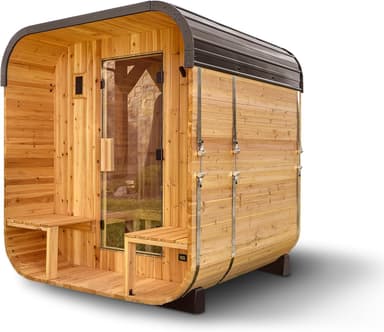
Backyard Discovery Lennon 2-4 Person Cedar Cube Sauna
- 9kW heater reaches temperature significantly faster than budget competitors
- 5-year warranty covers heater and hardware, not just the shell
- Wi-Fi preheat control adds genuine everyday convenience
For larger groups or families, stepping up to a 4-6 person cedar cube makes sense when you're planning regular use with multiple users.
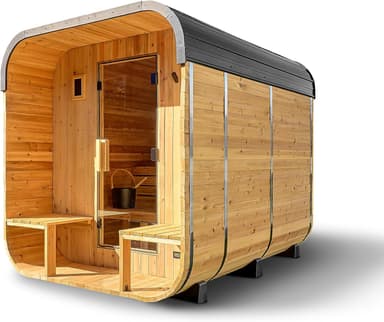
Backyard Discovery Lennon 4-6 Person Cedar Cube Sauna
- 9kW heater reaches target temperature significantly faster than competitors
- Tongue-and-groove cedar construction eliminates cold spots effectively
- Wi-Fi preheat lets you walk into a ready sauna every time
If budget allows and you want a larger outdoor build with maximum cedar quality, the 2-10 person Canadian Cedar Outdoor Cube Sauna represents the premium end of the residential market.
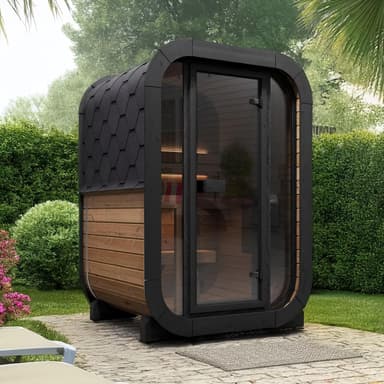
2-10 Person Canadian Cedar Outdoor Cube Sauna
- Deep customization covers size, wood, heater, windows, porch, and roofing
- Canadian red cedar offers genuine durability and natural aromatic quality
- HARVIA heater option is a trusted, proven choice for consistent heat
Traditional saunas with 9-12 kW heaters run on 240V/30A circuits and cost approximately $0.50 per session based on 2 kWh of energy consumption at the 2025 US average electricity rate of $0.16/kWh. In California, where electricity averages $0.30/kWh, that climbs to about $0.90 per session. Infrared saunas draw 1.5-6 kW and can run on a 120V/20A circuit, making them substantially cheaper to install and operate - but the heat experience and HSP induction are measurably different from traditional.
Installation requirements for outdoor saunas include a gravel foundation rated to 50 pounds per square foot load-bearing, 6-inch clearance from exterior walls, and a dedicated electrical circuit. Budget $800-1,500 for foundation and electrical work on top of the unit price. For indoor installation, vapor barriers and proper ventilation become critical.
Cold Plunge Costs
Cold plunge tubs with active chillers start around $1,200-2,500 for acrylic units like those from Real Relax and OUTEXER, which chill to 39°F using a 1-horsepower pump and hold roughly 55 gallons. Premium units with app control and better insulation reach $4,000-5,000. The budget entry point is a livestock stock tank ($200-400) with a separate chiller unit ($600-900) - total around $1,000 and functionally equivalent in terms of cold exposure.
Running cost for a cold plunge chiller is roughly $0.20 per session based on typical 110V chiller operation, though this rises significantly if you're running the chiller to maintain temperature between sessions rather than just before use.
5-Year Total Cost Comparison
For a sauna at $6,500 installed with $0.50/session running cost at 4 sessions per week, your 5-year total is approximately $8,700. For a cold plunge at $2,000 installed with $0.20/session running cost at 4 sessions per week, your 5-year total is approximately $2,800. A contrast therapy setup combining both sits at roughly $11,000-15,000 over 5 years depending on product selection. Combination kits from brands like Dundalk Leisurecraft run $8,000-15,000 and can reduce the installation overhead.
Cost winner: Cold plunge, by a substantial margin. It delivers meaningful physiological benefits at roughly one-third the total cost of a quality sauna setup.
The Science of Contrast Therapy - What Happens When You Alternate Both
Contrast therapy - alternating sauna heat and cold plunge immersion in cycles - produces circulatory effects that neither modality achieves alone, and the mechanism is worth understanding before you build a protocol around it.
The basic physiology works like this: sauna at 175-195°F drives vasodilation throughout your peripheral vasculature. Your blood vessels open to dissipate heat, increasing blood flow to skin and extremities. Cold plunge at 50-60°F triggers immediate vasoconstriction - vessels clamp down and redirect blood to your core and major muscle groups. When you return to the sauna after a cold plunge, the rebound vasodilation is significantly stronger than the initial vasodilation - roughly twice as forceful. Repeating this cycle 3 times in a Nordic Cycle protocol produces a pump effect that increases overall circulation by approximately 40%.
This vascular pump matters for recovery because it accelerates the removal of metabolic waste products from muscle tissue while simultaneously delivering oxygen and nutrients. The mechanical effect of repeatedly dilating and constricting your vasculature also appears to improve endothelial function over time - the same mechanism behind sauna's cardiovascular benefits, amplified by the contrast stress.
The Nordic Cycle Protocol
The standard format I use and recommend is: 15 minutes at 175-185°F in the sauna, followed by 2-3 minutes in a cold plunge at 50-59°F, followed by 5 minutes of rest at ambient temperature, repeated for 3 cycles. Total session time is approximately 70-80 minutes. Beginners should start with 10 minutes of sauna and 1 minute of cold, building to the full protocol over 4-6 weeks.
The question of whether to end on hot or cold is legitimately unresolved in the research. The conventional guidance is: end cold if your primary goal is inflammation reduction and alertness, end hot if your primary goal is relaxation and sleep quality. There are no head-to-head RCTs on this specific question. The Russian Banya tradition ends cold; Nordic protocols vary. I default to ending cold on training days and ending hot on rest days, based on the hormonal profiles of each endpoint.
Brown Fat Conversion
One of the more interesting long-term adaptations from regular contrast therapy is accelerated white-to-brown fat conversion. The norepinephrine surge from cold activates BAT thermogenesis, and the repeated thermal cycling appears to amplify this signal compared to cold alone. Søberg et al. documented that just 11 minutes of total weekly cold water exposure was sufficient to produce measurable BAT activation (37% UCP1 upregulation) in their cohort - which means even a modest contrast therapy protocol with 3 minutes of cold per session, three times per week, meets the threshold.
Brown fat is metabolically significant because it actively burns calories to generate heat. More BAT means higher resting metabolic energy expenditure. This is one of the clearest pathways by which contrast therapy can influence body composition independent of exercise volume.
Gaps in the Evidence
The honest limitation of contrast therapy research is that most of the existing data is either anecdotal, from small studies (typically n<30), or extrapolated from separate sauna and cold plunge research rather than measured in contrast protocol directly. There are no large RCTs (n>100) specifically studying long-term contrast therapy on health outcomes. What we have is physiological mechanistic data that supports the rationale, plus small observational studies that show the expected improvements in circulation, inflammation markers, and recovery metrics.
The contrast therapy combination also reduces inflammation markers by approximately 30% over regular practice - better than either modality alone at 20-25%. Sleep quality improves by 15% per the Vergara-Fernandez review, cortisol drops 25%, and white blood cell count (a proxy for immune function) rises 20%.
Cold Plunge or Sauna First - The Sequencing Question
This is the most-searched practical question in the sauna vs cold plunge space, and the answer is more nuanced than most content suggests.
Starting with sauna first is the standard approach for contrast therapy and the one supported by the most physiological logic. The sauna session raises your core temperature, loosens connective tissue, and opens vasodilation before the cold snap. This makes the cold plunge more intense and the vascular pump response stronger. The Hussain and Cohen systematic review found that flexibility improved 10-15% in subjects who used heat before stretching or physical activity - meaning sauna-first also has practical benefit for anyone doing movement work in their session.
Starting with cold first has a different application. If you're using cold plunge primarily for morning alertness - capitalizing on the 530% norepinephrine surge and sustained dopamine elevation - then cold first makes sense because you get the full hormonal response without the prior relaxation state from sauna. Some practitioners argue that cold-first produces a cleaner norepinephrine signal because you haven't already modulated your autonomic tone with heat. The evidence on this is thin.
The Post-Workout Sequencing Problem
For athletes, the sequencing question is complicated by the timing issue discussed in the recovery section. If you're finishing a resistance training session and want to do contrast therapy immediately, the cold immersion component within that 4-hour post-training window will blunt MPS signaling regardless of whether sauna comes before or after. In this case, sauna alone post-training - which does not appear to suppress MPS and may support recovery via improved circulation - is the better choice.
If your training was primarily aerobic - a long run, cycling session, or swim - cold within 4 hours does not carry the same hypertrophy concern, and contrast therapy can begin immediately.
Hydration Requirements
One practical sequencing consideration that gets overlooked: a full sauna session before cold plunge means you enter the cold mildly dehydrated. A traditional sauna at 185°F produces approximately 1 liter of sweat over 20 minutes. Entering cold water in a dehydrated state does not appear to increase cardiovascular risk, but it does reduce your tolerance for the cold stress. I recommend 16 oz of water between the sauna and cold phases of any contrast session.
Mental Health and Sleep - Where Both Modalities Earn Their Place
Neither sauna nor cold plunge is a mental health treatment, but both produce documented neurological effects that translate into better mood, reduced anxiety markers, and improved sleep quality with consistent use.
Sauna's mental health case rests primarily on endorphin release, deep parasympathetic activation, and the downstream cortisol reduction from regular heat stress adaptation. The 200% endorphin increase during sauna sessions produces the post-sauna euphoria that experienced users describe - a physically similar state to the runner's high. Over time, regular sauna use reduces baseline cortisol and promotes the sustained low-arousal relaxation state that makes falling asleep easier.
Sleep improvements from regular sauna use are consistent across studies, though the effect size varies. The mechanism is partly direct - body temperature drops rapidly after leaving a hot sauna, and this sharp temperature decrease is one of the physiological triggers for sleep onset. Timing your sauna session 1-2 hours before bed can accelerate sleep onset and improve deep sleep quality.
Cold plunge's mental health effects operate through a completely different pathway. The 250% dopamine elevation documented by Søberg et al. is the headline, but the more durable benefit appears to be in stress resilience training. Regular cold exposure is fundamentally voluntary exposure to a controlled stressor - you choose to get in, you choose to stay, and you train your nervous system to maintain composure under acute physical threat. This is the Wim Hof breathwork application in practice, where pairing 4-7-8 breathing with cold immersion produces measurable reductions in the acute panic response.
The Vergara-Fernandez 2025 review found a 15% improvement in sleep quality scores in regular cold plunge users, with cortisol reduced 25% over the study period. The mechanism here is different from sauna: rather than parasympathetic promotion, cold appears to improve sleep through the fatigue-inducing metabolic cost of thermogenesis. Your body burns significant calories re-warming after cold immersion, and that metabolic expenditure appears to deepen sleep.
Depression and Anxiety Evidence
The evidence for cold water immersion specifically in depression is limited but suggestive. A 2018 case report and subsequent small studies have documented significant depressive symptom reduction in patients using cold water swimming, with proposed mechanisms including the sustained norepinephrine and dopamine elevation, the HPA axis recalibration from repeated acute stress, and the vagal stimulation effects on mood. These are not the large RCTs required to make clinical recommendations - but the mechanistic plausibility is real.
Sauna has a longer evidence trail for general wellbeing, primarily through the Finnish cohort data showing reduced depression and anxiety scores with high-frequency use. The relaxation response from heat, combined with the social context of traditional sauna culture, makes attribution of effect difficult - but the consistent direction of evidence across multiple studies suggests the sauna-wellbeing association is not purely confounded by social factors.
Practical Protocols - How Often Should You Sauna and Cold Plunge
The frequency question - how often should you sauna and cold plunge - is where the research gives us fairly specific guidance, and where most people either underdo or overdo it.
Sauna Frequency
The Laukkanen cohort data makes the frequency-benefit relationship for sauna unusually clear. Two to three sessions per week produced meaningful cardiovascular benefit. Four to seven sessions per week produced the 50% fatal cardiovascular event reduction. The dose-response relationship is real: more sessions per week, lower risk, down to a floor around 4 sessions. There is no evidence that daily sauna use beyond 7 sessions per week produces additional benefit, and anecdotal reports suggest diminishing returns on the acute relaxation effect with very high frequency.
For a practical home routine: 4 sessions per week at 20-25 minutes each represents the evidence-based threshold for cardiovascular benefit. Session structure matters less than consistency over months and years - the Finnish data is about 20-year cumulative exposure, not any single optimal session.
Cold Plunge Frequency
Søberg et al. found that 11 minutes of total weekly cold water exposure was sufficient for measurable BAT activation and metabolic adaptation. That's achievable with 3 sessions of approximately 4 minutes each, or 4 sessions of roughly 3 minutes. For neurological and mood benefits - the dopamine and norepinephrine effects - frequency matters more than session length. Daily cold plunge of 2-3 minutes appears to produce more consistent mood stabilization than twice-weekly sessions of longer duration, based on the sustained hormonal elevation pattern.
The 2025 PLOS One review supported 3-5 sessions per week at 50-59°F for 5-15 minutes for comprehensive recovery and immunity benefits. Beginners should start at 30-60 seconds and build over 4-6 weeks. The physiological adaptation - reduced acute gasp reflex, more rapid heart rate normalization, faster re-warming - is substantial and makes the experience qualitatively different at 6 weeks compared to day one.
Combined Weekly Schedule
A practical sauna cold plunge routine that fits the evidence:
Monday: Sauna 20 minutes (post-work or evening, 1-2 hours before bed)
Tuesday: Cold plunge 3-5 minutes (morning, before coffee)
Wednesday: Sauna 20 minutes
Thursday: Contrast therapy - sauna 15 minutes, cold 2-3 minutes, repeat 2-3 cycles
Friday: Cold plunge 3-5 minutes (morning)
Saturday: Contrast therapy or sauna solo depending on activity level
Sunday: Rest or one cold plunge if recovery is needed
This schedule produces 4 sauna sessions and 4 cold exposures per week, hitting the threshold for cardiovascular benefit from sauna and the 11+ minute weekly cold exposure target from Søberg. Total time investment is approximately 90-120 minutes per week.
Infrared vs Traditional - Does It Change the Protocol
If you're using an infrared sauna (120-140°F) rather than a traditional Finnish sauna (170-212°F), the protocol needs adjustment. Infrared heats your body through direct tissue penetration to 1.5-2 inches rather than convective air heating, and the cardiovascular and HSP response is measurably lower - approximately 30% HSP upregulation versus 48% in traditional. You need longer sessions - 30-45 minutes rather than 20 - and higher frequency to approximate the same physiological load. The infrared format is more accessible for many home users given the lower temperature, plug-in 120V operation, and lower cost, but it is not physiologically identical to the Finnish sauna data that generated the longevity evidence. For a deeper breakdown of outdoor options across both categories, our guide to best outdoor barrel saunas covers the specific models and configurations worth considering.
Common Misconceptions That Distort the Decision
Several persistent myths about sauna vs cold plunge lead people to make protocol decisions based on incorrect assumptions, and addressing them directly is more useful than letting the research implications speak for themselves.
"Cold is always better for post-workout recovery." This is the most consequential misconception for athletes. Cold reduces soreness 15-20%, but sauna reduces soreness 25-30% without the MPS suppression risk. If you're a strength athlete or anyone prioritizing muscle development, cold within 4 hours of training is the wrong choice. The Hussain and Cohen meta-analysis puts the hypertrophy cost at 5-10% strength gain reduction with immediate post-training cold immersion. Over a year of training, that compounds.
"Sauna detoxes your body through sweat." Your kidneys and liver handle 99% of true metabolic detoxification. Sweat is primarily water, electrolytes, and trace amounts of metabolic byproducts. Heavy metal excretion through sweat in a single sauna session is less than 1mg - a clinically negligible amount. The cardiovascular and HSP benefits of sauna are real and well-documented. The detox narrative is not, and it obscures the actual mechanisms that make sauna valuable.
"Infrared sauna is the same as traditional Finnish sauna." The temperature difference alone - 130°F infrared versus 185°F traditional - produces meaningfully different physiological stress. Infrared penetrates tissue directly at 1.5-2 inches, which some practitioners argue produces unique benefits for deep tissue heating. But HSP induction is 30% in infrared versus 48% in traditional, and the cardiovascular training load is lower at infrared temperatures. The Finnish cohort data was generated in traditional wood-fired saunas, not infrared cabins. Infrared has genuine merits - lower EMF units from Clearlight and Sunlighten (under 1 milligauss), accessible temperatures for heat-sensitive users, plug-in installation - but it should not be assumed equivalent.
"Contrast therapy always means sauna then cold." Nordic protocols typically run sauna-to-cold, but the Russian Banya tradition runs cold-to-hot, and both have long histories of use without clear superiority in the research. The more important variable is the number of cycles (3 is the evidence-based standard) and the temperature differential (at least 80°F difference between sauna and plunge temperatures for the full vascular pump response). Obsessing over whether hot-cold or cold-hot is marginally better is a distraction from simply building the habit.
"More heat means more benefit." The dose-response relationship for sauna has a practical ceiling at normal session temperatures. Pushing from 185°F to 210°F does not proportionally increase HSP production or cardiovascular adaptation. What matters more is session frequency and cumulative annual exposure. An accessible 175°F sauna used 4 times per week outperforms an extreme 210°F sauna used once weekly by every metric in the Laukkanen data.
The cryotherapy comparison deserves mention here: whole-body cryotherapy at -200°F air temperature is frequently marketed as superior to cold water immersion. Water conducts heat 23 times faster than air, which means a 50°F cold plunge extracts body heat dramatically more efficiently than cryotherapy at extreme air temperatures. The physiological response from 3 minutes in a 50°F cold plunge exceeds that from 3 minutes in a cryotherapy chamber. Cold water immersion is the more effective modality for the hormonal and metabolic adaptations described throughout this article.
Key Takeaways
- ●
Frequency beats intensity for sauna benefits. The Laukkanen 2017 Finnish cohort study of 2,315 men showed 4-7 sessions per week cut fatal cardiovascular events by 50% and dementia risk by 66% compared to once weekly. A consistent 175°F session four times a week does more for your long-term health than a punishing 210°F session on Sundays.
- ●
Cold plunge hormonal output is genuinely striking. The Søberg 2021 study documented a 530% norepinephrine increase and 250% dopamine boost from cold water immersion at 60°F. No supplement stack produces those numbers. The catch is that this acute spike habituates over time, so novelty-chasing with colder temperatures is not the strategy - consistency at 50-60°F is.
- ●
Cold water immersion outperforms cryotherapy chambers. Water conducts heat 23 times faster than air. Three minutes in a 50°F cold plunge extracts more body heat and produces a stronger physiological response than three minutes in a -200°F cryotherapy booth. The physics are non-negotiable.
- ●
Contrast therapy is additive, not just convenient. Alternating sauna at 175-212°F with cold plunge at 50-60°F produces a vascular pump effect - roughly 40% circulation enhancement - that neither modality achieves alone. The post-cold rebound vasodilation is approximately 2x stronger when preceded by sauna-induced vasodilation.
- ●
Cold plunge timing matters if you train for hypertrophy. The Hussain and Cohen 2018 meta-analysis found that cold immersion immediately after strength training can impair strength gains by 5-10% by blunting anabolic signaling. Wait at least 4 hours post-training, or use contrast therapy on non-lifting days.
- ●
Both modalities reduce inflammation, through opposite mechanisms. Sauna-induced heat shock proteins (HSP70/90 upregulated 48%, per Kunnas et al. 2017) support cellular repair over days. Cold plunge reduces acute inflammation immediately via vasoconstriction and cortisol suppression of 25% (Vergara-Fernandez 2025). Combined, they address both acute and chronic inflammatory load.
- ●
Neither replaces the other. Sauna has the stronger long-term cardiovascular and cognitive evidence base. Cold plunge has the stronger acute metabolic and mood data. For anyone with the means and time to do both, the question is not which one wins - it is how to sequence them.
Who This Is For, Who Should Skip It
Who Benefits Most
Regular sauna use is most clearly supported for people focused on long-term cardiovascular health, cognitive longevity, and post-exercise recovery. If you train 3-5 days per week and spend 20-30 minutes in a sauna 4 or more days per week, the Laukkanen data suggests meaningful risk reduction over decades. Athletes managing delayed-onset muscle soreness get a documented 25-30% reduction in DOMS from regular sessions (Hussain and Cohen 2018).
Cold plunge is especially effective for people who need fast mood reset, face high-stress daily demands, or want metabolic support for fat adaptation. The 250% dopamine boost and 350% NEAT increase from Søberg 2021 make it a practical tool for anyone dealing with low-grade chronic fatigue or sluggish metabolism. The Vergara-Fernandez 2025 review also showed 15% better sleep quality with regular cold water immersion - relevant for shift workers, new parents, or anyone with disrupted sleep.
Contrast therapy specifically suits intermediate-to-advanced users who have already established tolerance to each modality individually. It is the logical next step once you are comfortable with 15-20 minute sauna sessions and can handle 2-3 minutes of cold immersion without a panic response.
Who Should Skip It or Proceed With Caution
What to Read Next
If this comparison helped clarify what you want to build at home or add to your routine, these guides go deeper on the practical side.
- ●
Best Outdoor Barrel Saunas - My tested breakdown of the top barrel sauna models, including temperature performance data, assembly times, and which ones hold 175°F in winter without struggling.
- ●
All UseSauna Guides - The full library covering infrared vs. traditional saunas, cold plunge tub reviews, contrast therapy protocols, and sauna installation walkthroughs. Start here if you are still deciding what setup fits your space and budget.
Frequently Asked Questions
Is sauna or cold plunge better for recovery after exercise?
It depends on what kind of recovery you need and when. For delayed-onset muscle soreness over the 24-72 hour window, sauna has a stronger effect - the Hussain and Cohen 2018 meta-analysis found a 25-30% reduction in DOMS versus 15-20% for cold immersion. For acute inflammation immediately post-training, cold wins on speed. The timing caveat matters most for hypertrophy-focused athletes: cold immersion within 1-2 hours of strength training suppresses anabolic signaling and can reduce strength gains by 5-10%. Use cold plunge on rest days or at least 4 hours after lifting. For endurance athletes, that restriction does not apply with the same force.
How long should you stay in a cold plunge?
Beginners should target 1-2 minutes at 50-60°F (10-15°C) and work up from there. The Søberg 2021 protocol found meaningful metabolic adaptation from just 11 minutes of total weekly cold exposure - spread across 2-4 sessions, not in a single sitting. Advanced users typically reach 5 minutes comfortably. Beyond 10-15 minutes in cold water below 60°F, hypothermia risk rises meaningfully. The goal is a controlled cold stress response, not endurance performance. Shivering is a normal signal; uncontrolled shivering, confusion, or numbness in extremities means exit the water immediately.
Can you do sauna and cold plunge on the same day?
Yes, and combining them in the same session is the basis of contrast therapy. The standard protocol is 15-20 minutes of sauna, followed by 1-5 minutes of cold plunge, with 2-3 full cycles. Always start with heat and finish with cold if your goal is recovery or metabolic adaptation. Finishing with heat is appropriate for pure relaxation purposes but reduces the dopamine and norepinephrine response. Give yourself at least 10 minutes of passive rest between the cold plunge and any intense physical activity, as blood pressure fluctuates significantly during the transition.
Does cold plunge burn fat?
Cold plunge activates brown adipose tissue (BAT), which burns calories to generate heat. The Søberg 2021 study measured a 37% increase in UCP1 gene expression - the protein responsible for BAT thermogenesis - and a 350% increase in non-exercise activity thermogenesis (NEAT) during cold exposure at 60°F. This is a real metabolic effect. The honest framing is that regular cold immersion contributes to fat adaptation and energy expenditure, particularly when done consistently. It does not replace a caloric deficit or meaningful exercise volume. The fat-browning effect from contrast therapy adds another layer, but these are supportive tools for body composition, not primary interventions.
What temperature should a cold plunge be?
The research consensus sits between 50-60°F (10-15°C) for the core hormonal and metabolic responses. The Vergara-Fernandez 2025 meta-analysis of 25 studies used protocols in the 50-59°F range for recovery outcomes. Going colder - below 50°F (10°C) - increases hypothermia risk without proportionally increasing physiological benefit. The 50°F floor is where vasoconstriction, norepinephrine surge, and BAT activation are reliably triggered. Temperature matters less than duration and consistency once you are in the target range. A 55°F plunge done 3-4 times per week produces better outcomes than a 40°F plunge done once monthly.
How often should you use the sauna to see cardiovascular benefits?
The Laukkanen 2017 Finnish cohort data shows a clear dose-response relationship. Once weekly produced baseline risk. Two to three times weekly reduced fatal cardiovascular events moderately. Four to seven sessions per week was associated with a 50% reduction in fatal CVD events and a 66% reduction in dementia risk compared to once weekly. For most people, 4 sessions per week at 175-185°F for 20-30 minutes each is the practical target that captures most of the benefit without requiring daily scheduling. More is not necessarily better beyond 4-7 sessions - that range appears to represent the effective ceiling in the existing data.
Is infrared sauna as effective as traditional sauna?
For most of the cardiovascular and longevity outcomes in the research base, the evidence comes from traditional Finnish saunas at 170-212°F (77-100°C). Infrared saunas run at 120-140°F (49-60°C) and produce a measurable physiological response - elevated heart rate, HSP induction, sweating - but at lower absolute temperatures. The Tei 2016 WAON-CHF study used far-infrared at 140°F with documented cardiac benefits in heart failure patients. Infrared is appropriate for people who cannot tolerate high ambient heat, who have space or electrical constraints (infrared units draw 1.5-6 kW on 120V or 240V circuits versus 9-12 kW for traditional), or who prioritize deep tissue penetration for joint recovery. For cognitive and cardiovascular longevity outcomes specifically, traditional sauna has the stronger direct evidence.
Does the order matter - sauna first or cold plunge first?
Order matters physiologically. Sauna-first is the established protocol for contrast therapy, and it is also the safer sequence. Starting with heat dilates blood vessels, raises core temperature, and primes the cardiovascular system for the cold stress that follows. The post-cold rebound vasodilation is approximately 2x stronger when preceded by sauna-induced dilation - that vascular pump effect is the mechanism behind contrast therapy's superior circulation enhancement. Cold-first followed by sauna reverses those benefits and produces a less distinct physiological stimulus. The one exception is people who are heat-sensitive or just beginning contrast therapy - starting with a shorter cold plunge to pre-cool before a lower-temperature sauna session reduces the cardiac load.
Frequently Asked Questions
Neither is definitively best; saunas edge out for most people in recovery and safety, while cold plunges excel at reducing inflammation and boosting mood. Saunas promote vasodilation for better circulation, muscle repair, and cardiovascular health (with studies showing 50% reduced risk of cardiovascular death at 4-7 sessions weekly), making them gentler, especially for those over 50. Cold plunges constrict vessels to cut soreness and spike norepinephrine for alertness, but experts like Tang favor saunas overall due to fewer risks and stronger evidence. For optimal results in a barrel sauna setup, combine them via contrast therapy (3-4 min heat to 1 min cold).
Related Guides
Affiliate Disclosure - UseSauna earns a commission from qualifying purchases through our Amazon affiliate links. This does not affect our editorial integrity.