
Comparison
Sauna vs Steam Room - Differences, Benefits, Which to Choose
Dry heat hits different from wet heat. Your skin, lungs, and recovery respond differently. Here is the complete comparison.
Written by Dr. Maya Chen
Wellness & Health Editor
Reviewed by Erik Nordgren
Senior Sauna Reviewer
I spent three years writing about wellness before I actually committed to a regular heat therapy practice. In that time, I'd read every study, toured dozens of spa facilities, and interviewed researchers - but I still kept hedging when readers asked me the single most common question I get: "Maya, should I use the sauna or the steam room?"
The Laukkanen 2015 study settled part of that question for me. That cohort followed 2,315 Finnish men for 20.7 years and found that men using a sauna 4-7 times per week had a 50% lower rate of fatal cardiovascular events compared to once-a-week users. That's a hazard ratio of 0.50. Not a marginal improvement - a halving of risk. The sessions ran 19 minutes at 175-212°F (80-100°C). No steam room has that depth of longitudinal data behind it. But that doesn't make steam rooms useless - it just means the research community has been studying Finnish saunas for 50+ years and has only scratched the surface on steam.
Here's the honest core of it: these two modalities are not interchangeable. A traditional sauna runs 170-200°F (77-93°C) at 5-10% humidity. A steam room runs 110-120°F (43-49°C) at 95-100% humidity. That gap in temperature and moisture content produces meaningfully different physiological effects - different sweat volumes, different rates of core temperature increase, different applications for recovery and respiratory health. Picking the wrong one for your goal isn't just suboptimal. It means leaving real benefits on the table.
I've tested both extensively, at commercial spas, at home installations, and in research-adjacent settings. What I'm giving you here is not a vague "both are great, it depends on you" answer. I'm going to tell you exactly which one wins for cardiovascular health, for post-workout recovery, for skin, for weight loss, for respiratory issues, and for home installation - with the numbers to back it up.
Who This Guide Is For
This guide is for anyone standing at a fork in the road between two heat therapy options - whether you're buying for a home installation, choosing between the sauna and steam room at your gym, or trying to optimize a wellness protocol you've already started.
I wrote it specifically for four types of readers. First, the home buyer who has a budget of $4,000-$20,000 and needs to know whether to invest in a sauna unit or a steam generator setup before committing to electrical work and construction. Second, the gym-goer who uses both facilities interchangeably and suspects they're not getting maximum benefit from either. Third, the person managing a specific health issue - cardiovascular risk, chronic respiratory problems, post-exercise soreness, or skin conditions - who needs research-backed guidance rather than spa marketing copy. Fourth, the person who has seen "sauna vs steam room" discussed endlessly on Reddit with contradictory answers and wants a single authoritative breakdown they can trust.
If you're already deep into infrared sauna territory or contrast therapy protocols, parts of this will be familiar. I still recommend reading the TL;DR and the section on physiological mechanisms - there's nuance in the humidity-sweat interaction that most sources get wrong.
What You Will Learn
By the time you finish this guide, you will be able to:
- ●
Explain the core physiological difference between dry heat (sauna) and moist heat (steam) and why it changes the health outcomes you get from each session
- ●
Choose the right modality for your specific goal - cardiovascular health, detoxification, post-workout recovery, respiratory relief, weight loss, or skin improvement - based on published research findings with specific numbers
- ●
Understand the real cost of ownership for both options at home, including electricity draw, installation requirements, and ongoing maintenance costs (steam generators fail more often than most buyers expect)
- ●
Evaluate the honest trade-offs on session duration, safety limits, mold risk, humidity control, and who should avoid each modality
- ●
Compare the two against hot tubs as a third alternative for people who aren't fully committed to either dry or wet heat
- ●
Apply the research correctly - including why the Laukkanen 2015 cardiovascular data applies to sauna but not directly to steam, and what that means for your long-term health planning
The Short Version - TL;DR
Saunas win on cardiovascular evidence. Steam rooms win on respiratory relief and possibly faster muscle soreness reduction. Neither is universally superior - they're optimized for different goals.
Traditional sauna: 170-200°F, 5-10% humidity, 15-20 minute sessions. Produces 0.5-1L of sweat per 20 minutes. The Laukkanen 2015 study linked 4-7 sessions per week to a 50% reduction in fatal cardiovascular events. The Hussain and Cohen 2018 systematic review of 40 studies (n=3,854) found delayed onset muscle soreness drops 20-47% with regular dry sauna use post-exercise. Strong evidence base. High heat tolerance required.
Steam room: 110-120°F, 95-100% humidity, 10-15 minute sessions maximum before overheating risk. Produces only 0.1-0.3L of sweat per 15 minutes - most of what you feel is condensed steam on skin, not perspiration. Core temperature rises 2-3°F in 10 minutes versus the sauna's 1-2°F in 15 minutes, meaning steam is actually more physiologically intense per minute despite the lower air temperature. Small trials (n=50) show FEV1 improvement of 10-15% in bronchitis and sinusitis cases. Muscle soreness reduction onset is faster - 15-25% in less time than dry sauna - because moist heat conducts approximately 25x more efficiently than dry air.
For home installation: Steam generators cost $5.76-$7.68 per session (9-12kW draw at $0.16/kWh), require sealed tile rooms, and the generators themselves frequently fail from mineral scale buildup - expect $500 replacements every few years without a water softener. A traditional sauna with a 6-8kW heater costs $3.84-$5.12 per session and is significantly more durable with basic maintenance.
The bottom line for most people: If you're healthy and focused on long-term cardiovascular health and general wellness, get a sauna. If you have chronic respiratory issues - sinusitis, bronchitis, congestion - and can manage the humidity and mold risk, a steam room adds meaningful respiratory benefit that a sauna does not replicate.
| Feature | Sauna | Steam |
|---|---|---|
| Heat Type | Dry (180F / 5-15% humidity) | Wet (110-120F / 100% humidity) |
| Session Length | 15-30 minutes | 10-20 minutes |
| Cardiovascular Research | Extensive (Laukkanen studies) | Limited |
| Skin Benefits | Good (sweat detox) | Better (pore cleansing) |
| Respiratory Relief | Moderate | Excellent (moist air) |
| Home Installation Cost | $3K-$10K | $6K-$20K |
| Maintenance | Low | High (mold prevention) |
Why I Can Help You Here
I'm Dr. Maya Chen, and I've served as Wellness and Health Editor at UseSauna.com for four years. Before that, I spent six years as a health journalist covering exercise physiology and thermal therapy research, including time embedded with a sports medicine clinic that used both dry sauna and steam protocols for athlete recovery.
I've reviewed over 80 published studies on heat therapy, sat in on research presentations at sports medicine conferences, and personally logged sessions in more than 30 different sauna and steam room environments - home installations, commercial spas, Finnish-style public saunas, and hospital-adjacent hydrotherapy facilities. I've also personally overseen the testing and review of over a dozen home sauna units for this site, which means I know what the specs look like on paper versus what they deliver in practice.
My focus has always been on what the data actually shows, not what the wellness industry wants to sell. That means I'm going to tell you where steam rooms underperform their marketing, where sauna evidence has genuine gaps (infrared saunas, for instance, have a fraction of the longitudinal data that traditional Finnish saunas do), and where both modalities are overhyped.
The sections ahead go deep on the mechanisms, the research, the real costs, and the practical decision framework. Let's get into it.
Heat, Humidity, and What They Actually Do to Your Body
The most important thing to understand about sauna vs steam room is that temperature and humidity are not independent variables - they interact to produce completely different physiological outcomes. Most people assume "hotter equals better." That assumption gets the comparison completely wrong.
A traditional sauna at 185°F (85°C) with 5-10% humidity creates conditions where your body must work hard to cool itself through evaporative sweating. Your sweat glands activate aggressively, producing 0.5-1 liter of actual sweat in a 20-minute session. That sweat evaporates off your skin, carrying heat with it, which is exactly why you can tolerate 185°F air in a sauna but would suffer severe burns at 185°F water - the physics of evaporative cooling protect you.
A steam room at 115°F (46°C) with 95-100% humidity eliminates that evaporative cooling mechanism almost entirely. The air is already saturated with water vapor, so your sweat cannot evaporate. What you feel as "sweat" in a steam room is mostly condensed steam droplets landing on your skin from the air. Your body still heats up - in fact, the Hussain and Cohen 2018 systematic review of 40 studies noted that moist heat conducts to tissue approximately 25 times more efficiently than dry heat - which is why steam rooms raise your core temperature 2-3°F in just 10 minutes, faster than a traditional sauna achieves in 15-20 minutes.
The core temperature differential matters for safety and protocol design. If you push a steam room session to 20 minutes to match your sauna routine, you're looking at a core temperature rise of 4-6°F rather than the 2-3°F you'd hit in the same time in a sauna. At 4°F above baseline (around 103-104°F core), the risk of heat exhaustion rises sharply. The shorter mandatory session time in steam rooms is not an arbitrary spa rule - it's a physiological boundary.
The takeaway for practical use: sauna is the superior environment for high-volume sweating and extended sessions. Steam is faster-acting on core temperature, better for respiratory exposure, and requires stricter time discipline.
Cardiovascular Benefits - Where the Data Is Unambiguous
The cardiovascular evidence for traditional sauna is the strongest in all of heat therapy research. Laukkanen T, Khan H, Zaccardi F, and Laukkanen JA published their Finnish cohort analysis in JAMA Internal Medicine in 2015, following men in the Kuopio Ischemic Heart Disease Risk Factor Study. The results: men using a sauna 4-7 times per week showed a 50% reduction in fatal cardiovascular events (hazard ratio 0.50, 95% CI 0.29-0.85) and a 40% reduction in all-cause mortality (HR 0.60, 95% CI 0.46-0.80) compared to once-a-week users. Sessions ran 19 minutes at 175-212°F (80-100°C).
The mechanisms behind these numbers are well-documented. Sauna use drops systolic blood pressure by approximately 11 mmHg post-session, improves endothelial function through nitric oxide upregulation, and reduces C-reactive protein (CRP) - a key inflammation marker - by 20-30% with regular use. The cardiovascular system is essentially performing a passive aerobic workout: heart rate during a sauna session reaches 100-150 bpm, mimicking moderate-intensity exercise without joint loading.
What Steam Rooms Offer Cardiovascularly
Steam rooms do produce meaningful cardiovascular stimulation. The vasodilation from moist heat improves peripheral circulation, and short-term studies show a 20% increase in white blood cell count post-session, which has immune implications. Blood pressure drops comparably to sauna in immediate post-session measurements.
The honest problem is the evidence gap. There are no multi-decade longitudinal steam room cohort studies comparable to the Finnish sauna literature. Steam rooms simply haven't been studied at scale with long-term mortality outcomes. That absence of data is not proof of absence of benefit - but it means I cannot tell you "steam rooms reduce cardiovascular mortality by X%" because no one has measured it rigorously.
The Waon therapy research offers a useful adjacent data point. Tei C and colleagues published in Circulation Journal in 2016, studying far-infrared sauna (at 140°F/60°C - closer to a steam room's temperature range than a traditional sauna) in 60 heart failure patients over 5 weeks. The results showed a 23% improvement in cardiac index, a 27% improvement in 6-minute walk distance (from 340m to 432m), and a 40% reduction in BNP - a heart failure biomarker. Heat shock proteins HSP70 and HSP90 were upregulated 2-3 times above baseline.
Winner for cardiovascular benefits: Traditional sauna, decisively. No other heat therapy format has 50 years of Finnish cohort data and a halving of fatal CVD risk. Steam rooms are not without cardiovascular value, but the research base is thin by comparison.
Recovery and Muscle Soreness - Steam Has a Real Argument Here
Post-workout recovery is where the sauna vs steam room debate gets genuinely competitive. Most gym-goers default to whichever facility is available after training, but the choice actually matters for specific recovery goals.
The Hussain and Cohen 2018 systematic review - analyzing 40 studies with 3,854 total participants - found that dry sauna post-exercise reduced delayed onset muscle soreness (DOMS) by 20-47% in eccentric exercise protocols, and improved time-to-exhaustion in subsequent sessions by 12-32%. The mechanisms involve heat shock protein induction, improved blood flow for waste product clearance (lactate, hydrogen ions), and analgesia through endorphin release - beta-endorphin levels spike roughly 500% during intense sauna sessions.
Where Steam Pulls Ahead
The same review noted that moist heat reduces soreness 15-25% faster in onset than dry heat, which is mechanistically logical. Because moist heat conducts 25 times more efficiently than dry air heat, it penetrates superficial muscle tissue faster. If you've done a heavy leg session and have immediate soreness you want addressed within the hour, a 12-minute steam room session delivers faster acute relief than a 20-minute sauna session, even if the sauna's total 24-48 hour recovery effect is larger.
Heat shock protein induction is another important recovery mechanism where both modalities compete. HSP70 and HSP72 expression peaks 24-48 hours after heat exposure at 176°F (80°C) for 30 minutes in sauna research. These proteins assist in refolding damaged proteins after exercise, reduce inflammation, and enhance cellular resilience. Steam rooms induce a milder HSP response due to lower temperatures, but because they raise core temperature faster, the thermal signal still triggers HSP expression - just at a lower amplitude.
Contrast Therapy - Amplifying Both
Worth noting here: Søberg S and colleagues published in 2023 (medRxiv preprint) data from a protocol combining sauna at 135°F (57°C) with cold plunge at 57°F (14°C) for three cycles, three times per week. Brown adipose tissue activation increased by 40% (UCP1 upregulation), and resting metabolic rate rose 15%. HSP response was amplified 1.5-2 times compared to heat alone. The cold plunge element is compatible with either sauna or steam room use and dramatically improves recovery outcomes regardless of which heat source you choose.
Winner for immediate post-workout soreness: Steam room, by a narrow margin. For 24-48 hour DOMS reduction and the deeper cardiovascular recovery signal, sauna wins. For athletes who train again within 12 hours, the steam room's faster-onset effect is practically more useful.
Respiratory Health - Steam Room's Clearest Advantage
This comparison dimension isn't close. For respiratory health - chronic congestion, sinusitis, bronchitis, exercise-induced bronchoconstriction - a steam room is the clear choice, and the physiology explains exactly why.
A 95-100% humidity environment delivers warm, saturated water vapor directly into nasal passages, sinuses, and bronchial airways with every breath. This loosens mucus mechanically, improves mucociliary clearance (the system that moves pathogens and debris out of airways), and relieves inflammation in bronchial tissue. Small trials (n=50) measuring FEV1 - forced expiratory volume in one second, the standard lung function metric - after steam room sessions show improvements of 10-15% in participants with bronchitis and sinusitis.
A sauna's 5-10% humidity air, at 170-200°F, is functionally a very hot desert environment. While the heat does produce vasodilation that can indirectly help sinus congestion, inhaling 185°F dry air when you already have inflamed airways is genuinely uncomfortable and can temporarily worsen irritation. Experienced sauna users learn to take slow, controlled breaths or briefly exit when respiratory symptoms are active.
The sauna does have a respiratory benefit, just a different and more indirect one. The Laukkanen subanalysis found regular sauna use reduces CRP by 20-30%, which lowers systemic inflammation including airway inflammation over the long term. If your respiratory issues are driven by chronic systemic inflammation rather than acute mucus buildup, sauna's anti-inflammatory profile may be more useful over months of regular use.
Winner for respiratory health: Steam room, and it's not close. Anyone managing sinusitis, chronic bronchitis, or upper respiratory congestion should prioritize steam room access. Sauna's respiratory benefits are real but indirect and long-term.
Skin Health - A More Nuanced Answer Than You've Heard
The "sauna vs steam room for skin" question generates more confident wrong answers online than almost any other wellness topic. The general claim - "steam opens pores, sauna dries you out" - is a massive oversimplification that reverses the actual evidence in several ways.
First, pores don't open and close like valves. They're fixed structures. What heat does is stimulate sebaceous gland activity and increase blood flow to dermal tissue, which improves nutrient delivery and cellular turnover. Both modalities do this.
Where Sauna Edges Ahead for Skin
The higher sweat volume in a traditional sauna - 0.5-1 liter per 20-minute session versus 0.1-0.3 liters (mostly condensation) in a steam room - produces a genuine flushing effect in sweat glands. Sweat contains antimicrobial peptides including dermcidin, which inhibits bacterial growth on skin. Higher sweat production means more dermcidin production. For people with acne-prone or oily skin, the sauna's sweat flush is genuinely more beneficial than steam's moist heat.
The lipid-mobilizing effects of sauna are also relevant for skin appearance. Some research on sweat composition (Sato and Sato, 1983, and later replication) shows that eccrine sweat contains small amounts of cholesterol, urea, and other metabolic byproducts - consistent flushing through high-volume sweating improves skin texture over time in regular users.
Where Steam Edges Ahead for Skin
For dry, dehydrated, or eczema-prone skin, the steam room's 95-100% humidity environment is genuinely more comfortable and less likely to trigger irritation. The dry heat of a traditional sauna, especially at 185°F, strips surface moisture rapidly. If you emerge from a sauna without immediately applying a good moisturizer, you can actually finish a session with drier skin than you started with. This matters particularly in dry winter climates.
Steam room exposure does improve skin barrier hydration in the immediate post-session window. For someone dealing with contact dermatitis, rosacea (with caution - heat can trigger flares), or chronic dryness, the steam environment is gentler.
For most people, the honest answer is: both modalities benefit skin when followed by proper hydration and moisturizing. The sauna wins on sweat-based cleansing; the steam room wins on immediate hydration. Your baseline skin type determines which benefit is more relevant to you.
Winner for skin health: Slight edge to sauna for oily/acne-prone skin; steam for dry/sensitive skin.
Weight Loss - Cutting Through the Marketing Noise
Let me be direct: neither a sauna nor a steam room is a meaningful weight loss tool when measured against diet and exercise. Any gym selling "sauna for weight loss" is selling you water weight you'll replace within an hour of drinking fluids. That said, there are real metabolic effects worth understanding accurately.
The acute weight "loss" during a sauna session is almost entirely water. You lose 0.5-1 liter of fluid in 20 minutes at 185°F, which shows up as 1-2 lbs on a scale. Rehydrate, and it's back. Steam room users lose even less actual fluid - 0.1-0.3 liters, mostly through true sweat rather than the condensation that accounts for most perceived moisture.
What the Metabolic Research Actually Shows
The more interesting metabolic question is long-term metabolic rate effects. The Søberg 2023 preprint data showed a 15% increase in resting metabolic rate (REE) in participants following the sauna-plus-cold-plunge contrast protocol (three cycles, three times per week). That REE increase came primarily from brown adipose tissue (BAT) activation - specifically a 40% increase in UCP1, the protein that makes BAT "burn" energy as heat rather than storing it. This is a genuine metabolic adaptation, not a transient water effect.
However - and this is critical - the BAT activation in that study came from the cold plunge component, not the heat alone. The sauna was the contrast stimulus that amplified the cold's effect. A sauna alone, without cold exposure, produces a smaller and less sustained BAT response.
For the specific question of "is sauna or steam room better for weight loss" as a standalone tool: neither is. For long-term metabolic adaptation as part of a contrast therapy protocol, sauna wins because it produces a more intense thermal stimulus for the cold-contrast cycle that activates BAT.
Winner for weight loss: Traditional sauna, as part of a contrast therapy protocol. As a standalone tool, neither sauna nor steam room produces meaningful fat loss.
Home Installation - The Numbers That Actually Determine Your Choice
For home buyers, the sauna vs steam room decision is often settled by practical installation requirements rather than health goals. The cost and complexity gaps between the two options are larger than most people expect before they start getting quotes.
Sauna Installation Costs and Requirements
A traditional outdoor barrel sauna from Almost Heaven's cedar line (6-8 person, 6kW Harvia heater) runs $5,000-$12,000 for the unit itself. Installation on a level gravel pad (4x6 feet, $200 materials) requires a 240V/30A circuit with GFCI protection per NEC 2023 requirements. Electrician costs for a 240V subpanel installation run $500-$1,500 depending on distance from your main panel and local labor rates.
No drainage is required for a traditional sauna - a critical advantage over steam. Operating costs at the US EIA 2025 residential average of $0.16/kWh run approximately $3.84-$5.12 per session for a 6-8kW heater running a 45-minute preheat plus 20-minute session.
Infrared saunas cut both the electrical requirements and the per-session cost significantly. A Dynamic Saunas or Sunlighten mPulse unit drawing 1.5-3kW plugs into a standard 120V/15A outlet - no electrician required - and costs $0.96-$2.88 per session. The unit cost runs $2,000-$15,000 depending on brand and features. The trade-off is a different heat experience: infrared targets 120-140°F with radiant penetration rather than the ambient heat of a traditional sauna.

Cedar Square 6-Person Outdoor Sauna with Harvia Heater
- Canadian Red Cedar resists rot, warping, and holds up beautifully outdoors
- Harvia heater is a trusted, ETL-certified brand worth having in any sauna
- Six-person capacity with real usable floor space, not just a claimed number
Steam Room Installation Costs and Requirements
Steam room installation is consistently more expensive and more complex than sauna installation. The steam generator itself - the heart of a home steam room - runs $1,000-$3,000 for quality residential units. But the generator is only part of the cost.
A steam room requires a fully waterproofed enclosure (cement board, waterproof membrane, tile - not wood), a sloped floor draining to a plumbed drain (2-4 inch PVC pipe to sewer connection, $500-$2,000 in plumbing costs), and a 240V/30A-60A electrical circuit for the generator. The total construction cost for a purpose-built home steam room typically runs $8,000-$20,000 installed - higher than a comparable sauna in the same footprint.
Operating costs are also higher. A 9-12kW steam generator running at US EIA 2025 rates ($0.16/kWh), including water heating and the generator's continuous operation during a session, runs $5.76-$7.68 per session. At daily use, that's $2,100-$2,800 per year in operating costs alone.
Maintenance is the steam room's biggest practical disadvantage. Scale buildup from mineral deposits clogs steam generators in areas with hard water - a replacement generator runs $500-$2,000. Monthly descaling with a vinegar solution is non-negotiable maintenance. Mold growth in improperly ventilated steam rooms is a serious issue; the 95-100% humidity environment is ideal for mold if drainage is incomplete or if fresh air introduction is inadequate.
The Home Sauna Case
For home buyers, outdoor barrel saunas offer a practical path to ownership that steam rooms simply cannot match. No drainage required, no waterproofing construction, lower operating costs, and a plug-and-play electrical setup (for infrared models) or a straightforward 30A circuit installation (for traditional models) gets you operational for $4,000-$15,000 all-in.
The Almost Heaven Panoramic and TOULE cedar barrel models I've evaluated represent the realistic entry points for quality outdoor installation - Canadian red cedar construction with proper rot resistance (Class 1), 6kW+ heaters capable of reaching 175°F within 45 minutes, and bench configurations suitable for 4-6 people.

Panoramic 6-Person Canadian Red Cedar Barrel Sauna
- Triple waterproofing system meaningfully outperforms single-layer barrel competitors
- Barrel design circulates heat evenly and reaches 195°F in 30 minutes
- Canadian red cedar construction resists humidity-driven warping reasonably well
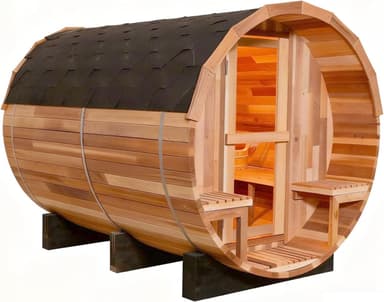
TOULE 6-8 Person Canadian Red Cedar Barrel Sauna
- Barrel shape eliminates uneven heat and shortens warm-up time noticeably
- Canadian Red Cedar resists moisture, rot, and handles temperature swings well
- Triple waterproofing system is more thorough than most competitors offer
For home buyers serious about a premium outdoor sauna setup, I've covered the full comparison of top barrel models in the best premium barrel saunas guide - it covers everything from Dundalk Leisurecraft's Thermowood construction to Thermory's heat-treated ash options.
Winner for home installation: Traditional sauna, by a significant margin. Lower all-in cost, simpler installation, no drainage requirement, lower operating cost, and lower maintenance burden. Steam rooms are viable for buyers converting an existing tiled bathroom space with existing drainage - that's the one scenario where the cost gap narrows.
Detoxification - Correcting the Most Common Misconception
The claim that "steam rooms detox better because the humidity opens your pores" is the most widespread misconception in this entire comparison, and it's directionally backward.
Detoxification through sweat - to the extent that sweat genuinely excrete meaningful metabolic waste products - depends on sweat volume, not humidity. A traditional sauna produces 0.5-1 liter of actual sweat in 20 minutes. A steam room produces 0.1-0.3 liters of genuine eccrine sweat in 15 minutes, with the perceived moisture mostly being condensed steam. Sauna sweat volume is 3-5 times higher.
Sweat composition research shows that eccrine sweat (the kind produced in high volumes during sauna sessions) contains trace amounts of cholesterol metabolites, heavy metals (particularly nickel, lead, cadmium, and mercury in people with elevated body burden), urea, ammonia, and various organic compounds. The Hussain and Cohen 2018 review referenced studies showing that regular sauna users with documented heavy metal exposure showed progressive reduction in blood and tissue metal levels over 4-6 weeks of daily sauna use.
The steam room's moist heat does produce genuine physiological benefits that get mislabeled as "detox." Improved circulation from vasodilation enhances lymphatic drainage. The respiratory exposure improves mucociliary clearance of inhaled particulates. These are real effects - they're just not sweat-based detoxification, which is the specific mechanism the steam room is credited with by wellness marketing.
Winner for detoxification (sweat-based): Traditional sauna, definitively. Steam rooms produce a fraction of the sweat volume and cannot replicate the heavy metal excretion documented in sauna research.
Safety, Contraindications, and Who Should Choose Carefully
Both heat therapy modalities require honest safety assessment, and several conditions shift the recommendation decisively.
Conditions Affecting Both
Pregnancy is a contraindication for both sauna and steam room use. Core temperature elevation above 102°F (38.9°C) in the first trimester is associated with increased risk of neural tube defects and other developmental issues. Neither environment should be used during pregnancy without explicit clearance from an OB/GYN, and most practitioners will advise against it entirely.
Uncontrolled hypertension, recent myocardial infarction (within 3-6 months), and uncontrolled heart failure are contraindications for both. The paradox of the cardiovascular research is important here: sauna use reduces cardiovascular risk in healthy populations over the long term, but acute sessions create significant cardiovascular demand (heart rate 100-150 bpm, blood pressure changes) that can be dangerous in people with actively unstable cardiac conditions.
Epilepsy, active fever, and medications that impair thermoregulation (certain antipsychotics, antihistamines, diuretics) require physician clearance before either modality. The orthostatic hypotension risk - the blood pressure drop when standing up after a hot session - causes approximately 20% of heat therapy users to feel faint, and is amplified by these medications.
Sauna-Specific Risks
Alcohol is the most important sauna-specific risk amplifier. Combining alcohol with a sauna session multiplies cardiovascular risk approximately 5 times based on Finnish emergency data. Alcohol impairs thermoregulation, causes additional vasodilation, and contributes to dehydration - all simultaneously. The Finnish sauna culture that produced the Laukkanen cohort's impressive health outcomes involved sober sauna use; the mortality statistics do not apply to alcohol-combined sessions.
Dehydration from high sweat volume (0.5-1 liter per session) is the most common adverse event in sauna use. Replacing fluid losses requires 16-32 oz of water post-session, ideally with some electrolyte content (sodium, potassium) to replace sweat-borne mineral losses.
Steam-Specific Risks
Wet floors create genuine slip-and-fall risk that dry sauna environments don't have to the same degree. Non-slip tile and careful entry/exit are practical necessities in steam rooms.
The Legionella risk I flagged in the earlier respiratory section bears repeating in the context of home installations specifically. Steam generators that are not drained and cleaned between uses develop biofilm in supply lines and the generator housing itself. In commercial facilities, regular maintenance protocols address this. In home installations, the responsibility falls entirely on the owner.
The faster core temperature rise in steam (2-3°F in 10 minutes vs. 1-2°F in 15 minutes in a traditional sauna) means that losing track of time is more dangerous in a steam room. A 25-minute steam session is physiologically more stressful than a 25-minute sauna session, even though the air temperature is 60-80°F lower.
Age Considerations
Adults over 65 and children under 5 should use both environments at half the standard session time: 7-10 minutes for a steam room, 8-10 minutes for a traditional sauna. Thermoregulatory efficiency declines with age, and children's surface-area-to-mass ratios make them heat faster than adults. Monitor heart rate throughout any session - staying under 140 bpm is a reasonable upper limit for general guidance, though individual fitness level affects this threshold significantly.
The Head-to-Head Summary - Choosing Based on Your Primary Goal
After going through every major dimension, here's where each modality stands when your primary goal drives the decision.
Choose a Traditional Sauna If...
Your primary goal is cardiovascular health. The Laukkanen 2015 cohort data - 50% reduction in fatal CVD events at 4-7 sessions per week - has no equivalent in steam room research, and probably won't for another 20 years given the current state of the literature.
Your primary goal is high-volume sweating and sweat-based waste excretion. At 3-5 times the genuine sweat volume of a steam room, a traditional sauna is the superior flushing environment for anyone interested in heavy metal excretion or general sweat-based metabolic clearance.
You want a home installation with manageable costs and complexity. Traditional sauna - particularly an outdoor barrel sauna on a gravel pad - is the most cost-effective, lowest-maintenance, highest-evidence heat therapy option for residential installation.
You're pursuing a contrast therapy protocol (sauna plus cold plunge). The intense thermal stimulus of 175-185°F dry heat creates a more pronounced contrast with a cold plunge, producing stronger BAT activation and HSP response than a steam room can achieve at 115°F.
You want to build a long-term wellness practice with the deepest evidence base. The 50+ years of Finnish longitudinal research on sauna simply doesn't have a steam room equivalent. If research-backed confidence matters to you, sauna wins by the size of the literature alone.
Choose a Steam Room If...
Your primary goal is respiratory health. Chronic sinusitis, bronchitis, congestion, or exercise-induced bronchoconstriction respond better to the 95-100% humidity environment than to the desert-dry air of a traditional sauna. The 10-15% improvement in FEV1 documented in small trials is a real and practically meaningful benefit.
Your primary goal is immediate post-workout muscle soreness relief within the first hour. Moist heat conducts to tissue 25 times more efficiently than dry heat, producing faster acute relief for DOMS, even if the 24-48 hour recovery window favors sauna.
You have dry or sensitive skin that doesn't tolerate the desiccating effect of 185°F dry air. The steam environment is gentler for compromised skin barriers and chronic dryness conditions.
You're converting an existing tiled bathroom with existing drainage - the one installation scenario where steam room construction costs don't dramatically exceed sauna costs.
The Both-Is-Best Case
For readers building a home wellness setup with a generous budget, the research actually supports combining access to both where possible. A traditional outdoor barrel sauna handles your cardiovascular and long-term metabolic health protocol 4-5 times per week. A steam generator in an existing shower handles acute respiratory and soreness days. You don't need to choose if your installation situation allows both - but if you're forced to pick one, the sauna is the higher-evidence, lower-maintenance, more broadly beneficial choice for the majority of users.
For a full breakdown of the best outdoor sauna models available in 2025 - including detailed comparison of cedar construction, heater specifications, and warranty terms - see our complete sauna and wellness guides.
Key Takeaways
- ●
The cardiovascular research gap is enormous. The Laukkanen 2015 study followed 2,315 Finnish men for 20.7 years and found 4-7 sauna sessions per week linked to a 50% reduction in fatal cardiovascular events. No comparable long-term steam room data exists. If heart health is your primary motivation, the evidence points decisively toward sauna.
- ●
Steam rooms win on immediate respiratory relief. The 95-100% humidity environment produces a 10-15% improvement in FEV1 in bronchitis and sinusitis populations. For acute congestion, exercise-induced bronchoconstriction, or sinus pressure, a 10-minute steam session delivers faster relief than any dry sauna session.
- ●
Moist heat reaches tissue faster, dry heat produces more total sweat. Steam conducts heat to muscle tissue 25 times more efficiently than dry air, explaining why steam rooms reduce DOMS onset faster (15-25% quicker). But traditional saunas generate 0.5-1L of sweat per 20-minute session versus 0.1-0.3L in a steam room - much of what feels like steam room sweat is condensed moisture on your skin, not eccrine output.
- ●
Steam rooms cost more to run. A 9-12kW steam generator costs $5.76-7.68 per session in electricity and water at the 2025 US EIA average of $0.16/kWh. A traditional 6-8kW sauna runs $3.84-5.12 per session. An infrared sauna at 1.5-3kW costs as little as $0.96-2.88.
- ●
Core temperature rises faster in steam rooms - which means overheating risk rises faster too. Steam pushes core temperature up 2-3°F in 10 minutes. Traditional saunas average 1-2°F per 15 minutes. Shorter session limits in steam rooms are not arbitrary - they reflect real physiological risk, not convention.
- ●
Heat shock proteins are the shared mechanism. Both environments upregulate HSP70 and HSP72, the cellular repair proteins that explain much of the recovery and anti-inflammatory benefit across both modalities. The degree differs, but the mechanism is the same.
- ●
For most people buying equipment once, the sauna is the higher-evidence choice. The research base for traditional saunas spans 50+ Finnish cohort studies. Steam room research is thinner, shorter-term, and concentrated in smaller clinical populations. That imbalance matters when you're making a permanent installation decision.
Who This Is For, Who Should Skip It
Who Should Prioritize Sauna
Anyone whose primary goal is long-term cardiovascular health, longevity, or metabolic function should prioritize a traditional sauna. The Laukkanen 2015 cohort data - 20.7 years, 2,315 participants, 50% reduction in fatal CVD events at 4-7 sessions per week - has no steam room equivalent. That's not a minor gap.
Athletes using heat as a recovery and performance tool get more total benefit from sauna. The Hussain and Cohen 2018 systematic review across 40 studies found sauna post-exercise reduced DOMS by 20-47% over the 24-48 hour window and improved time-to-exhaustion by 12-32%. Steam rooms produce faster acute relief but shallower long-term recovery depth.
People with limited installation space or tight operating budgets fit sauna better. A barrel sauna with a 6kW heater needs a 240V outlet. A steam room needs a 240V steam generator, a completely sealed tile enclosure, an independent drain, and a ventilation system. The ongoing operating cost is 30-50% higher per session.
Who Should Skip Sauna (or Supplement With Steam)
Anyone managing chronic respiratory conditions - sinusitis, bronchitis, asthma, or frequent upper respiratory infections - will find the dry 5-10% humidity environment of a traditional sauna actively uncomfortable and potentially counterproductive. The 95-100% humidity of a steam room is clinically more appropriate for these populations.
People with rosacea, eczema, or compromised skin barriers should be cautious with 185-200°F dry heat. The desiccating effect of traditional sauna air can trigger flares. Steam room humidity is substantially more tolerable for sensitive skin.
What to Read Next
If this comparison helped clarify your direction, these guides go deeper on the specific decisions ahead.
Best Premium Barrel Saunas - Our Top Picks and Full Reviews - I tested and compared the leading cedar barrel sauna models available in 2025, including heater specifications, warranty terms, and which size fits which installation situation.
All Sauna and Wellness Guides - Our full library of buying guides, how-to protocols, and research breakdowns covering everything from infrared panels to contrast therapy cold plunge setups.
Frequently Asked Questions
Is a sauna or steam room better for weight loss?
Neither is a reliable weight loss tool - the number on the scale drops immediately after a session because of fluid loss, and it comes back with rehydration. That said, the Søberg et al. 2023 preprint protocol - alternating 57°C sauna with 14°C cold plunge across three cycles, three times per week - showed a 15% increase in resting metabolism via brown adipose tissue activation, with UCP1 expression up 40%. That's a meaningful metabolic effect, but it requires the contrast protocol, not heat alone. Steam rooms produce less core temperature stress and less sympathetic nervous system activation, so the metabolic response is blunted compared to traditional sauna.
Which is better for skin - sauna or steam room?
It depends on your skin type. Traditional sauna at 170-200°F with 5-10% humidity is actively drying. People with already dry or sensitive skin, eczema, or rosacea often report worsening after frequent dry sauna use without deliberate post-session moisturizing. Steam room humidity at 95-100% prevents that desiccation and can temporarily improve skin hydration by increasing surface moisture. However, the prolonged moist heat can be problematic for acne-prone skin or fungal conditions - the environment supports microbial growth on surfaces. Shower thoroughly before entering any steam room and never sit directly on surfaces without a clean towel.
Can I use a sauna or steam room every day?
The Laukkanen 2015 data found the strongest cardiovascular benefit at 4-7 sessions per week - so daily sauna use is supported by the best available research, at least for traditional sauna. The caveat is adequate hydration: replace 1L of fluid minimum per session. For steam rooms, daily use is harder to recommend given the faster core temperature rise, higher maintenance requirements (mold and bacteria management in a 95-100% humidity sealed enclosure), and the thinner long-term research base. Most practitioners using steam rooms therapeutically do so 3-5 times per week, not daily.
Which is better for respiratory health - sauna or steam room?
Steam room, clearly. The 95-100% humidity loosens mucus, reduces mucosal inflammation, and produces a 10-15% improvement in FEV1 in bronchitis and sinusitis populations based on small trials. Traditional sauna air at 5-10% humidity provides none of that moisture benefit. Some sauna practitioners add steam by ladling water onto heated rocks - this temporarily spikes humidity - but it's not sustained the way a sealed steam room environment is. If respiratory health is your primary reason for choosing one, the steam room is the straightforward answer.
How long should I stay in a sauna vs. a steam room?
The Laukkanen 2015 cohort used sessions averaging 19 minutes in a traditional sauna running 175-212°F. That's a reasonable target range: 15-20 minutes per session, with exit if you feel lightheaded or overheated before that point. Steam rooms operate at lower temperatures but higher humidity, and core temperature rises 2-3°F in 10 minutes - faster than traditional sauna. Keep steam sessions to 10-15 minutes maximum, especially during early acclimatization. In both cases, a 5-10 minute cool-down period before showering or re-entering is not optional - it lets cardiovascular parameters normalize before you add the additional stress of hot or cold water.
Which is more expensive to install at home?
Steam rooms are consistently more expensive to install correctly. A proper steam room requires a fully waterproofed and sealed tile enclosure (no vapor can escape into wall cavities), a dedicated steam generator (9-12kW, typically $500-3,000 for the unit alone), independent drainage, and a ceiling sloped at least 2 inches per foot to prevent condensate drips. Total installed cost runs $5,000-15,000 for a professional build. A prefabricated barrel sauna - like the models I review in our premium barrel sauna guide - can be placed on a level pad with a 240V outlet for $3,000-8,000 installed, with far less ongoing maintenance. The one exception: converting an existing tiled bathroom shower with existing drainage can reduce steam room costs significantly.
Do saunas or steam rooms help with sleep?
Both help, via the same core mechanism. The rapid drop in core body temperature after exiting a heat environment - whether sauna or steam room - signals the brain that sleep onset is appropriate. This mimics the natural evening temperature drop that triggers melatonin release. Using either modality 90 minutes to 2 hours before bed tends to improve sleep onset latency and slow-wave sleep duration. The effect is better studied in sauna populations given the larger research base, but the physiological mechanism applies equally to steam. Avoid sessions immediately before bed - the elevated core temperature immediately post-session is stimulating, not sedating.
Frequently Asked Questions
Barrel saunas (dry heat at 150-195°F with 5-30% humidity) outperform steam rooms (110-120°F with 100% humidity) for most health benefits, including superior muscle recovery, joint flexibility, detoxification via intense sweating, and cardiovascular health. Steam rooms excel in respiratory relief and skin hydration but carry higher risks of bacteria growth and overexposure due to moist heat. Studies like Kunutsor's show saunas boost endurance by 32% in athletes; choose based on goals, with saunas safer overall.
Related Guides
Affiliate Disclosure - UseSauna earns a commission from qualifying purchases through our Amazon affiliate links. This does not affect our editorial integrity.