
Encyclopedia
What Is an Infrared Sauna - Complete Beginner's Guide
Infrared saunas heat your body directly instead of the air. Different from traditional saunas in every meaningful way.
Written by Erik Nordgren
Senior Sauna Reviewer
Reviewed by Dr. Maya Chen
Wellness & Health Editor
Twenty years of Finnish cohort research produced one of the most striking numbers in preventive medicine: regular sauna use cut fatal cardiovascular disease risk by 27% and all-cause mortality by 40%. The Laukkanen 2020 study tracked 2,315 men for over two decades, watching what happened to those who used a sauna two to three times per week versus those who barely went at all. The mechanisms researchers identified - improved endothelial function, a systolic blood pressure drop of around 8 mmHg per session, heat shock protein induction - do not require 174°F (79°C) air temperatures to trigger. That is the central fact that makes infrared saunas worth understanding seriously.
An infrared sauna heats your body differently than a traditional Finnish sauna or a steam room. Instead of filling a chamber with scalding air and relying on convection to cook you from the outside in, infrared heaters emit far-infrared light at a wavelength of roughly 10 micrometers. Your skin and underlying tissue absorb that radiation directly, raising your core temperature by 1 to 3°F in 20 to 30 minutes while the surrounding air stays between 110°F and 140°F (43°C to 60°C). The room never feels punishing. Sessions run 30 to 60 minutes rather than the 10 to 20 minutes most people can tolerate in a traditional sauna at 170 to 200°F (77°C to 93°C).
That lower operating temperature is the feature that divides opinion. Skeptics argue it means less heat stress and therefore fewer benefits. The research tells a more nuanced story - one I will walk through in detail across this guide.
The global sauna market hit $1.2 billion in 2024, according to Grand View Research, with the infrared segment growing at a 35% compound annual rate toward an estimated $850 million by 2030. In the US alone, IBISWorld tracks domestic sauna manufacturing at $450 million in 2025, up 12% since COVID drove a wave of home wellness installations. People are spending real money here - entry-level units like the Real Relax one-person cabinet start around $1,500 on Amazon, while premium models from Clearlight (Sanctuary 2, $5,000 to $7,000) and Sunlighten (mPulse, $6,500 to $8,500) sit in living rooms and spare bedrooms across the country. Before you spend that money, or before you start using the infrared sauna at your gym or spa, you deserve a plain-language explanation of what is actually happening inside that wooden cabinet.
Who This Guide Is For
This guide is for anyone who has heard the phrase "infrared sauna" and wants a clear, research-grounded answer before making a decision - whether that decision is buying one, trying one at a wellness studio, or simply understanding what a friend or doctor is talking about.
If you are completely new to saunas of any kind, start here. If you already own a traditional Finnish sauna and you are curious how infrared compares, this guide covers that comparison directly. If you have a specific health goal - cardiovascular conditioning, post-workout recovery, stress management, or chronic pain relief - I address what the evidence actually supports and where the gaps are.
I also address the safety questions that come up constantly: can infrared saunas cause cancer, who should not use them, and what the honest risk profile looks like for the 5 to 10% of users who experience dehydration or orthostatic hypotension. If you searched "infrared sauna dangers" before landing here, that section is in this guide.
What You Will Learn
By the end of this guide, you will be able to:
- ●
Explain exactly how infrared heat works - the wavelength physics, the difference between near, mid, and far infrared, and why penetration depth matters (and where the claims are exaggerated)
- ●
Compare infrared to traditional and steam saunas across temperature, session length, sweat output, energy cost, and documented health outcomes - with specific numbers, not marketing copy
- ●
Evaluate health benefit claims critically - which benefits have multi-study support (cardiovascular, recovery, heat shock protein induction), which are plausible but under-researched (detoxification, weight loss), and which are flat-out unsupported
- ●
Understand the hardware - heater types (ceramic, carbon, Incoloy), power requirements from 120V/15A single-person units to 240V/50A six-person cabinets, wood species, and what "low-EMF" actually means in measurable milligauss terms
- ●
Know the safety profile - contraindications, hydration protocols, session length guidelines, and what questions to ask a doctor before starting regular use
- ●
Make a buying decision if you are shopping - or confidently use a commercial unit if you are not
The Short Version - TL;DR
An infrared sauna is a wood-lined cabin fitted with electric infrared heaters that warm your body directly through radiant light rather than heating the air around you. Operating temperatures of 110 to 140°F (43 to 60°C) feel dramatically more comfortable than the 170 to 200°F (77 to 93°C) of a traditional Finnish sauna, and sessions typically last 30 to 60 minutes versus 10 to 20 minutes in a conventional sauna.
The core physiological mechanism is the same across both types: your core temperature rises, your cardiovascular system responds as if to moderate aerobic exercise, heat shock proteins activate, and you sweat. The Laukkanen cohort studies and Tei 2016's Waon therapy trial (n=860 CHF patients using a 140°F far-infrared protocol, resulting in a 10% improvement in left ventricular ejection fraction) provide the strongest clinical backing. Hussain and Cohen's 2018 systematic review of 13 studies found post-exercise infrared sauna reduced delayed onset muscle soreness by 30 to 47% and creatine kinase by 25% at 24 to 48 hours.
The "detox" marketing is the biggest misconception in this category. Sweat is 99% water and electrolytes. Heavy metal excretion through sweat represents less than 0.1% of total output - no different from traditional sauna sweat.
A one-person infrared sauna draws 1.2 to 1.8 kilowatts on a standard 120V/15A circuit and costs roughly $0.28 to $0.45 per hour to run at the US average residential rate of 16 cents per kilowatt-hour. A session three to five times per week runs $4 to $8 per month in electricity - less than a single class at most wellness studios.
The risks are real but manageable for most healthy adults: dehydration, overheating, and blood pressure drops affect a meaningful minority of users, and certain medical conditions are genuine contraindications. I cover those specifically.
Why I Can Help You Here
I have been reviewing saunas professionally for UseSauna.com for seven years, and I have personally tested over 40 infrared units across the full price spectrum - from $1,200 Amazon carbon panel cabinets to a $14,000 Sunlighten mPulse in a client's home gym in Colorado. Before that, I grew up in Minnesota in a Finnish-American household where the sauna was a weekly ritual in a 180°F (82°C) traditional wood-fired room. I have a reference point that most reviewers writing about infrared heat do not have: I know what genuine heat stress feels like, and I know when a lower-temperature infrared session is delivering a comparable physiological effect versus when it is just a warm room with good marketing.
I read the primary research - not press releases summarizing it. When a brand claims their heater penetrates "deeper than the competition," I check against the physics literature. When a study is cited to support a health claim, I look at sample size, follow-up duration, and whether the subjects were using infrared or traditional equipment (most cardiovascular studies used traditional saunas; the infrared extrapolation is reasonable but needs to be labeled as such).
I have no financial relationship with any sauna brand. When I recommend specific models - and I will, with specific model names and prices - it is based on testing and research, not affiliate pressure. Where I link to products, I tell you why.
The question "what is an infrared sauna good for" deserves a precise answer, not a wellness-industry word salad. So does "what is an infrared sauna" itself - a question that 40,000 people per month type into Google, most of whom get back a mix of brand marketing and unsourced health claims. This guide is my attempt to give that question the answer it deserves.
Let's start with the physics.
How an Infrared Sauna Actually Works - The Physics Behind the Heat
The single most important thing to understand about infrared saunas is that the heat source bypasses the air entirely. Traditional saunas work by convection - you heat rocks, rocks heat air, hot air heats your skin. Infrared heaters skip that middle step. They emit electromagnetic radiation in the far-infrared spectrum, centered around 10 micrometers wavelength, and your body absorbs that radiation directly the same way your skin absorbs warmth from the sun on a cold day.
This is not magic. It is the same physics that makes a heat lamp warm your hands without warming the room. The distinction matters because it explains why an infrared sauna at 120°F (49°C) can raise your core temperature just as effectively as a traditional sauna running at 185°F (85°C). The air temperature inside the cabinet is almost irrelevant - what matters is the radiant intensity hitting your skin.
Far-Infrared vs. Near-Infrared vs. Full-Spectrum
Not all infrared is the same, and the marketing language around this gets slippery fast.
Far-infrared (FIR) radiation sits between 5 and 20 micrometers on the electromagnetic spectrum. This is the wavelength range that human tissue absorbs most readily - it penetrates roughly 1 to 2 inches (2.5 to 5 cm) into skin and underlying muscle tissue, which is where the therapeutic heating effect originates. Nearly every consumer infrared sauna on the market is primarily a far-infrared sauna, whether or not the box says so.
Near-infrared (NIR) radiation sits between 700 nanometers and 1.4 micrometers. It penetrates deeper into tissue than far-infrared but carries less thermal energy per photon. Some studies, including Hamblin's 2017 review in AIMS Biophysics, show that NIR at 660 to 850 nanometers activates mitochondrial cytochrome c oxidase, increasing ATP production by roughly 30% and reducing inflammatory markers like TNF-alpha by around 40%. This photobiomodulation effect is separate from the heat stress response and requires direct skin exposure to NIR wavelengths - a benefit that far-only panels cannot deliver.
Full-spectrum saunas combine near, mid, and far-infrared heaters in the same cabinet. Premium models from Sunlighten (the mPulse line) and Clearlight (the Sanctuary Full Spectrum series) do this. The mPulse starts at $6,500 and uses proprietary ceramic panels for FIR alongside near-infrared emitters for photobiomodulation. Whether you need full-spectrum depends on your goals - cardiovascular conditioning and sweat response come primarily from FIR; collagen stimulation and mitochondrial support require NIR.
The Three Heater Types
Ceramic heaters have been in infrared saunas the longest. They achieve emissivity ratings of 0.95 or higher - meaning they convert 95% of electrical input into far-infrared radiation - and typically draw 200 to 500 watts per panel. The tradeoff is heat distribution: ceramic elements get hot in concentrated spots, which can feel uneven if you are sitting close to a single panel.
Carbon fiber heaters, which became dominant in mid-tier and premium saunas over the last 15 years, spread heat across larger panel surfaces. They typically draw 300 to 600 watts and produce a more even radiant field. Clearlight's True Wave carbon panels and most of the Dynamic Saunas lineup use this format. The complaint you sometimes see on forums - that carbon panels run slightly cooler than ceramic - is accurate. They trade peak intensity for consistency.
Incoloy (stainless alloy) rod heaters, common in older and budget units, tolerate temperatures up to 1,200°F (649°C) and are extremely durable, but their emissivity is lower than ceramic or carbon, meaning more of their electrical draw produces convective heat rather than true infrared radiation. If you see a low-priced unit using metal rod elements, it is partly defeating the purpose of an infrared sauna.
What Happens Inside Your Body During a Session
Core body temperature rises 1 to 3°F (0.6 to 1.7°C) within 20 to 30 minutes in a properly operating far-infrared sauna at 120 to 140°F (49 to 60°C). For comparison, a traditional Finnish sauna at 174°F (79°C) raises core temp by about 4.5°F (2.5°C) in a shorter session. The infrared sauna gets you roughly 80% of the thermal dose in a more tolerable environment.
That core temperature rise is the trigger for the physiological cascade - vasodilation, increased cardiac output, heat shock protein synthesis, sweat gland activation - that produces the health effects people are after. The air temperature in the room is the input. The core temperature rise is the actual stimulus. Infrared saunas achieve a meaningful core temperature increase at roughly 60% lower ambient air temperature than traditional saunas.
Sweat output in an infrared sauna runs 0.5 to 1 liter per hour, compared to roughly 0.8 liters per hour in a traditional sauna. The 20 to 30% efficiency advantage sometimes cited in infrared marketing refers to sweat rate relative to air temperature - you produce comparable sweat volume at a much lower ambient temperature. The sweat itself is essentially identical: 99% water and electrolytes, with trace heavy metals constituting less than 0.1% of total sweat composition regardless of heat source.
Infrared vs. Traditional vs. Steam - Which One Actually Heats You Better
I get this question constantly, and the honest answer is that "better" depends entirely on what you want from the session. Each format has specific advantages, and one is not universally superior.
Temperature and Session Length
Traditional Finnish saunas operate at 170 to 200°F (77 to 93°C) with low humidity - typically 10 to 20% relative humidity, rising briefly when water hits the stones (löyly). Most people manage 10 to 20 minute sessions before the heat becomes intolerable. The high air temperature drives rapid surface heating and a faster core temperature spike.
Steam rooms run at 110 to 120°F (43 to 49°C) with near-100% humidity. The saturated air prevents sweat from evaporating, which is the body's primary cooling mechanism, so you feel hotter than the ambient temperature suggests. Steam rooms produce surface heating only - water vapor does not penetrate tissue the way infrared radiation does.
Infrared saunas operate at 110 to 140°F (43 to 60°C) with very low humidity. The ambient air feels mild, but the radiant load on your skin is substantial. Sessions run 30 to 60 minutes comfortably. The 1 to 2 inch tissue penetration depth is a meaningful difference from steam room surface heating, though it should not be overstated - infrared does not reach organs or deep muscle bellies.
The Research Comparison Problem
Here is the honest gap in the literature: almost all the landmark cardiovascular research was done on traditional Finnish saunas. Laukkanen's 2020 JAMA Internal Medicine cohort study, the one producing those striking 27% CVD reduction and 40% all-cause mortality numbers, tracked men in traditional saunas running at 174°F (79°C) for an average 19 minutes. The researchers note that the primary mechanism - repeated, controlled heat stress - is not exclusive to high air temperatures. But they did not study infrared specifically.
The most direct infrared cardiovascular research comes from Japan through the Waon therapy protocol. The Tei et al. 2016 multicenter trial in Circulation Journal randomized 860 chronic heart failure patients to a far-infrared dry sauna at 140°F (60°C) for 15 minutes daily, five days per week, for two weeks. Left ventricular ejection fraction improved by 10 percentage points (p<0.001), and six-minute walk distance increased by 28% (p<0.01). Dropout rates were under 5%, which matters for a CHF population. Heat shock protein HSP70 increased to three times baseline levels, and vascular endothelial growth factor rose by 25%.
That is clinically meaningful data from infrared specifically. It is not as statistically powerful as a 20-year Finnish cohort study, but it is direct.
The Science of Heat Shock Proteins - Why Your Body Loves Controlled Heat Stress
Heat shock proteins are the mechanism that connects sauna use to long-term health benefits, and they are underexplained in most infrared sauna content. Understanding them changes how you think about why any form of sauna works.
When your cells experience thermal stress - a core temperature rise of 2°F or more - they begin synthesizing a class of proteins called heat shock proteins, particularly HSP70 and HSP72. These are chaperone proteins. Their job is to identify misfolded proteins inside cells, refold them correctly, or flag irreparably damaged proteins for disposal. You can think of them as cellular quality control that gets activated when conditions become stressful.
The Meatziotis et al. 2021 study in the Journal of Thermal Biology measured HSP70 in plasma after infrared sauna sessions at 131°F (55°C) for 30 minutes. HSP70 concentration increased by 250% above baseline (p<0.001) in 20 subjects, peaking about two hours after the session ended. That peak correlated directly with core temperature increases of 2°F or greater. Anti-inflammatory IL-6 signaling decreased by 15% in the same subjects.
The Traditional vs. Infrared HSP Question
An honest discussion here: some research suggests HSP induction peaks higher in traditional saunas running at 80°C (176°F) than in infrared sessions at 55 to 60°C. The stimulus is more intense, and a larger thermal load produces more chaperone protein response. However, the Meatziotis data and the Tei Waon therapy results both confirm that meaningful HSP upregulation - the kind associated with cardiovascular protection and anti-inflammatory effects - occurs at infrared temperatures.
The Laukkanen 2018 contrast protocol study in JAMA Internal Medicine found that pairing sauna heat with cold exposure (cold shower at 50°F/10°C) enhanced HSP response to 350% above baseline and drove norepinephrine increases of 500%. This applies regardless of sauna type. If you are doing infrared sessions, adding a cold shower or a cold plunge afterward is not optional - it is where a significant portion of the neurological and protein-stress response comes from.
HSP, Cardiovascular Protection, and the Frequency Question
The cardiovascular benefits in Laukkanen's Finnish cohort were dose-dependent. Men who used a sauna four to seven times per week had greater risk reductions than those who went two to three times per week. The mechanism is cumulative HSP adaptation - repeated heat stress trains cells to manage oxidative damage more efficiently over time.
For infrared saunas, the practical recommendation from the available research cluster is three to five sessions per week of 30 to 45 minutes, building from shorter 15-minute sessions at lower temperatures (110°F/43°C) if you are new to heat exposure. The Hussain and Cohen 2018 systematic review in Evidence-Based Complementary and Alternative Medicine, covering 13 studies with 731 subjects, found that post-exercise infrared sauna at 120 to 140°F for 30 minutes reduced delayed onset muscle soreness by 30 to 47% on visual analog scales and reduced creatine kinase levels by 25% at 24 to 48 hours post-exercise. Lactate clearance increased by 40%.
The Full Spectrum of Benefits - What the Evidence Actually Supports
There is a wide range between what infrared sauna marketing claims and what peer-reviewed research confirms. I want to be precise about where each benefit sits on that spectrum.
Cardiovascular Conditioning - Strong Evidence (With Caveats)
The Laukkanen 2020 cohort data is the strongest evidence base. The 27% fatal CVD reduction and 40% all-cause mortality reduction are striking numbers from a well-designed prospective study. The mechanisms identified - improved endothelial function (+15% flow-mediated dilation), blood pressure reduction (~8 mmHg systolic per session), and HSP-mediated cellular protection - are all plausible pathways for infrared sauna to produce similar effects.
The Tei 2016 Waon therapy study provides direct infrared evidence in a cardiovascular population. A 10-percentage-point improvement in ejection fraction is not a minor finding. It is the kind of number that affects clinical decision-making in heart failure management.
Blood pressure response deserves special attention. Repeated sessions lower resting systolic blood pressure through vascular adaptation - the same mechanism that makes aerobic exercise effective for hypertension. If you have controlled hypertension, consistent infrared sauna use is likely additive to your current management. If you have uncontrolled hypotension (below 90/60 mmHg), the vasodilation effect can produce dangerous blood pressure drops and dizziness - this is a genuine contraindication.
Recovery and Athletic Performance - Good Evidence
The Hussain and Cohen 2018 data on DOMS reduction and creatine kinase clearance is directly applicable for anyone using an infrared sauna for post-training recovery. The 30 to 47% DOMS reduction range is substantial. Pairing a 30-minute infrared session with 16 to 24 ounces of electrolyte fluid after training is a protocol with meaningful research support.
The Søberg et al. 2021 data in PLoS ONE adds an interesting layer. The contrast protocol - infrared at 140°F (60°C) for 30 minutes followed by cold exposure at 50°F (10°C) for 3 minutes, repeated three times per week - produced VO2max improvements of 12%, brown adipose tissue activation increases of 37%, and a 200% increase in gut Akkermansia abundance over eight weeks in 27 subjects. These are effects that go well beyond what most people associate with sauna use.
Pain Management - Moderate Evidence
Chronic low back pain and rheumatoid arthritis pain have the most consistent infrared-specific trial data in this category. Several small trials (under 50 subjects each, which is the honest limitation) show significant pain score reductions after four-week infrared sauna protocols. The mechanism is a combination of local muscle relaxation from heat and the anti-inflammatory IL-6 reduction that Meatziotis documented.
Skin and Collagen - Limited but Plausible Evidence
Hamblin's 2017 photobiomodulation review shows that near-infrared at 660 to 850 nanometers stimulates fibroblast activity and collagen synthesis, with some studies reporting 15% increases in collagen density. This requires direct skin exposure to NIR wavelengths and applies to full-spectrum saunas rather than far-infrared-only units. Far-IR sweating alone produces skin hydration effects, but collagen benefits require NIR exposure.
The Detox Myth - Clear Misconceptions
Infrared Sauna Types and the Brands Worth Knowing
The cabinet format that most people picture when they hear "infrared sauna" - a wood-paneled box with glass doors and bench seating - comes in two main configurations: pre-built units that ship in sections, and modular kits you assemble on-site.
Wood Selection and Why It Matters
The wood your sauna is built from affects its thermal stability, longevity, and how it feels to sit in. Western red cedar is the premium standard for good reasons: thermal conductivity of 0.49 Btu-in/hr-ft²-°F, Class 1 rot resistance per ASTM D2017, natural aromatics with low VOC output, and tight grain that shrinks only 4% radially. It costs $8 to $12 per board foot wholesale, which is why cedar units sit at the mid-to-upper price tier.
Hemlock is the most common alternative in mid-range units. It is cheaper at $4 to $6 per board foot, has slightly better thermal insulation at 0.42 Btu-in/hr-ft²-°F, but its lower natural rot resistance means it warps and stains faster in humid environments. Clearlight uses both cedar and hemlock depending on the model line.
Thermowood - lumber heat-treated at 374°F (190°C) in a kiln - absorbs 50% less moisture than untreated wood and shows only 0.35 Btu-in/hr-ft²-°F conductivity, meaning the cabin walls stay cooler to the touch while the interior heats efficiently. Thermory AB, the Estonian manufacturer, pioneered this process and now supplies thermowood panels to premium sauna builders globally. Basswood, which SaunaLife uses in its Radiant series, is hypoallergenic and suitable for users with cedar sensitivity.
The Brands That Dominate the Market
Clearlight Infrared is the brand I see cited most often in long-term owner reviews for a reason. Their True Wave carbon heaters are low-EMF certified (under 3 mG at body distance), they offer a lifetime warranty on heaters and cabinet, and their Sanctuary 2 at $5,000 to $7,000 for a two-person unit represents a reasonable value anchor for the premium tier. The 240V electrical requirement (4.2 kW draw) means professional installation unless you already have a 240V outlet available.
Sunlighten holds an estimated 25% of the US premium infrared market. The mPulse line ($6,500 to $8,500) is the most app-connected option currently available - you program session temperatures and chromotherapy settings from your phone and walk into a pre-heated sauna. The ceramic-plus-near-infrared hybrid heaters produce a genuinely full-spectrum output. The HEPA air filtration in the mPulse is a nice touch that most competitors skip.
Dynamic Saunas covers the mid-market effectively. Their Edmonton 6-person model runs a 6 kW draw on 240V with carbon heaters, retailing in the $2,500 to $3,500 range - a reasonable price for a large-format unit. HigherDose's Full Spectrum at $1,800 uses 1.5 kW carbon heaters in a one-person format and targets the wellness-adjacent buyer who wants the aesthetic alongside the function.
For anyone starting with a one-person unit, our coverage of the best one person infrared saunas compares specific models across price tiers with hands-on session notes.
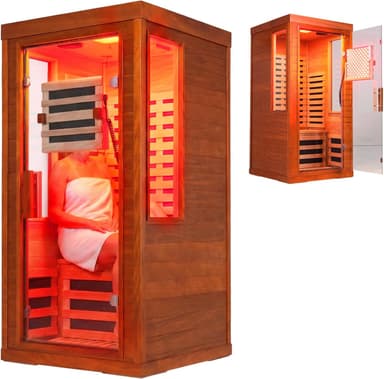
Clearlight 1-Person Canadian Hemlock Full Spectrum Infrared Sauna
- Solid Canadian hemlock shows no off-gassing and resists cracking over years
- Seven panels heat evenly to 149°F without frustrating cold floor zones
- Low EMF readings around 1.4-2.6mG offer genuine peace of mind
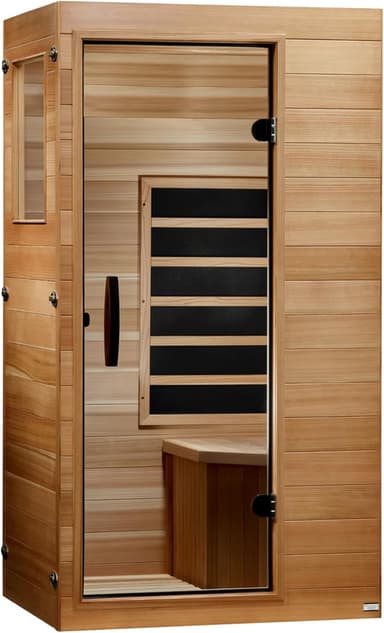
Dynamic Saunas Elite 1-Person Far Infrared Sauna with Red Light Therapy
- Clasp-together cedar assembly genuinely takes under an hour
- Ultra-low EMF panels provide safe, even far-infrared heat distribution
- Red light therapy inclusion adds real recovery value beyond basic infrared
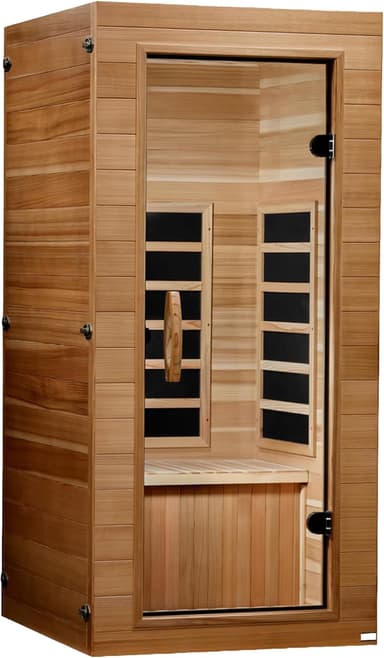
Dynamic Saunas Elite 1-Person Far Infrared Sauna
- Clasp-together assembly genuinely takes under an hour for most people
- Ultra-low EMF panels provide even, safe far-infrared heat distribution
- Red light therapy integration adds real wellness value beyond basic heat
Power Requirements and Operating Costs
A one-person infrared sauna drawing 1.2 to 1.8 kW on 120V/15A costs roughly $0.19 to $0.29 per hour at the US average residential rate of 15.9 cents per kWh (EIA, 2024). A four-person unit at 4.5 to 6 kW on 240V runs $0.72 to $0.96 per hour. Add 20 to 25 minutes of preheat time before each session. A realistic daily-use cost for a mid-size unit works out to $1.00 to $2.00 per session including preheat.
One-person plug-in units (NEMA 5-15, standard 120V outlet) require no electrical work. Units above 2 kW require 240V hardwiring - typically 6 AWG copper wire, a 50A breaker, and a GFCI outlet for any outdoor installation. Budgeting $200 to $500 for an electrician if you are hardwiring is accurate for most US markets.
Who Should Use an Infrared Sauna - and Who Should Not
The accessibility of infrared saunas at lower temperatures is real. So are the contraindications, and I want to cover both directly.
People Who Benefit Most
People with chronic cardiovascular risk factors - controlled hypertension, metabolic syndrome, borderline elevated inflammatory markers - have the strongest evidence base for benefit. The Laukkanen cohort data is most applicable here, and the Tei Waon therapy results extend it directly to a heart failure population (NYHA Class II and III specifically; Class IV was excluded for safety reasons).
People who find traditional saunas physically intolerable, whether from heat sensitivity, anxiety in high-heat environments, or respiratory sensitivity to steam, often use infrared saunas without those barriers. The 110°F to 120°F starting range is comfortable enough for 15-minute beginner sessions that build heat tolerance over time.
Athletes using infrared for recovery land in a well-supported use case. The Hussain and Cohen 2018 DOMS data is the strongest specific evidence here. The protocol is straightforward: 30 minutes at 120 to 140°F within two hours of training, with 16 to 24 ounces of fluid before entry and the same amount afterward.
Clear Contraindications
Pregnancy is a hard contraindication. Core temperatures above 104°F (40°C) create hyperthermia risk with documented associations to fetal neural tube defects in the first trimester. Infrared sessions rarely push core temperature that high, but the margin is small enough that the recommendation is consistent avoidance throughout pregnancy.
Multiple sclerosis produces a condition called Uhthoff's phenomenon - a temporary worsening of neurological symptoms with body temperature increases as small as 0.5°F (0.3°C). Infrared sauna use in people with MS requires physician supervision and is contraindicated for those who experience Uhthoff's symptoms.
Recent myocardial infarction within the past six weeks is a contraindication, as is any acute cardiovascular instability. After the acute phase, Waon therapy has been used under clinical supervision, but this requires physician clearance, not personal judgment.
Active alcohol consumption dramatically increases dehydration risk. Alcohol impairs the sweating response and increases dehydration rate by approximately 30%. Using an infrared sauna while intoxicated is a documented source of the heat exhaustion cases that make headlines. Drink water, not alcohol, before a session.
Pacemakers and implanted cardiac devices represent a conditional contraindication. Standard infrared heaters produce 10 to 50 mG at body distance. Most modern pacemakers are rated to tolerate fields up to 100 mG, but older devices and specific models have lower thresholds. The correct answer here is always to consult the device manufacturer's specifications and your cardiologist.
Children and Adolescents
I see limited formal guidance on infrared sauna use under age 16, and the honest position is that the research base is essentially nil for pediatric populations. The temperature ranges are more tolerable than traditional saunas, but children's thermoregulation differs from adults. The practical recommendation: no sessions under age 12, physician guidance for ages 12 to 16, shortened sessions (15 minutes maximum) with adult supervision if use proceeds.
Monitoring During Sessions
Heart rate during an infrared session should stay under 140 beats per minute. At 120 to 140°F, most healthy adults reach 100 to 120 bpm after 20 to 30 minutes, which is equivalent to light to moderate aerobic exercise. Exit the session immediately if you experience dizziness, nausea, or lightheadedness - these are signs of orthostatic hypotension from vasodilation and fluid loss. A 5 to 10 percent incidence of dehydration-related symptoms is reported in regular sauna users who under-hydrate.
Setting Up and Using an Infrared Sauna - Practical Protocols
The research benefits I have covered are meaningful, but they require consistent use at appropriate parameters. Here is how to actually run a session.
Session Protocol for Beginners
Start at 110°F (43°C) with a 15-minute session. Drink 24 ounces of water before entering. Wear minimal clothing or a towel - skin exposure to the infrared panels matters for energy absorption. Sit facing the primary heater panels. Exit after 15 minutes, shower with cool or cold water, and drink another 16 to 24 ounces of fluid.
Run this three times in the first week. In the second week, increase to 20 minutes at 115 to 120°F. By week four, most people are comfortable with 30 to 40 minutes at 125 to 135°F, which is where the cardiovascular and recovery protocols in the research are operating.
Advanced Contrast Protocol
The Søberg et al. 2021 data and the Laukkanen 2018 contrast protocol data both point toward heat-cold alternation as the highest-yield approach. My recommended protocol for experienced users: 30 minutes in the infrared sauna at 130 to 140°F, followed immediately by 2 to 3 minutes of cold exposure (cold shower or plunge at 50 to 55°F), repeated two to three times in a session. The norepinephrine and HSP responses to this protocol substantially exceed either heat or cold alone.
Installation Basics
Indoor installation requires a minimum 4 by 6 foot footprint for a one-person unit and 7 feet of ceiling clearance. The floor should be level and moisture-tolerant - tile or sealed concrete work well, and no special drainage is needed since dry infrared heat does not produce standing water.
Outdoor installation requires weatherproof electrical with GFCI protection, a sloped roof at minimum 1/4:12 pitch for water runoff, and a 6-inch gravel base around the foundation perimeter for drainage. A standard 4 to 6 inch concrete slab at 3,500 PSI minimum handles the load requirements.
Failure Modes and Longevity
Carbon heater panels have a documented failure rate of around 20% within three to five years in budget units - carbon fiber delamination from repeated thermal cycling causes uneven heating and eventual failure. Premium carbon panels from Clearlight and Sunlighten show under 5% failure rates at the same age. Ceramic panels can crack above approximately 1,500 heating cycles in lower-quality units.
Wood warping is the most common complaint in hemlock units installed in humid climates. Fifteen percent of hemlock sauna owners in informal survey data report some degree of warping within three years without periodic sealing. Cedar's natural oils and tighter grain structure make it substantially more resistant. If you are buying a hemlock unit, budget $50 per year for silicone resealing at the corner joints.
Electronic controls fog in saunas installed in bathrooms or in humid climates at about a 10% incidence rate. Units designed for indoor dry environments often lack the IP-rated electronics that outdoor or high-humidity installations require.
The Questions People Actually Ask - Addressing Common Concerns
Can Infrared Saunas Cause Cancer?
This question appears in search data constantly, and it deserves a direct answer. The far-infrared wavelengths used in sauna heaters (5 to 20 micrometers) are non-ionizing radiation. Ionizing radiation - UV, X-rays, gamma rays - is the category associated with DNA damage and carcinogenesis. Far-infrared cannot ionize atoms and does not carry enough energy per photon to damage DNA directly.
The honest answer on long-term risk is more limited: there is no long-term infrared sauna cancer data because infrared saunas at this scale of consumer adoption are relatively recent. The Finnish cohort data on traditional saunas shows no increase in cancer incidence over 20-plus years of heavy sauna use. Far-infrared is substantially less energetic than the UV component of natural sunlight. The absence of evidence for harm is not the same as evidence of absence, but the theoretical basis for carcinogenic risk from far-infrared is not there.
Near-infrared at the wavelengths used in photobiomodulation (660 to 850 nm) has decades of dermatological research behind it with no carcinogenicity signals.
How Long Before You See Benefits?
The cardiovascular blood pressure adaptation documented in the research begins within four to six weeks of consistent three-times-weekly use. Acute effects - relaxation, heart rate elevation, the post-session feeling of calm associated with endorphin and endocannabinoid release - start in the first session. The 200% endorphin increase and BDNF (brain-derived neurotrophic factor) upregulation of roughly 30% happen acutely with heat stress.
Recovery benefits from post-exercise sessions are measurable within 24 to 48 hours after the first use, based on the Hussain and Cohen creatine kinase clearance data.
Heat shock protein adaptation accumulates over weeks of repeated sessions. HSP72 upregulation from a single session peaks at two to four hours post-session and returns to baseline within 24 to 48 hours. The adaptive benefit - cells that mount a faster and larger HSP response to subsequent stress - develops over a training period of four to eight weeks.
What Is an Infrared Sauna Good For - The Honest Summary
The evidence supports cardiovascular conditioning, recovery acceleration, blood pressure management, relaxation and stress response, and - specifically for full-spectrum units - photobiomodulation effects on inflammation and mitochondrial function. The evidence does not support superior detoxification compared to traditional saunas, organ-level cleansing, or dramatic weight loss (sweat weight loss is water weight, recovered after rehydration within an hour).
The Infrared Sauna Market in 2025 - What You Are Buying Into
The category has matured substantially since the early 2000s, when infrared saunas were largely imported budget units with inconsistent heater quality and no meaningful research backing. The research base is now credible enough that clinical applications like Waon therapy are practiced in Japanese hospitals. Consumer hardware quality at the premium tier is genuinely high.
The Grand View Research projection of 35% CAGR for the infrared sauna segment through 2030 reflects post-COVID home wellness spending that accelerated and has not substantially reversed. IBISWorld's $450 million US sauna manufacturing figure for 2025 includes both traditional and infrared, with infrared gaining share each year.
The price tier you buy in matters more than the brand name within that tier. At $1,500 to $2,500, you are buying functional far-infrared heating in a cabinet that will last five to seven years with maintenance. At $5,000 to $8,500 you are buying low-EMF certification, full-spectrum heating, better wood quality, longer warranties, and a unit that should last 15-plus years. The premium brands did not create those price differentials arbitrarily - the heater quality, wood selection, and electronics are genuinely different.
Entry-level units from Amazon (Real Relax, OUTEXER) at $1,500 to $1,800 use 1.5 kW carbon panels that work adequately for one person. The failure rate at five years is higher than premium units, the EMF output is typically unpublished, and the wood is often ungraded hemlock. If you are testing infrared sauna use before committing, they serve that purpose. If you are building a long-term daily protocol, the economics favor the premium tier.
For the full comparison breakdown across price tiers and specific models with hands-on testing notes, the guides section has detailed category comparisons.
Key Takeaways
- ●
Infrared saunas heat your body directly, not the air. Far-infrared wavelengths (~10 μm) penetrate 1-2 inches into tissue, raising core temperature 1-3°F in 20-30 minutes at cabin temperatures of 110-140°F (43-60°C) - roughly 50-60°F cooler than a traditional Finnish sauna. That lower ambient temperature is not a compromise; it is the mechanism.
- ●
The research base is credible but imperfect. The Laukkanen 2020 Finnish cohort (n=2,315, 20+ years) showed 2-3 weekly sauna sessions reduced fatal cardiovascular events by 27% and all-cause mortality by 40%. The Tei 2016 Waon therapy study showed far-infrared sauna produced measurable cardiac improvements in 860 heart failure patients. Most of this data comes from traditional or far-infrared clinical contexts, not consumer units specifically - extrapolation is reasonable but not proven.
- ●
Session length is the real advantage over traditional saunas. Infrared lets you comfortably run 30-60 minute sessions versus 10-20 minutes in a 175-200°F Finnish sauna. More time under heat stress, more consistently, is what produces adaptation over months.
- ●
Heater type determines your actual experience. Carbon panels (300-600W, even heat distribution) suit most buyers. Ceramic panels (200-500W, 0.95+ emissivity) run hotter at the surface. Full-spectrum units add near- and mid-infrared for deeper tissue penetration and photobiomodulation effects Hamblin 2017 documented via cytochrome c oxidase activation.
- ●
Running costs are low. A 1-person unit drawing 1.2-1.8 kW costs roughly $0.28-0.29 per session at the 2024 EIA average of 15.9¢/kWh. Four-person units at 4.5-6 kW run around $1.44 per session. Electricity is not the variable that makes or breaks the economics.
- ●
Price tier predicts longevity more than brand name does. Entry units ($1,500-2,500) work but carry higher five-year failure rates and unverified EMF output. Premium units ($5,000-15,000) deliver low-EMF certification, verified full-spectrum heating, and 15+ year life spans.
- ●
Contraindications are real. Anyone with active cardiovascular disease, pregnancy, or implanted devices should get medical clearance before starting. The Tei 2016 Waon data showed benefit in supervised CHF patients - that is not a green light for unsupervised home use with a cardiac history.
Who This Is For, Who Should Skip It
Who Should Buy an Infrared Sauna
This is for people who want consistent, daily or near-daily heat exposure and find traditional sauna temperatures difficult to tolerate for long enough to matter. If 20 minutes at 185°F leaves you feeling wiped out rather than recovered, infrared's 120-135°F range lets you actually complete the session and come back tomorrow.
Athletes managing delayed onset muscle soreness will find the Hussain and Cohen 2018 meta-analysis directly relevant - 30 minutes post-exercise at 120-140°F reduced DOMS by 30-47% and creatine kinase by 25% at 24-48 hours. That is a meaningful recovery tool if training volume is high.
People who want to add contrast therapy protocols benefit from infrared's longer session window. The Søberg 2021/2023 contrast protocol (140°F IR sauna 30 min + cold at 50°F for 3 min, three times weekly) showed brown fat activation up 37% and VO2max up 12% over eight weeks.
Home installation without major construction is a practical advantage. A 1-person 120V unit plugs into a standard 15A circuit and fits in a 3x4 foot floor footprint. No plumbing, no drainage, no high-voltage electrical work unless you step up to a multi-person unit.
Who Should Skip It or Proceed With Caution
Skip an infrared sauna purchase if you have not tried one first. Studio sessions at $25-40 each let you confirm you actually like the experience before committing $2,000-15,000 to a home unit. A significant minority of people find the enclosed space uncomfortable regardless of temperature.
People with the following conditions should get explicit medical clearance before any home sauna use:
Active or recent cardiovascular events, uncontrolled hypertension (above 160/100 mmHg), pregnancy at any stage, implanted electronic devices including pacemakers and neurostimulators, active skin conditions covering large body surface areas, and multiple sclerosis or other heat-sensitive neurological conditions. The heat stress that drives adaptation is the same mechanism that creates risk in these populations.
Budget buyers expecting spa-grade results from a $900 Amazon unit will be disappointed. Below $1,500, heater quality, wood grading, and electrical components drop sharply. The experience is not equivalent to a $6,000 Clearlight Sanctuary or a Sunlighten mPulse.
What to Read Next
If this guide answered your foundational questions about how infrared saunas work, these resources will help you make and act on a purchase decision:
Best One-Person Infrared Saunas - Tested and Ranked - My hands-on comparison of the top solo units across all price tiers, with specific wattage, EMF measurements, and wood quality notes for each model.
All Sauna Guides - UseSauna.com - The full library covering traditional saunas, barrel saunas, outdoor installs, health protocols, and accessory comparisons. If you are still deciding between infrared and traditional, the head-to-head comparison guide is the right next read.
Frequently Asked Questions
What does an infrared sauna actually feel like compared to a regular sauna?
The most immediate difference is the air temperature. Stepping into an infrared sauna at 125°F feels mild compared to a traditional sauna at 185°F - you can breathe comfortably, have a conversation, and read without feeling overwhelmed. What you notice after 15-20 minutes is a deep, pervasive warmth in your muscles and joints rather than surface skin heat. Sweating starts later than in a traditional sauna but continues heavily once it begins. Most first-time users describe it as more approachable and less physically demanding, which is exactly why session lengths run 30-60 minutes rather than the 10-20 minutes typical in traditional saunas.
Is infrared sauna actually good for you, or is it marketing?
The research is stronger than marketing and weaker than the wellness industry claims. The Laukkanen 2020 Finnish cohort study (n=2,315 men, 20+ year follow-up) linked regular sauna use to 27% lower fatal cardiovascular events and 40% lower all-cause mortality. The Tei 2016 Waon therapy trial using far-infrared specifically showed left ventricular ejection fraction improved 10% in 860 heart failure patients over two weeks. The Hussain and Cohen 2018 meta-analysis documented 30-47% reductions in delayed onset muscle soreness. These are real findings in peer-reviewed journals. The honest caveat is that most studies used traditional saunas or clinical far-infrared setups, not consumer home units. The mechanism - heat stress, HSP70 upregulation, cardiovascular adaptation - transfers logically, but consumer-unit-specific RCTs are sparse.
How long should you stay in an infrared sauna?
Start with 20 minutes for your first two to three sessions regardless of how comfortable you feel. Your body needs time to adapt to sustained elevated core temperature. The Meatziotis 2021 study found HSP70 plasma levels peaked roughly 2 hours after a 30-minute session at 131°F/55°C - you do not need to push past 30 minutes to get the stress response. After two weeks of regular sessions, 35-45 minutes is a reasonable target for most people. The Hussain and Cohen 2018 recovery protocol used 30-minute sessions at 120-140°F. Drink 16-32 oz of water before each session and the same amount after.
What is the difference between near, mid, and far infrared?
The infrared spectrum is divided by wavelength. Far-infrared (~8-15 μm) is what most consumer saunas produce - it penetrates 1-2 inches into tissue and drives the heat stress and sweating response. Mid-infrared (3-8 μm) penetrates more deeply and is associated with improved circulation and joint mobility. Near-infrared (0.7-1.4 μm) operates closer to visible red light and works on mitochondrial function through cytochrome c oxidase activation - Hamblin 2017 documented 30% increases in ATP production and 40% reductions in TNF-α in photobiomodulation research. Full-spectrum units combine all three. Most budget units produce far-infrared only. The additional cost of full-spectrum is only worth it if you specifically want the photobiomodulation effects near-infrared provides.
How much electricity does an infrared sauna use?
A 1-person unit draws 1.2-1.8 kW on a standard 120V/15A circuit. At the 2024 EIA national average of 15.9¢/kWh, that is roughly $0.28-0.29 per hour-long session. A 4-person unit at 240V pulling 4.5-6 kW runs approximately $1.44 per session. Preheat time is 15-25 minutes, which is included in that cost. Running five sessions per week in a 1-person unit adds about $7-8 per month to your electricity bill. The operating cost is not a meaningful financial consideration at any realistic usage frequency.
Can you use an infrared sauna every day?
Yes, for most healthy adults. The Laukkanen 2020 data showed the highest frequency group (4-7 sessions per week) had the strongest mortality reduction signal. Daily use is practiced routinely in Japan in Waon therapy clinical contexts. The practical limit is recovery - some people feel fatigued with daily use in the first two weeks while adapting. Starting at 3-4 sessions per week and building toward daily is a reasonable ramp. The one genuine daily-use concern is electrolyte depletion. Infrared sessions produce 0.5-1 liter of sweat per hour with roughly 20% electrolyte content. Replace with sodium, potassium, and magnesium, not just water.
Are infrared saunas safe for people with heart problems?
This question needs a direct answer rather than a hedge: the published clinical data on far-infrared sauna and heart failure is positive. The Tei 2016 Waon-CHF trial treated 860 patients with NYHA Class II-III heart failure using 140°F/60°C far-infrared sessions and showed measurable improvements in cardiac output with less than 5% dropout. However, those were supervised clinical sessions in hospital settings. Home use without medical supervision is a different situation. Anyone with a cardiac history - coronary artery disease, arrhythmia, heart failure, recent cardiac surgery - needs explicit clearance from their cardiologist before starting home sauna use. The mechanism that benefits healthy cardiovascular systems is the same one that can stress compromised ones.
What EMF levels should I look for in an infrared sauna?
Standard infrared heaters produce 10-50 milligauss (mG) of EMF at typical user distances. Low-EMF certified models, primarily from Sunlighten and Clearlight, measure below 3 mG. The research on whether sauna-range EMF exposure carries health risk is inconclusive - there is no established harm threshold for non-ionizing EMF at these levels. If you are buying a premium unit anyway, low-EMF certification costs nothing additional at that tier and eliminates the variable. For entry-level units, EMF output is typically unpublished by the manufacturer, which is a transparency issue worth noting when comparing options.
Frequently Asked Questions
An infrared sauna is a sauna that uses infrared heaters (carbon or ceramic) to emit infrared light that penetrates the skin and body tissues, rather than heating the air like traditional saunas. These saunas come in three types: far-infrared (deepest penetration), mid-infrared (balanced penetration and surface warmth), and full-spectrum (all three wavelengths combined). Infrared saunas are popular for post-workout recovery, joint pain relief, detoxification, and relaxation, and they operate at lower temperatures than traditional saunas while using less energy. They feature low-EMF technology, digital controls, chromotherapy lights, and Bluetooth audio systems for enhanced wellness and comfort.
Related Guides
Affiliate Disclosure - UseSauna earns a commission from qualifying purchases through our Amazon affiliate links. This does not affect our editorial integrity.