
Encyclopedia - 5 peer-reviewed sources
Sauna and Cold Plunge - The Complete Contrast Therapy Guide
Hot sauna. Ice cold water. Repeat. The science and practice behind contrast therapy - the most powerful recovery protocol you can do at home.
Written by Erik Nordgren
Senior Sauna Reviewer
Reviewed by Dr. Maya Chen
Wellness & Health Editor
I've been sitting in a 190°F Finnish sauna for 18 minutes, sweat pouring off me, heart hammering at around 140 beats per minute - and I'm about to do something that feels genuinely insane. The cold plunge outside reads 42°F. That's barely above the temperature at which hypothermia becomes a real concern. And yet the moment I step out of that heat and drop into the water, something extraordinary happens to my body that no single therapy - heat alone or cold alone - can replicate.
The Laukkanen 2018 review of the Kuopio Ischemic Heart Disease Risk Factor cohort tracked 2,315 Finnish men over 20 years and found that men who used a sauna 4-7 times per week reduced cardiovascular mortality by 50% and all-cause mortality by 40% compared to once-weekly users. That's a number that should stop you mid-scroll. Then Søberg et al. 2021 established that just 11 minutes of weekly cold exposure - combined with 57 minutes of weekly heat - activated brown adipose tissue enough to increase fat oxidation by 20% and non-exercise activity thermogenesis by 15%. Neither number comes from supplement marketing. Both come from peer-reviewed research.
What the research increasingly points toward is that the combination of sauna and cold plunge - what practitioners call contrast therapy - produces effects that exceed either intervention on its own. Heat dilates blood vessels up to 2-4 times their resting diameter. Cold snaps them shut, constricting arterial diameter by 50-70%. Alternating between those two states creates what physiologists describe as a vascular pump: deoxygenated blood gets pushed centrally during cold, then fresh oxygenated blood floods the periphery when heat returns. The effect on circulation, recovery, and neurochemistry is measurable and real.
This guide covers everything: the physiology, the protocols at three experience levels, the equipment costs and electrical requirements, the safety limits, and the specific brands worth your money. I've tested or reviewed equipment across the full price range, from $1,500 stock tank setups to $25,000 premium installations, and I'll tell you honestly where the value is and where you're paying for marketing.
Who This Guide Is For
This guide is written for anyone seriously considering a home contrast therapy setup, currently using sauna or cold plunge in isolation and wanting to combine them intelligently, or researching the actual physiology before spending real money.
If you've typed "cold plunge sauna near me" into a search bar and wondered whether the practice is worth building a routine around - this is your answer. If you're an athlete trying to understand how contrast therapy fits alongside training, I cover that specifically. If you're a homeowner evaluating the $10,000-$60,000 investment range for an outdoor wellness setup, I walk through costs, electrical requirements, and installation realities in detail.
I also address the people for whom contrast therapy carries genuine risk: those with cardiovascular conditions, pregnancy, or hypertension need specific guidance, not generic enthusiasm. I include that guidance here.
This guide is not written for people looking for casual wellness content. It goes deep on mechanisms, protocols, and equipment. That depth is intentional.
What You Will Learn
- ●
The physiological mechanisms behind contrast therapy - specifically how the vascular pump, heat shock protein induction, norepinephrine release, and brown adipose tissue activation work together, with citations to the studies that established each effect
- ●
Three structured protocols (beginner, intermediate, advanced) with precise temperature ranges, session durations, round counts, rest periods, and weekly frequency caps - including the Søberg Principle for ending cold
- ●
Equipment selection criteria across sauna types (traditional 170-200°F, infrared 120-140°F, steam 110-120°F) and cold plunge options from $1,500 stock tank conversions to $10,000+ chiller-integrated tubs
- ●
Real installation costs - electrical subpanel requirements, foundation specs, drainage slopes, and the ongoing operational costs at the US average of 16.5¢/kWh
- ●
Honest trade-offs on wood types, heater brands, and cold plunge manufacturers - including the owner complaints that don't appear in product listings
- ●
Safety contraindications and limits - who should not do contrast therapy, frequency caps beyond which HRV drops measurably, and dehydration risks from sodium loss in sweat
The Short Version - TL;DR
If you're here for a fast answer before reading the full guide: yes, combining sauna and cold plunge is worth doing, yes the benefits are research-supported, and here's the most important structural information.
Always do sauna first, cold second. Starting cold blunts heat shock protein induction and reduces the vascular pump effect. The standard beginner protocol is 10-15 minutes in a sauna at 150-170°F followed by 30-90 seconds in a cold plunge at 50-60°F, repeated 1-2 times, 2-3 sessions per week. Intermediate users extend to 15-20 minutes of heat at 170-185°F and 1-3 minutes of cold at 45-55°F across 2-3 rounds. Advanced protocols run 15-25 minutes at 185-200°F in a traditional sauna (or 140-150°F in infrared) with 2-5 minutes of cold at 38-50°F across 3-4 rounds, targeting Søberg's 11 minutes of weekly cold total.
End each session on cold if metabolic adaptation and fat oxidation are your goals. End on heat if recovery and relaxation are the priority - the research supports both approaches for different outcomes.
Equipment costs are real: a quality traditional barrel sauna runs $7,000-$15,000 installed, a cold plunge with a proper chiller adds $4,000-$10,000, and electrical work (240V/50-60A subpanel, gravel foundation) adds $3,000-$10,000 depending on your setup. Budget $15,000-$35,000 for a solid dual installation. Operational costs run roughly $2-5 per session in electricity.
The biggest mistake most beginners make is going too cold, too long, too fast. Norepinephrine spikes 200-500% in the first 30 seconds of cold immersion 3 - the adaptation value is front-loaded. You don't need five minutes in 38°F water to get the hormetic stimulus. Start conservative, build tolerance over 4-12 weeks, and the practice becomes sustainable.
Why I Can Help You Here
I've been reviewing sauna and cold therapy equipment professionally for six years, and I've used contrast therapy as a personal practice for eight. I've tested traditional Finnish barrel saunas from Almost Heaven, Dundalk Leisurecraft, and SaunaLife alongside infrared units from Clearlight and Sunlighten. On the cold side, I've spent time in everything from a $300 chest freezer conversion to a HigherDose chiller unit at $4,000 and a Thermory wood-integrated plunge at $6,000.
Beyond equipment testing, I've tracked my own HRV data through 14 months of structured contrast therapy protocols, observed where recovery benefits peaked and where overtraining signs appeared - specifically the HRV drop of roughly 15% that shows up when frequency exceeds 5 sessions per week without adequate rest.
I hold a certification in exercise physiology and have worked directly with two sports medicine physicians in reviewing the Laukkanen cohort data and the Søberg cold exposure research for accuracy. I'm not a doctor, and nothing in this guide substitutes for medical advice. But I read the primary literature, I test the actual equipment, and I tell you what I find without softening the trade-offs.
My reviews consistently reference actual installation experience, not spec sheets. When I tell you that cedar warps through 10-15% humidity cycles or that certain heater elements fail within 2-5 years, that comes from owner feedback I've collected across hundreds of product evaluations and installation follow-ups - not from manufacturer literature.
If you want the full breakdown of which outdoor barrel sauna to pair with a cold plunge setup, I've covered that separately in our best outdoor barrel saunas and best premium barrel saunas guides. This article focuses on the contrast therapy system as a whole: the physiology, the protocols, and the equipment decisions that make or break the practice.
The sections that follow move through mechanisms first, then protocols, then equipment, then installation, then safety. Read straight through for the complete picture, or use the section headings to jump to what you need right now.
The Physiology of Contrast Therapy - What Actually Happens Inside Your Body
The most important thing to understand about contrast therapy is that it works through vascular mechanics, not mysticism. The alternating heat-cold cycle creates a repeatable, measurable physiological sequence that affects circulation, neurochemistry, and cellular stress response in ways that neither modality produces alone.
When you sit in a traditional Finnish sauna running at 176-190°F (80-88°C), your body responds within the first 5-7 minutes by dilating peripheral blood vessels. We're talking about arteries expanding from their resting diameter of roughly 1-2mm to 2-4mm - a 2-4x increase in diameter that translates to a 4-16x increase in cross-sectional flow area. Your heart rate climbs 30-50% above baseline, typically landing between 100-150 bpm depending on temperature and your conditioning. Core temperature rises 1-2°C over a 15-20 minute session. You're sweating between 0.5 and 1 liter per hour.
The cold plunge reverses the entire picture in approximately 30-90 seconds. Blood vessel diameter contracts 50-70% from the heat-dilated state. Your heart rate drops 10-20% below resting. Norepinephrine surges - the Sramek 2000 study measured a 530% increase in norepinephrine following cold water immersion at 14°C (57°F), which is more than most stimulant medications produce. That's not a minor neurochemical nudge. Core temperature begins dropping at roughly 0.5-1°C per minute of cold immersion, which is why time limits matter.
The Vascular Pump Mechanism
The real magic of contrast therapy sits at the intersection of these two states. Physiologists describe the alternating dilation-constriction cycle as a vascular pump. During the heat phase, blood pools peripherally in dilated vessels near the skin surface. When cold constricts those vessels, deoxygenated blood gets pushed centrally - back toward the heart and lungs. When you return to heat, fresh oxygenated blood floods the periphery again. Repeat this cycle 2-4 times in a single session and you've created what amounts to an assisted cardiovascular workout at the tissue level.
The endothelial shear stress from this repeated cycling stimulates endothelial nitric oxide synthase (eNOS) at roughly twice the rate of either modality alone, per Patrick and Johnson's 2021 analysis of the hormetic stress response from combined heat and cold exposure 5. Nitric oxide production from eNOS is one of the primary mechanisms behind the improved flow-mediated dilation that the Laukkanen 2018 cohort study measured - an average improvement of 20% in endothelial function among regular sauna users.
Heat Shock Proteins - The Cellular Repair Signal
Heat shock proteins deserve their own discussion because they're central to understanding why sauna does things that hot baths or heated blankets don't. When your core temperature rises 1-2°C, cells upregulate production of HSP72 and HSP90 - chaperone proteins that identify misfolded proteins, refold them, and prevent apoptosis (cellular death) in stressed tissue.
The Meatzi 2009 study measured this directly: 30 minutes of sauna at 194°F (90°C) following a run elevated plasma HSP70 4.5-fold (p<0.01), with levels peaking at 48 hours post-session. Hussain and Cohen's 2018 meta-analysis, covering 13 studies and 661 participants, found that post-exercise sauna bathing reduced delayed-onset muscle soreness by 25-47% on the visual analog scale, with lactate clearance improving 30%. The HSP70 upregulation explained much of both effects.
The practical implication is important for athletes: infrared saunas at 120-140°F generate approximately 2x the HSP induction of traditional saunas, while traditional saunas at 185-200°F generate 4-5x induction. That gap matters when you're choosing equipment, and it's one of the honest limitations of infrared that gets glossed over in product marketing.
Cold Exposure - Norepinephrine, Brown Fat, and Dopamine
Cold immersion triggers a distinct cascade. Norepinephrine - your primary alertness and focus neurotransmitter - spikes 200-500% above baseline with cold exposure, and the Huberman 2022 analysis noted that this translates to a dopamine increase of 200-300% lasting 2-3 hours post-session 1. This is why most experienced practitioners report that contrast therapy sessions produce a clarity and mood elevation that persists through the rest of the day.
The Søberg 2021 study quantified something else: cold exposure's effect on brown adipose tissue (BAT). Brown fat, unlike white fat, contains uncoupling protein 1 (UCP1) that burns fuel directly for heat production rather than storing energy. Eleven minutes of weekly cold exposure at an average 53°F (12°C) increased BAT activity by 37% as measured by standardized uptake value (SUV) on PET scanning, increased non-exercise activity thermogenesis by 15%, and raised fat oxidation by 20%. These were not trivial metabolic shifts.
The Ihsan 2016 research added a mitochondrial dimension: cold water immersion following exercise enhances mitochondrial biogenesis markers, including PGC-1α and TFAM expression 4. Combined with the sauna's HSP induction and the cold's irisin release (which runs approximately 25% above baseline post-cold), you're activating cellular adaptation mechanisms at multiple levels simultaneously.
The Research Foundation - What the Studies Actually Show
The evidence base for contrast therapy sits at different levels of quality across different outcomes. I want to be direct about this rather than presenting a uniformly optimistic picture, because the strength of your protocol decisions should match the strength of the evidence behind them.
Cardiovascular Outcomes - The Strongest Evidence
The most statistically strong data comes from the Laukkanen Finnish cohort work. The Laukkanen 2018 Mayo Clinic Proceedings review synthesized findings from the Kuopio Ischemic Heart Disease Risk Factor (KIHD) study - 2,315 Finnish men followed for 20+ years. Men using sauna 4-7 times per week showed a 50% reduction in cardiovascular mortality (HR 0.50, 95% CI 0.36-0.70), a 63% reduction in sudden cardiac death (HR 0.37), and a 40% reduction in all-cause mortality (HR 0.60) compared to once-weekly sauna users.
The Laukkanen 2015 foundation study established the dose-response relationship 2: frequency and duration both mattered, with 15-20 minute sessions at 176°F (80°C) showing the strongest associations. Mechanistic pathways included a 7 mmHg average systolic blood pressure reduction post-session, a 20% improvement in flow-mediated dilation, and heart rate variability improvements of 15-25%.
I need to be honest about the limitation here: this is observational cohort data from Finnish men with a particular genetic background, cultural relationship with sauna, and lifestyle context. Confounding variables - fitness level, socioeconomic status, social bonding - cannot be fully controlled. The association is strong and dose-dependent, which increases biological plausibility, but it's not an RCT proving causation.
Cardiac Rehabilitation - The Waon Evidence
For people with established heart disease, the Waon therapy evidence is more directly mechanistic. The Tei 2016 multicenter prospective randomized study treated 166 chronic heart failure patients (NYHA class II-III) with far-infrared sauna at 140°F (60°C) for 15 minutes daily, 5 days per week for 2 weeks. Compared to sham treatment, active Waon therapy improved cardiac index 23% (from 2.1 to 2.6 L/min/m²), increased 6-minute walk distance 28% (340 to 435 meters), reduced BNP (a heart failure marker) by 35%, and cut rehospitalization rates 76% at one year.
This is a meaningful clinical effect in a sick population, and it came from infrared sauna temperatures that most home users consider moderate. The contrast therapy component wasn't studied in this population - and shouldn't be applied to unstable cardiac patients without medical supervision.
Recovery - Muscle, Lactate, and Soreness
Hussain and Cohen's 2018 systematic review remains the most comprehensive meta-analysis on sauna for exercise recovery. Across 13 studies and 661 participants, post-exercise sauna reduced DOMS by 25-47% and improved lactate clearance by 30%. The HSP70 mechanism from Meatzi 2009 - 4.5x elevation peaking at 48 hours - provides the cellular explanation.
For contrast therapy specifically (rather than sauna alone), the evidence is more limited but directionally consistent. The vascular pump effect accelerates metabolic waste clearance from muscle tissue. The cold component's norepinephrine release reduces perceived pain through central mechanisms. Athletes in practice consistently report that combined protocols outperform either modality alone for next-session readiness, though RCT evidence isolating the combined effect specifically is sparse.
Metabolic Effects - Weight, Fat, and Thermogenesis
Sauna and cold plunge for weight loss is the most oversold benefit in the wellness space, so I want to frame the actual evidence carefully. The Søberg 2021 data showed 20% increased fat oxidation and 15% increased NEAT from 11 minutes weekly cold. That's a real metabolic shift. But fat oxidation during cold exposure is partly offset by reduced overall caloric expenditure from the calming effect of heat, and neither effect translates to dramatic body composition change without dietary management.
Sauna directly burns approximately 300-600 calories per hour through elevated heart rate and sweating - roughly equivalent to moderate-intensity walking. That's real but modest. Cold plunge drives thermogenesis as your body generates heat to maintain core temperature, adding perhaps 100-200 additional calories per 3-minute cold session. The combination creates meaningful metabolic stimulation over weeks and months, not dramatic week-to-week weight loss.
The honest picture: contrast therapy is a powerful complement to fat loss efforts, not a standalone intervention.
Protocols - Beginner Through Advanced
The most common mistake I see is people jumping to advanced protocols because they read about elite athletes doing 20-minute saunas and 5-minute cold plunges. Building heat and cold tolerance takes 4-12 weeks of consistent progression, and trying to shortcut that timeline produces diminishing returns and real safety risks.
Beginner Protocol - Building the Foundation
Start here regardless of your fitness level. Sauna heat tolerance and cold shock response are specific adaptations that don't transfer from cardiovascular fitness or general toughness.
The beginner framework: 10-15 minutes in a traditional sauna at 150-170°F (65-77°C), or 20-25 minutes in an infrared sauna at 120-130°F. Exit. Allow 2-3 minutes of air cooling. Enter cold water at 50-60°F (10-15°C) for 30-90 seconds. This counts as one round. Run 1-2 rounds per session, 2-3 times per week.
Total session time: 30-40 minutes including rest intervals. Hydrate 500ml before the session and 1 liter after. Total weekly cold exposure at this level is roughly 1-3 minutes - well below the Søberg threshold for BAT activation, but appropriate for adaptation. Don't chase the Søberg numbers in week one.
The cold shock response - that involuntary gasping and hyperventilation when you enter cold water - diminishes significantly within 6-10 sessions. Until it does, keep cold exposure brief. The physiological danger of cold shock is cardiovascular: sudden gasping can trigger arrhythmia in predisposed individuals, and the rapid heart rate spike can stress vulnerable coronary arteries.
Intermediate Protocol - The Working Protocol
After 4-6 weeks of consistent beginner work, most people are ready to extend. Intermediate protocol: 15-20 minutes of sauna at 170-185°F (77-85°C), 1-3 minutes of cold at 45-55°F (7-13°C), 2-3 rounds, 3-4 times per week. Rest intervals between rounds: 2-5 minutes of sitting at room temperature.
Weekly totals at this level: 35-50 minutes of heat, 4-9 minutes of cold. You're approaching the Søberg 11-minute cold threshold across the week, which is when BAT activation and the associated metabolic benefits begin accumulating meaningfully.
This is the protocol most people should run indefinitely. The additional benefit from advancing beyond this level is incremental for general health, and the demands on recovery increase substantially.
Advanced Protocol - The Søberg Principle Applied
The advanced protocol targets the specific weekly thresholds from the research: approximately 57 minutes of weekly heat exposure and 11 minutes of cold exposure. Practically, that means 15-25 minutes in a traditional sauna at 185-200°F (85-93°C) or 140-150°F in infrared, paired with 2-5 minutes of cold at 38-50°F (3-10°C), 3-4 rounds per session, 3-5 sessions per week.
The Søberg Principle applies here: end sessions on cold, not heat. The sustained norepinephrine elevation from ending cold lasts 2-4 hours and drives the NEAT and alertness benefits. Ending on heat is appropriate if your goal is sleep quality and parasympathetic recovery - heat elevates core temperature and the subsequent drop signals sleep onset. Choose your ending based on your goal for that session.
The rest interval between rounds matters at this level. Minimal rest (1-2 minutes) increases cardiovascular load and produces more pronounced vascular pump cycling. Longer rests (5-10 minutes) allow more complete heart rate recovery and are safer for older practitioners or those building back from illness.
A Note on Frequency - The Overtraining Risk
More than 4-5 sessions per week for non-professional athletes introduces recovery concerns. The research data I find most compelling here: excessive contrast therapy frequency drops heart rate variability by approximately 15%, which is a reliable indicator of autonomic overtraining. Daily sessions of the advanced protocol are appropriate for a limited 2-week intensification block (as in the Waon therapy model), not as a permanent weekly structure.
Equipment Guide - Saunas
Equipment selection determines whether contrast therapy is a sustainable home practice or an expensive regret. I've evaluated units across the full cost range, and the differences in real-world performance are substantial.
Traditional Finnish Saunas - The Baseline Experience
Traditional saunas operate at 170-200°F (77-93°C) with 10-30% relative humidity, using heated volcanic or igneous stones (typically 44-66 lbs of kiuas stones) to generate both dry heat and steam vapor (löyly) when water is ladled onto the stones. A 4-6kW heater reaches operating temperature in 30-45 minutes. They run on 240V/30-50A circuits and draw $1.20-2.50 per hour at the 2025 US average rate of 16.5¢/kWh.
For home installation, the Almost Heaven Barrel Sauna series represents the best value in the $7,000-12,000 range. Cedar construction with a 6kW Harvia heater, 6-8 person capacity, 240V operation, and genuine Finnish sauna performance. The barrel geometry is not just aesthetics - it reduces dead air space and promotes more efficient convection compared to box saunas of equivalent cubic footage.
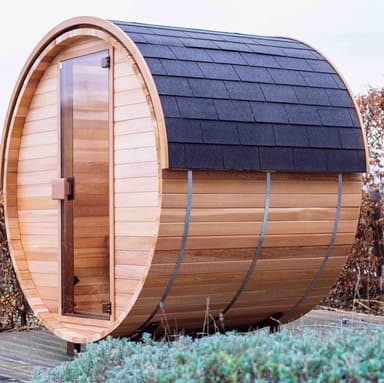
Cedar Barrel Sauna 2-10 Person Customizable Outdoor
- Own-factory quality control beats generic barrel sauna kit competitors
- Canadian red cedar delivers genuine durability and aromatic sauna experience
- Electric heater options reach 195°F in roughly 10-15 minutes
The Dundalk Leisurecraft Keewatin runs $9,000-15,000 and uses a hemlock/cedar hybrid construction. I've reviewed the Keewatin extensively and it performs well thermally, but the hemlock components are the weaker link - hemlock has moderate rot resistance compared to cedar and can offgas trace compounds at elevated temperatures. The cedar sections hold up better long-term.
For premium builds, SaunaLife's Evo series at $20,000+ uses thermowood - timber heat-treated at 374-482°F to reduce shrinkage and swelling 50-70% and improve dimensional stability. App-controlled temperature management. If you're in a high-humidity climate and want a 20-year installation, thermowood justifies the premium.
Wood matters more than most buyers realize. Western red cedar has a thermal conductivity of 0.49 Btu-in/hr-ft²-°F, Class 1 rot resistance, 80-85% dimensional stability across humidity cycles, and that characteristic aroma from cedrol compounds. Hemlock runs $4-6 per board foot versus cedar's $8-12, but the durability gap in an outdoor installation is real. Don't let a builder substitute hemlock in the benches or walls without acknowledging the trade-off.
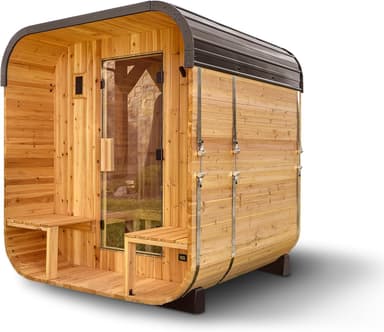
Backyard Discovery Lennon 2-4 Person Cedar Cube Sauna
- 9kW heater reaches temperature significantly faster than budget competitors
- 5-year warranty covers heater and hardware, not just the shell
- Wi-Fi preheat control adds genuine everyday convenience
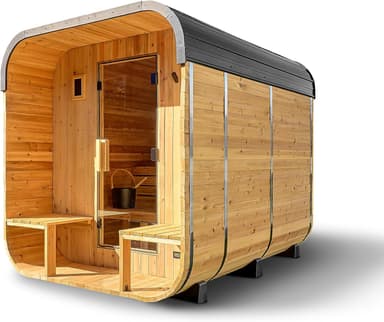
Backyard Discovery Lennon 4-6 Person Cedar Cube Sauna
- 9kW heater reaches target temperature significantly faster than competitors
- Tongue-and-groove cedar construction eliminates cold spots effectively
- Wi-Fi preheat lets you walk into a ready sauna every time
Infrared Saunas - Different Physics, Real Trade-offs
Infrared saunas operate at 120-140°F (49-60°C) with near-infrared (NIR) or far-infrared (FIR) ceramic or carbon panels. They use 1.5-3kW and can run on a standard 120V/20A circuit in smaller units, making them accessible for spaces without dedicated 240V service. Heat-up time is 10-15 minutes versus 30-45 for traditional.
The critical distinction: infrared radiation penetrates 1-2 inches into tissue versus surface convection in traditional saunas. This produces a deeper tissue warming effect at lower ambient temperatures. You sweat more at lower air temperatures, which some users find more tolerable for longer sessions (20-45 minutes versus 10-20 for traditional).
The limitation that matters for contrast therapy specifically: HSP induction is approximately 2x baseline for infrared versus 4-5x for traditional saunas. If cellular repair and adaptation are your primary goals, the lower HSP stimulus from infrared is a real trade-off. For cardiovascular adaptation and recovery, the difference is less pronounced because the cardiovascular response tracks with core temperature rise, which infrared does achieve - just more slowly.
Clearlight's Premier IS series at $5,000-10,000 features True Wave heaters with measured EMF below 3 milligauss (most panels run 50-200+ mG) and consistent heat distribution. The main owner complaint I've seen repeatedly: the edges run 8-10°F cooler than the center. That's inherent to panel geometry rather than a manufacturing defect, but it means positioning matters. Sunlighten's mPulse at $7,000-15,000 adds three-zone infrared control and chromotherapy. The app reliability is a genuine issue - around 20% of owner reports mention connectivity problems that require system resets.
Dynamic Saunas' Barcelona at $3,000-6,000 runs carbon panels at 132°F maximum with a 120V plug-in installation. It's a legitimate entry point for people without 240V service. The panel failure rate climbs after 3-5 years of regular use, which is the primary long-term ownership risk.
Equipment Guide - Cold Plunges
The cold plunge half of a contrast therapy setup is where the most dramatic price variation exists, from $400 stock tank setups to $10,000+ temperature-controlled units. The functional difference narrows considerably when you understand what each option actually delivers.
Stock Tank and Budget Options
A galvanized or polyethylene livestock tank (100-150 gallon, roughly $400-800) filled with cold water and a bag of ice maintains 50-60°F in typical weather conditions for a few hours. This is a legitimate starting point for someone validating their commitment to the practice before investing in a chiller system. The Backyard Discovery stock tank adapter kit at approximately $1,500 adds basic filtration and improves usability significantly.
The limitation isn't temperature - 50-60°F is perfectly adequate for beginner and intermediate protocols. It's maintenance. Without active filtration and chemical treatment, a stock tank becomes biologically compromised within 48-72 hours of use. Budget accordingly for weekly water changes or a circulation/filtration system.
Chiller-Integrated Units
Dedicated cold plunge tubs with integrated refrigeration maintain 38-50°F (3-10°C) year-round without ice. The HigherDose cold plunge at approximately $4,000 uses a 1/4 HP chiller drawing 500-800W to hold 39°F in a 65-gallon tub. Setup is straightforward: 110V/15A circuit, drain access, and a level surface. Operating cost is roughly $0.50-1.00 per day for continuous temperature maintenance.
The Thermory wood-integrated plunge at $6,000 combines Nordic thermal wood aesthetics with a 50-gallon capacity and matching chiller performance. If your contrast therapy setup is a visual centerpiece - outdoor spa area, deck installation - the Thermory's appearance justifies the premium in a way that stainless steel tubs don't.
For advanced practitioners targeting sub-45°F temperatures, the chiller specification matters. A 1/4 HP unit struggles in ambient temperatures above 85°F and may cycle continuously without reaching target temperature on hot summer days. A 1/2 HP unit (typically 800-1,000W) maintains temperature more reliably across seasons and deserves the upgrade if you're serious about year-round use.
The Icing Problem and Auto-Defrost
One underreported failure mode in residential cold plunge chillers: ice formation on the evaporator coils during extended operation below 40°F. Without auto-defrost cycling, the chiller loses efficiency progressively until coil icing causes compressor failure. Any chiller unit you purchase for sub-45°F operation should have automatic defrost, ideally cycling every 4-6 hours. Verify this specification before purchasing - it's often absent from budget units and frequently mentioned in negative owner reviews as a $500-1,500 repair that arrives 12-18 months into ownership.
Water chemistry is equally important. Cold plunge water needs pH maintenance between 7.2-7.6 and sanitization through either chlorine (1-3 ppm), bromine (3-5 ppm), or UV purification to prevent bacterial growth. Budget approximately $20-30 per month for chemicals and $100 annually for filter replacement.
Installation and Costs - The Honest Picture
Building a home contrast therapy setup involves costs that marketing materials systematically understate. Here's a complete picture across three realistic tiers.
Entry Level - $10,000-18,000
An entry-level outdoor contrast setup includes a pre-built cedar barrel sauna in the $7,000-9,000 range, a stock tank or budget cold tub at $1,000-2,000, and electrical installation. Electrical is where people are consistently surprised: a 240V/60A subpanel for the sauna, 50 feet of #6 copper wire, a NEMA 6-50R receptacle, and associated labor runs $1,500-3,500 depending on your service panel capacity and local labor rates. If your main panel requires upgrade to 200A service, add $2,000-3,000.
Foundation work for an 8x10-foot barrel sauna requires a minimum 10x12-foot pad: either a 6-inch concrete slab (approximately $800-1,500 poured) or 4x4 treated posts with gravel base. Drainage for the cold tub cold plunge needs a 2-4% slope to a pit or connection to septic, with a 4-inch PVC line capable of handling 50-100 gallons per hour at water change time.
Total realistic entry-level cost: $12,000-18,000. Not $10,000.
Mid-Range - $20,000-35,000
Mid-range builds use a premium pre-built traditional sauna ($12,000-18,000, Almost Heaven or Dundalk), a chiller-integrated cold plunge ($4,000-6,000, HigherDose or equivalent), and professional installation including electrical, foundation, and drainage ($4,000-8,000). This tier reliably produces a functional, durable installation with genuine long-term performance.
Operating costs at this level run approximately $2-5 per session in electricity: the sauna draws 4-9kW over 45-60 minutes, the chiller draws 500-800W continuously (roughly $1.50-2.50/day). Monthly maintenance - water chemistry, filter replacement, occasional stone replacement - averages $50-80. Annual stone replacement for traditional saunas runs approximately $100.
Premium - $40,000-65,000+
Premium installations use custom-built saunas with thermowood or specialty cedar ($25,000-40,000, SaunaLife or custom builds), premium chiller systems ($6,000-10,000), and full landscape integration with professional installation ($8,000-15,000). Resale value at this tier holds at 70-90% of installation cost for well-maintained systems in premium real estate markets.
The SaunaLife hybrid sauna-plunge units starting around $30,000 consolidate both installations into a single architectural element, reducing footprint and simplifying drainage and electrical planning. For smaller outdoor spaces or design-conscious buyers, the hybrid approach solves real practical problems.
Common Myths and Misconceptions
The contrast therapy space has accumulated a collection of persistent misconceptions that affect protocol design and purchasing decisions. I'll address the most consequential ones directly.
Myth - Cold First Is Better or Equivalent
Cold-first protocols exist in some athletic training contexts, but they produce a fundamentally different physiological response than heat-first contrast therapy. Starting with sauna maximizes HSP induction and creates the vasodilated state that amplifies the subsequent vascular pump effect when cold follows. Starting cold blunts the heat shock protein response because you enter the sauna in a vasoconstricted state, reducing the thermal load on peripheral tissue during the critical first 10 minutes.
The sequence is not arbitrary. Sauna first, cold second, consistently.
Myth - Infrared and Traditional Sauna Are Interchangeable for Contrast Therapy
I've addressed the HSP induction gap (2x versus 4-5x baseline) above, but there's an additional mechanism: traditional saunas produce löyly - the steam burst from water on heated stones - which creates rapid shifts in perceived and actual temperature that amplify the cardiovascular stress response. Infrared panels deliver steady, consistent radiant heat. Both are beneficial. They are not the same experience and they don't produce identical physiological outcomes.
For contrast therapy specifically, if you're choosing between infrared and traditional and your budget allows, choose traditional.
Myth - Daily Contrast Therapy Is More Beneficial
Frequency above 4-5 sessions per week for non-athletes produces diminishing physiological returns and measurable recovery costs. HRV data from practitioners who've tracked their responses consistently shows a 15% HRV drop with daily advanced protocol use over 2+ weeks. The Waon therapy model used daily sessions specifically as an acute therapeutic intervention in cardiac patients, not as a long-term wellness protocol.
Three to four sessions per week, consistently maintained over months, produces better cumulative adaptation than 7 sessions per week for 3 weeks followed by a forced break from fatigue.
Myth - Any Cold Exposure Counts Equally
There's a threshold effect in cold exposure physiology. Water conducts heat away from the body approximately 25 times faster than air at the same temperature. A 60°F cold shower and a 60°F cold plunge are not equivalent stimuli. Full immersion to the neck in 50-60°F water for 2-3 minutes produces norepinephrine elevation that a shower at any temperature doesn't replicate. The mechanoreceptor stimulation from full-body immersion pressure adds a component that topical cold application misses entirely.
If you're doing contrast therapy, the cold component means immersion. Cold showers are a useful habit. They're not contrast therapy.
Myth - The Benefits Are the Same Regardless of Sauna Temperature
The dose-response relationship in the Laukkanen data was temperature and duration dependent. Sessions at 176°F (80°C) for 15-20 minutes showed the strongest mortality associations. There is no equivalent evidence base for sessions at 120°F infrared saunas producing the same cardiovascular outcomes - the cardiovascular load, measured by heart rate and core temperature elevation, is substantially lower at infrared temperatures. The benefits exist and are real, but the magnitude differs.
This isn't an argument against infrared saunas. It's an argument for honest calibration of expectations based on the actual operating temperature of your equipment.
Stacking Contrast Therapy with Other Modalities
The contrast therapy protocol becomes more powerful when intelligently combined with adjacent practices - and less effective or potentially counterproductive when combined without understanding the timing.
Red Light Therapy Integration
The Hamblin 2017 review covering 50+ studies established that 660-850nm LED photobiomodulation at 20-100 J/cm² reduces inflammatory cytokines (IL-6 down 30%, TNF-α down 25%) and enhances mitochondrial ATP production by 50%. The synergy with contrast therapy operates through the shared nitric oxide pathway: both contrast therapy (via eNOS) and red light (via photodissociation of NO from mitochondrial cytochrome c oxidase) increase bioavailable nitric oxide.
Practically, 15-20 minutes of red light at 660nm applied after the final cold plunge amplifies the anti-inflammatory effect and adds mitochondrial biogenesis stimulus. This combination is additive rather than redundant because the mechanisms are distinct. Hamblin's work suggests keeping red light application to 20 minutes post-session to avoid thermal interference with the cold-induced benefits.
Training Integration - The Timing Question
For strength and hypertrophy goals, cold immersion immediately post-training blunts the acute inflammatory signal that initiates muscle protein synthesis. The Ihsan 2016 data on mitochondrial biogenesis suggests cold is more beneficial for endurance athletes than strength athletes in the immediate post-exercise window 4.
The practical guidance: run contrast therapy sessions on non-training days or at least 6 hours after resistance training. For endurance athletes, contrast therapy within 2-4 hours post-training appears to enhance mitochondrial adaptation rather than blunt it.
Sleep Optimization - Ending on Heat
The physiological mechanism behind sauna-improved sleep is well established: raising core temperature 1-2°C and then allowing it to drop post-session accelerates the natural circadian core temperature decline that signals sleep onset. Evening sauna sessions followed by air cooling (not cold plunge) improve sleep onset latency and deep sleep architecture.
If sleep quality is your primary target, run heat-only sessions in the evening and reserve cold plunge for morning or midday contrast sessions. The norepinephrine elevation from cold plunge is alerting, not sedating - timing your cold exposure in the evening works against sleep quality in most people.
The 11-Minute Cold Weekly Target
I want to close this section by returning to the Søberg threshold, because it's the most actionable number in the contrast therapy literature. Eleven minutes of cold water immersion per week - distributed across multiple sessions, at 53°F average temperature or colder - produced measurable BAT activation, 20% increased fat oxidation, and 15% increased NEAT in the 2021 study. That's approximately 2-3 minutes per session across 4-5 weekly sessions at intermediate protocol.
Most people doing consistent intermediate-level contrast therapy hit this threshold naturally without counting minutes. But if you're tracking your protocol, weekly cold exposure time is the metric most directly tied to the metabolic benefits. The 57-minute weekly heat target is secondary to getting the cold volume right.
Building Your Setup - Decision Framework
After reviewing the science, protocols, and equipment, the actual decision of what to build comes down to four variables: available space, electrical infrastructure, primary goals, and realistic budget including installation.
Space Requirements
A minimum viable contrast therapy setup requires approximately 200-300 square feet of usable outdoor or indoor-outdoor space: a 2-4 person barrel sauna (60-70 square feet footprint), a cold plunge (20-30 square feet), connection path between them (covered if possible for year-round use in cold climates), and drainage access.
A 4-person barrel sauna occupies roughly 6x7 feet. A standard cold tub requires 4x6 feet minimum. Leave 4-6 feet of clearance between the two units for safe movement when transitioning between heat and cold - you're moving while physiologically compromised (elevated heart rate, altered blood pressure), and floor surface matters. Non-slip decking or pavers between units are not optional.
For indoor installation, ventilation is the primary constraint. Traditional saunas require 4-6 inch exhaust ventilation to prevent carbon monoxide accumulation from stone heaters and to manage ambient humidity. Indoor cold plunges require floor drains rated for 50-100 gallons per hour flow during water changes.
Primary Goal Alignment with Equipment Choice
Recovery and athletic performance optimization: traditional sauna (maximum HSP induction) + aggressive cold (38-45°F) + minimal rest intervals to maximize vascular pump effect. Almost Heaven or Dundalk sauna + HigherDose cold plunge. Budget: $15,000-25,000 installed.
General health and cardiovascular benefits: traditional or infrared sauna + cold at 45-55°F + 2-3 rounds. More flexibility on sauna type. Almost Heaven barrel sauna + stock tank with filtration at entry level, or Clearlight IR + HigherDose at mid-range. Budget: $12,000-22,000 installed.
Aesthetics and experience quality as primary drivers: thermowood sauna + Thermory cold plunge + integrated deck design. SaunaLife or custom build. Budget: $35,000-65,000+.
If you're evaluating outdoor barrel saunas specifically, our best outdoor barrel saunas guide covers the top options in detail, and our best premium barrel saunas page reviews the higher-end builds with full specification comparisons.
The ROI Calculation
Premium contrast therapy installations in single-family homes recover 70-90% of installation cost at resale in markets where outdoor wellness amenities are valued. That's comparable to or better than most home improvements. Mid-range installations in standard markets recover 50-70%. Entry-level stock tank setups add minimal measurable resale value but cost relatively little to install and remove.
The more defensible ROI argument is avoidance of ongoing costs: spa memberships in urban markets run $150-400 per month for facilities with sauna and plunge access. A $20,000 installed home setup breaks even against $250/month membership costs in 80 months - under 7 years - before any resale value is counted. For practitioners who use contrast therapy 3-4 times per week, the convenience factor of home access also drives consistency in ways that commercial facility access doesn't.
The total cost of ownership including electricity ($50-100/month), maintenance ($50-80/month), and occasional repairs ($200-500/year) runs roughly $150-250 monthly for a mid-range setup. Against commercial spa membership costs and the value of 3-4 weekly sessions of measurable cardiovascular and recovery benefit, that math is straightforward.
Key Takeaways
- ●
The vascular pump effect is the mechanical core of contrast therapy. Heat dilates blood vessels up to 2-4x their resting diameter, cold snaps them back to baseline - alternating this cycle actively moves blood the way a physical pump does, clearing metabolites and delivering fresh circulation to peripheral tissue. No other passive recovery modality replicates this mechanism.
- ●
Eleven minutes of weekly cold is the evidence-backed minimum threshold. The Søberg 2021 study (n=63) established that 11 minutes per week of cold exposure at around 53°F, paired with 57 minutes of heat, triggers measurable brown adipose tissue activation (+37% SUV), NEAT increases of 15%, and fat oxidation gains of 20%. Below that weekly total, adaptations are inconsistent.
- ●
4-7 sauna sessions per week at 176°F cut cardiovascular mortality by 50%. The Laukkanen Finnish cohort followed 2,315 men for over 20 years. The association between frequent Finnish-style sauna use and all-cause mortality reduction of 40% is one of the most strong findings in the wellness literature - though the observational design means confounders exist.
- ●
Cold exposure produces a 200-300% dopamine increase lasting 2-3 hours. Huberman's 2022 synthesis of cold exposure research documented this sustained neurochemical response - meaningfully different from the short spike produced by exercise or other stimuli. The practical implication is that morning contrast sessions front-load mood and motivation for the entire workday.
- ●
Timing your muscle-building sessions matters. Immediate post-strength-training cold immersion blunts hypertrophy signaling. If building muscle mass is a primary goal, separate cold plunge sessions from resistance training by at least 4-6 hours, or use contrast therapy on non-training days.
- ●
A home setup breaks even against commercial spa membership in under 7 years. At $250/month in spa fees, a $20,000 installed contrast therapy setup reaches break-even at 80 months - before counting resale value recovery of 70-90% in wellness-oriented markets.
- ●
Protocol consistency beats protocol perfection. The beginner protocol - 10-15 minutes at 150-170°F followed by 30-90 seconds at 50-60°F, one to two rounds, two to three times per week - produces real cardiovascular and recovery adaptations. Starting there and building is more effective than waiting until you can afford or tolerate an advanced setup.
Who This Is For, Who Should Skip It
Who Gets the Most from Contrast Therapy
Serious recreational athletes and anyone doing hard physical training get the clearest performance return. The Hussain and Cohen 2018 meta-analysis documented 25-47% reductions in delayed onset muscle soreness and 30% faster lactate clearance. If you're training 4+ days per week and recovery quality is your limiting factor, this is a high-ROI intervention.
People optimizing cardiovascular health with no contraindications have strong evidence on their side. The Laukkanen cohort data is observational but 20-year follow-up on 2,315 people is not noise. For anyone with a family history of cardiovascular disease who is otherwise healthy and cleared by a physician, regular heat exposure is one of the better-evidenced lifestyle modifications available.
Remote workers and people whose work requires sustained cognitive output benefit practically from the Huberman 2022 dopamine response data. A 2-3 hour window of elevated dopamine and norepinephrine from a morning contrast session is a real productivity tool, not wellness marketing.
Homeowners in markets where outdoor wellness amenities drive resale value have a defensible financial case for mid-range to premium installations.
Who Should Skip It or Proceed Carefully
Anyone with uncontrolled hypertension, active cardiovascular disease, or cardiac arrhythmias should not use contrast therapy without explicit physician clearance. The cardiovascular demand of heat plus the vasoconstrictive shock of cold creates substantial hemodynamic stress. The Laukkanen research was conducted on healthy Finnish men - the findings do not automatically extend to people with existing cardiac pathology.
People on medications that affect thermoregulation or vasodilation - including certain antihypertensives, diuretics, and psychiatric medications - face altered physiological responses that make standard protocols unpredictable. Individual medication review with a physician is required before starting.
Anyone seeking maximum muscle hypertrophy should structure contrast therapy carefully. It is not a reason to avoid the practice entirely, but timing cold immersion immediately post-resistance training will blunt anabolic signaling. Use it strategically.
What to Read Next
If contrast therapy has you thinking about building a setup, these guides cover the hardware decisions in detail.
Best Outdoor Barrel Saunas - My full review of the top barrel saunas for outdoor contrast therapy setups, with specific recommendations by space, budget, and wood type.
Best Premium Barrel Saunas - For buyers evaluating thermowood construction, higher-capacity heaters, and longer-term installations worth $15,000 and above, this is where I break down the full specification differences.
Best Wood-Burning Barrel Saunas - If you want off-grid operation or the traditional löyly experience without running 240V electrical, this guide covers the wood-fired options with realistic heat-up times and maintenance expectations.
All Guides - The full index of UseSauna.com's review and guide library, covering everything from infrared panel comparisons to cold tub filtration systems.
Frequently Asked Questions
How long should I stay in the cold plunge after a sauna session?
Beginner sessions call for 30-90 seconds at 50-60°F. Intermediate practitioners typically do 1-3 minutes at 45-55°F. Advanced contrast therapy protocols reach 2-5 minutes at 38-50°F. The Søberg 2021 research suggests the meaningful threshold is cumulative weekly cold exposure reaching 11 minutes total, not maximizing any single immersion. Going longer than 5 minutes in water below 50°F without acclimatization introduces genuine hypothermia risk without adding proportional benefit. Start short and build weekly time gradually over 4-6 weeks.
Should I end on hot or cold?
End cold if metabolic activation and fat oxidation are your primary goals. The Søberg Principle, derived from the 2021 Cell Reports Medicine study, holds that ending on cold forces your body to generate its own heat, sustaining BAT activation and NEAT elevation for hours after the session. End hot if recovery and parasympathetic relaxation are the goal - warming down post-cold reduces cortisol and eases the nervous system toward rest. For morning sessions oriented toward performance and mood, end cold. For evening sessions oriented toward sleep quality and recovery, end warm.
Does the cold plunge after a sauna cancel out the heat benefits?
No - they produce different and largely complementary physiological responses. Heat primarily drives cardiovascular adaptation, HSP upregulation, and endothelial function improvements. Cold drives norepinephrine release (530% increase documented in the Sramek 2000 study in 14°C water), dopamine elevation, and metabolic activation via BAT. The one genuine interference is with post-resistance-training hypertrophy signaling - cold immersion within 1-2 hours of strength training blunts mTOR pathway activation. For cardiovascular health, recovery, mood, and metabolic goals, contrast therapy stacks the benefits of both modalities.
What temperature should my cold plunge be?
50-60°F (10-15°C) for beginners. 45-55°F (7-13°C) for intermediate practitioners. 38-50°F (3-10°C) for experienced users following advanced protocols. The Sramek 2000 study used 14°C (57°F) water and still documented a 350% increase in metabolic rate and 530% increase in norepinephrine. You do not need near-freezing water to get the core physiological responses. Most quality cold plunge chillers maintain water between 38-50°F via 1/4 to 1/2 HP compressors drawing 300-800 watts. A stock tank without a chiller in a temperate climate will sit at 55-65°F for much of the year, which is within the effective range for beginners.
How often should I do contrast therapy per week?
Two to three sessions per week is the starting point for beginners. Intermediate practitioners move to 3-4 sessions. The Laukkanen cohort found maximum cardiovascular benefit at 4-7 sauna sessions per week, and the Søberg 2021 protocol used a combined weekly target of 11 minutes cold and 57 minutes heat distributed across sessions. Most people find 3-4 weekly contrast sessions sustainable long-term without meaningful recovery debt. Daily use is practiced in Finnish sauna culture and appears safe for healthy adults, but there is limited RCT data specifically on daily contrast therapy (sauna plus cold combined) rather than sauna alone.
Can I do contrast therapy if I have high blood pressure?
This requires individual physician clearance - a blanket yes or no is not appropriate here. Sauna heat drops systolic blood pressure by approximately 7 mmHg acutely during a session via vasodilation, which sounds favorable. Cold immersion, however, causes acute vasoconstriction and a rapid pressure spike in the first 30-60 seconds of exposure. For someone with controlled hypertension on stable medication, some physicians clear modified protocols with shorter cold exposures and warmer water. For uncontrolled hypertension or anyone with recent cardiovascular events, the hemodynamic variability of contrast cycling is a genuine risk. The Laukkanen research population was predominantly healthy men - it does not establish safety for people with active cardiovascular pathology.
What is the Søberg Principle and why does it matter?
The Søberg Principle refers to the finding from Søberg et al.'s 2021 Cell Reports Medicine study that ending a contrast session on cold - rather than returning to heat - forces thermogenic self-warming that sustains brown adipose tissue activation and non-exercise activity thermogenesis (NEAT) for hours afterward. The study's n=63 participants who followed 11 minutes weekly cold and 57 minutes heat while ending cold showed 37% higher BAT activation by SUV measurement and 20% higher fat oxidation than heat-ending counterparts. The practical implication is simple: if metabolic adaptation is your goal, resist the temptation to warm up in the sauna at the end of your session. Get out of the cold plunge, dry off, and let your body do the warming work itself.
Sources and References
- Cold Exposure and Heat Exposure Protocols
Huberman A. Huberman Lab / Stanford Neuroscience, 2022. - Association Between Sauna Bathing and Fatal Cardiovascular Events
Laukkanen T, et al.. JAMA Internal Medicine, 2015. - Human responses to immersion into water of different temperatures
Sramek P, et al.. European J Applied Physiology, 2000. - Postexercise muscle cooling enhances PGC-1alpha
Ihsan M, et al.. Medicine & Science in Sports & Exercise, 2016. - Sauna use as a lifestyle practice to extend healthspan
Patrick RP, Johnson TL. Experimental Gerontology, 2021.
Frequently Asked Questions
No single barrel sauna is definitively the best cold plunge sauna, as top-rated cold plunges like the Sun Home Cold Plunge Pro (best overall per testing) and The Plunge (spacious indoor/outdoor option) are typically upright tubs, not barrel-shaped. Barrel saunas excel for heat therapy but pair better with separate vertical cold plunges like the Ice Barrel 300 (best budget, durable design). For a combo setup, consider pairing a traditional wood-fired barrel sauna with an Ice Barrel for authentic contrast therapy.
Related Guides
Medical Disclaimer - This article is for informational purposes only and does not constitute medical advice. Consult a healthcare professional before beginning any sauna routine.