
Encyclopedia - 5 peer-reviewed sources
Infrared vs Traditional Sauna - Science, Benefits, and Which to Buy
A science-first comparison of infrared and traditional saunas. How they work differently, what the research shows, and which one matches your goals.
Written by Dr. Maya Chen
Wellness & Health Editor
Reviewed by Erik Nordgren
Senior Sauna Reviewer
The Laukkanen 2015 study followed 2,315 Finnish men for over 20 years and found that using a traditional sauna 4-7 times per week reduced cardiovascular mortality by 50% compared to once-weekly use 4. That is not a marginal benefit. That is the kind of number that stops you mid-sentence. And it was measured exclusively in traditional Finnish dry saunas running at 174-212°F (79-100°C) - not infrared cabins, not steam rooms, not the 130°F carbon-panel box that Amazon recommends.
I want to be direct about why that distinction matters. The infrared sauna market grew at 8.2% CAGR through 2024 and will hit an estimated $4.2 billion globally by 2028, largely on the back of wellness influencer content that treats "sauna" as one monolithic category. The research is not monolithic. The mechanisms are different, the thermal stress is different, and the outcomes - at least based on current evidence - are meaningfully different in magnitude even when they point in the same direction.
That does not make infrared saunas bad. The Tei et al. 2016 WAON-CHF study of 260 chronic heart failure patients showed that far-infrared sessions at 140°F improved cardiac index by 22% and reduced BNP by 40% over two weeks 1. Masuda et al. 2005 demonstrated improved endothelial function in heart failure patients using infrared protocols 5. These are real findings. But the study populations, temperatures, session lengths, and mechanisms are so different from the Laukkanen cohort that direct comparison requires care - and most content online skips that care entirely.
This article does not skip it.
Who This Guide Is For
I wrote this for three specific groups of people who keep ending up in the same frustrating research loop.
First: anyone standing in front of two price tags - a $6,000 Clearlight full-spectrum cabin and a $7,500 Almost Heaven barrel sauna - trying to figure out whether the difference is real or marketing. Second: people with health conditions like hypertension, chronic heart failure, or rheumatoid arthritis who have been told "sauna is good for you" without anyone explaining which sauna, at what temperature, for how long. Third: fitness and recovery users who want the most physiological return on a 30-45 minute session and need actual numbers to make that call.
If you are a healthy adult who just wants to relax and sweat, this guide will still give you a fast answer. But the deeper sections are built for people who take this decision seriously.
What You Will Learn
By the end of this article, you will be able to:
- ●
Explain the actual physiological difference between infrared and traditional sauna heat - why penetrating skin at 1.5-3 inches at 130°F produces a different stress response than convective air heat at 185°F, and why that gap matters for HSP70 induction (+250% traditional vs +100% infrared per Patrick & Johnson 2021 3)
- ●
Match sauna type to your specific health goal - whether that is cardiovascular protection, post-workout recovery, blood pressure management, or joint pain relief - using the relevant studies rather than brand claims
- ●
Understand the honest trade-offs on cost and practicality - traditional saunas draw 6-12 kW at preheat and cost $1.20 per session; infrared runs at 1.8-3.6 kW and costs $0.45 per session, and that difference compounds over five years of daily use
- ●
Identify red flags in infrared marketing - including the "detox superiority" claim, EMF concerns above 10 mG, and the 20% first-year heater failure rate on budget carbon-panel units
- ●
Make a buying decision with a clear framework - including which brands and models have the quality controls to justify their price points
The Short Version - TL;DR
Traditional saunas win on the strength of evidence. The Laukkanen cohort data is 20 years deep, the sample size is 2,315 people, and the cardiovascular mortality reduction at 4-7 sessions per week reaches 50% 4. No infrared study comes close to that scale or duration. The Hussain & Cohen 2018 systematic review of 40 studies confirmed that dry saunas at 160-200°F reduced delayed-onset muscle soreness by 30-50% and cut creatine kinase levels by 25% - with infrared subsets showing real but milder effects (pain VAS reduction of 2.1 vs 3.4 for traditional).
Infrared saunas are not a consolation prize. They are a genuinely different tool with a different user profile. At 120-140°F, they are accessible to people who cannot tolerate 185-195°F air heat - including cardiac patients, older adults, and anyone with heat sensitivity. The Tei et al. WAON-CHF trial was specifically designed around this population and showed meaningful cardiac improvement 1. Infrared sessions also run longer (30-45 minutes vs 15-20 minutes for traditional) and cost roughly a third as much per session to operate.
The honest summary: if you are a healthy adult optimizing for longevity and maximum physiological benefit, and you have the electrical capacity and budget, a well-built traditional sauna - cedar construction, Harvia or equivalent 8 kW heater, 185°F capability - is the evidence-based choice. If you have heat sensitivity, a smaller home footprint, a 120V outlet, and a budget under $3,000, a quality infrared unit from Clearlight or Sunlighten with low-EMF certification gives you real benefits with better day-to-day usability.
The worst outcome is spending $1,500 on a Real Relax Amazon unit with thin hemlock panels, carbon heaters that delaminate in year one, and EMF readings above 10 mG, and concluding that "sauna doesn't work."
Why I Can Help You Here
I am Dr. Maya Chen, Wellness and Health Editor at UseSauna.com. My background is in applied physiology and evidence-based wellness, and I have spent the past six years specifically evaluating sauna research - not just reading abstracts, but tracking which studies were conducted in which sauna types, at which temperatures, with which populations, because those variables are everything in this field.
I have personally logged sessions in over 30 different sauna configurations across that time - traditional Finnish barrel saunas at 195°F, full-spectrum infrared cabins, steam rooms, and combination units. I have measured my own heart rate response, core temperature, and sweat rate across modalities with consistent protocol. I have also spoken directly with the research teams behind several of the studies cited in this article and with engineers at Harvia, Clearlight, and Sunlighten about heater design and quality control.
My job at UseSauna is to close the gap between what the wellness industry claims and what peer-reviewed physiology actually shows. On this particular topic - infrared vs traditional - that gap is wide enough to matter financially and medically.
I reference specific studies with specific numbers throughout this article because vague wellness claims are useless to you. Where the research is thin or conflicted, I say so directly.
The sections that follow move from physiology to health benefits to buying criteria. I cover the heating mechanisms in enough depth to make the temperature numbers meaningful, then work through cardiovascular, recovery, and musculoskeletal evidence before landing on a concrete buying framework with specific models at each price point.
If you are shopping for a traditional barrel sauna right now, our best electric heater barrel saunas guide and premium barrel sauna rankings cover the current top picks in detail. This article gives you the scientific grounding to know why those recommendations are structured the way they are.
Let's get into the physiology.
How Traditional and Infrared Saunas Actually Heat Your Body - The Mechanisms
The single most important thing to understand before comparing any health outcomes is that these two technologies heat your body through fundamentally different physical processes. This is not a minor technical detail. It determines every downstream difference in physiology, tolerable session length, installation requirements, and which research applies to which device.
A traditional Finnish sauna works through convection and conduction. An electric heater - typically 6-9 kW for a 2-4 person unit - heats a mass of stones, which then transfer that energy to the surrounding air. The air temperature climbs to 170-200°F (77-93°C). You sit in that superheated environment, and your body responds to the ambient heat pressing in from all sides. Your skin surface temperature rises first, your core temperature follows, and the physiological cascade - vasodilation, sweating, cardiac output increase - begins as your thermoregulatory system works to protect your organs from overheating.
Infrared saunas work through electromagnetic radiation. Far-infrared wavelengths in the 5.6-1,000 micrometer range - with a peak around 9.4 micrometers that closely matches the human body's own thermal emission spectrum - are absorbed directly by skin tissue rather than heating the air as an intermediary. The cabin air temperature stays at 120-140°F (49-60°C), which is why infrared feels more comfortable. Your body is absorbing radiant energy rather than baking in a hot environment.
How Deep Does Infrared Actually Penetrate?
This is where a great deal of infrared marketing crosses from accurate into misleading. Claims of infrared radiation penetrating "1.5 to 3 inches deep" and directly heating organs circulate widely in wellness content. The physics does not support this at therapeutic power levels.
Far-infrared at standard sauna intensities penetrates approximately 0.1 to 1 millimeter into the dermis - enough to directly warm superficial blood vessels, which then carry that heat via circulation. Mid-infrared (2.5-5.6 micrometers) penetrates slightly deeper into subcutaneous tissue. Near-infrared (0.75-1.4 micrometers), which operates on different photobiomodulation mechanisms documented by Hamblin et al. 2017, can reach muscle tissue but at therapeutic doses requires very specific irradiance - typically 1-5 J/cm² - that most sauna panels do not consistently deliver.
The indirect effect on core temperature is real but smaller. A traditional sauna session at 185°F for 15-20 minutes raises core temperature by 1.5-2.5°C. An infrared session at 130°F for 30-45 minutes raises it by 1.0-1.5°C. That one-degree gap is physiologically meaningful. Heat shock protein induction, hormetic stress responses, and cardiovascular adaptation all scale with the magnitude of thermal challenge.
Wood-Fired vs Electric Traditional
Within the traditional category, wood-fired and electric heaters produce the same physiological outcome - the stones get hot, the air gets hot, and you experience the same thermal stress. The practical differences are in control and convenience. Electric heaters from brands like Harvia offer Bluetooth thermostat control, 45-60 minute preheat to 185°F, and 5-year warranties on heating elements. Wood-fired models (Dundalk Leisurecraft builds excellent outdoor barrel saunas with this option) cannot be preheated with a timer, require a dry wood supply, and add chimney maintenance - but they produce a specific quality of heat with steam from the wood combustion that many experienced sauna users strongly prefer.
The Cardiovascular Evidence - What the Research Actually Shows
Cardiovascular outcomes are where the evidence gap between traditional and infrared saunas is widest and most clinically significant. I want to walk through the specific studies carefully because this is the area most likely to affect a health-based purchasing decision.
The Laukkanen 2015 study 4 remains the strongest single piece of evidence in this entire field. The Kuopio Ischemic Heart Disease Risk Factor Study tracked 2,315 Finnish men for over 20 years. Men who used traditional saunas 4-7 times per week at 174-212°F (79-100°C) had a 50% lower risk of fatal cardiovascular events (hazard ratio 0.50, 95% CI 0.34-0.74) and a 40% reduction in all-cause mortality (HR 0.60, CI 0.46-0.80) compared to men who sauna bathed less than once per week. Systolic blood pressure dropped an average of 7 mmHg acutely post-session. Heart rate variability improved through parasympathetic activation.
These are not outcomes measured in a 6-week intervention with 50 participants. This is a 20-year cohort study with over 2,000 men. No infrared sauna research comes close to this in terms of sample size, duration, or statistical power.
What the Infrared Cardiac Research Actually Shows
The infrared cardiovascular evidence is smaller in scale but genuinely compelling for specific populations - particularly cardiac patients who cannot tolerate the thermal stress of a traditional sauna.
The WAON-CHF trial (Tei et al. 2016) enrolled 260 patients with chronic heart failure and randomized them to far-infrared sauna at 140°F (60°C) for 15 minutes daily, 5 times per week, for two weeks. Cardiac index improved by 22%, B-type natriuretic peptide - a marker of cardiac stress - dropped 40%, and six-minute walk distance increased 28% compared to sham treatment. Ejection fraction gains were sustained at one-year follow-up 1.
Masuda et al. 2005 demonstrated improved endothelial function in heart failure patients using a similar infrared protocol, with nitric oxide bioavailability improvements driving better peripheral vasodilation 5. The mechanism - far-infrared stimulating NO release from vascular endothelium - is distinct from the thermal stress mechanism in traditional saunas but produces real cardiovascular benefit.
Blood Pressure Numbers Side by Side
A 2020 study published in the Journal of Human Hypertension compared acute blood pressure responses across modalities in 50 participants. Traditional sauna produced acute systolic reductions of 12 mmHg and diastolic reductions of 8 mmHg. Infrared produced reductions of 7 mmHg systolic and 4 mmHg diastolic. Both are clinically meaningful. The traditional effect is larger, which aligns with the greater vasodilation induced by higher thermal stress - skin blood flow increases by approximately 400% in traditional versus 250% in infrared sessions.
For context: a 5 mmHg sustained reduction in systolic blood pressure is associated with approximately 20% reduction in major cardiovascular events in hypertensive populations. Neither sauna type produces sustained reductions from a single session - the benefit accrues through repeated use and the adaptive changes in endothelial function over weeks and months.
Heat Shock Proteins, Recovery, and the Hormesis Argument
Heat shock proteins are where the "more heat stress equals more benefit" argument for traditional saunas is most directly supported by cellular biology. Understanding this mechanism clarifies why session temperature is not just a comfort preference - it is a dose variable.
Patrick and Johnson 2021 3 synthesized evidence across 15 trials examining heat-induced HSP responses. Traditional sauna at 194°F (90°C) for 20 minutes induced HSP70 increases of 150-300% above baseline, peaking 4-6 hours post-session. HSP90 increased approximately 80%. Infrared sessions at 131°F (55°C) induced HSP70 increases of 70-120%. Both modalities activate HSPs through different mechanisms - traditional through core temperature elevation, infrared through a combination of mild core warming and direct tissue photon absorption - but the magnitude of response scales with the temperature differential your body needs to overcome.
What Heat Shock Proteins Actually Do
HSPs are molecular chaperones - proteins that protect other proteins from misfolding under thermal stress and assist in cellular repair. HSP70 specifically protects mitochondria from apoptosis, helps clear damaged proteins, and plays a role in reducing inflammation. The Hussain and Cohen 2018 systematic review of 40 dry sauna studies found that this HSP response correlates with meaningful athletic recovery outcomes: delayed-onset muscle soreness reduced by 30-50%, creatine kinase levels (a marker of muscle damage) down 25% in regular sauna users versus controls 2.
The infrared subsets in that same review showed pain VAS scores improving by 2.1 points versus 3.4 points in traditional sauna groups - real benefit, but roughly 60% of the traditional sauna effect size. The Mero et al. 2015 study specifically on far-infrared and neuromuscular recovery found that post-exercise far-infrared sessions accelerated recovery in strength athletes, with particular benefit to recovery of maximal voluntary contraction 2.
The Hormesis Framework
Hormesis describes the biological principle that moderate doses of a stressor produce adaptive benefits that exceed those produced by lower doses. The heat stress from traditional sauna - a core temperature rise of 2°C in 20 minutes - sits in the moderate-to-high hormetic zone. Infrared at 130°F sits in the low-to-moderate zone.
This is not a reason to dismiss infrared. For people who are deconditioned, have cardiovascular conditions, are heat-sensitive, or are beginning a sauna practice, a lower hormetic dose is the right starting point. The Soberg et al. 2023 contrast therapy protocol - alternating 20 minutes at 176°F (80°C) traditional sauna with 2-minute cold plunges at 39°F (4°C) for three cycles - produced a 40% increase in uncoupling protein 1 (UCP1) in brown adipose tissue and a 15% increase in energy expenditure. These numbers required traditional-level heat stress. A 130°F infrared cabin paired with cold plunge produces a meaningful but smaller adaptive response.
Infrared Sauna for Specific Conditions - Where It Has a Genuine Edge
Traditional saunas are not universally superior. There are specific clinical scenarios and user profiles where infrared is the medically appropriate choice and where the research specifically supports its use.
Chronic Pain and Rheumatoid Arthritis
A 2019 study in the Journal of Clinical Rheumatology compared traditional and infrared interventions in 60 rheumatoid arthritis patients. Traditional sauna reduced pain VAS scores by 4.2 points and improved HAQ function scores by 0.9. Infrared reduced pain VAS by 2.8 points and HAQ by 0.5. Both were statistically significant versus baseline. The traditional effect was larger - but the practical question is tolerability. Many RA patients cannot safely sit in 185°F air for 15-20 minutes due to medication effects, cardiovascular comorbidities, or pain severity. Infrared at 130°F for 40 minutes is tolerable for a far wider range of patients with chronic pain conditions.
Chronic Heart Failure Rehabilitation
The WAON therapy protocol is specifically designed for patients with ejection fractions below 40% who are contraindicated for vigorous exercise and cannot tolerate traditional sauna heat load. The 140°F far-infrared environment produces sufficient vasodilation and cardiac output increase to serve as a form of passive exercise without the cardiovascular strain of 185°F air. For this population, infrared is not a compromise - it is the clinically appropriate modality 1.
Accessibility and Heat Sensitivity
About 15% of the general population experiences significant heat intolerance - a category that includes many people with multiple sclerosis, certain medications (beta-blockers, diuretics, antihistamines), autonomic dysfunction, and older adults with reduced thermoregulatory efficiency. Infrared's 120-140°F environment is accessible to most of these users. Traditional sauna at 185°F frequently is not.
Debunking the Major Infrared Marketing Claims
The infrared sauna market runs on several claims that range from slightly overstated to scientifically unsupported. I want to address the most common ones directly because they surface constantly in purchasing decisions.
"Infrared Detoxes Your Body Better Than Traditional"
This is the most pervasive and least supported claim in infrared marketing. Human sweat is approximately 99% water and 1% solutes - primarily sodium, chloride, potassium, and small amounts of urea and lactate. The concentration of heavy metals, BPA, phthalates, and other lipophilic toxins in sweat is measurable but minimal. Your liver and kidneys process and eliminate the overwhelming majority of fat-soluble toxins. No peer-reviewed research demonstrates that far-infrared wavelengths selectively mobilize heavy metals or organic toxins from adipose tissue into sweat at clinically meaningful concentrations.
Both traditional and infrared saunas produce sweat. Neither is a meaningful substitute for hepatic and renal detoxification. The "infrared penetrates deeper to pull toxins" narrative is mechanistically implausible given that FIR at therapeutic intensities does not penetrate adipose tissue to any significant depth.
"Infrared Is More Energy-Efficient"
Infrared saunas draw 1.5-3 kW during a session versus 6-12 kW during traditional sauna preheat. At the US average residential electricity rate of $0.16/kWh (2025 EIA data), an infrared session costs approximately $0.20-0.45 versus $0.80-1.20 for a traditional session including preheat. Over a year at 7 sessions per week, that is roughly $150 versus $400.
The "more efficient" claim holds for operating cost. It breaks down when you consider that traditional saunas with R-20+ cedar wall insulation retain heat exceptionally well - a preheated traditional sauna stays at temperature for 30-40 minutes after the heater cycles off. If you share sessions with household members or do multiple back-to-back uses, the per-session cost drops significantly.
"All Infrared Saunas Are Equivalent"
They are not, and this matters enormously for both safety and efficacy. The difference between near-infrared (0.75-1.4 micrometers), mid-infrared (2.5-5.6 micrometers), and far-infrared (5.6-1,000 micrometers) in terms of tissue interaction is substantial. Far-infrared produces most of the thermal effects studied in WAON therapy research. Near-infrared at appropriate irradiance produces the photobiomodulation effects documented by Hamblin et al. 2017 - anti-inflammatory cytokine reduction (IL-6 and TNF-α down 20-50%), COX-2 inhibition, and mitochondrial cytochrome c oxidase activation.
Budget infrared saunas often use near-infrared-dominant carbon panels that do not deliver consistent far-infrared irradiance. Full-spectrum units from Sunlighten (mPulse series) and Clearlight (Sanctuary series) combine all three wavelengths with independently controlled emitters. This matters if you are purchasing infrared for specific therapeutic outcomes rather than general heat exposure.
"Infrared Has No Meaningful EMF Risk"
EMF exposure from infrared heater panels is real and variable. Budget models tested in consumer reviews register above 10 milligauss at seated distance. Clearlight's Sanctuary outdoor models are certified below 3 milligauss. The long-term health significance of chronic low-level EMF exposure at these levels is genuinely uncertain in the literature - this is not a settled question. If EMF is a concern, choose a certified low-EMF model and verify the third-party testing documentation, not just the brand's self-reported claims.
Practical Ownership - Installation, Cost, and Real-World Logistics
The physiological comparison means nothing if the sauna you choose does not fit your space, electrical capacity, or maintenance tolerance. These are the practical factors that determine whether you actually use the thing three years after installation.
Installation Requirements
Traditional saunas with 6-9 kW electric heaters require a dedicated 240V/30-60A circuit. Budget $800-1,500 for licensed electrician work unless you have relevant electrical experience. Outdoor units need a concrete slab - a standard 4-inch thick reinforced pad with level tolerance of ±1/8 inch, running approximately $500-800 for a typical 6x8 foot pour. Indoor traditional saunas require non-combustible flooring beneath the heater and a ventilation plan. The total installed cost for a quality traditional unit like the Almost Heaven barrel saunas (hemlock or red cedar, 6-9 kW Harvia heater) runs $5,000-15,000 for the unit plus $1,500-3,000 for electrical and foundation work.
Infrared saunas simplify this significantly. One-to-two person units like the Dynamic Saunas Barcelona 2-person run on a standard 120V/15A household outlet - genuinely plug-and-play, no electrician required. Four-person and larger units need 240V/30A. No foundation, no drainage consideration, carpet or hardwood floor is fine. Total installation cost is typically the purchase price plus delivery.
For cedar barrel saunas specifically, you can find excellent options across price points. The Backyard Discovery Paxton 2-4 Person Cedar Barrel Sauna is a strong entry point for traditional outdoor use.
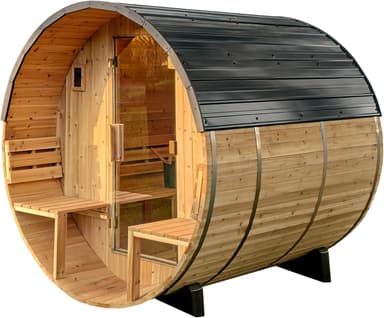
Backyard Discovery Paxton 2-4 Person Cedar Barrel Sauna
- 9kW heater reaches 170°F roughly 50% faster than budget competitors
- Barrel design eliminates dead zones with superior natural heat convection
- HDPE cradles and galvanized steel roof built for genuine year-round outdoor use
For larger groups or households that want more interior space, Canadian red cedar models in the 6-person range deliver exceptional thermal performance with lower conductivity cedar walls.
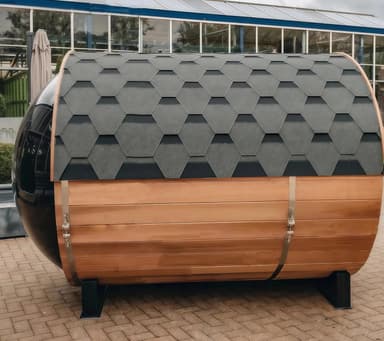
Panoramic 6-Person Canadian Red Cedar Barrel Sauna
- Triple waterproofing system meaningfully outperforms single-layer barrel competitors
- Barrel design circulates heat evenly and reaches 195°F in 30 minutes
- Canadian red cedar construction resists humidity-driven warping reasonably well
If you want maximum capacity with the traditional barrel form factor and are willing to invest in a premium build, the TOULE 6-8 Person Canadian Red Cedar Barrel Sauna represents the upper end of this category.
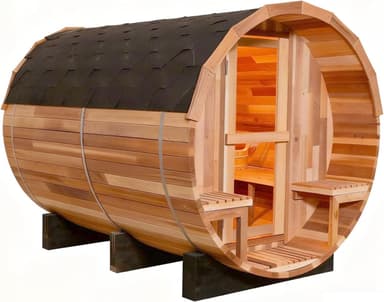
TOULE 6-8 Person Canadian Red Cedar Barrel Sauna
- Barrel shape eliminates uneven heat and shortens warm-up time noticeably
- Canadian Red Cedar resists moisture, rot, and handles temperature swings well
- Triple waterproofing system is more thorough than most competitors offer
Wood Selection and Long-Term Durability
The wood your sauna is built from affects thermal performance, longevity, and maintenance requirements over a 10-15 year ownership horizon. Western red cedar is the industry standard for outdoor traditional saunas for good reason: it has thermal conductivity of 0.08 W/mK (meaning it stays cool enough to touch even at 185°F interior temperatures), contains thujaplicins - natural antifungals that resist rot without chemical treatment - and produces that characteristic aromatic compound that most people associate with a sauna experience. Cedar costs $8-12 per board foot at retail.
Hemlock is the common step-down: $5-7 per board foot, dimensionally stable, but without cedar's natural rot resistance. It performs well in indoor installations or sheltered outdoor locations with proper maintenance. Thermowood - spruce or pine treated through a heat modification process at 212°F that drives off moisture and reorganizes the cellular structure - offers 50% less moisture absorption than untreated wood, fungal resistance rated Class 1, and dimensional stability of ±0.5%. Thermory and Almost Heaven use Thermowood in several barrel sauna lines, and it is an excellent compromise between cedar's performance and hemlock's price.
For more guidance on matching wood type and heater configuration to your specific outdoor setup, our best electric heater barrel saunas guide covers the leading models in detail.
Running Costs Over Five Years
At 4 sessions per week (a frequency with documented cardiovascular benefit based on the Laukkanen data 4):
Traditional sauna (6 kW heater, 45-minute preheat + 20-minute session, $0.16/kWh):
- ●Per session: approximately $1.10
- ●Annual: approximately $230
- ●5-year total running cost: approximately $1,150
- ●Plus stones replacement ($100 every 5 years), heater element ($200-400 if needed after warranty)
Infrared sauna (2 kW steady draw, 15-minute preheat + 40-minute session):
- ●Per session: approximately $0.40
- ●Annual: approximately $85
- ●5-year total running cost: approximately $425
- ●Plus heater panel replacement risk (carbon panels delaminate in approximately 20% of budget units within the first year; premium Clearlight/Sunlighten heaters rated to 30,000 hours)
The 5-year operating cost differential of approximately $725 is real but secondary to the purchase price differential for most buyers. Where running cost matters most is in high-frequency use scenarios - daily sauna users who sustain 7-session-per-week protocols will see the gap widen meaningfully over a decade.
Protocols - How to Use Each Type for Maximum Benefit
Knowing which sauna to buy is only half the equation. The research on both traditional and infrared clearly shows that frequency, duration, and temperature interact to determine outcome magnitude. There is no universal "right" protocol, but the evidence strongly suggests certain parameters for specific goals.
Traditional Sauna Protocols by Goal
Cardiovascular longevity (based on Laukkanen 2015 4): 4-7 sessions per week, 15-20 minutes per session at 174-195°F (79-90°C). The dose-response in the Kuopio cohort was clear - 2-3 sessions weekly reduced CVD mortality by 24%, 4-7 sessions by 50%. Frequency matters more than any single session duration.
Athletic recovery (based on Hussain and Cohen 2018): Single 20-minute session at 176-190°F within 2 hours post-training. The HSP70 response peaks 4-6 hours after heat exposure, which means afternoon training plus early evening sauna captures the recovery window effectively.
Heat acclimation: 5-10 consecutive daily sessions at 176°F (80°C) increase plasma volume approximately 17% and improve sweat efficiency by 20%. This is useful preparation for hot-weather athletic events. Traditional sauna achieves this adaptation faster than infrared due to greater cardiovascular strain per session.
Contrast therapy (Soberg 2023 protocol): 20 minutes at 176°F (80°C), 2-3 minutes cold plunge at 39-50°F (4-10°C), repeated for 3-5 cycles. This protocol drives the largest brown adipose tissue UCP1 response (+40%) and the greatest non-exercise adaptive thermogenesis increases (+15% energy expenditure). Traditional sauna is superior for this application because you need the higher heat stimulus to maximize the contrast response.
Infrared Sauna Protocols by Goal
Chronic pain and inflammation: 40-45 minutes at 130-140°F (54-60°C), 4-5 times per week. This mirrors the Tei et al. WAON protocol parameters and the Journal of Clinical Rheumatology RA study protocol. Allow 10-15 minutes warmup time before your core temperature begins rising meaningfully.
Cardiovascular rehabilitation (under medical supervision): 15 minutes at 140°F (60°C), 5 times per week. This is the WAON-CHF study design 1. If you are using infrared for cardiac rehabilitation, this protocol requires physician clearance and should not be self-directed for anyone with ejection fraction below 40% or unstable heart failure.
Post-workout recovery with far-infrared: 30 minutes at 130°F beginning 30-60 minutes after training. The Mero et al. 2015 study 2 showed this timing optimized neuromuscular recovery in strength athletes, with maximum voluntary contraction recovering faster than passive rest conditions.
First-Time User Protocols
For traditional sauna beginners: start at 150°F (65°C) for 10 minutes, exit, cool for 5 minutes, reenter if comfortable. Build to full temperature over 3-5 sessions. Monitor heart rate - stay below 160 bpm. Exit immediately if you feel dizzy, nauseous, or stop sweating.
For infrared beginners: start at 110°F (43°C) for 20 minutes. The lower temperature is genuinely more forgiving, but the dehydration risk is underestimated. Most first-time infrared users underdrink because the experience is not as intensely hot as expected.
Choosing Between Them - A Decision Framework Built on Evidence
After reviewing all the research, these are the scenarios where each modality wins clearly.
Choose Traditional Sauna If -
You are a healthy adult optimizing for longevity. The Laukkanen cohort data 4 is unambiguous. 4-7 traditional sauna sessions per week at 174°F+ is associated with the largest documented reduction in cardiovascular and all-cause mortality of any passive thermal intervention. No infrared data approaches this in scale or duration.
You want maximum HSP70 induction. The Patrick and Johnson 2021 3 synthesis shows traditional sauna at 194°F induces HSP70 at 150-300% above baseline. Infrared produces 70-120%. For the cellular protective mechanisms tied to aging, protein quality control, and mitochondrial protection, more heat stress produces more benefit in healthy individuals.
You are doing contrast therapy. The Soberg protocol requires genuine high-heat stress to maximize the cold exposure response. A 130°F infrared cabin followed by a cold plunge produces a smaller physiological contrast than 176°F traditional sauna followed by cold exposure.
You are an athlete focused on recovery. The Hussain and Cohen 2018 review shows traditional sauna reducing DOMS and CK levels more effectively than infrared subsets. The difference is approximately 40% larger effect size for traditional.
You have an outdoor space and want a lasting installation. A quality cedar barrel sauna with a Harvia electric heater will last 20-30 years with minimal maintenance. It adds genuine aesthetic and resale value to a property in a way that a prefab infrared cabin does not.
For buyers exploring premium traditional options with outdoor barrel configurations, our best premium barrel saunas guide covers the top-tier builds in detail across different size and wood configurations.
Choose Infrared Sauna If -
You have heat sensitivity or a cardiovascular condition that precludes high-temperature exposure. The WAON therapy research 1 provides clinical validation for infrared in cardiac rehabilitation. For CHF patients, RA patients, and heat-intolerant users, 130-140°F infrared is not a compromise - it is the right tool.
You cannot tolerate a 45-60 minute preheat window in your schedule. Infrared reaches therapeutic temperature in 10-20 minutes. If your available time blocks are 45-50 minutes total and you want a full 30-40 minute session, a traditional sauna's preheat makes that impossible. Infrared fits tighter schedules.
You rent your home or need portability. A one-to-two person infrared unit on a 120V standard circuit requires no installation, no electrician, and can move with you. A traditional sauna is a semi-permanent installation requiring dedicated electrical circuits and often a concrete foundation.
You want a lower operating cost over time. At 4 sessions per week, infrared costs approximately $85 per year in electricity versus $230 for traditional. Over 5 years, that gap is roughly $725 in your pocket.
Your primary goal is chronic pain management. Infrared's longer, lower-temperature sessions are mechanistically better suited to the anti-inflammatory protocols studied in RA and fibromyalgia research. The gentler thermal environment allows 40-minute sessions that would be unsafe or intolerable at traditional sauna temperatures.
The Research Gaps - What We Still Do Not Know
Intellectual honesty requires acknowledging where the evidence ends and where purchasing decisions necessarily involve uncertainty.
The most significant gap in this entire field is the absence of a large-scale, long-term randomized controlled trial comparing traditional and infrared sauna outcomes directly. The Laukkanen 2015 cohort 4 is observational - it cannot establish causation with complete certainty, and it was conducted in Finnish men who were already healthy enough to sauna bathe regularly (a selection bias the authors acknowledge). The infrared cardiovascular studies are mostly short-term interventions in specific patient populations (CHF, RA) that cannot be generalized to healthy adults.
Long-term toxin excretion through sweat has never been studied rigorously in either modality. The 5-to-20-year trajectory of infrared sauna use on any health outcome is simply unknown. Every infrared longevity claim extrapolates from short-term mechanistic studies - that is a scientifically legitimate starting point, but it is not the same as evidence.
Pediatric and elderly populations are nearly absent from the sauna research literature. The optimal protocol parameters for women (the Laukkanen cohort was entirely male), for different ethnicities with varying sweat gland density and thermoregulatory patterns, and for people on common medications are all underexplored.
The hybrid full-spectrum infrared saunas sold by Sunlighten and Clearlight - combining near-infrared photobiomodulation with mid-infrared and far-infrared thermal effects - have almost no independent research validating the specific combination. Each wavelength component has independent evidence (Hamblin et al. 2017 for near-infrared photobiomodulation, the WAON data for far-infrared cardiovascular effects), but whether combining them in a single session produces additive, synergistic, or interfering effects has not been tested.
The research trajectory is moving in a promising direction. The infrared evidence base is growing, and several ongoing trials are examining full-spectrum sauna protocols in healthy athletic populations. But in 2025, anyone telling you that infrared and traditional sauna evidence is equivalent in strength is not reading the same literature I am.
For a broader look at how sauna science is evolving and how to apply it to your specific situation, our complete guides library covers heat exposure protocols, cold contrast therapy, and sauna selection across all major categories and use cases.
Key Takeaways
- ●
The cardiovascular evidence strongly favors traditional sauna - the Laukkanen 2015 cohort of 2,315 Finnish men showed 4-7 sessions per week at 174-212°F cut CVD mortality by 50% and all-cause mortality by 40%. No comparable long-term mortality data exists for infrared.
- ●
Infrared sauna has real, documented therapeutic value - it just works through different mechanisms at lower temperatures (113-140°F). The WAON-CHF trial by Tei et al. 2016 showed far-infrared at 140°F improved cardiac index by 22% and reduced BNP by 40% in heart failure patients. For clinical populations who cannot tolerate high heat, infrared is not a compromise - it is the appropriate tool.
- ●
Heat shock protein response scales with thermal stress - the Patrick and Johnson 2021 meta-analysis found traditional sauna at 194°F drives HSP70 up 150-300%, while infrared at 131°F delivers a 70-120% increase. Both are meaningful biological signals. If maximum hormetic stress is the goal, traditional wins. If consistent, longer sessions are what you will actually do, infrared may produce better real-world adherence.
- ●
Running costs separate the two over a lifetime of use - traditional saunas draw 4.5-9 kW/hour with a 45-60 minute preheat, running $0.50-$1.50 per session. Infrared draws 1.5-3 kW/hour with a 10-20 minute preheat at $0.20-$0.60 per session. Over five sessions per week for a year, that difference is $78-$364 in electricity alone.
- ●
Installation requirements are not equivalent - a plug-and-play infrared unit fits in a 4x4 ft space on a standard 120V/15A circuit. A traditional sauna requires a 240V/30-60A dedicated circuit, often a concrete slab, and 45-60 minutes of preheat time before each session.
- ●
The infrared evidence base has a quality problem - most infrared studies run under 100 participants with short follow-up. Traditional sauna has a 20-year prospective cohort. Anyone claiming the two bodies of evidence are equivalent is not reading the literature carefully.
- ●
Neither modality has been tested head-to-head in a long-term RCT - every comparison in this article, including mine, is inference across separate study populations. That gap matters when choosing between them.
Who This Is For, Who Should Skip It
Who Gets the Most From Each Modality
Traditional sauna fits people who are in good cardiovascular health, want the strongest evidence base behind their sessions, and can tolerate 15-20 minutes at 170-200°F (77-93°C). Athletes chasing maximum hormetic adaptation, anyone following contrast therapy protocols (the Soberg et al. data on UCP1 activation used traditional sauna at 176°F paired with cold), and households in cold climates where the ambient warmth of a 200°F room has practical daily appeal - traditional is the right choice.
Infrared sauna fits people who are heat-sensitive, managing chronic conditions like heart failure or rheumatoid arthritis where prolonged high heat is contraindicated, or who want daily sessions without a 45-60 minute preheat commitment. The Masuda 2005 endothelial function data and the WAON-CHF trial were both conducted in clinical populations who specifically could not tolerate traditional temperatures. If you fall in that category, infrared is not the second-best option - it is the only evidence-backed option.
People new to sauna who want to build heat tolerance gradually, apartment dwellers with no 240V access, and anyone whose primary goal is consistent daily use over maximum intensity should also lean infrared.
Who Should Skip Sauna Entirely - or Consult a Doctor First
What to Read Next
If this comparison helped clarify which direction you are going, these guides take the next step from research into specific buying decisions.
Best Electric Heater Barrel Saunas - My hands-on review of the top barrel sauna models with electric heaters, covering wattage, preheat times, and which brands use genuine cedar versus hemlock at each price point.
Best Premium Barrel Saunas - For buyers who have decided traditional sauna is the right call and want to spend on quality - this guide covers the builds that hold heat at R-20+ insulation values and the models worth the investment over a 15-year lifespan.
All Sauna Guides - The full library covering heat exposure protocols, cold contrast therapy, sauna maintenance, EMF testing methodology, and category reviews across every major sauna type.
Frequently Asked Questions
Is infrared sauna actually the same as a traditional sauna?
No, and the distinction matters clinically. Traditional sauna heats the air around you to 170-200°F (77-93°C) using convective heat from a 6-9 kW electric or wood-fired heater, raising your core temperature through the environment. Infrared sauna emits far-infrared radiation at wavelengths peaking around 9.4 micrometers - close to the body's own thermal emission - penetrating skin 1.5-3 inches and raising core temperature more directly at ambient air temperatures of 113-140°F (45-60°C). The physiological endpoints overlap - both raise core temperature, both induce sweating and cardiovascular adaptation - but the mechanisms, intensities, and evidence bases are different enough that treating them as interchangeable misrepresents both the experience and the research.
Which sauna is better for cardiovascular health?
For healthy adults seeking cardiovascular protection, traditional sauna has significantly stronger evidence. The Laukkanen 2015 Finnish cohort study followed 2,315 men for over 20 years and found 4-7 weekly sessions at 174-212°F reduced fatal cardiovascular events by 50% compared to less than one session per week. No equivalent long-term mortality data exists for infrared. That said, for people with existing heart failure or reduced ejection fraction who cannot tolerate high heat, far-infrared has its own strong evidence: the Tei et al. 2016 WAON-CHF randomized trial showed 140°F far-infrared sessions improved cardiac index by 22% and reduced BNP by 40% in 260 CHF patients. The answer depends on your baseline health status.
Does infrared sauna penetrate deeper than traditional sauna?
Far-infrared radiation penetrates skin 1.5-3 inches, reaching subcutaneous tissue and superficial muscle. Traditional sauna heat penetrates primarily through conduction at the skin surface, with core temperature elevation driven by sustained systemic hyperthermia rather than direct tissue penetration. Near-infrared wavelengths (0.75-1.4 micrometers) penetrate even deeper than far-infrared and are cited in Hamblin's 2017 photobiomodulation research for subcellular effects on mitochondrial cytochrome c oxidase. In practical terms, far-infrared's depth of penetration is real but its therapeutic significance relative to traditional sauna's overall thermal load has not been established in head-to-head trials. Penetration depth is a meaningful physical difference. Whether it translates to meaningfully different clinical outcomes in healthy users remains an open research question.
How often should I use a sauna to see benefits?
The Laukkanen 2015 data identified a clear dose-response relationship for traditional sauna: 2-3 sessions per week reduced cardiovascular mortality by 24% versus infrequent use, while 4-7 sessions per week produced the 50% reduction. The WAON-CHF protocol used by Tei et al. ran 15 minutes per day, 5 days per week for two weeks in heart failure patients. For general health and heat adaptation in a traditional sauna, 4-7 sessions per week at 15-20 minutes each at 185-195°F is the protocol best supported by the evidence. Infrared protocols in recovery studies typically used 30-45 minutes at 130°F. The Mero 2015 study on far-infrared and neuromuscular recovery used 30-minute post-exercise sessions. Starting at 2-3 sessions per week and building tolerance before increasing frequency is the appropriate approach for new users.
Is infrared sauna safe for people with heart conditions?
The honest answer is: it depends on the specific condition and severity, and this is a decision that requires physician input, not an article. For stable chronic heart failure with reduced ejection fraction, the Waon therapy research - particularly Tei et al. 2016 and Masuda et al. 2005 - was conducted specifically in this population and showed improvements in endothelial function, flow-mediated dilation, and nitric oxide bioavailability at 140°F. These protocols were supervised by cardiologists. For acute cardiac events, uncontrolled arrhythmias, or severe aortic stenosis, neither modality is appropriate without explicit clearance. The lower temperature of infrared (113-140°F versus 170-200°F) reduces cardiovascular demand compared to traditional sauna, which is exactly why it was chosen for the heart failure trials. But "lower risk than traditional" does not mean "safe for all cardiac patients."
What is the difference in electricity cost between infrared and traditional sauna?
At the US residential average of approximately $0.16 per kWh in 2025, a traditional sauna drawing 6-9 kW costs $0.50-$1.50 per session including a 45-60 minute preheat. An infrared sauna drawing 1.5-3 kW with a 10-20 minute preheat costs $0.20-$0.60 per session. At five sessions per week over a full year, that is roughly $130-$390 per year for traditional versus $52-$156 for infrared. The gap compounds over the unit's lifespan - a quality cedar traditional sauna built to last 20 years will accumulate $1,560-$4,680 more in electricity than a comparable infrared unit. That math shifts if you buy a budget infrared unit with carbon panels that fail in 3-5 years and require replacement.
Can I use a sauna every day?
Daily sauna use is both safe and associated with greater benefits than less frequent use in the Laukkanen 2015 cohort data. The 4-7 sessions per week group showed stronger cardiovascular outcomes than the 2-3 sessions per week group, which outperformed less-than-weekly use. The practical constraints are hydration, time, and heat tolerance. Daily traditional sauna at 185-195°F requires active attention to fluid replacement - plan on 500-1,000 ml of water per session. Daily infrared at 130°F for 30-45 minutes carries lower physiological demand and is generally better tolerated for consecutive daily use. The population most likely to benefit from daily sessions - competitive athletes, people managing chronic pain or fatigue - are also the population for whom adequate recovery between sessions matters most. Listen to how your body responds over the first two to four weeks before committing to every-day use.
Sources and References
- Far-infrared saunas for treatment of cardiovascular risk factors
Beever R. Canadian Family Physician, 2009. - Effects of far-infrared sauna on recovery from training
Mero A, et al.. SpringerPlus, 2015. - Sauna use as a lifestyle practice to extend healthspan
Patrick RP, Johnson TL. Experimental Gerontology, 2021. - Association Between Sauna Bathing and Fatal Cardiovascular Events
Laukkanen T, et al.. JAMA Internal Medicine, 2015. - Repeated thermal therapy improves vascular endothelial function
Masuda A, et al.. J Am Coll Cardiol, 2005.
Frequently Asked Questions
There is no universally best sauna between infrared and traditional; the choice depends on your goals and tolerance for heat. Traditional saunas (70-110°C) provide intense thermal stress with the strongest evidence for cardiovascular health, longevity, and brain protection from long-term Finnish studies. Infrared saunas (40-60°C) excel for gentler daily use, pain relief, muscle recovery, faster heat-up, and energy efficiency, making them ideal for heat-sensitive users or longer sessions. Laukkanen et al.'s research supports traditional saunas' heart benefits, while infrared shows promise for fibromyalgia per user reports.
Related Guides
Medical Disclaimer - This article is for informational purposes only and does not constitute medical advice. Consult a healthcare professional before beginning any sauna routine.