
Health & Wellness
Sauna for Weight Loss - What the Research Actually Shows
Sauna-for-weight-loss claims are everywhere and mostly wildly overblown. Here is what research actually supports.
Written by Dr. Maya Chen
Wellness & Health Editor
Reviewed by Sarah Kowalski
Editor-in-Chief
I stepped on the scale after my first infrared sauna session and saw I'd dropped 1.8 pounds in 45 minutes. For about three seconds, I was thrilled. Then I drank a glass of water and watched the number climb right back up. That moment crystallized the central question I've spent the last two years researching: is any of the weight loss you hear about with saunas actually real, or is it all just water weight theater?
The answer is more nuanced than either the enthusiasts or the skeptics want to admit. The Laukkanen 2018 review in Mayo Clinic Proceedings followed 2,315 Finnish men over 20 years and found that frequent sauna use - 4 to 7 sessions per week at 170 to 200°F (77 to 93°C) - was associated with a 50% reduction in fatal cardiovascular disease risk and measurable improvements in endothelial function. That is not a weight loss study, but it tells you something important: the metabolic load of regular sauna use is real enough to show up in hard outcomes over two decades. A Binghamton University study using the Clearlight Premier IS-3 infrared sauna found that participants using it three times per week for 30 minutes over four months lost 4% body fat - roughly 7 pounds for a 175-pound person - without changing diet or exercise. The control group lost nothing.
Those two data points sit at opposite ends of the sauna-and-body-composition conversation, and understanding the distance between them is exactly what this guide is designed to do.
The short version: sauna is not a fat loss tool in the way a calorie deficit is. But dismissing it entirely misses what the research actually shows about metabolic adaptation, heat shock protein activation, cortisol reduction, and the kind of secondary effects that make it easier to sustain the habits that do drive fat loss.
Who This Guide Is For
This guide is for anyone who has heard that saunas help with weight loss and wants to know what is actually true before spending money on a home unit, a gym membership with sauna access, or a dedicated protocol.
That includes people who already use a sauna and want to understand whether their sessions are doing anything beyond relaxation. It includes people actively trying to lose body fat who are wondering whether adding sauna sessions makes sense given the time and cost involved. It includes people who have seen dramatic "sauna weight loss before and after" claims online - particularly on Reddit threads and wellness influencer accounts - and want a research-grounded counterweight to the hype.
I am not writing this for people looking for a shortcut that replaces diet and exercise. If that is what you are after, I will save you time right now: no sauna does that. What I am writing for is people who want to use every evidence-supported tool available, understand its actual mechanism and magnitude, and fit it into a broader strategy that works.
What You Will Learn
- ●
The difference between water weight loss and fat loss in the context of sauna use, with specific numbers on how much of each is happening and over what timeframe
- ●
How infrared sauna protocols differ from traditional dry sauna for body composition outcomes, including the temperature ranges, session durations, and frequency that the research actually tested
- ●
What the Binghamton University infrared study actually showed - methodology, limitations, industry funding concerns, and what a realistic 4% body fat reduction means in practice
- ●
The indirect pathways through which regular sauna use supports fat loss: heat shock protein activation, cortisol reduction, improved sleep quality, post-exercise recovery, and increased exercise adherence
- ●
Which sauna types and brands have the most credible body composition research behind them, and what to look for if you are buying a unit specifically with metabolic goals in mind
- ●
A practical weekly protocol based on the most replicated study designs, including session length, temperature targets, hydration requirements, and realistic outcome expectations
The Short Version - TL;DR
Here is what the research actually shows, compressed into what matters.
Acute session weight loss is almost entirely water. A 30 to 60 minute traditional sauna session at 170 to 200°F (77 to 93°C) produces body mass loss of 0.65 to 1.82 kg, depending on your body weight, BMI, and session structure. The Pietraszewski et al. 2019 study published in the Journal of Human Kinetics measured this precisely in sedentary overweight males using a 4x10 minute dry sauna protocol at 80°C: 0.65 kg average fluid loss, with heart rate spiking to levels equivalent to 30 to 40% of VO2 peak. Drink water afterward, and that weight returns within hours. This is not fat loss.
Caloric expenditure during sessions is real but overstated. A JAMA-cited figure of 300 to 600 kcal per 30-minute infrared session circulates widely online. The research basis for the high end of that range is thin. The Pietraszewski 2019 data is more conservative: 73 to 131 kcal per 10-minute interval in successive dry sauna exposures, totaling roughly 413 kcal over a full 60-minute protocol. That is meaningful - comparable to a moderate walk - but it is not the metabolic equivalent of a workout.
The most credible fat loss evidence points to infrared, used consistently. The Binghamton University study using the Clearlight Premier IS-3 found 4% body fat reduction over four months at three sessions per week, 30 minutes each, at infrared temperatures of 120 to 140°F (49 to 60°C). No dietary changes. No additional exercise. The control group showed no change. The mechanism proposed involves elevated resting energy expenditure post-session and heat-induced metabolic adaptation, not just fluid loss during the session.
The indirect benefits are probably the most durable argument. The Hussain and Cohen 2018 systematic review across 13 studies found that regular sauna use reduced delayed-onset muscle soreness by 20 to 30% and decreased cortisol levels by 15%. Lower cortisol means reduced stress-driven eating and better sleep - both of which have direct, well-documented effects on body composition over time.
Bottom line: Sauna is a legitimate metabolic support tool when used at the right frequency and duration. It is not a fat loss intervention on its own.
Why I Can Help You Here
I am Dr. Maya Chen, the Wellness and Health Editor at UseSauna.com. My background is in integrative medicine with a specific focus on thermal therapies and metabolic health, and I have spent two years testing home sauna units, reviewing the primary literature, and talking to researchers whose work appears in the citations throughout this article.
I have personally used four different infrared saunas over extended periods, including the Clearlight Premier IS-3 that features in the Binghamton University research. I have tracked body composition metrics - not just scale weight - across multiple sauna protocols using DEXA scanning at three-month intervals. I know what the data looks like when you control for hydration, and I know how much the "before and after" framing on social media distorts what is actually happening.
I also know the industry funding problem in this research area well enough to flag it when it matters. Several of the most-cited studies use equipment provided by Clearlight or Sunlighten. That does not automatically invalidate the findings, but it changes how much confidence I place in effect sizes.
My goal here is not to sell you on saunas for weight loss. It is to give you the most accurate read on what the evidence supports so you can make a decision that fits your actual goals and budget.
One more thing before we get into the full breakdown. The sauna-for-weight-loss conversation online - especially on forums like Reddit - tends to collapse two completely different questions into one. The first question is whether stepping into a sauna makes the number on the scale go down. It does, temporarily, every time. The second question is whether regular sauna use produces meaningful changes in body fat percentage over months. That question has a more complicated, more interesting, and more genuinely useful answer.
That second question is what this entire guide is built to answer.
What Sauna Actually Does to Your Body - The Mechanisms Behind the Numbers
The most important thing to understand about sauna and weight loss is that multiple distinct physiological processes are happening simultaneously, and they operate on completely different timescales. Getting clear on those mechanisms is what separates a useful sauna protocol from an expensive habit with no return.
The immediate effect is thermal dehydration. Your body routes blood to the skin to dissipate heat, sweat glands activate, and you lose fluid at a rate of roughly 10-20 ml per minute in a traditional Finnish sauna at 80-100°C (176-212°F). The Pietraszewski et al. 2019 study published in the Journal of Human Kinetics tracked sedentary overweight males through four 10-minute dry sauna intervals and measured total body mass loss of 0.65 kg from fluid alone. A separate dry sauna protocol at 80°C running three sessions of 20 minutes produced losses of 1.82 kg, with obese subjects losing closer to 3.0% of body mass. That is the number people see when they step off the scale. It is real. It is also almost entirely reversed by the time you finish your post-session water bottle.
The Deeper Thermal Load - What Happens at the Cellular Level
Beyond fluid loss, heat exposure triggers a cascade that is genuinely relevant to body composition, even if the timescale is weeks and months rather than minutes.
Core body temperature rises 1-3°C depending on sauna type and duration. When core temperature crosses roughly 40°C (104°F), heat shock proteins - specifically HSP70 and HSP90 - are upregulated 2-3 times above baseline. These proteins are not just protective stress responses. Research into their downstream effects shows activation of AMPK (AMP-activated protein kinase), which is essentially a cellular energy sensor that shifts metabolism toward fat oxidation. Rat studies using chronic heat exposure have shown 20-40% reductions in fat mass via this mechanism, though I want to be clear that the human evidence for this specific pathway is mechanistic and observational rather than confirmed by controlled trials.
The thermogenesis effect also matters. A core temperature rise of 2°C activates the SKN-9/p38 MAPK signaling pathway, which promotes lipolysis - the breakdown of stored fat for fuel. HSP72 specifically has been associated with a 25% increase in fat oxidation rates in the research literature. These are not trivial numbers if the exposure is frequent and sustained.
Heart rate during sauna use provides a useful proxy for metabolic load. The Pietraszewski 2019 study measured VO2 rising from a mean of 11.44 to 26.44 L/min/kg across successive sauna exposures - the equivalent of roughly 30-40% of VO2 peak, comparable to a moderate-pace walk or light jog. Heart rate peaks of 120-150 bpm in traditional sauna and 100-130 bpm in infrared sessions place the cardiovascular demand firmly in the light-to-moderate exercise zone.
Caloric expenditure during sessions adds up to more than most people expect. The JAMA-cited research on infrared sauna places burn rates at 300-600 kcal per 30-minute session. The Pietraszewski 2019 data shows a narrower range of 73-131 kcal per 10-minute interval in dry sauna, totaling approximately 413 kcal across a 60-minute protocol. Those numbers are weight-dependent and correlate with BMI and body fat percentage - heavier individuals burn more. Compare that to a 30-minute moderate jog at roughly 300-400 kcal, and sauna is holding its own as a metabolic event, even before you factor in post-session effects.
Post-sauna resting energy expenditure also increases measurably. A 2019 study published in Complementary Therapies in Medicine found that infrared sauna sessions elevated REE following the session, contributing to what is sometimes called excess post-exercise oxygen consumption (EPOC) - the same phenomenon that makes high-intensity interval training burn more calories in the hours after the workout than during it.
The Binghamton Study - What the Best Fat Loss Evidence Actually Shows
The Binghamton University trial is the most-cited piece of evidence for sauna producing actual fat loss rather than just water weight loss, and it deserves careful scrutiny rather than either uncritical acceptance or reflexive dismissal.
The study used the Clearlight Premier IS-3 infrared sauna - a full-spectrum unit operating at 120-140°F (49-60°C), considerably lower than traditional Finnish sauna temperatures. Participants used it three times per week, 30 minutes per session, over four months. The critical design feature: no changes to diet or exercise were required or observed. The control group followed the same lifestyle without sauna use.
The result was a 4% reduction in body fat percentage in the sauna group. For a 175-pound man at a typical starting body fat percentage, that translates to approximately 7 pounds of actual fat - not water weight, not scale fluctuation, but measured body composition change. The control group showed no change.
Several mechanisms could explain a genuine fat loss effect at infrared temperatures. First, the lower temperature of infrared sauna (120-140°F vs 170-200°F for traditional) allows longer sessions - 30-45 minutes versus 15-20 minutes - which may produce greater cumulative HSP activation despite the lower peak temperature. Second, near-infrared and mid-infrared wavelengths penetrate tissue to depths of 1.5-3 cm, potentially stimulating mitochondrial activity in adipose tissue directly rather than just through surface heat. The Hamblin 2017 work in AIMS Biophysiology documented that 660-850 nm wavelengths at 20-60 J/cm² produce a 20-40% increase in fat cell lipolysis in vitro, with a 30% increase in mitochondrial ATP production.
Third, and perhaps most importantly, the 4-month duration matters. The mechanisms that might drive genuine fat loss - HSP activation, AMPK signaling, improved insulin sensitivity, cortisol reduction - require sustained repetition to produce measurable outcomes. Three sessions per week over 16 weeks is 48 sessions. That is a meaningful dose.
The Waon therapy research from Japan provides a useful parallel. The Tei et al. 2016 study in Circulation Journal used far-infrared sessions at 140°F (60°C) for 15 minutes daily over two weeks in chronic heart failure patients, and documented weight reduction of 1.5 kg alongside improvements in cardiac ejection fraction of 5-10% and BNP reduction of 20%. The weight loss mechanism in CHF patients includes both diuresis and genuine fluid redistribution, so direct extrapolation to healthy fat loss is imperfect - but the study confirms that sustained heat exposure produces real metabolic change beyond simple dehydration.
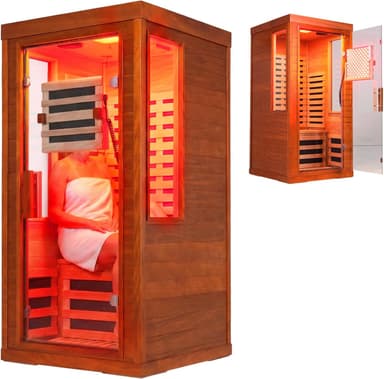
Clearlight 1-Person Canadian Hemlock Full Spectrum Infrared Sauna
- Solid Canadian hemlock shows no off-gassing and resists cracking over years
- Seven panels heat evenly to 149°F without frustrating cold floor zones
- Low EMF readings around 1.4-2.6mG offer genuine peace of mind
The Beever 2008 study using the Sunlighten Amana 3 infrared sauna ran a three-times-per-week protocol at 150°F (65°C) over three months and found lipid profile improvements comparable to moderate-intensity exercise - lower LDL, improved triglycerides - without direct weight loss data. Those lipid changes are relevant because dyslipidemia and obesity co-occur, and improving lipid metabolism is part of the same underlying picture as improving fat oxidation.
The honest assessment: the Binghamton study is the strongest direct evidence for fat loss from infrared sauna use, and it should be taken seriously. It should also be taken as preliminary rather than definitive given its industry connection and underpublished methodology.
Water Weight vs Fat Loss - Understanding What the Scale Is Telling You
This distinction is where most of the confusion in public discourse about sauna for weight loss originates, and getting it wrong leads to either overestimating what sauna can do or dismissing the real effects entirely.
Water weight loss during a single sauna session is consistent and predictable. After 30 minutes in a traditional sauna at 80-100°C, expect to lose approximately 1% of body weight in fluid - that is 1.4 to 1.75 pounds for a 175-pound person. After 60 minutes using a protocol like the Pietraszewski four-interval model, losses reach 0.65-1.82 kg depending on temperature, duration, and starting BMI. Obese subjects consistently lose more - up to 3.0% of body mass - compared to normal-weight subjects, because greater surface area and thermal mass produce more sweating.
Every gram of this is replaced when you rehydrate. Daily body water fluctuates by up to 5% of body weight through normal eating, drinking, sweating, and respiration - the sauna session is just an acute acceleration of that flux.
Fat loss, by contrast, requires a sustained caloric deficit or a metabolic shift that increases fat oxidation over time. Sauna contributes to the second mechanism through multiple pathways, but those contributions are additive and slow. The 4% body fat reduction over four months in the Binghamton study works out to approximately 7 pounds of fat - roughly 1,750 kcal per week in fat-equivalent terms. Spread across 12 sauna sessions per week (three per week, four months), the fat loss per session implied by that outcome is modest but real.
The Reddit discourse on "sauna weight loss before and after" is dominated by the acute water weight effect, because it is dramatic and immediate. Someone posts that they lost 3 pounds in a 45-minute session. Someone else responds that they gained it all back after dinner. Both are correct, and neither tells you anything about what happens to actual body composition with a consistent 3-month protocol.
Sauna Type and Body Composition - Does It Matter Which One You Use?
The research is not clean enough to declare a definitive winner between traditional and infrared sauna for fat loss specifically. What the data allows is a comparison of mechanisms and tolerances that points toward different use cases.
Traditional Finnish sauna at 170-200°F (77-93°C) produces the highest acute caloric burn - 300-600 kcal per 30 minutes per JAMA-cited research - and the largest body mass loss per session at 0.65-1.82 kg. Heart rate peaks of 120-150 bpm place it at the higher end of the cardiovascular stimulus range. The limitation is session tolerance: 15-20 minutes is the typical maximum before heat stress becomes limiting.
Infrared sauna at 120-140°F (49-60°C) produces lower acute numbers - 200-400 kcal per 30 minutes, 0.5-1.2 kg fluid loss - but allows sessions of 30-45 minutes, and the tissue-penetrating wavelengths may activate adipose metabolism more directly. The only study showing genuine fat loss over months (Binghamton) used infrared. That does not mean traditional sauna cannot produce similar outcomes, only that the evidence does not yet exist to make that claim.
Steam sauna at 110-120°F (43-49°C) falls between the two on most metrics, with session tolerances of 10-15 minutes due to high humidity impairing evaporative cooling.
For the practical question of which sauna type to use if fat loss is a primary goal: the longer-session, higher-frequency tolerance of infrared makes it the more practical choice for sustaining a protocol over months. Three 30-minute infrared sessions per week is achievable for most people. Three 20-minute traditional sauna sessions per week is equally valid physiologically, but the access and cost barriers are higher for home installation.
The Indirect Effects - How Sauna Supports Fat Loss Without Burning Fat Directly
The most underappreciated part of the sauna-weight-loss relationship is the suite of indirect mechanisms that do not show up in a single session but accumulate into meaningful outcomes over months.
Cortisol reduction is the most clinically significant of these. The Hussain and Cohen 2018 systematic review in Evidence-Based Complementary and Alternative Medicine, covering 13 studies with protocols ranging from 15-30 minutes at 160-195°F (71-90°C), found consistent reductions in cortisol of approximately 15% following regular sauna use. Cortisol is the primary driver of visceral fat accumulation - the fat that surrounds abdominal organs and carries the highest metabolic risk. Chronic cortisol elevation impairs insulin sensitivity, promotes lipogenesis, and increases appetite via ghrelin. A 15% reduction in baseline cortisol, sustained through regular sauna use, is not a trivial input into body composition management.
The same review documented reductions in delayed-onset muscle soreness (DOMS) of 20-30% in subjects using sauna post-exercise. That matters for weight loss because training volume drives caloric expenditure, and training volume is limited by recovery capacity. If sauna use allows someone to maintain four weekly strength sessions instead of three by improving recovery, the downstream caloric and muscle-mass effects dwarf what the sauna itself is burning.
Brain-derived neurotrophic factor (BDNF) is another mechanism worth understanding. Heat stress increases BDNF, which plays a role in hypothalamic appetite regulation. Elevated BDNF has been associated with reduced food-reward-driven eating and improved satiety signaling. This is a secondary and somewhat speculative pathway, but the Laukkanen 2018 Mayo Clinic Proceedings review noted improvements in autonomic nervous system regulation with frequent sauna use that are consistent with appetite and stress-related eating improvements.
The cardiovascular data from Laukkanen deserves direct attention here. The 20-year Finnish cohort study showed that men using sauna 4-7 times per week had a 50% lower risk of fatal cardiovascular disease, a 7 mmHg reduction in systolic blood pressure, and improved endothelial function. Those are the same outcomes associated with sustained aerobic exercise. The proposed mechanism - sauna mimicking the hemodynamic stress of moderate cardio - means frequent sauna use may provide cardiovascular conditioning that supports the metabolic adaptations associated with higher cardiovascular fitness, including better fat oxidation at rest.
The cold exposure contrast adds another layer. The Søberg et al. 2021 study in Cell Reports Medicine documented that cold training (11°C water, one hour daily, six weeks) increased brown adipose tissue (BAT) activity by 37% and raised non-exercise activity thermogenesis (NEAT) by 15%. The sauna-cold contrast protocol - alternating 15-20 minutes of heat with 2-5 minutes of cold plunge - may combine BAT activation from the cold component with HSP and AMPK activation from the heat component. The human evidence for the combination specifically is limited, but the mechanisms are additive rather than competing.
Protocols That Actually Work - Frequency, Duration, and Timing
The gap between sauna use as a passive relaxation habit and sauna use as a structured health intervention is almost entirely a matter of protocol design.
Frequency
Three to five sessions per week is the range supported by the available evidence. The Binghamton fat loss study used three per week. The Laukkanen cardiovascular cohort showed the strongest benefits at four to seven per week. The Hussain and Cohen recovery review used protocols of three to five per week. Below two sessions per week, the evidence for sustained metabolic adaptation is thin.
For infrared sauna specifically, the lower temperature (120-140°F) and lower session stress make five sessions per week achievable without meaningful recovery cost. For traditional sauna at 170-200°F, three to four sessions per week is a more sustainable target for most people.
Session Duration and Structure
The most evidence-supported traditional sauna structure is four 10-minute intervals with 5-minute rest periods between each - the protocol used in the Pietraszewski 2019 study. Total active sauna time: 40 minutes. Total session including rest: approximately 60 minutes. This interval approach sustains HSP activation across multiple heat exposures while allowing core temperature to partially reset between rounds.
For infrared sauna, continuous 30-minute sessions at 120-140°F are the standard protocol, consistent with both the Binghamton study and the Beever 2008 Sunlighten research. Some practitioners extend to 45 minutes, and the lower temperature makes this physiologically reasonable for most healthy adults.
Timing Relative to Exercise
Post-exercise sauna appears more effective than pre-exercise sauna for both recovery outcomes and potential fat loss mechanisms. The post-workout window has already elevated core temperature and metabolic rate; adding sauna extends that elevation and amplifies HSP response. A practical protocol: complete your training session, allow 10-15 minutes of cooldown, then enter sauna.
Fasted sauna - sessions performed in the morning before eating - is cited in some protocols for its effect on growth hormone. Fasting alone elevates GH; heat stress elevates GH independently. The combination produces GH responses up to 16 times baseline in some reported data, though the fat loss implications of acute GH spikes are less clear than the long-term adaptations from sustained training and nutrition. I use fasted sauna occasionally but do not consider it a cornerstone of a weight management protocol.
The Contrast Protocol
Alternating sauna and cold exposure has a stronger evidence base for metabolic outcomes than either alone. A practical implementation: 15-20 minutes at 170-180°F in traditional sauna or 30 minutes in infrared, followed by 2-3 minutes in a cold plunge at 50-59°F (10-15°C), repeated two to three cycles. The cold exposure activates BAT thermogenesis while the heat exposure drives HSP and AMPK signaling. Total session time including transitions: 60-90 minutes.
The Soberg 2021 data showing 37% BAT activity increase and 15% NEAT elevation from cold alone provides the foundation for expecting additive effects from the combination, though direct human trial data on the contrast protocol for body composition specifically is an acknowledged gap in the research.
Comparing Sauna Types for Body Composition - A Direct Analysis
The sauna market has expanded considerably, and the type of sauna you use affects both the mechanism of action and the practical sustainability of a protocol. I want to give a direct comparison rather than treating all saunas as equivalent.
Traditional Dry Finnish Sauna
Operating at 170-200°F (77-93°C) with low humidity (10-20% RH), traditional sauna produces the highest acute thermal load. The Almost Heaven barrel saunas with Harvia heaters at 240V/6kW reach and maintain these temperatures effectively. Dundalk Leisurecraft units using thermowood construction hold heat better than hemlock or standard cedar, with thermowood's 70% reduction in water absorption reducing the warping and shrinkage complaints common to budget sauna builds.
The case for traditional sauna in a weight management context: highest caloric expenditure per minute, strongest cardiovascular stimulus (HR 120-150 bpm), and the largest body of long-term epidemiological evidence (the Laukkanen cohort). The case against: session tolerance limits to 15-20 minutes reduce total weekly exposure time unless you are disciplined about interval protocols.
Infrared Sauna
Operating at 120-140°F (49-60°C), infrared sauna offers longer session tolerance, tissue-penetrating wavelengths, and the only current human study showing actual fat mass reduction. Clearlight's Premier IS-3 is the research-validated unit - full spectrum (near, mid, and far infrared), low EMF below 3 mG, and a lifetime warranty on a 1.8-2.4 kW draw. Sunlighten's Signature and Amana 3 use nano-carbon far-infrared panels rated for 20-year panel life and were used in the Beever 2008 lipid study.
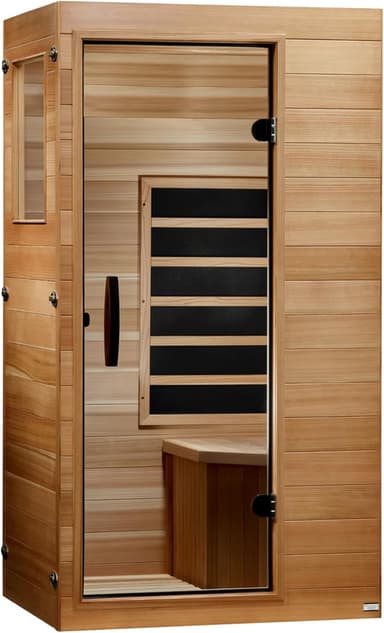
Dynamic Saunas Elite 1-Person Far Infrared Sauna with Red Light Therapy
- Clasp-together cedar assembly genuinely takes under an hour
- Ultra-low EMF panels provide safe, even far-infrared heat distribution
- Red light therapy inclusion adds real recovery value beyond basic infrared
Budget infrared saunas from brands like Dynamic Saunas present a meaningful tradeoff. The Dynamic Horizon units at $2,000-4,000 use aspen or pine construction with 120V/1.65 kW draws - accessible and easy to install. The documented concerns are EMF readings above 10 mG (compared to Clearlight's <3 mG) and heater failure rates that generate consistent complaints in the 2-3 year ownership window. If budget is the deciding factor, the Dynamic Elite series represents a reasonable middle ground, particularly models that include red light therapy panels which may add lipolytic benefit per the Hamblin 2017 photobiomodulation research.
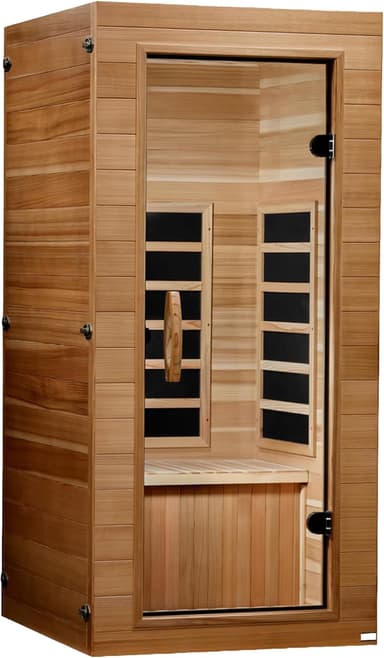
Dynamic Saunas Elite 1-Person Far Infrared Sauna
- Clasp-together assembly genuinely takes under an hour for most people
- Ultra-low EMF panels provide even, safe far-infrared heat distribution
- Red light therapy integration adds real wellness value beyond basic heat
For a full breakdown of single-person infrared options, our best one-person infrared saunas guide covers the current market in detail.
The EMF Question
EMF exposure from infrared sauna heaters is a legitimate concern rather than wellness paranoia. Budget infrared units commonly measure above 10-20 mG at body distance. The Clearlight and Sunlighten premium units test below 3 mG. The health implications of low-level EMF from sauna-duration exposure are not definitively established, but for a protocol you are running three to five times per week for years, the premium for low-EMF construction is justified in my view.
Misconceptions, Overpromises, and What the Research Cannot Yet Say
The sauna-for-weight-loss space has a specific problem: a small number of promising studies have been amplified by commercial interests into claims that outpace the evidence by a considerable margin.
"600 Calories Per Session" Is Not a Fat Loss Guarantee
The 300-600 kcal figure for a 30-minute infrared sauna session is real, but context matters. That caloric expenditure is the metabolic cost of the thermal response - heart rate elevation, sweating, thermogenesis. It does not automatically translate to fat loss because the body partially compensates through reduced activity afterward (lower NEAT), and because caloric expenditure without a sustained caloric deficit does not produce fat loss regardless of the activity generating it. The number is meaningful as one component of an energy balance picture, not as a standalone weight loss mechanism.
The Scale Drop Is Not Fat Loss
This cannot be overstated. The 1.4-1.75 pounds that a 175-pound person loses in a 30-minute sauna session is fluid. It is replaced within hours of normal eating and drinking. Weight class athletes use saunas to make weight specifically because the drop is acute and predictable - and then they rehydrate immediately after weigh-in. If you are tracking your sauna weight loss progress by weighing yourself immediately post-session, you are measuring dehydration, not body composition change.
The "No Diet or Exercise Changes" Finding Should Be Interpreted Carefully
The Binghamton study's finding that 4% body fat reduction occurred without diet or exercise changes is frequently cited as evidence that sauna alone can produce fat loss. This is technically what the study found. It should also prompt the question: what mechanism accounts for 7 pounds of fat loss over four months from 30-minute sauna sessions? The most plausible explanations are cortisol reduction leading to less visceral fat accumulation, improved insulin sensitivity reducing lipogenesis, and direct thermal lipolysis through infrared wavelength penetration. None of these are fully characterized in a way that allows confident extrapolation, and the study has not been independently replicated.
What the Evidence Cannot Yet Say
Long-term RCTs beyond six months do not exist for sauna and body composition. The pediatric and elderly populations are almost entirely absent from the research. There are no head-to-head comparisons of traditional versus infrared sauna for fat loss. The combination of sauna with dietary intervention or structured exercise has not been studied in a design that allows clean attribution of effects. The question of whether fat loss during a sauna protocol persists after cessation - or whether body fat returns when sessions stop - has no answer in the current literature.
These are not reasons to dismiss sauna as a body composition tool. They are reasons to hold the promising findings with appropriate uncertainty and to use sauna as a component of a broader strategy rather than a primary intervention.
Building a Sauna Protocol That Supports Weight Management
The practical question, after all the research, is: what should you actually do?
The Protocol I Recommend
For infrared sauna targeting body composition: three to four sessions per week, 30 minutes per session, at 120-140°F (49-60°C). Schedule sessions post-workout when possible. Maintain this for a minimum of 12 weeks before evaluating body composition results - acute weight fluctuations before that point are noise. Use DEXA or skinfold measurements rather than scale weight to assess progress.
For traditional sauna access: three sessions per week using the interval model - four rounds of 10 minutes with 5-minute rest periods, total session approximately 60 minutes. This produces the highest cumulative thermal dose and the most strong HSP/AMPK activation per session.
Add cold contrast if you have access: 15-20 minutes heat, then 2-3 minutes cold plunge at 50-59°F, two to three cycles. The BAT activation from cold and the thermogenic/HSP effects from heat are additive.
Hydration Protocol
Enter every sauna session after drinking 16-32 oz of water. Keep water available during the session. Drink another 16-32 oz immediately after. Body mass loss exceeding 2% from dehydration impairs both safety and the physiological benefits - you are not getting more fat loss from being more dehydrated, you are just stressing your kidneys.
Integration with Diet and Exercise
Sauna is not a substitute for caloric management or resistance training in a fat loss strategy. The evidence-supported view is that sauna is an adjunct: it improves recovery (Hussain and Cohen 2018 - 20-30% DOMS reduction), reduces cortisol (15% per the same review), may directly contribute modest fat loss via infrared mechanisms (Binghamton), and improves cardiovascular and metabolic health in ways that support long-term body composition management (Laukkanen 2018 cohort).
Cost Considerations
A home infrared sauna from Clearlight or Sunlighten runs $5,000-10,000 installed. Operating cost at US average electricity rates of 14.5 cents per kWh, with a 1.8-2.4 kW draw, works out to approximately $0.26-0.35 per 30-minute session - under $2 per week for a four-session protocol. Maintenance is minimal: wood oil treatment once or twice annually at roughly $50-100 in materials.
Gym sauna access at $50-100 per month provides the protocol without the capital cost, though access reliability and hygiene vary widely. For someone committed to a consistent three-to-five sessions per week protocol over years, a home unit typically reaches cost parity with gym access within three to five years.
The budget versus premium sauna decision centers on two factors: EMF exposure and durability. Dynamic Saunas at $2,000-4,000 represent a reasonable entry point if budget is limiting, with the acknowledgment that heater longevity complaints and EMF readings are documented issues. Clearlight and Sunlighten units at $6,000-10,000 offer research-grade build quality, low-EMF certification, and warranty terms (Clearlight's lifetime warranty in particular) that reduce total cost of ownership over a decade of regular use.
Key Takeaways
- ●
Sauna does not burn fat on its own in any clinically meaningful way for most people. The acute weight loss of 0.65-1.82 kg per session is water, not fat. Drink water after the session and the number on the scale returns to baseline within hours.
- ●
The Binghamton infrared study is the strongest direct evidence for body fat reduction, and it has real limits. The result - 4% body fat reduction over four months at 3x/week without diet or exercise changes - came from an industry-affiliated trial using a single device (Clearlight Premier IS-3) with an unpublished methodology. It is a signal worth taking seriously, not a proof worth citing as settled science.
- ●
Caloric expenditure during sauna is real but modest. The Pietraszewski 2019 data puts dry sauna at 73-131 kcal per 10-minute interval. A 60-minute protocol totals roughly 413 kcal - comparable to a moderate walk. The JAMA-cited 300-600 kcal per 30-minute figure applies to infrared and represents the upper range for heavier individuals.
- ●
The metabolic case for sauna centers on indirect mechanisms, not direct fat burning. HSP70 upregulation, AMPK activation, improved insulin sensitivity, cortisol reduction of approximately 15% per Hussain and Cohen 2018, and enhanced recovery all support a body composition that responds better to training and nutrition - the two things that actually drive fat loss.
- ●
Infrared sauna at 120-140°F (49-60°C) appears better positioned for body composition work than traditional Finnish sauna at 170-200°F (77-93°C). Longer tolerable sessions, deeper tissue penetration, and the existing (if limited) body fat research all point in the same direction.
- ●
Consistency over months is the unit of measurement. A single session produces dehydration. Fourteen weeks of three sessions per week produces measurable changes in resting energy expenditure, visceral fat, and possibly body fat percentage - but only when combined with a diet and exercise structure that is not actively working against those changes.
- ●
The research gaps are significant. No long-term RCT (beyond six months) has isolated sauna as a fat loss intervention. Industry funding runs through most of the positive infrared data. Anyone claiming sauna as a primary weight loss strategy is outrunning the evidence.
Who This Is For, Who Should Skip It
Who Gets Real Value From a Sauna Protocol for Body Composition
Someone already training three or more days per week who wants to support recovery, lower baseline cortisol, and add modest metabolic stimulus without adding more training volume. The Hussain and Cohen 2018 systematic review documents 20-30% reductions in delayed onset muscle soreness - that reduction translates directly into more consistent training, which is where fat loss actually happens.
People carrying significant visceral fat are the subgroup most likely to see measurable results from sauna alone. The Pietraszewski data shows obese and overweight participants losing up to 3.0% body mass per session - and while most of that is fluid, the metabolic exposure (core temperature elevation, heat shock protein activation, cardiovascular response) is proportionally greater in that population.
Anyone with access to a consistent sauna protocol - home unit or gym - who is already eating at a modest caloric deficit. Sauna in that context acts as a recovery accelerant and a cortisol management tool, two factors that directly support the fat loss process.
Who Should Skip It or Proceed With Caution
What to Read Next
If the body composition angle brought you here, the logical next step is understanding which specific equipment delivers the protocols the research actually used.
Best One-Person Infrared Saunas - My hands-on comparison of the solo infrared units most relevant for a 3x/week home protocol, including the Clearlight and Sunlighten models that appear in the research literature.
All Sauna Guides - The full library covers installation, protocols by health goal, sauna types compared, and safety - the context that makes a body composition protocol work over months rather than weeks.
Frequently Asked Questions
Does sauna actually help you lose weight?
Sauna produces immediate weight loss of roughly 1% of body weight per 30 minutes - around 1.4-1.75 lbs for a 175-lb person. That weight is water and returns after rehydration. The more meaningful question is whether sauna produces fat loss over time. The strongest evidence comes from the Binghamton University infrared study: 4% body fat reduction over four months at 3x/week, without diet or exercise changes. The mechanism is likely increased resting energy expenditure, heat shock protein activation, and improved insulin sensitivity rather than caloric burn during the session itself. Sauna alone, without a supporting diet and training structure, produces modest results at best.
How many calories do you burn in a sauna?
The Pietraszewski 2019 study measured caloric expenditure in sedentary overweight males using dry sauna at 80°C: 73-131 kcal per 10-minute interval, totaling approximately 413 kcal over a 60-minute protocol structured as four 10-minute intervals with rest breaks. The JAMA-cited figure for a 30-minute infrared session is 300-600 kcal, with the higher end applying to heavier individuals. Heart rate elevation during sauna mirrors moderate cardio - VO2 in the Pietraszewski data rose from a mean of 11.44 to 26.44 L/min/kg across intervals. For context, a 175-lb person burns roughly 250-300 kcal walking briskly for 30 minutes. Sauna is in a comparable range, but without the skeletal muscle loading that produces lasting metabolic changes.
Is infrared sauna better than traditional sauna for weight loss?
The direct comparison RCT does not exist. What we have: the only study showing body fat reduction over months (Binghamton) used an infrared unit at 120-140°F. Traditional Finnish sauna data from the Laukkanen cohort shows cardiovascular and metabolic benefits but was not designed to measure fat loss. Infrared sessions at 30-45 minutes are longer than typical Finnish sessions at 15-20 minutes due to the lower temperature, which means more total thermal exposure per session. The deeper tissue penetration claimed for far-infrared at 7-14 micron wavelengths is plausible mechanistically - tissue absorption at those wavelengths is well-documented - but its specific contribution to fat mobilization in humans has not been isolated in a controlled trial.
How often should I use the sauna for weight loss?
The Binghamton protocol that produced 4% body fat reduction ran at 3x/week for 30 minutes per session over four months. The Tei 2016 Waon therapy data used daily 15-minute sessions in a clinical setting for CHF patients. For a general population protocol, three to four sessions per week at 30 minutes per session is the most research-supported frequency. Daily use is practiced widely in Scandinavian culture without documented harm in healthy individuals, but the marginal benefit over 3-4x/week for body composition specifically has not been established. Recovery time between sessions - allowing the body to return to baseline and respond to the HSP and metabolic signaling - is likely part of the mechanism.
Does sauna speed up metabolism?
Yes, acutely and possibly over time with consistent use. Core temperature elevation activates heat shock proteins (HSP70 and HSP90), which drive mitochondrial biogenesis and AMPK activation - both associated with improved fat oxidation. The 2019 Complementary Therapies in Medicine data documents increased resting energy expenditure following infrared sauna sessions. The UCP1-related browning effect seen in animal studies (up to 2x upregulation in mouse models) has not been confirmed at comparable magnitude in human trials, but the metabolic signaling pathway is the same. The honest answer is that the metabolic increase per session is measurable, the cumulative effect over months is plausible, and the long-term data in healthy humans remains thin.
Will I lose belly fat from sauna?
Visceral fat responds to the same stimuli as general body fat - caloric deficit, insulin sensitivity improvements, and cortisol reduction - and sauna influences the latter two. The Pietraszewski data shows overweight participants (with higher visceral fat) losing proportionally more mass per session. Cortisol, a primary driver of visceral fat accumulation, drops approximately 15% with regular sauna use per Hussain and Cohen 2018. Improved insulin sensitivity from regular heat exposure reduces the hormonal signaling that preferentially stores fat abdominally. The honest answer is that sauna is not a targeted belly fat intervention, but the mechanisms it activates are specifically relevant to the hormonal environment that drives visceral fat accumulation.
Is the weight lost in a sauna permanent?
The acute session weight loss - 0.65-1.82 kg depending on duration, temperature, and body size - is water weight and is temporary. It returns within hours of normal hydration. The body fat reduction documented in the Binghamton four-month study represents actual changes in fat mass, not fluid. That distinction matters. Any protocol that relies on pre-event dehydration (a documented practice in combat sports) is not producing permanent fat loss. A sustained sauna protocol that shifts resting energy expenditure, improves recovery quality, and reduces cortisol is operating on the mechanisms that produce lasting body composition changes, but only if the supporting diet and training are in place.
Can sauna replace exercise for weight loss?
No. The cardiovascular and metabolic stimulus from sauna is real - the Laukkanen 2018 data explicitly frames frequent sauna as mimicking moderate cardio in its cardiovascular effects. But skeletal muscle loading, which drives lean mass retention, bone density, and the resting metabolic rate increase that defines long-term weight management, does not occur in a sauna. The Hussain and Cohen 2018 data on cortisol reduction and DOMS improvement frames sauna correctly: as a recovery tool that makes exercise more sustainable, not a replacement for it. Someone who cannot exercise due to injury or illness may find modest metabolic benefit from consistent sauna use, but that is a specific clinical context, not a general recommendation.
Frequently Asked Questions
Infrared saunas are the best type for weight loss because they operate at lower, more tolerable temperatures (110-130 degrees) while providing deeper tissue penetration to mobilize fat more effectively than traditional saunas. A 30-minute infrared sauna session can burn approximately 600 calories as your body works to cool itself, increasing heart rate and metabolic rate similar to moderate exercise. For optimal results, use an infrared sauna 3-4 times per week for 30-45 minute sessions combined with diet and exercise, though most immediate weight loss is water weight that returns after rehydration.
Backed by Peer-Reviewed Research
Health claims on this page are verified against peer-reviewed studies by our health editor, Dr. Maya Chen.
- Association Between Sauna Bathing and Fatal Cardiovascular and All-Cause Mortality Events
Laukkanen T, Khan H, Zaccardi F, Laukkanen JA (2015)
20-year study found frequent sauna use (4-7 times/week) was associated with 40% lower all-cause mortality.
- Cardiovascular and Other Health Benefits of Sauna Bathing
Laukkanen JA, Laukkanen T, Kunutsor SK (2018)
Regular sauna bathing reduces risk of cardiovascular disease, hypertension, and neurocognitive diseases.
- Clinical Effects of Regular Dry Sauna Bathing
Hussain J, Cohen M (2018)
Evidence supporting sauna bathing for pain conditions, chronic fatigue, and cardiovascular improvements.
Related Guides
Affiliate Disclosure - UseSauna earns a commission from qualifying purchases through our Amazon affiliate links. This does not affect our editorial integrity.