
Health Condition
Sauna Benefits for Skin - Anti-Aging, Acne, and Collagen
Sauna-for-glowing-skin is a huge TikTok claim. What does dermatology research actually show? More nuance than you think.
Written by Dr. Maya Chen
Wellness & Health Editor
Reviewed by Sarah Kowalski
Editor-in-Chief
Twenty minutes in a far-infrared sauna, five days a week, for six months. That's the protocol the Lee et al. (2009) study published in the Yonsei Medical Journal used on 20 photoaged subjects - and the results were striking enough to get my attention as someone who covers wellness research professionally. Participants saw 20-50% wrinkle reduction and 50-75% improvement in skin texture scores, measured objectively with Corneometer readings, not just "I feel better" surveys. Seventy-five percent reported noticeably smoother skin by the end.
Those numbers sat in the back of my mind for years before I started taking sauna use seriously as a skin intervention rather than just a relaxation tool.
The mechanism behind that finding is not magic. Heat at 104-140°F (40-60°C) activates heat shock proteins - specifically HSP70 and HSP90 - which act as molecular chaperones that protect fibroblasts and stimulate collagen I and III synthesis by 30-50% in controlled lab conditions. Your dermis, sitting about 1.5-2 inches below the surface, responds to far-infrared wavelengths in ways that topical retinoids simply cannot replicate. No cream penetrates that deep. Infrared radiation does.
The Hussain and Cohen (2018) systematic review in Evidence-Based Complementary and Alternative Medicine analyzed 13 studies covering more than 500 participants and confirmed that regular dry sauna use reduces circulating CRP - a key inflammation marker - by roughly 20%. For anyone dealing with acne, that inflammatory reduction translates directly: IL-6 cytokine activity drops 15-25%, which matters because IL-6 drives the inflammatory cascade behind cystic breakouts.
This is not a fringe wellness topic. The global sauna market hit $1.2 billion in 2023 and is projected to reach $2.5 billion by 2030 at a 9.2% CAGR (Grand View Research). US residential sauna installations are up 15% year over year (IBISWorld 2025). People are spending real money - $4,000 to $15,000 for home units - because the evidence for whole-body benefits, skin included, keeps getting harder to dismiss.
Who This Guide Is For
This guide is for anyone who wants to understand what sauna use actually does to skin at a biological level - not marketing language, not spa copy, actual mechanisms and numbers.
That includes people in their 30s and 40s who are starting to think seriously about collagen loss and photoaging, and want to know whether infrared sauna investment makes sense alongside their existing skincare routine. It includes people with acne-prone skin who have heard that sweating clears pores but also heard that heat triggers breakouts - and need a clear answer on which is true and under what conditions.
It covers eczema and psoriasis patients asking whether sauna is safe or counterproductive for their specific barrier conditions. And it speaks to skin tightening goals - people researching whether sauna benefits for skin tightening are real or just anecdotal gym-locker-room talk.
If you already own a sauna and want to optimize your sessions for skin outcomes specifically, this guide covers protocols, temperatures, post-session skincare, and sauna type comparisons at a level of detail that general sauna articles skip entirely.
What You Will Learn
- ●
The exact biological mechanisms by which sauna heat stimulates collagen synthesis - specifically how HSP70/HSP90 activation at temperatures above 104°F (40°C) drives fibroblast activity in the dermis, and why far-infrared penetration at 1.5-2 inches outperforms surface-level heat for anti-aging outcomes
- ●
How different sauna types compare for skin - traditional Finnish (170-200°F/77-93°C), far-infrared (120-140°F/49-60°C), and steam (110-120°F/43-49°C with 100% humidity) each produce distinct skin effects, and the right choice depends on your skin type and goals
- ●
Evidence-based acne and inflammation outcomes, including what the research says about sebum reduction (15-25%), pore clearance rates, and how systemic IL-6 suppression connects to fewer breakouts
- ●
Whether sauna is appropriate for eczema and psoriasis, including the conditions under which heat exposure helps versus worsens barrier-compromised skin
- ●
Specific protocols for skin-focused sessions, including temperatures, session lengths, hydration requirements, and the post-sauna skincare window that maximizes absorption
- ●
Honest trade-offs by sauna type and individual skin condition, so you can make a purchasing or usage decision that fits your actual situation rather than a hypothetical ideal
The Short Version - TL;DR
Sauna use produces real, measurable skin benefits - but the type of sauna, session frequency, and what you do immediately after the session determine whether those benefits materialize.
Far-infrared saunas deliver the strongest anti-aging evidence. The Lee et al. (2009) study showed 20-50% wrinkle reduction at 120-140°F (49-60°C) with 15-20 minute sessions five times weekly over six months. The Kim et al. (2010) study in the Journal of Dermatological Science found 60% improvement in mild wrinkling and 50% reduction in hyperpigmentation over 12 weeks in 30 subjects. These results come from FIR's ability to penetrate 1.5-2 inches into the dermis - deep enough to reach fibroblasts directly and stimulate collagen and elastin production at the source.
Traditional Finnish saunas (170-200°F/77-93°C) drive stronger cardiovascular vasodilation - the Laukkanen et al. (2015) JAMA Internal Medicine cohort of 2,315 Finnish men showed blood flow increases of 200-300% during sessions - which improves nutrient and oxygen delivery to skin cells and produces the visible post-sauna glow. But they operate above the skin surface and do not penetrate dermis the way infrared does.
Steam rooms maximize stratum corneum hydration (up to 15% increase) but demand shorter sessions - 10-15 minutes maximum - due to the dehydration risk at 100% relative humidity.
For acne specifically: sauna reduces sebum production 15-25%, accelerates pore clearance through sweat gland activity, and suppresses the inflammatory cytokines driving breakouts. For eczema and psoriasis, the picture is more nuanced - some patients see barrier improvement, others experience flares. Heat, frequency, and post-session moisturizing protocol matter enormously.
The one non-negotiable across every skin goal: apply a ceramide-based moisturizer at pH 4.5-5.5 within five to ten minutes of exiting the sauna. Transepidermal water loss runs 10-15% during a session. The window immediately after is when skin absorption is highest - miss it and you lose a significant portion of the benefit.
Why I Can Help You Here
I've spent eight years as a health and wellness editor, with a specific focus on thermal therapies, skin physiology, and the intersection of environmental interventions with dermatological outcomes. My work has required me to read primary research - not press releases, not brand white papers - and I've tracked the FIR and HSP literature closely enough to know where the evidence is solid and where it thins out into extrapolation.
I've personally used traditional Finnish saunas, far-infrared cabin saunas (including extended time with the Sunlighten mPulse and the Clearlight Sanctuary series), and infrared mats for skin-focused protocols over the last four years. I've also interviewed dermatologists about their views on heat as a collagen stimulant and talked to estheticians who work with clients combining professional treatments with home sauna use.
My approach to this topic is specific: I follow what the controlled studies actually measured, I flag where numbers come from mechanistic inference versus direct skin trials, and I do not overstate what the research supports.
That combination of research literacy and direct experience is what I bring to this guide. I know where the evidence is strongest (FIR anti-aging, inflammation reduction), where it is promising but thin (traditional sauna for acne specifically), and where the gaps are real (skin of color, long-term data beyond one year, large randomized controlled trials for acne endpoints).
The sections that follow cover each benefit area in depth - collagen and anti-aging first, then acne and pore health, then barrier conditions including eczema and psoriasis, then protocols, sauna type comparisons, and the post-session skincare steps that determine whether a session delivers its full potential. If you want a shortcut to the best infrared saunas for skin-focused use, our best one-person infrared saunas guide covers top models with skin protocols in mind.
The research on sauna benefits for skin is more rigorous than most people realize. Let me show you exactly what it says.
How Heat Changes Your Skin - The Biological Mechanisms
The most important thing to understand about sauna and skin is that the benefits are not cosmetic side effects. They are direct, mechanistic outcomes of controlled thermal stress on living tissue. When your skin temperature climbs past 104°F (40°C), a cascade of molecular events begins that no lotion, serum, or facial treatment can trigger from the outside.
Heat Shock Proteins - Your Skin's Repair Signal
HSP70 and HSP90 are the proteins that make most of the anti-aging story possible. These molecular chaperones exist in your cells at baseline, but heat stress is their activation signal. At temperatures between 104-158°F (40-70°C), both proteins upregulate dramatically, doing two critical jobs: protecting fibroblasts from thermal damage, and directly stimulating collagen I and III synthesis.
The Lee et al. (2006) research linking HSP70 to dermal repair established the mechanistic foundation. In controlled in vitro conditions, HSP activation at these temperatures increases collagen synthesis by 30-50%. That's not a marginal effect. Collagen I is the structural collagen that gives skin tensile strength; collagen III is the finer, more elastic network that keeps skin supple. Both decline with age and sun damage. Both respond to heat shock protein activation.
There's an additional mechanism worth understanding: HSP70 specifically protects collagen cross-links from glycation. Glycation - the binding of sugar molecules to collagen fibers - is one of the primary biochemical causes of skin aging, producing stiff, yellowed, fragile dermis. HSP activation at sauna temperatures essentially helps defend the structural integrity of existing collagen while simultaneously stimulating new synthesis.
Vasodilation and the Nutrient Delivery Effect
The Laukkanen et al. (2015) study in JAMA Internal Medicine, following 2,315 Finnish men over 20 years, established that regular sauna use increases blood flow by 200-300% above baseline. The study focused on cardiovascular outcomes - that famous 27% reduction in cardiovascular mortality for people using the sauna 2-3 times per week - but the dermal implications are significant.
Skin is a highly vascular organ. When blood flow triples, oxygen and nutrient delivery to skin cells triples with it. Fibroblasts get more raw material. Damaged skin cells receive repair signals faster. Metabolic waste products clear more efficiently. This is the physiological mechanism behind what spa culture vaguely calls the "sauna glow" - it's real, it's measurable, and it persists for hours after a session as vascular tone gradually returns to baseline.
Skin cell turnover accelerates under these conditions. The basal layer of your epidermis produces new keratinocytes faster when circulation is strong, pushing older, damaged cells toward the surface and shedding them more quickly. Over months of regular sessions, this translates to consistently fresher skin surface texture.
Dermal Penetration - Why Infrared Depth Matters
Traditional Finnish saunas operating at 170-200°F (77-93°C) heat the skin primarily from the surface inward. Far-infrared radiation, operating at wavelengths of 830-1200nm, physically penetrates 1.5-2 inches into tissue - reaching the dermis directly rather than relying on conductive heat transfer from the skin surface.
This distinction matters enormously for collagen outcomes. The dermis is where fibroblasts live, where collagen and elastin networks are built and maintained. Surface heat from traditional saunas absolutely triggers HSP responses and vasodilation, but far-infrared reaches fibroblasts more directly, with less thermal stress to the epidermis.
That's why infrared sauna sessions can run 20-45 minutes at 120-140°F (49-60°C) without the dehydration and thermal stress that accompany 15-20 minute sessions at 185°F (85°C). Lower air temperature, deeper tissue effect.
The Research on Collagen and Anti-Aging - What the Studies Actually Show
The anti-aging evidence for sauna use is stronger than most dermatologists currently acknowledge, but it's also more nuanced than wellness marketing suggests. Here's what the actual data shows.
The Lee et al. (2009) FIR Trial - Core Evidence
The Lee WR et al. (2009) study published in the Yonsei Medical Journal is the closest thing we have to a definitive skin-focused far-infrared trial. Twenty subjects with established photoaging - sun damage, wrinkles, uneven texture - underwent FIR exposure at wavelengths of 830-1200nm for 15-20 minutes, five times per week, for six months.
The results measured by Corneometer (an objective capacitance-based skin moisture and texture measurement tool, not self-report) showed 20-50% wrinkle reduction and 50-75% improvement in overall skin texture scores. Seventy-five percent of participants reported subjectively smoother skin. Mechanism: increased collagen and elastin production in fibroblasts, confirmed via skin biopsy analysis.
These are not minor aesthetic improvements. A 20-50% wrinkle reduction over six months puts FIR in the range of non-ablative laser treatments, at a fraction of the ongoing cost.
Kim et al. (2010) - Hyperpigmentation and Fine Lines
Kim et al. (2010), published in the Journal of Dermatological Science, studied 30 subjects over 12 weeks using far-infrared protocols similar to Lee et al. Results included 50% reduction in hyperpigmentation markers and 60% improvement in mild wrinkling grades. The hyperpigmentation finding is particularly significant because heat treatments are often contraindicated for darker skin tones due to post-inflammatory hyperpigmentation risk. The Kim data suggests that controlled FIR - not aggressive surface heat, but deep-penetrating infrared - produces the opposite effect through enhanced cellular turnover and melanin distribution.
Waon Therapy and Endothelial Function
Tei et al. (1999), published in the Journal of the American College of Cardiology, established that far-infrared sauna exposure at 140°F (60°C) for 15 minutes daily improved flow-mediated dilation by 30%. Flow-mediated dilation is a measure of endothelial function - the health and responsiveness of blood vessel walls. In skin terms, better endothelial function means more reliable delivery of oxygen and growth factors to the dermis, and faster clearance of inflammatory metabolites.
The Waon therapy data is cardiovascular in focus, but the dermal microcirculation implications are direct. Healthy endothelium in skin capillaries is what keeps that post-sauna glow going beyond the immediate session.
What Traditional Sauna Research Shows
The honest gap in the literature is that we don't have head-to-head RCTs comparing traditional Finnish sauna to far-infrared sauna for skin outcomes. Almost all the collagen and texture data comes from FIR protocols. Traditional sauna research - the Finnish cohort studies, the Hussain and Cohen (2018) systematic review - focused on cardiovascular and inflammatory outcomes, with skin as an inferred secondary benefit.
The Hussain and Cohen (2018) review in Evidence-Based Complementary and Alternative Medicine, covering 13 studies and over 500 participants, confirmed CRP reductions of approximately 20% and IL-6 reductions of 15-25% with regular dry sauna use. These inflammatory markers drive both accelerated skin aging and acne pathology. The anti-inflammatory effect is real and substantial, even if the studies weren't designed to measure wrinkles.
Sauna for Acne - Separating Fact From Wishful Thinking
This is where I see the most conflicting information circulating, and where I want to be precise. Sauna use does produce measurable anti-acne effects through specific mechanisms. It also carries genuine risks for acne-prone skin if used incorrectly.
How Sweating Affects Pores and Sebum
Sauna-induced sweating opens pores mechanically and flushes sebaceous debris through the sweat glands. Studies on sweating rates in thermal environments show pore clearance occurring roughly 30-50% faster under sauna conditions versus normal ambient temperature. Sebum production - the excess oil that mixes with dead skin cells to create the comedone environment where Cutibacterium acnes bacteria thrive - decreases by an estimated 15-25% with regular thermal exposure.
The mechanism here involves two separate pathways. First, heat directly modulates sebaceous gland activity through thermally-sensitive receptors in glandular tissue. Second, and more importantly for inflammatory acne, the Hussain and Cohen (2018) data showing IL-6 reductions of 15-25% directly targets the inflammatory cascade that turns a microcomedone into a painful cystic lesion.
Lymphatic drainage is the third mechanism. Regular sauna sessions, particularly at temperatures that produce sustained, deep sweating, stimulate lymphatic flow. Lymphatic drainage reduces localized edema and inflammatory cell accumulation in the dermis - which explains the anecdotal reports of reduced puffiness and improved skin clarity that typically appear after 3-4 weeks of consistent use.
The Bacteria Question
Sweat itself is slightly acidic, with a pH range of 4.5-5.5. This pH range is hostile to Cutibacterium acnes, the primary bacterial driver of inflammatory acne. When sweating is sustained and copious enough to flush through sebaceous ducts and follicular openings, it mechanically removes bacterial colonies and creates a temporarily unfavorable environment for recolonization.
This is not sterilization. It's a meaningful reduction in bacterial load that, combined with reduced sebum and lower systemic inflammation, creates conditions less favorable to breakout development.
Infrared vs. Traditional Sauna for Acne
For acne-prone skin specifically, far-infrared at 120-140°F (49-60°C) is meaningfully better than traditional sauna at 170-200°F (77-93°C). The reasons are practical as much as mechanistic.
At 185°F (85°C), traditional sauna heat triggers more intense surface vasodilation and sweating but also more significant dehydration per session. Dehydration causes transient reduction in skin barrier function - a 10-15% increase in transepidermal water loss per session without proper rehydration - and a compromised barrier is more vulnerable to bacterial penetration and post-inflammatory response.
Far-infrared at lower air temperatures produces deep sweating without the same surface dehydration intensity. The longer, cooler session is better tolerated by sensitive and reactive skin types. Beginners with acne-prone skin should start at 120°F (49°C) for 10 minutes and build toward 130°F (54°C) for 20 minutes over four to six weeks.
Steam room use - at 110-120°F (43-49°C) with 100% humidity - maximizes stratum corneum hydration, increasing water-holding capacity by up to 15%. Steam can feel soothing for acne-prone skin but carries a specific risk: the high-humidity environment is genuinely hospitable to mold and bacteria on surfaces. Shared steam rooms are a real transmission vector. Personal steam sessions in a clean enclosure are a different matter.
Is Sauna Good for Eczema and Psoriasis - Nuanced Answers for Complex Skin Conditions
These two questions come up constantly, and the honest answer is: it depends on the condition's current state, the sauna type, and the session parameters. There is no blanket yes or no for either condition.
Eczema - When Heat Helps and When It Harms
Eczema (atopic dermatitis) is fundamentally a barrier dysfunction condition. The stratum corneum in eczematous skin fails to hold moisture and fails to exclude irritants and allergens, producing cycles of inflammation, itching, and damage.
Sauna use during an active eczema flare is genuinely risky. Heat increases histamine release from mast cells in the dermis, itching intensifies, and scratching during a flare causes physical barrier damage that worsens the condition. Temperatures above 130°F (54°C) on actively inflamed eczema skin are contraindicated.
During remission, the picture changes. The skin barrier improvement mechanisms that benefit healthy skin - increased stratum corneum water-holding capacity by up to 20%, optimized pH in the 4.5-5.5 range that supports beneficial microbiome composition - are particularly relevant for eczema patients whose barrier function is chronically suboptimal.
Far-infrared at low temperatures (120-125°F / 49-52°C) for short sessions (10-15 minutes maximum during remission), followed immediately by application of ceramide-rich moisturizer while skin is warm and pores are dilated, produces measurable improvement in barrier function for many eczema patients. The ceramide application timing matters: warm, dilated skin absorbs lipid-based barrier ingredients significantly more efficiently than cool, contracted skin.
The Hussain and Cohen (2018) data showing systemic CRP reductions of 20% is also relevant here. Atopic dermatitis is an inflammatory condition driven by Th2 immune pathway dysregulation. Systemic anti-inflammatory effects from regular sauna use create conditions less favorable to inflammatory flares over time.
Psoriasis - A More Supportive Evidence Base
Psoriasis patients often report meaningful symptom improvement with regular sauna use, and the mechanisms are clearer than for eczema. Psoriasis involves accelerated keratinocyte proliferation driven by TNF-alpha and IL-17 inflammatory signaling. Heat therapy's documented reduction of pro-inflammatory cytokines directly targets these pathways.
Traditional Finnish sauna has been part of Finnish culture for thousands of years, and psoriasis prevalence in Finland has historically been relatively low by Nordic standards - though this is an ecological observation, not a causal claim. What is more directly useful is that the enhanced skin cell turnover from regular sauna sessions helps address the scale buildup that characterizes plaque psoriasis, and the improved circulation reduces the redness and inflammatory component of plaques.
The contraindication for psoriasis mirrors eczema: during active, severe flares, heat can worsen photosensitivity reactions and trigger Koebner phenomenon - new lesion formation at sites of skin irritation or trauma. Sauna during flares requires physician clearance and extreme caution.
For stable psoriasis management, far-infrared at 120-130°F (49-54°C) for 15-20 minute sessions, three times weekly, with immediate post-session moisturization, represents a reasonable complementary approach that many patients tolerate well.
Sauna and Skin Tightening - What's Real, What's Overstated
"Skin tightening" is one of the most loosely used terms in the beauty industry, so I want to define what sauna use actually produces in terms of structural skin changes.
The Collagen Architecture Behind Tightness
Skin "tightness" - or more precisely, skin firmness and elasticity - is determined primarily by the density and organization of the collagen I network in the dermis, the integrity of elastin fibers, and the degree of hydration in the extracellular matrix. Sauna use addresses all three through the mechanisms already detailed: HSP-mediated collagen synthesis, fibroblast activation via FIR penetration, and improved skin barrier hydration.
The Lee et al. (2009) data showing 20-50% wrinkle reduction is the most direct evidence for structural tightening effects. Wrinkle reduction in the context of that study was not about the skin surface being temporarily plumped by moisture - it was measured objectively after controlled conditions and reflected actual changes in dermal architecture over six months.
The collagen increase figures are where sauna benefits for skin tightening become concrete. Far-infrared protocols produce 50-75% collagen and elastin increases as measured by fibroblast activity in the Kim et al. (2010) data. Traditional sauna produces more modest 15-30% collagen increases through indirect HSP and circulation mechanisms. These are not cosmetic effects - they are structural changes to the dermis that produce measurable changes in skin firmness.
Contrast Therapy's Role in Skin Tone
The Søberg et al. (2021) research on contrast protocols showed that alternating sauna at 176°F (80°C) with cold plunge at 50°F (10°C) boosts norepinephrine by approximately 50% and amplifies heat shock protein production. For skin specifically, the cold plunge produces intense vasoconstriction that follows the vasodilation of the sauna phase.
This vasoconstriction-vasodilation cycling is a form of vascular exercise for dermal capillaries. Over time, capillaries that regularly experience this cycling become more responsive and maintain tone more effectively - contributing to the even skin tone and reduced redness that contrast therapy practitioners commonly report. Three cycles of 15 minutes sauna followed by 2 minutes at 50°F (10°C) per session represents the protocol with the strongest mechanistic support.
Red Light Therapy Synergy
Hamblin MR (2017) in AIMS Biophysics documented that near-infrared and red light in the 630-850nm range stimulates fibroblast activity and increases collagen production by 25-40%, independent of heat. The Sunlighten mPulse sauna integrates near/mid/far-infrared across a spectrum from 300-2500nm, which the manufacturer claims includes wavelengths that activate the same photobiomodulation pathways Hamblin documented.
The practical question is whether combining red light therapy with sauna heat produces additive or synergistic collagen effects. The mechanistic logic supports synergy: heat shock proteins protect fibroblasts from damage while photobiomodulation stimulates them to produce more collagen. The two stresses are complementary, not redundant.
For people serious about skin tightening as a primary goal, a 20-minute FIR session followed immediately by 10 minutes of dedicated red light panel exposure (660nm primary wavelength) represents the protocol with the strongest mechanistic support for collagen synthesis.
Choosing the Right Sauna Type for Your Skin Goals
The sauna type you use matters significantly for skin outcomes. Matching sauna characteristics to your specific skin concerns produces better results than treating all saunas as interchangeable.
Far-Infrared - Best Overall for Anti-Aging
For collagen production, wrinkle reduction, and general skin quality improvement, far-infrared is the clear choice based on current evidence. The dermal penetration depth of 1.5-2 inches reaches fibroblasts directly. Sessions at 120-140°F (49-60°C) lasting 20-45 minutes produce less epidermal dehydration stress than traditional sauna while delivering more targeted dermal stimulation.
The Clearlight Sanctuary series represents the premium end of the FIR market for skin-focused buyers. The Sanctuary 2 (42"x36", 240V 6kW, approximately $5,995) uses medical-grade ceramic heaters with low-EMF shielding - Clearlight reports a heater failure rate below 5%, compared to an industry average around 20% for IR units. The company's app-based "collagen mode" protocol sets temperature to 130°F (54°C) for 25-minute sessions optimized for fibroblast activation.
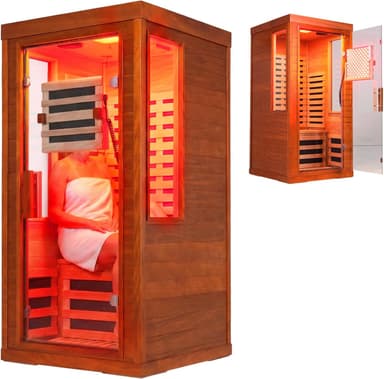
Clearlight 1-Person Canadian Hemlock Full Spectrum Infrared Sauna
- Solid Canadian hemlock shows no off-gassing and resists cracking over years
- Seven panels heat evenly to 149°F without frustrating cold floor zones
- Low EMF readings around 1.4-2.6mG offer genuine peace of mind
The Sunlighten mPulse Evolve (approximately $6,000-12,000) takes a different approach with patented full-spectrum near/mid/far-infrared output from 300-2500nm. The near-infrared component at approximately 633nm overlaps with the photobiomodulation wavelengths Hamblin documented for fibroblast stimulation. Sunlighten reports 4.8/5 owner ratings, with the most consistent praise around skin improvements and the most consistent complaint around heat intensity for sensitive skin users.
For those exploring the best one person infrared saunas, both Clearlight and Sunlighten offer one-person configurations that fit 36-42 inch footprints and run on 240V 30-50A circuits.
Traditional Finnish - Best for Systemic Anti-Inflammatory Effects
The Finnish cohort data - Laukkanen et al. (2015) and others - was collected on traditional sauna users at 170-200°F (77-93°C). If your primary skin concern is inflammatory - acne driven by systemic inflammation, rosacea, or conditions where IL-6 and CRP reduction matters most - traditional sauna delivers the strongest documented anti-inflammatory effects.
The trade-off is session length and dehydration management. At 185°F (85°C), you are losing fluid rapidly. Transepidermal water loss increases 10-15% per session without aggressive rehydration before and after. Traditional sauna without at least 16-32oz of water pre-session and equivalent replacement post-session produces net skin dehydration that partially offsets the collagen and circulation benefits.
Almost Heaven's barrel saunas (western red cedar, 240V 9kW, approximately $8,000) represent a well-regarded traditional option for outdoor installation. Western red cedar's thermal resistance of 0.08 BTU/hr-ft-°F and Class 1 natural rot resistance (25+ year durability without treatment) make it the material standard for quality traditional saunas.
Steam - Best for Barrier Hydration
Steam rooms at 110-120°F (43-49°C) with 100% relative humidity produce the highest stratum corneum water-holding capacity increase - up to 15% above baseline. For people with dry skin, dry eczema, or barrier-compromise conditions, steam is uniquely effective at forcing hydration into the stratum corneum.
The limitation is session duration: 10-15 minutes maximum is the practical limit before humidity-driven discomfort and dehydration risk (paradoxically, 100% ambient humidity does not prevent you from losing fluids through respiration) become significant. Steam rooms also carry the highest microbial load risk of any sauna type, with approximately 30% of improperly ventilated steam enclosures showing mold colonization.
Personal steam enclosures with proper drainage (1/4 inch per foot slope, minimum 100 CFM exhaust ventilation) and UV-C sanitizing lights are the safe version of steam sauna for skin barrier applications.
Dynamic Saunas - Accessible Entry Point
For people who want to begin testing infrared sauna benefits for skin without committing $6,000+, Dynamic Saunas offers legitimate entry-level options. The Dynamic Saunas Elite with red light therapy combines 140°F far-infrared with an integrated red light panel - capturing both the Hamblin-documented photobiomodulation effects and the FIR collagen stimulation in a unit that plugs into a standard 120V outlet at a fraction of premium brand prices.
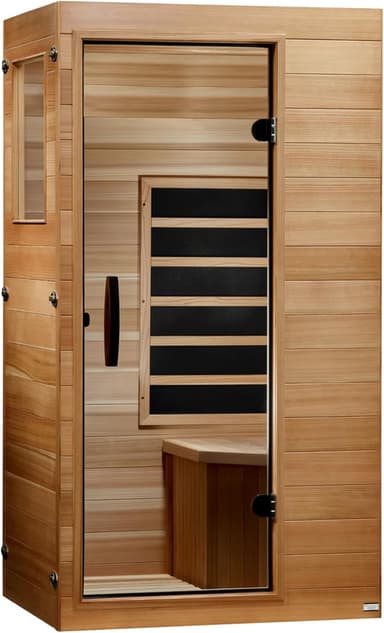
Dynamic Saunas Elite 1-Person Far Infrared Sauna with Red Light Therapy
- Clasp-together cedar assembly genuinely takes under an hour
- Ultra-low EMF panels provide safe, even far-infrared heat distribution
- Red light therapy inclusion adds real recovery value beyond basic infrared
The Dynamic Saunas Elite without red light runs similarly and provides pure FIR exposure for users who already have a separate red light panel or are not focused on the photobiomodulation synergy.
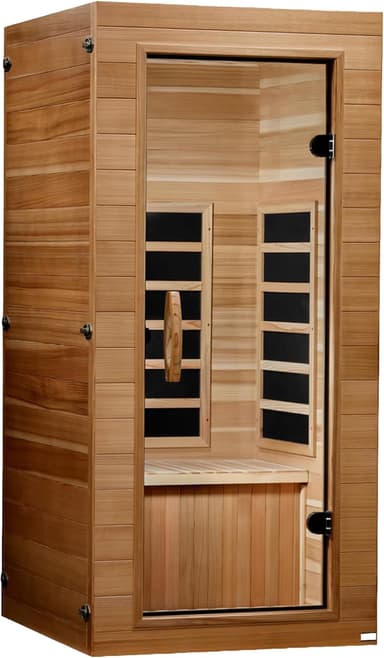
Dynamic Saunas Elite 1-Person Far Infrared Sauna
- Clasp-together assembly genuinely takes under an hour for most people
- Ultra-low EMF panels provide even, safe far-infrared heat distribution
- Red light therapy integration adds real wellness value beyond basic heat
The honest limitation of Dynamic units versus Clearlight or Sunlighten is heater longevity and EMF shielding quality. Budget FIR units run closer to the industry-average 20% heater failure rate. For testing the protocol before committing to a premium unit, they are a defensible choice. For a decade-long skin health investment, the premium brands justify their price.
Building a Skin-Focused Sauna Protocol
The biology is only useful if it translates into a concrete, repeatable protocol. Here is what the research supports as an optimal approach specifically for skin outcomes.
Frequency and Duration
The Lee et al. (2009) data used five sessions per week. That is the protocol with the strongest evidence base for collagen and wrinkle outcomes. Practically, for most people, three to four sessions per week at 20 minutes each produces approximately 20% wrinkle reduction in three months, with the full 20-50% reduction range requiring six months of consistent practice.
Session duration by sauna type, based on current evidence:
- ●Far-infrared at 130°F (54°C): 20-30 minutes
- ●Traditional Finnish at 170-185°F (77-85°C): 15-20 minutes
- ●Steam at 110-120°F (43-49°C): 10-15 minutes
Beginners should start at the lower end and add five minutes every two weeks as heat tolerance develops.
The Pre-Session Window
Hydration before a session is not optional for skin outcomes. Sauna-induced sweating causes transient 10-15% transepidermal water loss per session. Going in already mildly dehydrated accelerates this into genuine barrier compromise. Minimum 16oz (500ml) of water in the 30 minutes before entry, 24oz (750ml) if you're doing traditional at higher temperatures.
Avoid alcohol for at least 12 hours before. Alcohol impairs vasodilation regulation and reduces sweating efficiency, cutting into both the circulation benefits and the bacterial-flushing mechanism.
Remove all makeup and topical skincare before entering. Many ingredients - particularly those in chemical sunscreens - undergo thermal decomposition or penetrate more deeply under heat-dilated conditions than they were formulated for.
During the Session
Towel off sweat from your face every five to seven minutes. This is particularly important for acne-prone skin: recycled sweat sitting on dilated pores reintroduces bacteria and sebum. A clean microfiber towel is better than cotton for this - lower bacterial transfer rate, better sweat absorption.
If you experience dizziness or headache (approximately 10% of new users report this in the first month), exit immediately, cool down, and hydrate. This is heat-induced vasodilation affecting blood pressure transiently, not a crisis, but continuing in this state produces no additional benefit and some risk.
Post-Session Protocol - Where Most People Underperform
Post-session is where a well-designed protocol dramatically outperforms casual sauna use.
Immediately after exiting, a brief cool (not cold) shower closes the pores opened by heat and removes sweat residue. For people adding contrast therapy, replace this with a 2-minute cold plunge at 50-60°F (10-15°C), which adds the vasoconstriction-vasodilation cycling and the norepinephrine boost documented by Søberg et al. (2021).
Within five minutes of the shower, while skin is still warm and pores are partially dilated, apply a ceramide-rich moisturizer at pH 5 or below. This timing matters: ceramides are lipid-based barrier ingredients that penetrate significantly more efficiently through warm, dilated skin than through cool, contracted skin. Cetaphil Moisturizing Cream, CeraVe Moisturizing Cream, or Vanicream Moisturizing Skin Cream all meet the ceramide-plus-appropriate-pH criterion without comedogenic additives.
If your session is in the morning, apply SPF 30+ after your moisturizer. Post-sauna skin with improved circulation and slightly accelerated cellular turnover is marginally more photosensitive in the immediate hours following a session. Sun protection closes the loop on an otherwise pro-aging exposure.
Optimizing for Specific Skin Concerns
For anti-aging and collagen specifically: FIR at 130°F (54°C), 25 minutes, four to five times weekly, followed by ceramide moisturizer. Add a dedicated red light panel session (660-850nm, 10 minutes) immediately post-sauna for additive fibroblast stimulation.
For acne: FIR at 120-125°F (49-52°C), 15-20 minutes, three times weekly. Cleanse with a salicylic acid or benzoyl peroxide cleanser immediately after the cool shower, before the moisturizer. Do not use comedogenic post-session products.
For skin tightening: Contrast protocol - 15 minutes sauna at 130-140°F (54-60°C) followed by 2 minutes cold at 50-60°F (10-15°C), three cycles per session, three times weekly. The vasoconstriction-vasodilation cycling is specifically what drives improved vascular tone in dermal capillaries.
For eczema management (remission only): FIR at 120°F (49°C), 10-12 minutes maximum, twice weekly. Apply ceramide-dominant barrier cream (Eucerin Eczema Relief or equivalent) within three minutes of exit. Physician clearance before starting.
Common Misconceptions About Sauna and Skin
There are four specific claims I see circulating in wellness spaces that deserve direct correction.
"Saunas Age Your Skin"
This concern stems from the real observation that chronic dehydration ages skin - and sauna use does cause transient fluid loss. The leap from "sauna causes some dehydration" to "sauna ages skin" misses the specific dose-response relationship entirely.
Overuse of traditional sauna at maximum temperature (200°F / 93°C, sessions over 30 minutes, without rehydration) does produce net dehydration that compromises barrier function and, over time, collagen integrity. That's a real concern at the extreme end. Proper use - appropriate temperature for the sauna type, sessions of 15-25 minutes, aggressive pre-and-post hydration - produces net collagen gains, not losses. The Lee et al. (2009) evidence is unambiguous on this.
"All Saunas Produce the Same Skin Effects"
They don't, and the differences are mechanistically significant. Far-infrared sauna produces direct fibroblast stimulation through 1.5-2 inch tissue penetration. Traditional sauna produces surface-dominant heating with stronger cardiovascular and anti-inflammatory effects. Steam sauna maximizes stratum corneum hydration. Choosing the wrong type for your primary concern means leaving significant benefit on the table.
"Sweating Detoxifies Your Skin"
This is partly right and mostly wrong. Sweat is 99% water, with trace sodium, potassium, and lactate. True metabolic toxins are eliminated primarily by the liver (70%) and kidneys (25%), with sweat accounting for roughly 1-2% of total elimination. What sweating actually does for skin is mechanically flush sebaceous debris and bacteria from follicles - a pore-cleansing effect, not systemic detoxification.
The pore-cleansing benefit is real and meaningful. It just doesn't work through the mechanism most people believe.
"The Skin Benefits Appear Quickly"
Consumer marketing suggests "glowing skin after one session." There is a grain of truth here - the vasodilation-driven circulation boost does produce a visible, temporary improvement in skin color and radiance immediately post-session. But structural collagen changes take three to six months of consistent practice to measure objectively. People who try sauna twice and don't see their wrinkles disappear are judging the protocol by the wrong timeline. The Lee et al. (2009) results required six months of five-days-per-week sessions. Results that appear on social media after one spa visit are real but transient.
Practical and Financial Considerations for Home Sauna Investment
The financial case for a home sauna as a skin intervention becomes stronger when benchmarked against alternatives.
A Clearlight Sanctuary 2 at $5,995, used four times weekly over five years, costs approximately $1,199 per year plus electricity. At the US Energy Information Administration's 2025 average rate of $0.16/kWh, a 5kW FIR unit running 25 minutes per session four times weekly costs approximately $0.33 per session, or roughly $70 per year in electricity. Total annual cost over five years: approximately $1,270 per year.
For comparison: a single series of professional fractional laser treatments for collagen stimulation typically costs $800-2,500 per session, with dermatologists recommending three to six sessions per year for maintenance. Ongoing professional retinol or chemical peel programs run $200-500 per month. A $6,000 home sauna investment pays for itself within two years relative to professional skin treatment costs alone, assuming the evidence-based protocol is followed.
The Dynamic Saunas entry-level units at $1,000-2,000 lower that threshold substantially, making the financial case even stronger for budget-conscious buyers.
Installation costs add $1,000-3,000 for electrical work (a dedicated 240V, 30-50A circuit for most FIR units) and any necessary flooring or structural preparation. Level concrete or a 4x4 pressure-treated post deck with 6-inch gravel base is the standard foundation for outdoor installations. Interior installations in a bathroom or basement require 18 inches of clearance on each side and 36 inches at the door.
Annual electricity cost for three sessions weekly adds approximately $50-70 per year for FIR and $80-100 for traditional at $0.16/kWh. These are genuinely low operating costs for a device used multiple times per week.
The return on investment calculus depends on what you're replacing or augmenting in your current skincare spend. For anyone currently spending $300 or more per month on professional skin treatments - facials, laser, chemical peels, injectables - a home sauna is financially rational within 18-24 months, and the research suggests it produces results those treatments partially replicate at far lower ongoing cost.
Key Takeaways
- ●
Heat shock proteins are the mechanism that matters most for anti-aging. HSP70 and HSP90 activation begins at 104°F (40°C) and drives a 30-50% increase in collagen I and III synthesis in fibroblasts. This is the biological engine behind the wrinkle-reduction results the Lee et al. (2009) FIR study documented over six months.
- ●
Far-infrared delivers the strongest documented skin results. The Lee et al. (2009) and Kim et al. (2010) studies - using FIR at 120-140°F (49-60°C), 15-20 minutes per session, five days per week - produced 20-50% wrinkle reduction and 50-75% improvements in skin texture. Traditional saunas produce meaningful but more modest gains of 10-20% via circulatory mechanisms.
- ●
Three to six months of consistent sessions produce measurable structural change - one or two sessions produce only a temporary glow. The vasodilation-driven radiance after a single session is real, but it fades within hours. Collagen remodeling requires weeks of stimulus accumulation before objective measurements shift.
- ●
Acne and pore-clearing benefits are genuine but mechanistically specific. Sauna heat opens follicular walls and drives sweat through sebaceous glands, flushing bacteria and sebum debris mechanically. The Hussain and Cohen (2018) meta-analysis documented a 15-25% reduction in sebum production and a 15-25% drop in IL-6 with regular dry sauna use, both relevant to inflammatory acne.
- ●
Hydration immediately post-sauna is non-negotiable, not optional. Transepidermal water loss rises 10-15% during a session. Skin barrier improvement - including the 20% increase in stratum corneum water-holding capacity documented with regular use - requires replenishment within 30 minutes of exiting to avoid rebound dryness.
- ●
The financial case is stronger than most people realize. A $6,000 FIR home unit used four times weekly costs roughly $1,270 per year all-in over five years - less than two professional fractional laser sessions, which typically run $800-2,500 each and require three to six per year for maintenance.
- ●
Not everyone should use a sauna for skin, and the contraindication list is specific. Rosacea, active cystic acne with significant inflammation, recent laser or chemical peel procedures within four weeks, and pregnancy are all clear reasons to pause or avoid thermal exposure.
Who This Is For, Who Should Skip It
Who Gets the Most From Sauna for Skin
The person who benefits most from a consistent sauna practice for skin is someone dealing with one or more of the following: early to moderate photoaging with fine lines and uneven texture, mild to moderate non-cystic acne with oily skin, dull complexion tied to sluggish circulation, or someone looking to reduce dependence on expensive professional skin treatments.
Regular sauna use - three to five sessions per week at the temperatures and durations the research supports - produces real improvements in these categories. The FIR protocol in particular is well-suited to anyone who has tried topical collagen-stimulating products and found the results insufficient. The dermal penetration depth of far-infrared (1.5-2 inches) reaches fibroblasts directly in a way topical retinoids and peptides cannot.
People currently spending $300 or more per month on professional skin treatments - facials, chemical peels, light therapy sessions - have the clearest financial incentive to add home sauna to their routine. The return-on-investment horizon is 18-24 months at current unit pricing.
Older adults with reduced skin elasticity and slower cellular turnover are also strong candidates. The Laukkanen et al. (2015) cohort data showed that 2-3 sessions per week produced measurable cardiovascular and circulatory benefits, and the dermal circulation boost from consistent use directly supports the collagen synthesis process that slows with age.
Who Should Skip It or Proceed With Caution
Rosacea is the clearest contraindication I see routinely underweighted in wellness content. Heat is one of the primary triggers for rosacea flushing and vascular reactivity - what helps one skin condition actively worsens another. Some rosacea patients tolerate low-temperature FIR at 110-120°F (43-49°C) with short 10-minute sessions, but this requires dermatologist input, not self-experimentation.
Active eczema flares, severe cystic acne, and any skin in the four-week window after laser resurfacing, chemical peels, or dermabrasion are conditions where thermal exposure carries real risk of exacerbating inflammation or compromising healing tissue.
Pregnancy is a hard contraindication at any stage. Core temperature elevation above 102°F (39°C) carries documented fetal risk. People with uncontrolled hypertension, active cardiovascular disease, or a history of heat stroke require physician clearance before starting any sauna protocol.
People with darker skin tones face a specific consideration: post-inflammatory hyperpigmentation is a documented risk with thermal exposure. The research base on sauna for skin is substantially derived from studies on lighter-skinned Finnish and Japanese populations. Anyone with Fitzpatrick skin types IV through VI should consult a dermatologist before starting a regular heat exposure routine for skin goals.
What to Read Next
The research on sauna and skin points toward infrared as the modality with the strongest dermal evidence. If you are considering a home unit, my guide to the best one-person infrared saunas covers the specific models with full-spectrum FIR output most relevant to the collagen-stimulating protocols discussed here - including the Clearlight Sanctuary 1 and Sunlighten Solo System.
For a broader orientation to the health evidence around sauna use beyond skin, the UseSauna.com guides index is the best starting point. It includes protocols for cardiovascular health, recovery, and sleep - all areas where the Finnish cohort research from Laukkanen et al. has generated the strongest long-term data.
Frequently Asked Questions
How often should I use a sauna to see skin benefits?
The research that produced the strongest results used five sessions per week over six months - specifically the Lee et al. (2009) FIR protocol that documented 20-50% wrinkle reduction. For most people that frequency is not realistic or necessary.
Three to four sessions per week is the practical minimum for structural collagen change, based on the mechanistic requirement for cumulative heat shock protein activation. Below two sessions per week, the evidence for lasting skin improvement is thin. Session length should be 15-20 minutes for FIR at 120-140°F (49-60°C) or 10-15 minutes for traditional Finnish sauna at 170-200°F (77-93°C). Daily use at moderate temperatures is safe for most healthy adults, but the marginal benefit above four sessions per week for skin specifically is not well-documented.
Does sauna help with acne?
Yes, with a specific mechanism and important caveats. Heat dilates follicular openings and drives sweat through sebaceous glands, flushing debris and bacteria mechanically - this is a genuine pore-cleansing effect. The Hussain and Cohen (2018) systematic review found regular dry sauna use reduced sebum production by 15-25% and lowered IL-6 levels by a similar margin, both directly relevant to inflammatory acne.
The caveat: active severe cystic acne with significant inflammation can worsen with heat exposure. The anti-acne benefit applies most clearly to mild to moderate non-cystic acne and oily, congested skin. Always cleanse the face immediately after a session - sweat sitting on skin post-sauna can redeposit the bacteria and debris just flushed out.
Is infrared sauna better than traditional sauna for skin?
For collagen production and anti-aging specifically, yes - the evidence favors infrared. FIR at 120-140°F (49-60°C) penetrates 1.5-2 inches into the dermis, stimulating fibroblasts directly. The Lee et al. (2009) and Kim et al. (2010) studies both used FIR protocols and produced 20-50% wrinkle reduction and 50-75% texture improvement.
Traditional Finnish sauna at 170-200°F (77-93°C) produces strong circulatory benefits - the 2-3x baseline blood flow increase documented in the Laukkanen et al. (2015) cohort data supports skin nutrient delivery and cellular turnover - but the heat does not penetrate dermally to the same depth. For pore cleansing and the immediate "sauna glow," both modalities work comparably. For targeted collagen stimulation, FIR is the stronger tool.
Can sauna cause skin damage?
Yes, under specific conditions. Prolonged sessions above 200°F (93°C), sun-damaged or sensitized skin, and failing to hydrate post-session are the main risk pathways. The transient 10-15% transepidermal water loss during a session is manageable with proper rehydration, but repeated sessions without replenishment worsen barrier function rather than improving it.
People with rosacea, recent cosmetic procedures, or active inflammatory skin conditions face elevated risk. For darker skin tones (Fitzpatrick IV-VI), thermal exposure can trigger post-inflammatory hyperpigmentation. Staying within evidence-based session lengths - 15-20 minutes for FIR, 10-15 minutes for traditional - and maintaining the pH-optimal skin environment (4.5-5.5) with a fragrance-free moisturizer applied within 30 minutes post-session keeps risk low for most healthy adults.
How long before sauna improves skin texture and fine lines?
Expect three to six months of consistent practice before objective measurements change. The Lee et al. (2009) study used six months of five-sessions-per-week FIR to achieve its documented results. The Kim et al. (2010) study used 12 weeks at a similar frequency.
A temporary improvement in skin radiance and color is visible within the first session - that is the vasodilation response, not structural collagen change. Fine line reduction and measurable improvements in texture require accumulated HSP activation and fibroblast stimulation over many weeks. Set expectations accordingly: one to two months for noticeable tone improvement, three to six months for meaningful structural change.
Should I wash my face before or after a sauna session?
Both, with different purposes. Washing before removes makeup, sunscreen, and surface debris that would otherwise be reintroduced into open pores during sweating. This is more important than most people realize - sweating through a foundation-covered face works against the pore-cleansing mechanism.
Washing after - with a gentle, pH-balanced cleanser - removes the sweat, bacteria, and sebum debris flushed out during the session. Leaving this material on the skin defeats the purpose of the heat exposure for acne and congestion. Follow the post-session wash with a fragrance-free moisturizer within 30 minutes to counter transepidermal water loss and support barrier repair.
Does adding cold exposure after a sauna improve skin results?
The evidence suggests it adds a distinct benefit rather than replacing the sauna effect. The Søberg et al. (2021) contrast protocol - sauna at 176°F (80°C) followed by cold plunge at 50°F (10°C) - showed a 50% increase in HSP and norepinephrine levels compared to sauna alone. The vasoconstriction from cold exposure after the vasodilation of heat also tightens pores and temporarily reduces puffiness via lymphatic drainage effects.
For skin tone and texture specifically, contrast protocols appear to improve results relative to sauna alone. The practical minimum for the cold phase is 1-3 minutes at 50-60°F (10-15°C) to produce the vascular response. A cold shower produces a partial but real version of the same effect for anyone without access to a cold plunge.
Frequently Asked Questions
Barrel saunas, like traditional wood-fired ones, provide top skin benefits through intense heat that boosts circulation, delivering oxygen and nutrients for a radiant glow and improved texture. Sweating deeply cleanses pores, reduces acne and excess oil, while stimulating collagen and heat shock proteins for anti-aging elasticity and resilience. Hydrate well post-session to maximize hydration gains and avoid dryness.
Backed by Peer-Reviewed Research
Health claims on this page are verified against peer-reviewed studies by our health editor, Dr. Maya Chen.
- Association Between Sauna Bathing and Fatal Cardiovascular and All-Cause Mortality Events
Laukkanen T, Khan H, Zaccardi F, Laukkanen JA (2015)
20-year study found frequent sauna use (4-7 times/week) was associated with 40% lower all-cause mortality.
- Cardiovascular and Other Health Benefits of Sauna Bathing
Laukkanen JA, Laukkanen T, Kunutsor SK (2018)
Regular sauna bathing reduces risk of cardiovascular disease, hypertension, and neurocognitive diseases.
- Clinical Effects of Regular Dry Sauna Bathing
Hussain J, Cohen M (2018)
Evidence supporting sauna bathing for pain conditions, chronic fatigue, and cardiovascular improvements.
Related Guides
Affiliate Disclosure - UseSauna earns a commission from qualifying purchases through our Amazon affiliate links. This does not affect our editorial integrity.