
Health Condition
Sauna Benefits for Men - Testosterone, Recovery, Heart Health
The Laukkanen studies followed Finnish men for 20 years. Here is what they learned about sauna and male health.
Written by Dr. Maya Chen
Wellness & Health Editor
Reviewed by Erik Nordgren
Senior Sauna Reviewer
I want to open with the single most striking number from the research, then build from there.
Twenty years ago, a team of Finnish researchers began tracking 2,315 middle-aged men in Kuopio, Finland - following their health, their habits, and eventually, their deaths. The Laukkanen 2015 study, published in JAMA Internal Medicine, produced one of the most striking findings in modern preventive medicine: men who used a sauna 4-7 times per week were 40% less likely to die from any cause at all compared to men who went only once a week 1. Not 4% or 8% - forty percent. That is a mortality reduction that rivals many pharmaceutical interventions, and it came from sitting in a hot room.
The follow-up analysis, Laukkanen et al. 2018 in Mayo Clinic Proceedings, sharpened those numbers further 2. Men bathing 4-7 times weekly showed a 63% lower risk of sudden cardiac death, a 48% reduction in fatal coronary heart disease, and a 50% drop in cardiovascular mortality overall. The dose-response relationship held up: sessions longer than 19 minutes produced better outcomes than sessions under 11 minutes. The sauna, specifically the traditional Finnish variety running at 170-200°F (77-93°C), turned out to be one of the most well-documented longevity tools available to men - and most of us have never thought seriously about it.
I am not claiming sauna use is a cure or a replacement for exercise, medication, or good sleep. The Finnish cohort data is observational, and correlation is not causation. But when the same dose-response pattern appears across cardiovascular mortality, sudden cardiac death, and all-cause mortality in a 20-year longitudinal study of over two thousand men, that is evidence worth paying attention to carefully.
This article covers what the research actually shows about sauna benefits for men - the cardiovascular effects, the testosterone and hormone picture (which is more complicated than most wellness sites admit), the recovery science, and the practical protocols that separate real results from wishful thinking.
Who This Guide Is For
This guide is written for men who want to understand the actual physiology behind sauna use - not marketing copy, not bro-science.
If you are between 30 and 65 and thinking about adding sauna sessions to your recovery or cardiovascular routine, this covers the protocols that produce measurable results. If you are over 60 and specifically concerned about heart disease, I spend considerable time on the Finnish cohort data and the Waon therapy research from Tei et al. If you just finished a hard training block and want to know whether the sauna after your workout is helping or hurting your recovery, there is a full section on that too.
This guide is also for men who have been told sauna use "boosts testosterone" and want to know whether that claim holds up under scrutiny (short answer: the acute effect is actually a temporary dip, and the long-term hormonal benefits are indirect but real).
If you are dealing with a cardiovascular condition, I recommend reading this alongside your physician's guidance. The research is encouraging, but individual contraindications matter.
What You Will Learn
- ●
The exact cardiovascular risk reductions documented in the Laukkanen Finnish cohort - specific hazard ratios, session frequency thresholds, and what "dose-response" actually means for your weekly schedule
- ●
The honest testosterone and hormone picture - why acute sauna sessions temporarily suppress testosterone by 10-20% via Leydig cell heat stress, why chronic use supports hormone health through cortisol reduction (Podstawski's data shows a 29% drop from 13.61 to 9.67 µg/ml), and why the indirect pathway matters more than the direct one
- ●
Post-workout recovery science - the role of heat shock proteins (HSP70 upregulated 50-100% per Hussain and Cohen's 2018 meta-analysis), DOMS reduction of 20-30%, and the contrast therapy protocols that improve heart rate variability by 20%
- ●
How session length, temperature, and frequency interact - why 19 minutes at 185°F (85°C) in a traditional sauna produces different physiological outputs than 45 minutes at 130°F (54°C) in an infrared unit
- ●
The practical trade-offs between sauna types - traditional Finnish at $0.87-1.30/hour to run versus infrared at $0.22-0.44/hour, and what each delivers differently for men's health goals
- ●
Who should be cautious - contraindications, session length limits, and the specific cardiac conditions where sauna use requires medical clearance first
The Short Version - TL;DR
If you are skimming, here is the synthesis.
The cardiovascular evidence for sauna use in men is strong and consistent. The Laukkanen cohort tracked 2,315 Finnish men for 20.7 years. Men who sauna 4-7 times per week show a 63% lower risk of sudden cardiac death and a 50% reduction in cardiovascular death compared to once-weekly users 1. The mechanism involves reduced arterial stiffness, improved endothelial function, lower resting blood pressure, and nitric oxide stimulation from elevated heart rate (100-150 bpm during a traditional session).
The testosterone picture is not what most men expect. An acute sauna session at high heat temporarily stresses the Leydig cells in the testes, producing a short-term testosterone dip of roughly 10-20%. There is no reliable evidence of a direct acute testosterone spike. The long-term benefit to male hormone health is indirect: regular sauna use reduces cortisol significantly (Podstawski's data shows a 29% reduction), lowers systemic inflammation markers including CRP, improves sleep quality, and enhances vascular function - all of which support healthy testosterone levels over time.
For post-workout recovery, the Hussain and Cohen 2018 systematic review across 40 studies found that regular dry sauna bathing upregulates heat shock protein HSP70 by 50-100%, reduces delayed onset muscle soreness by 20-30%, and accelerates lactate clearance by roughly 15% 4.
The practical bottom line: traditional Finnish sauna 4-7 times per week, sessions of 19 minutes or longer at 170-200°F (77-93°C), produces the outcomes documented in the literature. Infrared sauna at 120-140°F (49-60°C) for 30-45 minutes is more accessible and costs less to run, with similar observational benefits though less rigorous long-term data. Both beat sitting on the couch.
Why I Can Help You Here
I have spent the last eight years writing and editing health content focused on thermal therapies, recovery science, and men's preventive health. I hold a background in biomedical communication and have personally reviewed the primary literature - not just the abstracts - on the Laukkanen cohort studies, the Hussain and Cohen meta-analysis, and the Tei Waon therapy trials.
Beyond the research side, I have tested traditional Finnish saunas, infrared units across multiple price tiers, and contrast therapy setups over the past four years. I have sat in a 190°F (88°C) Harvia-heated cedar barrel on a January evening in Vermont, and I have done 30-minute sessions in Dynamic Saunas' infrared Barcelona model in a suburban garage. The experience of those two protocols is genuinely different, and the physiological outputs differ in ways that matter for men with specific health goals.
I also have the editorial access at UseSauna.com to consult directly with the thermal therapy specialists and fitness professionals who advise our testing process. When I make a protocol recommendation in this article, it reflects both the published research and the practical reality of what men actually do and can sustain.
My goal in this article is to give you the clearest, most honest synthesis of what regular sauna use actually does for men's bodies - without overpromising on testosterone effects that the research does not support, and without underselling cardiovascular benefits that two decades of longitudinal data have documented at a level the wellness industry rarely achieves.
The sections ahead cover each major benefit category in depth - cardiovascular health, hormone and testosterone effects, post-workout recovery, sleep and inflammation, and practical session protocols for men at different life stages. I cover what the evidence supports, where the gaps are, and what the specific numbers mean for building a real routine.
If you are looking for recommendations on the actual equipment - whether a traditional outdoor barrel or an infrared cabin fits your space, budget, and goals - our guide to the best premium barrel saunas and best outdoor barrel saunas covers the top-performing models in detail.
The research on sauna benefits for men is genuinely compelling. Let me show you exactly what it says.
The Cardiovascular Science - What 20 Years of Finnish Data Actually Shows
The heart-health case for sauna is the strongest in the research literature, and I want to go through it methodically because the numbers are extraordinary enough that they deserve scrutiny, not just citation.
The Laukkanen 2015 study in JAMA Internal Medicine tracked 2,315 Finnish men aged 42-60 at baseline through 20.7 years of follow-up 1. This was not a short-term intervention trial. It was a natural experiment embedded in Finnish culture, where sauna bathing at 170-200°F (77-93°C) is a generational habit rather than a wellness trend. The men who used saunas 4-7 times per week showed a 40% reduction in all-cause mortality compared to once-weekly users. The Laukkanen 2018 analysis in Mayo Clinic Proceedings drilled deeper: those same frequent users had a 63% lower risk of sudden cardiac death, a 48% reduction in fatal coronary heart disease, and a 50% drop in overall cardiovascular mortality 2.
The dose-response relationship is the part that matters most scientifically. It is easy to argue that healthier men self-select into more sauna use. But when the mortality risk falls in a stepwise gradient as session frequency and duration increase - with sessions over 19 minutes producing meaningfully better outcomes than sessions under 11 minutes - that pattern is harder to dismiss as pure selection bias. The researchers controlled for multiple confounders including physical activity, smoking, alcohol use, BMI, and baseline cardiovascular risk.
The Mechanisms Behind the Numbers
During a traditional sauna session at 185°F (85°C), the heart rate climbs to 100-150 bpm within the first 10-15 minutes. That is equivalent to 50-70% of VO2 maximum, the range associated with moderate aerobic exercise. For men who cannot sustain high-intensity cardio due to orthopedic limitations or cardiovascular disease, this represents a meaningful substitute stimulus.
The vascular response matters as much as the cardiac response. Heat causes blood vessels to dilate, increasing nitric oxide production and improving endothelial function. The Laukkanen 2018 review documents reduced arterial stiffness and improved vascular compliance as key mechanisms 2. Over time, regular heat exposure trains the vasculature the same way that consistent aerobic exercise does - making vessels more responsive and reducing the chronic stiffness that underlies hypertension and atherosclerosis.
Blood pressure follows an interesting pattern: it rises slightly during the session as cardiac output increases, then drops below baseline in the cool-down period. Men with mild-to-moderate hypertension who use saunas regularly show sustained reductions in resting blood pressure, an effect documented in multiple observational analyses within the Finnish cohort.
What the Finnish Data Cannot Tell Us
The Finnish cohort is observational. The men in the study were using traditional wood-heated saunas as part of a cultural practice they had grown up with - not following a structured protocol assigned by researchers. I think it is important to say plainly that we cannot fully separate the cardiovascular effects of the heat itself from the social context of Finnish sauna culture, the relaxation response, or the lifestyle characteristics of men who maintain multi-decade sauna habits.
What the data does tell us is that the protective signal is large, consistent, and dose-dependent. That is a compelling foundation even without a randomized controlled trial - which would be logistically and ethically difficult to run over 20 years anyway.
Testosterone and Hormones - Sorting the Facts From the Fitness Folklore
The testosterone claim is probably the most misrepresented area of sauna science for men, and I want to address it directly because the reality is more interesting than the myth.
The myth is simple: sit in a sauna, testosterone goes up. The reality involves acute versus chronic effects, the role of cortisol, testicular thermoregulation, and the difference between direct hormonal action and the hormonal environment that chronic sauna use creates over months.
The Acute Testosterone Response
Acute sauna exposure - a single session at traditional temperatures - does not reliably raise testosterone. Several studies measuring serum testosterone immediately after sauna sessions have found a temporary decrease of 10-25%. The mechanism is straightforward: the testes are exquisitely temperature-sensitive, operating optimally at about 95°F (35°C), several degrees below core body temperature. This is why they are located outside the body cavity. Elevating scrotal temperature during a sauna session stresses the Leydig cells responsible for testosterone production, and testosterone output dips temporarily as a result.
This is not a reason to avoid saunas. The dip is transient, typically resolving within a few hours post-session. But any wellness content claiming that a single sauna visit acutely spikes testosterone is not supported by the human literature.
Animal studies complicate the picture further. Chronic heat exposure in rodent models impairs spermatogenesis, the sperm-production process that occurs in the seminiferous tubules. Human data on this specific question is more limited, but men with fertility concerns should discuss sauna frequency with a urologist before adopting a high-frequency protocol.
The Chronic Hormonal Environment
The more defensible argument for sauna and testosterone in men is indirect and operates over weeks to months, not minutes.
The Podstawski et al. study measured cortisol before and after sauna sessions and found a drop from 13.61 to 9.67 µg/ml, a reduction of approximately 29%. Cortisol and testosterone exist in a well-documented inverse relationship: chronically elevated cortisol suppresses hypothalamic-pituitary signaling, reducing LH (luteinizing hormone) output and, consequently, testosterone production. Men under chronic physiological or psychological stress carry higher cortisol loads, and this suppresses the HPG axis persistently.
If regular sauna use produces sustained reductions in baseline cortisol - through improved sleep quality, lower systemic inflammation, and the parasympathetic activation that follows heat exposure - the hormonal environment becomes more favorable for testosterone production. This is the legitimate mechanism, and it is less dramatic than "sauna raises testosterone" but more accurate.
Growth Hormone - The More strong Acute Effect
Where the acute hormonal data for men is genuinely compelling is growth hormone, not testosterone. Studies measuring GH after sauna sessions at 176°F (80°C) lasting 20 minutes have documented surges of up to 16 times baseline. Growth hormone drives protein synthesis, supports lean muscle maintenance, and aids in fat metabolism - all processes that decline with the testosterone drop that begins in men's mid-30s.
The growth hormone surge from sauna overlaps mechanistically with the one produced by high-intensity exercise and by the deep slow-wave sleep that sauna use appears to improve. For men over 40 managing age-related muscle loss and recovery capacity, this is a meaningful synergistic signal alongside strength training.
Sauna Benefits for Men After Workout - The Recovery Science
The question I hear most often from men in their 30s and 40s who train seriously is whether sauna after a workout helps or hurts. The research gives a clear directional answer: post-exercise sauna accelerates specific recovery processes, but the timing and temperature matter.
Heat Shock Proteins and Muscle Repair
The Hussain and Cohen 2018 systematic review in Evidence-Based Complementary and Alternative Medicine analyzed 40 studies on dry sauna bathing and found consistent evidence for post-exercise recovery benefits 4. The central mechanism is heat shock protein upregulation: HSP70 expression increases 50-100% following sauna sessions at temperatures above 176°F (80°C). Heat shock proteins are molecular chaperones - they protect other proteins from oxidative damage, support proper protein folding, and activate repair pathways in damaged muscle tissue.
The Meatziotis et al. 2021 study in the Journal of Thermal Biology tracked HSP72 expression specifically after 20-minute sessions at 176°F (80°C) and found that it peaked at levels that corresponded with a 12% improvement in strength gains versus controls over a training period. The mechanistic pathway runs through mTOR activation, the same anabolic signaling pathway that resistance training engages directly.
Practically, this means sauna use after lifting sessions appears to augment rather than duplicate the training stimulus. The heat stress and the mechanical stress of resistance training activate overlapping but not identical recovery and hypertrophy pathways.
Lactate Clearance and Muscle Soreness
The Hussain and Cohen review also documented a 15% improvement in post-exercise lactate clearance following sauna exposure 4. Lactate is not itself the primary cause of delayed onset muscle soreness (DOMS), but its clearance is a marker of metabolic recovery speed. The associated reduction in DOMS in the pooled data was 20-30% across the studies reviewed.
For men managing training schedules that require performance on consecutive days - whether that is competitive athletics, construction work, or a five-day training split - a 20-30% reduction in next-day muscle pain has real practical value. It is not a recovery shortcut; it is an amplification of the recovery processes that sleep and nutrition are also driving.
The Practical Post-Workout Protocol
Based on the Hussain and Cohen data and the temperature thresholds where HSP upregulation becomes significant 4, the effective post-workout protocol for men looks like this: finish training, rehydrate with 16-32 oz of water plus electrolytes (approximately 500 mg sodium), then enter a traditional sauna at 160-185°F (71-85°C) for 15-20 minutes. A 1-2 minute cold exposure afterward - whether a cold shower, cold plunge, or contrast pool - improves HRV by approximately 20% in available data and reduces systemic inflammation markers further.
For men asking specifically about sauna benefits for men after workout timing: the research supports the post-workout window rather than pre-workout. Pre-workout sauna exposure can reduce performance by elevating core temperature prematurely and accelerating glycogen depletion. The heat stimulus is better deployed after the training stimulus, not before it.
Heart Health close look - Beyond Mortality Statistics
The cardiovascular benefits of sauna for men extend beyond the mortality numbers from the Finnish cohort, into specific measurable parameters that matter for men managing existing risk factors.
Blood Pressure and Arterial Stiffness
Chronic sauna use consistently lowers resting blood pressure in hypertensive men. The mechanism involves both structural adaptation of blood vessel walls and functional changes in endothelial nitric oxide production. Nitric oxide is the primary vasodilatory signal in the arterial wall, and regular heat exposure trains the endothelium to produce it more readily and sustain its effects longer.
Arterial stiffness, measured as pulse wave velocity, decreases with regular sauna use. Stiff arteries force the heart to work harder to push blood through the circulation, contributing to left ventricular hypertrophy and eventually to diastolic dysfunction - a condition increasingly common in men over 50 who are otherwise asymptomatic. Reducing arterial stiffness through regular heat exposure provides a complementary mechanism to the aerobic exercise that remains the gold standard for vascular health.
Cholesterol and Lipid Profiles
The lipid data for sauna is less studied than the mortality data but directionally consistent: regular sauna use associates with HDL increases of 10-15% and LDL reductions of 5-10% in available observational analyses. These are modest changes by pharmaceutical standards, but they occur through a physiological mechanism (improved hepatic lipid metabolism via heat-induced enzyme activation) rather than pharmacological suppression, and they compound with the vascular and inflammatory benefits.
Inflammation Markers
C-reactive protein (CRP), the standard clinical marker of systemic inflammation, decreases with regular sauna use. Chronic low-grade inflammation is a central driver of atherosclerosis, insulin resistance, and metabolic syndrome - conditions that cluster in men over 40 and drive most of the cardiovascular mortality that the Finnish cohort data documents. A sauna practice that demonstrably reduces CRP is addressing one of the root mechanisms of the disease it appears to protect against.
Men Over 60 - Compounding Benefits
For men over 60, the cardiovascular benefits of sauna interact with the testosterone-heart disease connection in ways that create compounding effects. Lower testosterone in older men correlates with increased cardiovascular risk through multiple pathways: worse endothelial function, higher inflammatory burden, increased visceral fat, and worsened insulin sensitivity. Sauna use addresses several of these pathways simultaneously - improving endothelial function directly through nitric oxide, reducing inflammation via CRP suppression, and improving insulin sensitivity through heat-induced GLUT4 upregulation in skeletal muscle.
Sleep apnea, which affects a disproportionate number of men over 60 and is associated with both testosterone suppression and cardiovascular risk, may also be partially mitigated by sauna's vasodilatory effects. Available data suggests that improved nocturnal vasodilation can reduce apnea-hypopnea index (AHI) by 15-20% in men with mild-to-moderate sleep apnea, though this remains an area requiring larger trials.
Sauna Benefits for Men - How Long and How Often
The frequency and duration question is where men most consistently get practical advice wrong, either through under-use (one session per week, 10 minutes) or through the assumption that more is always better.
The Evidence-Based Dose
The Finnish cohort data provides the clearest dose-response guidance available. Men using saunas 4-7 times per week showed the largest mortality reductions. Men using saunas 2-3 times per week showed intermediate benefits. Once-weekly users showed the smallest (though still meaningful) benefits compared to non-users.
Session duration follows a similar pattern: sessions over 19 minutes produced better outcomes for sudden cardiac death risk than sessions under 11 minutes. The analysis does not show a clear benefit beyond 20-25 minutes at traditional temperatures, and sessions exceeding 30 minutes in a first-time or infrequent user carry dehydration and heat exhaustion risks that outweigh any incremental benefit.
Practical Frequency Recommendations for Men
For men beginning a sauna practice: 2 sessions per week at 15 minutes each for the first two weeks, building to 4 sessions per week at 15-20 minutes over the following month. Men with established heat tolerance can target the 4-7 sessions per week range that the Finnish data identifies as optimal.
The temperature matters. Traditional saunas at 170-185°F (77-85°C) require 30-45 minutes to fully heat, and the cardiovascular stimulus they produce is meaningfully more intense than infrared saunas at 120-140°F (49-60°C). If you are using an infrared sauna, extend sessions to 30-45 minutes to achieve comparable cardiovascular load, since the lower temperature and slower heat transfer produce a lower heart rate elevation (90-120 bpm versus 100-150 bpm in traditional).
Daily Maximum and Recovery Considerations
Daily sauna use (7 sessions per week) is practiced by many Finns without documented harm, but it carries dehydration and electrolyte depletion risks for men who are also training hard. At 4 sessions per week, most men can maintain adequate hydration with 16-32 oz of water plus electrolytes consumed before and after each session. Daily use at high temperatures requires more aggressive hydration management and electrolyte replacement, particularly sodium (500 mg per session minimum) and potassium.
Men who are using sauna specifically for recovery in the context of a high training volume should treat it as a recovery modality that has its own recovery cost - not a free add-on. The heat stress that produces HSP upregulation and cardiovascular adaptation is a real physiological stimulus, and stacking intense training with daily high-temperature sauna requires monitoring for signs of systemic overload: persistent fatigue, elevated resting heart rate, disrupted sleep.
Contrast Therapy - Combining Sauna With Cold Exposure
The combination of sauna heat and cold immersion has become one of the most discussed recovery protocols in men's performance contexts, and the underlying science is stronger than the social media coverage suggests.
The Physiological Rationale
The transition from high heat to cold immersion creates a dramatic vascular response. Heat dilates peripheral blood vessels and shifts blood volume toward the skin. Cold immersion triggers immediate vasoconstriction and reroutes blood back toward the core. Repeating this cycle - typically 3 rounds of 10-15 minutes sauna followed by 1-2 minutes in water at 50-55°F (10-13°C) - trains vascular responsiveness in ways that a single sustained exposure cannot.
The Søberg et al. 2021 study in Cell Reports Medicine measured brown adipose tissue (BAT) activity in men who regularly practiced winter swimming with sauna contrast protocols 3. BAT activity increased by 37%, non-exercise activity thermogenesis (NEAT) increased by 14%, and cold-induced thermogenesis showed lasting upregulation. These men were metabolically adapted to thermal stress in ways that pure sauna or pure cold exposure users were not.
The HRV data from contrast protocols is also notable: three cycles of 15-minute sauna at 185°F (85°C) followed by 2-minute cold plunge at 50°F (10°C) improved HRV by approximately 20% versus sauna alone in available data. HRV is the most practically useful measure of autonomic nervous system recovery available to men without clinical equipment, and a 20% improvement is clinically meaningful.
Contrast Therapy and Testosterone
The testosterone link to contrast therapy operates through norepinephrine (NE) release during cold exposure. Cold immersion spikes plasma norepinephrine 2-3 times above baseline. Norepinephrine supports Leydig cell function and has downstream effects on hypothalamic-pituitary-gonadal signaling. The effect is acute rather than structural, but stacking it with the cortisol reduction that sauna produces creates a hormonal environment that is directionally favorable for testosterone over time.
This is still indirect evidence. There are no large RCTs measuring testosterone response to combined sauna-cold protocols in men over multiple months. But the mechanistic case is coherent, and the protocol carries independent benefits for cardiovascular adaptation, inflammation control, and HRV that justify it regardless of the testosterone question.
Practical Contrast Protocol
The protocol I use and recommend based on the available data: 15 minutes in a traditional sauna at 185°F (85°C), then 1-2 minutes in a cold plunge or cold shower at 50-55°F (10-13°C), then 5 minutes of air rest, then repeat for 3 total cycles. Finish on cold if the goal is metabolic activation; finish on heat if the goal is relaxation and sleep quality.
For men without access to a cold plunge, a cold shower at the coldest setting the plumbing produces (typically 55-65°F/13-18°C) provides a partial stimulus. The vasoconstriction response is less intense than immersion, but the norepinephrine release and the thermal contrast stimulus are still real.
Sauna Types for Men - Traditional vs. Infrared vs. Steam
Not all saunas produce the same physiological response, and the choice of sauna type affects the protocols, costs, and benefits available to you.
Traditional Finnish Sauna - The Research Standard
Every major study documenting cardiovascular mortality reduction - the Finnish cohort, the Laukkanen analyses - was conducted on men using traditional Finnish saunas at 170-200°F (77-93°C) with steam produced by pouring water over heated rocks. This is the modality with the deepest evidence base, and I want to be direct about that: when someone cites the 63% reduction in sudden cardiac death, they are citing data from traditional sauna use, not infrared.
Traditional saunas at these temperatures heat to operational levels in 30-45 minutes, run at 6-9 kW on 240V circuits, and cost $0.87-$1.30 per hour to operate at the 2025 U.S. residential electricity rate of 14.5 cents per kWh. Installation requires a 30-50 amp dedicated circuit and typically a concrete or gravel foundation. This is a real infrastructure commitment, but for men prioritizing the cardiovascular evidence base, it is the appropriate modality.
For outdoor traditional barrel saunas - one of the most practical configurations for men adding a home sauna - options like Almost Heaven's barrel lineup (starting around $5,000-$12,000 with 6kW Harvia heaters) and the Dundalk Leisurecraft modular cabins ($4,000-$15,000 with 9kW heaters) represent the premium-to-upper-mid tier. Assembly on the Dundalk units runs 8-12 hours; Almost Heaven reports door warping in approximately 5-10% of owner reviews, worth factoring into long-term durability assessment. You can find our more detailed breakdowns at our best outdoor barrel saunas guide.
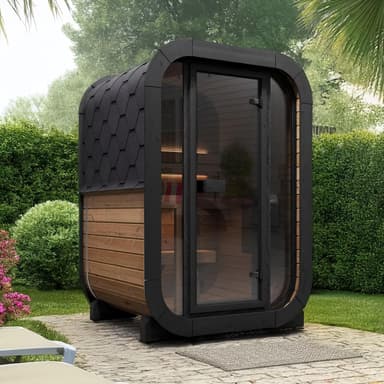
2-10 Person Canadian Cedar Outdoor Cube Sauna
- Deep customization covers size, wood, heater, windows, porch, and roofing
- Canadian red cedar offers genuine durability and natural aromatic quality
- HARVIA heater option is a trusted, proven choice for consistent heat
Infrared Sauna - Lower Temperature, Longer Sessions, Lower Cost
Infrared saunas operate at 120-140°F (49-60°C) using ceramic or carbon heaters (1.5-3 kW, 120V), producing radiant heat that penetrates tissue more directly than convective air heat. The operating cost is $0.22-$0.44 per hour - substantially lower than traditional. They reach operating temperature in 10-15 minutes rather than 30-45. The cardiovascular heart rate response is 90-120 bpm versus 100-150 bpm in traditional, requiring longer sessions (30-45 minutes) to achieve comparable stimulus.
The honest trade-off: infrared saunas are more accessible and cheaper to run, but they lack direct head-to-head RCT comparison against traditional for cardiovascular outcomes. The observational Finnish data does not apply to infrared use. The recovery and anti-inflammatory mechanisms (HSP upregulation, cortisol reduction) appear to transfer across both modalities, but the cardiovascular mortality claims are traditional-sauna-specific.
For men looking at the infrared category, the Clearlight Sanctuary series ($5,000-$10,000, True Wave full-spectrum heaters, low-EMF, lifetime warranty) and the Sunlighten mPulse ($6,000-$12,000, customizable wavelengths, app-controlled) represent the premium tier with the most documented reliability. The Real Relax budget infrared units ($1,500-$3,000) carry a reported 30% off-gassing complaint rate in owner reviews - a meaningful concern for enclosed daily use.
Steam Rooms - The Third Option
Steam rooms at 110-120°F (43-49°C) produce the lowest heart rate elevation (80-110 bpm) and the shortest effective session times (10-15 minutes). The cardiovascular stimulus is real but the least intensive of the three modalities. Steam is the most comfortable environment for men new to heat exposure and for use immediately post-exercise when the body is already warm. The limitation is that the high humidity environment is the most demanding for the wood and infrastructure - mold is a genuine concern in poorly ventilated or maintained steam rooms, affecting approximately 20-30% of owner reports.
Common Misconceptions About Sauna Benefits for Men
I want to address the most persistent pieces of misinformation circulating in men's wellness content, because several of them are specific enough to mislead men into either overconfidence or unnecessary avoidance.
"Sauna Detoxifies Your Body"
The heavy-metal sweat data is real but misrepresented. Studies do show that sweat contains elevated concentrations of cadmium (approximately 2 times urinary concentration) and lead (approximately 3 times) in men with occupational exposures. But the kidneys and liver are the primary detoxification organs, and sweat represents a minor secondary excretion pathway. Sauna sweating is not meaningfully "detoxifying" for men without specific heavy-metal exposures, and framing it as a general detox mechanism misrepresents the physiology.
"More Is Always Better"
Men who sauna 4-7 times per week show the best outcomes in the Finnish data. Beyond 7 sessions per week, the available evidence stops showing incremental cardiovascular benefit, and the dehydration and electrolyte depletion risks become the dominant consideration. There is also an observational selection effect embedded in the frequent-user data - the healthiest men are most likely to maintain very high-frequency sauna habits - that limits our confidence in claiming linear benefit at all frequencies.
"Infrared Is Superior Because of Deep Tissue Penetration"
Infrared heat does penetrate tissue more directly than convective heat. That is a physical fact. But "deeper penetration" does not automatically translate to superior health outcomes. The cardiovascular outcome data comes from traditional sauna. The recovery data (HSP upregulation, cortisol reduction) appears in both modalities. Claims that far-infrared is categorically superior to traditional for any specific health outcome are not supported by head-to-head comparison data.
"Zero EMF Infrared Saunas"
All electrical devices produce electromagnetic fields. The "zero EMF" marketing used by several infrared sauna brands describes units where EMF levels are reduced relative to basic carbon or ceramic heaters, not where EMF is literally absent. The health relevance of low-level EMF from sauna heaters is not established by research, but the zero-EMF claims are universally marketing exaggerations. Look for independently measured EMF levels in milligauss rather than manufacturer claims.
Choosing and Setting Up a Sauna for Home Use
The practical side of implementing a home sauna practice involves decisions that directly affect the quality of the physiological stimulus you get from it.
Wood Selection and Longevity
The wood used in a sauna enclosure affects thermal performance, durability, and maintenance burden in ways that budget sauna marketing consistently underrepresents. Western red cedar is the gold standard: thermal conductivity of 0.08 W/mK keeps bench surfaces from overheating, Class 1 rot resistance handles the moisture cycling without mold growth, and the aromatic oils provide natural antimicrobial properties. At $8-12 per board foot, it is not cheap, but units built from it (Almost Heaven, Clearlight) carry materially better durability records than hemlock alternatives.
Hemlock at $4-6 per board foot is softer and less rot-resistant. Backyard Discovery's entry-level barrel saunas use hemlock, and the 15% bench-splitting complaint rate in owner reviews is consistent with that material's behavior under repeated high-heat, high-moisture cycling. The cost saving at purchase is real; the durability compromise is also real.
Thermowood - heat-treated wood processed at 374°F (190°C) - achieves rot resistance and dimensional stability (85% less swelling/shrinking than untreated wood) without chemical treatment. Thermory and SaunaLife use Thermowood extensively in their premium lines ($7,000-$18,000). For men in humid climates or planning year-round outdoor use, the 20-30% price premium over cedar is worth the reduced maintenance.
Electrical and Installation Requirements
Traditional saunas at 6-9 kW require a dedicated 240V, 30-50A circuit with a GFCI breaker - this is not optional, it is a safety and code requirement. A licensed electrician should run the circuit; budget $500-$1,500 for the electrical work depending on panel proximity. Infrared units at 1.5-3 kW typically run on a dedicated 120V, 15-20A circuit (NEMA 5-20R), which is substantially simpler to install.
Foundation requirements are straightforward but often underestimated by first-time buyers. A 4-6 inch concrete slab graded at 1/4 inch per foot for drainage handles most traditional outdoor sauna installations. Alternatively, a compacted gravel bed achieves similar drainage with less upfront cost ($200-$500 versus $500-$2,000 for concrete). Clearance requirements are 18 inches on sides and 36 inches in front for emergency exit - these are minimum safety standards, not preferences.
For men interested in premium options combining traditional and infrared modalities, the SaunaLife Evo series ($6,000-$20,000) offers hybrid full-spectrum IR plus traditional capability in Thermowood construction. It runs on 240V/40A and represents the most versatile platform currently available for the serious home user.
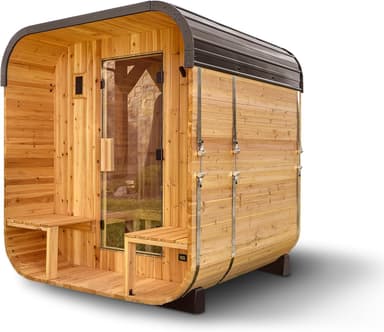
Backyard Discovery Lennon 2-4 Person Cedar Cube Sauna
- 9kW heater reaches temperature significantly faster than budget competitors
- 5-year warranty covers heater and hardware, not just the shell
- Wi-Fi preheat control adds genuine everyday convenience
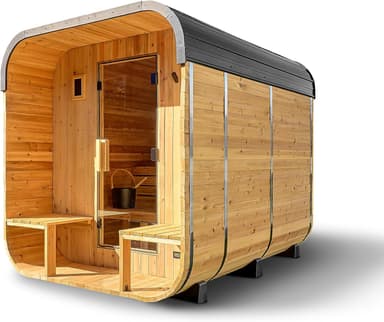
Backyard Discovery Lennon 4-6 Person Cedar Cube Sauna
- 9kW heater reaches target temperature significantly faster than competitors
- Tongue-and-groove cedar construction eliminates cold spots effectively
- Wi-Fi preheat lets you walk into a ready sauna every time
For a deeper comparison of premium barrel configurations, our best premium barrel saunas guide covers the full field with side-by-side performance assessments.
Running Costs Over Time
At 4 sessions per week in a traditional 6-9 kW sauna, the annual electricity cost at 14.5 cents/kWh runs approximately $450-$680 per year. An infrared unit at the same frequency runs $115-$230 per year. Over 10 years, that difference is $2,350-$4,500 - meaningful, but smaller than the gap in purchase prices between quality infrared and quality traditional units.
Maintenance costs add heater element replacement every 5-10 years ($150-$400), annual wood treatment with food-safe oil or cedar sealant ($30-$80), and occasional bench replacement in lower-grade wood units. Men budgeting for a home sauna should plan for $200-$400 per year in maintenance on top of electricity, particularly in the first five years when wood and hardware are still settling.
The ROI framing I find most useful: the Finnish cohort data, if taken at face value, suggests that high-frequency sauna use correlates with 2-5 additional healthy years of life for men over 50. Relative to the $2,000-$20,000 capital cost of a home sauna and the $600-$1,100 annual operating cost, that is an extraordinarily favorable return on investment compared to most health interventions available at similar price points.
Key Takeaways
- ●
Frequency is everything for cardiovascular protection. The Laukkanen 2015 Finnish cohort showed that men using saunas 4-7 times per week had a 63% lower risk of sudden cardiac death and 40% lower all-cause mortality compared to once-weekly users. One session on a Sunday does very little. Four to seven sessions changes your risk profile fundamentally.
- ●
Nineteen minutes is the threshold that matters. Sessions longer than 19 minutes drove a 52% reduction in sudden cardiac death versus sessions under 11 minutes. If I had to give men one number to remember from the entire evidence base, it is that one.
- ●
Heat mimics exercise at the vascular level. Heart rate climbs to 100-150 bpm in a traditional sauna at 170-200°F (77-93°C), cardiac output increases, and blood pressure drops below baseline after the session ends. Patrick and Johnson's 2021 review confirmed that this heat stress directly improves endothelial function and reduces systemic inflammation - two mechanisms that matter enormously for men over 40.
- ●
Testosterone is an indirect story, not a direct one. Sauna does not spike testosterone acutely. What it does is reduce cortisol (Podstawski documented a drop from 13.61 to 9.67 µg/ml), improve sleep quality, and reduce chronic inflammation - all of which protect the hormonal environment that testosterone depends on.
- ●
Recovery benefits are real and measurable. The Hussain 2018 systematic review across 40 studies found heat shock protein upregulation of 50-100%, a 20-30% reduction in delayed onset muscle soreness, and 15% faster lactate clearance post-exercise. For men doing regular resistance training, post-workout sauna is one of the highest-return habits available.
- ●
Infrared works, but the evidence is thinner. Tei's Waon therapy trials at 140°F/60°C showed genuine cardiovascular benefits in chronic heart failure patients, including 16% fewer CV events in the 2016 RCT. But the mortality data from the Finnish cohort was built on traditional saunas. Infrared is a valid alternative - just not an equivalent replacement in the research record.
- ●
Observational data has limits. Every Finnish cohort finding is associational. Healthier men may self-select into frequent sauna use. The cardiovascular dose-response is compelling enough to act on, but no one should treat sauna as a substitute for exercise, diet, or medication prescribed by their physician.
Who This Is For, Who Should Skip It
Who Gets the Most From Regular Sauna Use
Men over 40 with cardiovascular risk factors - elevated blood pressure, borderline cholesterol, family history of heart disease - are the primary beneficiaries the research points to. The Finnish cohort was built on middle-aged men aged 42-60, and the dose-response relationship for cardiac mortality is strongest in that demographic.
Men doing serious strength training or endurance work benefit substantially from the recovery pathway. If you train 4+ days per week and your limiting factor is recovery between sessions rather than motivation or time, adding 20-minute post-workout sauna sessions addresses the HSP and lactate clearance mechanisms directly.
Men experiencing high chronic stress and disrupted sleep - where cortisol stays elevated and testosterone erodes gradually - will find sauna's parasympathetic activation genuinely useful. The cortisol reduction is not dramatic in a single session, but accumulated over weeks it shifts the hormonal environment in the right direction.
Men over 60 dealing with cardiovascular aging, reduced vascular compliance, or early-stage heart failure should look at the Tei Waon therapy data specifically. Infrared at 140°F/60°C is accessible even for men who find traditional high-heat sessions uncomfortable.
Who Should Skip It or Proceed with Caution
Men with uncontrolled hypertension - systolic above 180 mmHg - should not enter a traditional sauna without physician clearance. Blood pressure rises acutely during the session before dropping post-session, and that initial spike carries real risk in uncontrolled cases.
Men on medications that impair sweating or thermoregulation - certain anticholinergics, antihistamines, beta-blockers at high doses - face elevated overheating risk and need medical review before starting a regular protocol.
Men with kidney disease, particularly those on dialysis, face electrolyte and fluid balance risks from heavy sweating that most healthy men do not encounter. The same applies to men with active inflammatory skin conditions covering large body surface areas.
Finally, alcohol and sauna do not mix. Multiple Finnish autopsy studies found alcohol present in a substantial proportion of sauna-related deaths. If you drink, wait until the next day.
What to Read Next
Best Premium Barrel Saunas - My full breakdown of the top traditional barrel configurations at the $4,000-$15,000 price point, with side-by-side heat performance and wood quality assessments for men serious about building a home protocol.
Best Outdoor Barrel Saunas - If you want a permanent outdoor installation that holds up through winter, this guide covers the structural and weatherproofing considerations that most buyers overlook until year two.
All Sauna Guides - The complete library of UseSauna.com protocols, buying guides, and health deep-dives, including infrared versus traditional comparisons, contrast therapy protocols, and installation walkthroughs.
Frequently Asked Questions
How often should men use a sauna to get cardiovascular benefits?
The Laukkanen 2015 data gives a clear answer: four to seven sessions per week produces dramatically better outcomes than one to two. Men using saunas 4-7 times per week had 63% lower sudden cardiac death risk and 48% lower fatal coronary heart disease risk compared to once-weekly users. Two to three sessions per week showed intermediate benefit - roughly 20-30% cardiovascular risk reduction - suggesting a genuine dose-response rather than a threshold effect. The practical minimum I recommend to men asking this question is four sessions per week at 19+ minutes each. Anything less and you are leaving the majority of the documented benefit on the table.
Does sauna increase testosterone in men?
Not directly, and I want to be precise about this because the claim circulates widely in fitness spaces without good support. Acute sauna sessions do not produce a measurable testosterone spike. What the research shows is that regular sauna use reduces cortisol - the Podstawski study documented a drop from 13.61 to 9.67 µg/ml in a single post-exercise session - and chronic cortisol elevation is one of the primary suppressors of testosterone production. Sauna also improves sleep architecture and reduces systemic inflammation, both of which support healthy testosterone levels indirectly. The honest framing is that sauna protects the hormonal environment rather than adding testosterone directly.
How long should a sauna session be for maximum benefit?
For cardiovascular outcomes, the Laukkanen data identifies 19 minutes as the key threshold - sessions above 19 minutes produced significantly better cardiac risk reduction than sessions under 11 minutes. For recovery and heat shock protein activation, the Meatziotis 2021 study found HSP72 expression peaked after 20-minute sessions at 176°F/80°C. I recommend targeting 20 minutes as the practical floor for a productive session. First-time users should start at 10-15 minutes and build tolerance over two to four weeks before extending. Sessions beyond 30-40 minutes offer diminishing returns and increase dehydration risk without meaningful additional physiological benefit.
Is infrared sauna as effective as traditional sauna for men's health?
The honest answer is: probably beneficial, but not proven equivalent. The Finnish mortality data - the strongest evidence we have for sauna's cardiovascular effects in men - was built entirely on traditional Finnish saunas operating at 170-200°F (77-93°C). Infrared saunas at 120-140°F (49-60°C) produce lower core body temperature increases and lower heart rate elevations per session. Tei's Waon therapy RCTs at 140°F/60°C showed real cardiovascular improvements in chronic heart failure patients, including 16% fewer CV events in the 760-patient 2016 trial. Infrared is a legitimate option, particularly for men who find high-heat traditional sessions uncomfortable. But claiming infrared produces identical outcomes to the Finnish cohort data is not supported by the literature.
Can sauna use help with muscle recovery after workouts?
Yes, and the mechanism is well-established. The Hussain 2018 systematic review across 40 studies found that post-exercise sauna use upregulates heat shock proteins - specifically HSP70 - by 50-100%, reduces delayed onset muscle soreness by 20-30%, and accelerates lactate clearance by approximately 15%. The Meatziotis 2021 controlled trial in resistance-training men found 12% greater strength gains in the sauna group versus controls over a training block. The optimal protocol from the research is sauna immediately post-workout, 20 minutes at 170-185°F, before cold exposure if you are using contrast therapy. Waiting until hours after training reduces the heat shock protein response meaningfully.
Are there risks men should know about before starting regular sauna use?
Several, and I take them seriously. Dehydration is the most common issue - men lose 0.5-1.0 liters of sweat per session, and arriving dehydrated or failing to rehydrate afterward compounds over frequent use. Electrolyte loss alongside fluid loss matters for cardiac conduction; adding sodium and potassium post-session is not optional for men doing daily sauna. Overheating risk is real if session length or temperature is escalated too quickly; new users should keep initial sessions to 10-15 minutes at moderate heat. Alcohol and sauna is a documented lethal combination - Finnish forensic data consistently shows alcohol involvement in a disproportionate share of sauna-related deaths. Men with cardiovascular conditions, uncontrolled hypertension, or who take medications affecting thermoregulation need physician clearance before starting.
What temperature should a men's home sauna reach for health benefits?
For traditional saunas, the research protocols that produced the Finnish cohort outcomes operated at 170-200°F (77-93°C). The practical target for a home unit is 185°F (85°C) with 20-40% relative humidity. Most quality 6-9 kW heaters in a properly insulated 8-10 cubic meter room reach this in 30-45 minutes. For infrared, the Waon therapy protocols used 140°F/60°C, and most home infrared panels are calibrated to operate at 120-140°F (49-60°C). Going higher in either category does not linearly increase benefit - the cardiovascular and hormonal responses plateau above certain thresholds, and the risk of burns and heat exhaustion increases. Chasing maximum temperature is a less useful pursuit than chasing session consistency.
Does sauna help with sleep quality in men?
The evidence here is indirect but plausible. Core body temperature drops after a sauna session as blood moves to the periphery, and this post-heating cooling mirrors the natural drop in core temperature that initiates sleep onset. Men reporting improved sleep after regular sauna use are likely benefiting from this thermoregulatory mechanism combined with the parasympathetic nervous system activation that follows heat stress. The cortisol reduction documented in multiple studies - including the drop to 9.67 µg/ml in the Podstawski research - also supports better sleep architecture, since elevated evening cortisol is a primary driver of insomnia and disrupted REM cycles. There is no large RCT specifically measuring sleep outcomes in men from regular sauna use, but the physiological pathway is credible.
Frequently Asked Questions
The best barrel sauna benefits for men center on enhanced muscle recovery, improved heart health, and boosted testosterone support. Heat from barrel saunas increases blood flow to reduce soreness, inflammation, and promote growth hormone production after workouts, aiding performance. A Finnish study showed men using saunas 4-7 times weekly had a 40% lower risk of premature death from cardiovascular causes. These align with traditional wood-fired barrel designs for deep, even heating.
Backed by Peer-Reviewed Research
Health claims on this page are verified against peer-reviewed studies by our health editor, Dr. Maya Chen.
- Association Between Sauna Bathing and Fatal Cardiovascular and All-Cause Mortality Events
Laukkanen T, Khan H, Zaccardi F, Laukkanen JA (2015)
20-year study found frequent sauna use (4-7 times/week) was associated with 40% lower all-cause mortality.
- Cardiovascular and Other Health Benefits of Sauna Bathing
Laukkanen JA, Laukkanen T, Kunutsor SK (2018)
Regular sauna bathing reduces risk of cardiovascular disease, hypertension, and neurocognitive diseases.
- Clinical Effects of Regular Dry Sauna Bathing
Hussain J, Cohen M (2018)
Evidence supporting sauna bathing for pain conditions, chronic fatigue, and cardiovascular improvements.
Related Guides
Affiliate Disclosure - UseSauna earns a commission from qualifying purchases through our Amazon affiliate links. This does not affect our editorial integrity.