
Installation
Outdoor Sauna Installation - Foundation and Setup Guide
Outdoor installation has one big enemy - water. Get foundation and drainage right or pay for it later.
Written by Jake Morrison
Installation & DIY Expert
Reviewed by Erik Nordgren
Senior Sauna Reviewer
I spent three weekends getting my first outdoor sauna foundation wrong before I got it right. The first attempt was a loose gravel bed I threw together without compacting it properly - the barrel sauna settled unevenly within two months, and the stave joints started separating on the low side. The second attempt used cinder blocks I pulled from a neighbor's demolition pile. Dense concrete deck piers they were not, and after one freeze-thaw cycle in a Minnesota winter, two of them had shifted enough to rack the floor frame. The third attempt - frost-proof sonotube footings, properly compacted class 5 gravel extended 2 feet beyond the sauna margins, dead level across every footing - has not moved in four years.
That hard-won experience is what this guide is built on. The actual sauna assembly, whether you are putting together a barrel kit from Nootka Saunas or a cabin-style unit from Almost Heaven, is the easy part. Ninety percent of long-term problems with outdoor saunas trace back to decisions made before a single wall panel goes up: foundation type, site drainage, frost line depth, and ground preparation. Get those right and your sauna lasts decades. Get them wrong and you are dealing with racked frames, rotting sill plates, and foundation movement inside of two years.
The numbers back this up. The Laukkanen 2015 study published in JAMA Internal Medicine followed 2,315 Finnish men over 20 years and found that men who used a sauna 4-7 times per week had a 40% lower risk of all-cause mortality compared to once-weekly users. That kind of health return is worth protecting with a proper installation. You do not spend $4,000 to $15,000 on an outdoor sauna unit and then cut corners on a $300 foundation.
Who This Guide Is For
This guide is for homeowners planning to install a prefabricated outdoor sauna kit - barrel, cube, or cabin-style - on a residential property. You do not need construction experience to follow it, but you need to be willing to do actual site work: digging, leveling, compacting, and in some cases mixing or ordering concrete.
If you are evaluating outdoor sauna installation cost before committing, this guide will give you realistic material breakdowns for each foundation type. If you have already purchased a unit and are staring at a flat patch of backyard wondering where to start, this is your step-by-step walkthrough. If you are weighing a DIY foundation against hiring a sauna installation contractor - what you would search as "sauna installation near me" - this guide gives you enough technical grounding to evaluate quotes intelligently and know when professional help is actually necessary.
This guide does not cover electrical rough-in for electric heaters (that requires a licensed electrician and its own dedicated treatment) or custom-built sauna structures from raw lumber. The focus is foundation and setup for kit-based outdoor saunas.
What You Will Learn
- ●
How to select the right foundation type for your sauna size, local climate, and soil conditions - with specific material specifications for each option including gravel depth, concrete thickness, and footing load ratings
- ●
How to prepare your site from raw ground through to a level, drained, installation-ready surface that will not shift through freeze-thaw cycles
- ●
How to pour and set footings correctly including the steel rod air-pocket removal step most DIY guides skip, and why inadequate curing time creates structural problems
- ●
How to integrate your foundation with the sauna frame - the center anchor board method, floor joist connections, and how to confirm dead-level across your footing tops before any structure goes up
- ●
Which foundation approach matches which sauna type - gravel beds for barrel saunas, concrete pads for heavy cabin-style units, frost-proof footings for cold climates
- ●
How to avoid the four most expensive installation mistakes I see repeatedly, including the cinder block substitution error that cost me a full foundation redo
The Short Version - TL;DR
Outdoor sauna installation breaks into two distinct phases: foundation work and sauna assembly. Foundation work is harder, takes longer, and matters more.
For most residential installations in temperate climates, you have five foundation options. A concrete pad (3-4 inches thick over a compacted gravel drainage bed) is the most durable choice for heavy cabin-style saunas and holds up best through freeze-thaw cycles - budget $800-$2,000 depending on size and whether you hire a contractor. A compacted gravel base using 4-6 inches of class 5 crushed rock is the most common choice for barrel saunas and smaller units - material cost runs $150-$400 and you can install it yourself in a day. Frost-proof sonotube footings rated at 2,500 pounds per footing are the right answer for cold climates where frost line depth is significant - depth and diameter need local contractor confirmation because they vary by geography. Concrete deck piers with an inverted trapezoid profile (not cinder blocks - never cinder blocks) work for smaller structures and hand-dig below topsoil. Paving stones on a compacted gravel base are the budget-friendly aesthetic option when drainage and leveling are done correctly.
Regardless of which foundation you choose, three requirements are non-negotiable: the surface must be 100% level, drainage must be engineered into the site before you build, and in cold climates your foundation must go below the local frost line or be designed to move with freeze-thaw cycles without racking the structure above it.
Sauna assembly follows the foundation. Most kit saunas from reputable manufacturers - the Cedar & Stone units with their published site diagrams, the Nootka barrel kits with their stave assembly systems - go together in a day or two once the foundation is right. The outdoor sauna installation cost for a complete DIY project, foundation through finished structure, typically runs $3,500-$18,000 depending on unit price, foundation type, and whether you pull in trades for electrical.
Plan for one full weekend on foundation prep, a cure period if you are using concrete, and one to two days on assembly.
Why I Can Help You Here
I have been installing and reviewing outdoor sauna kits for seven years, with hands-on experience across barrel saunas, cube saunas, and full cabin-style units. I have personally built on all five foundation types covered in this guide - including the two failed attempts that taught me more than any successful installation. I have consulted with contractors in Minnesota, Montana, and the Pacific Northwest on frost line requirements and watched how different foundation choices perform through multiple winters.
Beyond my own installs, I have reviewed manufacturer documentation from Cedar & Stone, Almost Heaven, and Nootka Saunas, and I have talked directly with owners who are three, five, and ten years into their outdoor sauna setups. The long-term durability data from those conversations shapes how I weight the trade-offs in this guide.
I am also a regular reader of the sauna health research - Laukkanen's Finnish cohort studies, the cardiovascular work out of the University of Eastern Finland - because understanding what you are building toward matters. A properly installed outdoor sauna used consistently is a genuine health investment. That framing keeps me honest about quality and durability standards.
Step 1 - Choose the Right Foundation for Your Sauna and Site
The foundation decision determines everything that follows. Get this wrong and no amount of careful assembly saves you. Get it right and the rest of the installation is largely mechanical.
There are five practical foundation options for a residential outdoor sauna installation. Each has a specific use case, and none of them works universally for every site and sauna type.
Concrete Pad - The Permanent Solution
A poured concrete pad, 3 to 4 inches thick, is the most durable foundation you can build. I use it for any cabin-style sauna heavier than 800 pounds, any installation in a climate with more than 30 freeze-thaw cycles per year, and any situation where the homeowner wants to set it once and never touch it again.
The tradeoff is cost and time. You need to excavate down to stable subgrade, lay a 4-inch compacted gravel drainage bed before any concrete touches the ground, and then wait. Freshly poured concrete needs a minimum of 7 days before you load it, and 28 days to reach full design strength. Factor that into your project timeline before you schedule the sauna delivery.
For a typical 8x8-foot cabin sauna, the concrete pad runs approximately 8x10 feet - 1 foot of overhang on each side for sill plate support and drainage clearance. Material cost for the pour itself is $150 to $300 depending on your region. Add excavation equipment rental ($200 to $400/day) and a concrete contractor if you are not pouring yourself, and all-in you are looking at $800 to $2,000 for the foundation alone before the sauna unit arrives.
If you want the durability of concrete without the curing delay, premade concrete deck pads are available through most landscape supply yards. They come in 2x2-foot sections you can arrange and level manually. They work well for smaller saunas in the 4-6 person range and cut your foundation timeline from weeks to a single afternoon.
Compacted Gravel Base - Best for Barrel Saunas
A compacted class 5 crushed rock base, 4 to 6 inches deep, is the standard foundation for barrel saunas and the one I recommend most often to homeowners doing their first installation. It drains naturally, self-levels to a point, costs $100 to $300 in materials, and you can install it in a single day with a plate compactor.
The critical detail most people miss: the gravel bed needs to extend 2 feet beyond the sauna's footprint on every side. That 2-foot extension is not aesthetic - it gives you dolly wheel clearance during delivery, stable footing while you work during assembly, and long-term access for maintenance without sinking into soft ground. A barrel sauna dropped onto a gravel pad that stops at its exact footprint will be surrounded by churned-up mud the first time it rains during installation.
Compact the gravel in two lifts: lay 3 inches, run the plate compactor over it twice in perpendicular directions, then add the remaining 2 to 3 inches and compact again. A single uncompacted lift sounds fine underfoot but will settle unevenly under load. That uneven settling is exactly what separated my stave joints in the first installation.
The finished gravel surface needs to be flush with the surrounding grade and level within 1/4 inch across the entire pad. Check it with a 6-foot level in both directions and diagonally. Barrel saunas are particularly unforgiving of off-level foundations - the stave joints are engineered to mate at a specific geometry, and even a 1/2-inch variance across a 7-foot span creates gaps that let moisture in and heat out.
Frost-Proof Sonotube Footings - Best for Cold Climates
For any installation in a climate with hard winters, frost-proof sonotube bell footings are the technically correct solution. Each footing carries up to 2,500 pounds of load and, when poured below the local frost line, eliminates heaving entirely.
The key word is "below the frost line" - and the depth is not standardized. It varies by geography, soil type, and moisture content. I cannot give you a universal number. A soil contractor in your area can, and the $150 consultation fee pays for itself when you are not redigging footings that moved over winter.
The footing layout comes from your sauna manufacturer. Cedar & Stone Saunas, for example, provides site diagrams showing exact footing placement for each of their models. Nootka Saunas includes footing specifications in their installation packages. If your manufacturer does not provide this, the general rule for a cabin-style sauna is one footing at each corner and one midpoint footing on any span longer than 6 feet.
All footing tops must be level with each other - not level individually, but level in relation to each other. Use a water level or a laser level to establish a common elevation across all footings before the concrete cures. Correcting a footing that set 1/2 inch high means demolishing it and starting over.
Pavers and Paving Stones
Paving stones are the most visually appealing option and the most common choice when the sauna installation sits adjacent to existing hardscaping - a patio, a pool deck, or a pergola. Done correctly, they provide excellent drainage and solid support.
Done incorrectly - placed directly on compacted soil or sand without a gravel base - they settle, tilt, and create a rocking uneven surface within one season. The paver installation must start with a 4-inch compacted gravel base. The pavers go on top of that, set in a bedding layer of coarse sand or stone dust, and then compacted again with a plate compactor and polymeric sand swept into the joints.
Budget $400 to $900 for materials on a typical barrel sauna footprint. The aesthetic upgrade over plain gravel is real, and if you are showing this installation to guests or a real estate appraiser, it matters.
Step 2 - Assess Your Site and Plan for Drainage
Before you break ground, spend 30 minutes studying how water moves across your property after a heavy rain. This single observation prevents more long-term problems than any other pre-installation step.
Stand at your proposed sauna site and look for the direction of natural runoff. Water should flow away from the sauna on all sides, not toward it. If your site sits in a low spot or at the base of a slope, you have a drainage problem that foundation work alone will not solve.
Reading Your Site
Walk the perimeter of your proposed location after the next significant rain - at least 1 inch of precipitation. Look for pooling, saturated soil, or concentrated flow paths. If water sits for more than 2 hours post-rain, the site either needs a French drain system or you need to choose a different location.
The French drain approach that works for sauna-specific installations uses 4-inch perforated white drainage pipe laid in a "T" configuration below the frost line. The horizontal arm of the T runs parallel to and upslope of the sauna, intercepting surface and subsurface water before it reaches the foundation. The vertical arm redirects that water to a suitable discharge point - a dry well, a storm drain, or a downhill location at least 10 feet from the structure.
For sites where frost line depth makes trenching impractical with shovels alone, the post-hole-digger approach works: drill down 4 feet at strategic drainage points, fill with 4-inch perforated drainage tile surrounded by clean drainage rock and capped with filter fabric, then backfill. It is not as elegant as a full French drain but it moves water down and away from the root zone where your foundation sits.
Slope and Grade Adjustment
Your foundation site needs to be level within 1/4 inch across its full span. If your site has a natural slope, you have two options: cut and fill (excavate the high side and use that soil to build up the low side, then compact), or step your footings (for sonotube installations, you pour the upslope footings shorter and the downslope footings taller until all tops reach the same elevation).
Cut and fill is appropriate for gravel pad and concrete installations. Stepped footings are the correct approach for sonotube systems. Never try to compensate for an out-of-level site by shimming the sauna frame after it is built - shims compress, rot, and shift.
Access Planning
Your delivery crew needs a clear path from the street or driveway to the installation site that is at least 6 feet wide, firm underfoot, and free of overhanging obstructions. Barrel saunas typically arrive as a kit on a pallet - a forklift or pallet jack can handle most of the transport if the path is hard-packed. Cabin-style saunas and larger units often arrive pre-assembled in sections and require a crew of 3 to 4 people plus a furniture dolly on solid footing.
Mark your access path before you order delivery and confirm it with the delivery coordinator. The gravel bed extension - 2 feet beyond the sauna footprint on all sides - is part of this access planning. Those 2 feet of firm gravel on the sides and rear of the unit give the assembly crew stable footing throughout the build.
Step 3 - Gather Tools and Materials
This step is worth a complete list. Showing up to a foundation pour missing a 6-foot level or a tamper costs you a full day and a rescheduled concrete delivery.
For a Compacted Gravel Base
- ●Class 5 crushed rock or locally equivalent 3/4-inch clean gravel (calculate: length x width x 0.5 ft x 1.35 for compaction factor, in cubic feet, divide by 27 for cubic yards)
- ●Plate compactor (rent from Home Depot or Sunbelt Rentals, $75 to $150/day)
- ●6-foot aluminum level
- ●Landscape fabric (optional, beneath gravel to suppress weeds - use commercial-grade, not garden center weight)
- ●Edging stakes or 2x6 lumber for perimeter containment
- ●Wheelbarrow and steel-tined rake
For Sonotube Footings
- ●Sonotube forms (Quikrete makes 8-inch diameter tubes - size up to 10-inch for heavier cabin saunas)
- ●80-pound bags of Quikrete 5000, minimum 2 bags per footing (or ready-mix for larger installs)
- ●Post-hole digger or rented 1-man auger
- ●1/2-inch rebar, cut to footing depth plus 6 inches
- ●Water level or laser level (a $30 water level works fine for 4 to 6 footings)
- ●String line and batter boards for layout
- ●Steel rod or scrap rebar for tamping air pockets
Universal Site Prep Tools
- ●Measuring tape (25-foot minimum)
- ●Spray paint or marking flags for layout
- ●Hand tamper ($40) or plate compactor
- ●Wheelbarrow
- ●Work gloves, safety glasses
- ●Shovel, flat spade, and mattock for clearing vegetation
Step 4 - Prepare the Ground
Ground preparation is the part that feels like unnecessary labor until you skip it and regret it. Every hour you put into proper ground prep extends the functional life of your sauna installation by years.
Clear the Site
Remove all vegetation, rocks, and debris from the foundation area plus the 2-foot perimeter extension. Grass and organic material beneath a foundation create two problems: they decompose and create voids that allow settling, and they retain moisture that wicks up into the structure. Use a flat spade to scalp the sod to a depth of 3 to 4 inches across the entire pad area.
If you are installing landscape fabric beneath a gravel bed, do it now - after clearing, before any gravel goes down. Overlap seams by 6 inches and extend the fabric 6 inches past the planned gravel edge. This is optional but worthwhile if you are installing in a location where grass or weeds grow aggressively.
Establish Level Reference Points
Drive batter boards (2 simple 2x4 stakes with a crossboard) at two corners outside your pad area. Run string lines across the pad at grade level to establish your level reference plane. Use a line level or laser level to confirm the strings are level in both directions.
If your site slopes, decide now whether you are cutting (excavating the high side) or filling (building up the low side with compacted material). For a fill scenario, use the same class 5 crushed rock as your foundation material - not topsoil, not sand, not construction debris. Compactable angular crushed rock is what holds its position under load and freeze-thaw cycling.
For Sonotube Installations - Dig the Holes
Lay out your footing locations from the manufacturer's diagram using your string lines as reference. Drill or dig each footing hole to the manufacturer-specified diameter and to a depth below your local frost line. Flare the bottom of each hole slightly wider than the tube diameter - this creates the "bell" that mechanically locks the footing in place when the soil refreezes around it.
Set the sonotube form in the hole, check it for plumb with a level, and backfill around the outside of the tube with the excavated soil. Compact the backfill in 6-inch lifts. The tube should stand upright on its own before you pour.
Step 5 - Install the Foundation
This is the physical build step. The work varies significantly by foundation type, but the standard for success is the same across all of them: dead level, properly supported, and fully cured or compacted before any sauna weight goes on it.
Pouring Sonotube Footings
Mix your concrete according to the Quikrete 5000 instructions - typically 3 quarts of water per 80-pound bag, mixed until uniform with no dry streaks. Quikrete 5000 reaches 5,000 psi at 28 days, which is appropriate for structural footings. Standard Quikrete 4000 also works but takes longer to reach design strength.
Pour concrete into each tube in one continuous operation without stopping. As you pour, work a steel rod up and down through the wet concrete - this is how you eliminate air pockets that would create voids in the finished footing. Tap the sides of the tube form with a hammer to help consolidation.
Strike off the top of each footing flush with the tube top using a scrap board. Then use your water level or laser level to verify that all footing tops are at the same elevation. If a footing ran slightly high, screed off the excess before it sets. If one ran slightly low, you can add a small amount of concrete within the first 20 minutes - after that, you need to let it cure and use a shim plate to make up the difference.
Install post bases or hardware anchors into the wet concrete at the center of each footing, set to your layout lines. Use a combination square to confirm the anchors are plumb. You have roughly 45 minutes with Quikrete 5000 at 70 degrees F before the window closes.
Allow footings to cure 72 hours minimum before loading them. Full 28-day cure is preferable if your timeline allows.
Compacting a Gravel Base
Dump your first 3-inch lift of class 5 gravel and spread it evenly across the pad area with a rake. Set your compactor down and make two full passes in parallel runs from one end to the other, then two more passes perpendicular to the first. The gravel surface will drop 1/2 to 3/4 inch during this first compaction pass - that is normal and expected.
Add the second lift to bring the pad to final grade. Compact again with two perpendicular passes. Check level across the finished surface in multiple directions with your 6-foot level. Tolerance is 1/4 inch across 6 feet.
If any area is high, scrape it with the flat spade and compact again. If an area is low, add a small amount of gravel, tamp by hand, and recheck. Do not try to fix low spots by pressing them up from below - that does not work with granular material.
Step 6 - Set the Sill Plates and Level the Floor Frame
The transition from foundation to sauna structure happens at the sill plate - the pressure-treated lumber that sits directly on your foundation surface and carries the floor frame. This connection is where moisture infiltration, rot, and structural movement most commonly begin.
Sill Plate Material and Treatment
Use only ground-contact rated pressure-treated lumber (labeled "UC4B" or "Ground Contact" on the tag) for any sill plate that contacts concrete, gravel, or soil. Standard pressure-treated lumber rated UC3 or UC2 is for above-ground use only and will fail within 5 to 7 years at grade. The chemical treatment difference between UC3 and UC4B is significant - do not substitute based on what the lumber yard has on hand.
Many sauna kit manufacturers supply cedar sill plates or floor frame members. Cedar is rot-resistant but not rated for direct ground contact. If your kit includes cedar base members, install them on top of a UC4B pressure-treated sill plate, or place a rubber sill gasket between the cedar and the foundation surface to break the capillary moisture path.
Anchoring to Footings
For sonotube footing installations, your post bases or hardware anchors are already set in the footings. Drop the floor frame members into the hardware, confirm they are level across all connection points, and fasten with the specified hardware - typically 16d galvanized nails or 3/8-inch lag screws depending on the anchor type.
For concrete pad installations, the sill plate fastens to the pad with concrete anchor bolts - either sleeve anchors set into drilled holes or J-bolts cast in during the pour. Drill holes with a hammer drill using a 1/2-inch masonry bit, vacuum the dust from each hole, and drive the sleeve anchors per the manufacturer's torque specification. Do not over-torque - you can crack a concrete pad edge if you are driving anchors within 3 inches of the edge.
For gravel base installations, the floor frame typically rests on treated skids or sleepers that distribute load across the gravel surface. These are not mechanically anchored - the sauna's weight holds them in place. In high-wind areas above 90 mph design wind speed, add ground anchors: earth screw anchors (also called auger anchors) driven into the ground adjacent to the skids and connected with galvanized tie-down straps.
Confirming Level Across the Frame
With the full floor frame assembled and sitting on its foundation, put your 6-foot level on the frame in both directions and diagonally corner to corner. Every measurement should read level within 1/4 inch. Check it again after hand-tightening all fasteners - the act of tightening can pull a frame slightly out of plane.
For barrel sauna installations, set the cradle assemblies on the floor frame before finalizing anything. Confirm that both cradle tops are at the same height and that the arc matches across the full barrel diameter. A barrel sauna floor frame that is level but has one cradle 1/4 inch lower than the other will still produce a barrel that wants to rock.
Step 7 - Assemble the Sauna Structure
With a dead-level foundation and floor frame, the wall and roof assembly for a prefabricated kit sauna is largely a matter of following the sequence in the manufacturer's instructions. I am not going to replicate kit-specific assembly steps here - Backyard Discovery, Almost Heaven, and Nootka Saunas each provide detailed manuals that cover their specific connection systems.
What I will cover is the structural principles that apply across all kit types, because these are the points where I see DIY installations go wrong.
Wall Panel Sequencing
Most cabin-style kit saunas assemble tongue-and-groove wall panels into a prebuilt corner frame. The panels interlock horizontally, and the sequence matters - you cannot install a middle panel before the panels below it. Start from the bottom and work up, confirming each course is level and fully seated before moving to the next.
The center board with bead on both sides that serves as the central anchor board in many kit systems is the most important single component in the wall assembly. It needs to be plumb, level, and mechanically fastened to the floor frame before any other wall panels go up. Everything else indexes off this board - if it is 1/4 inch out of plumb, that error compounds through every subsequent panel.
Use clamps to hold panels in position while you drive fasteners. Warped boards - and cedar warps, especially if it spent time in a damp warehouse - can be pulled into line with a clamp. Fasten them while clamped. Steel connectors at the top of wall panels, connecting them to the roof frame, provide the structural continuity that keeps the wall assembly acting as a unit under lateral load from wind.
Roof and Top Cap Assembly
For cabin saunas with a shed or gable roof, the roof panels are the last major structural elements. Confirm that the top wall plates are level before setting any roof rafters - a racked top plate produces a racked roof frame. For two-person installation, have one person hold each rafter end while the other drives the toe-nail or connector plate. Rafters that shift during fastening are a persistent aggravation.
For barrel saunas, the final stave installation at the top of the barrel is where fit problems become visible. If the barrel is tracking correctly, the final staves close up the circumference evenly with consistent gap spacing. If the barrel is closing off-center - one side of the final gap wider than the other - it means the barrel is out of round, usually because the floor cradle spacing is not matching the manufacturer's specified dimension. Disassemble back to the cradles, reset the spacing, and restack.
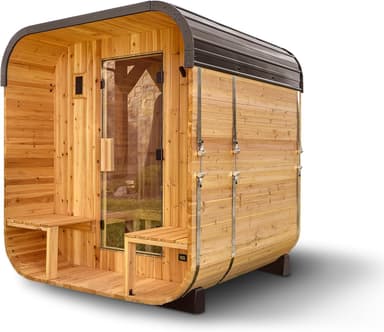
Backyard Discovery Lennon 2-4 Person Cedar Cube Sauna
- 9kW heater reaches temperature significantly faster than budget competitors
- 5-year warranty covers heater and hardware, not just the shell
- Wi-Fi preheat control adds genuine everyday convenience
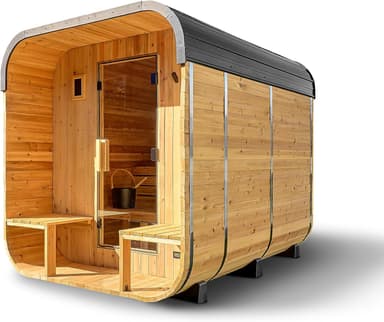
Backyard Discovery Lennon 4-6 Person Cedar Cube Sauna
- 9kW heater reaches target temperature significantly faster than competitors
- Tongue-and-groove cedar construction eliminates cold spots effectively
- Wi-Fi preheat lets you walk into a ready sauna every time
Roofing Material and Weatherproofing
For cabin-style sauna kits with an exposed roof, the manufacturer-supplied roof boards need a weatherproof membrane and finish roofing material. At minimum, install 30-pound felt paper (roofing felt) over the roof boards before any final roofing material goes on. Overlap courses by 6 inches, start at the eave and work up toward the ridge. For a permanent installation in a northern climate, consider peel-and-stick ice and water barrier across the full roof deck - add $80 to $150 in material cost but eliminates ice dam infiltration entirely.
Cedar shingles are the traditional finish choice for outdoor sauna roofs and they look correct on the structure. They run $150 to $300 in materials for a typical 8x10-foot sauna roof. Metal roofing - corrugated steel or standing seam panels - is more durable, especially in snow country, and easier to install without roofing experience. A 29-gauge corrugated steel panel for a small sauna roof runs $120 to $200 and installs with self-drilling roofing screws.
Step 8 - Address Ventilation and Moisture Management
A sauna that heats to 170 to 195 degrees F and then cools down is a moisture pump. Every session introduces significant water vapor into the structure - from steam generation, from bather sweat, and from towels and water ladles. That moisture has to go somewhere. If the structure is sealed tightly and has no designed ventilation path, it goes into the wood, and that is where rot begins.
Fresh Air Ventilation
Traditional sauna ventilation uses a passive system: a low fresh air inlet opposite the heater (typically at floor level or low on the wall) and a high exhaust vent on the same wall as the heater or on the ceiling. The temperature differential drives air movement - cool air comes in at the floor, heats, rises, and exits at the top.
The standard sizing for residential sauna ventilation is a 4-inch diameter vent opening for both intake and exhaust in a room up to 100 cubic feet. Scale up proportionally for larger rooms. Vents should be closeable - either with a manual damper or a sliding cover - so you can reduce fresh air during the heat-up phase and open fully during active use.
For kit saunas, most manufacturers supply vent hardware or pre-drill vent locations. Do not block or eliminate these openings in pursuit of faster heat-up. A sauna that heats 10 minutes faster but has chronic moisture problems is a bad trade.
Post-Session Moisture Removal
After every session, leave the sauna door ajar and the vents fully open for at least 60 minutes. This allows residual moisture to dissipate before the structure cools completely and the wood absorbs the vapor. Wipe the bench surfaces and floor with a dry towel before opening for ventilation.
For installations in climates with high ambient humidity - the Gulf Coast, the Pacific Northwest, Florida - add a small bilge fan (a Rule 500 GPH bilge blower costs $25 and moves adequate air) mounted to exhaust through the high vent position. Run it for 30 minutes after every session. The airflow cost is negligible; the moisture management benefit is significant.
Foundation Drainage - Final Check
After the sauna is fully assembled and weatherproofed, walk around the perimeter and check that all drainage paths are unobstructed. The gravel bed or concrete pad should shed water away from the structure on all sides. If you see water pooling against the base of the wall after rain, the site grade needs adjustment before you run the heater for the first time.
Troubleshooting Common Problems
Even careful installations produce problems. Here is what I see most often and how to address each one.
The Barrel Sauna Is Rocking or Unstable
Cause: Cradle spacing does not match the manufacturer's specified dimension, or one cradle is lower than the other.
Fix: Remove all staves from the barrel section (this is faster than it sounds on most kits), reset the cradle positions using the manufacturer's dimensions and a level stretched across both cradle tops. Restack the staves. Check for rocking after every 10 staves during reassembly.
Stave Joints Are Opening Up on One Side
Cause: Barrel frame is not level, or the foundation has settled unevenly since installation.
Fix: Check your foundation level with a long level. If the foundation has settled, correct it (repack gravel, reset footings, or install shim plates as appropriate) before addressing the stave gaps. Once the foundation is level, the staves often close back up as the wood re-equilibrates. If gaps persist after re-leveling, the staves may need to be reseated by partial disassembly.
For complete guidance on barrel sauna specifications and our top-rated models, see our best outdoor barrel saunas page.
Wall Panels Are Not Seating Flush
Cause: Bottom course is not level, or tongue-and-groove profiles have swelled from moisture exposure during storage.
Fix: Pull the problem panel and check the course below it with a level. If the lower course is out of plane, correct it before resetting the problem panel. For swelled tongue-and-groove profiles, run a block plane lightly along the tongue edge to remove the moisture swelling. Do not force swelled panels together - the split can propagate the full height of the wall.
Water Is Pooling Under the Floor Frame
Cause: Site drainage is inadequate, or the gravel base is not sloped slightly (1/4 inch per foot minimum) away from the structure.
Fix: Expose the gravel base along the problem side by removing the floor skids temporarily. Adjust the grade by adding gravel on the high side and regrading away from the structure. For persistent pooling on a level site, install a perforated drain tile in a trench around the perimeter of the foundation, sloping to a daylight outlet or dry well at least 10 feet from the sauna.
Foundation Has Shifted After First Winter
Cause: Footings were not below frost line, or concrete was poured on wet/saturated soil.
Fix: This is the expensive one. Shallow footings that have heaved need to be demolished and replaced. There is no patch for a heaved footing. For next time: confirm frost line depth with a local contractor before any concrete work begins.
Sauna Is Not Reaching Target Temperature
While this is primarily a heater sizing and insulation issue rather than a foundation issue, I see it traced back to installation in one specific scenario: the door does not seal properly because the frame is racked. A racked frame comes from an out-of-level foundation. Check your frame for square by measuring diagonally corner to corner - both diagonal measurements should match within 1/4 inch. If they do not, the foundation is the root cause to address.
Outdoor Sauna Installation Cost - What to Budget by Foundation Type
Realistic cost planning prevents the situation where you spend $8,000 on a sauna unit and then discover the foundation preparation costs another $2,000 you did not account for.
Gravel Base Foundation
Materials (gravel, landscape fabric, edging): $150 to $400 Equipment rental (plate compactor, delivery): $75 to $150 Labor (DIY, 4 to 8 hours): $0 Professional labor if hired: $300 to $600
Total range: $225 to $1,150
This is the most accessible option for a capable DIYer. The materials are available at any landscape supply yard, the tools are rentable anywhere, and the skill requirement is modest.
Concrete Pad Foundation
Materials (concrete, gravel base, reinforcement mesh): $300 to $600 Excavation and forms: $150 to $400 (DIY) or $600 to $1,200 (contractor) Concrete pour labor: $400 to $1,200 (contractor) Equipment rental: $200 to $400
Total range: $1,050 to $3,200
For most homeowners, a concrete pad requires at minimum a concrete contractor for the pour itself. The mixing and placement of a full 3-inch slab across an 8x10-foot area is beyond what manual mixing or a standard rented mixer handles efficiently. Ready-mix delivery is the practical solution.
Sonotube Footing System
Materials (sonotube forms, concrete bags, post bases): $200 to $500 Equipment rental (auger or post-hole digger): $100 to $250 Labor (DIY, 8 to 12 hours): $0 Professional soil assessment: $100 to $200
Total range: $400 to $950
This is the technically correct solution for cold climates and the one where the professional soil assessment investment pays off most clearly. A $150 consultation that confirms your frost line depth prevents a $1,500 footing demolition and repour two winters later.
Paver Installation
Materials (pavers, gravel base, sand, polymeric joint filler): $400 to $1,200 Equipment rental (plate compactor, screed): $75 to $150 Labor (DIY, 6 to 10 hours): $0 Professional installation: $800 to $2,000
Total range: $475 to $3,200
For a barrel sauna or smaller cabin sauna adjacent to existing patio hardscaping, professionally installed pavers often represent the best combination of aesthetics and long-term performance. Get two quotes from licensed hardscape contractors and ask specifically about the gravel base depth and compaction method - any contractor who proposes less than 4 inches of compacted base is cutting corners.
Where to Find Local Help
Searching "outdoor sauna installation near me" or "sauna installation near me" typically returns two categories of results: sauna dealers who offer turnkey installation packages and general contractors who have done sauna work. The dealer packages are convenient but often priced at a significant premium. The general contractor route is usually more economical but requires you to provide more guidance on sauna-specific requirements. This guide gives you the technical knowledge to brief a general contractor effectively on what the foundation needs.
For reference, the all-in outdoor sauna installation cost - sauna unit plus foundation plus assembly labor - typically runs $5,000 to $20,000 depending on size, sauna type, and foundation complexity. The foundation represents 5% to 20% of that total. It is not the line item to optimize for savings.
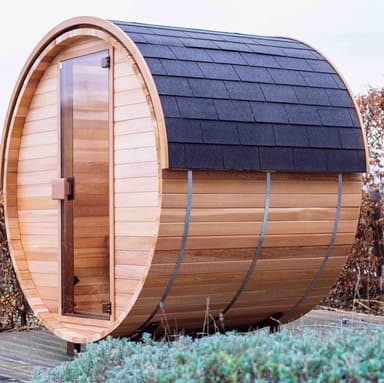
Cedar Barrel Sauna 2-10 Person Customizable Outdoor
- Own-factory quality control beats generic barrel sauna kit competitors
- Canadian red cedar delivers genuine durability and aromatic sauna experience
- Electric heater options reach 195°F in roughly 10-15 minutes
If you are considering a wood-burning sauna as part of your outdoor installation, our best wood-burning barrel saunas guide covers the heater selection and clearance requirements that affect foundation and siting decisions.
Key Takeaways
- ●
Foundation type determines long-term outcome more than any other installation decision. A $200 gravel base under the right sauna in the right climate outlasts a $2,000 concrete pad poured without adequate drainage prep. Match the foundation to the sauna weight, your climate, and your soil - not your budget preference.
- ●
Frost line depth is non-negotiable in cold climates. In the Upper Midwest and Northern Plains, frost lines reach 48 to 60 inches. Footings that stop above that depth will heave, tilt, and ultimately require full demolition and repour. One call to a local contractor before you dig saves $1,500 and a destroyed sauna season.
- ●
A 100% level surface is the single most important quality standard during installation. Barrel saunas fail to seal properly on unlevel bases. Cabin sauna walls rack and doors bind. Every foundation type I covered - gravel, paver, concrete, footing - requires the same standard: level in all directions before the sauna touches it.
- ●
Cedar and spruce are the correct material choices for outdoor sauna framing. Both species handle repeated heat and moisture cycling without warping at the rate softwoods do. The aromatic properties of cedar are a bonus - the structural performance is the reason to use it.
- ●
The foundation represents 5% to 20% of total outdoor sauna installation cost. On a $10,000 project, that is $500 to $2,000. This is not the line item to cut. A failed foundation means the entire sauna comes off and gets reinstalled.
- ●
Compacted gravel base extended 2 feet beyond the sauna margins on each side is the baseline requirement for any installation. This extension is not cosmetic - it provides clearance for delivery equipment, installation crew access, and ongoing maintenance without disturbing the sauna structure.
- ●
Drainage around the foundation prevents structural failure. Moisture trapped under a sauna floor accelerates wood rot and undermines footing stability. Every installation needs a plan for water movement away from the structure - whether through gravel permeability, slope, or a French drain system below the frost line.
Who This Is For, Who Should Skip It
This Guide Is For
This guide is built for homeowners who want to install an outdoor sauna and understand that the foundation work is where installations succeed or fail. If you bought or are planning to buy a barrel sauna or cabin-style sauna kit, this is your pre-installation reference for everything below and around the sauna structure itself.
It is specifically useful if you are in a cold climate - Minnesota, Wisconsin, Montana, Colorado - where freeze-thaw cycles are a real engineering constraint, not a theoretical one. The footing specifications and frost line guidance in this guide are written for those conditions.
General contractors and hardscape professionals briefing themselves on sauna-specific requirements will find the load specifications, drainage configurations, and footing sizing references useful. The Foundation Selection Matrix in the appendix is designed to hand directly to a contractor.
Who Should Skip It or Get Professional Help
If your sauna weighs more than 1,500 lbs, has structural walls thicker than 3.5 inches, or sits on a property with clay-heavy soil, poor drainage, or significant slope, this guide covers the concepts but your specific installation needs a structural engineer or licensed contractor on-site before you pour anything.
Anyone planning to install a sauna on an existing deck should verify the deck's live load rating before proceeding. The minimum I use is 40 PSF. If you do not have the original deck plans, hire a structural engineer for a one-hour assessment. It costs $150 to $300 and gives you a definitive answer.
If you are in a jurisdiction that requires permits for accessory structures - which covers most municipalities for anything over 100 to 200 square feet - the permit process involves a site plan and often a foundation inspection. This guide informs that process but does not replace it.
What to Read Next
Best Outdoor Barrel Saunas - My tested picks for barrel saunas by size, material, and climate performance, with weight and base requirements listed for each model so you can size your foundation correctly before ordering.
Best Wood-Burning Barrel Saunas - If you are going the wood-fired route, heater clearance requirements and combustion air access affect where on your foundation the sauna can sit. This guide covers both heater selection and the installation specifics that differ from electric setups.
All Installation and Setup Guides - The full library of UseSauna.com installation guides, covering electrical rough-in, interior bench construction, ventilation, and ongoing maintenance.
Frequently Asked Questions
What foundation is best for an outdoor sauna?
The best foundation matches the sauna's weight, your climate, and your soil conditions. For barrel saunas in mild climates (under 15 freeze-thaw cycles per year), 4 to 6 inches of compacted class 5 crushed gravel is sufficient and costs $225 to $600 DIY. For cabin saunas over 600 lbs in any climate, a poured concrete pad at 3 to 4 inches on a compacted gravel base is the most durable option. In cold climates with frost lines deeper than 24 inches, frost-proof sonotube footings - sized to 10-inch diameter, 36-inch depth for 2,500 lbs capacity - are required under any structure. The gravel base is never wrong as a drainage layer regardless of which foundation type sits above it.
How deep do sauna footings need to be?
Footing depth depends entirely on your local frost line, not on a universal standard. In the Southeast US, 0 to 12 inches is sufficient. Mid-Atlantic installations need 12 to 24 inches. The Midwest requires 36 to 48 inches, and the Upper Midwest and Northern Plains push to 48 to 60 inches. A footing that terminates above the frost line will heave when the ground freezes and thaws. An 8-inch diameter sonotube at 36 inches deep handles approximately 2,000 lbs. A 10-inch diameter sonotube at 36 inches handles approximately 2,500 lbs. Confirm your specific frost line with a local contractor or your county's building department before you dig.
Can I put an outdoor sauna on pavers?
Yes, with two conditions: the pavers must sit on a minimum 4-inch compacted gravel base, and the surface must be perfectly level before the sauna is placed. Pavers installed directly on uncompacted soil or topsoil will settle unevenly within one to two freeze-thaw seasons, creating gaps and a tilted base that binds sauna doors and prevents barrel sauna staves from sealing. Professionally installed pavers with proper compaction and polymeric joint filler represent an excellent option aesthetically and structurally for barrel saunas and lighter cabin saunas. Budget $400 to $1,200 in materials DIY, or $800 to $2,000 for professional installation.
Do I need a permit for an outdoor sauna?
Most municipalities require a permit for accessory structures above a certain square footage - typically 100 to 200 square feet, though the threshold varies. A permit requirement means a site plan submission and, in many jurisdictions, a foundation inspection before you can pour concrete. Electrical work for a sauna heater almost always requires a permit and licensed electrician regardless of structure size. Check with your local building department before breaking ground. The permit process in most areas takes two to six weeks and costs $100 to $500. Operating without a required permit creates liability issues and complicates property sales.
How thick does a concrete pad need to be for a sauna?
A concrete pad for an outdoor sauna requires 3 to 4 inches of poured concrete. Below the concrete, lay a compacted gravel drainage base before pouring - this prevents water from pooling under the slab and reduces heaving pressure in freeze-thaw climates. Use high-quality, ready-mixed concrete rather than bagged site-mix for slabs larger than 40 square feet. After pouring, use a steel rod to remove air pockets throughout the pour, then screed level and allow full cure before placing any structure on the pad. Full cure takes 7 to 28 days depending on temperature and humidity. Placing a heavy sauna on a partially cured slab risks surface cracking and long-term stability problems.
How much does it cost to install an outdoor sauna foundation?
Foundation cost depends on type and size. Compacted gravel base: $225 to $600 DIY. Paving stones with gravel base: $475 to $3,200 depending on size and whether you hire a hardscape contractor. Poured concrete pad: $1,050 to $3,200, typically requiring a concrete contractor. Frost-proof sonotube footings: $400 to $950 DIY plus $100 to $200 for a soil assessment. The foundation represents 5% to 20% of total outdoor sauna installation cost. On a $10,000 project that is $500 to $2,000. The all-in outdoor sauna installation cost - sauna unit plus foundation plus assembly labor - typically runs $5,000 to $20,000 depending on size and foundation complexity.
What wood is best for an outdoor sauna structure?
Cedar is the traditional and preferred choice for outdoor sauna framing and interior surfaces. Its natural oils provide moisture resistance, its low thermal conductivity prevents burns on contact, and its aromatic properties contribute to the sauna environment. Spruce is a structurally sound and more economical alternative that handles the same heat and moisture cycling well. Both species handle repeated thermal expansion and contraction better than other softwoods. Whatever species you use, any flooring surfaces - interior or exterior threshold areas - must be treated to withstand sustained heat and moisture exposure. Untreated pine or fir will show deterioration within two to three seasons in an outdoor installation.
Can I install an outdoor sauna on an existing wood deck?
You can install a sauna on an existing wood deck if the deck meets two criteria: a live load rating of at least 40 PSF (pounds per square foot) and adequate underside ventilation to prevent moisture accumulation. If you do not have the original structural drawings for the deck, hire a structural engineer for a one-hour on-site assessment before placing any sauna on the surface. Add rubber isolation pads between the sauna base and deck boards to prevent moisture transfer and reduce vibration. Proper ventilation underneath a wood deck is critical - trapped moisture from sauna condensation accelerates deck board rot from below, which is not visible until structural damage is already present.
Frequently Asked Questions
The best installation for an outdoor barrel sauna is on a solid, level foundation like concrete, pavers, decking, or stone to ensure stability and longevity. Position it on a firm surface reasonably close to your home for electricity access, prioritizing privacy, views, and proximity to features like a pool for contrast therapy. Flat dirt or grass works if other options are unavailable, but avoid uneven ground to prevent structural issues.
Related Guides
Affiliate Disclosure - UseSauna earns a commission from qualifying purchases through our Amazon affiliate links. This does not affect our editorial integrity.