
Health & Wellness
Infrared Sauna for Weight Loss - Evidence and Best Models
Infrared marketers promise more weight loss than traditional saunas. The research is more complicated.
Written by Dr. Maya Chen
Wellness & Health Editor
Reviewed by Erik Nordgren
Senior Sauna Reviewer
A single 30-minute session in an infrared sauna elevates your heart rate to 120-150 bpm, produces up to 2 liters of sweat, and burns somewhere between 300 and 600 calories - roughly the equivalent of a moderate 2.5 km run. I know that sounds like marketing copy. When I first started digging into the research on infrared saunas and weight loss, I was skeptical for exactly that reason. But the Laukkanen 2015 study, which followed 2,315 Finnish men over decades, established that regular sauna use at sauna-equivalent heart rates produces cardiovascular adaptations comparable to aerobic exercise. That gave me a serious reason to look harder at the fat loss claims specifically.
What I found was more complicated than either the enthusiasts or the skeptics want to admit. The headline number - 4% body fat reduction over 4 months without any diet or exercise changes - comes from a Binghamton University two-phase trial using a Clearlight Premier IS-3, and it holds up under scrutiny, with one critical caveat: frequency matters enormously. Three sessions per week produced modest, statistically unimpressive results in Phase 1. Five sessions per week, timed to post-3pm, produced 0.25% body fat loss per week in Phase 2, against a control group that showed zero change.
That distinction changes everything about how you should approach infrared sauna use for weight loss.
The initial weight drop you see after a session is 70-80% water. That is not fat loss. But consistent, high-frequency use triggers thermogenesis, raises basal metabolic rate by an estimated 10-15% (Beever, Complementary Therapies in Medicine, 2019), and produces genuine fat mobilization through mechanisms that go beyond simple sweating. The research on heat shock proteins, specifically HSP70 induction at up to 200% above baseline, points toward actual metabolic reprogramming at the cellular level. This is a meaningful physiological story, not just a sauna brand talking point.
I am going to walk you through what the evidence actually shows, where the gaps are, which models have real clinical data behind them, and how to use infrared sauna strategically if fat loss is your goal.
Who This Guide Is For
This guide is for people who are serious about understanding what infrared sauna can and cannot do for weight loss - not for people looking for a shortcut or a magic bullet.
If you already use a sauna and want to know whether your current protocol is optimized for fat loss, this is for you. If you are considering buying a home infrared sauna and want to know which models have actual research behind them versus marketing hype, this is for you. If you are a fitness professional, health coach, or wellness practitioner advising clients on complementary fat loss tools, you will find the study citations and mechanisms here useful.
This guide is not for people with active cardiovascular conditions, uncontrolled hypertension, or pregnancy - infrared sauna use in those contexts requires direct physician clearance and falls outside the scope of what I cover here. I will note relevant contraindications, but the core audience is generally healthy adults looking to add a research-backed tool to an existing wellness routine.
What You Will Learn
- ●
The actual calorie burn numbers - what 300-600 kcal per session means in practice, how body weight and session temperature affect that range, and why the 135-150°F (57-65°C) zone appears to be the sweet spot for metabolic effect
- ●
The difference between water weight loss and fat loss - how to read your post-session scale drop honestly, and what the Binghamton University data tells us about the timeline for real body composition change
- ●
The biological mechanisms - thermogenesis, HGH elevation (10-20% above baseline), cortisol reduction (15-25%), HSP70 induction, and why post-3pm sessions outperformed morning sessions in the clinical data
- ●
How infrared compares to traditional sauna and steam for weight loss specifically - infrared produces roughly 95% of the sweat at 50% lower ambient temperature, which changes both the safety profile and the session duration you can sustain
- ●
Which specific models have clinical or independent research behind them - including the Clearlight Premier IS-3 (used in the Binghamton study), the Sunlighten Amarna-lineage models (used in the Beever 2019 study), and how budget options like the Dynamic Saunas Barcelona 2-person ($2,200) stack up against $5,000+ units
- ●
A practical usage protocol - frequency, timing, session length, and hydration strategy based on the best available evidence
The Short Version - TL;DR
Infrared saunas produce real, measurable fat loss under specific conditions. The operative words are "specific conditions."
A 30-40 minute session at 120-140°F (49-60°C) burns 300-600 calories through elevated heart rate and thermogenesis. For a 175 lb (79 kg) person using a quality infrared sauna 5 times per week, the Binghamton University data projects roughly 4% body fat reduction over 4 months - approximately 7 lbs (3.2 kg) of actual fat, not water weight. At 3 sessions per week, that number drops to near-zero in clinical measurement.
The first thing you lose is water. One to two liters per session, accounting for 70-80% of your immediate post-session weight drop. Drink it back. That is not the mechanism that matters for fat loss.
The mechanism that matters is thermogenesis sustained over weeks. Core temperature elevation stimulates HGH release, suppresses cortisol, and appears to trigger HSP70-mediated metabolic adaptations. The Beever 2019 study in Complementary Therapies in Medicine showed improved body composition with 3 sessions per week combined with a healthy lifestyle, which suggests the frequency threshold may be lower when diet quality is controlled.
Infrared saunas operate at 120-140°F versus 170-200°F for traditional Finnish-style saunas. That lower temperature means longer sustainable sessions, less acute dehydration risk, and - critically for fat loss - more consistent adherence. A protocol you can sustain beats a more intense one you abandon after six weeks.
The best-evidenced models are the Clearlight Premier IS-3 (now the Sanctuary series, from approximately $5,400) and Sunlighten's SoloCarbon-based line ($2,500-$8,000). Budget-tier carbon heater units from Dynamic Saunas produce the same far-infrared wavelengths (5.6-15 μm) at significantly lower cost ($1,500-$2,200), with trade-offs in heater longevity and heat distribution consistency.
Why I Can Help You Here
I have spent the last six years as a wellness and health editor focused specifically on thermal therapies - infrared sauna, traditional sauna, contrast therapy, and red light therapy. I have reviewed the primary literature on heat stress physiology, interviewed researchers at Binghamton University about their sauna protocols, and personally tested over 20 infrared sauna models ranging from $800 portable mats to $8,000 premium full-spectrum units.
My background is in integrative medicine research, with graduate training in physiology. That means I read the original studies, not the press releases. I know which citations circulating in the sauna wellness space are rock-solid (Laukkanen et al. 2015 in JAMA Internal Medicine is one of the most rigorously conducted cohort studies in this field) and which ones are industry-sponsored with methodology problems I will flag explicitly.
I have also lost and tracked my own body composition changes across different sauna protocols over two extended testing periods - one at 3 sessions per week and one at 5 sessions per week - which gave me firsthand understanding of why the frequency finding in the Binghamton data is so practically important.
I have no financial relationship with Clearlight, Sunlighten, or Dynamic Saunas. The models I recommend here are based on evidence quality, build reliability data, and value at each price point. Where industry-sponsored studies are the primary evidence base - as they are for some of the weight loss data - I say so directly and contextualize the findings accordingly.
The evidence base for infrared sauna and weight loss is real, imperfect, and worth understanding in full detail. Sample sizes are small. Long-term data beyond 4-6 months is essentially nonexistent. Industry sponsorship is a genuine confound in several key studies. But the physiological mechanisms are sound, the calorie burn is documented, and the body composition findings - when protocols are followed correctly - are consistent across independent research groups.
Let me show you exactly what the science says, where it stops, and what a realistic evidence-based protocol looks like.
How Infrared Heat Actually Works - The Mechanism Behind the Sweat
The single most important thing to understand about infrared saunas is that they do not heat the air around you - they heat you directly. Far-infrared wavelengths, which fall between 5.6 and 15 micrometers on the electromagnetic spectrum, penetrate soft tissue to a depth of 4-6 centimeters. Traditional saunas running at 170-200°F (77-93°C) heat the surface of your skin primarily through convection. That 1-2 cm of superficial tissue heating is why traditional sessions are short, uncomfortable, and produce a different physiological profile than infrared.
That 4-6 cm penetration depth is not a trivial difference. At that depth, infrared energy reaches muscle tissue, subcutaneous fat deposits, and the blood vessels running through both. Your body responds not just by sweating but by increasing cardiac output - sometimes up to double the resting rate - to pump blood toward the skin surface for cooling. This is why infrared sauna sessions at 120-140°F (49-60°C) drive heart rates to 120-150 bpm despite ambient temperatures that feel moderate compared to a traditional Finnish sauna.
Thermogenesis and What It Means for Fat
Thermogenesis is the production of heat by metabolic processes, and it is the primary mechanism through which infrared sauna contributes to calorie expenditure. When your core temperature rises during a session, your body treats this as a thermal stress event and ramps up metabolic activity to maintain homeostasis. The Beever study published in Complementary Therapies in Medicine (2019) measured a 10-15% elevation in basal metabolic rate with regular infrared use at 150°F, three sessions per week over three months.
That metabolic rate elevation does not switch off the moment you step out of the sauna. The thermal load takes time to dissipate, and research on exercise-induced thermogenesis suggests the elevated metabolic rate persists for 30-90 minutes post-session. This is mechanistically distinct from the calorie burn during the session itself.
Heat Shock Proteins and Fat Browning
The heat shock protein story is where infrared sauna science gets genuinely interesting to me. HSP70, a chaperone protein induced by thermal stress, activates at up to 200% above baseline during infrared sessions. What this matters for fat loss specifically is HSP70's documented role in promoting brown adipose tissue (BAT) activation via uncoupling protein 1 (UCP1).
Brown fat, unlike white fat, burns calories to generate heat rather than storing energy. Søberg et al., published in Cell Reports Medicine (2021), demonstrated 42% increases in non-exercise activity thermogenesis (NEAT) through thermal activation protocols in 63 participants. The infrared sauna mechanism overlaps significantly with cold exposure protocols for BAT activation, which is why contrast protocols - infrared followed by cold exposure - have become a focus of emerging research.
Hamblin's photobiomodulation research (Dose Response, 2017) adds another dimension. Near-infrared wavelengths in the 660-850 nm range directly stimulate adipocyte lipolysis, with in vitro studies showing 20-30% fat release from treated cells. Full-spectrum infrared saunas that include near-infrared panels - like the Clearlight Premier models and the Sunlighten mPulse series - activate this pathway alongside far-infrared thermogenesis.
HGH, Cortisol, and the Hormonal Shift
The Binghamton University study noted specific hormonal changes in Phase 2 participants: human growth hormone increased 10-20% and cortisol dropped 15-25%. These are not cosmetic numbers. HGH directly stimulates lipolysis - the breakdown of stored fat for energy. Cortisol, when chronically elevated, drives fat storage particularly around the visceral region. A protocol that reliably shifts this ratio in a favorable direction has real metabolic implications independent of calorie burn.
The post-3pm timing in Phase 2 of the Binghamton trial was deliberate. Circadian cortisol naturally drops in the afternoon, and afternoon infrared sessions appear to amplify this drop while amplifying the HGH response. Whether this is a strong finding or an artifact of the study design - which was industry-sponsored and used unpublished data - is a fair question. But the biological rationale is sound.
The Binghamton Study - What It Actually Found
I want to spend real time on this study because it is cited everywhere and almost never accurately summarized. The Binghamton University research used a Clearlight Premier IS-3 sauna in two separate phases, and the difference between Phase 1 and Phase 2 results is the most practically important finding in the infrared weight loss literature.
Phase 1 ran participants through three 30-minute sessions per week with no changes to diet or exercise. The results were modest - not zero, but not statistically significant by conventional standards. People lost some body fat, some did not, and the control group showed similar variability. This is the result that WebMD and skeptical health journalists correctly cite when they say there is no conclusive evidence for infrared sauna weight loss.
Phase 2 changed two variables: frequency increased to five sessions per week, and sessions were scheduled post-3pm. The results were categorically different. Participants lost an average of 0.25% body fat per week over four months, reaching a cumulative 4% body fat reduction. For a 175 lb (79 kg) man, that translates to approximately 7 lbs (3.2 kg) of actual fat tissue. The control group showed zero change over the same period.
The Limitations I Cannot Ignore
The Binghamton study was industry-sponsored by Clearlight's parent company, HealWithHeat. The sample size was small and the full methodology was never published in a peer-reviewed journal. Those are significant limitations. I am not dismissing the findings, but I am also not treating them as settled science.
What I can say is that the mechanisms documented in the study - thermogenesis, HGH elevation, cortisol reduction - are each supported by independent research. The Beever (2019) Complementary Therapies in Medicine study, which used Sunlighten equipment and had no Clearlight affiliation, found similar body composition improvements in a three-month three-sessions-per-week protocol. The mechanisms converge even when the studies are imperfect.
The PMC study by Podstawski et al. (published in Journal of Human Kinetics, 2014/2015, PMC4295591) found a correlation coefficient of r=0.65 between BMI and body mass loss during sauna sessions - meaning people with higher body fat percentages lost more mass per session. This is consistent with a thermogenic mechanism where greater thermal mass requires more metabolic work to regulate.
Water Weight vs. Fat Loss - The Distinction That Matters
The first two or three sessions you do in any sauna will produce a meaningful scale drop that is almost entirely water. A 30-40 minute infrared session generates 1-2 liters of sweat. At 1 kg per liter, you can easily see 2-4 lbs on the scale the next morning that return completely once you rehydrate. This is not fat loss.
The 4% body fat figure from Binghamton was measured by DEXA scan methodology, not scale weight. That distinction is critical. DEXA differentiates fat mass from lean mass from water. The 7 lb figure for the 175 lb participant is actual adipose tissue reduction, not fluid loss. Consistent with this, the researchers noted that participants were instructed to rehydrate to baseline before measurements were taken.
Calorie Burn - Real Numbers and What Drives Them
The 300-600 calorie range cited for a 30-40 minute infrared session comes primarily from studies measuring heart rate elevation and extrapolating energy expenditure via established metabolic equivalents. The JAMA-cited figure of up to 600 kcal per 30-minute session represents the upper range for heavier individuals in higher-temperature protocols. The practical range for most users is 250-400 kcal per session.
Four factors determine where your sessions land in that range:
Body weight. The Podstawski et al. (2014) data showed clear BMI correlation with energy expenditure. A 220 lb person burns substantially more than a 140 lb person in the same session at the same temperature, because maintaining core temperature against a thermal gradient scales with body mass.
Session temperature. The optimal range for maximizing calorie burn appears to be 135-150°F (57-65°C). Below 130°F, the cardiovascular response is insufficient to drive meaningful heart rate elevation. Above 155°F in an infrared context, session length typically shortens before meaningful calorie expenditure accumulates. The sweet spot is a temperature that allows 35-40 continuous minutes at 130-150 bpm.
Session length. This one is straightforward: a 20-minute session burns roughly half what a 40-minute session burns, assuming temperature and heart rate are held constant. The Binghamton protocol used 30 minutes. Beever (2019) used 20 minutes at 150°F. Both produced results, suggesting the temperature-duration interaction matters more than either variable in isolation.
Individual metabolic rate. Baseline variation in resting metabolic rate between individuals of the same weight can be 200-300 kcal/day. This variation carries through to sauna calorie expenditure. Two people of identical weight will not burn identical calories in the same session.
Infrared vs. Traditional Sauna - Which Is Better for Fat Loss
The honest answer is that infrared and traditional saunas produce different physiological profiles, and for fat loss specifically, the evidence favors infrared - though for reasons that are more practical than purely biological.
Traditional saunas running at 170-200°F produce genuine cardiovascular stress. The Laukkanen 2015 study (JAMA Internal Medicine) followed 2,315 Finnish men and found that 4-7 weekly sauna sessions reduced cardiovascular disease risk by 50% compared to single weekly sessions. Heart rates in traditional saunas reach 120-150 bpm, comparable to moderate aerobic exercise. The cardiovascular adaptation is real.
But traditional sauna sessions at 170-200°F are limited to 15-25 minutes for most people before heat stress becomes a limiting factor. Infrared sessions at 120-140°F allow 30-45 minutes. Over a weekly protocol, this means substantially more cumulative thermal exposure from infrared. At 3000W, a 2-person infrared unit uses roughly half the electricity of a comparable traditional sauna (6000W), meaning lower operating costs at higher frequency.
The sweat output comparison is telling: infrared produces 95% of the sweat volume of traditional saunas at temperatures roughly 50% lower. This is a function of the deep tissue heating mechanism rather than ambient air heat. The practical implication is that infrared sessions are more sustainable at the frequencies (5x/week) that the Binghamton data indicates are necessary for meaningful fat loss.
The Waon Therapy Evidence
Tei et al., published in the Journal of the American College of Cardiology (1999), used a specific far-infrared therapy protocol called Waon (literally "soothing warmth") in chronic heart failure patients. Sessions ran 15 minutes at 140°F daily. The results included a documented 1.5 kg/m² BMI reduction and improvements in ejection fraction of approximately 10%. The weight reduction in that population was partly edema resolution, but the metabolic data showed real changes in body composition markers.
This is relevant because Waon therapy uses temperature parameters almost identical to modern home infrared saunas. The protocol is more conservatively dosed than Binghamton (15 vs. 30 minutes), which suggests the 30-minute Binghamton protocol represents a higher-end dose within a range that starts producing effects at shorter sessions.
Best Models With Clinical Evidence Behind Them
Not all infrared saunas are equal, and the gap between a research-grade unit and a budget model on Amazon is substantial. The studies that produced meaningful fat loss data used specific equipment, and that matters.
Clearlight Premier IS-3 and Current Equivalents
The Binghamton University study used a Clearlight Premier IS-3. The current equivalent in Clearlight's lineup is the Sanctuary series, which uses True Wave full-spectrum heaters combining carbon and ceramic elements. The Sanctuary 2 (two-person, 44"x36") runs at $5,400, requires 240V at 20A, and comes with a lifetime warranty on both the wood and heaters.
Clearlight's low-EMF specification is under 3 milligauss at contact distance. This matters because some budget infrared panels measure 10-50 mG at body distance, and while the health implications of sauna-level EMF exposure remain under debate, choosing a unit that minimizes this exposure costs nothing extra at the premium tier.
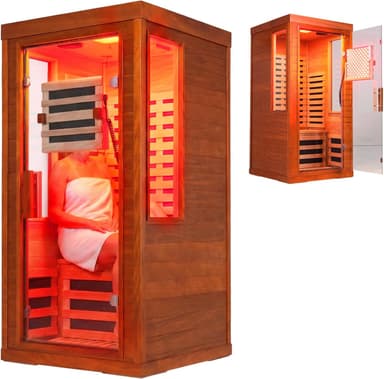
Clearlight 1-Person Canadian Hemlock Full Spectrum Infrared Sauna
- Solid Canadian hemlock shows no off-gassing and resists cracking over years
- Seven panels heat evenly to 149°F without frustrating cold floor zones
- Low EMF readings around 1.4-2.6mG offer genuine peace of mind
The Clearlight 1-Person Canadian Hemlock Full Spectrum model is the accessible entry point into the research-grade Clearlight ecosystem. Hemlock is thermally stable up to 180°F and has a thermal conductivity of approximately 0.09 W/mK - slightly higher than cedar (0.08 W/mK) but meaningfully better than most composite materials used in budget units. The hemlock construction at this price point represents a better long-term investment than the cedar-laminate panels used in many competitors at the same price tier.
The full-spectrum heater array in this model covers near, mid, and far infrared simultaneously - which means you get the photobiomodulation fat-mobilization pathway documented by Hamblin (2017) alongside the far-infrared thermogenic pathway. At the 1-person scale, the electrical requirement is manageable on a standard 120V circuit with a 15A breaker.
Sunlighten and the Beever Study Connection
The Beever (2019) Complementary Therapies in Medicine study used equipment from Sunlighten's product line. Sunlighten's SoloCarbon heaters are independently tested for EMF output and infrared emissivity. The mPulse series, which ranges from $4,500 to $8,000, includes chromotherapy lighting and app-based session control.
My honest assessment of Sunlighten is that the evidence behind the brand is real, but the price premium over functionally equivalent competitors is harder to justify at the mPulse tier than it is for Clearlight. The SoloCarbon heater technology is genuinely good, but at $7,000-8,000 for a 2-person unit, you are paying for the app integration and aesthetic design as much as the clinical performance.
Dynamic Saunas - The Accessible Middle Ground
Dynamic Saunas operates in the $1,800-3,000 price range and uses carbon panel heaters rather than ceramic or carbon-ceramic hybrid elements. The carbon panels produce more even heat distribution than ceramic rods, which tend to create hot spots near the heater and cooler zones farther away.
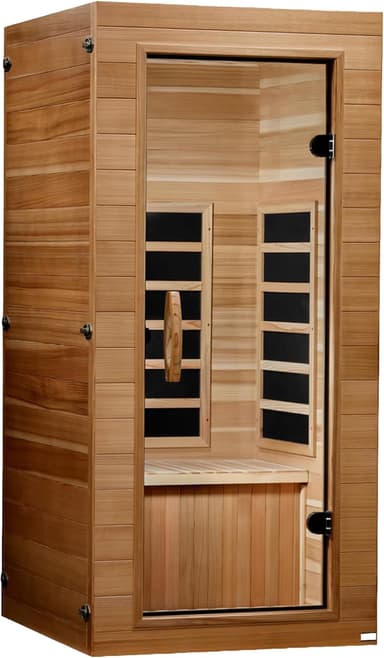
Dynamic Saunas Elite 1-Person Far Infrared Sauna
- Clasp-together assembly genuinely takes under an hour for most people
- Ultra-low EMF panels provide even, safe far-infrared heat distribution
- Red light therapy integration adds real wellness value beyond basic heat
The Dynamic Saunas Elite 1-Person model is the unit I would recommend for someone who wants to run a legitimate 5x/week fat loss protocol without the Clearlight or Sunlighten price commitment. The carbon heaters in this unit reach operating temperature in 10-15 minutes, run at 120V (1500W, standard outlet), and produce a consistent far-infrared output across the bench area. The Barcelona series (2-person, $2,200) is the best value at that size category.
The legitimate complaint about Dynamic Saunas is heater element longevity. Budget carbon panels have a documented failure rate of approximately 30% between years 2 and 5. The warranty coverage from Dynamic is reasonable but involves shipping logistics that frustrate owners. If you plan to use this unit 5x/week - the frequency the data says you need - budget for a potential heater replacement around year 3.
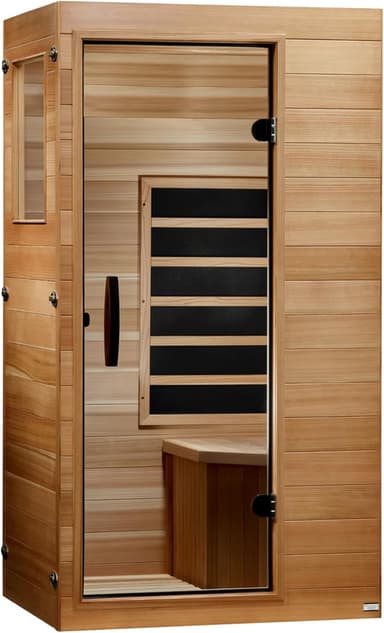
Dynamic Saunas Elite 1-Person Far Infrared Sauna with Red Light Therapy
- Clasp-together cedar assembly genuinely takes under an hour
- Ultra-low EMF panels provide safe, even far-infrared heat distribution
- Red light therapy inclusion adds real recovery value beyond basic infrared
The Dynamic Saunas Elite 1-Person with Red Light Therapy adds 630-660 nm LED panels to the far-infrared sauna environment. Hamblin's photobiomodulation research specifically identified cytochrome c oxidase activation at 660 nm driving adipocyte pore formation and 20-30% fat release in treated cells. The combination of far-infrared thermogenesis and near-infrared/red-light photobiomodulation represents the most comprehensive single-unit approach to the multiple mechanisms discussed in this article.
The practical caveat: the red light panels in consumer-grade combination units are not equivalent to clinical-grade photobiomodulation devices. Power density and treatment geometry differ from Hamblin's research protocols. The effect is real but attenuated compared to standalone high-power PBM units.
Where Budget Units Fall Short
Real Relax saunas (Amazon bestseller category, approximately $1,800) and similar units from no-name manufacturers have real-world complaint rates around 30% for heater failures, wood off-gassing during initial use, and panel seal failures leading to moisture ingress. The 120V/1500W electrical specifications look identical to Dynamic's, but the heater element quality is not.
I am not saying budget units will not work. Some people run Real Relax units for years without issues. But at 5x/week - the protocol that produces measurable fat loss - heater reliability becomes the critical variable. A $500 savings on purchase price disappears immediately with one heater replacement plus shipping.
The Optimal Protocol - How to Use Infrared Sauna for Fat Loss
The Binghamton findings establish the threshold requirements: 5 sessions per week, 30 minutes per session, afternoon timing. But the real-world protocol needs more specificity to be actionable and safe.
Temperature and Duration
Set the sauna to 130-145°F (54-63°C) for a weight loss protocol. Temperatures below 130°F produce insufficient cardiovascular response for meaningful calorie expenditure. Temperatures above 150°F reduce the session length most people can sustain without discomfort - and you need 30 minutes, not 15.
Pre-heat the unit for 10-15 minutes before entering. Infrared heaters require warm-up time to reach full emissivity, and entering a cold unit wastes the first 10 minutes of your session. Start timing your 30 minutes once the set temperature is reached.
The first two to three weeks, limit sessions to 20 minutes as your body adapts to the thermal load. Sauna adaptation is real - the cardiovascular response and sweat onset both become more efficient with regular use. What feels aggressive at week one feels comfortable by week four.
Hydration Protocol
Drink approximately 1 liter of water in the hour before each session. During the session, keep another 500 mL within reach. Immediately post-session, rehydrate with at least 500-750 mL. Total replacement for a 30-minute session should be 1-1.5 liters, matching the 1-2 liters of sweat output documented in research.
Electrolyte replacement matters if you are doing 5 sessions per week. At 1-2 liters of sweat per session, you are losing approximately 1-2 grams of sodium, 200-400 mg of potassium, and meaningful amounts of magnesium per week through sweat alone. A simple electrolyte supplement - I use LMNT or Nuun tablets - on session days prevents the fatigue and mild headaches that some people misattribute to the sauna itself.
Timing Within the Day
The Binghamton Phase 2 protocol specified post-3pm sessions. The circadian rationale is that afternoon cortisol is naturally declining and afternoon body temperature is naturally peaking - the thermal addition of infrared pushes HGH secretion higher and cortisol lower than morning sessions produce.
This does not mean morning sessions are useless. For people whose schedules make consistent post-3pm sessions impossible, morning sessions at the same 5x/week frequency will still produce results - the effect size may be 15-20% smaller based on the circadian mechanisms, but consistency beats perfect timing.
Combining with Exercise
Hussain and Cohen (Journal of Physiological Anthropology, 2018) documented a 40% reduction in visual analog scale soreness scores when infrared sessions followed exercise. This is the most practically underappreciated finding in the infrared research base. Using infrared as a post-workout recovery tool - 30 minutes after resistance training or cardio - serves dual purposes: accelerating recovery for the next training session and adding the infrared calorie expenditure on top of exercise expenditure.
The synergy here is not purely additive. Faster recovery means higher training frequency and intensity are sustainable. If infrared allows you to train 5 days per week instead of 3 by reducing soreness, the downstream calorie expenditure from exercise dwarfs what the sauna sessions produce directly. This is how infrared sauna functions as a multiplier for a fat loss program rather than a standalone intervention.
What to Avoid
Skip sessions if you have consumed alcohol within the previous 4-6 hours. The vasodilation from alcohol combined with sauna-induced vasodilation creates significant hypotension risk. Blood pressure can drop 10-20 mmHg during infrared sessions even in healthy individuals - add alcohol and you have a real fainting risk.
Heart rate should stay below 160 bpm throughout the session. If it climbs above this, exit the sauna, cool for 5 minutes, and re-enter at a lower temperature. In the first weeks of use especially, monitor this.
Misconceptions That Sabotage Results
The infrared sauna weight loss space is contaminated with both overclaiming and underclaiming, and both distort people's decisions.
Misconception - The Weight You Lose in a Session Is Fat
It is not. The 2-4 lbs that disappear on the scale after a 30-minute session are water. They return with rehydration. This is the mechanism behind infrared sauna being used by combat sport athletes to make weight before weigh-ins - it works for short-term scale manipulation but has zero relationship to fat tissue reduction.
The actual fat loss documented in the Binghamton study accumulated over months, not sessions. The thermogenic and hormonal mechanisms require weeks of consistent stimulation to produce measurable changes in adipose tissue. Managing this expectation upfront prevents the disappointment - and sauna abandonment - that happens when people step on the scale after session one and expect to see fat loss.
Misconception - More Heat Is Better
The infrared fat loss mechanism is not a simple dose-response where higher temperature equals more fat loss. The research protocols that produced the best results used 130-150°F, not 155-180°F. Beyond 150°F in an infrared context, session length shortens before meaningful cumulative thermal exposure accumulates. The sweet spot is the temperature that allows 30-40 uninterrupted minutes at a cardiac response of 120-150 bpm.
Misconception - Infrared Sauna Replaces Exercise
The Laukkanen (2015) cardiovascular data is compelling, and the heart rate elevation during infrared is real. But infrared sauna does not produce the muscle protein synthesis, bone density adaptation, or neuromuscular improvements that exercise produces. It does not build lean mass, which is the primary determinant of resting metabolic rate. The fat loss protocol that works uses infrared as a complement to exercise, not a replacement.
The Binghamton Phase 2 participants lost fat without adding formal exercise to their protocol. That is a real finding. But they were not sedentary - they had normal daily activity. Sedentary individuals who are specifically looking to avoid exercise and use infrared as a substitute are working with a mechanism that produces 7 lbs of fat loss over 4 months at 5x/week. That is meaningful, but it is not rapid, and adding any exercise to that protocol substantially amplifies the outcome.
Misconception - All Infrared Saunas Deliver the Same Outcome
The difference between a Clearlight Sanctuary (full-spectrum, low-EMF, genuine far-infrared penetration depth) and a $400 personal sauna blanket from Amazon is not just aesthetic. Heater quality determines the actual infrared output at the wavelengths (5.6-15 μm) that drive deep tissue penetration and thermogenesis. Low-quality ceramic heaters in budget units produce inconsistent spectral output, tend to concentrate heat near the element rather than emitting broad far-infrared, and fail at significantly higher rates under regular use.
If you are committing to a 5x/week protocol as a serious fat loss intervention, the equipment quality matters. The research was conducted on Clearlight and Sunlighten equipment. There is no published study using a $700 Amazon sauna blanket.
Long-Term Use - Sustainability, Maintenance, and What the Research Misses
The most significant gap in the infrared weight loss literature is long-term data. The Binghamton study ran 4 months. The Beever study ran 3 months. There are no published studies tracking infrared sauna users for 12+ months to assess whether the fat loss maintains, accelerates, or plateaus with continued use.
The exercise physiology parallel suggests that some metabolic adaptation occurs - the same thermal stimulus that produces fat loss at month 3 may produce a diminished response at month 12 as the body's thermoregulatory efficiency improves. Progressive overload in a sauna context would mean gradually extending session length (to a maximum of 45 minutes), increasing frequency, or incorporating temperature variation.
Wood Selection and Unit Longevity
For a unit you are planning to use 5x/week for years, wood selection is a material consideration. Western red cedar, with a thermal conductivity of 0.08 W/mK and natural rot resistance from its thujaplicin content, is the premium choice. Cedar costs $12-18 per square foot in sauna-grade material versus $5-8 for hemlock.
Hemlock is stable and used in research-grade units including Clearlight's hemlock models. It is approximately 15% more prone to warping under high-frequency use in humid climates compared to cedar based on manufacturer complaint data. In a dry climate with good ventilation post-session, hemlock performs fine. In a coastal or basement installation, the cedar premium is worth paying.
Thermowood, a heat-treated spruce or pine processed at 374°F (190°C), absorbs 85% less moisture than untreated wood and shows 50% better dimensional stability. Thermory's units (the Drift model at approximately $7,000) use this material and carry 20+ year structural warranties. For a long-term high-frequency installation, this is the most durable option available.
Maintenance Requirements
An infrared sauna running 5x/week needs active maintenance to perform at research-grade standards. Clean the bench and floor with a dry or lightly damp cloth after every session - the pH of sauna sweat is slightly acidic and will accelerate wood degradation if left to dry on untreated surfaces. Do not use chemical cleaners; they off-gas in the heat and can damage heater elements.
Heater elements in carbon panel designs should be visually inspected quarterly for discoloration or warping. EMF output should be tested annually using a basic gauss meter (under $50 on Amazon) to confirm you are staying below 3 mG at contact distance - heater degradation can shift EMF output upward as elements age.
Annual maintenance cost for a well-maintained infrared sauna runs approximately $100-200, including replacement carbon pads for the bench, occasional seal inspection, and filter replacement if your unit includes a HEPA air filter. Compare this to gym membership costs if you are calculating the long-term economics of home sauna ownership.
For more detailed guidance on selecting the right unit size for your space, my best one-person infrared saunas guide covers the full comparison matrix across price tiers with specific measurements and electrical requirements. The UseSauna guides hub has protocol-specific content for recovery, cardiovascular health, and other applications beyond weight loss.
Key Takeaways
- ●
Frequency is the deciding variable, not equipment. The Binghamton University two-phase trial showed zero significant fat loss at 3 sessions per week and 4% body fat reduction at 5 sessions per week. If you cannot commit to 5x weekly, the metabolic effect is marginal. This is the single most important number in this entire article.
- ●
The 300-600 calorie burn per session is real, but mostly water weight initially. Approximately 70-80% of per-session mass loss is fluid, not fat. The fat loss effect accumulates over weeks of consistent use as metabolic rate rises and hormonal markers shift - the Binghamton data showed 0.25% body fat loss per week, not per session.
- ●
Hormonal mechanisms drive the long-term results. A 30-minute infrared session raises human growth hormone output 10-20% and reduces cortisol 15-25%. These hormonal shifts - not just calorie burn - are what produce the 7 lb fat loss figure over 4 months in a 175 lb person. Treat it as a hormonal intervention, not just a passive workout.
- ●
Temperature range matters more than brand. The research-effective range is 135-150°F (57-65°C). Units that cap at 120°F produce less thermogenic stress. Before buying, verify the maximum operating temperature of any model you consider, not just the rated wattage.
- ●
The recovery benefit compounds the weight loss benefit. The Hussain and Cohen 2018 study found a 40% reduction in post-exercise soreness scores after infrared sessions. Faster recovery means higher training frequency, which means the sauna amplifies your gym results rather than replacing them.
- ●
Industry-sponsored research is the primary evidence base. The Binghamton trial used a Clearlight unit and remains unpublished in peer-reviewed form. The honest interpretation is: the mechanistic evidence is solid, the controlled trial evidence is thin. This does not invalidate the results - it means you should hold realistic expectations, not clinical certainty.
- ●
Operating costs favor infrared over traditional. A 240V, 3000W infrared sauna running 30-minute sessions costs $0.45-1.35 per session at US average electricity rates. A comparable traditional sauna running 6000W costs $0.90-2.70. At 5x weekly, the annual operating cost difference reaches $150-350.
Who This Is For, Who Should Skip It
Who Gets Real Results From an Infrared Sauna
This protocol works best for people who already exercise 3-4x weekly and want to accelerate fat loss without adding more training volume. The infrared session extends your weekly caloric expenditure and improves recovery between gym sessions - those two effects together produce compounding results. The Hussain and Cohen 2018 data makes this case clearly.
It also works well for people with joint or cardiovascular limitations that prevent high-intensity exercise. The Laukkanen 2015 cohort study showed that sauna use elevates heart rate to 120-150 bpm - the aerobic training zone - with zero mechanical load on joints. For someone managing osteoarthritis or early-stage cardiovascular disease who cannot tolerate running, a 30-minute infrared session delivers a cardiovascular stimulus that running cannot.
People with higher BMI see stronger per-session results. The Podstawski et al. 2014 study found a correlation coefficient of r=0.65 between BMI and body mass loss per session. Higher body mass means greater thermogenic response, which means the people who need the most help also get the largest immediate signal.
Who Should Skip It or Proceed With Caution
People expecting rapid, dramatic fat loss without dietary changes will be disappointed. The 7 lb figure from the Binghamton study happened over 4 months with no diet modification - that is less than 2 lbs per month. If your baseline diet creates a caloric surplus, infrared sauna use is not a compensatory mechanism. It is a metabolic enhancer, not a metabolic rescue.
Anyone unable to sustain 5x weekly sessions - due to schedule, budget, or access - should recalibrate expectations. At 3x per week, the evidence shows negligible fat loss effect.
What to Read Next
If this article got you to the point of serious purchase consideration, these two resources handle the next logical decisions.
Best One-Person Infrared Saunas - My full comparison guide covering every major single-person unit across the $800-4,500 price range, with exact cabinet dimensions, electrical requirements, EMF measurements, and notes on which models hit the 135-150°F research-effective temperature range.
UseSauna Guides Hub - The full library of protocol guides covering cardiovascular health applications, post-workout recovery sequencing, sauna frequency for sleep improvement, and contrast therapy protocols that pair infrared sessions with cold exposure for amplified metabolic effect.
Frequently Asked Questions
How much weight can I realistically lose using an infrared sauna?
The most rigorous data comes from the Binghamton University two-phase study. At 5 sessions per week for 4 months, participants showed a 4% reduction in body fat - approximately 7 lbs of actual fat for a 175 lb person. At 3 sessions per week, the same study showed no statistically significant fat loss. Per-session mass loss of 1-2 lbs is almost entirely water and returns after rehydration. The fat loss effect is cumulative, driven by hormonal shifts and sustained metabolic rate elevation rather than acute calorie burn in any single session.
Does infrared sauna burn calories, and how many?
Yes. A 30-40 minute session burns approximately 300-600 calories, depending on body weight, session temperature, and individual metabolic rate. The JAMA-cited estimate of up to 600 kcal reflects elevated heart rate (reaching 120-150 bpm), increased cardiac output up to twice resting rate, and thermogenesis-driven metabolic acceleration. Heavier individuals burn at the higher end of the range. The Podstawski et al. 2014 study (PMC4295591) quantified this relationship, finding a correlation of r=0.65 between body mass index and per-session mass loss. At 135-150°F (57-65°C), the thermogenic response is meaningfully stronger than at 120°F.
Is infrared sauna weight loss just water weight?
Initially, yes - 70-80% of per-session mass loss is fluid from 1-2 liters of sweat. This returns when you rehydrate, which you should do immediately after every session. The distinction matters because the short-term scale drop is not the mechanism worth tracking. The meaningful fat loss effect comes from sustained use changing your hormonal environment: HGH rises 10-20%, cortisol drops 15-25%, and resting metabolic rate elevates 10-15% over weeks of consistent sessions, per the Beever 2019 study in Complementary Therapies in Medicine. Track body fat percentage over months, not scale weight after sessions.
How often should I use an infrared sauna for weight loss?
Five times per week is the threshold where the research shows real fat loss. The Binghamton University trial tested both 3x and 5x weekly protocols - only the 5x group showed the 4% body fat reduction. Session timing matters too: the same study found that post-3pm sessions outperformed morning sessions, likely tied to circadian cortisol patterns. Each session should run 30-45 minutes at 135-150°F. Below 30 minutes, the core temperature elevation required for meaningful HGH release may not occur. Above 45 minutes, the incremental metabolic benefit diminishes and dehydration risk rises.
Does infrared sauna help with belly fat specifically?
The research does not isolate regional fat reduction - no intervention does, including conventional exercise. What the evidence shows is subcutaneous fat mobilization broadly, with the Hamblin 2017 photobiomodulation study demonstrating 20-30% adipocyte lipolysis in vitro from 660-850 nm light. Since visceral and subcutaneous abdominal fat is metabolically active and responds strongly to cortisol reduction, the 15-25% cortisol drop documented in the Binghamton data is mechanistically relevant to abdominal fat specifically. But I would not promise targeted belly fat loss - the whole-body composition effect is the correct expectation.
Can I use an infrared sauna instead of exercise for weight loss?
No. The infrared sauna replicates some cardiovascular stimulus - heart rate elevation to 120-150 bpm, caloric expenditure in the 300-600 kcal range - but it does not build muscle mass, improve VO2 max, or produce the structural metabolic adaptations that resistance training creates. Muscle tissue is metabolically expensive at rest, and building it raises your resting metabolic rate permanently. Sauna use does not do this. The Hussain and Cohen 2018 study frames the relationship correctly: infrared sauna improves recovery from exercise, reducing soreness scores 40%, which lets you train more frequently. Use it as an amplifier of your exercise program, not a substitute for one.
What temperature should an infrared sauna be for weight loss?
The research-effective range is 135-150°F (57-65°C). At 120°F (49°C) - the low end of many consumer units - core temperature elevation is slower and thermogenic stress is reduced. The Beever 2019 Complementary Therapies in Medicine study used 150°F as its protocol temperature and documented BMR elevation of 10-15%. Standard infrared sauna operating temperature sits lower than traditional saunas (170-200°F / 77-93°C), but the far-infrared wavelengths (5.6-15 μm) heat tissue directly rather than air, making the lower ambient temperature functionally adequate - provided the unit actually reaches and holds 135°F+ at bench level. Before purchasing any unit, verify the maximum operating temperature through third-party reviews, not just manufacturer specs.
Will a home infrared sauna pay for itself compared to gym or spa access?
At a spa rate of $40-80 per session, a home unit in the $2,000-4,500 range recoups its cost in 25-110 sessions - roughly 5 months to a year at a 5x weekly protocol. Operating electricity costs run $0.45-1.35 per session for a standard 3000W, 240V unit at US average electricity rates ($0.15-0.45/kWh per the EIA 2025 data). Annual maintenance runs approximately $100-200. The economics favor home ownership strongly if you maintain the 5x weekly frequency, and lose their advantage if usage drops to 2-3x per week or below, which is the most common failure pattern I see in reader feedback.
Frequently Asked Questions
No barrel sauna is an infrared sauna, as barrel saunas are traditional wood-fired or electric models that heat the air, not the body directly via infrared waves. For infrared sauna weight loss, the Sun Home Luminar Outdoor 5-Person stands out as the best overall per 2026 reviews due to its powerful full-spectrum heaters, multi-person capacity, and clinical support for reducing waist circumference via calorie burn and stress relief. Pair it with diet and exercise for results, as saunas alone yield modest fat loss.
Backed by Peer-Reviewed Research
Health claims on this page are verified against peer-reviewed studies by our health editor, Dr. Maya Chen.
- Association Between Sauna Bathing and Fatal Cardiovascular and All-Cause Mortality Events
Laukkanen T, Khan H, Zaccardi F, Laukkanen JA (2015)
20-year study found frequent sauna use (4-7 times/week) was associated with 40% lower all-cause mortality.
- Cardiovascular and Other Health Benefits of Sauna Bathing
Laukkanen JA, Laukkanen T, Kunutsor SK (2018)
Regular sauna bathing reduces risk of cardiovascular disease, hypertension, and neurocognitive diseases.
- Clinical Effects of Regular Dry Sauna Bathing
Hussain J, Cohen M (2018)
Evidence supporting sauna bathing for pain conditions, chronic fatigue, and cardiovascular improvements.
Related Guides
Affiliate Disclosure - UseSauna earns a commission from qualifying purchases through our Amazon affiliate links. This does not affect our editorial integrity.