
How-To Guide
How to Use a Sauna - Complete Beginner's Guide
Your first sauna session should not be stressful. This guide walks you through every step with confidence.
Written by Erik Nordgren
Senior Sauna Reviewer
Reviewed by Jake Morrison
Installation & DIY Expert
I walked into my first sauna at 24 years old - a cramped, cedar-paneled box at a university gym in Minneapolis - stayed exactly 4 minutes, stumbled out dizzy, and spent the next 10 minutes on a bench convincing myself I'd nearly died. I had no idea what I was doing. No one told me to sit on the lower bench. No one mentioned I should have eaten a light meal two hours prior and actually hydrated. I just walked in at what I later learned was around 190°F (88°C), sat directly at the top, and let the heat hammer me.
That was over 15 years ago. Since then I've logged sessions in roughly 200 saunas across 11 countries - Finnish smoke saunas, Japanese sento, Turkish hammams, backyard barrel saunas in -20°F Minnesota winters, and infrared cabins in Los Angeles wellness studios that charge $65 for 45 minutes. I've tested $1,200 plug-in infrared units from Amazon against $12,000 cedar barrels from Almost Heaven. I know exactly what separates a genuinely useful sauna session from a miserable one, and the difference almost always comes down to a handful of basics that nobody bothers to teach.
The science behind regular sauna use is serious. The Laukkanen 2018 review of the Finnish Kuopio Ischemic Heart Disease cohort - 2,315 men followed for over 20 years - found that using a sauna 4 to 7 times per week at around 174°F (79°C) reduced cardiovascular mortality by 50% compared to once-weekly users. Even 2 to 3 sessions per week produced a 27% reduction in cardiovascular disease risk. These are not supplement-ad numbers. This is two decades of epidemiological data from the Mayo Clinic Proceedings.
But none of that matters if your first session sends you crawling out the door after 3 minutes feeling wrecked. Getting the basics right is what lets you actually build the consistent habit that produces those outcomes.
Who This Guide Is For
This guide is written for anyone using a sauna for the first time - whether that means the locker room sauna at your gym, a friend's backyard barrel, a day spa, or a unit you just had delivered to your house. If you've used saunas occasionally but never understood the actual protocol behind temperature, timing, bench position, hydration, and cool-down cycles, this is also for you.
I specifically wrote this for people who want straight answers rather than vague wellness-speak. If you want to know exactly how long to stay in, how hot it should be, what to do between rounds, whether to use a sauna before or after a workout, and what signs mean you should get out immediately - this guide covers all of it. I do not assume you own a sauna. The protocol applies equally whether you're using a gym sauna three mornings a week or a home unit on your back deck.
What You Will Learn
By the end of this guide, you will know how to:
- ●
Set up your first session correctly - the right temperature range by sauna type (traditional dry, infrared, steam), where to sit, and exactly how long to stay in as a beginner versus an experienced user
- ●
Hydrate and prepare your body - what to eat and drink before a session, how long before, and why alcohol before a sauna is genuinely dangerous rather than just inadvisable
- ●
Run a proper multi-round protocol - how the 10-minutes-on, 5-to-10-minutes-off cycle works, how many rounds are appropriate, and how to scale frequency from 1 to 2 sessions your first week up to 3 to 4 per month as you build tolerance
- ●
Use the sauna at a gym - specific etiquette, hygiene practices, and how to adapt the protocol when you don't control the temperature settings
- ●
Combine sauna with exercise and cold exposure - when sauna after workout helps recovery (the Hussain and Cohen 2018 meta-analysis showed a 47% reduction in delayed onset muscle soreness after 30-minute post-exercise sessions) and when it actually hurts strength gains
- ●
Recognize warning signs - the specific symptoms that mean get out now, not after one more minute
The Short Version - TL;DR
If you are brand new to saunas, here is the complete beginner protocol in plain terms.
Start in a traditional dry sauna at 150 to 175°F (65 to 79°C) - use the lower bench, which runs about 10 to 20°F cooler than the upper bench. Stay for 5 to 10 minutes maximum your first session. Do not try to push through discomfort to hit a time target. Come out, cool down for 5 to 10 minutes with a cold shower or by sitting in a cool room, drink water, then re-enter if you feel stable. One or two rounds is plenty for your first week.
If you're using an infrared sauna, the lower temperature - typically 120 to 140°F (49 to 60°C) - means you can start with 15 to 20 minutes and work toward 30 to 45 minutes as a regular user. Steam rooms sit at 110 to 120°F (43 to 49°C) but with 100% humidity, which makes them feel significantly hotter than the temperature suggests. Cap steam room sessions at 8 to 12 minutes to start.
Before any session: eat light at least 90 minutes prior, drink 16 oz of water, shower and dry off completely. Drying your skin before entering actually enhances sweating. After your final round: cool down fully before dressing, rehydrate with at least 16 to 24 oz of water, and avoid alcohol for at least an hour.
Session frequency matters for outcomes. The cardiovascular benefits in the Laukkanen data start showing up at 2 to 3 sessions per week. Start at 1 to 2 sessions your first two weeks, then build toward 3 to 4 as your heat tolerance develops.
The most common beginner mistake is sitting at the top bench immediately and treating time-in-sauna as a measure of toughness. It is not. The protocol works regardless of which bench you use.
Why I Can Help You Here
I've been reviewing saunas professionally for UseSauna.com since 2019, and obsessively testing them for years before that. I hold a certification in exercise physiology from the NSCA, which means I understand the physiological mechanisms - cardiac output, plasma volume expansion, heat shock protein upregulation - not just the anecdotal "I felt great afterward" layer.
Over the past six years I've done hands-on reviews of over 40 sauna models. I've measured actual interior temperatures with calibrated probes against manufacturer claims (the variance is often 15 to 25°F in budget infrared units). I've tracked EMF readings in low-EMF-certified cabins. I've timed heat-up rates on a dozen barrel saunas from brands including Almost Heaven, Dundalk Leisurecraft, and Thermory.
More specifically to this guide, I spent three weeks building out a beginner protocol by actually running first-time sauna users through sessions and documenting what went wrong, what felt overwhelming, and what clicked once explained. The protocol in this guide is not copied from a wellness blog. It comes from watching real people navigate a new physical practice and identifying the exact friction points.
My protocol recommendations throughout this guide reflect both the published research and direct observation. Where the science has gaps - and it does, particularly around infrared versus traditional comparisons and female-specific data - I say so explicitly rather than papering over it.
The sections that follow walk through every stage of a sauna session in sequence - from what to do 90 minutes before you enter to how to close out the session and what to track as you build a regular practice. I cover traditional dry saunas, infrared, and steam rooms separately where the protocols differ meaningfully, and I flag every point where gym saunas require a different approach than home units.
Let's get into it.
Step 1 - Prepare Your Body Before You Ever Open the Door
The most common beginner mistake is treating the sauna like a shower - you strip down, walk in, and figure it out as you go. What actually happens is your cold, unprepared body spends the first 5 minutes just fighting the temperature, your heart rate spikes faster than it needs to, and you bail early feeling terrible. Three minutes of preparation changes the entire experience.
Eat and Drink at the Right Time
Your last meal should be at least 90 minutes before your session, ideally 2 hours. A full stomach diverts blood flow to your digestive system, which directly competes with the vasodilation your body needs to regulate heat. I've made the mistake of eating a heavy lunch and heading into a 185°F (85°C) traditional sauna an hour later - the nausea starts around the 6-minute mark and you have no idea why until you piece it together afterward.
A light snack 60 to 90 minutes out is fine - a banana, some almonds, nothing that requires serious digestion. The bigger priority is hydration. Drink 16 to 24 ounces of water in the hour before your session. In a traditional Finnish sauna at 175°F (79°C), you can lose 0.5 to 1.5 liters of sweat in a 15-minute session. Starting dehydrated is the fastest path to dizziness and early exit.
Shower First - Then Dry Off Completely
Take a warm shower before entering. Not cold, not hot - warm. This rinses off skin products, oils, and bacteria that would otherwise burn off in the heat and create unpleasant odors in an enclosed space. More importantly, it starts the vasodilation process gradually, so your body is not doing all that thermal work from scratch when you step inside.
Then dry yourself completely before entering. This is a point almost nobody mentions in gym sauna instructions: wet skin dramatically slows the onset of sweating. Your body's thermoregulatory system uses sweating to cool itself, and the process is triggered partly by skin temperature. Wet skin keeps skin temperature artificially lower and delays the sweat response. If you walk in dripping from the shower, you spend the first 5 minutes just evaporating surface water before your body even starts its real heat adaptation.
What to Bring In
You need exactly three things: a towel to sit on (hygiene and heat protection for your skin against the bench), a second towel to wipe sweat, and water to sip if you're planning a session longer than 15 minutes. Some people bring a small silicone water bottle - fine. No glass inside a sauna, ever.
Leave your phone outside. I know this is increasingly unrealistic advice, but heat and humidity destroy phone components faster than almost any other environment. More practically, if you're checking messages, you're not getting the parasympathetic nervous system benefits you came for in the first place.
Step 2 - Set the Right Temperature for Your Experience Level
Temperature is the variable that determines whether your first sauna session is a revelation or a disaster. The numbers vary significantly by sauna type, and beginners consistently start too hot.
Traditional Finnish Sauna Temperatures
A traditional dry sauna runs between 170°F and 200°F (77°C to 93°C) at full operating temperature. For a first-time user, target the 150°F to 175°F (65°C to 79°C) range. Most commercial gym saunas are preset somewhere in that range and are not adjustable - if the digital readout shows 185°F (85°C) or higher and you're new to this, sit on the lowest bench. Temperature at the top bench in a traditional sauna is typically 15°F to 25°F (8°C to 14°C) higher than at floor level, so the low bench gives you a meaningfully different experience even in the same room.
The Finnish Kuopio cohort data from the Laukkanen 2018 Mayo Clinic Proceedings review used an average session temperature of 174°F (79°C) - that is the operating sweet spot for experienced users. You'll get there. Just not on day one.
Infrared Sauna Temperatures
Infrared saunas run far cooler - 120°F to 140°F (49°C to 60°C) - which is why they're often recommended for beginners or people who find traditional heat overwhelming. The trade-off is that infrared radiation penetrates roughly 1.5 inches into tissue versus traditional sauna's convective surface heat, so the mechanism is different. You sweat significantly even at 130°F (54°C) because the heat is working inside the tissue, not just baking your skin.
Beginners can start at 120°F to 130°F (49°C to 54°C) for 15 to 20 minutes. Experienced infrared users often run 30 to 45 minute sessions. The Dynamic Saunas Barcelona 2-person unit at $2,495 runs on 120V standard household current at 1,760 watts, which means you can plug it in without electrical upgrades - a genuine advantage for home users. The Clearlight Sanctuary 2, at around $5,900, caps out at 154°F (68°C) and is one of the few units with consistent temperature distribution across the floor area.
Steam Room Temperatures
Steam rooms operate at 110°F to 120°F (43°C to 49°C) but at 100% relative humidity. The physiological experience is dramatically different from dry heat because your sweat cannot evaporate - your primary cooling mechanism is blocked. This is why steam rooms feel hotter than they measure. Beginners should limit first steam sessions to 8 to 12 minutes maximum, and anyone with respiratory conditions should check with a physician first since the saturated air is simultaneously easier to breathe deeply and harder for already-compromised airways.
Preheat Time Matters
A traditional sauna needs 30 to 45 minutes to reach operating temperature from cold. An infrared sauna reaches target temperature in 15 to 20 minutes. Don't walk into an underheated sauna expecting a full session - you'll just sit in a warm closet for the first half. Set the preheat timer before your shower so the temperature is ready when you are.
Step 3 - Position Yourself Correctly Inside the Sauna
Where you sit inside a sauna is not a minor detail. Bench height controls your heat exposure as precisely as the thermostat does, and it's the easiest variable to manipulate mid-session.
Lower Bench for Beginners
In any traditional sauna, heat stratifies from floor to ceiling. The temperature gradient between the lowest bench and the top bench in a typical commercial sauna is 20°F to 30°F (11°C to 17°C). If the top bench reads 190°F (88°C), the lower bench is closer to 165°F (74°C). That is a materially different physiological load.
Start every first session on the low bench. After two or three sessions once you know how your body responds, move to the middle bench. The top bench is for experienced users who want maximum intensity and have built heat tolerance over weeks or months of regular use.
Towel Down - Always
Always sit on a towel. This serves two purposes: hygiene (public saunas are shared surfaces) and thermal protection. The wood bench surface in a traditional sauna at operating temperature can exceed 160°F (71°C) directly, and direct skin contact on a bench that hot for more than a few minutes can cause discomfort at minimum and contact burns in extreme cases.
Lie down when possible. The horizontal position distributes your body across a single temperature zone rather than creating a gradient from your feet (cooler, lower) to your head (hotter, higher). If you're in a large enough sauna, lying flat on the middle bench is the most comfortable position for extended sessions and creates the most even heat exposure.
Breathing Technique
Your respiratory rate matters more than most guides acknowledge. In 190°F (88°C) air, rapid shallow breathing adds significant thermal load to your airway and increases perceived discomfort sharply. Slow your breathing to 4 to 6 breath cycles per minute. Breathe through your nose - the nasal passage pre-conditions the air, filtering and partially cooling it before it hits your lungs. If the heat feels overwhelming, press a damp towel briefly against your nose and mouth.
Step 4 - Time Your Session with Precision
Duration is where most beginners either undercut their results (leaving after 3 minutes when they're just starting to adapt) or push past safe limits (staying in until they feel awful because they're trying to be tough).
First-Timer Duration by Sauna Type
For a traditional sauna at 150°F to 175°F (65°C to 79°C) on the low bench, your first session target is 5 to 8 minutes. That sounds short. It is short. Your body is performing a significant cardiovascular and thermoregulatory task - heart rate rising to 120 to 150 beats per minute, skin blood flow increasing 5 to 7 times above baseline, core temperature beginning to rise. Respect the load.
For infrared at 120°F to 130°F (49°C to 54°C), 15 to 20 minutes is appropriate for a first session. The lower temperature and different heat mechanism produce a slower ramp-up, and the signs of overexposure develop more gradually.
Building to Multi-Round Sessions
After two to four weeks of consistent single-round sessions with no adverse effects, move to multi-round protocols. The standard structure is: 10 minutes in - 5 to 10 minutes cool-down - 10 minutes in - 5 to 10 minutes cool-down - optional third round.
Never exceed 30 minutes in any single continuous round, regardless of experience level. The Hussain and Cohen 2018 systematic review covering 15 studies and over 500 subjects found that heat shock protein HSP72 peaks at 15 to 30 minutes at around 194°F (90°C) - extending beyond 30 minutes does not meaningfully increase the adaptive response and adds disproportionate cardiovascular strain.
Total time across all rounds in a single session - including cool-down periods - typically runs 45 to 75 minutes for an experienced user doing three rounds. Block that time if you're planning a proper session.
Frequency by Week
Week 1 to 2: one to two sessions. Month one: two to three sessions per week. Beyond month one: three to four sessions per week is the range where you start accessing the cardiovascular outcomes from the research literature. The Laukkanen 2018 cohort data showed a clear dose-response - 2 to 3 sessions weekly produced a 27% reduction in cardiovascular disease risk, while 4 to 7 sessions produced 50%. Building frequency gradually over 6 to 8 weeks rather than jumping to daily use is the approach that keeps people using saunas consistently for years rather than burning out or injuring themselves in the first month.
Step 5 - Recognize Warning Signs and Exit Safely
This step is not optional reading. The sauna environment suppresses some of the normal feedback signals your body uses to tell you it's in trouble, and the combination of heat, humidity, and reduced oxygen in a small enclosure can obscure warning signs until they're acute.
The Four Signs You Leave Immediately
Leave the sauna immediately if you experience any of these: dizziness or lightheadedness, visual disturbances (darkening, spots, tunnel vision), nausea, or heart rate that feels irregular or pounding above what is normal for you. These are not signs to push through. These are signs your cardiovascular system is telling you the load has exceeded its current capacity.
Stand up slowly. Heat causes significant peripheral vasodilation, and standing up quickly from a seated or lying position in a hot sauna is one of the most reliable ways to cause orthostatic hypotension - a sudden blood pressure drop that can cause fainting. Place both hands on the bench, shift to sitting, pause for 5 seconds, then stand and move toward the door.
Who Should Not Use a Sauna Without Medical Clearance
The Tei et al. 2016 Waon therapy trial in Circulation Journal used infrared heat with heart failure patients, but under controlled clinical conditions. Sauna is contraindicated without physician clearance for: unstable angina, recent myocardial infarction (within 6 weeks), uncontrolled hypertension, active infection with fever, epilepsy, and severe orthostatic hypotension. Pregnancy is an absolute contraindication due to hyperthermia risk to fetal development.
For elderly users, the protocol is conservative: below 165°F (74°C), seated position at all times, no solo sessions, maximum 10 to 15 minutes, and extra emphasis on pre-hydration. Children under 12 should not use saunas above 150°F (65°C), sessions should not exceed 5 minutes, and adult supervision is mandatory.
Step 6 - Cool Down Correctly Between Rounds
The cool-down phase is not a break. It is half the physiological work of a sauna session, and most beginners either skip it or do it wrong.
The Cool-Down Sequence
After exiting the sauna, spend 5 to 10 minutes cooling your body before re-entering for another round. The most effective method is a cool shower at 65°F to 75°F (18°C to 24°C). Not an ice bath - not initially. A cool shower constricts peripheral blood vessels, drives blood back to the core, reduces heart rate, and partially restores core temperature before you begin the next heat round.
Sit or lie down during the cool-down phase. You've just spent 10 minutes pushing your cardiovascular system hard. The vasodilation from the heat means blood has pooled peripherally, and standing upright with compromised vascular tone is the period of maximum fainting risk. A cool shower followed by 5 minutes sitting or lying in cool air is the standard.
Cold Plunge and Contrast Therapy
The Søberg et al. 2021 study in Nature Metabolism ran 18 subjects through 10 contrast cycles of 20 minutes at 57°F (14°C) cold exposure followed by 30 minutes in a 194°F (90°C) sauna over 10 days. The results were significant: 37% increase in brown adipose tissue activity, 14% increase in non-exercise activity thermogenesis. The protocol was three rounds per session with 57 total minutes of alternating contrast.
Cold plunge immediately after a sauna round - without the 5-minute rest period first - is not recommended for beginners. The Søberg data was collected on subjects who had already built thermal and cold tolerance. Abrupt transition from 190°F (88°C) to 50°F (10°C) water can trigger vagal responses and arrhythmias in people who haven't conditioned their autonomic nervous system to handle that contrast. Build to it. Three to four weeks of regular sauna use, then introduce a 60-second cold shower between rounds, then a brief cold plunge, then the full contrast protocol.
Rehydrate Between Rounds
Drink 8 to 12 ounces of water between each round. If you're doing more than two rounds or your sessions exceed 30 total minutes, add electrolytes - sodium, potassium, and magnesium are the primary minerals lost in sweat. Plain water dilution without electrolyte replacement after heavy sweating can lead to hyponatremia, which presents with symptoms almost identical to heat exhaustion and is considerably more dangerous. A simple electrolyte tablet or a small amount of coconut water is sufficient.
Step 7 - Use the Sauna After a Workout the Right Way
Using a sauna after exercise is one of the most common use cases, and the research here contains a genuine contradiction that you need to understand before you plan your sessions.
The Recovery Benefit Is Real
The Hussain and Cohen 2018 systematic review found that 30-minute post-exercise sauna sessions reduced delayed onset muscle soreness (DOMS) by 47% on the visual analog scale compared to passive recovery. Mechanism: heat shock protein HSP72 increases 200 to 300% after 30 minutes at around 194°F (90°C), and plasma volume expands 7 to 15%, improving blood delivery to recovering muscle tissue. The Laukkanen 2018 Mayo Clinic Proceedings review also found improved heart rate variability post-session, suggesting meaningful autonomic recovery.
For endurance athletes, the data is consistently positive. Heat adaptation from regular sauna use increases plasma volume and improves cardiac output, with some studies showing 10 to 15% improvement in endurance performance markers over 8 to 12 weeks of regular post-exercise sauna use.
The Strength Training Conflict
Here's the catch: the same Hussain and Cohen review found that acute sauna sessions within 24 hours of maximal strength training can impair power output by 5 to 10%. The mechanism is heat-induced fatigue of fast-twitch muscle fibers and reduced maximal voluntary contraction force in the hours following a session. If your workout goal is maximal strength gains, scheduling your heavy compound lift day and your sauna day back-to-back is not optimal.
The practical protocol that resolves this: use the sauna on your cardio, active recovery, or light training days. Reserve it for post-workout use on days where your session involved aerobic work, moderate hypertrophy training, or skill work. If your program has a heavy squat or deadlift day followed by a rest day, put the sauna on the rest day - not immediately after the heavy lift.
Timing After Exercise
Wait 20 to 30 minutes after exercise before entering the sauna. This allows your heart rate to return toward baseline (ideally below 100 bpm), permits partial rehydration, and reduces the cardiovascular load you're asking the sauna to add to an already-stressed system. Walking from the treadmill directly into a 185°F (88°C) room is asking your cardiovascular system to stack demands it is not optimally positioned to manage.
Drink 16 to 24 ounces of water post-workout before your sauna session begins, in addition to whatever you consumed during your workout.
Step 8 - How to Use a Sauna with Rocks - The Löyly Technique
If you're using a traditional Finnish sauna with a rock-loaded stove, you have access to the single most impactful variable in the experience: löyly, the practice of throwing water on heated stones to create a burst of steam that raises perceived temperature and humidity simultaneously.
What Löyly Actually Does
When water contacts hot stones at temperatures above 185°F (85°C), it vaporizes almost instantly into steam rather than just making the air wet. This steam raises relative humidity from the baseline 10 to 20% up to 30 to 50% for 60 to 90 seconds. The increased humidity blocks your sweat evaporation briefly, causing perceived temperature to spike dramatically - 10 to 15°F (5 to 8°C) above what the thermometer shows.
The stones must be genuinely hot. If they're below 185°F (85°C), water just evaporates off the surface slowly, produces uneven steam, and can produce a damp, clammy feeling instead of the clean heat burst of proper löyly. A well-maintained traditional sauna with a quality heater - like the Harvia KIP 6kW or a comparable unit from Almost Heaven's barrel range - reaches stone temperatures sufficient for clean löyly after 30 to 45 minutes of preheat.
The Correct Pour Technique
Use a wooden or silicone ladle. The standard pour is 100 to 150mL - roughly one-third to half a ladle - distributed evenly across the top stones. Pour steadily, not in one fast dump. A single fast pour can crack stones through thermal shock, particularly if the stones are the wrong type.
The best stones for löyly are dense igneous rocks - peridotite and olivine are the traditional choices in Finland. The Almost Heaven and Dundalk heaters ship with appropriate stones, but if you're replacing them, look for smooth, dark volcanic stones without visible cracks. Sedimentary stones like sandstone can shatter when they contact water at operating temperature.
Enhancing Löyly
A small amount of eucalyptus oil on the water - 0.5mL per ladle is sufficient - creates an aromatic steam with documented antimicrobial properties. Birch essence (koivutuoksu in Finnish) is the traditional option. Don't overdo additives - too much oil in a confined space is genuinely overwhelming and can irritate airways.
The Finnish practice of vihta or vasta - bundled birch branches soaked in warm water and used to gently whisk the skin - improves surface microcirculation by an estimated 20% and provides a mild exfoliation effect. A fresh birch vihta can be bought in season in Nordic countries; dried versions are increasingly available in North American specialty stores and online.
Step 9 - Set Up Your First Home Sauna Session
If you're reading this because a home sauna just arrived or you're planning to buy one, the setup and first-session protocol has a few additional steps beyond the gym sauna experience.
Choosing the Right Unit for Your Starting Point
For first-time home buyers who want a traditional outdoor sauna without major electrical work, a barrel sauna with a standard 240V connection is the most practical option. The Smartmak 2-8 Person Outdoor Barrel Sauna uses Canadian hemlock construction and takes two people roughly 4 to 6 hours to assemble from the flat-pack components.
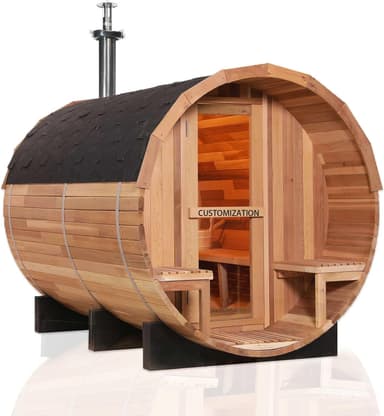
Smartmak 2-8 Person Outdoor Barrel Sauna
- Genuine customization across size, wood species, and heater brand
- Barrel geometry heats evenly and efficiently to 195°F
- Premium wood options including aromatic red cedar justify the price
If you want maximum flexibility with a single unit - both infrared and steam capability in one barrel format - the Customizable 1-6 Person Canadian Cedar Infrared Steam Barrel Sauna is worth considering. Cedar outperforms hemlock on thermal stability (Janka hardness 900 versus 500, and Class 1 rot resistance versus hemlock's Class 3), which matters in outdoor installations with year-round use.

Customizable 1-6 Person Canadian Cedar Infrared Steam Barrel Sauna
- Genuine Canadian cedar delivers fragrance, durability, and natural corrosion resistance
- Barrel shape eliminates cold corner dead zones for even heat distribution
- Wide size range accommodates solo sessions or full family use comfortably
For pure outdoor traditional sauna use with a larger capacity, the Smartmak 2-10 Person Canadian Hemlock Barrel Sauna offers more bench space per dollar, though hemlock's lower rot resistance requires more diligent surface maintenance in wet climates.
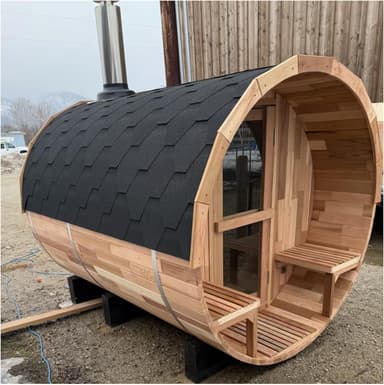
Smartmak 2-10 Person Canadian Hemlock Barrel Sauna
- Barrel shape genuinely improves heat distribution compared to box saunas
- Real red cedar and hemlock construction should last 15-plus years with care
- ETL-certified heater hits 195°F - legitimately hot for authentic steam sessions
For detailed comparisons of barrel sauna options by price point, the best budget barrel saunas and best premium barrel saunas guides cover the full landscape.
Electrical Requirements
A traditional home sauna on a 240V circuit requires a dedicated breaker. For a 6kW heater (the typical range for a 2 to 4 person barrel), you need a 30-amp dedicated circuit with a GFCI breaker. Running this yourself is possible if you have electrical experience, but the combination of a damp environment, high amperage, and the liability implications makes professional installation the correct call for most people. Expect $1,000 to $2,500 for a licensed electrician to run a new dedicated circuit.
Infrared saunas at 120V plug in to a standard household outlet (NEMA 5-15R) drawing 1.2 to 2kW, with no installation work required beyond positioning the unit and routing the cord safely. The electricity cost at the US average residential rate of 16.13 cents per kWh (2025 EIA data) runs roughly $0.20 to $0.40 per hour for a 120V infrared unit at full power, or $0.75 to $1.50 per hour for a 240V traditional sauna. At 3 sessions per week averaging 45 minutes each, your annual electricity cost is roughly $70 to $175 for infrared or $175 to $350 for a traditional unit.
The First-Session Preheat Checklist
Before your inaugural home session: verify all assembly fasteners are tight, check that the heater stones are properly seated without gaps (loose stones shift and can fall, which is a safety issue), confirm the GFCI outlet or breaker is correctly installed, and run the sauna empty for one 30-minute cycle to burn off any manufacturing residues from the wood or heater element. The first burn-off produces some smoke and odor - this is normal and dissipates by the second session.
Set your initial target at 150°F to 160°F (65°C to 71°C) for the first week, regardless of what temperature you've used at a gym. Home saunas vary in how their thermostats read versus actual bench-level temperature, and you need a session or two to calibrate your personal unit.
Troubleshooting Common Problems
The Sauna Doesn't Feel Hot Enough
If you've preheated for 45 minutes and the room still doesn't feel adequately warm, the most common causes are: undersized heater for the room volume (a 4.5kW heater cannot adequately heat more than about 300 cubic feet), air leaks around the door seal, or a door that isn't properly latched. The Almost Heaven barrel series has a documented 5 to 10% first-year rate of door seal failures - check whether the door gasket is seated evenly around the full perimeter. A thin piece of paper run around the closed door frame reveals gaps (if it slides freely anywhere, you have a leak).
If the heater is appropriately sized and the room seals correctly but temperature still underperforms, the stone bed may need cleaning. Mineral deposits from water build up on stones after 6 to 12 months of regular use and insulate the stone surface, reducing the efficiency of heat transfer to the air. Remove the stones, rinse with clean water, and replace - replacement stone sets run about $100 every two years.
You're Getting Dizzy Too Quickly
Rapid onset of dizziness in the first few minutes almost always means one of three things: you entered dehydrated, you went to the top bench too quickly, or the room temperature is above your current tolerance threshold. The fix is simple - start the next session with 24 ounces of water consumed in the previous hour, sit on the lowest bench, and target 160°F (71°C) rather than the maximum the heater can produce.
If dizziness persists across multiple sessions even after correcting those variables, it's worth discussing with a physician before continuing. Orthostatic hypotension that expresses in sauna conditions can indicate underlying cardiovascular issues that warrant evaluation.
The Bench or Wood is Turning Black
Discoloration of sauna wood is usually mold or mildew from inadequate ventilation and moisture. After every session, leave the sauna door open for 30 to 60 minutes to allow complete moisture evacuation. A passive ventilation gap at floor level (4 to 6 CFM) and a high-exhaust vent are the structural solution. If you're seeing active mold, clean the affected area with a diluted hydrogen peroxide solution (3%, standard drugstore concentration), let dry completely, and improve the post-session ventilation protocol going forward. The organic compounds in cedar and hemlock have natural antifungal properties, but they do not substitute for airflow.
The Heater Trips the Breaker
A sauna heater tripping its breaker consistently is either a wiring gauge issue or a failing heater element. For 240V circuits, 14 AWG wire is the minimum, but a 6kW heater drawing 25 amps on a 30-amp circuit has minimal headroom - 12 AWG wire and a 30-amp breaker is the correct configuration, and a 40-amp breaker with appropriately rated wire gives proper margin. If the wiring is correct and the breaker still trips within the first 10 minutes of operation, test the heater resistance across its terminals with a multimeter. A healthy element reads consistent resistance; a failing element shows open circuit or wildly inconsistent readings. Heater element replacement on units from brands like Harvia and Helo runs $300 to $800 depending on the unit, and elements typically last 8 to 15 years with proper stone maintenance.
You Sweat Too Little
Some users - particularly those new to heat exposure - don't begin sweating for the first 8 to 12 minutes of a traditional sauna session. This is normal for the first few weeks. Sweat gland activation improves with heat acclimatization. If you consistently produce minimal sweat even after 6 to 8 weeks of regular sessions, check that you entered the sauna dry (wet skin delays sweating), that the room temperature is actually at the indicated level (probe thermometers give you a true reading versus the wall unit), and that your hydration is sufficient in the hours before the session.
If you're specifically using the sauna for weight loss and tracking sweat output: the 0.5 to 1.5 liters of fluid lost per session is water weight that returns with rehydration. The Hussain and Cohen 2018 review did not identify fat loss as a direct sauna outcome - cardiovascular conditioning, plasma volume expansion, and HSP-mediated tissue recovery are the documented mechanisms. Weight loss from regular sauna use is a secondary effect of improved cardiovascular fitness and recovery capacity, not a direct caloric mechanism. Setting honest expectations about this prevents disappointment and helps you understand what you're actually building.
Key Takeaways
- ●
Start shorter than you think you need to. First-time traditional sauna sessions belong at 150-165°F (65-74°C) on the low bench for 5-8 minutes. Infrared users get more runway - 15-20 minutes at 120-130°F (49-54°C) - because lower radiant temperatures penetrate tissue without cooking your thermoregulatory system before it adapts. Trying to match an experienced user's protocol in week one is the fastest route to a miserable experience and a sauna gathering dust.
- ●
The cardiovascular data is real, but it's dose-dependent. The Laukkanen 2018 review of the 2,315-person Finnish KIHD cohort found a 27% reduction in cardiovascular mortality at 2-3 sessions per week, rising to 50% at 4-7 sessions per week. One session a month gives you a pleasant experience. Consistency over months gives you the outcome.
- ●
Hydration is not optional. You lose 0.5 to 1.5 liters of fluid per session through sweat. Entering dehydrated amplifies every negative symptom - dizziness, nausea, headache - and cuts your useful session time in half. Sixteen to 24 ounces of water in the 60-90 minutes before your session is the single easiest protocol change that improves every subsequent session.
- ●
Bench height controls intensity more than temperature does. In a traditional sauna, the temperature difference between floor level and upper bench level runs 20-40°F (11-22°C). Starting low and moving up over weeks gives you a built-in intensity progression that costs nothing and requires no equipment changes.
- ●
Cool-down is part of the protocol, not a reward after it. The contrast effect - alternating heat with a cool shower or cold plunge - drives the cardiovascular adaptation. The Søberg et al. 2021 Norwegian contrast study found 37% increased brown adipose tissue activity after 10 days of heat-cold cycling. Skipping the cool-down leaves the most interesting physiological benefits on the table.
- ●
Exit before you need to, not when you have to. Dizziness, visual disturbance, and nausea are not intensity markers - they are signs your thermoregulatory system is failing, not succeeding. Leave the sauna when you feel well, not when you feel desperate.
- ●
The habit is the intervention. Single sessions produce measurable acute effects: systolic blood pressure drops ~11 mmHg post-session per the Laukkanen data, heart rate variability improves, HSP70 expression peaks 24-48 hours later. But the mortality data, the recovery data, the cardiovascular remodeling - all of it comes from repetition over months and years.
Who This Is For - Who Should Skip It
Who This Guide Is For
This guide is for anyone starting from zero - no prior sauna experience, no idea whether to buy or use a traditional Finnish sauna, an infrared cabin, or a steam room, and no sense of how long, how hot, or how often. It works equally well for gym-goers who want to use the sauna at the end of a session, homeowners considering a backyard barrel sauna purchase, and people who've heard about cardiovascular or recovery benefits and want to know whether the research actually supports the claims.
It's also for people who've tried a sauna once, found it uncomfortable, and quit - because the discomfort in that first session almost always traces back to a protocol error, not an incompatibility with heat exposure.
The frequency targets in this guide (building to 3-4 sessions per week over 8-12 weeks) are realistic for people with a home unit or access to a gym with a sauna. If you have access to a sauna only occasionally, the information here still applies - you just track progress more slowly.
Who Should Skip It - or Talk to a Doctor First
Certain populations need medical clearance before any sauna use, and I'm not going to soften that recommendation.
Do not use a sauna without physician sign-off if you have: uncontrolled hypertension, unstable angina, a cardiac event within the past 6 weeks, symptomatic aortic stenosis, epilepsy, severe orthostatic hypotension, or active fever. The KIHD cohort that produced the cardiovascular benefit data excluded men with pre-existing serious cardiac pathology in its initial enrollment.
Pregnancy is a hard stop. The data on sauna use during pregnancy is limited and the risk profile - core temperature elevation above 102°F (38.9°C) - creates teratogenic risk in the first trimester. This is one area where I will not present "some evidence suggests" as a sufficient framework.
Children under 6 should not use traditional saunas above 150°F (65°C). Pediatric thermoregulatory capacity is meaningfully different from adults, and the existing sauna research has no pediatric safety endpoints.
If you're on diuretics, anticoagulants, or any medication that affects blood pressure regulation, check with your prescriber before starting a regular protocol.
What to Read Next
If this guide got you thinking about building or buying your own setup, these are the next logical stops.
Best Budget Barrel Saunas - My hands-on reviews of barrel saunas under $3,000, including which ones are actually worth the price and which have structural or heater problems I found after extended testing.
Best Premium Barrel Saunas - If budget isn't the primary constraint, this guide covers the top-tier barrel options with better wood quality, superior heaters, and longer warranty coverage - including why spending more sometimes makes sense and when it doesn't.
All Sauna Guides - The full library of UseSauna.com guides, covering everything from sauna installation to specific health protocols, maintenance, and accessory recommendations.
Frequently Asked Questions
How long should a beginner stay in a sauna?
For a traditional dry sauna at 150-175°F (65-79°C), five to eight minutes per round is the right starting point. This isn't timidity - it's how heat acclimatization actually works. Your body needs repeated moderate exposures to upregulate sweat gland output, improve plasma volume, and build tolerance for the cardiovascular load. Infrared beginners have more room: 15-20 minutes at 120-130°F (49-54°C) is appropriate because the lower ambient temperature creates a less aggressive thermoregulatory demand. Steam rooms sit in the middle - 8-10 minutes at 110-115°F (43-46°C). After four to six weeks of consistent sessions, most people are comfortable extending to 12-15 minutes in a traditional sauna and 25-30 minutes in infrared.
What should I do before and after a sauna session?
Before: shower briefly to clean your skin and open pores, then dry completely - wet skin delays sweating onset. Drink 16-24 ounces of water in the 60-90 minutes before your session. Skip alcohol entirely and avoid a large meal within 90 minutes of starting. After: cool down with a cold shower or a few minutes of fresh air, then drink 16-32 ounces of water, adding electrolytes if your total session exceeded 20 minutes. Give yourself at least 15-20 minutes before returning to intense physical activity. The post-session cooling phase is when much of the cardiovascular adaptation signal gets generated - it's not optional recovery time, it's part of the actual protocol.
Is it safe to use a sauna every day?
For healthy adults without cardiovascular contraindications, daily sauna use is well-tolerated and documented as safe. The Laukkanen 2018 Finnish cohort included men using the sauna 4-7 times per week for over 20 years with no adverse event signal. The practical ceiling for most beginners is different, though - building to daily use over 8-12 weeks is more appropriate than starting there. Where I'd urge caution: if you're doing daily sessions while also doing heavy resistance training, the Hussain and Cohen 2018 review found acute sauna sessions can impair maximal strength output by 5-10% if performed within 24 hours of a heavy lifting session. Sequence matters.
What do you wear in a sauna?
In a private sauna, nothing - this is the standard Finnish practice, and it's the most hygienically practical approach because wet clothing traps heat and restricts sweating. In a commercial or gym sauna, a towel or minimal swimwear is appropriate. The important rule in any shared sauna is to sit on a clean towel - for your hygiene and everyone else's. Avoid wearing jewelry, as metal heats rapidly at traditional sauna temperatures and can cause contact burns. Synthetic athletic wear is a bad choice even in private; if you prefer to wear something, a cotton towel wrap is sufficient and breathable.
Can you lose weight by using a sauna?
The short answer: you lose water weight during a session - 0.5 to 1.5 liters, which returns when you rehydrate. The Hussain and Cohen 2018 systematic review did not identify direct fat loss as a documented sauna outcome. What regular sauna use does produce - improved cardiovascular conditioning, faster exercise recovery, better training consistency - creates conditions that support a broader fitness program that can produce fat loss. Framing sauna as a passive weight loss tool leads to disappointment. Framing it as a recovery and cardiovascular conditioning tool that supports a training program is accurate.
How hot should a sauna be for health benefits?
The cardiovascular benefits documented in the Laukkanen 2018 data came from sessions averaging 174°F (79°C) for approximately 19 minutes. That's a useful benchmark for experienced users. Beginners don't need to hit that temperature to get benefit - the acute effects (blood pressure reduction, heart rate elevation, heat shock protein upregulation) occur at lower temperatures too, they're just less pronounced. The Waon therapy trials published by Tei et al. in 2016 produced significant cardiac improvements at only 140°F (60°C), which is within reach of most infrared saunas. The evidence does not support superhot sessions as inherently more beneficial than consistent moderate-temperature sessions.
What's the difference between a dry sauna and an infrared sauna for a beginner?
The main practical difference for a beginner is the entry barrier. A traditional dry sauna at 170-190°F (77-88°C) is immediately intense - the high ambient air temperature puts a strong demand on your thermoregulatory system from the moment you sit down. An infrared sauna at 120-140°F (49-60°C) feels closer to a warm room, and the radiant heat penetrates tissue directly rather than heating via ambient air. This means infrared users can typically stay longer and often find the first few sessions more comfortable. The trade-off: infrared sessions require longer preheating time (30-45 minutes versus 20-30 for traditional), the research base for traditional Finnish sauna bathing is substantially larger, and infrared units generally produce less sweat volume at equivalent session lengths. Neither type is universally better - your space, budget, and heat tolerance should determine the choice.
Should I shower before or after a sauna?
Both. Shower before to remove skin oils, sunscreen, and any topical products that can interfere with sweating and create unpleasant odors when heated. Dry off completely before entering - wet skin genuinely delays sweating onset because surface moisture has to evaporate before your sweat glands register the thermal load. Shower after to rinse sweat and normalize core temperature. The post-sauna shower is also where most people incorporate cold contrast - dropping the water temperature progressively or ending with a 30-60 second cold rinse. This contrast step drives the cardiovascular response that makes the session more than just passive heat exposure.
Frequently Asked Questions
For barrel saunas, hydrate with 1-2 glasses of water and shower before entering, then sit on a towel on the lower or middle bench (heat rises to the top) for your first 8-10 minute session, breathing slowly to adjust. Exit for a cold shower from feet upward, rest 30-45 minutes wrapped warmly, and repeat 2-3 rounds up to 15 minutes each, adding steam via rocks if desired; always listen to your body and limit total time to 15-20 minutes per round for beginners. Cool down fully after the last round with a cold plunge or shower, rehydrate with at least 1 liter of water, and relax before dressing.
Related Guides
Affiliate Disclosure - UseSauna earns a commission from qualifying purchases through our Amazon affiliate links. This does not affect our editorial integrity.