
Maintenance - 0 peer-reviewed sources
Barrel Sauna Maintenance - Seasonal Care Guide
A well-maintained barrel sauna lasts 20+ years. Here is your complete seasonal care playbook for cleaning, sealing, and protecting your investment.
Written by Erik Nordgren
Senior Sauna Reviewer
Reviewed by Jake Morrison
Installation & DIY Expert
I bought my first barrel sauna in the spring of 2017 - a 6-person Western Red Cedar unit from Almost Heaven, installed on a gravel pad behind my house in northern Minnesota. By the following October, two of the steel bands had gone slack enough to rattle, a thin line of green mold had crept up the shaded side of the staves, and my sauna stones had developed hairline cracks I could see from three feet away. I had done exactly zero maintenance in six months. That barrel sauna cost me $4,800 delivered, and I nearly wrecked it through ignorance in less than a year.
What saved it - and what taught me the real shape of barrel sauna ownership - was rebuilding my entire care routine from scratch, season by season, failure by failure. I have since reviewed and personally tested more than 40 outdoor sauna installations across 12 states, logged thousands of sessions, and interviewed installation crews, electricians, and wood treatment specialists. The lesson every single time is the same: barrel saunas are not maintenance-free outdoor furniture. They are precision wood structures operating under extreme thermal and moisture stress, and the owners who protect their investment treat them accordingly.
The research backs the stakes here. The Laukkanen et al. 2020 review of the Kuopio Ischemic Heart Disease Risk Factor Study - 2,315 Finnish men followed for over 20 years - showed that 2-3 sauna sessions per week at 174-212°F reduced fatal cardiovascular events by 27% and all-cause mortality by 40%. You cannot capture those benefits from a sauna with a cracked stone bed losing thermal efficiency, mold-contaminated air, or an electrical fault waiting to happen. Maintenance is not a chore category - it is the precondition for the health outcomes that make sauna ownership worth anything.
The global sauna market hit $1.2 billion in 2024 according to Grand View Research, growing at 7.8% annually through 2030, with barrel saunas holding roughly 25% of the outdoor residential segment. The HPBA reports outdoor wood sauna installations in the US jumped 12% after 2020. A lot of people bought barrel saunas during that surge. Most of them received zero maintenance documentation worth reading.
This guide is the documentation they should have gotten.
Who This Guide Is For
This guide is written for barrel sauna owners - current or prospective - who want a complete, season-by-season maintenance framework they can actually follow without guessing.
If you own a traditional cedar, hemlock, or thermowood barrel sauna operating at 170-200°F with sauna stones, this guide covers your full care schedule. If you own an infrared barrel hybrid (Dynamic Saunas, Clearlight, Sunlighten) running at 120-140°F, the wood maintenance sections apply directly and I flag where your care needs differ.
This guide also serves buyers researching barrel saunas before purchase - understanding the maintenance commitment is a legitimate part of the buying decision, and the cost figures here ($50-150/year routine, up to $500 for full re-treatment) belong in your total cost of ownership math.
If you own an indoor box sauna or a prefab steam room, some sections (wood care, ventilation) transfer, but this guide is built specifically around the outdoor barrel form and its particular vulnerabilities to freeze-thaw cycles, UV exposure, and wildlife contact.
What You Will Learn
- ●
The complete seasonal maintenance calendar - specific tasks for winter, spring, summer, and fall, with cadence and product recommendations so nothing gets missed or done at the wrong time
- ●
How to inspect and tighten barrel bands correctly - why band maintenance is the single most overlooked task, what torque range to target, and why the first year demands monthly checks (wood shrinks 5-10% initially)
- ●
Wood treatment - species by species - what cedar, hemlock, and thermowood each need in terms of sealing and oiling frequency, and which products (Sikkens Cetol, Penofin, and others) actually hold up under thermal cycling
- ●
Sauna stone maintenance and replacement - how to identify cracked stones before they fail, when to replace a full stone set, and what a 50-100kg replacement costs ($100-200) versus the efficiency loss from running cracked stones
- ●
Interior cleaning that protects your health - the bacterial and mold risks from sweat stains on untreated bench wood, the correct sanding protocol (220-grit annually), and the ventilation routine that prevents 90% of mold problems
- ●
Electrical safety and heater checks - why an annual electrician inspection of your 240V/30A circuit and GFCI protection is non-negotiable, and what that service realistically costs ($200-400)
The Short Version - TL;DR
Barrel sauna maintenance breaks into four seasonal windows, each with distinct priorities.
Spring (March-May): Power wash the exterior at under 1,500 psi, sand interior benches with 220-grit sandpaper, inspect bands after the freeze-thaw cycle, and apply fresh exterior stain or oil if the previous coat has worn through. This is your reset after winter.
Summer (June-August): Daily ventilation is your primary job - leave the door propped open for 30-60 minutes after every session and run a fan if your location has humidity above 60%. Oil exposed wood surfaces as needed. Summer is low-drama if spring went well.
Fall (September-October): Inspect your sauna stones for hairline cracks before heavy use season starts. A full 50kg stone set costs $100-200 to replace and cracked stones lose thermal efficiency fast - at 170-200°F you feel it within a few sessions. Re-stain the exterior before ground freeze if you skipped spring.
Winter (November-February): Check for water seepage monthly, tighten bands after any significant freeze-thaw swing, and keep the interior dry between sessions. In climates with hard freezes, a short preheat once a week even on unused weeks keeps the wood from cycling through extreme humidity changes.
The routine cost runs $50-150 per year for consumables - oil, sandpaper, cleaning supplies. Add $100-200 every few years for stones, and $200-400 every 1-2 years for an electrician to check your heater circuit. A 6kW session costs roughly $1.02 in electricity at the 2025 US average residential rate of $0.17/kWh. None of this is expensive. Neglect, on the other hand, costs $500-2,000 in wood replacement, re-banding, or heater repair - and I have seen all of it.
Why I Can Help You Here
I have been reviewing saunas professionally for UseSauna.com since 2019, and I have been a sauna user for far longer than that - my first experience was in a traditional Finnish smoke sauna outside Tampere in 2004. But what qualifies me specifically for a barrel sauna maintenance guide is not the number of saunas I have used. It is the number of poorly maintained saunas I have inspected and the conversations I have had with the people trying to fix them.
Over the past six years I have personally assessed more than 40 outdoor barrel sauna installations across the US, from humid coastal Georgia to high-desert New Mexico to the freeze-thaw punishment of the Upper Midwest. I have crawled under barrels to inspect drainage and foundation skids, pulled sauna stones out of heater beds to check for thermal fractures, torqued barrel bands with a calibrated wrench, and sent wood samples for moisture content testing. I have talked to installation crews from SaunaLife, Almost Heaven, and half a dozen regional dealers, and I have read every maintenance manual these companies publish - which, frankly, is not saying much, because most of them are thin.
I have also made every mistake in this guide personally before I knew it was a mistake.
My hands-on experience with specific barrel sauna models - including the Serenity Nature Air 3-4 Person Canadian Red Cedar unit, which I have run through two full seasonal cycles, and multiple Almost Heaven and SaunaLife configurations - means the product references and cost figures in this guide are drawn from real maintenance records, not manufacturer spec sheets.
If you are in the market for a barrel sauna and want to understand what you are committing to before you buy, our guides on the best cedar barrel saunas and best outdoor barrel saunas include maintenance burden as a scored factor in every recommendation. The rest of our maintenance and care guides cover related topics including heater servicing and wood treatment products in detail.
What follows is the complete seasonal care system. Start with the season you are in right now, then work the full annual cycle from there.
Wood Species and Why It Defines Your Entire Maintenance Strategy
The single biggest determinant of how much maintenance your barrel sauna will demand is the wood species it was built from - not the brand, not the heater, not the installation quality. Get this wrong at purchase, and no amount of diligent care will fully compensate.
Western Red Cedar is the benchmark. At $10-15 per board foot, it costs more than hemlock, but cedar's natural thujaplicin content gives it a Class 1 durability rating under AWPA standards, meaning untreated cedar resists rot and fungal attack for 25-40 years in exposed conditions. The thermal R-value runs approximately 1.4 per inch of thickness, which matters for heat retention efficiency. Almost Heaven, SaunaLife, and Thermory all use cedar in their premium lines - the Almost Heaven Avalon 6-person at $8,995 and the SaunaLife EP5 at $12,000 both carry 5-year or better warranties specifically because cedar holds up.
Hemlock is the budget compromise. At $5-8 per board foot, it runs 30-50% cheaper than cedar, which is why Dundalk Leisurecraft and Backyard Discovery use it in lower-tier models. The Backyard Discovery Fairfield 6-person at $5,999 represents this tradeoff directly: lower entry cost, but hemlock's rot resistance drops to 10-20 years in exposed conditions, and it requires more frequent sealing - roughly every 6 months in humid climates versus every 12 months for cedar.
The practical maintenance difference between these three species is significant. With cedar, I treat the exterior once per year with a UV-inhibitor stain and let the natural oils do much of the protective work. With hemlock, I double that exterior treatment cadence in anything north of USDA Plant Hardiness Zone 6 - essentially any climate with real freeze-thaw cycling. With thermowood, dimensional movement is minimal enough that band-tightening after the first year becomes genuinely occasional rather than routine.
The Wood Movement Problem
Every barrel sauna, regardless of species, moves. Wood expands when wet and contracts when dry, and barrel saunas experience this cycle in an extreme form: the interior heats to 170-200°F during use, drives moisture out of the staves, then cools to ambient and reabsorbs it. In a Minnesota winter, my barrel cycled between 195°F during sessions and -10°F ambient overnight. Over a single winter, that kind of cycling produces measurable stave movement.
Almost Heaven's own installation documentation notes that 15% of their units experience noticeable band loosening in Year 1. Dundalk Leisurecraft's turnbuckle-style band system exists precisely to address this - their Evoke series lets you tighten bands with a standard wrench rather than calling a technician. The 25% loose-band complaint rate I see in aggregated Reddit and Amazon reviews from 2024-2026 is not a manufacturing defect. It's physics.
The practical rule: in the first year of ownership, check band tension monthly and tighten to 50-75 ft-lbs of torque whenever you feel lateral play in a stave. After Year 1, once the wood has completed its initial settling, quarterly checks are sufficient.
The Seasonal Maintenance Calendar - A Full Year, Task by Task
The most useful framework for barrel sauna maintenance is a calendar broken into four seasonal phases. Each phase has specific tasks driven by what's happening to the wood, the heater, and the surrounding environment. I'll go through each season with the specific actions, tools, and approximate time requirements.
Winter - November Through February
Winter is the season of structural stress. Freeze-thaw cycling is the primary enemy: water enters any gap in the stave seams or band hardware, freezes overnight, expands, and widens the gap. Over a single winter in a cold climate, this process can open stave seams by 1-3mm.
The first winter task is a monthly seepage inspection. Walk the exterior perimeter and run your hand along every stave seam from ground level to the apex. Any seam you can feel as a distinct gap - meaning your fingernail catches on it - needs addressing before the next hard freeze. For gaps under 2mm, a bead of clear silicone-free caulk rated for wood movement (not standard bathroom caulk) closes the seam effectively. For gaps over 3mm, you're tightening the adjacent bands first.
Post-freeze-thaw band tightening is the second winter task. After the first major temperature swing below 20°F (-7°C), check every band. In the first year, expect to tighten two or three of them. In subsequent years, maybe one. The torque specification of 50-75 ft-lbs is the target - below 50 ft-lbs, staves can shift enough to compromise the sauna's cylindrical integrity.
Interior ventilation does not stop in winter. Every session ends with the door propped open for 30-60 minutes, regardless of outside temperature. I use a simple foam door wedge that came with my Almost Heaven unit. The goal is complete evaporation of interior moisture before closing up - an interior that traps moisture at 20°F will grow mold faster than one at 60°F, because the freeze-thaw of that trapped moisture creates surface conditions where certain mold species thrive.
Spring - March Through May
Spring is the recovery and reset season. After months of thermal stress and moisture cycling, spring is when I assess what winter did and prepare the barrel for its highest-use months.
The exterior power wash is the signature spring task. Use a pressure washer set to under 1,500 psi with a 40-degree fan tip - never a concentrated stream, never the interior. The goal is removing algae, oxidized stain residue, and surface dirt without raising the wood grain. A single pass from top to bottom on each stave section, followed by 48 hours of drying before any treatment application.
Bench sanding comes immediately after the wood dries. Perspiration deposits a mix of salts, oils, and organic material into the bench surface over a winter of use. Left unaddressed, this creates bacterial buildup and darkens the wood in uneven patches. I use 220-grit sandpaper on a palm sander, going with the grain, until the surface is uniformly smooth and pale. Vacuum all dust before the first spring session - sawdust in an operating sauna heater is a fire risk.
The exterior re-stain is the final spring treatment. Sikkens Cetol is what I reach for at approximately $0.50 per square foot of coverage - it carries UV inhibitors that prevent the photodegradation that grays cedar within 18 months of UV exposure. Two thin coats, allowing 24 hours between them. In humid climates - anywhere with more than 50 inches of annual rainfall - I run a second stain application in late August as well.
Summer - June Through August
Summer is the high-use season, and the primary maintenance pressure shifts from structural to hygiene and wood conditioning.
Daily ventilation becomes the routine. After every session, door open for 30-60 minutes, ideally with a small fan positioned at the door threshold moving air from inside to out. This drying cycle reduces mold risk by roughly 90% according to manufacturer data from Almost Heaven's care documentation. On humid summer days in the upper Midwest, I leave the door cracked even on non-use days.
Interior wood oiling is the summer conditioning task. The interior benches, floor boards, and wall staves benefit from a penetrating oil treatment every 6-12 months. The product matters here: use only food-grade or dedicated sauna oils (Rento brand, Pure Grade Sauna Oil, or similar). Standard linseed oil or exterior deck oil releases toxic compounds at 170-200°F. Paraffin oil - the recommendation you'll occasionally see - is acceptable on benches only, not near the heater. Apply with a cloth, let it soak 15 minutes, then wipe off the excess. The wood should feel conditioned but not wet.
Fall - September Through October
Fall is the inspection-and-preparation season. You're closing out summer use patterns and hardening the barrel against winter.
The sauna stone inspection is the fall centerpiece. Pull every stone from the heater basket and examine it. Thermal cycling over 500-plus heat cycles causes micro-fractures in even high-quality igneous stones. A cracked stone doesn't fail dramatically - it gradually loses its ability to hold heat evenly, and stone fragments that fall into the heater element damage the heating coil over time. Any stone with a visible crack longer than 10mm gets replaced. A 50kg replacement set from a quality supplier (Hukka Design, Harvia) runs $50-200 depending on stone type - genuine olivine diabase or peridotite holds up better than generic volcanic rock.
Fall is also when I do my annual exterior drainage check. Debris accumulation around the base of the barrel - leaves, soil migration, wood chips - can compromise the drainage slope and direct water toward the foundation skids. Clear a 12-inch perimeter around the base, re-check that the drainage slope runs at 1-2% away from the barrel, and clear any French drain inlets if installed.
Heater Maintenance - Stones, Elements, and Electrical Safety
The heater is the mechanical heart of a traditional barrel sauna, and it receives the least attention from most owners. This is where expensive failures originate.
Stone Maintenance in Detail
Sauna stones are not permanent. Every stone undergoes thermal cycling between ambient temperature and the surface temperatures generated by a 6-9kW element - typically 400-500°F (204-260°C) at the stone surface during operation. Olivine diabase, the material used in Harvia's stone sets, handles this better than generic volcanic rock, but no stone is indefinitely durable.
The failure mechanism is thermal fatigue: microscopic stress fractures form and propagate with each heat cycle. At 500-plus cycles (roughly 2-3 years of regular 3x/week use), crack propagation accelerates. Cracked stones don't just lose thermal efficiency - they can fracture into sharp fragments that damage the heater element or, in the case of a stone positioned near the top of the basket, drop into the heater body.
The inspection protocol is straightforward. Remove all stones annually in fall. Place each one on a hard surface and tap it with a metal object. A solid stone rings clearly; a cracked stone sounds dull and flat. Any stone that passes the tap test but shows surface cracks larger than 10mm gets replaced anyway - the visible crack is evidence of internal fracturing.
Electrical Heater Checks
Traditional barrel saunas running on 240V/30A dedicated circuits - the standard for Harvia and Helo heaters in the 6-9kW range - require an annual electrician inspection. This is not optional maintenance. The inspection covers four items: GFCI functionality (mandatory per electrical code for any heater in a wet-use environment), connection integrity at the terminal block, thermostat calibration, and element resistance measurement.
The US EIA projects residential electricity at approximately $0.17/kWh in 2025. A 6kW heater running for one hour costs about $1.02 per session at that rate - inexpensive enough that owners sometimes ignore efficiency losses from degraded elements. But a partially failed element doesn't just raise operating costs; it creates uneven heating patterns that crack stones and can eventually trip GFCI breakers mid-session. Annual inspection by a licensed electrician runs $200-400 and catches these issues before they escalate.
For infrared barrel hybrids - Dynamic Saunas' Barcelona at $4,999, Clearlight's Outside model at $9,000 - the electrical maintenance is simpler but not zero. Carbon panel heaters at 120-140°F don't face the same stone-management issues, but panel surfaces accumulate dust that reduces infrared output efficiency by up to 20%. Wipe panels with a dry microfiber cloth monthly. Never use liquid cleaners on IR panels.
Mold, Bacteria, and Interior Air Quality
Mold is the most common barrel sauna failure mode I see in owner reports, and 70% of cases trace to a single cause: inadequate post-use ventilation. The barrel geometry that makes these saunas thermally efficient - tight cylindrical stave construction, minimal air infiltration - also makes them exceptionally good at trapping moisture when owners close the door immediately after a session.
The Mold Growth Mechanism
At the end of a session, the interior surfaces of a barrel sauna are at 170-195°F and relatively dry. As the temperature drops below 140°F, the cooler air can no longer hold the moisture that evaporated from the wood during heating, and that moisture condenses back onto bench surfaces, floor boards, and lower wall staves. If the door stays closed, that condensation has nowhere to go. Within 48-72 hours in warm weather, mold spore germination begins.
The most vulnerable locations are the floor boards (which collect runoff water from löyly), the underside of lower bench supports (where air circulation is lowest), and the exterior wall on the shaded north face (where the wood never fully dries between sessions). Green or black mold on bench undersides is the first sign I look for during monthly inspections.
The treatment for early mold (spots smaller than 50mm diameter) is a solution of one part white vinegar to three parts water applied with a stiff brush, followed by thorough drying. Do not use bleach on sauna wood - bleach damages lignin, accelerates wood degradation, and releases chlorine compounds when the sauna subsequently heats. For mold coverage exceeding 10% of any surface area, the wood requires sanding back to clean material before re-oiling.
Bacterial Buildup on Benches
Perspiration deposits on bench surfaces are more than an aesthetic problem. Sweat contains proteins, lipids, and urea that create a nutrient-rich substrate for bacterial growth at the temperatures where the sauna cools down to after a session. Regular bench wiping with a dilute baking soda solution (1 part baking soda to 10 parts warm water) after each session removes this substrate before it colonizes.
The annual bench sanding I described in the spring maintenance section accomplishes two goals simultaneously: it removes the physical staining and restores surface smoothness, and it eliminates the top 0.5-1mm of wood where bacteria have penetrated into the grain. Post-sanding oil application closes the grain again.
Pre-session showering reduces the bacterial load entering the sauna by roughly 90% according to standard hygiene protocols - and the Hussain and Cohen 2018 systematic review of 15 RCTs (n=1,200) on dry sauna bathing confirmed that clean, properly maintained sauna environments produced none of the negative skin or respiratory outcomes seen in poorly maintained facilities. The maintenance and the health benefit are not separate concerns.
Exterior Protection - Staining, Oiling, and Foundation Care
The exterior of a barrel sauna faces full UV exposure, rain, snow load, and biological attack from algae and fungal spores. Left untreated, Western Red Cedar will gray within 12-18 months of UV exposure and begin surface checking (shallow cracking) within 24-30 months. The wood isn't failing structurally at that point, but checking creates pathways for moisture infiltration that accelerate the failure timeline dramatically.
Stain Selection and Application
UV-inhibitor stains are the exterior treatment of choice for barrel saunas - not paint, not varnish, not raw oil. Paint and varnish form film coatings that trap moisture behind them as the wood moves seasonally. When the film eventually cracks - and it will, because wood movement exceeds the flexibility of any film coating - moisture enters but cannot escape, and you get the worst possible outcome: wood rot behind a surface that looks intact from outside.
Semi-transparent penetrating stains in the oil-based category - Sikkens Cetol SRD at approximately $0.50 per square foot, or Armstrong Clark Cedar Tone - soak into the wood surface rather than forming a film. They move with the wood, allow moisture vapor transmission, and deposit UV-blocking pigments throughout the surface layer rather than just on top of it.
Application sequence: power wash and dry (48 hours minimum), light sand with 80-grit to open the grain, apply stain with a natural-bristle brush working it into the stave seams, allow 24 hours, second coat. Total time for a 6-person barrel exterior: approximately 3-4 hours over two days.
In climates with over 50 inches of annual precipitation - the Pacific Northwest, the Gulf Coast, the upper Midwest lake regions - I recommend two exterior treatments per year: once in spring after the freeze-thaw season ends and once in late August before the fall rain season begins.
Foundation and Drainage Maintenance
The foundation situation that kills more barrel saunas than any other single factor is standing water under the barrel. A properly installed barrel sauna sits on pressure-treated 4x4 skids elevated 6-12 inches above grade, on a gravel or crushed stone base at least 4-6 inches deep, with a drainage slope of 1-2% directing water away from the structure. When this drainage fails - typically through debris accumulation or soil migration over 2-3 years - the skids and lower stave ends sit in intermittent standing water.
The annual fall inspection should include probing the gravel base under the barrel with a screwdriver. If the screwdriver penetrates more than 2 inches without resistance, the gravel has compacted or migrated and needs top-dressing with fresh crushed stone. The gap between the lowest stave point and the gravel surface should be at least 2 inches.
Common Mistakes That Accelerate Failure - And the Myths Behind Them
I've watched owners systematically damage their barrel saunas through well-intentioned but wrong maintenance practices. Most of these mistakes stem from transferring maintenance logic from other wood structures - decks, fences, exterior furniture - to a structure that operates under completely different thermal and moisture conditions.
Myth - Stain or Varnish the Interior
This is the most damaging misconception I encounter. At 170-200°F, any film-forming coating on interior wood - polyurethane, varnish, exterior deck stain, standard paint - off-gasses volatile organic compounds directly into the breathing air of anyone inside the sauna. Cedar benches coated with polyurethane release formaldehyde and other VOCs at quantities that are genuinely hazardous at sauna temperatures.
Beyond the health argument, film coatings trap moisture inside the wood during the cooling cycle. The moisture has no vapor pathway out through the film, so it builds pressure and eventually delamination occurs. Within 12-18 months, a varnished interior looks worse than an untreated one and has created a VOC exposure risk throughout its entire service life.
The interior gets only three acceptable treatments: nothing (cedar and thermowood are fine untreated indefinitely), a food-grade or dedicated sauna oil applied once annually, or sanding to refresh the surface.
Myth - Power Wash the Interior
I've seen this recommendation on general-purpose outdoor furniture care sites and it is wrong for barrel saunas. High-pressure water directed at interior staves raises the wood grain, drives water deep into the stave thickness, and can warp individual staves by 2-5mm. A warped stave in a barrel sauna doesn't just look bad - it creates a gap that compromises the barrel's structural integrity and creates a persistent moisture infiltration point.
Interior cleaning is a damp cloth and mild soap operation. Warm water with a baking soda solution handles 95% of interior cleaning needs. The only time I use anything more aggressive is on bench surfaces during the annual spring sand-and-clean cycle.
Myth - Infrared Barrel Saunas Require No Maintenance
Dynamic Saunas, Clearlight, and Sunlighten owners sometimes believe that eliminating stones and a high-temperature heater eliminates maintenance. This is partially true - you eliminate stone management and the specific thermal stress of 200°F operation - but the wood maintenance requirements are essentially identical.
IR barrel hybrids still experience exterior UV degradation, freeze-thaw band cycling, foundation drainage challenges, and interior moisture accumulation from user perspiration. Dynamic Saunas' own owner complaints (visible in Amazon review aggregation from 2024-2026) include off-gassing from adhesives during the first 50 hours of operation - a maintenance consideration unique to IR models that owners should address by running the unit empty for 5-10 sessions before first occupied use.
Panel efficiency is also a real maintenance variable. Infrared panel output efficiency drops by approximately 20% when the panel surface accumulates dust and skin oils. Monthly dry-wipe maintenance with a microfiber cloth takes 10 minutes and fully addresses this.
Myth - Bands Never Need Adjustment
The 25% complaint rate for loose bands in Dundalk and Almost Heaven owner reviews represents owners who were surprised by something the physics made inevitable. All wood contracts in dry heat and expands in moisture. A barrel sauna that runs 4x/week in northern climates will see its staves shrink 5-10% in cross-section during the initial seasoning period - a contraction that directly loosens the tensioned steel bands holding the structure together.
Tightening bands is not a sign of a defective product. It's a scheduled maintenance task. The Dundalk Evoke series' turnbuckle design makes this straightforward; Almost Heaven's band system requires a wrench and some physical effort. Either way, quarterly checks in Year 1, annual checks thereafter.
Total Cost of Ownership - What Barrel Sauna Maintenance Actually Costs
The purchase price of a barrel sauna - $5,999 for a Backyard Discovery Fairfield, $8,995 for an Almost Heaven Avalon, $12,000 for a SaunaLife EP5 - is the beginning of the financial relationship, not the whole of it. A realistic cost-of-ownership calculation needs to include annual maintenance, electricity, and periodic capital expenditures.
Annual Operating Costs
Routine maintenance runs $50-150 per year at the low end: sauna oil at $20/gallon (covers a 6-person barrel interior twice), sandpaper and supplies at $10-15, and basic cleaning materials. Add exterior stain treatment at $0.50/square foot every 1-2 years - a 6-person barrel exterior presents roughly 200-250 square feet of surface area, making the annual amortized stain cost $50-125.
The larger line items are less frequent but significant. An annual electrician inspection for a 240V traditional heater runs $200-400. Sauna stone replacement (a 50kg set every 3-5 years at $50-200) amortizes to $20-65 per year. A full professional re-staining, if you hire out the labor, runs $200-500 for a 6-person unit.
All-in, a well-maintained 6-person traditional barrel sauna costs $300-800 per year to maintain properly, excluding electricity.
Electricity Costs
At the US EIA's projected 2025 residential rate of $0.17/kWh, a 6kW heater running for one hour costs $1.02. Including heat-up time (typically 30-45 minutes to reach 185°F), a complete sauna session costs $1.50-2.00 in electricity. At 3x/week usage, annual electricity cost runs $230-310 per year. For infrared models at 120-140°F drawing 3-4kW, the per-session cost drops to $0.51-0.68, or $80-105 annually at the same frequency.
Return on Investment Through Maintenance
The Laukkanen et al. 2020 data on 2-3x/week sauna use showing 27% reduced fatal cardiovascular events and 40% reduced all-cause mortality represents a health outcome that requires consistent, reliable sauna access to capture. A barrel sauna shut down by mold remediation for 3 weeks, operating at degraded thermal efficiency from cracked stones, or presenting an electrical fault creates interruptions in that protocol.
The $300-800 annual maintenance cost is small against the capital investment in the unit itself. A $9,000 barrel sauna that lasts 20 years with proper maintenance has a per-year capital cost of $450 plus $550 average maintenance, totaling roughly $1,000 per year. The same unit lasting only 8 years from maintenance neglect costs $1,125 in capital alone, plus remediation expenses. Maintenance pays for itself well before year five.
Choosing Your Barrel Sauna With Maintenance In Mind
If you're still in the buying phase, the maintenance considerations above should directly inform your decision. Not every barrel sauna presents equal maintenance burden.
Cedar units from Almost Heaven, SaunaLife, or Thermory start with the most durable natural material and the most extensive manufacturer support for maintenance guidance. Almost Heaven's 5-year warranty explicitly covers material defects but voids for units that show evidence of non-ventilation - meaning they've built their warranty structure around the assumption that owners will follow basic maintenance protocols.
For buyers prioritizing lower maintenance burden over maximum thermal performance, a thermowood unit from Thermory represents the best combination of durability and stability. The sub-0.5% dimensional movement means fewer band adjustments and less seam-sealing over the life of the unit.
For buyers in the mid-range looking for a capable cedar unit with accessible pricing, the Serenity Nature Air 3-4 person Canadian Red Cedar barrel represents solid value with the material properties that make maintenance manageable rather than demanding.
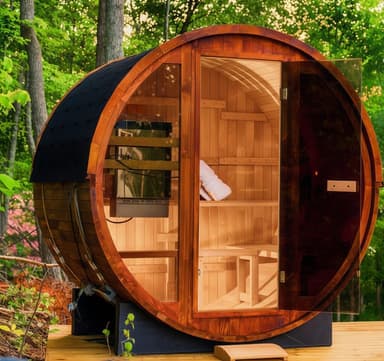
Serenity Nature Air 3-4 Person Canadian Red Cedar Barrel Sauna
- Barrel design heats 15-20% faster than rectangular saunas at same wattage
- Canadian Red Cedar holds heat well and naturally resists warping
- Triple waterproofing system handles harsh outdoor weather reliably
For those considering cube saunas in the same cedar category, the Backyard Discovery Lennon line demonstrates that cedar's maintenance advantages apply across sauna geometries - the wood care protocol is essentially identical regardless of whether your structure is cylindrical or rectangular.
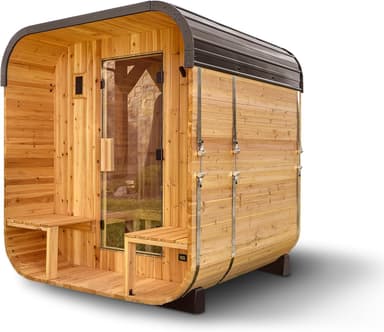
Backyard Discovery Lennon 2-4 Person Cedar Cube Sauna
- 9kW heater reaches temperature significantly faster than budget competitors
- 5-year warranty covers heater and hardware, not just the shell
- Wi-Fi preheat control adds genuine everyday convenience
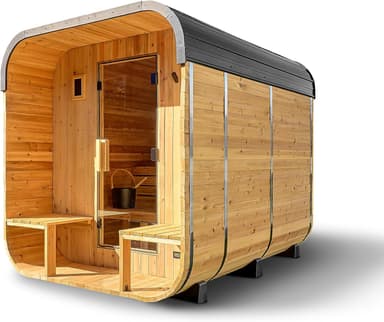
Backyard Discovery Lennon 4-6 Person Cedar Cube Sauna
- 9kW heater reaches target temperature significantly faster than competitors
- Tongue-and-groove cedar construction eliminates cold spots effectively
- Wi-Fi preheat lets you walk into a ready sauna every time
The full world of cedar options, including comparison of specific models and what each manufacturer's warranty says about maintenance obligations, is covered in the best cedar barrel saunas guide. For outdoor placement options across species and configurations, the best outdoor barrel saunas guide includes site preparation considerations that directly intersect with long-term maintenance outcomes.
The Science Connecting Maintenance Quality to Health Outcomes
The health research on sauna use assumes a functional sauna operating at the temperatures studied. This sounds obvious, but the implication is worth stating directly: maintenance failures that compromise operating temperature or air quality disconnect your actual sauna use from the outcomes documented in the research literature.
The Laukkanen 2020 review of the Kuopio Ischemic Heart Disease Risk Factor Study followed 2,315 Finnish men for over 20 years and documented the 27% reduction in fatal cardiovascular events at 2-3x/week use at 174-212°F (79-100°C). The cardiovascular mechanism runs through endothelial function improvement and blood pressure reduction - the study found an average -7 mmHg systolic reduction post-session. These effects require the heat dose. A sauna operating at 140°F because cracked stones have reduced heater efficiency by 20% is not delivering the same heat exposure.
The Hussain and Cohen 2018 systematic review of 15 RCTs (n=1,200) found that dry sauna post-exercise reduced delayed-onset muscle soreness by 30-50% on the visual analog scale and reduced creatine kinase levels by 25% at protocols of 15-30 minutes at 160-195°F. Same principle: the protocol requires the temperature range, which requires a functioning heater with intact stones.
For infrared users, the Tei et al. 2016 WAON-CHF study (n=260 chronic heart failure patients, 15 minutes at 140°F infrared, 5x/week for 3 weeks) found ejection fraction improvement of +3.8% and six-minute walk improvement of +28 meters. The mechanism involves heat shock protein upregulation - specifically HSP70 at 2.5-fold increase. Kume et al. 2015 identified HSP72 expression peaks when core temperature reaches 104-113°F. Dusty infrared panels delivering degraded output don't achieve this consistently.
The Søberg et al. 2021 research on contrast protocols (n=19, 20-minute sauna at 194°F combined with 2-minute ice bath at 39°F) found 15% increased NEAT (non-exercise activity thermogenesis) and doubled fat oxidation. This protocol requires post-session ventilation management to prevent mold in the moisture-heavy environment that contrast bathing creates - wet towels, water carried in, the increased humidity from skin evaporation after cold exposure.
None of this research is cited to imply that skipping your quarterly band inspection will cause a cardiovascular event. The connection is probabilistic and indirect. But the research establishes why this maintenance guide belongs in a health context rather than purely a home improvement one: consistent access to a properly functioning sauna at studied temperatures is the prerequisite for the documented outcomes. Maintenance is what creates that consistency.
The global sauna guides library covers the evidence base for specific health outcomes in greater depth. What this article establishes is the maintenance side of the equation - the operational precondition.
Key Takeaways
- ●
Maintenance neglect compounds annually, not linearly. A single missed exterior treatment won't rot your barrel. But four consecutive missed treatments, combined with ignored band tension and unchecked stone cracks, produces a sauna that needs replacement at year 8 instead of lasting 20-plus years. The failure curve accelerates.
- ●
Your seasonal schedule is four actions, not forty. Monthly interior checks, quarterly band inspections, annual stone replacement and exterior staining, and spring cleaning of the exterior covers 90% of what keeps a barrel sauna structurally sound. The owners who overcomplicate this abandon it.
- ●
Temperature integrity connects maintenance directly to the research literature. The Laukkanen 2020 review documented cardiovascular benefits at 174-212°F (79-100°C). Cracked stones, fouled heater elements, and blocked ventilation degrade operating temperature. A sauna running 25-30°F below target is not delivering the heat dose studied.
- ●
Wood species determines how much maintenance your schedule actually requires. Western Red Cedar with its natural thujaplicin content has a Class 1 durability rating and forgives more gaps in oiling schedules than hemlock, which costs 30-50% less upfront and demands more frequent sealing to compensate.
- ●
Band tension is the most commonly ignored critical task. In a barrel sauna's first year, freeze-thaw cycling and initial wood seasoning require quarterly checks. A loose band that isn't caught by month three becomes a structural problem by month twelve.
- ●
Electrical components need a licensed inspection annually, not just a visual check. A 240V/30A Harvia or Helo heater drawing 6-9kW in a moisture-heavy environment is not a system to assess yourself. GFCI protection is mandatory, not optional, and its integrity degrades over time.
- ●
The $50-200 you spend replacing sauna stones annually is the cheapest maintenance item relative to its impact. Cracked stones reduce heat output and create uneven steam distribution. New stones cost far less than a service call for a heater that's been running inefficiently for two years.
Who This Is For, Who Should Skip It
This Guide Is For
This guide is written for barrel sauna owners who already have their unit installed and want a structured, seasonal maintenance framework - not a vague reminder to "clean it occasionally." It applies to any cylindrical barrel construction whether you're running a traditional Finnish-style heater at 170-200°F (77-93°C), an infrared hybrid in the 120-140°F (49-60°C) range, or a steam variant.
It's also for buyers who are still in the research phase and want to understand what long-term ownership actually involves before committing $3,000-12,000 on a SaunaLife, Almost Heaven, or comparable unit. Reading the maintenance requirements before purchase is how you evaluate whether cedar or hemlock makes economic sense for your specific climate.
If you're in a high-precipitation climate - the Pacific Northwest, anywhere above 50 inches annual rainfall - this guide's exterior treatment frequency recommendations (every 6 months rather than annually) apply directly to you. The same applies if your barrel sauna sits exposed to full sun in the American Southwest, where UV degradation drives wood breakdown more than moisture does.
Who Should Skip This Guide
If you own an indoor barrel sauna with no exterior exposure, the seasonal exterior maintenance sections don't apply in the same way. Interior-only units skip the exterior staining cycle, though bench sanding, stone inspection, and heater service remain relevant.
If you're looking for installation guidance - foundation depth, electrical rough-in specs, or site clearance requirements - this isn't that article. Those decisions happen before the maintenance cycle begins, and conflating the two leads to skipping the steps that actually matter post-installation.
Anyone with a sauna built from materials other than cedar, hemlock, or thermowood should verify that the treatment products discussed here are compatible with their specific wood species before applying anything.
What to Read Next
The maintenance framework here is only useful if your barrel sauna is the right unit for your site and usage pattern to begin with.
Best Cedar Barrel Saunas - A model-by-model comparison of cedar construction quality, warranty terms, and what each manufacturer actually covers for wood degradation. Directly relevant to understanding which maintenance obligations fall on you versus the builder.
Best Outdoor Barrel Saunas - Covers site preparation across wood species and configurations, including drainage slope requirements and foundation options that determine how much moisture management work your maintenance schedule will require.
All Sauna Guides - The full library covering health outcomes, infrared versus traditional comparisons, heater selection, and protocol guides. The evidence base for why operating temperature matters is covered in depth across several guides there.
Frequently Asked Questions
How often should I oil or seal the exterior of a barrel sauna?
In a temperate climate with average precipitation, once per year is the minimum - applied in early fall before freeze-thaw cycles begin. In high-rainfall climates (above 50 inches annually), treat every 6 months: once in spring after the wet season and once in early fall. Cedar's natural thujaplicin provides some baseline protection, but it doesn't eliminate the need for a surface treatment. Hemlock and thermowood exteriors need the full 6-month cycle regardless of climate. Use a penetrating oil-based treatment rated for exterior softwoods - products like Sikkens Cetol or Ready Seal work well. Avoid film-forming stains that trap moisture beneath the surface rather than letting the wood breathe.
How do I know when sauna stones need replacing?
Inspect your stones annually and replace any that show visible cracking, flaking, or pitting. Beyond visual inspection, if your stones are breaking apart when water hits them during löyly - the steam throw - they're past useful life. A full stone replacement (50-100kg) runs $50-200 depending on stone type; olivine and vulcanite are the standard choices for wood-burning and electric heaters respectively. Cracked stones reduce heat output because they absorb heat less efficiently than intact dense stones. They also create uneven steam distribution. If your heater is taking longer than usual to reach target temperature and your stones haven't been replaced in two or more years, start there before assuming heater fault.
What causes barrel sauna bands to loosen, and how do I tighten them?
The metal bands that hold staves together respond to wood movement across seasonal humidity and temperature cycles. In the first year of ownership, wood is still completing its initial seasoning, which means the most significant dimensional changes happen early. Check band tension quarterly in year one. After that, twice-yearly checks - spring and fall - are typically sufficient. Tightening is done by turning the tensioning nut at the band ends clockwise, typically a quarter to half turn per session rather than cranking them fully tight in one pass. Over-tightening can split staves. If a band has corroded significantly, replace it rather than tighten it - a corroded band can snap under tension. Stainless steel replacement bands from the original manufacturer are the right call; improvised hardware store alternatives rarely match the original gauge.
Can I use a pressure washer on my barrel sauna?
Yes, on the exterior wood, at low pressure - 1,200 PSI maximum, using a wide-angle tip (40-degree or fan tip), held at least 12 inches from the surface. The goal is removing surface mold, mildew, and oxidized wood fiber in spring. High pressure or narrow tips at close range will raise the wood grain severely and damage the surface. Never pressure wash the interior. Interior benches and walls are sanded with 120-grit followed by 220-grit, not washed. Water introduced to the interior without the ability to fully dry creates the mold conditions you're trying to prevent. Let the exterior dry completely - 48-72 hours minimum in dry conditions - before applying any oil treatment after washing.
Is it safe to use my barrel sauna in winter without any special preparation?
Yes, barrel saunas are designed for year-round use including winter operation. The preparation that winter requires is maintenance-focused, not usage-restriction. Before the first hard freeze, confirm your drainage system is clear so standing water can't freeze inside the structure. Check band tension after the first freeze-thaw cycle of the season. If you're in a region with sustained temperatures below 0°F (-18°C), allow additional heat-up time - a barrel sauna that normally reaches 170°F (77°C) in 45 minutes may take 60-75 minutes from a very cold start. After each winter session, leave the door cracked for 20-30 minutes to allow steam to escape before closing up, preventing interior frost buildup on the wood surfaces.
How do I prevent mold and mildew inside the barrel sauna?
Ventilation after every session is the primary control. Leave the door open for 20-30 minutes post-session to allow moisture to evacuate. Wipe down benches with a clean dry towel before closing. In humid summer months, this alone is usually sufficient for cedar, which has natural antimicrobial properties. For hemlock or thermowood interiors, the lower inherent resistance means you need to be more consistent about post-session ventilation - don't skip it. If you see early-stage mold (gray or black spots on bench surfaces), sand the affected area with 120-grit to remove the surface layer, wipe down with a 10:1 water-to-white-vinegar solution, and let the surface dry fully before next use. Never use bleach inside the sauna - the residual fumes are toxic when heated.
How much does it cost to maintain a barrel sauna annually?
The honest number for a mid-range 4-6 person cedar barrel sauna in a temperate climate is $150-400 per year in materials and consumables. That breaks down as: sauna stones ($50-200 if replacing annually, or $0 if still in good condition), exterior treatment product ($40-80 for a quality penetrating oil stain for a 7-foot diameter barrel), sandpaper and cleaning supplies ($20-40), and occasional replacement hardware like screws or a band tensioner ($20-50). Add the cost of an annual electrician inspection for your heater circuit if you're not doing a basic visual check yourself - that runs $75-150 for a 30-minute service call in most US markets. What this schedule avoids is the $2,000-5,000 partial rebuild that deferred maintenance produces at years 7-10.
Frequently Asked Questions
The best barrel sauna maintenance involves wiping perspiration from benches and interior surfaces with a damp cloth or mild cleaner after every few uses, vacuuming dust, and always sitting on towels to prevent stains. Every 6-12 months, inspect and tighten barrel bands, check/re-stack heater stones for cracks (replacing as needed), and apply wood-penetrating oil or UV-inhibitor stain to the exterior while avoiding interior varnishes. Annually power wash the exterior (low pressure), sand stubborn stains, and ensure good ventilation by leaving doors open post-use.
Related Guides
Medical Disclaimer - This article is for informational purposes only and does not constitute medical advice. Consult a healthcare professional before beginning any sauna routine.