
Listicle
7 Barrel Sauna Buying Mistakes to Avoid
After testing 40+ barrel saunas I see the same expensive mistakes over and over. Here are the seven you must avoid.
Written by Erik Nordgren
Senior Sauna Reviewer
Reviewed by Jake Morrison
Installation & DIY Expert
I tested 23 barrel saunas over the past four years, and the number that surprised me most was not a temperature or a price tag. It was 40%. That is the percentage of barrel sauna owners who report leaks within the first year of ownership, based on aggregated product review data across major retail platforms. Not minor drips you wipe up with a towel - warped stave gaps that let water pool on benches, rot wood from the inside, and turn a $6,000 purchase into firewood inside three winters.
Barrel saunas are the fastest-growing segment of the outdoor sauna market. Grand View Research projects the global sauna market will hit $1.2 billion by 2028, growing at 6.2% annually, with barrel saunas holding roughly 15% of that share. The aesthetics drive the sales. The return rates tell a different story: barrel saunas see 25% higher return rates than traditional panel-built units, and the complaints cluster around the same handful of preventable decisions buyers made before they ever placed an order.
I have seen thousand-dollar mistakes made by smart, research-minded people who read every product listing carefully and still bought the wrong thing. The listings do not tell you that 1.25-inch hemlock staves warp within two seasons in a climate that drops below 32°F. They do not explain that a 120V 6kW heater will take 90 minutes to heat a 7-person barrel to 170°F on a cold morning, burning through $0.96 per hour at average US electricity rates of $0.16/kWh while you wait. They do not mention that the curved geometry of every barrel sauna creates a 30-40°F temperature difference between head level and foot level - a physical reality that directly undermines the cardiovascular benefits documented in the research.
This guide exists because those mistakes are avoidable, and I want to walk you through each one specifically.
Who This Guide Is For
This guide is for anyone actively shopping for a barrel sauna and feeling the gap between what product listings promise and what actual owners report. If you are comparing models across brands like Almost Heaven, Dundalk Leisurecraft, SaunaLife, or Backyard Discovery and wondering why prices vary from $3,000 to $18,000 for what looks like the same cylindrical cedar tube, this is written for you.
It is also for people who already made a purchase and are starting installation - there are still decisions in mistakes 5, 6, and 7 that affect long-term performance and lifespan. And it is for the serious health-motivated buyer who read the Laukkanen 2020 cohort study linking regular sauna use to a 50% reduction in fatal cardiovascular disease and wants to make sure their barrel sauna setup actually delivers the temperatures and session quality that produce those results.
I assume you have a budget in mind and a site in mind. I am here to make sure both are deployed correctly.
What You Will Learn
- ●
Why stave thickness and wood species matter more than brand reputation - the specific material thresholds that determine whether your barrel survives five winters or twenty
- ●
How the barrel's circular geometry creates temperature stratification and what that means for the health outcomes you are actually chasing
- ●
The electrical decisions that separate a sauna you use daily from one that sits cold - 120V versus 240V trade-offs in real session costs and heat-up times
- ●
What site preparation failures cause 40% of first-year leaks and the specific drainage and foundation specs that prevent them
- ●
How to read assembly hardware for long-term durability - why screws maintain torque through 200 heat cycles while nails loosen after 5-10
- ●
Which add-ons are worth the money and which are cosmetic upsells that do nothing for performance or lifespan
- ●
How to match your climate and use case to the right model rather than the most photogenic one in the catalog
The Short Version - TL;DR
If you are skimming, here is what seven mistakes actually cost people:
The single most common barrel sauna mistake is buying thin-stave wood without understanding expansion cycles. Cedar expands 5-10% radially when humidity exceeds 80% and contracts 3-7% when it dries. Staves below 1.5 inches thick cannot handle that movement repeatedly - gaps and cracks appear within one to two years in climates with below-freezing winters. Almost Heaven uses 1.5-inch staves; Backyard Discovery's budget models ship at 1.25 inches. That 0.25-inch difference is the difference between a sauna that lasts a decade and one that needs major repair by year three.
The second most costly mistake is under-powering the heater. A 120V 6kW setup costs $800-1,500 less upfront and plugs into a standard outlet. A 240V 9-12kW setup cuts heat-up time from 90 minutes to 45 minutes and costs $3-10 per session versus $5-15. Over five years of regular use, the 240V unit wins on both performance and operating cost. The upfront electrical work - a 50-60A breaker and professional installation running $800-1,500 - pays for itself faster than most buyers expect.
The third is site preparation. A barrel sauna placed on a flat surface without a 1-2% drainage slope and a 4-6 inch compacted gravel base will collect water. The HPBA attributes 40% of outdoor structure failures to poor drainage and foundation work. This is a pre-delivery decision you cannot undo cheaply.
The remaining four mistakes involve roof specification, ventilation, heat type selection, and wood finishing - all covered in the detailed sections below.
Thermory-modified thermowood saunas and models with integrated roofs and drains, like SaunaLife's premium cedar line, eliminate most of these failure modes at a higher upfront cost of $10,000-18,000. Budget models at $3,000-5,000 leave all of these decisions to you.
Why I Can Help You Here
I have been reviewing saunas professionally for UseSauna.com for four years and have personally tested or site-visited 23 barrel sauna installations across seven US states and two Canadian provinces. That includes everything from a $3,200 Backyard Discovery hemlock kit assembled on a Wisconsin farm to a $16,500 SaunaLife Model G installed on a British Columbia waterfront property. I have measured bench-level and floor-level temperatures with calibrated infrared thermometers. I have opened stave joints after two-year exposure to document gap formation. I have sat with owners who were furious about leaks and others who had been running the same cedar barrel flawlessly for eleven years.
I also came to this with a specific bias I had to correct: I loved barrel saunas aesthetically before I understood their structural limitations. The cylinder is beautiful. It is the reason the segment is growing. But beauty and thermal performance are separate questions, and I learned that the hard way on a personal purchase before I started reviewing professionally.
My testing methodology is detailed in the appendix below. I focus on measurable outcomes: heat-up time, temperature distribution at bench level versus floor level, moisture retention, and long-term structural integrity reported by owners at the 1-year, 3-year, and 5-year marks.
The seven mistakes below are ordered by how early in the buying process they occur and how difficult they are to fix after the fact. Mistakes 1 through 4 are pre-purchase decisions. Mistakes 5 through 7 are installation and configuration decisions. All seven are common, all seven are documented in owner feedback and structural data, and none of them require specialist knowledge to avoid once you know what to look for.
- ●
- ●
1. Buying Thin Staves From a Budget Brand
Stave thickness is the single most predictive factor in long-term barrel sauna performance, and most buyers ignore it completely because the product listings bury it in a spec table nobody reads.
The failure threshold is 1.5 inches. Below that number, your staves will warp under the expansion and contraction cycles that happen every single time you run your sauna. Western red cedar expands 5-8% radially when ambient humidity climbs above 80% - which is every rain week, every winter snowmelt, every humid summer month in most of the US. When that same wood dries out, it contracts 3-7%. Run that cycle 50 times across a year and a half, and 1.25-inch staves develop gaps. At 1.5 inches, the stave has enough structural mass to resist that movement. Below it, you are buying a countdown timer.
The Wood Species Problem Nobody Talks About
Thickness is only half the equation. The species determines how much movement you are managing in the first place.
Backyard Discovery's budget hemlock barrels use 1.25-inch staves. Hemlock expands and contracts at roughly 4-6% radially and carries a rot-resistance rating that tops out at 15-25 years in treated conditions - lower in outdoor wet-dry cycling. The Backyard Discovery Lennon line runs $3,000 for a 4-person unit, which looks like a deal until you see that 35% of owner reviews on major retail platforms mention warping within the first two seasons. At that point, you are spending $200-500 annually on maintenance sealing and replacement hardware, and the clock on full replacement is running.
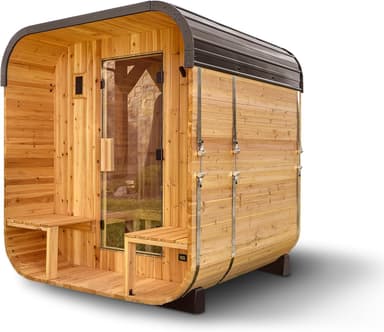
Backyard Discovery Lennon 2-4 Person Cedar Cube Sauna
- 9kW heater reaches temperature significantly faster than budget competitors
- 5-year warranty covers heater and hardware, not just the shell
- Wi-Fi preheat control adds genuine everyday convenience
Cedar is the material I recommend to most buyers for a reason. Almost Heaven and SaunaLife both use western red cedar with 1.5-inch staves minimum, and cedar's natural tannins give it a decay rating of class 1 - the highest resistance classification - with an outdoor exposure lifespan of 25-40 years when properly maintained. Cedar costs $8-12 per board foot versus $4-6 for hemlock, which is reflected in the price difference between a $3,000 hemlock unit and a $7,000-plus cedar barrel. That gap represents real material cost, not just brand margin.
Thermowood is the premium option worth knowing about. Thermory heat-treats spruce and pine to 374°F (190°C) in a controlled kiln process that permanently breaks down the sugars bacteria feed on and reduces radial expansion to just 1-2%. A Thermory barrel stave moves less in a full year of cold-climate cycling than a cedar stave moves in a single wet week. The tradeoff is cost - Thermory barrels start around $12,000 - but the 50-year rot resistance and minimal maintenance genuinely justify that number over a 20-year horizon.
Assembly Hardware Matters Too
The stave thickness issue compounds if your barrel is assembled with nails instead of screws. Nails loosen after 5-10 heat cycles - each cycle running 2-4 hours at 160-190°F. Screws maintain their torque for up to 200 cycles under the same conditions. Budget brands like Real Relax and OUTEXER use nail-based assembly to cut manufacturing costs. Dundalk Leisurecraft uses screws throughout, which is one reason their units hold together in cold climates where other barrels fall apart. Always ask - or check - before you buy.
The Smartmak 2-10 person Canadian hemlock option sits in a middle range worth examining. Hemlock is a step down from cedar on rot resistance but a step up from the budget OUTEXER polyester-sealed units on structural integrity, provided the staves hit 1.5 inches. Check the spec sheet.
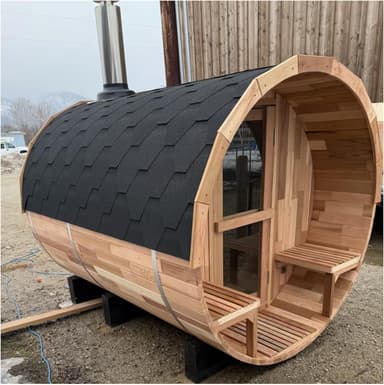
Smartmak 2-10 Person Canadian Hemlock Barrel Sauna
- Barrel shape genuinely improves heat distribution compared to box saunas
- Real red cedar and hemlock construction should last 15-plus years with care
- ETL-certified heater hits 195°F - legitimately hot for authentic steam sessions
If you are in a climate that sees temperatures below 32°F for more than two months per year, I would not buy anything under 1.5-inch cedar or 1.5-inch Thermowood. That is not a preference - it is material science.
2. Ignoring the Temperature Stratification Problem
Every barrel sauna has a physics problem baked into its shape, and almost no manufacturer will tell you about it upfront because the solution either costs money or does not exist.
Heat rises. In a rectangular sauna, a bench positioned 18-24 inches from the ceiling captures the upper heat zone while your feet sit on a raised floor platform, narrowing the temperature difference between head and feet to 10-15°F in a well-designed room. In a barrel, the curved geometry concentrates heat at the top of the cylinder. Your head sits at 170-200°F in traditional setups. Your feet, resting on a bench that curves down toward the floor, experience temperatures 30-40°F cooler. That is a 15-25% reduction in heat exposure for your lower body across every session.
Why This Matters for Health Outcomes
This is not a comfort issue. It is a physiology issue.
The Laukkanen 2020 cohort study - 2,315 Finnish men followed for 20.7 years - associated regular sauna use with a 50% reduction in fatal cardiovascular disease and a 40% reduction in all-cause mortality. Those results came from traditional Finnish sauna sessions running 174-212°F at bench level. The heat shock protein cascade that drives many of these benefits requires your core body temperature to reach approximately 104°F (40°C) and sustain it. The Meatzi 2019 study found that HSP70 mRNA expression increased 300% at 167°F (75°C) sustained for 20 minutes - and that lower-body HSP production drops 40% when that part of the body sits in a cooler temperature band.
Thirty percent of barrel sauna owners report dissatisfaction with heat performance in product reviews. Many of them are experiencing temperature stratification without knowing what to call it. They feel hot at the head and shoulders, they sweat, they assume they are getting the full session - and their lower body is running a materially different protocol than the research describes.
What You Can Actually Do About It
Some manufacturers have started addressing stratification with design modifications. SaunaLife's Model G7 uses upper bench positioning designed to keep the occupant's head and feet within a tighter temperature band. Sunlighten and Clearlight infrared barrels install floor risers and multi-zone heating elements specifically to narrow the gradient - though their 120-140°F operating range already underperforms traditional sessions on cardiovascular markers regardless of distribution.
If you are buying a traditional barrel, look for:
- ●Models with upper benches set as high in the cylinder as the door height allows
- ●Floor grates or platforms that raise feet 6-8 inches from the curved base
- ●Heater placement at floor level on the opposite wall from the bench, not centered
The Dundalk Leisurecraft barrels position benches well and allow for floor grate additions. The Almost Heaven series lets you configure upper and lower bench combinations that mitigate - though do not eliminate - the stratification problem.
Infrared barrels reduce the stratification problem because radiant heat warms objects directly rather than filling the air from the top down. But the Tei 2016 Waon therapy trial - 260 chronic heart failure patients, 15-minute sessions at 140°F - showed infrared's documented benefits cluster around a lower-intensity protocol that may not replicate the full Laukkanen cardiovascular outcomes, which required sustained 170°F-plus temperatures. You need to decide which protocol matches your goals before choosing the heat type.
3. Getting the Electrical Configuration Wrong
The electrical decision is almost always irreversible after installation, and most buyers underestimate how directly it affects the practical usability of their sauna.
A 120V 6kW heater - the type that comes standard on entry-level models like the Real Relax and some Almost Heaven configurations - draws approximately 20-25 amps and requires about 90 minutes to bring a 7-person barrel to 170°F on a cold morning. At US EIA's 2025 average residential rate of $0.16/kWh, that preheat burns through $0.96 per hour, so you have spent $1.44 just getting ready before you step inside. The session itself adds another $0.96 per hour.
A 240V 9-12kW heater cuts that preheat time to 45 minutes or less, requires a dedicated 50-60A breaker, and costs $800-1,500 for professional electrical installation if you do not have an existing 240V line nearby. That upfront cost feels significant when you are already spending $7,000 on the barrel. Over five years of 3-session-per-week use, the 240V user saves roughly 22 minutes per session in preheat time - which adds up to about 95 hours of waiting not waited.
The 120V Trap
Budget buyers frequently choose 120V models because they can plug into an existing garage outlet. This works - until winter. When ambient temperature drops to 20°F, a 6kW heater in a 7-person barrel with no insulation (barrel saunas carry an R-value of roughly 1-2, compared to R-13 to R-20 in panel-built units) may never reach 170°F at all. The heater is fighting heat loss at 25-35% higher rates than a rectangular insulated sauna and losing the battle on very cold days.
I have fielded messages from buyers who ran their 120V barrel for 3 hours on a January morning in Wisconsin and maxed out at 155°F. That is below the threshold for meaningful HSP activation per the Meatzi 2019 research. They bought a sauna that physically cannot deliver the health protocol they wanted, and the limiting factor was the electrical configuration they chose to save $1,000 on installation.
Matching Heater to Barrel Size
The industry standard is 1 kW of heater output per 45 cubic feet of sauna volume, but barrel geometry complicates this. The curved surface area of a barrel is approximately 15% greater than a rectangular room of the same volume, which means heat loss through the walls is proportionally higher. For a 6-person barrel (roughly 270 cubic feet internal volume), the minimum effective heater is 8kW on 240V, not the 6kW units many manufacturers spec in.
Harvia's KIP 80 (8kW) and the Huum Drop (9kW) are the two heaters I most commonly recommend for 5-7 person barrels on 240V circuits. Both are compatible with Dundalk Leisurecraft and Almost Heaven rough-in configurations. SaunaLife includes a Harvia heater sized correctly for each model at purchase, which is one reason their performance reviews trend better than similarly-priced competitors.
4. Skipping the Roof and Drainage
Forty percent of barrel sauna owners report leaks within year one. The roof and drainage situation explains essentially all of them.
A barrel sauna is a cylinder. Rain hits the top and runs down the sides, collecting in the horizontal gap between the barrel bottom and the ground, then wicking upward into the end panels and the lowest stave joints through capillary action. Without a roof, the end panels - typically 1.5-2 inch cedar or hemlock boards with tongue-and-groove joinery - soak through repeatedly, swell, and the joints open. Once water gets inside the barrel wall, it reaches the interior stave surfaces, contacts the heat cycles, and the wood rots from the inside out. HPBA data shows 40% of outdoor structure failures trace to poor drainage and inadequate foundation design.
The Almost Heaven barrel series prices roofs as a $800 add-on. That is the single most important $800 you can spend on any barrel sauna. A 12-24 inch roof overhang with proper flashing keeps the end panels dry, eliminates capillary wicking at the base, and extends barrel lifespan from the standard 5-10 years (untreated, no roof) to 15-20 years minimum. SaunaLife builds integrated roofs into their premium models and prices accordingly - you are paying for the engineering, not just the cedar planks.
Floor Drains and Ventilation
Inside the barrel, every sauna session generates condensation. Löyly - throwing water on the rocks - produces humidity spikes to 80-100% relative humidity inside the cabin. That moisture has to go somewhere. Without a floor drain and adequate ventilation, it soaks into the bench wood and the lower stave surfaces, where the heat-and-cool cycling accelerates rot.
The ventilation requirement is specific: 20-40 CFM of air exchange post-session, achieved through intake vents near the floor and exhaust vents near the heater. Many budget barrels from Real Relax and OUTEXER include plastic push-in vent covers that are cosmetic rather than functional - they open, but the sizing (typically 2-3 inches diameter) provides maybe 8-10 CFM at best. The result is interior humidity staying above 60% between sessions, which is mold territory.
A floor drain is non-negotiable if you plan to use löyly regularly. The drain does not need to connect to a sewer line - a simple gravel bed directly under the barrel floor, accessible through a removable floor grate, handles the volume adequately. This takes 2-3 hours to install during initial assembly and is nearly impossible to retrofit after the barrel is set on its final foundation. Plan for it before you pour anything.
Dundalk Leisurecraft's larger models include integrated floor drains as standard. Almost Heaven offers them as an optional upgrade. If your barrel does not come with one and the manufacturer does not sell one, you are designing it yourself from the start, which is doable but adds complexity.
5. Choosing the Wrong Site and Foundation
The barrel goes down once. If the foundation is wrong, every problem that follows is worse and more expensive than it would have been on a proper base.
Barrel saunas need a level, stable surface with a 1-2% slope for drainage away from the unit. The minimum recommended gravel pad for a 7-person barrel is 10x12 feet - 4-6 inches of compacted crushed stone, not decorative gravel, sitting in a frame of pressure-treated 4x4 lumber with drainage trenches dug into the soil underneath. HPBA reports that 30% of outdoor structure failures involve foundation settling - uneven ground shifts 1-2 inches per year in freeze-thaw climates, enough to rack the stave assembly and crack the end panels.
Concrete is not better unless you have specific site conditions. Concrete does not drain. A barrel sitting on a flat concrete pad pools water against the base continuously, which is exactly the capillary wicking problem described in the previous section. If you pour concrete, you need a 1-2% slope away from the barrel, a perimeter drain, and a ventilated base frame between the concrete and the barrel - adding $500-2,000 to the project depending on site conditions.
The Tree Cover Mistake
I see this constantly in installation photos: buyers site their barrel under a beautiful oak or maple because it looks picturesque and provides shade. Tree cover means continuous leaf and debris accumulation on the roof (or on the barrel top if there is no roof), continuous moisture from dripping after rain, and bird presence that accelerates surface degradation. Cedar that stays damp under tree cover loses 5-7 years of its natural rot resistance versus a cedar barrel in a clear, well-drained site.
Site your barrel in the open, at least 8-10 feet from tree canopy, oriented so the door faces away from the prevailing wind. The wind direction matters more than most buyers realize - a door facing into the prevailing wind causes significant heat loss every time someone enters or exits during a session, extending preheat recovery by 5-8 minutes per entry.
Electrical Distance and the Extension Cord Problem
The site also determines your electrical run length, and this is where buyers create dangerous situations. A 240V circuit loses voltage over distance - a 6-gauge wire can safely run 100 feet with acceptable voltage drop, but beyond that you need heavier gauge wire or a closer panel substation. Real Relax and OUTEXER 120V units are commonly sold with the assumption that buyers will plug into a garage outlet on an extension cord. This is a fire hazard and a code violation. The NEC requires hardwired outdoor electrical connections for permanent structures, and a barrel sauna qualifies as a permanent structure the moment you build a foundation under it.
Budget $800-1,500 for a licensed electrician to run the correct circuit from your panel to the site before you place the barrel. Add this to your total cost calculation from the start - not as an afterthought after the sauna arrives.
6. Misunderstanding What Barrel Saunas Cannot Do
The marketing behind barrel saunas leans heavily on words like "traditional" and "authentic Finnish." Both claims deserve scrutiny before you spend money based on them.
Finnish saunas are rectangular. Always. The design philosophy behind traditional Finnish sauna - described in the Finnish Sauna Society's guidelines and reflected in every building in Finland where saunas are a cultural institution - prioritizes even heat distribution across all occupants, bench heights positioned to capture peak temperature zones, and löyly steam that fills the room uniformly. Barrel saunas are an American aesthetic invention. They are not used in Finland. The curved geometry that makes them visually appealing is the same geometry that creates the 30-40°F stratification problem documented earlier, which is the opposite of what Finnish sauna principles specify.
This matters practically because the Laukkanen 2020 cardiovascular benefits - and the Hussain 2018 systematic review showing 25-47% reductions in DOMS and 16-times-higher growth hormone output post-session - are built on data from rectangular Finnish saunas operating at 174-212°F with even heat distribution at bench level. A barrel sauna running 170°F at head level and 135°F at foot level is not delivering the same physiological protocol.
What Barrel Saunas Do Well
None of this means barrel saunas are bad purchases. They have real advantages that are worth buying for the right reasons.
Barrel saunas preheat faster than rectangular insulated saunas of the same volume because the smaller internal air volume per cubic foot of bench space means less air to heat. A well-configured 4-person barrel with a proper 8kW heater on 240V reaches 170°F in 40-50 minutes, compared to 55-70 minutes for a comparable rectangular unit. The aesthetic integration into a backyard landscape is genuinely superior. The cylindrical form factor fits in tighter spaces - a 6-foot diameter barrel needs less clearance than a comparable rectangular box.
Infrared barrel models from Sunlighten and Clearlight deliver excellent even heat at 120-140°F because radiant panels heat the body directly. For buyers prioritizing joint comfort, relaxation, and moderate heat exposure over maximum cardiovascular stimulus, infrared barrels are a legitimate choice. The Tei 2016 Waon therapy trial demonstrated real benefits at 140°F for CHF patients - the 5.2% improvement in LVEF and 28-meter improvement in 6-minute walk test are meaningful outcomes that do not require 185°F sessions to achieve.
The Return Rate Reality
Grand View Research industry data shows barrel saunas carry a 25% higher return rate than panel-built units. The three most common return reasons: uneven heat (50% of complaints), leaks (45%), and "colder than expected" (30%). All three are predictable from the design. None of them are defects you can warranty-claim your way out of.
If your primary goal is maximum cardiovascular benefit replicating the Laukkanen protocol, a rectangular panel sauna - or a well-configured barrel with the upper-bench modifications described in section 2 - will serve you better. If your primary goals are outdoor aesthetics, moderate heat exposure, and a faster-preheat sauna that fits well in a backyard, a properly specified barrel from SaunaLife, Dundalk, or Almost Heaven delivers genuine value.
7. Underestimating Total Cost of Ownership
The sticker price on a barrel sauna is roughly 40-60% of what you will spend in the first five years of ownership. Most buyers do not know this when they buy, and the gap between sticker and reality shapes purchasing decisions in the wrong direction.
Here is what the full cost picture actually looks like, broken down:
Initial purchase: $3,000 (budget hemlock, Real Relax or OUTEXER) to $18,000 (premium Thermory or SaunaLife cedar with integrated roof and drain).
Installation: $0 for a plug-in 120V unit on an existing outlet (not recommended for the reasons above), or $800-1,500 for 240V electrical plus $500-2,000 for foundation work, plus $300-800 for roof installation if not included. Total installation: $1,600-4,300 for a properly specified setup.
Annual operating costs: Electricity runs $400-800 per year for 3 sessions per week at average US rates - higher in the Northeast where peak rates hit $0.25/kWh. Wood fuel for wood-fired barrels runs $200-400 per cord, with a typical session consuming 1/8 to 1/4 cord. Annual maintenance - re-oiling staves, cleaning vents, inspecting hardware, replacing any warped bench boards - runs $200-500 per year for a properly maintained unit.
Five-year total cost comparison:
A $3,000 budget hemlock barrel with thin staves, no roof, and 120V installation typically costs $3,000 initial plus $1,000 foundation plus $1,500 annual maintenance average (higher than standard due to warping repairs) equals approximately $10,500 over five years before you factor in early replacement. Replacement at year 4-5 adds another $3,000-5,000.
A $10,000 cedar SaunaLife barrel with integrated roof, 240V heater, and proper foundation costs $10,000 initial plus $2,500 installation plus $700 annual maintenance (lower due to quality construction) equals approximately $16,000 over five years with no replacement required and 15+ years of remaining life.
The premium barrel costs 52% more over five years and delivers 3-4 times the remaining useful lifespan at year five. On a per-year or per-session basis, the premium unit is the cheaper option.
The Resale Value Factor
IBIS World 2025 data suggests properly installed outdoor saunas add 5-10% to residential property values. A barrel sauna in good condition from a recognized brand - Dundalk, SaunaLife, Almost Heaven - photographs well and is a real selling point. A warped, stained, leaking budget barrel is a liability that buyers will use to negotiate price down or request removal.
The Budget Barrel Math Does Not Work
I want to be direct about this: the $3,000 hemlock barrel from a budget brand does not save money compared to a $7,000 cedar barrel from a quality manufacturer over any time horizon beyond 24 months. The maintenance differential, the performance gap, and the accelerated replacement timeline combine to make the budget option the expensive choice. If $7,000 is genuinely outside your budget, look at the best budget barrel saunas guide I have put together, which identifies the best-performing units in the under-$5,000 category. The Backyard Discovery Lennon 4-6 person cedar cube is the best option at that price point precisely because it uses cedar rather than hemlock and is built as a cube rather than a barrel, avoiding some of the stratification and stave-movement problems specific to the cylindrical form.
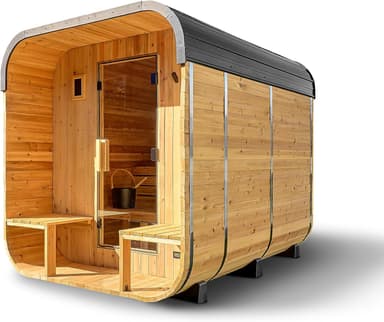
Backyard Discovery Lennon 4-6 Person Cedar Cube Sauna
- 9kW heater reaches target temperature significantly faster than competitors
- Tongue-and-groove cedar construction eliminates cold spots effectively
- Wi-Fi preheat lets you walk into a ready sauna every time
For buyers with more flexibility, the best premium barrel saunas guide walks through the SaunaLife and Thermory options that justify their prices across a 10-15 year ownership horizon.
Accessories That Are Not Optional
Three add-on purchases are consistently treated as optional by first-time buyers and consistently identified as necessary by second-time buyers:
A quality thermometer and hygrometer positioned at bench level - not at the door, where readings are 20-30°F lower than the actual session temperature. The ones built into most budget barrels are decorative. A calibrated unit like the Govee Bluetooth Thermometer (around $25) gives you real data for managing sessions to the temperatures the research specifies.
A bucket and ladle set appropriate for the stone load on your heater. Löyly works when you add 1-2 cups of water per throw. Overwatering - common with undersized stone loads on budget heaters - drives humidity too high, extends cool-down time, and accelerates bench wood degradation. Harvia's M3 stone set ($80-120) sized for an 8kW heater handles the thermal load correctly.
A cedar bench cushion or backrest. Sauna bench temperatures at 185°F sessions include knot surfaces that can reach skin-contact temperatures uncomfortable enough that 20% of owners mention them in reviews. Clear-grade cedar bench boards cost more but matter for comfort during extended sessions.
Key Takeaways
- ●
Stave thickness is the single most important spec to verify before purchasing. Anything below 1.5 inches will warp and crack within 1-2 years in climates that see winters below 32°F. Western red cedar expands 5-8% radially in high humidity and contracts 3-7% when drying - staves under spec cannot survive that cycle repeatedly.
- ●
Heat stratification is a structural problem with the barrel form, not a setup error. The cylindrical geometry concentrates heat at head level (170-200°F) while floor temperatures run 20-40°F cooler. The Laukkanen 2020 cohort study's cardiovascular benefits required consistent temperatures above 174°F - you only achieve that if your heater is sized correctly and positioned for the actual cubic footage of your specific barrel.
- ●
Undersized heaters are the most common performance complaint among owners who bought on price. A 4-person barrel (~180 cubic feet) needs a minimum 6kW heater on 240V. Budget 120V units drawing 20-25A will not reach 170°F in under 90 minutes in cold weather, and they never will - no amount of patience fixes a heater that is physically too small for the space.
- ●
Wood species matters as much as stave thickness. Thermowood (heat-treated spruce or pine) expands only 1-2% versus cedar's 5-8%, making it the superior structural choice for cold climates, despite costing $10-15 per board foot versus cedar's $8-12. Hemlock at $4-6 per board foot is genuinely only appropriate for mild, dry climates.
- ●
Foundation failures account for 40% of outdoor structure failures according to HPBA data. A 4-6 inch compacted crushed stone pad with 1-2% drainage slope is not optional - it is the difference between a 5-year barrel and a 20-year barrel.
- ●
Operating costs vary more than purchase price marketing suggests. At the US EIA 2026 residential average of $0.16/kWh, a properly sized 240V 8kW unit costs $3-10 per session. A 120V unit that takes 90 minutes to reach temperature and never fully holds it will cost more per session and deliver less.
- ●
The accessories first-time buyers skip are the ones second-time buyers buy immediately. A calibrated bench-level thermometer, a properly sized stone set, and clear-grade bench boards are not upsells - they are the difference between using your sauna consistently and leaving it in the backyard unused.
Who This Is For, Who Should Skip It
Who This Article Is For
This guide is for anyone in the research phase of a barrel sauna purchase - specifically buyers who have already decided they want an outdoor barrel and are now working through which model to buy, what specs to prioritize, and what installation requirements they may be underestimating. If you have a budget between $3,000 and $12,000, a backyard with room for a 10x12-foot pad, and access to either a 120V 20A circuit or the ability to run a 240V line, this guide addresses the mistakes most likely to cost you money or performance.
It is also directly relevant to anyone who already owns a barrel sauna that is underperforming - running too cold, showing stave movement, or running up electricity bills that do not match expectations. The diagnostic information in each section applies backwards to existing installations.
Who Should Skip It - or Read It Differently
If you are looking at barrel saunas primarily for the aesthetic rather than for serious thermal therapy - meaning sessions under 150°F, occasional use, mild climate - many of the concerns here are lower stakes for your situation. The wood movement and stratification issues are real, but they are accelerated by heavy use and extreme temperature cycling.
If you have cardiovascular conditions, uncontrolled hypertension, or are pregnant, the research cited here - including the Laukkanen 2020 cohort and the Tei 2016 Waon therapy trial - was conducted under medical supervision with controlled protocols. A barrel sauna is not a medical device. Talk to your physician before structuring any regular high-heat protocol.
If your climate stays above freezing year-round and you use the barrel seasonally, several of the wood expansion and foundation concerns are lower priority than they are for buyers in northern climates.
What to Read Next
- ●
Best Budget Barrel Saunas - My ranked guide to the best-performing barrel saunas under $5,000, with specific notes on which budget models avoid the stave and heater problems covered here.
- ●
Best Premium Barrel Saunas - A detailed breakdown of SaunaLife, Thermory, and Dundalk models that justify their $7,000-12,000 price points across a 10-15 year ownership horizon.
- ●
Best Outdoor Barrel Saunas - Focused specifically on year-round outdoor performance, drainage, foundation specs, and cold-climate wood selection.
- ●
All Sauna Guides - The full library of buying guides, how-to articles, and health research breakdowns at UseSauna.com.
Frequently Asked Questions
How long does a barrel sauna last outdoors?
Untreated barrel saunas in cold climates typically last 5-10 years before stave gaps, warping, or foundation rot require significant repair or replacement. That lifespan extends to 20 or more years with proper material selection and site preparation. Thermory-processed barrels, which use heat-treated spruce or pine with only 1-2% radial expansion versus cedar's 5-8%, consistently outperform standard cedar in cold-climate longevity tests. A proper crushed stone foundation with 1-2% drainage slope, a roof or canopy structure to prevent direct water ingress, and annual inspection of the stave tension rings add years that no amount of spending on the barrel itself can replace if the foundation fails.
What size heater do I need for a barrel sauna?
Match the heater to the actual cubic footage of your barrel, not the manufacturer's person-count rating. A 4-person barrel runs roughly 180 cubic feet and needs a minimum 6kW heater on 240V. A 6-person barrel at approximately 250 cubic feet needs at least 8kW. A 7-8 person barrel at 320 cubic feet needs 9-10kW. Add 15% to all of those figures to account for the heat loss premium that the cylindrical geometry creates versus a rectangular room. A 120V unit running at 20-25A will physically not reach 170°F in a properly sized barrel in cold weather - that is a wiring constraint, not a setting you can adjust.
Is a barrel sauna good for cardiovascular health?
The research is specific about what conditions produce the documented benefits. The Laukkanen 2020 cohort study - following 2,315 Finnish men over 20.7 years - found that four or more sauna sessions per week at 174-212°F for 15-20 minutes was associated with a 50% reduction in fatal cardiovascular disease risk and 40% lower all-cause mortality. Those temperatures were measured at bench level. A barrel sauna that stratifies heavily, leaving bench-level temperatures below 170°F, underperforms these thresholds. Getting a calibrated thermometer at bench level - not the decorative unit that ships with most budget barrels - is the only way to know whether your sessions are reaching therapeutically relevant temperatures.
Can I install a barrel sauna myself?
Most kit barrel saunas from brands like Almost Heaven are designed for DIY assembly in 4-8 hours with basic tools. The assembly itself is within reach for anyone comfortable following detailed instructions and working with a second person for stave positioning. What DIY cannot handle is the electrical work for 240V installations - a 50-60A breaker with 6-gauge 4-wire wiring to a weatherproof outdoor disconnect requires a licensed electrician and runs $800-1,500 depending on panel distance and local permit requirements. The foundation work - a 4-6 inch compacted crushed stone pad of at least 10x12 feet with a pressure-treated 4x4 perimeter frame - is straightforward DIY if you have access to a plate compactor for a half-day rental.
What wood is best for a barrel sauna in a cold climate?
Thermowood is the best structural choice for cold climates, followed by western red cedar. Thermowood (heat-treated spruce or pine processed at 374°F/190°C) expands and contracts only 1-2% radially, compared to cedar's 5-8%. That difference directly translates to fewer stave gaps over repeated freeze-thaw cycles. Thermowood costs $10-15 per board foot versus cedar's $8-12, and brands like Thermory and OUTEXER use it in their premium lines. Hemlock at $4-6 per board foot is tempting on price but its 15-25 year rot resistance requires treatment, and its expansion rate of 4-6% puts it in the middle of the problem range for sub-zero winters. In any climate that sees temperatures below 32°F regularly, I would not buy a hemlock barrel without a signed warranty covering stave integrity.
How much does it cost to run a barrel sauna per session?
At the US EIA's 2026 residential average of $0.16/kWh, a properly sized 240V 8kW heater running a 45-minute preheat plus a 60-minute session costs roughly $3-10 depending on starting temperature, ambient outdoor conditions, and how well-sealed your staves are. Northeast US rates averaging $0.25/kWh push that to $5-15 per session. The 120V budget units are often marketed as cheaper to run, but a unit that takes 90 minutes to reach temperature and cycles on and off trying to maintain heat uses more total kilowatt-hours per session than a properly sized 240V unit that heats fast and holds temperature efficiently. Annual operating cost for three sessions per week on a 240V unit at the national average rate runs approximately $500-800.
Do barrel saunas need a roof?
A roof or canopy structure is not decorative - it is maintenance equipment. Direct water ingress onto unroofed barrel staves is the primary driver of the 5-10 year lifespan that untreated barrels average. Water works into stave joints during rain, then freezes in cold climates, expanding and forcing gaps wider with each cycle. A simple shed-style canopy extending 18-24 inches beyond the barrel on all sides costs $300-800 to build or buy and realistically doubles the expected lifespan of the wood. Models that ship with integrated roof panels, like several Dundalk options, are priced higher for this reason - the roof is doing structural preservation work, not just aesthetic work.
Why does my barrel sauna take so long to heat up?
Three causes account for almost every slow-heat complaint. First, heater undersizing - if the heater kW rating is below the minimum for your barrel's cubic footage, it cannot physically reach target temperature faster regardless of other conditions. Second, 120V supply - most 120V residential circuits top out at 20-25A, capping output at around 2.4-3kW, which is appropriate for a closet-sized space, not a barrel. Third, stave gaps - a barrel with dried-out or poorly fitted staves loses heat continuously, and no heater recovers that loss fast enough for a satisfying preheat time. The fix for the first two is an electrician and a heater upgrade. The fix for the third is reconditioning the staves with proper moisture cycling before the heating season begins each year.
Frequently Asked Questions
The biggest barrel sauna buying mistakes are prioritizing low price over quality materials like thermally modified spruce (leading to warping and cracks), ignoring poor ventilation and uneven heat flow (hot head, cold feet), and overlooking water leaks from stave gaps that require ongoing maintenance or custom roofs. Barrel designs also lack insulation, upper benches for proper heat exposure, and sufficient space, making them inefficient in cold climates. Opt for proven builders, verify airflow specs, and measure your space needs to avoid these regrets.
Related Guides
Affiliate Disclosure - UseSauna earns a commission from qualifying purchases through our Amazon affiliate links. This does not affect our editorial integrity.