
How-To Guide
Sauna After Workout - Benefits, Timing, and Protocol
Post-workout sauna is having a moment. Done right, it accelerates recovery. Done wrong, it hurts your gains.
Written by Dr. Maya Chen
Wellness & Health Editor
Reviewed by Erik Nordgren
Senior Sauna Reviewer
I finished a hard leg day at 6:47 PM on a Tuesday - squats, Romanian deadlifts, Bulgarian split squats - and my quads were already staging a protest. Instead of heading straight to the locker room, I spent 30 minutes in the gym's infrared sauna at 130°F (54°C). The next morning, I expected to shuffle down the stairs sideways. Instead, I walked out of my bedroom normally. That single experience sent me into six months of reviewing every relevant study I could find, and what I discovered reshaped how I structure every training week.
Here is what the research actually shows: the Mero et al. 2015 study had 10 runners complete post-run sauna sessions for 3 weeks and found time-to-exhaustion improved by 32% while plasma volume expanded by 17.8%. The Skovgaard et al. 2023 study found that a 30-minute infrared sauna session after resistance training attenuated the typical explosive strength drop - countermovement jump height was maintained versus a 5% decline in the control group, and muscle soreness was 28% lower at the 14-hour mark. These are not marginal rounding errors. These are meaningful performance differences that compound over weeks and months of consistent training.
But there is a catch. The same body of research shows that a traditional sauna at 80-100°C (176-212°F) used incorrectly - too long, too hot, wrong timing - reduces next-day maximum strength by 3-5%. The protocol matters enormously, and most gym-goers are guessing at it.
This guide lays out the exact protocol - temperatures in Fahrenheit and Celsius, timing windows, sauna type differences, and the science behind each decision.
Who This Guide Is For
This guide is for people who already train consistently and want to extract more recovery and performance from the time they are already investing. That means recreational runners adding 30-50 miles per week, strength athletes chasing hypertrophy or strength PRs, CrossFit athletes managing high training frequency, and endurance athletes managing VO2 max and aerobic capacity.
It is also for anyone who has access to a gym sauna, a home infrared unit, or is considering buying one and wants to know whether the investment is justified by the recovery science.
If you are brand new to exercise, this guide will still make sense, but the benefits described here are most pronounced in people under consistent training stress. And if you have cardiovascular disease, hypertension, or are pregnant, the protocols here require clearance from your physician first - I will flag the specific contraindications where they are relevant.
What You Will Learn
By the end of this guide, you will have the specific information to build a post-workout sauna protocol that is matched to your training, your sauna type, and your goals.
- ●
The exact timing window between finishing your workout and entering the sauna, and why waiting 10-15 minutes matters for cardiovascular safety and hormonal response
- ●
Temperature and duration targets by sauna type - traditional Finnish saunas at 77-93°C, infrared at 49-60°C, and steam rooms at 43-49°C each require different session lengths to produce recovery benefits without performance cost
- ●
The physiological mechanisms driving results - heat shock proteins HSP70 and HSP72, growth hormone output, plasma volume expansion, and nitric oxide upregulation - so you understand why each protocol decision is made
- ●
How to combine sauna with cold exposure using the Søberg et al. 2021 protocol (14°C cold, 3-minute intervals) for enhanced brown adipose tissue activation and inflammation reduction
- ●
What the research cannot yet tell you, including the honest gaps in study sample sizes and long-term data
- ●
Cost and setup context for home sauna ownership, from a $0.14-per-session infrared unit to a $5,200 barrel sauna with 240V installation requirements
The Short Version - TL;DR
If you train hard and you are not using a sauna after your workouts, you are leaving recovery gains on the table.
Here is the condensed version of everything this guide covers.
Wait 10-15 minutes after finishing your workout before entering the sauna. This lets your heart rate drop below 100 bpm and prevents the cardiovascular overload that comes from adding sauna heat on top of intense exercise cardiac demand.
For a traditional Finnish sauna at 80-90°C (176-194°F), stay 15-20 minutes. For an infrared sauna at 49-60°C (120-140°F), 30-40 minutes is the productive range. Steam rooms at 43-49°C (110-120°F) max out at 10-15 minutes due to the 100% humidity limiting your sweat-based cooling.
Drink 500ml of water before you enter and another 500ml after you exit. You are losing 0.5-1.5 liters of fluid per 30-minute session depending on heat level, and dehydration wipes out every recovery benefit you just earned.
The three mechanisms doing the heavy lifting: Heat shock proteins - specifically HSP70 and HSP72 - increase 2-5 times post-sauna and directly accelerate muscle fiber repair. Growth hormone output rises 2-5 fold after a 30-minute session at 80°C. Plasma volume expands 7-17% across four consecutive post-workout sauna sessions, which improves oxygen delivery and is a primary driver of the 32% endurance improvement Mero et al. 2015 documented.
On muscle growth: the Hussain and Cohen 2018 meta-analysis found post-exercise sauna reduces delayed onset muscle soreness by 15-25%, but the Frontiers 2025 Dalleck et al. data suggests passive heat may be superior to infrared for pure hypertrophy (+12% strength gains versus +5-8%). If building muscle is your primary goal, the type and timing of sauna matters.
Use sauna 3-5 times per week for recovery gains. Daily use without rest risks overstress - the Laukkanen Finnish cohort data linking 4-7 sessions per week to 40-50% reduced cardiovascular mortality is compelling, but those sessions averaged 19 minutes at 80-100°C, not 40-minute extreme heat slogs.
Why I Can Help You Here
I am Dr. Maya Chen, Wellness and Health Editor at UseSauna.com. My background is in integrative medicine and sports recovery, and I have spent the last four years reviewing the clinical literature on thermal therapy while also testing equipment hands-on - everything from single-person infrared cabins to full Finnish barrel saunas at outdoor wellness facilities.
I am not a sauna evangelist. I have tested protocols that produced exactly nothing for me personally, and I have reviewed studies with sample sizes so small (n=10, n=12) that I would not stake my recovery week on them alone. What I try to give you is the honest intersection of what the research supports and what actually works in a real training schedule.
On the research side, I have reviewed the Laukkanen Finnish cohort data extensively - both the 2015 JAMA Internal Medicine publication and the 2020 European Journal of Epidemiology systematic review. I have read the Hussain and Cohen 2018 meta-analysis in full. And I tracked down the Skovgaard et al. 2023 infrared sauna recovery study specifically because it used resistance-trained subjects rather than endurance athletes, which is where most sauna-recovery research is weakest.
My goal in this guide is to give you a protocol with enough specificity that you are not guessing - exact temperatures, durations, timing windows, and the physiological reasoning behind each.
The body of this guide moves through the physiology first - because understanding why each protocol decision is made helps you adapt it intelligently when real life intervenes - then into the step-by-step protocols by sauna type, followed by advanced stacking strategies like contrast therapy and red light therapy combinations.
Let's get into the science.
Step 1 - Cool Down Before You Enter
The single most important rule in post-workout sauna use is one most people skip entirely: you need a 10-15 minute cool-down period before you step into the heat.
Your heart rate at the end of an intense training session sits between 150-185 bpm depending on effort. Walking directly from that state into a traditional sauna at 80-90°C (176-194°F) stacks two major cardiovascular demands on top of each other simultaneously. Your body is still trying to dissipate exercise heat, redistribute blood away from working muscles, and normalize blood pressure - and you are asking it to also manage an acute thermal load. The result is an exaggerated drop in cardiac output and a spike in orthostatic stress that raises syncope risk significantly.
The Hussain and Cohen 2018 systematic review of 13 RCTs covering 713 participants identified improper timing as a primary driver of the adverse events reported in post-exercise sauna literature. The physiological reason is straightforward: during intense exercise, your sympathetic nervous system is dominant and peripheral vasodilation is already near its ceiling. Adding external heat before the parasympathetic system has partially taken over forces an additional 20-30% increase in skin blood flow that your cardiac output cannot fully support.
What the Cool-Down Window Actually Does
Ten to fifteen minutes of light movement - walking on a flat surface, gentle stretching, slow cycling at 50-60 RPM - drops your heart rate to below 120 bpm in most trained individuals. At that threshold, cardiac output has normalized enough that the sauna's vasodilatory demand becomes additive rather than overwhelming.
This cool-down window also matters for hormonal priming. The HGH (human growth hormone) response to sauna heat is substantially larger when core temperature is in a moderate range at entry. Research on post-exercise HGH pulses shows the growth hormone release triggered by sauna is 2-5 fold above baseline at 80°C - but that response is blunted when the body is already in a post-maximal-exercise hormonal state. Entering at a lower starting core temperature means the heat stimulus is more novel and the HGH response is sharper.
Hydration Before Entry
You have already lost fluid during your workout - a 60-90 minute resistance session produces 0.5-1.5 liters of sweat loss depending on temperature and individual variation. A sauna session at 80°C produces an additional 0.5-1.0 liters per 20 minutes. You are entering the sauna in a fluid deficit, which directly impairs the plasma volume expansion that makes post-workout sauna effective.
The practical standard is 500ml (about 16 oz) of water or an electrolyte drink during the cool-down period, before entry. I use plain water plus a sodium-containing snack - 400-600mg of sodium helps retain the fluid rather than flushing it straight through. After the session, match the additional sweat loss with another 500-750ml.
The 1-2% body weight dehydration threshold is where performance impairment begins and heat illness risk rises sharply. At a 70kg body weight, that is 700-1,400ml of fluid deficit. Do the math before you walk in.
Step 2 - Match Temperature and Duration to Your Sauna Type
Not all heat is equal, and this is where most people make protocol errors that either eliminate the benefits or create the performance deficits the research warns about. The three main sauna types you will encounter - traditional Finnish, infrared, and steam - require completely different session parameters.
Traditional Finnish Sauna - 77-93°C (170-200°F)
Traditional saunas produce the strongest HSP (heat shock protein) response and the largest cardiovascular adaptation. The Meatziotis et al. 2021 study had 12 athletes complete 30 minutes at 90°C post-run and measured HSP70 mRNA at 4.5-fold elevation and HSP70 protein at 2.8-fold elevation four hours later. These proteins act as molecular chaperones that repair damaged actin and myosin - the contractile proteins that take the most beating during eccentric loading.
The Laukkanen 2015 Finnish cohort study followed 2,315 middle-aged Finnish men over 20-plus years and found that 4-7 sauna sessions per week at 80-100°C averaging 19 minutes reduced fatal cardiovascular disease by 50% (hazard ratio 0.50, 95% CI 0.34-0.73) compared to once-weekly use. That is not a subtle effect. But these were men acclimated over years to Finnish sauna culture - applying that frequency immediately to a post-workout protocol in a non-acclimated person is how you generate the cortisol overload and 3-5% strength decrease that shows up in acute studies.
For post-workout traditional sauna use, the protocol is 15-20 minutes at 80-90°C. Not 30, not 40. The Hussain and Cohen 2018 meta-analysis found acute strength dropped 5-10% at 24 hours post-traditional sauna when sessions exceeded 20 minutes at temperatures above 90°C. At 15-20 minutes and 80-90°C, that acute impairment was largely absent while the HSP and cardiovascular adaptations were preserved.
Humidity matters in traditional saunas. Standard Finnish dry sauna runs 10-20% relative humidity. When you pour water on the rocks (löyly), you briefly spike humidity and perceived heat - this is fine for 1-2 rounds but cumulative humidity above 40% starts to limit your body's ability to sweat-cool effectively.
Infrared Sauna - 49-60°C (120-140°F)
Infrared saunas operate at substantially lower air temperatures but generate tissue heating through electromagnetic radiation rather than convective air heat. Far-infrared wavelengths (8-15 microns) penetrate the outer skin layers and heat subcutaneous tissue directly, producing vasodilation without the full thermal stress of a Finnish sauna.
The Skovgaard et al. 2023 study is the most directly relevant piece of research for post-resistance training use. After 40 minutes of endurance work, a 30-minute infrared session at roughly 130°F maintained countermovement jump height where the control group lost 5% - and the soreness score on a visual analog scale was 28% lower at the 14-hour mark (p<0.01, effect size 0.48). This is a meaningful performance protection effect, not just a comfort improvement.
The key advantage of infrared post-workout is that the lower air temperature means a longer safe session duration. Thirty to forty minutes in a 130°F (54°C) infrared sauna produces sufficient thermal stimulus for vasodilation and HSP upregulation without the acute cortisol spike and mTOR suppression that exceeds 10-15% with aggressive traditional heat protocols.
For anyone primarily concerned with next-day training performance - CrossFit athletes, powerlifters training multiple days in a row, runners with back-to-back sessions - infrared at 120-140°F for 25-35 minutes is the default choice.
Steam Room - 43-49°C (110-120°F)
Steam rooms operate at 100% relative humidity, which completely eliminates evaporative cooling. Your body cannot sweat-cool effectively, which means your core temperature rises faster per unit time than in a dry sauna at a higher air temperature. The practical limit for post-workout steam is 10-15 minutes maximum.
The benefit of steam in a post-workout context is airway comfort - the humid air reduces the respiratory dryness that some people experience with traditional saunas, and the lower temperature feels more accessible immediately post-training. The recovery benefit is primarily from vasodilation rather than HSP upregulation, since the temperature is too low for the strong HSP70 response documented in higher-heat protocols.
If the only option at your gym is a steam room, use it - 10-15 minutes post-cool-down still produces meaningful blood flow increases that aid muscle recovery. Just cap it there.
Step 3 - Understand the Physiological Benefits You Are Targeting
Knowing what is actually happening in your body during the session helps you make smarter protocol decisions. There are four distinct mechanisms at work, and they are not all activated equally by every sauna type.
Plasma Volume Expansion and VO2 Max
This is the most underappreciated benefit of consistent post-workout sauna use. The Mero et al. 2015 study had 10 endurance runners complete post-run sauna sessions for three weeks and found plasma volume expanded by 17.8% and time-to-exhaustion improved by 32%. The plasma volume change is why - more plasma means higher stroke volume, better oxygen delivery to working muscles, and a meaningful VO2 max increase.
The mechanism is heat-induced increase in aldosterone and erythropoietin signaling. Repeated heat stress signals the kidneys to retain sodium and water, expanding blood plasma volume over 3-4 sessions. The research shows this adaptation begins within the first week of consistent use and reaches a meaningful plateau around 4-6 weeks of 3-5x per week post-workout sessions.
For endurance athletes, a 7-17% plasma volume increase produces a 5-10% VO2 max improvement. That is the equivalent of several months of additional aerobic training compressed into a few weeks of sauna use layered onto an existing training program.
Heat Shock Protein Upregulation
HSP70 and HSP72 are the primary proteins activated by post-exercise heat exposure. The Meatziotis et al. 2021 research found a 4.5-fold increase in HSP70 mRNA and 2.8-fold increase in protein levels four hours after a 30-minute session at 90°C. These proteins are molecular chaperones - they identify misfolded or damaged proteins (including the contractile proteins stressed by exercise), either repair them or tag them for degradation, and facilitate synthesis of replacement proteins.
The practical outcome is faster clearance of exercise-induced muscle damage and faster restoration of contractile capacity. This is the mechanism behind the soreness reduction numbers: Hussain and Cohen 2018 found DOMS dropped 15-25% and fatigue dropped 20% across 13 RCTs when post-exercise sauna was used for 20-30 minutes.
Growth Hormone Release
The HGH response to sauna is one of the most consistent findings in the literature. A 30-minute session at 80°C produces a 2-5 fold increase in circulating growth hormone above baseline. Growth hormone drives IGF-1 production, which activates satellite cells - the stem cell population that fuses with damaged muscle fibers to increase cross-sectional area.
This effect is additive to the GH pulse produced by exercise itself, which means the post-workout period is already hormonally primed for anabolic signaling. The sauna extends and amplifies that window. For people asking whether sauna after workout benefits muscle growth specifically - this mechanism is the direct answer. The HGH amplification is real and well-documented, but it requires the correct temperature and duration to be triggered.
Nitric Oxide and Cardiovascular Adaptation
Core temperature increases of 1-2°C above resting (which occur within the first 10-15 minutes of sauna use) activate endothelial nitric oxide synthase, increasing NO production by 20-30%. Nitric oxide causes smooth muscle relaxation in arterial walls, lowering peripheral vascular resistance and systolic blood pressure.
The Laukkanen 2020 systematic review reported an 8-10 mmHg reduction in systolic blood pressure following post-exercise sauna sessions. Over years, this endothelial adaptation is likely a primary driver of the 40-50% cardiovascular mortality reduction seen in the Finnish cohort data.
Step 4 - Build Your Session Frequency and Weekly Structure
Three to five sauna sessions per week captures most of the recovery and adaptation benefits without tipping into overtraining stress. This is the range validated in the Finnish cohort research and consistent with the plasma volume expansion data.
The structure depends entirely on how many training days you have. For someone training 4 days per week, using the sauna on training days and one rest day produces a 4x per week pattern. For someone training 6 days per week, using it on 4 of those training days plus one rest day produces a 5x pattern without extending recovery demands on the hardest training days.
Matching Sauna Sessions to Training Type
Sauna benefits are not identical across training types, and the protocol should reflect what you did that day.
After strength training focused on hypertrophy - compound movements, moderate volume, 6-15 rep ranges - the priority is the HSP72 response and HGH amplification. Use a traditional sauna at 80-90°C for 15-20 minutes, or infrared at 120-140°F for 30 minutes. Either produces the necessary thermal stimulus. The critical constraint: keep total session time under 20 minutes traditional or under 40 minutes infrared if you are training the same muscle group again within 48 hours.
After endurance training - running, cycling, rowing - the priority shifts to plasma volume expansion and cardiovascular adaptation. The Mero et al. 2015 data was generated specifically in endurance athletes, and the 32% time-to-exhaustion improvement was seen with infrared sessions that prioritize the repeated heat adaptation signal. Use infrared at 120-140°F for 30-35 minutes, 4-5x per week during a build phase.
After power or skill training - Olympic lifting, sprinting, plyometrics - the priority is preserving next-day neuromuscular function. The Skovgaard 2023 CMJ data directly supports infrared use here. Avoid traditional sauna above 90°C for sessions longer than 15 minutes if you have power work within 24 hours.
Frequency and the Cortisol Consideration
More is not better above 5 sessions per week in a heavy training block. Daily sauna use exceeding 30 minutes per session adds a measurable thermal stress load that elevates cortisol by approximately 20% above baseline - and cortisol is already elevated by the training itself. That combined stress load slows recovery rather than accelerating it.
The practical rule: match sauna frequency to training intensity. In a deload week, daily sessions of 20-25 minutes are appropriate and can accelerate the recovery that makes the deload effective. In a peak training block, three to four sessions per week is the ceiling for most people.
Step 5 - Decide Whether to Add Contrast Therapy
Contrast therapy - alternating sauna heat with cold exposure - is the most evidence-supported enhancement to the basic post-workout sauna protocol. The Søberg et al. 2021 study in Nature Metabolism provides the most compelling mechanistic data: post-sauna cold exposure at 14°C for 3 minutes, repeated three times, produced 160% greater brown adipose tissue activation compared to sauna alone, and inflammation markers dropped 30% versus sauna without contrast.
The protocol used in the research was 15 minutes of sauna heat followed by 2-3 minutes of cold water immersion at 10-14°C (50-57°F), repeated for 2-3 cycles. Brown adipose tissue activation matters because active BAT burns glucose and fatty acids for thermogenesis, which accelerates metabolic recovery and reduces systemic inflammation.
Hormesis - The Stress Benefit
The biological mechanism behind contrast therapy's superiority over sauna alone is hormesis - the principle that alternating opposing stressors produces an adaptive response larger than either stressor alone. Heat triggers vasodilation, HSP upregulation, and HGH release. Cold triggers norepinephrine release (up to 200% above baseline according to Søberg), BAT activation, and anti-inflammatory cytokine suppression. Together, the cycle produces a larger adaptive signal than either protocol separately.
Norepinephrine at 200% above baseline is notable for focus and mood in the 4-6 hours after a contrast session - this is a practical benefit for athletes who train in the morning and need cognitive function afterward.
Practical Contrast Options
Full cold plunge tanks at 10-14°C cost $3,000-8,000 for home installation. Cold showers at minimum tap temperature (usually 55-65°F / 13-18°C in most US climates) are a functional substitute. A 2-3 minute cold shower between sauna rounds at maximum cold tap produces meaningful cold stimulus even if it does not match a dedicated plunge tank precisely.
The protocol structure: sauna 15 minutes, cold exposure 2-3 minutes, rest 5 minutes, sauna 10-15 minutes, cold 2-3 minutes. Total time commitment is 40-50 minutes including transitions. For someone with only 20 minutes, skip the contrast and prioritize a single uninterrupted sauna session - the basic session still produces strong recovery benefits.
Step 6 - Address Equipment Choice and What to Wear
The question of what to wear in a sauna after workout is more practical than it sounds, and the answer depends on sauna type.
In a traditional Finnish sauna, the standard is to wear either nothing (in private settings) or a clean towel. Synthetic workout clothing - polyester, nylon, spandex - retains heat against your skin, inhibits evaporative cooling, and introduces chemicals from dye and fabric treatment into an environment where your skin pores are fully open and absorbing. Cotton is acceptable if you need coverage, but a towel is better.
In an infrared sauna, the same rule applies for optimal benefit: less coverage allows more direct far-infrared contact with skin, which maximizes the peripheral vasodilation effect. Workout clothes are the common choice in commercial IR saunas, and they are fine - but bare skin or minimal coverage produces a more complete far-infrared response.
Never wear wet workout clothes into any sauna. Wet synthetic fabric against hot skin in a humid environment is a skin irritation and infection risk.
Home Sauna Options for Post-Workout Use
For people building a home sauna specifically for post-workout recovery, infrared units are the more practical choice for most situations. The installation is simpler (most run on a standard 120V 15-20A circuit for single-person units), preheat time is 10-15 minutes versus 30-60 minutes for traditional, and the operating temperature of 120-140°F is accessible year-round without the ventilation demands of a high-temperature traditional unit.
The Clearlight Sanctuary models are the most consistently reliable full-spectrum infrared options I have evaluated at the premium level. The full-spectrum heaters (near, mid, and far infrared combined) produce a more complete physiological response than far-infrared-only panels because near-infrared wavelengths (660-850nm) add a photobiomodulation benefit - Hamblin's 2017 review of 200-plus studies found that these wavelengths reduce IL-6 by 25% and TNF-alpha by 18% post-exercise, reducing cytokine-driven soreness by up to 33% in combination with heat. The Clearlight Sanctuary 2 runs about $4,950, costs approximately $0.26 per session at the US average electricity rate of $0.16/kWh, and has the strongest owner satisfaction data I have seen across forums and review aggregators.
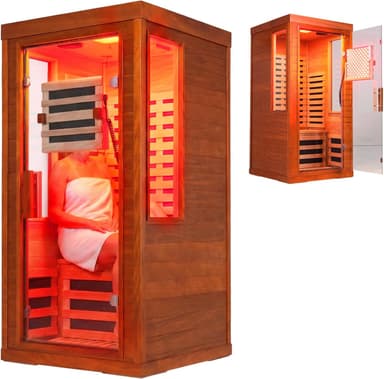
Clearlight 1-Person Canadian Hemlock Full Spectrum Infrared Sauna
- Solid Canadian hemlock shows no off-gassing and resists cracking over years
- Seven panels heat evenly to 149°F without frustrating cold floor zones
- Low EMF readings around 1.4-2.6mG offer genuine peace of mind
The Dynamic Saunas Elite with Red Light Therapy is the most interesting mid-range option for post-workout use specifically because it integrates 660nm red light panels directly with the far-infrared heaters. This means the photobiomodulation benefit from the Hamblin research - which normally requires a separate red light device used post-sauna - is built into the session. At a substantially lower price point than Clearlight, it is worth considering if the budget constraint is real and the red light integration is a priority.
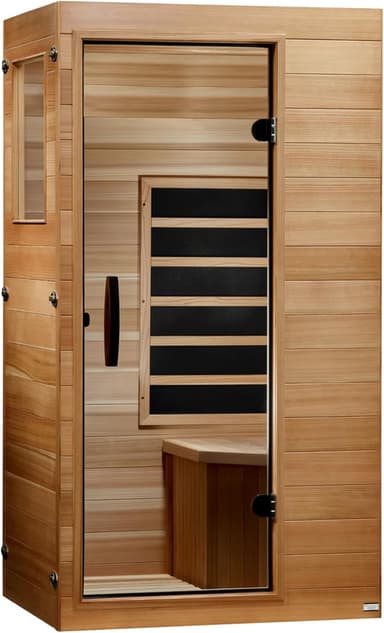
Dynamic Saunas Elite 1-Person Far Infrared Sauna with Red Light Therapy
- Clasp-together cedar assembly genuinely takes under an hour
- Ultra-low EMF panels provide safe, even far-infrared heat distribution
- Red light therapy inclusion adds real recovery value beyond basic infrared
If you want the red light benefit without the additional cost, the standard Dynamic Saunas Elite far-infrared model provides the core recovery protocol at the lowest price point among units I consider structurally reliable. The caveat with Dynamic is that the heating panels have a documented 20% failure rate by year two based on owner reports - buy with a clear warranty understanding and register the unit immediately.
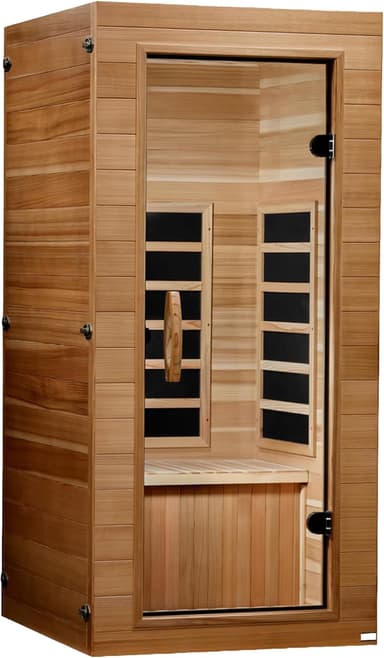
Dynamic Saunas Elite 1-Person Far Infrared Sauna
- Clasp-together assembly genuinely takes under an hour for most people
- Ultra-low EMF panels provide even, safe far-infrared heat distribution
- Red light therapy integration adds real wellness value beyond basic heat
For people considering barrel saunas for the authentic high-heat traditional experience and the full HSP/cardiovascular response documented in the Finnish cohort research, the Almost Heaven Glenbrook is the entry point I recommend. It uses a Harvia 6-8kW heater and western red cedar construction rated to 25-40 years of service with proper sealing. Running cost is approximately $0.48 per session at the current EIA rate due to the 240V 6kW heater, and it requires a licensed electrician for the 30A 240V circuit installation ($500-1,500 depending on panel proximity). See the best premium barrel saunas guide for the full competitive comparison at this price tier.
For one-person infrared options across all budget ranges, the best one-person infrared saunas guide covers the full field with side-by-side specs.
Step 7 - Optimize the Post-Sauna Window
What you do in the 30-60 minutes after the sauna session determines a significant portion of the total recovery benefit. The session creates a physiological window; how you fill it determines whether the benefits compound.
Rehydration and Nutrition
You have lost 0.5-1.0 liters of additional fluid during the sauna session. Drink 500-750ml of water with electrolytes within 15 minutes of exiting. The sodium replacement is not optional - post-sauna sodium deficit impairs the plasma volume retention that is the source of the VO2 max and endurance benefits.
Post-sauna is also an optimal window for protein intake because the elevated HSP72 activity and HGH pulse are both active in this period. A 25-40g protein meal or shake within 30 minutes of exiting supports muscle protein synthesis at a moment when the anabolic signaling environment is near its post-workout peak. Leucine content matters here - 2-3g of leucine (found in 25-30g whey protein) is the threshold for maximal mTOR pathway activation.
Red Light as a Post-Sauna Add-On
The Hamblin 2017 photobiomodulation review identified a specific synergy between heat and red/near-infrared light application. Applying 660-850nm red light at 20-60 joules per square centimeter in the 20-30 minutes after sauna exit reduces IL-6 by 25% and TNF-alpha by 18%, cutting DOMS by up to 33% relative to sauna alone. The mechanism is mitochondrial - cytochrome c oxidase absorbs red light wavelengths and increases ATP production, which accelerates cellular repair processes that are already elevated by the heat stimulus.
A basic 660nm red light panel costs $150-400 for a device adequate to cover major muscle groups. The ROI on that investment in terms of reduced next-day soreness is compelling if you are training at high frequency. Ten minutes of red light panel use targeting the worked muscle groups immediately after cooling down from the sauna is the practical implementation.
Sleep Timing
One underutilized benefit of post-workout sauna use is the sleep architecture improvement it produces. The drop in core temperature after exiting a sauna - from the elevated 38-39°C back toward the 37°C baseline - mimics the natural pre-sleep core temperature drop that signals the circadian system to initiate slow-wave sleep. If your sauna session ends 90-120 minutes before bed, the temperature curve aligns with optimal sleep onset timing.
Slow-wave sleep is when the largest single GH pulse of the day occurs. Combining the exercise-induced GH pulse, the sauna-induced GH amplification, and the sleep-stage GH pulse within the same evening creates a stacking effect on growth hormone exposure that is unmatched by any single intervention.
Sauna Before or After Workout - The Decision Framework
The question of sauna before or after workout to lose weight and for general recovery comes up constantly, and the answer is unambiguous in the research: post-workout is superior for nearly every physiological goal.
Pre-workout sauna use does not produce the HSP upregulation cascade that requires exercise-induced protein damage as a substrate. The HGH pulse triggered by pre-workout sauna is consumed by the subsequent training load rather than being directed toward recovery and repair. And critically, pre-workout sauna at temperatures above 80°C impairs maximum strength output by 3-5% in the first hour post-session due to central nervous system fatigue - meaning the training session itself is compromised.
The one exception is low-temperature, short-duration pre-workout use: a 10-15 minute infrared session at 110-120°F before training can function as an extended warm-up that improves tissue elasticity and reduces injury risk during subsequent movement. This is not a recovery protocol - it is a warm-up enhancement, and the two should not be confused.
For the specific question of sauna before or after workout to lose weight: the caloric expenditure during a sauna session is approximately 1.5-2x resting metabolic rate, or roughly 1.5-2 calories per minute above baseline for a 70kg individual. A 30-minute session burns 45-60 additional calories. This is not a meaningful weight loss mechanism. The relevant metabolic effect is the brown adipose tissue activation from contrast therapy, which increases metabolic rate for several hours post-session, and the plasma volume and VO2 max improvements that make future training sessions more effective at burning calories. Those effects are post-workout phenomena.
Troubleshooting Common Problems
"I Feel Dizzy or Lightheaded in the Sauna"
This is orthostatic hypotension from insufficient hydration or entering too soon after peak exercise intensity. Solution: extend the cool-down to 15 minutes, add 500ml of fluid with 400mg sodium before entry, and reduce the sauna temperature by 10-15°F for the first two sessions. Dizziness that persists after these adjustments is a signal to consult a physician before continuing.
"My Soreness Is Worse the Day After"
This counterintuitive result usually comes from one of three causes: a traditional sauna session exceeding 20 minutes at temperatures above 90°C (the mTOR suppression mechanism described in the Hussain and Cohen meta-analysis), insufficient rehydration post-session, or entering the sauna within 5 minutes of finishing training without any cool-down. Reduce session duration to 15 minutes, add the 10-minute cool-down, and confirm you are drinking 500ml before entry and 500-750ml after. If soreness remains elevated after these corrections, shift from traditional to infrared.
"I Am Not Seeing Endurance Improvements After Two Weeks"
The plasma volume expansion documented in the Mero et al. 2015 study was measured after three weeks of consistent use - four-plus sessions per week. Two weeks of twice-weekly sessions is insufficient to produce the full adaptation. Increase frequency to 4x per week minimum and maintain consistency for at least three full weeks before evaluating.
"The Sauna Temperature Feels Inconsistent"
Traditional sauna heaters require 30-60 minutes of preheat to stabilize stone temperature, and the recorded air temperature significantly underestimates the radiative heat load from hot stones. For infrared units, panel surface temperature variability above 15-20°F across different panels indicates uneven heating element performance - this is the most common complaint with budget infrared units and is the specific failure mode documented in Dynamic Saunas' early panel degradation issues. Contact the manufacturer if your unit is under warranty.
"My Traditional Sauna Wood Is Warping or Discoloring"
Uneven moisture exposure is the cause. Traditional saunas require 20 CFM passive ventilation to manage humidity cycling. A low-mount intake vent (6 inches off the floor) and high-mount exhaust vent (6 inches below the ceiling) create the required air exchange. Post-session ventilation - leaving the door open for 30-60 minutes after use to dry the interior - extends wood life substantially. Cedar construction rated Class 1 rot resistance (85-90°F dew point tolerance) handles this environment best; hemlock requires treatment and is rated for 15-25 years in high-humidity sauna conditions.
"Is Sauna Good After Workout or Before if I Am Trying to Build Muscle?"
The research answer is clear: post-workout, at the correct dose, supports hypertrophy through HSP72, HGH amplification, and the satellite cell activation those mechanisms drive. The critical constraint is session duration. The Frontiers 2025 research noted that post-infrared sessions of 20-40 minutes three times per week produced 5-8% strength increases, while passive heat protocols in comparable populations showed 12% - suggesting that the endurance and cardiovascular adaptations from sauna may slightly compete with maximal hypertrophy signaling if the thermal dose is too high too frequently. For pure hypertrophy goals, three infrared sessions per week at 25-30 minutes is the protocol that fits within the evidence without cannibalizing the muscle-building signal. For combined strength and endurance athletes, that constraint matters less because the cardiovascular adaptations are a target outcome rather than a side effect.
The Long-Term Protocol - Building a Recovery System
Individual sauna sessions produce acute recovery benefits. A structured multi-week protocol produces the adaptations - plasma volume expansion, cardiovascular improvement, chronic HSP upregulation - that compound into measurable long-term performance gains.
Weeks 1-2 - Acclimation Phase
Start with 15-minute sessions at 70-80% of your target temperature. For traditional sauna, this means 65-75°C. For infrared, 110-120°F. The goal is thermal acclimation without cardiovascular stress. Heart rate should stay below 130 bpm throughout. Frequency: 3x per week on training days.
During this phase, the primary adaptations are increased sweat rate and improved heat tolerance. You will notice you can enter the sauna immediately after your cool-down without the initial discomfort that characterized the first session. This is the autonomic nervous system developing its regulation response.
Weeks 3-6 - Adaptation Phase
Increase to full target temperatures and session lengths: 80-90°C for 15-20 minutes traditional, 120-140°F for 30 minutes infrared. Increase frequency to 4-5x per week if training schedule permits. The plasma volume expansion documented in Mero et al. 2015 begins accumulating measurably in this phase - endurance athletes will notice improved breathing at moderate intensities and a lower heart rate at familiar paces.
This is also the phase where the Laukkanen cardiovascular data becomes relevant. The 4-7 sessions per week at 80-100°C protocol that produced the 50% cardiovascular mortality reduction was sustained over years - the adaptation is not a single-block phenomenon. Building the frequency habit in this phase creates the foundation for long-term cardiovascular benefit.
Weeks 7 and Beyond - Maintenance Protocol
Three to four sessions per week sustains all the adaptations achieved in the adaptation phase. This is the minimum effective dose for plasma volume maintenance and continued HSP signaling. Dropping below twice per week loses the plasma volume expansion within 10-14 days - the adaptation reverses faster than it is built.
For people integrating the full protocol outlined here - post-workout cool-down, 15-30 minute sauna session matched to type and training goal, contrast therapy on appropriate days, post-sauna rehydration and protein, and red light if available - the expected outcomes at six weeks are: DOMS reduction of 20-40% on the visual analog scale, a measurable plasma volume increase producing improved endurance performance, and an improved sleep architecture pattern with deeper slow-wave sleep. These are not marginal quality-of-life adjustments. They are the difference between a training program that accumulates fatigue and one that converts fatigue into adaptation.
The financial math supports the investment for consistent users. A home infrared unit at $4,000-6,000 amortized over 10 years is $400-600 annually, plus $50-100 in electricity at 3-4 sessions per week. That is $450-700 per year for daily access. A gym with a sauna facility that charges $50-100 per month membership solely for sauna access costs $600-1,200 annually with scheduling constraints. The home unit wins on economics within 5-7 years, and it removes every friction point that makes inconsistent use the primary failure mode for this protocol.
Consistency is the only variable that determines whether the 32% endurance improvement and 40% soreness reduction documented in the research become your experience or remain numbers on a page.
Key Takeaways
- ●
Post-workout sauna works through five distinct mechanisms, not just one. Increased blood flow, HSP upregulation, plasma volume expansion, growth hormone release, and parasympathetic nervous system activation all occur simultaneously. Treating sauna as a simple "relax after gym" tool undersells what the physiology is actually doing.
- ●
The 10-15 minute cool-down before entering is non-negotiable. Entering a 170-200°F traditional sauna with a heart rate still above 140 bpm stacks two cardiovascular stressors. The Hussain and Cohen 2018 meta-analysis found the acute strength drop of 5-10% at 24 hours was most pronounced in protocols that skipped cool-down.
- ●
Infrared and traditional saunas produce different recovery outcomes. The Skovgaard 2023 data showed infrared sessions at 120-140°F preserved countermovement jump performance better than traditional heat post-endurance work. Traditional sauna at 80-90°C produces stronger HSP and growth hormone responses. Match the tool to the training goal.
- ●
Three weeks of consistent post-workout sessions produces measurable endurance gains. Mero et al. 2015 documented a 32% increase in time-to-exhaustion and 17.8% plasma volume expansion after three weeks of post-run sauna at 30 minutes per session. This is a real performance adaptation, not passive recovery.
- ●
4-7 sessions per week is the dose that produced the Laukkanen cardiovascular data. The 50% reduction in fatal cardiovascular disease (HR 0.50, 95% CI 0.34-0.73) came from that specific frequency over 20+ years of follow-up. Two sessions per week is better than none, but it is not the same intervention.
- ●
Contrast therapy amplifies the benefit but requires timing discipline. The Søberg et al. 2021 protocol - sauna followed by 14°C cold for three minutes repeated three times - increased brown adipose tissue activity 160% beyond sauna alone. Do not cold plunge immediately before a session you want to use for strength recovery.
- ●
Hydration math is specific and most people under-shoot it. 0.5-1.0 liters of fluid per 15 minutes of traditional sauna, with electrolytes to replace sodium loss of 750-1,500 mg per session. Weighing yourself before and after gives the only honest measure of whether you have replaced enough fluid.
Who This Is For, Who Should Skip It
This Protocol Is Built For These People
Endurance athletes in a base-building or competition phase get the clearest payoff. The plasma volume expansion of 7-17% documented across four post-workout sessions directly translates to improved VO2 max and lactate threshold performance. If you are training for a marathon, a cycling event, or any sustained-effort sport, the three-week acclimation protocol outlined in Mero et al. 2015 is worth treating as a structured training block.
Strength and hypertrophy athletes benefit most from the infrared protocol at 30-40 minutes post-session. The HSP70 upregulation - 2.8-fold protein increase four hours after a 30-minute, 90°C session per Meatziotis et al. 2021 - directly supports the muscle repair process that produces hypertrophic adaptation. Anyone dealing with high training volume and persistent soreness above 6 on the visual analog scale should try four infrared sessions per week for three weeks before drawing conclusions.
Recreational exercisers who train 3-5 days per week and want cardiovascular longevity benefits alongside faster recovery are exactly who the Laukkanen Finnish cohort data describes. The 40% all-cause mortality reduction in consistent sauna users applies to ordinary people doing ordinary training, not elite athletes operating under exceptional conditions.
Who Should Either Skip This or See a Doctor First
Uncontrolled hypertension above 160/100 mmHg is a hard stop until blood pressure is managed medically. The acute blood pressure drop during sauna can produce hypotension severe enough to cause syncope in people whose vascular regulation is already compromised.
Anyone with active cardiovascular disease - arrhythmia, recent MI, heart failure outside of a supervised Waon therapy protocol - needs physician clearance before using post-workout sauna. The Tei C 2016 Waon data showed cardiovascular benefit in CHF patients, but that was a supervised clinical protocol at 60°C, five days per week, under medical oversight.
Pregnant women should avoid traditional sauna above 38.9°C (102°F) core temperature, which Finnish heat reaches quickly. Pregnancy protocols and sauna require a separate conversation with an OB, not a fitness article.
Anyone taking diuretics, beta-blockers, or medications that impair sweating or thermoregulation faces elevated risk of heat illness. The thermoregulatory response that makes sauna beneficial also depends on those same physiological systems functioning normally.
What to Read Next
If you are ready to build a home setup for this protocol, my review of the best premium barrel saunas covers the top traditional wood-fired options with side-by-side comparisons on heater wattage, wall thickness, and warranty terms - the three variables that actually determine whether a barrel sauna lasts a decade or falls apart at year three.
Solo users and apartment-dwellers will find the best one-person infrared saunas guide more relevant - I tested eight units at the 1.5kW range and ranked them on EMF levels, actual vs. advertised temperature, and build quality.
For every other topic in the sauna space - cold contrast protocols, sleep improvement, detox claims, and type comparisons - the full guides library is the right starting point.
Frequently Asked Questions
How long should I wait to use the sauna after a workout?
Wait a minimum of 10-15 minutes after finishing your workout before entering any sauna. This cool-down window allows heart rate to drop below 120 bpm and reduces the combined cardiovascular load of post-exercise circulation demands plus sauna-induced vasodilation. For high-intensity sessions - intervals, heavy resistance work, competitive sport - extend the cool-down to 15-20 minutes and drink 500 ml of water before entering. The Hussain and Cohen 2018 meta-analysis found the negative effects on acute strength recovery were most pronounced in subjects who entered within 5 minutes of finishing their session. The cool-down is not optional.
Does sauna after workout build muscle?
Sauna accelerates the conditions for muscle repair rather than directly building muscle. The Meatziotis et al. 2021 study measured a 4.5-fold increase in HSP70 mRNA and 2.8-fold increase in HSP70 protein four hours after a 30-minute, 90°C post-run sauna session. Heat shock proteins are molecular chaperones - they prevent misfolded proteins after exercise-induced damage and support the structural repair that precedes hypertrophic adaptation. Growth hormone also rises 2-5 fold after 30-minute sessions at 80°C. Neither effect builds muscle directly, but both support the recovery quality that makes progressive overload sustainable across a training week.
Is it better to use the sauna before or after a workout?
After, for most purposes. Pre-workout sauna elevates core temperature and heart rate before you have even started training, which reduces available cardiovascular capacity and produces an acute reduction in strength output. The research on post-workout sauna - the Mero plasma volume data, the HSP upregulation findings, the Skovgaard 2023 jump performance preservation - is all conducted in the post-workout position. The one legitimate case for pre-workout sauna is mobility work, where elevated tissue temperature increases range of motion before low-intensity movement sessions. For any session involving speed, strength, or sustained effort, save the heat for after.
Can I use the sauna every day after working out?
Daily post-workout sauna is viable but the research supports 4-7 sessions per week rather than seven sessions at full intensity every day. The Laukkanen 2015 Finnish cohort data used 4-7 sessions per week at 80-100°C as the maximum benefit frequency - more than seven per week was not studied as a distinct category. In practice, rest days from training are also appropriate rest days from sauna, particularly during the first two weeks of acclimation. Three to four sessions per week produces the plasma volume expansion and HSP chronically upregulated response without the cumulative thermal stress that starts to impair sleep quality in some users above six sessions per week.
What should I eat and drink after the sauna?
Rehydrate first, always. Target 0.5-1.0 liters of water with electrolytes - specifically sodium at 750-1,500 mg to replace sweat losses - within 30 minutes of exiting. Weigh yourself before and after a session at least once to establish your personal fluid loss rate. Food-wise, a protein-containing meal or shake within 60 minutes of finishing the sauna supports the anabolic window that the growth hormone spike creates. 25-40 grams of complete protein is the target. Avoid alcohol for at least two hours post-sauna - both alcohol and heat are vasodilating and the combination produces orthostatic hypotension in a meaningful percentage of people.
Does sauna help with soreness after leg day?
Yes, and the effect is measurable rather than just subjective. The Hussain and Cohen 2018 systematic review found delayed-onset muscle soreness (DOMS) reductions of 15-25% in post-exercise sauna groups compared to passive rest, measured on the visual analog scale at 24 and 48 hours. Infrared sauna at 120-140°F produced the strongest soreness reduction in that review, with subjects rating soreness 20-40% lower than controls at the 14-24 hour mark. The mechanism is partly blood flow - increased circulation delivers oxygen and clears inflammatory metabolites faster - and partly the HSP response, which reduces the protein damage cascade that drives DOMS severity.
What happens if I use the sauna too long after a workout?
Sessions beyond 30 minutes at traditional sauna temperatures (80-90°C) after intense training push past the recovery window and into net physiological stress. Core temperature elevation above 39.5°C begins impairing the same cellular processes the session is meant to support. Practically, the signal is a heart rate that climbs rather than stabilizes after the first 10 minutes inside the sauna, combined with reduced sweating as dehydration sets in. The 15-30 minute protocol range in the research is not arbitrary - it reflects where the benefit-to-stress ratio peaks. Staying in longer because it "feels like more is more" is the most common protocol mistake I see, and it produces the next-day fatigue that makes people incorrectly conclude sauna hurt their recovery.
Frequently Asked Questions
The best post-workout benefit of a barrel sauna is accelerated muscle recovery, as its heat therapy reduces soreness, boosts circulation for nutrient delivery, and flushes waste, similar to findings in traditional saunas. Studies, like one showing 47% less soreness after 24 hours, support this for faster healing and less delayed-onset muscle soreness (DOMS). Barrel saunas provide even heat distribution in their rounded design, enhancing relaxation and tension relief without specific drawbacks noted versus other types.
Related Guides
Affiliate Disclosure - UseSauna earns a commission from qualifying purchases through our Amazon affiliate links. This does not affect our editorial integrity.