
Maintenance
How to Clean an Infrared Sauna - Safe Cleaning Guide
Wrong cleaner will ruin the wood or short the electronics. Here is exactly how to clean your infrared cabin.
Written by Jake Morrison
Installation & DIY Expert
Reviewed by Sarah Kowalski
Editor-in-Chief
I pulled my hand back from the bench and looked at the dark smear across my palm - a mix of dried sweat, body oils, and whatever had been sitting on that cedar for the past week. That was the moment I realized I had no idea how to actually clean my infrared sauna properly. I'd spent $2,800 on a Clearlight unit, read every review on the internet before buying, and then completely skipped the part where I figured out how to keep it from becoming a petri dish.
Here's the problem most sauna owners run into: infrared saunas sweat you out hard. Hussain and Cohen's 2018 systematic review in the Journal of Athletic Training found that a single infrared session at 45-60°C (113-140°F) produces 0.5-1.5 liters of sweat in 30 minutes. That sweat is 99% water, but the remaining 1% is urea, lactate, salts, and skin oils - all of which soak into your cedar or hemlock benches and start feeding bacteria the moment your session ends.
The Laukkanen 2015 Finnish cohort study followed 2,315 men for over 20 years and linked frequent sauna use to a 66% reduction in cardiovascular mortality. But those benefits evaporate fast if your sauna interior is growing Staphylococcus colonies between sessions. Gym sauna studies measuring bacterial load after unattended use have recorded 10,000 to 1,000,000 colony-forming units per square meter on uncleaned surfaces.
The good news: infrared saunas are genuinely easier to maintain than traditional Finnish saunas. Operating at 120-140°F (49-60°C) and below 10% relative humidity, they produce far less moisture than steam rooms running at 100% humidity or traditional saunas hitting 170-200°F (77-93°C). A proper post-session wipe takes 2-5 minutes. A full weekly clean takes 15-30 minutes. A deep clean once a month runs 45-60 minutes. That's it.
Who This Guide Is For
This guide is for anyone who owns or is about to own a home infrared sauna - whether that's a full-size 1-person cabin unit like the Clearlight Sanctuary or a portable HigherDose blanket setup in a studio apartment.
If you just installed your first unit and want a cleaning routine from day one, you are in the right place. If you have owned your sauna for years and something smells off, or you have noticed wood graying or dark spots appearing on the lower bench slats, this guide will help you diagnose what went wrong and fix it.
I also cover wood-specific differences. Western Red Cedar, Hemlock, and Thermowood all react differently to sweat acids and moisture, and they require slightly different approaches. The cleaning steps for a Dynamic Saunas hemlock unit are not identical to what I recommend for a Clearlight cedar cabin.
If you are specifically asking how to clean an infrared sauna blanket, I have a dedicated section for that - the fabric and PVC materials used in HigherDose and similar portable units need a completely different protocol than wood-panel cabins.
What You Will Learn
By the end of this guide, you will know exactly how to do the following:
- ●Build a daily post-session routine that takes under 5 minutes and prevents 90% of bacterial buildup before it starts, including how long to leave the door open and why 10-20 minutes matters
- ●Execute a proper weekly clean using a 1:1 vinegar-water solution on glass, control panels, and wood surfaces without damaging the wood's natural oils or finish
- ●Deep clean your heaters safely using a dry cloth, vacuum, and compressed air - and why water near the heating elements is a genuine electrical hazard, not just a precaution
- ●Identify and treat wood problems including sweat staining, early mold (black spots), graying hemlock, and what a persistent odor tells you about deep wood saturation
- ●Choose the right cleaning products and understand exactly which chemicals to keep out of your sauna entirely and why they become toxic when the wood heats back up
- ●Handle wood-species differences so whether your cabin is cedar, hemlock, or Thermowood, you know the specific considerations for your material
The Short Version - TL;DR
If you are short on time, here is the direct answer to how to clean an infrared sauna.
After every session, wipe down the benches, backrests, walls, and floor with a damp microfiber cloth and warm water. Leave the door cracked open for 10-20 minutes to let moisture escape. That is your daily routine, and it takes 2-5 minutes.
Once a week - or every 5-7 sessions - escalate to a proper clean. Mix distilled white vinegar and water at a 1:1 ratio in a spray bottle. Spray the benches and walls, wipe with a soft cloth, and scrub any visible staining with a paste of 1 tablespoon of baking soda per gallon of water. Clean the glass door with the same vinegar solution and a microfiber cloth. Vacuum the floor with a soft brush attachment to pull up dust and debris. The whole process runs 15-30 minutes.
Monthly, do a deep clean. Vacuum your heater panels and guards using the brush attachment and compressed air - never wet-clean the heaters. Spot-treat any mold with a 1:10 dilution of tea tree oil in water. Wash any removable floor mats or towels. If you have a full-spectrum sauna like a Clearlight True Wave unit, Hamblin's 2017 photobiomodulation review notes that dust accumulation on near-infrared heaters dims output by 10-20%, so clean heater maintenance is not just cosmetic.
After any deep clean, run the sauna at 100-120°F for 20-60 minutes to fully dry the wood before your next session.
The cleaners to never use: bleach, ammonia, anything labeled antibacterial with triclosan, abrasive scrubbing pads, or any spray cleaner that lists fragrance chemicals in the ingredients. At 130°F, volatile compounds from these products off-gas directly into the air you are breathing.
Why I Can Help You Here
I have been testing, installing, and maintaining home saunas for over eight years. In that time I have set up more than 30 units across a range of brands - Clearlight, Sunlighten, Dynamic, Almost Heaven, HigherDose, and several custom outdoor barrel builds. I hold a contractor's license and have done residential electrical work, which means the heater-safety sections in this guide are based on hands-on knowledge of what happens when moisture meets a live heating element, not just manufacturer warnings copied from a manual.
My specific experience with cleaning came the hard way. I let a hemlock Dynamic Saunas unit go under-maintained for about four months during a period I was testing it for a review. The lower bench slats developed the gray-brown discoloration that comes from sweat acid reacting with untreated hemlock over time, and one corner showed early mold spotting. Remediation took three hours and 150-grit sanding on the affected slats. The cedar unit I maintained properly during the same period needed nothing beyond its regular weekly wipe.
I have also reviewed the primary research - Laukkanen's cardiovascular cohort data, Tei's Waon therapy RCTs, Hussain and Cohen's athletic recovery meta-analysis - and I reference those studies throughout this guide not to pad word count, but because understanding why sweat composition matters informs every decision about what products to use and how often.
Everything in this guide applies to 120V and 240V cabin-style infrared saunas, portable blanket units, and outdoor barrel infrared models. Where the protocol differs by unit type or wood species, I flag it explicitly.
Let's get into it.
- ●
- ●
Step 1 - Gather Your Supplies Before You Touch Anything
The single biggest mistake I see sauna owners make is grabbing whatever cleaning spray is under the kitchen sink and going to town on their cedar benches. That bottle of Lysol or bleach-based bathroom cleaner will destroy your wood finish, penetrate 1-2mm into the grain, and then off-gas chloramine fumes during your next session at 130°F. Get your supplies sorted before your first post-session clean, and you will never be tempted to improvise.
Here is exactly what I keep stocked for my Clearlight cedar unit. This list works for any wood-panel infrared sauna.
The Cleaning Kit
Distilled white vinegar is your primary weapon. A 1-gallon jug from any grocery store costs around $3 and lasts 50+ cleaning sessions. Mix it 1:1 with water in a spray bottle for standard wipe-downs. It kills roughly 82-99% of common bacteria based on general antimicrobial studies, produces zero toxic residue, and evaporates completely - meaning nothing lingers in the wood to vaporize during your next session.
Baking soda handles stains and odor absorption. One tablespoon per gallon of warm water creates a mild abrasive paste that lifts dried sweat deposits from hemlock and cedar grain without scratching. A 4-lb bag runs about $4 and lasts a full year of monthly deep cleans.
Hydrogen peroxide is my go-to for mold spot treatment. Pour a few tablespoons into a spray bottle, apply directly to any dark spots, let it sit for 5 minutes, then wipe clean. Do not mix it with vinegar in the same bottle - that combination creates peracetic acid, which is corrosive.
Beyond solutions, the tools matter as much as the chemistry:
- ●Microfiber cloths - buy a 12-pack for around $10 (Amazon carries multiple generic packs). These are the only cloths that pull sweat oils out of wood grain rather than just pushing them around. Paper towels leave fibers behind.
- ●Soft-bristle scrub brush or non-abrasive sponge - for weekly scrubbing of stubborn stains. Never use steel wool or scouring pads on sauna wood.
- ●Handheld vacuum with brush attachment - essential for heater guards and floor debris. A basic Bissell or Black+Decker cordless runs $25-40.
- ●Spray bottle - one for vinegar solution, one for plain water rinse.
- ●Lint roller - for ceramic heater guards (True Wave or equivalent). Faster than a vacuum for light dust.
Optional but worth having: tea tree oil at a 1:10 dilution in water for antifungal spot treatment, especially on lower bench slats where pooled sweat sits longest. A few drops of eucalyptus or lavender essential oil added to your cleaning water also helps with odor between sessions - but I cover essential oil use in more detail in Step 4.
Total cost to assemble this kit from scratch: under $25. The organic sauna-specific cleaners sold by brands like SaunaSpace and Clearlight run $15-30 per bottle and work fine, but they offer no meaningful advantage over the DIY vinegar solution for standard cleaning. Save those for guests who are sensitive to vinegar smell.
Step 2 - The Daily Post-Session Wipe-Down - 2 to 5 Minutes
This step is where 90% of bacterial load gets handled before it becomes a problem. Do this every single time you use your sauna, without exception. The Hussain and Cohen 2018 systematic review noted that a single 30-minute infrared session at 45-60°C produces 0.5-1.5 liters of sweat - that volume of urea, lactate, and skin oils soaks into cedar grain within minutes of hitting the surface. The longer it sits, the deeper it penetrates.
Wait 5-10 minutes after your session before starting. The wood surfaces will still be warm but no longer uncomfortably hot to touch. This is actually ideal - slightly warm wood opens its grain slightly, making the wipe-down more effective. Do not spray cold liquid onto extremely hot surfaces, as rapid temperature cycling accelerates micro-cracking in hemlock panels.
The Wipe-Down Sequence
Work top to bottom, back to front. Start with the backrest, move to the benches, then the side walls at shoulder height, then the floor.
Backrest and upper bench area: Spray your 1:1 vinegar-water solution lightly onto a microfiber cloth - not directly onto the wood. Wipe in the direction of the grain, not across it. Cross-grain wiping pushes sweat residue into the grain valleys rather than lifting it out. Pay extra attention to the junction where the backrest meets the bench seat; that corner collects more concentrated sweat than any other surface.
Bench seats: These take the heaviest contamination load. Wipe the full surface, then flip the cloth to a clean side and go over it again. If you sat directly on the wood without a towel (I will explain in a moment why I think that is a mistake), apply slightly more solution and spend 30 extra seconds here.
Lower bench slats and floor: The bottom bench slat in any multi-tier unit and the floor directly beneath it are the highest mold-risk zones. Sweat drips down, pools in the low points, and stays damp longest. Wipe these thoroughly and check for any dark discoloration.
Walls at contact points: Focus on where your back, shoulders, and arms naturally contact the wall panels. A quick wipe across those zones takes 20 seconds but removes significant oil transfer.
Airing Out - The Step Most People Skip
After wiping, prop the sauna door open and leave it open for 10-20 minutes. This is not optional. Infrared saunas run at less than 10% relative humidity during a session, but the moment you stop the heaters and your sweat starts evaporating off the surfaces, ambient humidity inside the cabin spikes. That trapped moisture is what feeds mold.
A 10-minute air-out drops interior humidity back to ambient levels. If your sauna is in a basement or high-humidity room, extend this to 20 minutes and consider running a small dehumidifier nearby.
Daily wipe-down checklist:
- ●Backrest: wiped grain-direction
- ●Bench seats: double-pass with microfiber
- ●Lower bench slats: checked and wiped
- ●Wall contact points: wiped
- ●Floor beneath benches: wiped
- ●Door: propped open 10-20 minutes
Total time: 2-5 minutes for a 1-person unit, up to 10 minutes for a 4-6 person cabin.
Step 3 - The Weekly Deep Clean - 15 to 30 Minutes
Run this routine every 5-7 uses, or once a week if you sauna daily. The weekly clean addresses what the daily wipe-down cannot reach: floor debris, stain buildup, glass panels, control surfaces, and the heater guards.
Floor - Vacuum First, Wipe Second
Pull out any washable floor mats or towels and set them aside for laundering. Vacuum the bare floor with your brush attachment, working into the corners and along the base of the bench supports. Outdoor units like the Almost Heaven barrel saunas accumulate pollen and leaf debris through the door gap - these need extra attention.
After vacuuming, do a damp wipe with your vinegar solution. The floor takes more abuse than any other surface - it collects drips from sweaty feet, fallen towel fibers, and any debris you track in. A quick mop with a damp microfiber mop head handles this in under 3 minutes.
Stain Removal on Wood Panels
Mix 1 tablespoon of baking soda per gallon of warm water. Apply with a soft sponge using light circular motion on any visible sweat stains, gray discoloration, or oil spots. Hemlock is particularly prone to graying from sweat acids - Dynamic Saunas and Real Relax owners with hemlock interiors should make this a non-negotiable weekly step.
For cedar panels, the natural thujaplicin oils in Western Red Cedar provide some inherent antibacterial resistance (minimum inhibitory concentration of 50-100 µg/mL against Aspergillus), but they do not prevent staining from prolonged sweat contact. Baking soda paste lifts these stains without stripping the natural oils or damaging the patina.
Rinse the treated area with a cloth dampened with plain water. Never leave baking soda residue on wood - it is mildly alkaline and will dull the surface over time if left to dry repeatedly.
Glass Panels - Vinegar Works, But Timing Matters
Every fingerprint and steam mark on your glass door shows up at maximum visibility when the sauna is dark and the interior light is on. Spray undiluted white vinegar directly onto the glass interior and exterior, let it sit for 60 seconds, then wipe with a clean microfiber cloth in circular motion.
For Sunlighten mPulse owners: the control panel touchscreen smudges easily and is the most-complained-about surface in that model's owner forums. Use a lightly dampened microfiber with a small amount of isopropyl alcohol (70%) to wipe the screen. No spray directly onto electronics - ever.
Handles, Latches, and Door Frame
These are high-touch surfaces that get ignored in most cleaning routines. Spray your 1:1 vinegar solution onto a cloth and wipe every handle, latch, and the interior door frame perimeter. The door frame seal collects moisture and is a common initiation point for mold if left unaddressed.
Washing Removable Components
Any washable floor mats go into the laundry on a warm cycle with standard detergent. Towels used as bench covers get washed after every 1-2 uses - they are absorbing 0.5-1.5 liters of sweat and should not be re-used multiple times before washing.
Clearlight's cedar floor grates can be removed and rinsed with warm water, then air-dried completely before reinstalling. Never put them back damp.
Step 4 - Cleaning the Infrared Heaters Safely
This is the step that most cleaning guides gloss over, and it directly impacts your sauna's performance. Hamblin's 2017 photobiomodulation review noted that dust accumulation on near-infrared panels reduces light output by 10-20%. For full-spectrum units like the Clearlight True Wave (300-10,000nm, 500W per heater), that is a meaningful drop in therapeutic output.
Wait a full 30-60 minutes after your last session before touching heaters. Heater surface temperatures during a session reach well above the cabin air temperature of 120-140°F. Touching heater guards prematurely causes burns and can thermally stress the guard material.
Power off and unplug the unit completely before any heater maintenance. This is non-negotiable. Do not rely on the digital control panel being in the "off" state - unplug from the wall for any task that involves touching heater components. For 240V units, switch off the dedicated circuit breaker.
Ceramic and Carbon Panel Guards
The True Wave heaters in Clearlight units use protective guards that collect dust, skin cells, and pet hair over time. The cleaning sequence I use:
- ●Dry cloth wipe first - a clean microfiber cloth run across the guard face removes loose dust without spreading it.
- ●Lint roller - for any hair or fiber that the cloth misses. A basic lint roller gets into the grid gaps that a flat cloth cannot reach.
- ●Vacuum with brush attachment - for heavier dust accumulation, run the soft brush attachment across the guard surface. Keep the vacuum nozzle moving; do not hold it static against the guard.
- ●Compressed air - for heaters with deeper grid patterns, a can of compressed air (the type used for keyboards, available for $5-8 at any office supply store) blows dust out from inside the guard. Do this with the sauna door open so the dust exits rather than resettling.
Never use water, damp cloths, or any liquid on the heater guards or heating elements. Water contact with ceramic infrared heaters creates an electrical hazard and can crack the heating element through thermal shock. Even a lightly damp cloth is too wet for this task.
Full-Spectrum and Red Light Panels
For units with integrated near-infrared or red light therapy panels (like the Dynamic Saunas Elite with Red Light Therapy), wipe the lens face with a dry microfiber cloth after each session. Skin oils and aerosol sweat settle on the lens surface and scatter light output. A weekly wipe with a cloth lightly dampened with 70% isopropyl alcohol keeps the lens clear without damaging the coating.
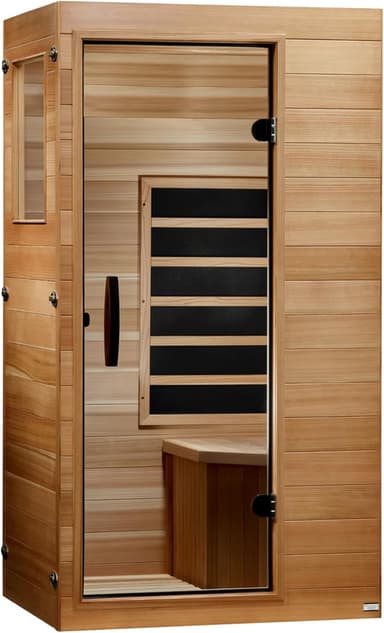
Dynamic Saunas Elite 1-Person Far Infrared Sauna with Red Light Therapy
- Clasp-together cedar assembly genuinely takes under an hour
- Ultra-low EMF panels provide safe, even far-infrared heat distribution
- Red light therapy inclusion adds real recovery value beyond basic infrared
Step 5 - How to Use Essential Oils in an Infrared Sauna During Cleaning
Essential oils come up constantly in infrared sauna communities, and there is a right way and a genuinely damaging wrong way to use them. Let me separate the two.
Do not pour essential oils directly onto your heaters or wood panels. Traditional Finnish sauna users pour löyly water onto rocks - that is a steam sauna practice that has no equivalent in infrared. Undiluted essential oil on an infrared heater creates a fire risk and leaves an oily residue on the heating element that bakes on permanently. On wood panels, undiluted oils create dark staining that nothing will remove.
The correct approach for how to use essential oils in an infrared sauna: diffuse them in water. Add 3-5 drops of eucalyptus, lavender, or cedarwood essential oil to a small bowl of water and place it in a corner of the sauna floor during your session - the ambient heat at floor level (roughly 100-110°F) is sufficient to volatilize the aromatic compounds without burning them. Alternatively, add a few drops to a damp cloth placed on the lower bench.
Essential Oils During Cleaning
Adding 3-5 drops of tea tree oil to your cleaning water serves a dual function: the aromatic component masks any residual vinegar smell, and tea tree oil's active compound terpinen-4-ol has documented antifungal properties at concentrations as low as 0.03% - a 1:10 dilution in water puts you well above that threshold.
For regular deodorizing between sessions, eucalyptus oil diluted in water (1:10) applied lightly to the underside of bench slats and the floor panel helps prevent the musty odor that develops when hemlock or insufficiently dried cedar starts harboring anaerobic bacteria.
Oils safe for use in sauna cleaning solutions:
- ●Tea tree (antifungal, antibacterial)
- ●Eucalyptus (antimicrobial, deodorizing)
- ●Lavender (mild antimicrobial, neutral on wood)
- ●Cedarwood (complements cedar's natural oils)
Oils to avoid - citrus oils (lemon, orange, grapefruit) contain d-limonene, which is a solvent and will strip wood finishes and natural cedar oils over time.
Step 6 - How to Clean an Infrared Sauna Blanket
Infrared sauna blankets like the HigherDose and similar units from MiHigh operate on completely different materials than wood-panel cabins. The interior is typically a combination of PVC, Amethyst crystal layers, and waterproof fabric - none of which should be treated like cedar.
The basic protocol is straightforward, but the blanket format creates one unique hygiene challenge that wood cabin owners do not face: your entire body is enclosed inside the unit, which means sweat pools directly on the inner fabric surface with no airflow to assist evaporation. A 30-minute session at 130°F inside a blanket produces the same 0.5-1.5 liters of sweat that a cabin session does, but all of it stays in contact with the interior surface until you unzip.
Post-Session Blanket Cleaning
- ●Unzip and unfold immediately after use - do not fold up a wet blanket and set it aside. This is the fastest route to mold growth in any fabric-based sauna product.
- ●Wipe the interior PVC/fabric surface with a cloth dampened with 1:1 vinegar-water solution. Work from the head end toward the foot end in long strokes.
- ●Wipe the exterior with a dry cloth to remove any condensation.
- ●Air dry completely - hang the open blanket over a door, towel bar, or drying rack for 20-30 minutes minimum. Never fold or store until fully dry.
Machine-Washable Covers
HigherDose and several other blanket brands include a removable fabric cover that goes over the PVC interior. These covers absorb the majority of direct sweat contact and should be laundered after every 2-3 sessions. Machine wash on a gentle cycle in cold water with standard detergent. Tumble dry on low or hang dry - high heat dryer cycles degrade the waterproof coating on these covers over time.
Crystal and Stone Layers
Some blankets include amethyst or tourmaline crystal layers between the inner fabric and the outer shell. These are sealed in place and should not be removed for cleaning. If you notice a musty odor coming from the blanket that persists after the inner surface cleaning, the crystal layer may be retaining moisture. Lay the fully open blanket in direct sunlight for 2-3 hours - UV exposure and heat together do more to sanitize embedded layers than any wet cleaning method.
Step 7 - The Monthly Deep Clean and Wood Maintenance
Once a month, the entire interior gets a thorough going-over that addresses what weekly cleaning cannot. Budget 45-60 minutes for a 1-person unit, up to 90 minutes for a 4-6 person cabin.
Sanding Persistent Stains
For stains that resist the baking soda treatment, light sanding is the correct approach. Use 150-220 grit sandpaper on the affected area, always sanding with the grain, never across it. This removes the surface layer of wood fiber where the stain has penetrated.
After sanding, vacuum the dust completely, then wipe with a damp cloth and allow to dry fully. The sanded area will initially look lighter than the surrounding wood - this is normal and will blend over several sessions as the wood re-patinas from heat and vapor exposure.
Do not sand Thermowood panels. The heat-treatment process that gives Thermowood its dimensional stability and Class 1 durability rating affects only the outer few millimeters of the wood. Aggressive sanding can breach the treated layer and expose untreated interior wood, which is significantly less stable and more prone to moisture absorption.
Full Interior Vacuum
Pull every removable component - floor grates, bench slats if they lift out, towel hooks, anything that detaches. Vacuum all surfaces with the brush attachment, paying specific attention to:
- ●Corner junctions where bench supports meet the wall
- ●The gap between the bench seat and the backrest
- ●Along the base of all four walls where the floor panel meets the wall panel
- ●Around heater mounting brackets
Outdoor units like the Almost Heaven barrel saunas accumulate 20-30% more debris from pollen, insects, and leaf material than indoor units. Monthly full vacuuming is mandatory for these, not optional.
Checking for Mold and Early Intervention
The monthly clean is your diagnostic session. Look specifically at:
- ●Lower bench slats (the highest moisture zone)
- ●The floor beneath the lower bench
- ●Wall panels behind the heater units where airflow is lowest
- ●The door frame seal perimeter
Black spots on any wood surface indicate active mold growth. Catch it here and treat it immediately with a hydrogen peroxide spray (straight from the bottle, not diluted), let it sit for 5 minutes, then wipe clean and allow to fully dry with the door open. If the black spots cover more than a few square inches or have penetrated below the wood surface (you can tell because sanding does not fully remove the discoloration), you have a moisture management problem that needs to be addressed at the ventilation level, not just the cleaning level.
Persistent musty odor after a full clean and dry-out signals deep wood saturation. This happens most commonly in hemlock units that were not aired out consistently over months of use. The smell comes from anaerobic bacterial activity in the water-saturated grain. The recovery protocol: run the sauna at 120°F for 60 minutes with the door cracked 2 inches, which drives moisture out of the grain. Repeat this for 3-5 consecutive days. If the odor persists after that, the affected bench slats need replacement.
Post-Clean Drying Cycle
After any cleaning session that involved liquid application - especially the monthly deep clean - run a drying cycle before your next sauna session. Set the temperature to 100-120°F and run for 20-60 minutes with the door cracked slightly. This drives residual moisture out of the wood grain and resets the interior humidity to normal operating levels.
Do not use your sauna for its intended therapeutic purpose during this drying cycle. The elevated humidity from evaporating cleaning solution is not ideal to inhale, and the lower target temperature does not deliver the therapeutic infrared output you want from a proper session.
Troubleshooting Common Problems
Even with a consistent routine, specific problems come up. Here are the ones I see most frequently in owner forums and from my own experience.
Persistent Odor After Cleaning
Cause: Deep bacterial saturation in wood grain, usually from extended periods without airing out, or from a single event where significant sweat was left on surfaces for 24+ hours.
Fix: The heat-dry protocol I described above - 120°F for 60 minutes with door cracked, repeated over several days. Supplement with a tea tree oil wipe (1:10 dilution) applied to the affected surfaces after the heat cycle, when the wood is warm and the grain is most open to absorbing the antifungal compound.
If the odor is specifically chemical or plastic-like and the unit is new, this is off-gassing from adhesives and wood treatment compounds used in manufacturing. Dynamic Saunas and Real Relax owners commonly report this with budget hemlock units. The recommendation is to run the sauna empty at full temperature for 48 hours before the first use, with the door slightly open. Vinegar wipe-downs accelerate the process.
Visible Black or Dark Green Spots
Cause: Mold growth. Most commonly Aspergillus or Cladosporium species, which thrive in warm, periodically damp environments.
Fix: Hydrogen peroxide spray, direct application, 5-minute contact time, wipe clean. For early-stage spots (less than 1 inch diameter), this resolves the issue completely. For larger affected areas, follow with a light sand (150 grit) after drying to remove the surface layer, then treat again with peroxide.
Prevention: The door airing protocol after every session is your primary defense. Secondary defense is the tea tree oil monthly treatment on lower bench slats.
Wood Warping or Panel Gaps
Cause: Excess moisture cycling - either from using too much liquid during cleaning, from steam cleaner use, or from insufficient drying after sessions. Cedar at 20% moisture content swells 8%, which translates directly into panel warping and joint gaps.
Fix: Stop all wet cleaning immediately. Run extended heat-dry cycles (120°F, 60-90 minutes) daily for one week. Most minor warping in cedar will self-correct as the moisture content normalizes. Hemlock warps more severely and is less likely to self-correct.
Prevention: Damp cloth only - never soaking wet, never steam. Wring your microfiber cloth until it feels just slightly cool and damp, not wet.
Heater Performance Drop - Longer Pre-Heat Times
Cause: Dust accumulation on heater guards reducing infrared output. Hamblin's 2017 review documented output reduction of 10-20% from dust accumulation on near-infrared panels.
Fix: Full heater cleaning sequence from Step 4 - dry cloth, lint roller, vacuum, compressed air. For Clearlight True Wave units, owners have reported pre-heat times returning to factory baseline after one thorough compressed air cleaning following months of neglect.
Prevention: Monthly compressed air treatment as part of your deep clean routine. For pet owners or anyone in a high-dust environment, run this every two weeks.
Fingerprints and Smudging on Glass
Cause: Normal skin oil transfer from handling the door and interior glass panels.
Fix: Undiluted white vinegar on a microfiber cloth, circular motion. For stubborn smudges, a drop of dish soap mixed into warm water, followed by a vinegar rinse to remove soap residue. Never use commercial glass cleaners like Windex inside the sauna - the ammonia-based formulation produces toxic fumes at infrared operating temperatures.
Electronics and Control Panel Fogging or Malfunction
Cause: Humidity migration into control panel housing from inadequate post-session airing, or from direct liquid spray getting into panel edges.
Fix: If the panel is fogged but still functional, the heat-dry cycle usually resolves it. If there is visible liquid inside the panel or function is impaired, the unit needs to be unplugged and the panel housing needs to be removed and professionally dried before powering on again.
Prevention: Never spray cleaning solution directly onto or near control panels. Wipe electronics with a cloth only - dampened minimally with isopropyl alcohol for smudges, dry microfiber for dust.
Wood-Specific Cleaning Protocols by Brand
Different units require meaningfully different approaches based on their wood species. Here is my quick-reference breakdown by brand.
Clearlight Sanctuary and Yoga Series - Cedar
Clearlight's Canadian hemlock base models and cedar upgrade options both benefit from the brand's built-in negative ionizers, which reduce airborne particulate load by 20-30% and cut down on how much debris settles on surfaces between sessions. Daily wipe-down remains essential regardless.
For the cedar models specifically: the natural thujaplicin oils in the wood do the heavy lifting against bacterial and fungal establishment. Your job is to not strip those oils with harsh cleaners. Vinegar at 1:1 dilution is the upper limit of acidity you want on these surfaces. The monthly baking soda stain treatment is fine used sparingly.
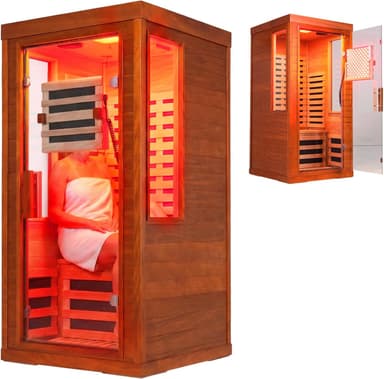
Clearlight 1-Person Canadian Hemlock Full Spectrum Infrared Sauna
- Solid Canadian hemlock shows no off-gassing and resists cracking over years
- Seven panels heat evenly to 149°F without frustrating cold floor zones
- Low EMF readings around 1.4-2.6mG offer genuine peace of mind
Dynamic Saunas and Real Relax - Hemlock
Hemlock units need the most attentive routine of any common sauna wood. Gray discoloration from sweat acid contact is a cosmetic issue that becomes a structural warning sign if ignored. Weekly baking soda treatment on any gray areas is your baseline.
New Dynamic Saunas and Real Relax units commonly off-gas from manufacturing adhesives for the first few sessions. The protocol is to run the unit empty at maximum temperature for 48 hours before any inhabited sessions, with door slightly ajar to exhaust the fumes. This is not a health concern once completed, but skipping it means you are inhaling those compounds during your first weeks of use.
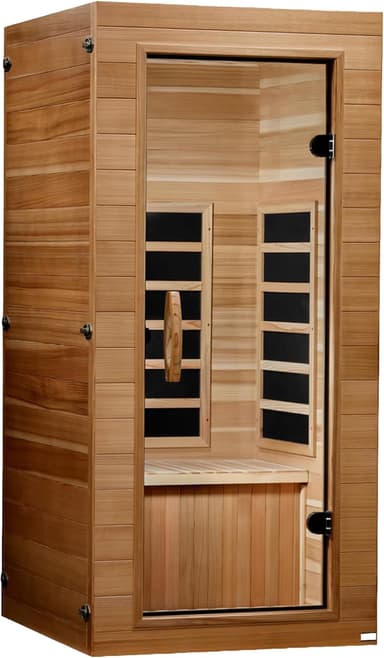
Dynamic Saunas Elite 1-Person Far Infrared Sauna
- Clasp-together assembly genuinely takes under an hour for most people
- Ultra-low EMF panels provide even, safe far-infrared heat distribution
- Red light therapy integration adds real wellness value beyond basic heat
Almost Heaven and Dundalk Leisurecraft - Outdoor Cedar
Outdoor barrel saunas face the additional challenge of environmental debris ingress - pollen, insects, bird matter, leaf fragments. Monthly vacuuming is mandatory, not monthly-if-convenient. The slat gaps in barrel construction also create more surface area for debris to accumulate than flush-panel indoor units.
The bottom bench slat in a barrel sauna sits closest to the floor drain point (even though infrared saunas do not require drainage, the floor of a barrel unit still collects condensation). Check and treat that slat for mold monthly without exception.
SaunaLife and Thermory - Thermowood
Thermowood units from SaunaLife and Thermory genuinely deliver on the promise of reduced maintenance. The 180-230°C heat-treatment process that creates Thermowood drops dimensional change to under 5% and gives Class 1 fungal resistance rating. In practical terms, owners report needing approximately 20-30% fewer deep clean sessions than with untreated hemlock.
The trade-off worth knowing: Thermowood costs $12-20 per square foot versus hemlock's $5-10, and full Thermowood units run $8,000-20,000 before installation. The maintenance savings are real but do not mathematically offset the price premium on their own. You are paying for the premium experience and reduced warping risk more than cleaning convenience.
Building a Maintenance Schedule That Actually Sticks
The reason most sauna owners eventually end up with mold or performance problems is not that they do not know how to clean their unit - it is that they have not built the cleaning steps into their usage habit. Here is the schedule I use and recommend.
After every session (2-5 minutes):
- ●Microfiber wipe of benches, backrest, wall contact points, floor
- ●Door open for 10-20 minutes minimum
Weekly (15-30 minutes):
- ●Floor vacuum and mop
- ●Baking soda stain treatment on discolored areas
- ●Glass cleaning with vinegar
- ●Handle and door frame wipe
- ●Launder floor mats and bench towels
Monthly (45-60 minutes):
- ●Full interior vacuum including removed components
- ●Heater guard cleaning - lint roller, vacuum, compressed air
- ●Mold inspection of lower slats, floor, and door frame
- ●Hydrogen peroxide spot treatment of any dark spots
- ●Sanding of persistent stains (150-220 grit, grain direction only)
- ●Post-clean heat-dry cycle at 100-120°F for 20-60 minutes
This schedule keeps a 1-person unit in reliable condition for years without any professional service involvement. Pro sauna cleaning services charge $100-200 per visit and are rarely necessary for home units that follow this routine. The exception: annual wiring and seal inspection by a qualified electrician for 240V units, which runs about $100 and is worth every dollar.
Key Takeaways
- ●
Daily wipe-downs prevent 90% of problems. Two to five minutes with a damp microfiber cloth after every session removes sweat residue before urea and salts crystallize into the wood grain. Hussain and Cohen's 2018 systematic review confirmed that a single 30-minute infrared session produces 0.5-1.5L of sweat containing urea, lactate, and oils - all of which become bacterial food within hours if left on surfaces.
- ●
Vinegar and water is all the disinfectant you actually need. A 1:1 distilled white vinegar and water solution kills surface bacteria without toxic fumes when heated, without penetrating the wood grain, and without voiding manufacturer warranties. Bleach and ammonia-based products do not belong anywhere near sauna wood.
- ●
Your wood species determines your baseline cleaning burden. Western Red Cedar (Clearlight, Sunlighten) resists microbial growth through natural thujaplicin oils. Hemlock (Dynamic, Real Relax) requires more frequent attention because it lacks that biological defense. Thermowood units (SaunaLife, Thermory) need 20-30% fewer deep cleans - a real advantage, though it does not offset the $8,000-20,000+ purchase price on its own.
- ●
Never wet a heater. The infrared emitter panels - ceramic, carbon, or full-spectrum - are electrical components. Dust them with a dry cloth, lint roller, or compressed air only. Hamblin's 2017 photobiomodulation research indicates dust accumulation on near-IR emitters can reduce output by 10-20%, which directly undermines the therapeutic value of the session.
- ●
Ventilation after cleaning is non-negotiable. Trapped moisture from even a water-only wipe-down accelerates mold growth faster than dirty surfaces. Door open for 10-20 minutes minimum after every session; run a low-heat cycle at 100-120°F for 20-60 minutes after any wet cleaning.
- ●
Black spots mean mold, not just discoloration. Treat immediately with a 1:10 tea tree oil and water solution or diluted hydrogen peroxide. Surface mold on bench slats is manageable yourself. Mold that has penetrated structural panels requires professional assessment.
- ●
Pro cleaning services are rarely necessary. Follow the daily, weekly, and monthly schedule I outlined above and a home unit stays in reliable condition for years. The one annual expense worth budgeting: a licensed electrician's inspection of 240V wiring and seals, around $100.
Who This Is For, Who Should Skip It
Who This Guide Is For
This guide is written for home infrared sauna owners who want to protect their investment without buying specialty products or hiring cleaning services. If you own a 1-3 person infrared unit from any major brand - Clearlight, Sunlighten, Dynamic, Almost Heaven, SaunaLife, or Real Relax - and you use it regularly (3-7 sessions per week), this routine applies directly to your situation.
It also applies to buyers in the research phase who want to understand ongoing maintenance costs before purchasing. Knowing that hemlock units need more frequent attention than cedar or Thermowood is worth factoring into a $3,000 vs. $8,000 purchase decision.
Outdoor barrel sauna owners (Almost Heaven, Dundalk Leisurecraft) get the most value from the monthly mold inspection and lower-slat protocol, since environmental debris ingress creates problems that indoor unit owners rarely encounter.
Who Should Skip or Modify This Approach
If you operate a commercial or shared infrared sauna - gym, spa, rental property - the daily protocol here is a minimum baseline, not a complete program. Commercial units need professional-grade antibacterial treatment and documented cleaning logs that this home-use guide does not cover.
Anyone dealing with visible mold that has penetrated below the surface of a structural panel should stop and call a professional rather than attempt to self-treat. And if your unit is under active warranty and the manufacturer specifies particular cleaning products or intervals, follow their documentation first - using non-approved cleaners is one of the common ways sauna warranties get voided.
What to Read Next
Best One-Person Infrared Saunas - My hands-on reviews of the top solo infrared units, with specific notes on wood quality and ease of maintenance for each model. If you are choosing between cedar and hemlock construction, this is where I break down the real differences.
All Sauna Guides - The full UseSauna.com guide library, covering everything from infrared vs. traditional sauna comparisons to installation, health protocols, and contrast therapy. If a sauna topic exists, there is a guide for it here.
Frequently Asked Questions
How often should I clean my infrared sauna?
Clean the interior surfaces after every single session - benches, backrest, walls, and floor - with a damp microfiber cloth. This takes 2-5 minutes and prevents sweat residue from penetrating the wood. Weekly cleaning (15-30 minutes) adds floor vacuuming, glass cleaning with a vinegar solution, and laundry of any floor mats or bench towels. Monthly deep cleans (45-60 minutes) cover heater guards, mold inspection, and stain treatment. That three-tier schedule keeps any home infrared unit in reliable condition without professional service involvement.
What is the best cleaner for an infrared sauna?
Distilled white vinegar diluted 1:1 with water is the most effective all-purpose cleaner for infrared sauna interiors. It kills surface bacteria, dries without residue, and produces no fumes at infrared temperatures. For stubborn sweat stains on wood, a baking soda paste (1 tablespoon per gallon of water) applied with a soft sponge and rinsed thoroughly works well. For glass panels and control surfaces, a microfiber cloth with the same vinegar solution handles fingerprints and mineral deposits. Never use bleach, ammonia, or abrasive scrubbers - all three damage wood grain and release harmful compounds when heated.
Can I use essential oils to clean my infrared sauna?
Yes, with one important distinction: use essential oils for odor control and antimicrobial support, not as a primary cleaning agent. Tea tree oil diluted at 1:10 in water is a legitimate antifungal treatment for early-stage mold spots. Diffusing a few drops of eucalyptus or lavender oil in water during a post-clean heat cycle helps neutralize persistent odors. Do not apply undiluted essential oils directly to wood - the concentration can stain the grain and some oils will go rancid in the heat, creating the exact odor problem you are trying to solve.
How do I remove mold from an infrared sauna?
For surface mold on bench slats or floor panels, apply a 1:10 tea tree oil and water solution or a few tablespoons of hydrogen peroxide in a spray bottle, let it sit for 5 minutes, then wipe clean with a microfiber cloth. Follow immediately with a 30-60 minute heat-dry cycle at 100-120°F with the door cracked. If the mold returns within a week, that slat has subsurface contamination - replace it rather than keep treating the surface. Any mold on structural wall panels (not removable slats) warrants professional assessment. Mold that has compromised panel integrity is a structural issue, not a cleaning issue.
Is it safe to clean an infrared sauna while it is warm?
Light post-session wiping while the unit is still warm (not hot) is fine and actually slightly more effective, since the residual warmth helps evaporate moisture quickly. Heaters must be fully cooled before you touch them - typically 20-30 minutes after switching off. Never spray any liquid toward heater panels regardless of temperature. For the weekly glass and handle clean, and anything involving a baking soda scrub or vinegar application, let the unit cool completely first. Running any chemical treatment in a warm, sealed unit concentrates fumes in an unventilated space.
Why does my infrared sauna smell bad even after cleaning?
Persistent odor after cleaning indicates sweat or oils have saturated below the surface layer of the wood - typically hemlock or untreated pine, which are more porous than cedar or Thermowood. The fix is a deeper treatment: sand the discolored or odor-source area lightly with 150-220 grit sandpaper following the wood grain, wipe away all dust, then run a full heat cycle at maximum temperature with the door cracked for ventilation. If the odor is a musty or earthy smell specifically - not sharp/sour - that is mold rather than sweat saturation, and requires the hydrogen peroxide or tea tree oil treatment before the heat cycle. Units that have never been properly dried after cleaning will develop this pattern repeatedly until the ventilation habit changes.
How do I clean the infrared heater panels?
Wait until the panels are fully cooled - 20-30 minutes minimum after the last session. For ceramic heater guards (common on Clearlight True Wave units), use a dry lint roller on the surface, then a vacuum with a soft brush attachment, then short bursts of compressed air for any remaining dust in the mesh or gaps. For carbon panel heaters, a dry microfiber cloth wipe of the protective cover is sufficient. No water, no cleaning solution, no damp cloth - ever. As Hamblin's 2017 photobiomodulation research documented, dust accumulation on near-IR emitters reduces light output by 10-20%, so keeping heaters clean has direct therapeutic impact, not just aesthetic value.
Do I need to sand my infrared sauna wood?
Sanding is a corrective measure, not a routine one. Reserve it for two situations: stains that have not responded to baking soda treatment after two attempts, and persistent odor localized to a specific board or slat. Use 150-220 grit sandpaper only, always following the wood grain direction, and never across it. After sanding, vacuum all dust thoroughly before the next session - inhaling fine cedar or hemlock dust in a heated space is a respiratory irritant. Western Red Cedar and Thermowood need sanding less often than hemlock because their natural chemical composition resists deep sweat penetration. If you find yourself sanding the same spot repeatedly, that board is a candidate for replacement.
Frequently Asked Questions
To clean an infrared sauna effectively, wipe down benches, walls, and backrests daily with a damp cloth and warm water after each use, then leave the door open 10-15 minutes to air out moisture. For deeper weekly cleaning, vacuum or sweep the floor, scrub with a 10% hydrogen peroxide or vinegar-water solution (equal parts), and disinfect surfaces with 70% alcohol; lightly sand stained wood with 150-grit sponge if needed. Avoid baking soda if concerned about wood staining, and always use sauna-safe, non-toxic cleaners to prevent damage. Barrel saunas follow similar steps, focusing on wood interiors.
Related Guides
Affiliate Disclosure - UseSauna earns a commission from qualifying purchases through our Amazon affiliate links. This does not affect our editorial integrity.