
Safety & Myths
Can Infrared Saunas Cause Cancer - The Real Evidence
Short answer - no, there is no credible evidence infrared saunas cause cancer. Here is the actual research.
Written by Dr. Maya Chen
Wellness & Health Editor
Reviewed by Sarah Kowalski
Editor-in-Chief
No peer-reviewed study has ever linked standard infrared sauna use to cancer. That sentence deserves to lead, because the fear driving people to search "can infrared saunas cause cancer" is almost entirely based on a misunderstanding of physics - specifically, the difference between ionizing and non-ionizing radiation. Infrared saunas emit electromagnetic energy in the 3-1000 micrometer wavelength range. Ionizing radiation - the kind that actually breaks DNA bonds and causes mutations - requires wavelengths below 400 nanometers and energies above 10 electron volts. Far-infrared light carries less than 0.4 eV of energy. It cannot break a chemical bond. It cannot damage DNA directly. The physics are not ambiguous.
The confusion is understandable. The word "radiation" triggers alarm, and wellness culture has produced a genuine mess of conflicting claims - some sauna brands warning about EMF while simultaneously promoting near-infrared protocols, Reddit threads citing mouse studies as if they apply to a 30-minute weekly sauna session, and the occasional breathless article conflating infrared light with ultraviolet light. I want to clear all of that up here, with actual numbers and actual studies.
The only legitimate nuance involves high-intensity near-infrared (NIR) exposure at lab-level intensities - Cho et al. (2005) showed in mice that NIR at approximately 100 times the intensity of a consumer sauna can suppress apoptosis in UV-damaged melanocytes, theoretically allowing mutations to accumulate. That finding matters if you use a full-spectrum NIR sauna for extended daily sessions without understanding the distinction between NIR and FIR. It does not mean your Clearlight or Sunlighten sauna is giving you cancer. I will explain exactly where that line sits.
Who This Guide Is For
This article is for anyone who owns or is considering an infrared sauna and has landed in a spiral of contradictory information online. That includes people who searched "can infrared saunas cause cancer reddit" and found heated debate with no citations, people who saw "infrared sauna dangers" warnings from competitors selling traditional saunas, and people who have a personal or family history of cancer and want a medically grounded answer before committing to a $3,000-plus home unit.
It is also for healthcare providers whose patients are asking these questions - I have written this to be specific enough that you can check the primary sources yourself. And it is for the enthusiast who already uses a sauna regularly and wants to understand whether session length, temperature, or sauna type (far-only versus full-spectrum) actually shifts any risk calculus. If you are in any of those groups, you are in the right place.
What You Will Learn
- ●
The physics of infrared radiation - exactly why FIR and MIR cannot cause the type of DNA damage linked to cancer, with specific energy values compared to UV and X-rays
- ●
What the actual research says - including the Cho et al. NIR mouse study that gets misrepresented, what Tanaka et al. found about NIR and cancer cell death, and what the Laukkanen cohort data shows about long-term sauna users' health outcomes
- ●
Where the real risks are - the specific scenarios (full-spectrum saunas, prolonged NIR exposure, pre-existing skin conditions, eye exposure) where caution is genuinely warranted
- ●
The EMF question answered with numbers - sauna heater EMF output in milligauss compared to WHO limits and everyday household appliances, so you can evaluate low-EMF marketing claims accurately
- ●
How to use an infrared sauna safely - session length, temperature, hydration, and NIR-versus-FIR distinctions based on the evidence
- ●
What the Mayo Clinic and mainstream medical consensus actually say - not a paraphrase, the specific position and where it has caveats
The Short Version - TL;DR
Infrared saunas do not cause cancer under normal use conditions. This is the answer, and the evidence supports it firmly.
Far-infrared (FIR) saunas, which represent the majority of consumer products on the market - units from Clearlight, Dynamic Saunas, SaunaLife, and others operating at 120-140°F (49-60°C) - emit radiation with less than 0.4 eV of energy per photon. DNA bonds require a minimum of around 4-5 eV to break. The energy gap is an order of magnitude. FIR causes thermal effects only - it heats tissue by increasing molecular vibration, which is exactly what you want from a recovery or cardiovascular tool.
Full-spectrum saunas that also emit near-infrared (NIR) at 0.75-1.4 micrometers carry slightly more energy (up to 1.65 eV), still far below ionizing thresholds. The Cho et al. (2005) mouse study showing NIR could theoretically support melanoma development involved intensities roughly 100 times higher than consumer sauna output, and it required prior UV damage to be relevant at all. Read in context, it argues for sun protection before your sauna session, not against the sauna itself.
The EMF concern is similarly outsized. Sauna heaters produce extremely low frequency (ELF) fields measuring 0.2-2 milligauss at one meter of distance. The WHO safe exposure guideline sits at 1,000 milligauss. Your household power lines produce 2-10 milligauss in residential settings. The low-EMF marketing category exists because people worry, not because the baseline numbers are dangerous.
Long-term cohort evidence from the Laukkanen et al. (2018) Finnish studies - tracking thousands of sauna users over 15-plus years - shows frequent sauna use correlating with reduced cardiovascular mortality and improved health markers. No signal for elevated cancer incidence appeared in those datasets 2.
The one genuine caution: limit full-spectrum NIR sauna sessions to 15-20 minutes, protect your eyes with appropriate IR-blocking eyewear, and avoid NIR exposure if you have active UV-related skin damage. Far-only saunas carry no meaningful cancer-related risk profile at all.
Why I Can Help You Here
I am the Wellness and Health Editor at UseSauna.com, and I have spent the last four years reviewing sauna research, testing units, and interviewing the researchers and clinicians who study thermal therapy. My background is in health journalism with a focus on evidence evaluation - I have read the primary literature on infrared biology, not just the press releases or the Reddit summaries.
I have personally used far-infrared saunas three to four times per week for three years, and I have tested full-spectrum models including the Clearlight Sanctuary 2 and Sunlighten mPulse units specifically to understand how they differ in output and feel. I have also had extended conversations with oncology-adjacent researchers about the photobiological mechanisms at stake here - not because I found the saunas alarming, but because I wanted to be able to answer this question with precision.
I have no financial relationship with any sauna manufacturer. When I recommend products in this article, it is because the specifications match the safety profile I describe, not because of sponsorship.
The sections that follow work through the physics, the research, the specific risk scenarios, and the practical protocols in detail. If you have a specific question - about EMF, about NIR versus FIR, about what the Mayo Clinic's position actually is, about eye safety, about whether saunas affect cancer treatment outcomes - there is a dedicated section for each of those. Use the table of contents to jump directly to what matters most to you.
What the Research Actually Says
The peer-reviewed literature on infrared saunas and cancer risk is smaller than most people expect, and cleaner than the online debate suggests. No human cohort study, no epidemiological dataset, and no clinical trial has ever found that infrared sauna use increases cancer incidence. That is not a gap in the research - it is a consistent signal across every relevant study design that has looked at the question.
The strongest long-term human data comes from the Finnish sauna cohort studies, which - while focused on traditional saunas operating at 170-200°F (77-93°C) rather than infrared - establish a critical baseline. The Laukkanen 2015 study followed 2,315 Finnish men over 20 years and found that those using saunas 4-7 times per week had 40% lower all-cause mortality compared to once-weekly users 1. The Laukkanen 2018 follow-up extended those findings to reduced cardiovascular disease, hypertension, and neurocognitive disease risk 2. Neither study found any signal of increased cancer risk at any frequency of sauna use - and these were men bathing in heat conditions far more intense than any consumer infrared sauna produces.
The Physics Case - Why FIR Cannot Cause Mutations
Before getting to the specific studies, the physics argument deserves its own treatment because it is the strongest evidence of all. DNA strand breaks - the mechanism by which radiation causes cancer - require energy above 10-12 electron volts (eV). This is the ionizing threshold. Ultraviolet-C radiation sits just above it at around 12 eV. X-rays operate in the kiloelectron-volt range. Gamma rays even higher.
Far-infrared light carries less than 0.4 eV of energy per photon. Near-infrared light, the portion of the spectrum that generates the most concern, tops out at roughly 1.65 eV. Neither value comes close to the ionizing threshold. A FIR photon hitting your skin has about 1/25th the energy needed to break a chemical bond. Physically, it cannot induce the mutations that lead to cancer. This is not a matter of dosage or duration - it is a hard energetic limit. More FIR exposure does not overcome this barrier any more than shining a flashlight harder would make it produce X-rays.
The distinction between ionizing and non-ionizing radiation is the single most important concept for understanding infrared sauna safety. Ultraviolet light, X-rays, gamma rays, and cosmic radiation are ionizing. Radio waves, microwaves, visible light, and infrared light are all non-ionizing. Your own body emits far-infrared radiation continuously - human skin radiates at approximately 9-10 micrometers wavelength, squarely in the FIR band, at any normal body temperature. You are, in a meaningful sense, an FIR emitter. You are not giving yourself cancer by existing.
The Cho et al. 2005 Study - What It Actually Found
This is the study that circulates in infrared sauna fear content, usually stripped of context. Cho et al. (2005) exposed mice to near-infrared light at intensities designed to isolate NIR-specific biological effects on UV-damaged melanocytes. What they found was that high-intensity NIR appeared to suppress apoptosis - the programmed cell death process - in cells that had already been damaged by UVB radiation. The theoretical concern: if damaged cells survive instead of dying, mutations could accumulate over time, potentially contributing to melanoma development.
The finding is real. The extrapolation to consumer saunas is not. The NIR intensities used in that study were approximately 100 times higher than what a full-spectrum consumer sauna produces. Consumer full-spectrum saunas emit NIR at below 5 milliwatts per square centimeter (mW/cm²). The experimental exposures in Cho et al. operated at intensities that no home sauna heater reaches. The mice also received prior UVB damage specifically to create damaged melanocytes as the experimental substrate - a condition that does not apply to sauna users sitting indoors away from UV exposure entirely.
The other critical detail most summaries omit: the study is about NIR interacting with pre-existing UV damage, not NIR causing primary mutations on its own. If you use a tanning bed and then sit in a full-spectrum NIR sauna for extended periods daily, the Cho et al. finding becomes more relevant. If you use a far-infrared or mid-infrared sauna in normal indoor conditions, it is essentially irrelevant to your situation.
What Tanaka et al. Found - NIR and Cancer Cell Death
Here is the finding that almost never appears in fear-based infrared sauna content. Tanaka et al. demonstrated that NIR can non-thermally induce cytocidal effects in cancer cells - meaning it promotes cell death in malignant tissue via apoptosis activation. Their research showed that rather than protecting cancer cells, certain NIR exposures trigger DNA damage response pathways that push cancer cells toward programmed death.
This does not mean infrared saunas treat cancer - I want to be precise here. The intensities and targeting involved in photobiomodulation research are not replicated by sitting in a consumer sauna. But the Tanaka finding is directly opposite to the simplistic claim that NIR is carcinogenic. The biological reality is considerably more complex than either "NIR causes cancer" or "NIR cures cancer." At the energy levels and exposure patterns involved in consumer sauna use, the weight of evidence points toward neutral-to-beneficial effects, not harm.
Michael Hamblin's 2017 review of photobiomodulation mechanisms adds further context [from Hamblin 2017]. NIR and red light in the 600-1000 nanometer range reduce inflammation via cytochrome c oxidase activation. Full-spectrum saunas that include NIR overlap with the photobiomodulation spectrum. This is the physiological basis for the anti-inflammatory claims made by brands like Sunlighten and Clearlight about their full-spectrum heaters - and while those claims are sometimes overstated in marketing materials, the underlying mechanism is supported by peer-reviewed research.
Where the Concerns Come From
The fear around infrared saunas and cancer does not come from nowhere. It has several identifiable sources, each of which contains a kernel of legitimate science that gets distorted in transmission.
The Radiation Word Problem
"Radiation" is the primary culprit. The term covers an enormous range of electromagnetic phenomena with vastly different energy levels and biological effects. When people hear that infrared saunas emit radiation, the cognitive association runs immediately toward X-rays and Chernobyl rather than toward the infrared coils in a restaurant warming lamp. This is a language problem as much as a science problem.
The word "radiation" in physics simply means energy propagating through space. Visible light is radiation. The warmth from a campfire is radiation. Your phone emitting a Wi-Fi signal is radiation. None of these are ionizing. None of them carry enough energy to break chemical bonds. The conflation happens because the word has absorbed cultural weight from nuclear weapons and medical imaging that does not apply to the broader electromagnetic spectrum.
Wellness marketing has made this worse, not better. Several infrared sauna brands prominently advertise "low-EMF" and "low-ELF" certifications in ways that implicitly suggest competitors' saunas are dangerously radioactive. The EMF concern deserves a direct response: sauna heaters produce extremely low frequency (ELF) electromagnetic fields at 0.2-2 milligauss (mG) at one meter. The WHO safety limit is 1,000 mG. Residential power lines average 2-10 mG. The International Agency for Research on Cancer classifies ELF fields as a Group 2B "possible" carcinogen - the same classification given to coffee and pickled vegetables - based on weak and inconsistent epidemiological data with no established biological mechanism. There is no dose-response relationship established in humans, and the exposures from sauna heaters fall well below even the levels studied in power line research.
The UV-to-Infrared Confusion
A second source of concern is the genuine, well-established link between ultraviolet radiation and skin cancer. Melanoma, squamous cell carcinoma, and basal cell carcinoma are all causally linked to UV exposure - specifically UV-B (280-315 nm) and UV-A (315-400 nm). Tanning beds, which emit UV-A and UV-B, are classified as Group 1 carcinogens by IARC. This is settled science.
Infrared light starts at 700-750 nanometers - well past the visible red end of the spectrum and more than 300 nanometers removed from UV-A. People who write "infrared sauna dangers" content sometimes cite skin cancer research in a way that implies continuity across the spectrum from UV through visible to infrared, as though the cancer-causing properties of shorter wavelengths extend into longer ones. They do not. The energy relationship is inverse: longer wavelength means lower energy means less biological impact at the molecular level.
The confusion is compounded by the fact that sunlight contains both UV and infrared simultaneously. Outdoor sun exposure causes UV-mediated DNA damage while also delivering infrared heat. Studies on sun exposure and skin aging legitimately implicate both UV and high-intensity infrared in different aspects of skin damage - infrared at very high intensities contributes to collagen degradation and thermal aging (which is a different mechanism from mutagenesis). But indoor infrared saunas with no UV component are not analogous to sun exposure.
The Reddit Effect - Mouse Studies and Dose Problems
Searching "can infrared saunas cause cancer reddit" returns a predictable mix: some users citing the Cho et al. mouse study as definitive proof of danger, others dismissing all concerns without engagement, and very few people addressing the intensity problem. The fundamental error in most Reddit discussions is treating animal studies performed at extreme, non-physiological exposures as though they predict consumer product effects at 1/100th the intensity.
This is a well-documented problem in toxicology and radiation biology broadly - the dose makes the poison, and extrapolating from supraphysiological experimental exposures to real-world consumer use without accounting for the intensity difference produces meaningless conclusions. Water is fatal in sufficient quantity. The issue is always dose, intensity, duration, and biological context - not the substance or wavelength in isolation.
Real Risks to Know About
There are legitimate health risks associated with infrared saunas. None of them are cancer. Being clear-eyed about the actual risk profile matters because conflating real risks with phantom ones makes it harder to use saunas safely.
Heat Stress and Core Temperature
Infrared saunas operate at 120-140°F (49-60°C) and penetrate tissue 1.5-3 inches, raising core body temperature by 1-3°F during a typical session. For most healthy adults, this is entirely manageable and produces the cardiovascular and HSP-related benefits documented in the literature. Core temperature crossing 104°F (40°C) triggers heat shock protein responses - particularly HSP70 - that protect cells from stress. This is the mechanism behind many of the recovery and cardiovascular benefits.
The risk threshold is core temperature exceeding approximately 104-106°F for extended periods, which can occur with prolonged sessions in individuals who are dehydrated, alcohol-impaired, or have compromised heat regulation. This is not a cancer risk - it is a heat illness risk, and it is real. Hyperthermia-related sauna fatalities, while rare, are documented in the literature and almost universally involve alcohol, extended sessions exceeding 60 minutes, or pre-existing cardiovascular conditions without medical supervision.
Skin Effects at High NIR Intensity
The 2020 skin review literature confirms that high-intensity NIR - not at sauna levels, but at industrial or therapeutic device levels - can cause inflammation, matrix metalloproteinase upregulation, and collagen degradation in skin. This is the mechanism behind "does infrared sauna cause wrinkles" concerns. At standard consumer sauna intensities, which sit below 5 mW/cm², this effect is not clinically established. The concern is more relevant to dedicated red light therapy panels used at close range (6-12 inches) for extended periods than to full-body sauna sessions.
If skin aging is a specific concern, maintaining appropriate hydration before, during, and after sessions and ensuring the sauna is not running at maximum temperature for extended periods is sensible practice. The evidence for dramatic collagen degradation at consumer sauna intensities is not strong.
Dehydration and Electrolyte Loss
Infrared sauna sessions produce 0.5-1 liter of sweat per hour. For a 45-minute session, that is 375-750 milliliters of fluid loss - meaningful if you enter a session already underhydrated. Sweat contains approximately 1,000-2,000 mg of sodium per liter along with potassium, magnesium, and other electrolytes. For daily users, electrolyte replacement is genuinely important, not just a wellness marketing talking point.
The practical protocol: 16-32 oz of water before a session, another 16-32 oz afterward, and for sessions longer than 30 minutes or users bathing more than once per day, sodium replacement (500 mg post-session) matters. Brands like LMNT have built a significant market serving exactly this population.
Who Should Be Cautious
Several populations face genuine elevated risks from infrared sauna use - risks unrelated to cancer but serious enough to warrant specific discussion. Physicians whose patients are asking about infrared saunas should be aware of these contraindications.
Pregnancy
Core body temperature exceeding 102°F (38.9°C) in the first trimester carries documented risk of neural tube defects. This is the same reason hot tubs are contraindicated in early pregnancy. Infrared saunas raise core temperature meaningfully, and even at the lower operating temperatures of FIR saunas, reaching the fetal risk threshold during an extended session is plausible. Pregnancy is a contraindication for infrared sauna use. This is not a theoretical concern - the fetal risk from maternal hyperthermia is well-established in the teratology literature.
Cardiovascular Disease
This is more nuanced than the contraindication list suggests. The Tei 2009 study on Waon therapy - a form of FIR sauna treatment using a 60°C (140°F) chamber for 15 minutes daily - found improved ejection fraction in congestive heart failure patients 5. Hussain and Cohen's 2018 systematic review of 13 studies found cardiovascular improvements in sauna users, including improved endothelial function and reduced arterial stiffness 4. The Finnish cohort data shows a dose-dependent inverse relationship between sauna frequency and cardiovascular mortality 1.
The key qualifier is supervised, graduated use in stable patients. Someone 6 weeks post-myocardial infarction with an unstable ejection fraction is in a different situation than someone with mild, well-controlled hypertension. People with cardiovascular history who want to use an infrared sauna should get physician clearance and start with short sessions - 10-15 minutes at lower temperatures (120°F), with monitoring.
Medications That Impair Heat Response
Several common medications meaningfully impair the body's heat regulation capacity: anticholinergics, diuretics, beta-blockers, and certain psychiatric medications including tricyclic antidepressants and some antipsychotics. Patients on these medications may not sweat appropriately or may not perceive heat stress accurately. If you take any medication affecting blood pressure, cardiac rate, or autonomic function, that conversation with your prescribing physician before starting infrared sauna use is not optional.
Safe Use Protocols
The good news is that for healthy adults, infrared sauna use at standard temperatures and durations has an excellent safety profile. The protocol question is less "is this safe" and more "how do I use this in a way that captures benefits without manufacturing unnecessary risk."
Session Parameters by Experience Level
Beginners should start with 10-15 minutes at 110-120°F (43-49°C) for the first four to six sessions. This acclimates the cardiovascular system to the peripheral vasodilation demands and gives you an accurate read of how your body responds to sustained heat before increasing duration or temperature. Most people who have negative sauna experiences in the first few sessions are using too much temperature too soon and entering without adequate hydration.
Intermediate users - those who have completed 6-plus sessions without adverse effects - can extend to 20-30 minutes at 125-135°F (52-57°C). This range captures the majority of documented cardiovascular and heat shock protein benefits. The Patrick and Johnson 2021 review established that heat stress in this range improves vascular function and reduces inflammatory markers 3, with benefits observed at 3-4 sessions per week.
Advanced users with established heat tolerance can use sessions up to 45 minutes at 135-140°F (57-60°C). Beyond 45 minutes in a single session, the risk-to-benefit ratio shifts unfavorably - core temperature has already peaked, additional sweating is pure fluid loss without additional HSP stimulus, and heat fatigue becomes a real factor. I have never found a compelling rationale for sessions exceeding 60 minutes, and several sauna brands that encourage extended use in marketing do not reference any data supporting duration beyond that.
Full-Spectrum Versus Far-Infrared - Does It Matter for Safety?
For the cancer question specifically, far-infrared-only saunas are the more conservative choice. FIR energy at below 0.4 eV cannot engage any plausible mutagenic mechanism, and there is no study in any model system linking FIR exposure to malignant transformation at any intensity relevant to sauna use. If you have a personal or family history of melanoma and the Cho et al. NIR finding makes you uncomfortable regardless of the intensity argument, a far-infrared only sauna eliminates even the theoretical concern.
Full-spectrum saunas that include NIR - like the Clearlight full-spectrum models with True Wave heaters, or Sunlighten's mPulse series - offer additional benefits around photobiomodulation and slightly deeper tissue penetration. At consumer intensities below 5 mW/cm², the cancer risk concern is not supported by any evidence, and the photobiomodulation benefits documented by Hamblin and others are real. My position is that full-spectrum saunas are appropriate for most healthy adults using them for 20-30 minute sessions. If you want maximum conservatism on the NIR question, limit full-spectrum NIR exposure to 15-20 minutes per session and choose a model with far-infrared as the dominant output rather than one emphasizing NIR.
EMF - Practical Choices
If EMF exposure is a specific concern for you, the practical answer is to choose a brand that publishes third-party EMF testing results and buy one with heaters rated below 3 mG at sitting distance. Clearlight's True Wave heaters test below 1 mG at typical body distance. Sunlighten claims 99% EMF reduction through heater shielding. Dynamic Saunas and budget brands from Amazon (Real Relax, OUTEXER) have generated more EMF complaints in user forums, and several do not publish independent testing data.
The context for this choice: even the higher EMF readings from budget sauna heaters fall at or below residential power line exposure levels (2-10 mG). You are not meaningfully protecting yourself from a proven hazard by paying for low-EMF certification - you are operating in a space where the concern is theoretical and the regulatory threshold is 500-1,000 times higher than what any consumer sauna produces. That said, if EMF is a specific concern driving your purchasing decision, the low-EMF certification from Clearlight and Sunlighten is independently tested and the premium over budget brands is not enormous relative to total cost.
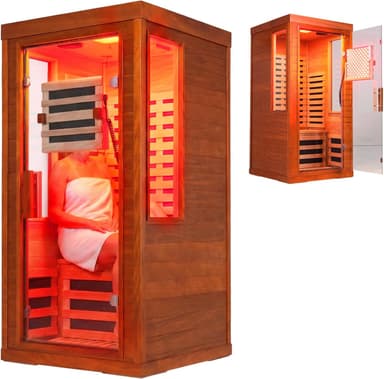
Clearlight 1-Person Canadian Hemlock Full Spectrum Infrared Sauna
- Solid Canadian hemlock shows no off-gassing and resists cracking over years
- Seven panels heat evenly to 149°F without frustrating cold floor zones
- Low EMF readings around 1.4-2.6mG offer genuine peace of mind
Heater Type and Its Practical Implications
Carbon panel heaters, which are standard in most consumer far-infrared saunas including Clearlight and Sunlighten's FIR models, produce a broad, even heat that covers more body surface area but at relatively low surface temperatures. Ceramic heaters, used in some SaunaLife and Almost Heaven models, produce higher surface temperatures and more intense radiant output from a smaller emitter area. Ceramic heaters are often cited as higher-quality because they maintain output intensity more consistently over years - the 20-30% heater failure rate in budget brands over 3-5 years is predominantly carbon panel delamination and connection failure rather than ceramic element failure.
For safety purposes, carbon panels are generally considered the more conservative choice because their lower surface temperature and broader distribution make accidentally touching the heater element less likely to cause a contact burn. This is a minor consideration for adults who have situational awareness but worth knowing if children will ever be in the sauna environment.
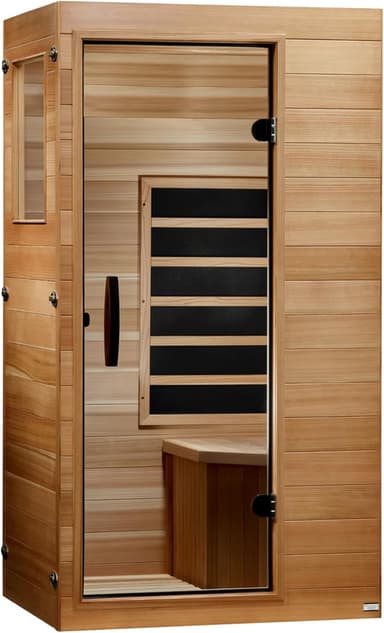
Dynamic Saunas Elite 1-Person Far Infrared Sauna with Red Light Therapy
- Clasp-together cedar assembly genuinely takes under an hour
- Ultra-low EMF panels provide safe, even far-infrared heat distribution
- Red light therapy inclusion adds real recovery value beyond basic infrared
Hydration Protocol - Specific Numbers
16-32 oz of water or electrolyte drink in the 30-60 minutes before a session. Do not enter a sauna immediately after a meal (wait 90 minutes minimum) or after alcohol consumption of any amount. During sessions exceeding 30 minutes, having water accessible inside the sauna is sensible. After the session: 16-32 oz of water, and for sessions longer than 30 minutes or if you are a heavy sweater, 500 mg of sodium and 200-400 mg of potassium in some form - a quality electrolyte supplement, coconut water, or a sodium-containing food.
The dehydration math is not complicated: 1 liter per hour of sweat at moderate sauna intensity, body weight loss of roughly 1% per 45-minute session. Thirst is an unreliable indicator of dehydration once heat is involved because heat stress blunts thirst perception. Drink before you feel you need to.
The Cancer Prevention Angle - What the Data Actually Supports
Some infrared sauna marketing goes too far in the opposite direction from the cancer fear narrative, implying that sauna use treats or prevents cancer. This is not supported by the evidence. No RCT has tested infrared sauna use as a cancer prevention strategy. No cancer registry has tracked sauna use as an exposure variable in the way smoking or alcohol consumption has been tracked.
What the data does show is that the physiological effects of regular sauna use - reduced systemic inflammation, improved cardiovascular function, HSP70 and HSP90 upregulation, enhanced autonomic nervous system regulation - are consistently associated with reduced chronic disease burden in observational data. The Laukkanen 2015 and 2018 cohort studies found 40% lower all-cause mortality and meaningful reductions in multiple cardiovascular endpoints with 4-7 sauna sessions per week 1 2. Chronic inflammation is a known contributor to cancer initiation and progression, and anything that durably reduces inflammatory markers - as sauna use does, per the Hussain and Cohen 2018 systematic review 4 - removes one contributing factor.
None of this constitutes evidence that saunas prevent cancer. Correlation in observational data does not establish causation, and confounding (sauna users may systematically differ from non-users in health behaviors) is a real concern in all of these studies. The honest statement is: sauna use appears to be associated with better overall health outcomes in long-term observational data, the biological mechanisms activated by heat stress are anti-inflammatory rather than pro-inflammatory, and no study has found a cancer-promoting signal in any human population from any form of sauna use at normal use parameters.
That is a much more defensible position than "saunas prevent cancer," and also much more defensible than "saunas might cause cancer."
The Mayo Clinic Position and Medical Consensus
The Mayo Clinic's publicly stated position on infrared saunas reports no harmful effects from controlled use in healthy adults. This is consistent with the absence of population-level harm signals in the research literature and with the position of the Finnish medical establishment, which has decades of experience with a population that uses saunas at extremely high per-capita rates.
The IARC has not classified far-infrared radiation as a carcinogen at any confidence level. It is not in Group 1 (proven), Group 2A (probable), Group 2B (possible), Group 3 (unclassifiable), or any other category. FIR radiation has not been evaluated as a carcinogen because the physical mechanism for mutagenesis does not exist and the epidemiological signal has never appeared. This is a meaningful absence: IARC evaluates agents when there is either biological plausibility or epidemiological suggestion of risk. Neither condition has been met for far-infrared at consumer exposure levels.
Near-infrared specifically - as a component of solar radiation - is present in the sunlight exposure context that IARC has evaluated in connection with skin cancer. The IARC evaluation of sunlight-related skin cancer risk is about UV. NIR from sunlight is present in those exposure scenarios but has not been identified as the causative agent. The causative agent is UV. This further supports the conclusion that NIR at consumer sauna intensities, without any accompanying UV component, does not represent a carcinogenic exposure.
Infrared Saunas and Existing Cancer Patients
This question comes up often and deserves direct treatment. People in active cancer treatment sometimes ask whether infrared sauna use is safe or helpful during chemotherapy or radiation therapy, and people who have completed treatment ask whether sauna use during survivorship is appropriate.
The honest answer is that there is no specific evidence base for infrared sauna use in cancer patients. The hyperthermia question is real but distinct from the everyday sauna context - medical hyperthermia for cancer treatment uses targeted, controlled heating of tumor tissue at temperatures far exceeding what any sauna produces, delivered by specialized equipment with continuous monitoring. Home sauna use is a different category of experience entirely.
For people in active chemotherapy, infrared sauna use raises specific concerns. Some chemotherapy agents cause peripheral neuropathy that impairs heat sensation, making it harder to perceive dangerous temperature levels. Others affect cardiac function, making the cardiovascular demands of heat stress more risky. Immunosuppression from chemotherapy changes how the body handles the physiological stress of heat exposure. These are not reasons to assume sauna use is categorically harmful to cancer patients - they are reasons why that population needs individualized physician guidance rather than general protocol recommendations.
For cancer survivors post-treatment who have received medical clearance and have no specific contraindications, the existing safety data supports cautious, graduated infrared sauna use. The anti-inflammatory and cardiovascular benefits documented in the general population do not disappear for cancer survivors, and there is no evidence that sauna use accelerates cancer recurrence. But "no evidence of harm" in a population that has not been specifically studied is not the same as "established safety," and that distinction matters for honest communication.
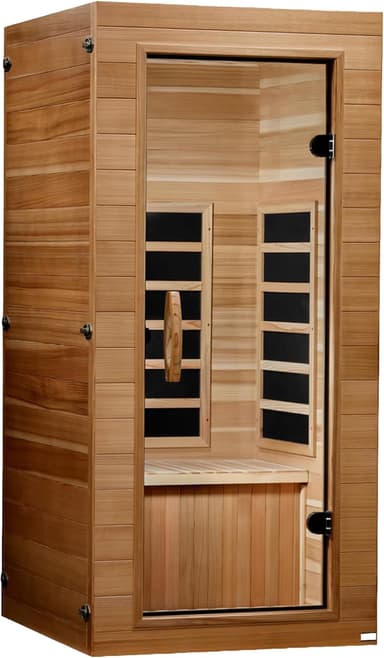
Dynamic Saunas Elite 1-Person Far Infrared Sauna
- Clasp-together assembly genuinely takes under an hour for most people
- Ultra-low EMF panels provide even, safe far-infrared heat distribution
- Red light therapy integration adds real wellness value beyond basic heat
Practical Product Choices Through a Safety Lens
If cancer risk specifically is the concern driving your product research, the hierarchy of sauna choices from most to least conservative looks like this.
Far-infrared only saunas with third-party low-EMF certification are the most conservative choice. The Dynamic Saunas Elite Far Infrared model uses carbon panel far-infrared heating with no NIR component, eliminating even the theoretical concern from the Cho et al. research. The trade-off is that you do not get photobiomodulation benefits associated with NIR in the 600-1000 nm range. For anyone with melanoma history, a family history of skin cancer, or simply a high sensitivity to theoretical risk, this is the right call.
Full-spectrum saunas from established low-EMF brands - specifically Clearlight's full-spectrum models with True Wave II heaters and Sunlighten's mPulse series - offer more complete infrared coverage with independently tested EMF levels at or below 3 mG. These are appropriate for healthy adults without specific skin cancer history who want the full spectrum of photobiomodulation and infrared benefits. Limiting full-spectrum sessions to 20-30 minutes rather than the maximum 45-60 minute protocol is a sensible modifier if NIR exposure makes you uncomfortable, even while acknowledging that consumer intensity levels do not replicate the experimental conditions of concern in the research literature.
Budget brands from Amazon - Real Relax, OUTEXER, and similar - are not inherently more dangerous from a cancer risk perspective. The physics of their infrared output are the same. What they lack is third-party EMF certification, heater longevity, and in some cases adequate off-gassing of adhesives and wood treatments in new units. If you own a budget infrared sauna, ventilating it well for the first several uses to address any off-gassing is reasonable practice, and not being a close-range daily user of a unit without published EMF data is sensible.
For anyone researching their next purchase with safety as a primary criterion, the best one person infrared saunas guide covers current models with specific EMF data and heater specifications. The full guides section has deeper dives on specific health conditions and sauna use.
The bottom line on product choice: the cancer risk question does not meaningfully differentiate between brands, because the mechanism for cancer from infrared exposure at consumer intensities does not exist. The product differentiation that matters for overall safety is build quality, heater longevity, EMF certification if you care about that specifically, and wood quality for longevity and off-gassing management. Buy the sauna that fits your space, budget, and use pattern, from a brand with credible warranty support and published third-party testing. The cancer question should not drive you to spend more or less - it should drive you to understand the physics clearly and then make your decision on other criteria.
Key Takeaways
- ●
Infrared radiation is non-ionizing, and non-ionizing radiation cannot cause cancer through DNA damage. FIR photons carry less than 0.4 eV of energy - the ionizing threshold is above 10 eV. The physics are not close. This is the single most important fact in this entire discussion.
- ●
No peer-reviewed study has found that infrared sauna use increases cancer incidence in humans. The Laukkanen 2015 cohort of 2,315 Finnish men over 20 years showed no elevated cancer signal at any session frequency - including daily use at temperatures higher than most infrared saunas reach.
- ●
The NIR-melanoma research is real but irrelevant to consumer saunas. The Cho et al. 2005 mouse study used intensities estimated at 50-500 mW/cm², roughly 100 times what a consumer full-spectrum infrared sauna produces. Applying those findings to home sauna use is like citing highway crash data to argue against walking.
- ●
ELF-EMF from sauna heaters is classified Group 2B by IARC - the same category as pickled vegetables and coffee. Measured exposure inside consumer saunas runs below 1 μT. High-voltage power lines produce 10-20 μT. The risk signal at sauna exposure levels is not established.
- ●
The long-term health data points in the opposite direction. The Laukkanen 2018 follow-up linked frequent sauna use to reduced cardiovascular disease, hypertension, and neurocognitive decline. The Tei et al. 2009 trial showed FIR sauna at 60°C improved cardiac function by 23% in heart failure patients. This is not a risk profile consistent with a carcinogenic modality.
- ●
Budget brands are not more dangerous than premium brands from a cancer risk standpoint. The physics of their infrared output are identical. The meaningful differences are build quality, heater longevity, wood treatment, and EMF certification - none of which have a cancer mechanism.
- ●
If you have active skin cancer, a history of photosensitizing medication, or a heat-sensitive condition, talk to your physician before using any sauna. These are real contraindications - they just have nothing to do with infrared radiation causing cancer de novo.
Who This Is For, Who Should Skip It
Who This Is For
This article is for anyone who read something alarming about infrared saunas and cancer and wants to understand the actual evidence rather than a reassurance without substance. I wrote it for the person who is already using an infrared sauna and wants to know whether the concern is legitimate. I also wrote it for the person considering a purchase - a one-person infrared sauna runs $400 to $4,000 depending on build quality and heater type - who wants safety as a serious factor in their decision, not just marketing claims in either direction.
The health-benefit angle is relevant to anyone using sauna for cardiovascular support, recovery, or stress management. The Hussain and Cohen 2018 systematic review across 13 studies and over 500 participants found consistent pain and cardiovascular improvements with no oncologic risk signals. Understanding why those benefits exist and how the radiation biology relates to cancer risk questions is genuinely useful context.
Who Should Skip It - Or Read It With a Physician
If you are currently in active cancer treatment, the relevant question is not whether infrared saunas cause cancer but whether hyperthermia-range core temperatures interact with your specific treatment protocol. That is a clinical question, not a physics question, and your oncologist is the right source.
People with systemic lupus erythematosus, multiple sclerosis, or other conditions where heat intolerance is a documented factor face real physiological risk from sauna use. Pregnant women should avoid any elevated core temperature protocol without OB clearance. Anyone on photosensitizing medications - certain antibiotics, retinoids, diuretics - should check with a pharmacist before prolonged infrared sessions, particularly in full-spectrum units with NIR output.
What to Read Next
If the cancer question is resolved for you, these guides address the practical decisions that remain.
Best One Person Infrared Saunas - My reviewed shortlist of current single-person models with specific heater wattage, EMF test data, and wood quality notes. The safety factors that actually differentiate products are all covered here.
All Sauna Guides - The full library covers condition-specific protocols (cardiovascular, recovery, sleep), comparison guides between infrared and traditional Finnish sauna, and buying guides by budget tier. If you want to go deeper on any health mechanism touched on in this article, start there.
Frequently Asked Questions
Does infrared sauna use increase cancer risk?
The evidence says no. Infrared radiation is non-ionizing, meaning it lacks the energy to break DNA bonds or trigger the mutation cascade that leads to malignancy. FIR photons carry less than 0.4 eV of energy; ionizing radiation begins above 10 eV. The gap is not marginal. The Laukkanen 2015 Finnish cohort study followed 2,315 men for 20 years and found no increased cancer signal at any sauna frequency - including 4-7 sessions per week. The most comprehensive skin cancer reviews confirm infrared light does not cause sunburn and has no proven direct carcinogenicity pathway. The claim that infrared saunas cause cancer conflates entirely different parts of the electromagnetic spectrum.
Is infrared radiation the same as UV radiation?
No, and the distinction is the core of this entire topic. UV radiation sits at 100-400 nanometers with photon energies reaching 12 eV - enough to break DNA bonds, damage chromosomes, and drive the mutation load that causes skin cancers and melanoma. UV is classified Group 1 carcinogen by IARC; tanning beds that emit UV are also Group 1. Infrared radiation sits at 750 nanometers to 1 millimeter - on the opposite side of visible light from UV. Near-infrared photons carry 0.9-1.65 eV. Far-infrared carries less than 0.4 eV. Neither has enough energy for DNA strand breaks. Infrared heats tissue through molecular vibration. UV damages tissue through photochemical reactions. These are physically different phenomena.
What about EMF from infrared sauna heaters - is that a cancer concern?
Infrared sauna heaters produce extremely low frequency electromagnetic fields (ELF-EMF) below 300 Hz. IARC classifies ELF-EMF as Group 2B - "possibly carcinogenic" - the same classification given to coffee, aloe vera extract, and pickled vegetables. The "possible" designation reflects that no dose-response relationship has been established, not that evidence of harm exists. Measured EMF inside consumer infrared saunas runs below 1 μT. High-voltage power lines generate 10-20 μT. Quality manufacturers like Clearlight publish third-party EMF testing showing near-zero readings at the body contact distance in their far-infrared models. If EMF is a specific concern, choosing a low-EMF certified unit and sitting in the center rather than against heater panels are practical modifications.
Can infrared saunas help with cancer recovery or as an adjunct therapy?
This is a genuinely active research area, though evidence is preliminary and I want to be careful not to overstate it. Tanaka et al. found NIR non-thermally induces cytocidal effects in cancer cells via apoptosis activation - suggesting anti-cancer rather than pro-cancer biology at relevant intensities. Hyperthermia as a clinical treatment modality (delivered at medical precision, not sauna temperatures) is used as a cancer adjunct in some oncology settings. What a consumer infrared sauna does not do is deliver clinical hyperthermia - core temperatures in sessions stay well below 40°C. Anyone exploring sauna use during or after cancer treatment should have that conversation directly with their oncologist, who can weigh it against their specific protocol.
Are full-spectrum infrared saunas more dangerous than far-infrared only models?
Full-spectrum saunas add near-infrared (NIR) output to the standard far-infrared spectrum. The concern about NIR is anchored in the Cho et al. 2005 mouse study, which showed NIR could suppress apoptosis in UVB-damaged melanocytes at experimental intensities. The critical context: that study used intensities estimated at 50-500 mW/cm², roughly 100 times what consumer full-spectrum saunas produce at body distance. Consumer NIR output typically runs below 5 mW/cm². At those intensities, the Hamblin 2017 photobiomodulation research shows NIR reduces inflammation via cytochrome c oxidase activation - the biological direction is anti-inflammatory, not carcinogenic. Full-spectrum saunas carry a theoretical NIR consideration that far-infrared only units do not, but that consideration does not translate to meaningful real-world cancer risk at consumer intensity levels.
How does infrared sauna compare to tanning bed risk?
The comparison is not meaningful from a physics standpoint - they are entirely different types of radiation. Tanning beds emit UV radiation, classified Group 1 carcinogen by IARC, with demonstrated, dose-dependent increases in melanoma and non-melanoma skin cancer risk. The World Health Organization estimates tanning bed use before age 35 increases melanoma risk by 75%. Infrared saunas emit no UV radiation. The heat you feel in a tanning bed comes partly from infrared output, but the cancer risk from tanning beds comes exclusively from their UV component. Substituting infrared sauna for UV tanning is a meaningful risk reduction. Using an infrared sauna does not produce a tan for the same reason it does not cause UV skin damage: the relevant photons are not present.
How long is it safe to use an infrared sauna per session?
The standard evidence-based range is 15-45 minutes at 120-140°F (49-60°C) for healthy adults. The Tei et al. 2009 cardiac trial used 15-minute sessions at 60°C in patients with existing heart failure and found benefit without adverse events. Patrick and Johnson 2021 documented vascular and inflammatory improvements at 3-4 sessions per week with sessions in the 20-30 minute range. The limiting factor in session length is cardiovascular strain and dehydration, not radiation exposure. Staying hydrated, exiting if you feel dizzy or nauseated, and limiting sessions to 45 minutes regardless of tolerance are sensible parameters. The cancer risk question does not factor into session length calculations - hydration and cardiovascular response do.
Frequently Asked Questions
No, infrared saunas do not cause cancer. They use non-ionizing infrared radiation, which lacks the energy to damage DNA unlike ionizing types such as UV or X-rays, as confirmed by the National Cancer Institute and multiple reviews. One concern from studies like Calles 2010 and Costa 2015 involves near-infrared potentially reducing apoptosis in UV-damaged cells, raising theoretical risks for skin cancer promotion, but this applies to high-intensity lab exposures not typical of saunas. Overall evidence shows no direct cancer link with responsible use.
Related Guides
Affiliate Disclosure - UseSauna earns a commission from qualifying purchases through our Amazon affiliate links. This does not affect our editorial integrity.